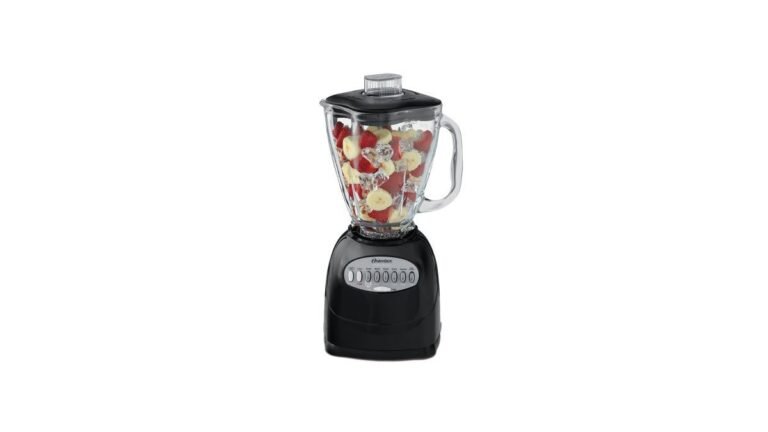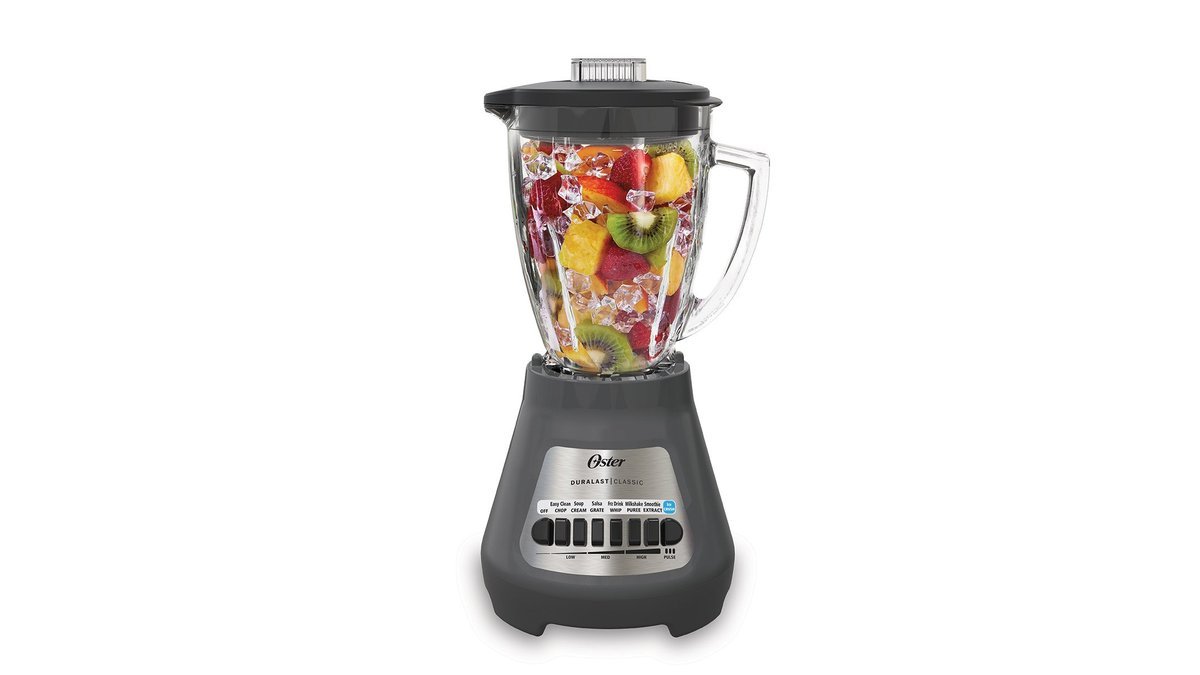
Oster Classic Series 8-Speed Blender Review: Glass Jar Verdict
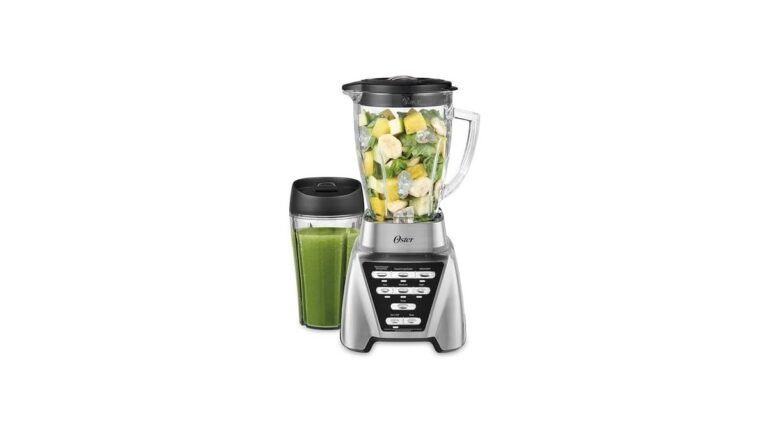
The Oster Classic Series 8-Speed Blender is a countertop blender with a glass jar and a dedicated ice-crushing button, and the attribute that decides whether it’s right for you is that glass jar. Most blenders at this level give you plastic. Glass changes how the machine lives on your counter.
So here’s the answer: buy it if you want a blender whose jar is glass and whose controls are physical buttons you press rather than a screen you tap. Skip it if you need something that fits under a low cabinet, or if you want a machine that quietly folds into the background of a small kitchen. This is a gray, plastic-based, stainless-steel-bladed blender built around a glass jar, and it’s aimed at people who blend often enough to care what the jar is made of. If that’s not you, consider a smaller personal blender you drink straight from, or a hand blender that lives in a drawer. Neither has a glass jar, and neither crushes ice with a button labeled for it, but both take up less room.
| Preview |  |
|---|---|
| Product | Oster® Classic Series 8-Speed Blender |
| Brand | Oster |
| The listing says | Color: Gray Base material: Plastic |
| More information | Price on Amazon |
Is the glass jar worth it over plastic?
Yes, for most people who blend more than once a week. The listing names the jar material as glass, and that single word does more work than any other line in the specification. Glass doesn’t stain the way plastic can after a few batches of tomato sauce, and it doesn’t hold onto the smell of garlic or onion the way a porous plastic pitcher tends to. You can see through it clearly for years, which matters more than it sounds — a cloudy jar makes it hard to judge whether you’ve pureed something smooth enough.
The trade-off is weight and care. Glass is dense, so lifting a full jar to pour takes a firmer grip, and it will not survive a drop onto a tile floor the way a plastic pitcher might. That’s a real consideration if you have limited hand strength or you’re blending for someone who does. The listing gives the jar capacity as 6 cups, which is a family-sized batch rather than a single smoothie — you’ll fill it partway for one person.
Who does this suit? Anyone who’s replaced a plastic blender jar because it went scratched and cloudy, and doesn’t want to do that again. Who should think twice? Someone blending in a hurry, one-handed, with a toddler on their hip. For them, a pitcher made of plastic is the smarter pick, even though it gives up the clarity and stain resistance.
Who should buy a glass-jar blender?
Three situations where this is the right call. First, you cook from scratch and blend often — sauces, soups, batters, marinades — so the jar is in and out of the dishwasher constantly and you want one that comes out looking the same as it went in. Second, you make frozen drinks or smoothies with ice, and you want a machine with a control labeled for that job rather than guessing which speed to use. Third, you’re replacing a blender whose motor still works but whose jar has gone hazy, and you’d rather start fresh with glass than buy another plastic pitcher.
One situation where it isn’t. If your kitchen has low upper cabinets and you keep appliances on the counter, a tall blender with a glass jar may not clear the shelf above it. Measure before you order. And if you only blend occasionally — a few times a month, mostly soft fruit — you’re paying for durability and ice-crushing you won’t use. A small blender with a plastic jar will do the job and take up less space.
Oster Classic Series 8-Speed Blender specifications
Here’s what the listing states about this blender, in its own terms.
| # | What Amazon lists |
|---|---|
| 1 | Color: Gray |
| 2 | Base Material: Plastic |
| 3 | Blade Material: Stainless Steel |
| 4 | Jar Material: Glass |
| 5 | Ice Crushing Button: Yes |
What does a 6-cup jar actually hold?
Six cups is the listed capacity, and it’s worth translating. That’s a full pitcher of soup for a family, or enough smoothie for several glasses at once. For a single serving you’ll be blending in the bottom third of the jar, which works but puts the blades close to the surface — you may need to stop and push ingredients down. For two people, it’s comfortable.
Where six cups falls short is batch cooking. If you’re pureeing a large pot of tomato sauce or making baby food in bulk, you’ll be doing it in rounds, pouring out and refilling. That’s not a flaw so much as a size limit, and it’s the honest ceiling of a jar this size. Anyone feeding a crowd regularly should look at a large-capacity pitcher instead.
The glass jar is also heavy when full, and a brimming pitcher of liquid is a lot to lift and aim into a container without splashing. Pour over the sink the first few times until you know the weight. If you have wrist or grip issues, fill it less and blend in two batches — the motor doesn’t care, and your grip will thank you.
How do the 8 speeds and ice button work?
The listing names eight speeds and a separate ice-crushing button, so the everyday routine is simple: load the jar, press a speed, and for frozen ingredients press the ice button instead. Physical buttons are the point here — you press, it runs, you press again, it stops. No menus, no presets to scroll through, nothing to learn. Most people will use a couple of speeds and ignore the rest, which is normal and fine.
The eight speeds give you a range from gentle stirring to full power, so you can fold chopped nuts into batter at a low setting without turning them to dust, then switch high for a smooth puree. The dedicated ice button takes the guesswork out of frozen drinks, which is the job most people actually bought the machine for.
Who finds this easy? Anyone who’s used a blender before — it’s a quick learning curve. Who finds it fiddly? Someone used to a touchscreen appliance with named programs, because here you choose the speed yourself and there’s no display telling you which one. If you want the machine to decide, this isn’t that machine.
Cleaning and upkeep: what does it ask of you?
Less than you’d expect. The jar is glass, so it goes in the dishwasher or gets rinsed by hand without worrying about staining or scratching. The listing names stainless steel for the blades, which is the part that touches food most directly, and plastic for the base. The base itself shouldn’t go in water — wipe it with a damp cloth and keep the cord dry, which is standard for anything with a motor in it.
Day to day, the routine is: rinse the jar, wipe the blade assembly, let everything dry. Once in a while, if you’ve blended something oily or strongly flavored, a warm soapy wash handles it. There’s no filter to replace, no cartridge to buy, no descaling cycle.
The listing doesn’t state whether the jar and blade assembly are fully separable for cleaning, so if that matters to you — some people want every part to come apart — check before buying. That’s the one upkeep question the page leaves open, and it’s worth a look at the manual or a question to the seller.
Build and materials: what’s it made of?
The listing is specific here, which is helpful. The base is plastic, the blades are stainless steel, and the jar is glass. The listing names stainless steel for the blades, which is the part that touches food most directly. Glass for the jar means no scratching from a spatula or a spoon, and no gradual clouding.
The honest trade-off is the plastic base. The listing doesn’t state a finish or a weight for the base, so there’s nothing to judge there beyond the material itself. What it does tell you is that this is a blender built around a good jar and good blades, with a housing that’s doing its job without being the selling point.
If you want a metal-bodied machine, look elsewhere. If you want the parts that touch your food to be the durable ones, this is the right arrangement.
How long will this blender last?
The parts that wear are the ones you’d expect. The blade assembly sees the most stress, especially if you crush ice often, and stainless steel blades dull gradually rather than failing suddenly.
What changes that? How you treat it. Cleaning the jar promptly keeps the blades free of dried residue, which reduces strain on the motor.
The listing doesn’t state a warranty period, so there’s no cover length to weigh here — that’s a gap worth closing with the seller before you order. Replacements for glass jars and blade assemblies are the kind of thing you’d want to confirm are available, since a chipped jar is the one failure that takes the whole blender out of service.
Setup and first use
Unboxing is straightforward. You’ll have the base, the glass jar, and a lid, and the jar sits on the base with the blade assembly in place. Before the first blend, wash the jar, lid and blade assembly in warm soapy water and dry them — glass and steel both pick up manufacturing residue, and you don’t want that in your first smoothie.
Then it’s a matter of loading ingredients, pressing the lid down firmly, and choosing a speed. For ice, use the dedicated ice button rather than a high speed, since that’s what it’s labeled for. Start with something forgiving — a banana smoothie, a simple puree — to get a feel for how the speeds map to results before you attempt anything demanding.
How much of this does the listing document? Not much. It names the parts and the ice button but doesn’t walk through assembly or first-use cleaning, so expect to rely on the included manual or your own judgment. It’s not complicated, but you’re figuring it out rather than being told.
How it compares to other options
A simpler blender — one with a plastic jar and a single speed or a dial — gives up the glass, the ice button, and the speed range. You’d still make smoothies, but you’d be guessing at settings and watching the jar cloud as it ages. For someone blending soft fruit occasionally, that’s a reasonable trade. For anyone crushing ice or blending daily, the glass jar and the dedicated button are the two features you’d miss.
A more elaborate blender adds preset programs, a display, sometimes a self-cleaning cycle and a metal housing. It asks more of your counter space and more of your attention. Whether that’s better depends on whether you want the machine to make decisions for you. This one doesn’t — you pick the speed, you press the button.
Buying nothing is a real option. A whisk, a potato masher, and a knife handle a surprising amount of what people use blenders for, and they never need cleaning around a blade assembly. If you blend less than once a week, that’s the honest answer. The case for this blender is frequency: the more you use it, the more the glass jar and the ice button earn their place.
Pros and cons
Pros
- Glass jar resists staining and clouding
- Stainless steel blades handle ice crushing
- Dedicated ice button takes out the guesswork
- Eight speeds cover gentle folding to full puree
- Physical buttons need no learning curve
- The capacity suits family-sized batches
Cons
- Glass jar is heavy when filled to capacity
What the listing doesn’t tell you
Before you order, it’s worth putting a few questions to the seller or checking the manufacturer’s own product page. Each one changes whether this blender fits your kitchen or your routine.
Ask specifically whether the jar is included.
Do the jar and blade assembly separate completely for cleaning? This decides how easy the daily wash is. If you want every food-contact part to come apart, confirm it before buying.
What are the assembled dimensions, and will it fit under your cabinets? The listing gives the jar capacity but not the height. Measure your clearance and compare before ordering — a blender that doesn’t fit gets stored, and stored blenders don’t get used.
Are replacement jars and blade assemblies sold separately? A blender’s useful life is often limited by its jar. If replacements exist, a chipped jar is an inconvenience rather than the end of the machine.
Related guides
Frequently Asked Questions
Can this blender crush ice?
Yes. The listing names a dedicated ice-crushing button, which is the control intended for frozen ingredients. That’s a separate button from the eight speeds, so you don’t have to guess which setting handles ice. Load the ice, press that button, and let it run. For best results, add a little liquid so the pieces circulate rather than sitting in a pile.
What do I have to replace to keep using it?
Nothing on a schedule. There’s no filter, cartridge or descaling step. The parts the listing identifies as replaceable are the glass jar, if it chips or breaks, and the blade assembly, if the stainless steel dulls after heavy use. The listing doesn’t state whether either is sold separately, so confirm availability before you rely on it.
How much does the jar hold?
The listing gives the capacity as 6 cups. That’s a full pitcher for a family or several glasses of smoothie at once. For a single serving you’ll be blending in the lower part of the jar, which works but may need you to stop and push ingredients down. It’s a family-sized jar rather than a personal one.
What’s in the box?
The listing describes the blender with its glass jar, and names the base material, blade material and jar material, along with the ice-crushing button. It doesn’t itemize every accessory, so if you need to know whether a specific piece — a lid style, a tamper, a spatula — is included, ask the seller before ordering.
Is a glass jar actually better than plastic?
For stain and odor resistance, yes. Glass doesn’t absorb color from tomato sauce or hold onto garlic the way a porous plastic pitcher can, so it stays clear and neutral over years of use. The trade-off is weight and the risk of breakage. If you want a jar that looks the same after a hundred batches, glass is the material to pick.
Is a blender like this worth owning at all?
It depends on how often you’ll use it. If you blend several times a week, the glass jar and ice button earn their counter space. If you blend a few times a month, a whisk and a knife handle most jobs and never need cleaning around a blade. The honest test is frequency, not features.
The verdict
Buy the Oster Classic Series 8-Speed Blender if you blend often and you want the parts that touch your food to be the durable ones — a glass jar that won’t cloud, stainless steel blades that handle ice, and a physical ice button that removes the guesswork. That’s the core proposition, and the eight speeds give you room to work with everything from batters to purees. The listing names plastic for the base, and doesn’t state a warranty period — worth settling with the seller before you commit.
Skip it if you blend occasionally, if your counter space is tight, or if you need a machine that fits under a low cabinet — measure first, because a tall glass jar is the wrong shape for a cramped kitchen. In that case, a blender with a plastic pitcher, or a hand blender that lives in a drawer, will serve you better.
For the frequent blender who’s tired of replacing cloudy plastic pitchers, this one is built around the right part. For everyone else, the manual method still works.