Best Juicer Under $100

- Dual speeds for soft or hard produce
- No-drip spout keeps every drop
- 27 oz. sealing pitcher stores juice up to 48 hours
- 3" feed chute fits whole fruits and vegetables

- 3-year limited warranty from Hamilton Beach
- Extra-large 3" chute, 800 watts, 80 oz. pulp bin
- Removable parts are dishwasher safe
- 3" chute fits a whole apple or bunch of celery

- Customizable juicing filter for more juicing possibilities
- High-speed max power reaches 800W
- Juices fruit and vegetable within 8 secs
- 3'' wide feed chute for various fruits & vegetables

- Mini compact juicer for 1-2 servings
- Includes 16 oz juice cup
- Slow cold press juicing at 70 RPM
- 3/4" feed chute, cut produce into smaller pieces

- Auto-reversing juicing cones for maximum juice extraction
- Adjustable Pulp Control with removable pulp basket
- Markings on the clear juice container
- Drip-free pour spout with handle
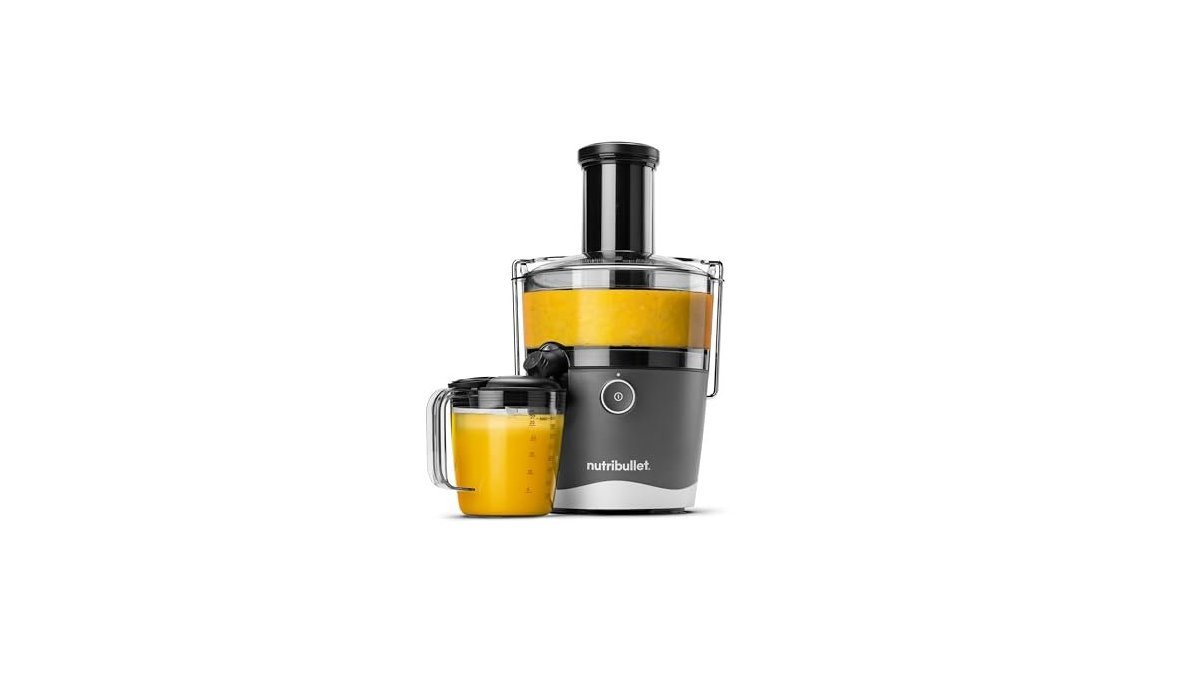
1. NutriBullet 800W Juicer
Best for: First-time juicers who want simple daily use
The NutriBullet 800W Juicer is a centrifugal machine built around speed and simplicity, and it is one of the better juicers under 100 dollars. Its standout listed feature is the 3″ feed chute, which the seller says fits whole fruits and vegetables, so you skip the slicing step. Dual speeds let you match the motor to soft produce or hard produce. The 27 oz. sealing pitcher is made to store juice for up to 48 hours, which matters if you like to juice ahead.
Daily life with this one centers on its self-contained pulp basin. You lift it off and carry it to the sink, and the sieve, pulp basin, and pitcher are all dishwasher-safe. The stainless steel sieve is the part that does the real work, and it’s the part you’ll clean most often. The plastic body and pitcher are BPA-free, and the unit stands about 16 inches tall, so measure your counter clearance before you commit.
This is a compact centrifugal machine. The 27 oz. pitcher and.5L pulp container are the listed capacities.
| What it gives you | What you accept |
|---|---|
| 3″ chute fits whole produce | 27 oz. pitcher suits small batches |
| Dual speeds for soft and hard foods | Pulp basin needs emptying between batches |
| Dishwasher-safe sieve, basin, pitcher | Stainless sieve still needs brushing |
2. Hamilton Beach Centrifugal Juicer Machine With Big Mouth 3” Feed
Best for: Buyers who juice whole apples and carrots
The Hamilton Beach Big Mouth is a centrifugal juicer with an 800 watt motor and a 3″ Big Mouth chute. The seller says the chute fits a whole apple, a bunch of celery, or a handful of carrots, which removes the pre-cutting step that slows most juicing sessions down. It carries a 3-year limited warranty, and Hamilton Beach describes itself as America’s number one juice extractor brand.
The 80 oz. pulp bin is the number that changes daily use here. The pulp bin, juice bowl, lid, and pusher are all dishwasher safe, and a strainer cleaning brush is included for the mesh filter. If you juice several times a week, that combination cuts your cleanup time noticeably.
This isn’t the right pick for someone who only wants a glass of orange juice now and then.
What goes smoothly:
- Whole apples and carrots go in without chopping
- 80 oz. pulp bin holds a long session’s worth
- Most removable parts go in the dishwasher
- 3-year limited warranty covers the motor
What you have to accept:
- Large footprint takes real counter space
- Mesh strainer still needs the included brush
3. Juilist 800W Juicer
Best for: Small kitchens that still want strong extraction
The Juilist 800W Juicer is a compact centrifugal machine with a 3″ wide feed chute and three speed settings. The seller lists a max of 800W, with speed “1” for soft produce, “2” for hard produce, and “P” for the highest speed reached after release. Its listed safety features include automatic overheat protection and a double safety lock.
Two details stand out for a compact machine. The seller states the juicer extracts up to 26% more juice than other 800W juicers, based on the brand’s own laboratory testing, and it says juicing takes within 8 seconds. There’s also a visible window so you can watch the juice flow, and the stainless steel cutting disc sits inside a micro-mesh filter. Accessories are dishwasher safe, and a brush is included for the filter.
Snapshot:
- Three speeds cover soft and hard produce
- Compact body leaves counter space free
- Visible window shows juice as it flows
- Overheat protection and double safety lock
- Dishwasher-safe accessories with a cleaning brush
- Pulp container is sized for small batches
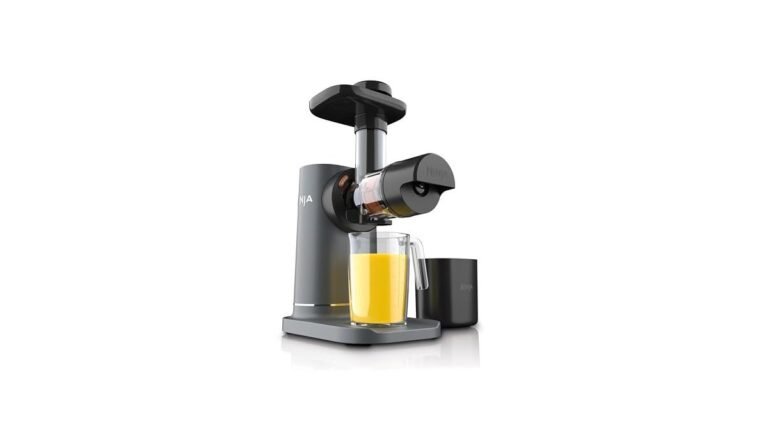
4. Elite Gourmet EJX600 BPA-Free Cold Press Juicer
Best for: Single servings of cold press juice
The Elite Gourmet EJX600 is a mini masticating juicer, and that design choice is the whole point. It runs at 70 RPM, and the seller says this low-speed cold press extraction produces smooth juice with less foam and less oxidation than high-speed centrifugal juicers. It includes a 16 oz. Tritan juice cup, which tells you the batch size it’s built for.
The trade-off is prep. The feed chute measures 3/4″, so the seller advises cutting produce into smaller pieces, especially hard items like apples, carrots, beets, and ginger. In exchange, there are only three removable parts, cleanup is quick, and those parts are top-rack dishwasher safe, excluding the motor base and cord. Built-in overload and overheat protection guard the motor, and Elite Gourmet backs it with US-based customer support.
This isn’t the juicer for anyone filling multiple bottles at once. The seller states plainly that it’s designed for one to two servings at a time and isn’t intended for large-batch juicing, so a family would find it slow.
Who it fits: Someone who wants one fresh glass a day and cares more about juice quality than speed. The cold press design and small footprint suit a single person or a couple.
Who should pass: Anyone juicing for a family, or anyone unwilling to cut produce into small pieces first. The seller advises cutting produce into smaller pieces for best performance.
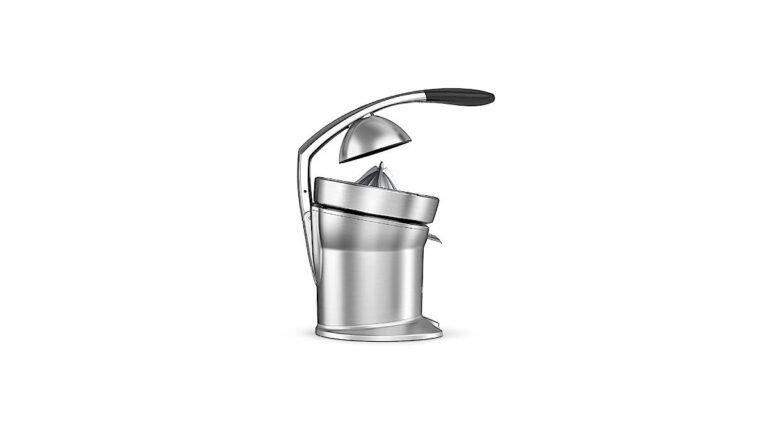
5. BLACK+DECKER 32oz Electric Citrus Juicer
Best for: Oranges, lemons, and grapefruit only
The BLACK+DECKER CJ625 is a citrus juicer, not a general juicer, and that’s a strength if citrus is what you drink. It uses auto-reversing juicing cones, which the seller says provide maximum juice extraction by changing direction as you press. Pressure activation means the motor runs only while you push down on the fruit.
Two features make it practical for cooking. Adjustable pulp control works with a removable pulp basket, so you can leave pulp in or take it out and use it in other recipes. The clear 32 oz. container has measurement markings, a handle, and a drip-free pour spout, so it doubles as a pitcher you can pour straight from. The container is clear so you can watch the yield rise as you juice.
The pulp basket is the part that separates this from a plain reamer. You set the pulp control, and whatever the cones press out collects in the basket instead of landing in the juice. From there you either tip it out or keep it for another recipe.
The measurement markings matter more than they look. If you’re juicing for a recipe that calls for a set amount, you can read the level on the container as you go instead of pouring into a cup to check.
Pressure activation is worth understanding before you buy. The motor only turns while you press the fruit down onto the cone. Lift up and it stops.
This isn’t for anyone who wants green juice, carrot juice, or anything that isn’t citrus. It is a citrus juicer, so it is built for oranges, lemons, grapefruits and other citrus rather than a mixed juice routine.
What goes smoothly:
- Auto-reversing cones press more juice from each half
- Pulp basket lets you choose pulp or no pulp
- Measurement markings help when juicing for recipes
- Pitcher pours without dripping
What you have to accept:
- Citrus fruit only, no greens or hard vegetables
- You hold the fruit down while it juices
Also Worth Considering
The QCen Juicer Machine Centrifugal Juicer is an 800W centrifugal model with a wide mouth feed chute, stainless steel, and BPA-free parts, aimed at fast extraction and easy cleaning. Its two speeds split the work: “1” for soft fruits and vegetables such as watermelon, orange and strawberry, “2” for hard ones such as carrot, celery, apple and pear. A locking arm stops it running unless the cover is locked in place, and overload protection switches it off if it overheats. Don’t run it continuously for more than 5 minutes; if it stops, let it cool for 15 minutes before restarting. Avoid low-water-content produce.
The Magic Bullet Mini Juicer Cup is a compact personal option with a cup, suited to a drink for one rather than batch juicing. Its 400-watt motor and 2-inch feed chute take larger chunks, so there’s less chopping, and it juices straight into a personal cup with a twist-on to-go lid. Attachments are top-rack dishwasher safe, and a silicone spout cap catches drips.
The Proctor Silex Electric Citrus Juicer, sold as Alex’s Lemonade Stand, is a 34 oz. pressure-activated citrus machine with two reamers for big and small fruit and a pulp control. The pitcher detaches for serving, and the reamers reverse automatically for maximum extraction. A share of every purchase goes to Alex’s Lemonade Stand Foundation.
The Decision Filter
Start with one question: what will you actually put in it? If the answer is oranges and grapefruit, a citrus juicer does that job with less cleanup than anything else here. If the answer is apples, carrots, and greens, you need a centrifugal or masticating machine. If the answer is a single smooth glass each morning, a slow cold press model fits you better than a fast one.
Most people miss this: the feed chute size decides how much time you spend cutting before you juice, and that prep time is what makes people stop using a juicer. Answer the produce question first, and the list drops to two.
Then look at the chute. A 3-inch chute takes a whole apple, a bunch of celery, or a handful of carrots, so you skip the cutting step entirely. That’s the width on the NutriBullet, the Hamilton Beach Big Mouth, the Juilist, and the QCen. The Magic Bullet Mini is narrower at 2 inches, which still fits larger chunks but not whole fruit. The Elite Gourmet is the outlier at 3/4 of an inch, and the brand says plainly to cut produce into smaller pieces, especially hard items like apples, carrots, beets, and ginger. If you won’t stand there dicing, that difference decides it for you.
Speed settings tell you the same thing from the other side. Two speeds, low for soft produce and high for hard, appear on the NutriBullet and the QCen. The Juilist adds a third, highest setting, and its low speed is listed for oranges, watermelon, and tomato while its high speed covers apple, carrot, and celery. Match the setting to what you bought, or you get less juice out of it.
One more number worth knowing before you commit: the QCen manual says not to run the machine continuously for more than 5 minutes, and to let it cool for 15 minutes if it stops from overheating.
The Thirty-Second Checklist
- Will you juice most days, or only when you remember? A juicer that’s a hassle to assemble gets used twice and then sits. If you’re honest that you’ll only juice occasionally, buy for the occasional user, not the fantasy version of yourself.
- Does anyone else in the house need to use it easily? Simple controls and easy assembly matter more than an extra speed nobody touches.
- How much counter space can you give up for good? A compact body takes up little room. The NutriBullet 800W Juicer lists a height of 16 inches, so measure your clearance before you commit. If the answer is “none,” a mini or compact model fits.
- Will you cut produce first, or do you want whole items to fit? A 3-inch chute fits a whole apple, a bunch of celery or a handful of carrots, so you skip pre-cutting. A 3/4-inch chute means you cut everything into smaller pieces, hard items especially.
- Do you drink juice fresh, or store it for later? A sealing pitcher keeps juice up to 48 hours. If you drink it on the spot, that feature is dead weight.
- If it turns out wrong, can you live with the size and cleanup? Check the warranty before you buy. Hamilton Beach states a 3-year limited warranty, and the Magic Bullet Mini lists a 1-year limited warranty.
Three Regrets Worth Avoiding
Regret #1: Buying a machine that only handles citrus when the household also wants green juice. The BLACK+DECKER CJ625 is built for oranges, lemons, and grapefruit and won’t take apples or leafy greens, so it can’t cover a mixed routine. The fix is simple: decide your produce list before you decide the machine.
Regret #2: Underestimating prep time. The Elite Gourmet EJX600 uses a 3/4″ feed chute and the seller advises cutting hard items into smaller pieces, which adds minutes before any juice appears. If you won’t do that prep, choose a wider chute instead.
A 3″ chute is the other end of that trade. The NutriBullet, the Hamilton Beach Big Mouth, the Juilist, and the QCen all take whole fruits and vegetables, so the slicing step disappears. The Juilist claims a fruit or vegetable juices in under 8 seconds once it’s in the chute. The Magic Bullet Mini sits in between, with a 2″ chute that fits larger chunks but not a whole apple.
Regret #3: Buying more capacity than you’ll use. The Hamilton Beach Big Mouth carries an 80 oz. pulp bin and a large body, which suits frequent juicing but takes counter space a single-serving user won’t get back. The fix is matching bin size and footprint to how many glasses you actually drink.
The Elite Gourmet is the counterexample, and its own listing is blunt about it: a mini, single-serve design for a person or a couple, not intended for large-batch juicing or filling multiple bottles. The Magic Bullet Mini makes the same pitch — it takes up less space than standard models and juices straight into a personal cup with a to-go lid.
So the question isn’t which machine is better. It’s how many glasses you pour in a sitting. One or two, and a compact model earns its counter space. A full pitcher most mornings, and the larger bin is the one you’ll keep using.
What to Look for in a Juicer Under $100
Here’s how to turn your own habits into a shortlist.
| If you want… | Look for | Avoid |
|---|---|---|
| Juice without chopping | 3″ or wider feed chute | 3/4″ chute models |
| Smooth, low-foam juice | Slow masticating, 70 RPM | High-speed only machines |
| Long juicing sessions | Large pulp bin, 80 oz. | Small pulp containers |
| Citrus juice only | Auto-reversing cones | Centrifugal machines |
| Easy cleanup | Dishwasher-safe removable parts | Hand-wash-only designs |
| Small counter footprint | Compact body, few parts | Tall, wide machines |
The chute is the first thing to settle. A 3″ chute takes a whole apple, a bunch of celery or a handful of carrots, so you skip pre-cutting entirely. A 3/4″ chute does not, and the manual says so: cut hard items like apples, carrots, beets and ginger into smaller pieces. If you juice most days, that difference is the whole chore.
Speed is the second. Centrifugal machines run fast and are built for hard and soft produce alike. A slow masticating model turns at 70 RPM and the maker claims less foam and less oxidation. If foam in the glass bothers you, that’s your column. If you want speed, it’s not.
Pulp capacity decides how long you can go before emptying. An 80 oz. bin lets you keep feeding. A small container means stopping mid-batch, so match the bin to how much you actually juice in one sitting.
Citrus is its own decision. Auto-reversing cones extract from small to large fruit, and pulp control lets you set how much pulp lands in the glass. A centrifugal machine won’t do this well, so if citrus is all you want, buy the citrus machine.
Cleanup is where a juicer gets abandoned. Dishwasher-safe removable parts, a cleaning brush and few parts total all matter more than motor size. Check the list before you buy.
Finally, measure your counter. A compact body with few parts fits under a cabinet. Tall, wide machines do not.
Closing
If apples and carrots fill your fridge, take the wider chute. A 3″ chute takes a whole apple, a bunch of celery or a handful of carrots, so you skip the pre-cutting step. The Magic Bullet Mini is the exception at 2″, and the Elite Gourmet is smaller still at 3/4″, where you cut hard items like apples, carrots, beets and ginger into smaller pieces first.
If citrus fills a bowl on the counter, take the citrus machine. The BLACK+DECKER CJ625 runs on pressure rather than a feed chute, and its auto-reversing cones extract from the fruit. The Proctor Silex adds two nesting reamers, so one machine handles Key limes through grapefruit.
If you want a single smooth glass each day, take the slow cold press. The Elite Gourmet runs at 70 RPM and is built for a couple of servings at a time, with a cup sized for one person. It isn’t intended for large batches or filling multiple bottles.
One caution before you buy: the QCen manual says not to run the machine continuously for more than 5 minutes, and to let it cool for 15 minutes if it stops from overheating.
Your next step is to measure your counter space and check the chute width against the produce you actually buy, then head to Amazon to check availability.
Frequently Asked Questions
Will a juicer fit under my kitchen cabinets?
It depends on the machine’s height and your clearance. The NutriBullet 800W Juicer lists a height of 16 inches, so measure the gap between your counter and the cabinet above before ordering. Feed chutes sit on top of the body, so add a few inches of working space above the unit. Compact models take less height, but the trade-off is usually a smaller pulp container.
Do I have to cut fruit before juicing?
Not always. A 3″ feed chute is designed to take whole apples, a bunch of celery, or a handful of carrots, so those go in as they are. A 3/4″ chute, like the one on the Elite Gourmet EJX600, needs produce cut into smaller pieces, especially hard items such as apples, carrots, beets, and ginger. The wider the chute, the less prep you do.
Can I store juice in the pitcher?
Some pitchers are built for it. The NutriBullet 800W Juicer includes a 27 oz. sealing juice pitcher with a lid and froth separator, and the seller says it stores fresh juice for up to 48 hours. Other machines give you a juice bowl meant for pouring, not storing. If you like to juice ahead, look for a pitcher with a sealing lid.
Is a cold press juicer better than a centrifugal one?
They do different jobs. A cold press or masticating juicer runs slowly, and the Elite Gourmet EJX600 lists 70 RPM, which the seller says gives less foam and less oxidation than high-speed centrifugal juicers. Centrifugal machines spin fast and handle whole produce through a wide chute, which suits bigger batches. Neither is better overall; the right one depends on how much you juice and how you like the texture.
How do I clean a juicer without losing time?
Look for removable parts that are dishwasher safe. The Hamilton Beach Big Mouth lists its pulp bin, juice bowl, lid, and pusher as dishwasher safe and includes a strainer cleaning brush. The Elite Gourmet EJX600 has only three removable parts, top-rack dishwasher safe, excluding the motor base and cord. Rinse the mesh filter right after juicing and it comes clean faster.
What if the juicer stops working mid-use?
Some machines have protection built in. The Juilist 800W Juicer lists automatic overheat protection and a double safety lock, and the Elite Gourmet EJX600 has built-in overload and overheat protection. If a motor shuts down, it’s often a heat cutoff, and it resets after the unit cools. Check that the lid and safety lock are seated correctly, because many juicers won’t start unless everything is locked in place.
Does a juicer come with a warranty?
It varies by brand, so check the listing for each one. Hamilton Beach states a 3-year limited warranty on the Big Mouth juicer. Elite Gourmet points to over 40 years as a kitchen brand and US-based customer support for its EJX600. Other models here don’t state a warranty period in their listings. A longer stated warranty matters most on the motor, since that’s the part you can’t replace yourself.