Best Juicer for Lemons: 5 Picks That Get Every Drop
Best Juicer For Lemons
That’s the whole problem. A big orange gives up its juice when you press it, but a lemon holds on. So the real question isn’t which machine spins fastest. It’s which tool gets the most juice out of a fruit that doesn’t want to give it.
That’s what separates a good buy from a bad one here. Match the tool to how you actually use lemons. If you squeeze one lemon into a glass of water each morning, a hand press lives in a drawer and takes ten seconds. If you’re making a pitcher of lemonade for a party, you want a reamer with a big container and a spout. If you cook with citrus most nights, you want something that sits on the counter and doesn’t fight back.
The mistake people make is buying for the biggest job they can imagine, then using it for the smallest job they do every day. An electric juicer takes up counter space and its removable parts need washing after use. A hand squeezer that can’t handle a grapefruit frustrates you the one time a year you need one.
So think about volume first. Then think about your hands — how much grip strength you have, and whether squeezing hurts after the third lemon. Then think about cleanup, because pulp and seeds have to go somewhere, and that somewhere has to be washed.
Everything below is judged on what the listing gives you: what it’s built from, what it does, what it leaves out, and how long it’s covered for. The buttons take you there for today’s listing.

- Auto-reversing cones extract maximum juice
- Pulp collects in removable basket
- Measurement markings on clear juice container
- Container doubles as pitcher with spout

- 40W motor, more power than 25W models
- Auto-reversing extraction for faster juice yield
- 24 OZ (3-CUP) capacity for home batches
- Removable parts are top rack dishwasher safe

- One dollar of every purchase goes to Alex's Lemonade Stand Foundation
- Makes lemonade and juice from oranges, limes, grapefruits
- 34 oz. pitcher with measurement markings
- 2 nesting reamers for small to large citrus

- Dual-gear mechanism delivers up to 20% more juice
- Made of durable nylon and stainless steel
- Non-slip handles reduce pressure on hands
- Designed for lemons, key limes and similar fruits

- Hopper contains juice with integrated spout
- Sits flat on countertop for leverage
- Built-in strainer catches pulp and seeds
- Made from durable aluminum and nylon
1. BLACK+DECKER 32oz Electric Citrus Juicer
Best for: Daily lemon water and small cooking jobs
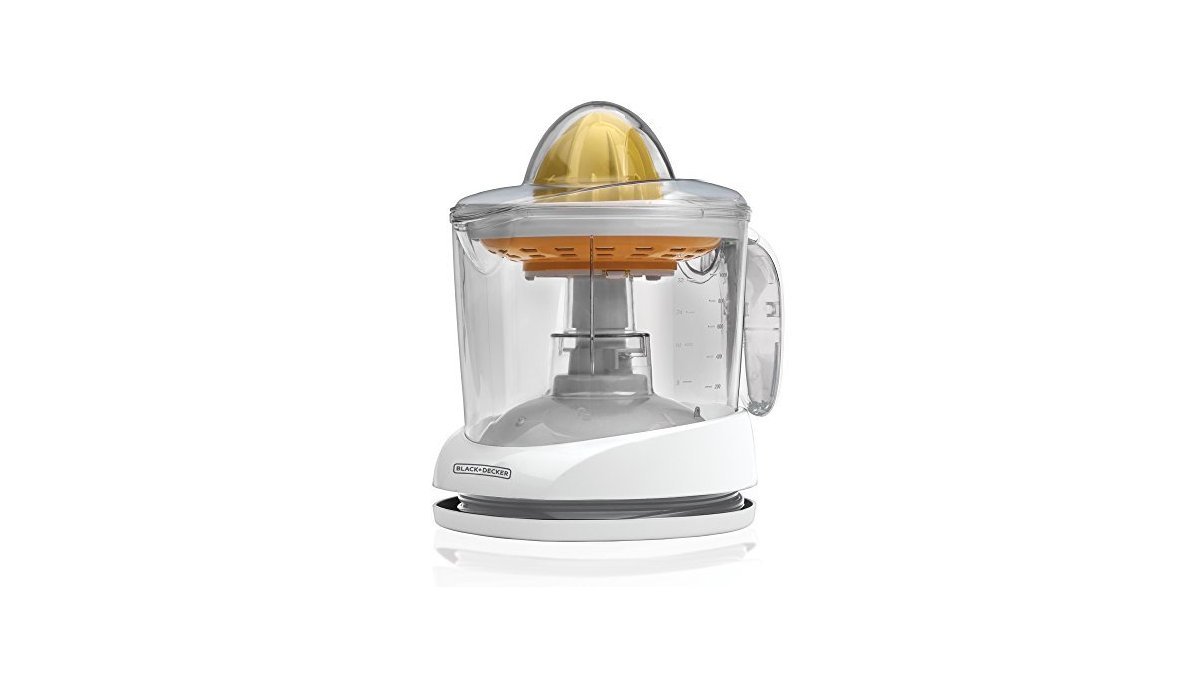
This is a pressure-activated electric juicer with a 32 oz clear container that doubles as a pitcher. You press the fruit down on the cone and it spins; let go and it stops. The listed feature that would change a buyer’s mind is the auto-reversing cones, which the seller says extract more juice by changing direction as you press.
The adjustable pulp control is the part you’ll notice in daily use. Pulp collects in a removable basket, so you can dial in how much ends up in the glass or pull the basket out and toss it. Markings on the container let you juice straight into a recipe amount instead of guessing.
What this suits is someone who wants one appliance that handles lemons, limes, and the occasional orange without a learning curve. What it isn’t for is someone juicing a whole bag of lemons in one go — the container fills, and you’re pouring and continuing.
| What it gives you | What you accept |
|---|---|
| Auto-reversing cones for extraction | Corded electric, so it needs counter space near an outlet |
| Pulp basket you can remove or keep | Pulp control is a dial, not a precise setting |
| Clear container with measurement markings | Container doubles as the pitcher, so you pour from the unit |
| Drip-free spout and handle | Dishwasher-safe parts still need loading and unloading |
2. Elite Gourmet ETS623 Electric Citrus Juicer
Best for: Small kitchens, dorms, and RV counters
This is a compact electric citrus juicer with a 24 oz capacity and a 40-watt motor. The listing compares that motor directly to standard 25-watt models and says it’s built for faster yield. It uses the same push-down activation and auto-reversing reamer as bigger machines, just in a smaller footprint.
The listing says the 24 oz capacity makes up to 3 cups at a time, which it frames as two to three servings. For lemonade for two people, or a batch of dressing and a marinade in the same session, that’s the right size. It has a built-in pour spout and an integrated pulp and seed filter.
What goes smoothly:
- Push-down activation means no buttons to hunt for
- Auto-reversing reamer handles lemons, limes, oranges, and grapefruit
- Removable parts are top-rack dishwasher safe
- Compact body fits apartments, dorms, and RVs
- BPA-free materials and ETL listed
What you have to accept:
- Hand washing is recommended for the longest product life
- 24 oz is a home batch size, not a crowd size
3. Proctor Silex Alex’s Lemonade Stand 34 oz. Electric Citrus Juicer
Best for: Pitchers of lemonade and cooking in volume
This is a 34 oz electric citrus juicer with two nesting reamers, so it handles small fruit like Key limes and large fruit like grapefruit with the same machine. The pitcher collects the juice and then detaches for serving at the table, which is the feature that changes how you use it — you’re not pouring from the appliance, you’re carrying the pitcher.
The listing says a portion of every purchase goes to Alex’s Lemonade Stand Foundation, which funds childhood cancer research. That’s a stated part of the product, not a marketing flourish, and it’s worth knowing if it matters to you. The pulp control dial slides left or right, and pulp collects in a strainer you can pull out and discard.
Who it fits: Anyone making lemonade for a group, or cooking with citrus often enough that a 34 oz pitcher saves a second round of juicing. The two reamers mean one machine covers everything from tiny limes to grapefruit.
Who should pass: Someone squeezing a single lemon a day. A 34 oz pitcher taking up counter space is more machine than that job needs, and the listed note that it’s available while supplies last means the exact model may not stay around forever.
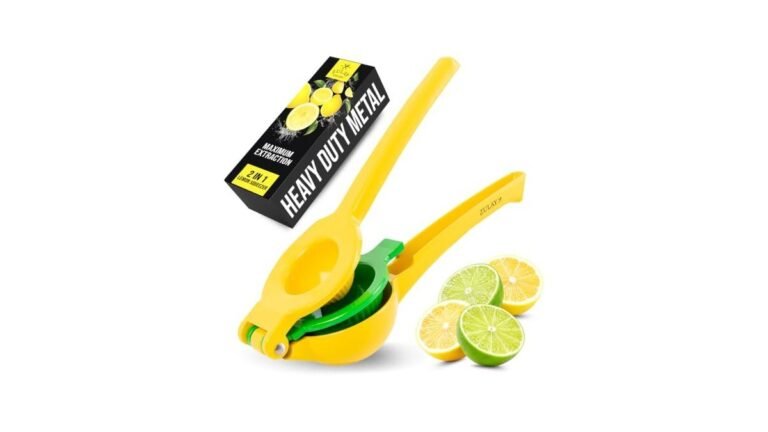
4. Chef’n FreshForce Lemon Squeezer Citrus Juicer
Best for: Cocktails, dressings, and anyone with tired hands
This is a manual hand press built specifically for lemons and small citrus like Key limes. The listing says the patented dual-gear mechanism delivers up to 20 percent more juice than standard citrus squeezers with less hand strain. That extra gear is the whole point — it multiplies your squeeze, so you get more force out of the same grip.
It’s made from nylon and stainless steel, with non-slip handles. A basket catches pulp and pits, so what comes out is clean. It’s top-rack dishwasher safe and compact enough for a kitchen drawer.
Snapshot:
- Dual-gear mechanism multiplies squeezing force
- Built for lemons and Key limes, not grapefruit
- Non-slip handles reduce pressure on hands
- Basket catches pulp and pits as you press
- Top-rack dishwasher safe
- Stores in a drawer, no counter space needed
5. KitchenAid Citrus Juice Press Squeezer
Best for: Countertop leverage without electricity
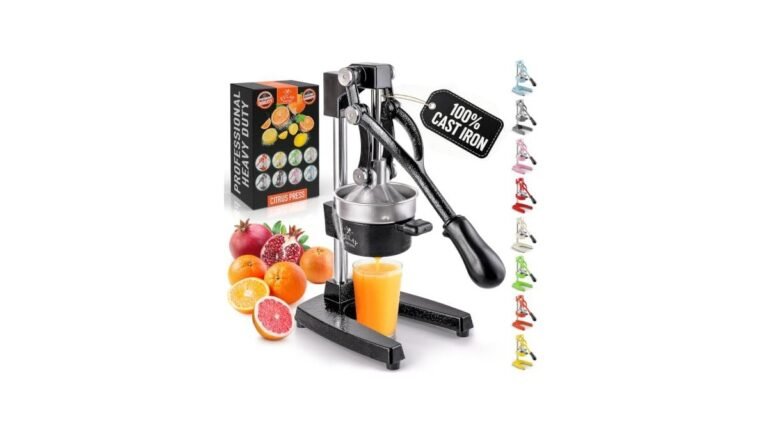
This is a manual citrus press that sits flat on the counter, so you push down with your body weight instead of your grip. The listing calls this out directly: it’s designed to sit flat for added leverage, letting you squeeze more juice out of a lemon or lime. That’s a real difference from a handheld squeezer, because the counter takes the load.
Juice stays inside the press in a hopper with an integrated spout for pouring. Inside the hopper there’s a built-in strainer that catches pulp and seeds. It’s made from aluminum and nylon, built for lemons and limes, and it’s dishwasher safe. The listing includes a hassle-free replacement and a limited warranty.
| **What it gives you | What you accept** |
|---|---|
| Countertop leverage for less hand strain | Manual, so one fruit at a time |
| Hopper keeps juice contained with a pour spout | Built for lemons and limes only |
| Built-in strainer catches pulp and seeds | Aluminum and nylon need normal care |
| Hassle-free replacement, limited warranty | Takes up counter or shelf space |
Also Worth Considering
OXO Good Grips Citrus Squeezer — A die-cast aluminum hand squeezer that strains seeds and pulp as you press. The listing positions it for lemons and limes and says it’s dishwasher safe. Worth a look if you want a handheld press with metal construction rather than plastic.
OXO Grips Small Citrus Juicer — A manual juicer with a 2.5 oz cup for measuring citrus juice and a drip-free pour spot. The listing names oranges, lemons, limes, and cocktails as its jobs. Useful if you want to measure juice as you squeeze it, without a separate cup.
Dreamfarm Fluicer Fold-Flat Citrus Juicer — A manual lemon squeezer with a pip catcher that folds flat for storage. The listing says it suits lemons and limes and measures 10 inches. Worth considering if drawer space is tight and you want something that stores thin.
The Decision Filter
Ask yourself one question first: how much juicing do you do in a single session? That answer cuts this list in half. A quick squeeze now and then points you to a hand tool. A bag at a time points you to an electric machine with a container.
Most people miss this: they buy for the biggest batch they’ll ever make and then live with the cleanup of that machine every single day. The daily job is what you’re really buying for.
If your hands tire or ache when you squeeze, a countertop press or a geared hand press takes the load off. If you’re juicing for a pitcher, you need capacity and a spout. If you want juice without electricity, a manual press covers it.
Now split the hand tools, because they aren’t one category. A squeezer strains seeds and pulp as you press. A small reamer with a cup measures as it goes, which matters when a recipe wants a set amount. A fold-flat press is the one to pick when drawer space is tight.
Then check the fruit. Lemons and limes are what the manual presses are built for. If grapefruit is in the mix, you have moved into electric territory, where the reamers handle big and small fruit.
One more thing decides it. Electric machines come with removable parts that are top rack dishwasher safe, and the pulp lands in a basket or strainer you can dump or reuse. If you won’t hand wash a press after every single lemon, buy the machine.
The Quick Checklist
- How many lemons will you juice in one go, most weeks?
- Does anyone else in the house need to use it easily?
- Will it fit the counter or drawer space you actually have?
- Do your hands hurt when you squeeze hard, repeatedly?
- Do you need to measure the juice for recipes as you go?
- What happens if you buy the wrong size for your batch?
Answer the first two together, because they point the same way. A 24 oz machine makes up to 3 cups at a time, which suits 2–3 servings. A 34 oz pitcher is the one that serves a crowd. If your household is a couple, the smaller capacity is enough. If you’re pouring for a table, take the pitcher.
The third question is about storage, and the answer is a number. The Fluicer folds completely flat, with no bulky humps or bumps in your drawers. Everything else here takes up drawer or counter room as it stands.
The fourth question decides between electric and manual. A dual-gear squeezer delivers up to 20% more juice than standard squeezers with less hand strain. If squeezing hard and repeatedly hurts, that gear mechanism is the reason to choose it.
The fifth question is measurement. A 2.5 oz cup with measurement markings is sized for measuring citrus juice for cooking and baking. If you follow recipes as you go, buy the one with the markings.
The last question has a real trade-off. Buy a machine sized for a crowd and you store it for a couple. Buy a manual press for a household that juices by the pitcher and you squeeze every glass by hand.
Three Regrets Worth Avoiding
Regret #1: Buying an electric juicer for one lemon a day. The machine needs using and washing every time, and that routine wears thin fast. The fix is to be honest about your daily volume before you choose. If your juicing is a small daily squeeze, a hand press is the tool that actually gets used.
Regret #2: Choosing a manual squeezer when you’re juicing for a crowd. Hand tools are built for lemons and limes, and a pitcher of lemonade takes a lot of fruit. The fix is to look at the container size in the listing — 32 or 34 oz tells you it’s built for batches, and a hand press doesn’t pretend to be.
Regret #3: Ignoring how much grip strength the tool demands. A squeezer without a gear mechanism puts all the force on your hand. The fix is to look for leverage — either a geared mechanism or a press that sits flat on the counter and uses your body weight instead.
If You Want This, Look for That
Here’s how to translate what you want into what you check in a listing.
| If you want… | Look for | Avoid |
|---|---|---|
| Juice without electricity | Manual press with leverage | Anything needing an outlet |
| A pitcher for a crowd | 32 oz or larger container | Small hand squeezers |
| Less hand strain | Dual-gear or countertop press | Basic single-lever squeezers |
| Easy cleanup | Top-rack dishwasher safe parts | Hand-wash-only assemblies |
| Juice for recipes | Measurement markings on container | Unmarked bowls or cups |
| Small kitchen storage | Fold-flat or drawer-size tools | Large fixed appliances |
Two rows deserve a second look, because the listing alone won’t tell you which side you’re on.
Capacity is the first. A 24 oz model makes up to 3 cups, which the maker calls ideal for 2–3 servings. If your household drinks more than that in one sitting, the pitcher is the wrong size no matter how good the motor is.
Fruit size is the second. Some juicers ship with two nesting reamers so one machine handles tiny Key limes and grapefruit alike. A single reamer covers the middle of that range and nothing at either end.
Then there’s the trade the table can’t show. The Elite Gourmet listing compares its 40W motor directly to standard 25W models. A manual press skips the outlet entirely and leans on leverage instead. Neither is better — they answer different questions.
One more: pulp control is a dial on some machines and a removable basket on others. Both let you decide how much pulp lands in the glass.
Frequently Asked Questions
Will an electric citrus juicer work on lemons as well as oranges?
Yes, and most electric models here list lemons alongside oranges, limes, and grapefruit. The reamer size matters more than the fruit type. A machine with two nesting reamers, like the Proctor Silex, handles both small Key limes and large grapefruit with the same unit. A single-reamer machine works fine on standard lemons but can struggle with very small fruit, because the fruit slips instead of staying seated on the cone.
How much juice does one lemon actually give?
How much juice a lemon gives varies by variety, ripeness, and how warm the fruit is. That’s why capacity numbers in the listings matter more than they look. A 24 oz container is about 3 cups, which the Elite Gourmet listing frames as two to three servings. So plan your batch size around how much juice you actually need.
Do I need to roll or warm lemons before juicing?
Rolling a lemon on the counter before cutting it’s a common habit, and warming it briefly can help too. Neither is required, but both make the fruit softer and easier to press. This matters most with manual squeezers, where you’re supplying all the force. With an electric juicer or a countertop press, the machine or the leverage does more of the work, so the prep step matters less.
Are the removable parts really dishwasher safe?
The listings here say top-rack dishwasher safe for the removable parts on the electric models, the Chef’n squeezer, and the KitchenAid press. The Elite Gourmet listing adds a note that hand washing is recommended for the longest product life.
What’s the difference between a reamer, a squeezer, and a press?
A reamer is the cone you twist fruit onto, and it’s what electric juicers use. A squeezer is a handheld tool that closes around a halved fruit. A press sits flat on the counter and you push down on a lever. Reamers suit volume, squeezers suit speed and storage, and presses suit leverage when your hands need help.
How do I keep pulp and seeds out of the juice?
Every product here addresses this, but in different ways. The electric models use a removable pulp basket or strainer, and the BLACK+DECKER and Proctor Silex both let you adjust how much pulp passes through. The Chef’n squeezer and the KitchenAid press have built-in baskets and strainers that catch pulp and pits as you press.
What should I check about the warranty before buying?
Warranty terms vary, and they’re worth reading before you commit. The KitchenAid listing states a hassle-free replacement plus a limited warranty, which is the most specific coverage in this group. The other listings here don’t spell out warranty length in the copy provided, so check the product page directly.
Closing
When two picks still look equal, use this tie-break: count how many lemons you’ll juice in one session, then pick the tool that makes that exact number easy. If it’s a light squeeze, go manual. If it’s more than five, go electric with a container. That single question settles almost every comparison on this page.
Next, check the parts list in the listing — what comes apart, and whether those parts are dishwasher safe. A juicer you’ll actually clean is a juicer you’ll actually use. Then check the warranty line, because it tells you how long the seller stands behind the build.
One more pass before you buy: read what each tool was built to handle. The manual squeezers here are made for lemons and limes, and one is sized for small fruit only. The electric models are the ones that name oranges and grapefruit. If your fruit is larger than a lemon, that line alone decides it.
From there, the button takes you to Amazon for today’s listing and availability.