Best Personal Blender for Frozen Fruit Smoothies: 5 Top Picks
When you want a smoothie made with frozen fruit — not just thawed, but truly frozen — most personal blenders struggle. They buzz, stall, or leave icy chunks. What separates a good one from a bad one is simple: motor power plus blade design plus how the cup locks and seals during high-speed blending. A weak motor gives up on frozen berries. A poor seal lets liquid leak when you twist or pulse. And if the cup doesn’t lock firmly into place, the blender won’t start — or worse, it starts and slips. You’re not just buying a blender. You’re buying reliability for your morning routine, portability for your gym bag, and real results with ingredients straight from the freezer. The best best Personal Blender For Frozen Fruit Smoothies doesn’t ask you to prep first — it handles whole frozen fruit, ice, and leafy greens in one go, without needing a second machine or a long wait. It’s built to last, easy to clean, and designed so you actually use it — not store it.
| # | Product | Best for | |
|---|---|---|---|
| 1 | Ninja Fit QB3001SS | Best Overall | Check Price |
| 2 | NutriBullet NBR-0601WM | Most Trusted Design | Check Price |
| 3 | Ganiza Smoothie Blender Max 1300W | Most Powerful | Check Price |
| 4 | Colarlemo 1200W Smoothie Blender | Best for Ice Crushing | Check Price |
| 5 | KOIOS 1000W BL319B | Fastest Blending | Check Price |
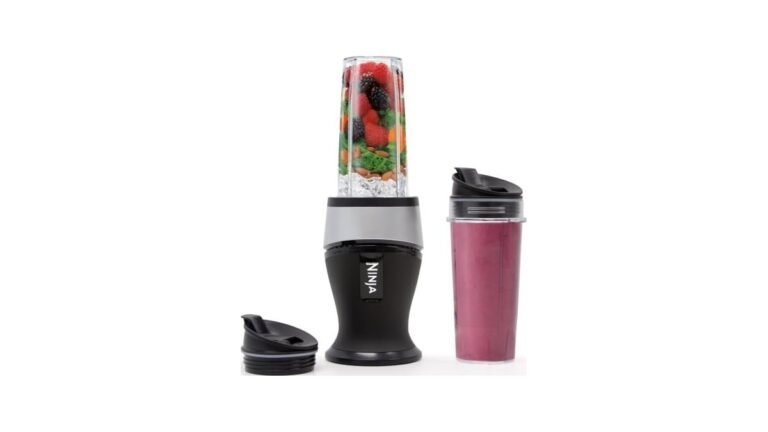
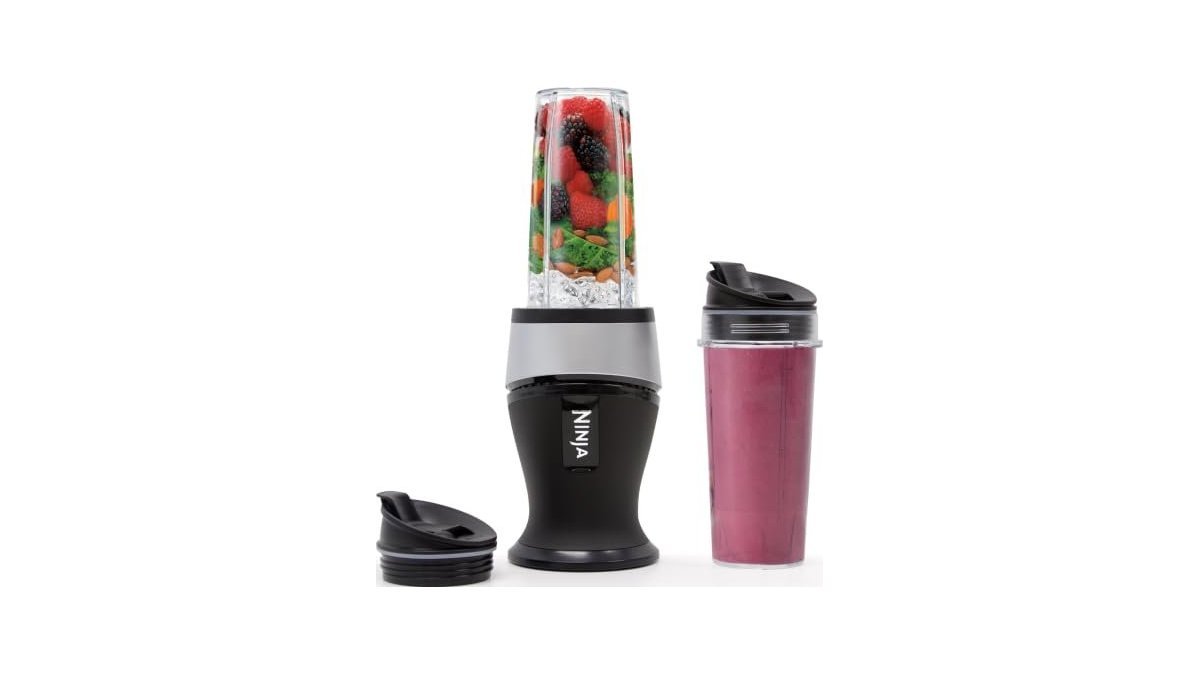
1. Ninja Fit Compact Personal Blender

Best for: People who want a compact, trusted brand that blends frozen fruit smoothly and goes straight from counter to bag.
This is a 700-watt personal blender built around two 16-ounce cups — small enough for one serving, sturdy enough for daily use. Its “PULSE TECHNOLOGY POWER” means you press and hold to blend, giving you full control over texture. That matters when frozen fruit needs more time than fresh: you can pulse longer without overheating or forcing the motor. The Pro Extractor Blades are designed to pull nutrients from whole fruits and veggies — including stems and peels — which fits well if you use apples with skin or kale stems.
All parts are BPA-free and top-rack dishwasher safe. You’ll carry your smoothie in the same cup you blended in, thanks to the spout lid. But because it only includes two cups and no larger options, you’ll need a separate pitcher or bigger blender for family meals or meal prep. The listing doesn’t mention grinding coffee beans or spices.
| What you get | What you accept |
|---|---|
| Compact footprint fits tight spaces | Only 16-oz cups — no larger servings |
| Push-to-blend control for frozen textures | No hands-free twist-start design |
| BPA-free, top-rack dishwasher safe parts | No grinding cup or extra accessories |
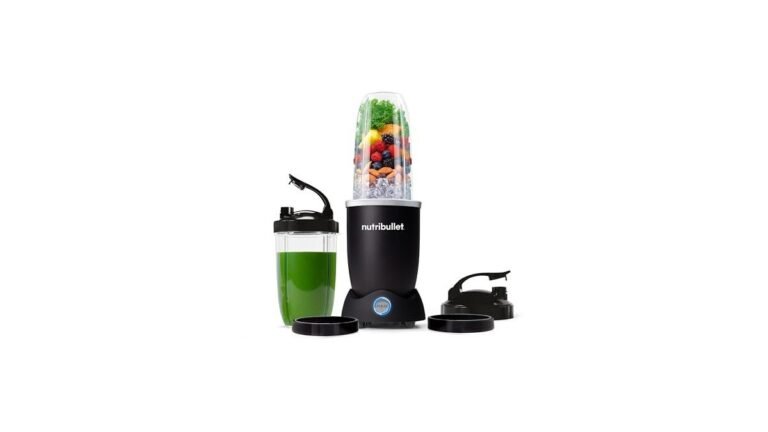
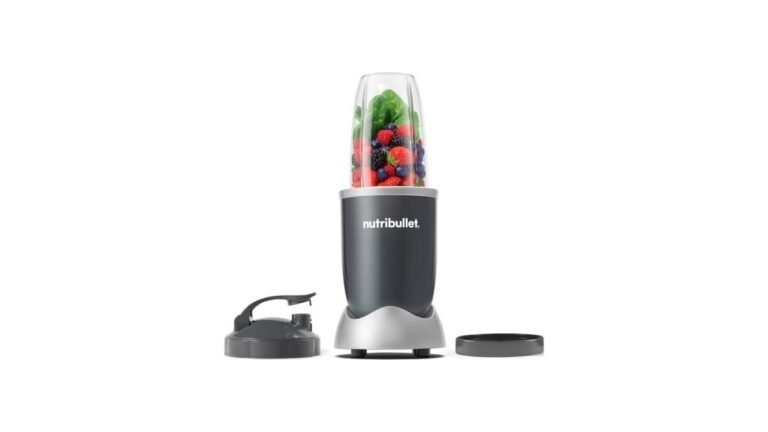
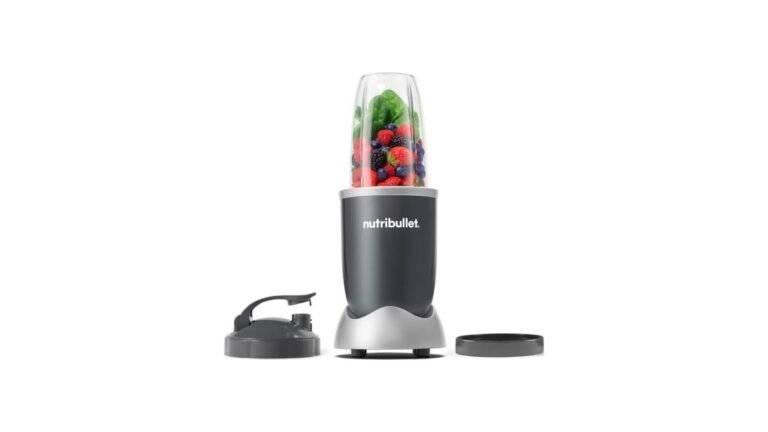
2. nutribullet® Personal Blender

Best for: First-time users who want simplicity, strong brand trust, and a clear path to healthy habits.
This is the original NutriBullet — a 700 peak watt blender built around a twist-and-go system. You add ingredients, screw the cup onto the base, and twist to start. It’s intuitive, low-friction, and built to North American electrical standards — meaning stable voltage handling and safety certifications you can rely on. The 24-oz cup gives more room than the Ninja’s 16-oz, making it easier to blend thicker mixtures like protein + frozen banana + almond butter without overflow. But the extractor blade is fixed — you can’t remove it fully for deep cleaning, and the listing says nothing about thermal protection or cooling fans.
Owning it feels familiar and fuss-free. You’ll use it daily because it’s fast to set up and clean — just rinse the blade and pop the cup in the dishwasher. The included recipe book helps beginners build confidence. But if you often blend very hard items (like whole almonds or dry coffee beans), the fixed blade and lack of stated overload protection mean longer blending times could stress the motor. It’s also not built for heavy-duty grinding — the listing calls it a “personal blender,” not a combo unit.
What goes smoothly:
- Twist-and-go operation needs no learning curve
- 24-oz cup fits thicker smoothies without spilling
- Includes recipe book and lip ring for secure grip
- Meets North American and Canadian safety standards
- Simple disassembly: twist off blade, rinse, wash
What you have to accept:
- Fixed blade — not fully detachable for deep cleaning
- No mention of thermal or overload protection
- No grinding cup or extra accessories beyond basics
3. Ganiza Smoothie Blender Max 1300W

Best for: People who blend large portions, freeze ahead, or need one machine for smoothies and grinding.
This model has a 1300-watt motor paired with two 37-oz cups. Its “BLENDER & GRINDER COMBO” claim is backed by a thickened 6-leaf stainless steel blade and a separate 23-oz grinding cup. You can crush ice, grind coffee beans, make spice powders, or blend frozen fruit — all with one base.
Owning it means fewer machines on your counter and more flexibility: you can grind oats for breakfast and blend a post-workout shake without swapping bases. The 13-piece set includes cleaning tools and rings, so upkeep stays simple. But the instruction tip warns: “food volume shouldn’t exceed MAX” and “ratio of food to liquid should be at most 1:1.” That means you must measure carefully — especially with dense frozen fruit — or risk stalling. It’s powerful, but less forgiving of overfilling than smaller units.
Snapshot:
- Blends large batches — ideal for camping, travel, or sharing
- Handles both smoothies and dry grinding (nuts, coffee, spices)
- Built-in cooling fan and thermal shut-off for safer long runs
- Cups are BPA-free and top-rack dishwasher safe
- Comes with cleaning brush and detailed recipe guide
- Requires attention to fill level and liquid ratio
4. Colarlemo 1200W Smoothie Blender

Best for: People who crush ice daily and want speed, stability, and multiple cup sizes.
This blender spins at 25,000 RPM — faster than the Ninja or NutriBullet — thanks to its 1200-watt motor and upgraded 6-leaf stainless steel blades. The non-slip base has four silicone feet, and the side + bottom ventilation keeps heat down during repeated use. With three cup sizes (23 oz, 32 oz, 37 oz), you can scale from a single shot of cold-pressed juice to a full post-workout shake. Each cup has clear measurement lines, helping you balance frozen fruit and liquid precisely. But the listing says if the motor stops, you must unplug and cool it for 10–20 minutes — meaning it’s built for bursts, not marathon blending sessions.
Owning it means reliable ice crushing every time, no pre-chopping needed. You’ll appreciate the flat lids for storage and the to-go lid for portability. Cleaning is simple: rinse or self-clean with water + soap. It’s excellent for frozen drinks, but not clearly built for dry grinding — no grinding cup or mention of spice/nut use.
| What you get | What you accept |
|---|---|
| Three cup sizes — flexible for different needs | Motor requires manual cool-down if stalled |
| 25,000 RPM speed for fast ice crushing | No thermal protection stated — just ventilation |
| Clear measurement lines on all cups | No grinding cup or dry-blending accessories |
5. KOIOS 1000W Smoothie Blender

Best for: People who want fast, hands-free blending and a full kit for home, gym, or travel.
This blender uses a “Press-Twist Design”: tighten the cup onto the base, rotate clockwise, and it starts — no holding, no pulsing. Its 1000W pure copper motor hits 30,000 RPM, and the asymmetric 4-blade assembly is detachable for full cleaning. The 15-in-1 set includes three cups (two 24 oz, one 17 oz), leak-proof lids, sealing rings, and a cleaning brush — everything you’d need for daily use or gifting. Smart thermal and overload protection plus a bottom cooling fan suggest solid engineering for frequent use.
Owning it means consistency: it starts the same way every time, stays put with suction pads, and cleans easily. You’ll use the smaller cup for shots or kids’ portions, the larger ones for standard smoothies. KOIOS BL319B includes two 24-oz cups and one 17-oz cup; Ganiza Smoothie Blender Max includes two 37-oz cups and one 23-oz grinding cup. It’s built for speed and ease, not bulk.
Who it fits
People who value hands-free operation, clean design, and strong warranty support. Great for offices, gyms, or small kitchens where space and simplicity matter. The detachable blade and multiple lids suit busy routines.
Who should pass
Those who need large-capacity blending (37 oz+) or dry grinding (coffee, nuts, spices). Also not ideal if you prefer push-to-pulse control — this one starts and runs until you stop it.
The Decision Filter
Cup size determines practicality: if you usually make one 16–24 oz smoothie, smaller models save space and weight; if you blend for two or prep ahead, larger cups reduce cleanup. Motor performance depends on more than wattage — blade shape, cup seal, and thermal safety matter just as much.
The Thirty-Second Checklist
- Do you drink smoothies daily — or only 2–3 times a week?
- Will you carry your smoothie in the same cup you blend in, or pour it out?
- Do you live in a small space where countertop size matters?
- Do you also want to grind coffee beans, nuts, or spices — not just blend?
- Are you comfortable cleaning blades by hand, or do you prefer dishwasher-safe parts only?
- Will other people (kids, roommates, partners) use it — and do they need simple controls?
Three Regrets Worth Avoiding
Regret #1: Buying only for wattage and ending up with icy chunks. Some blenders state specific frozen-ingredient performance — like ‘pulverizes frozen ingredients’ or ‘crushes ice’ — while others do not. The fix: choose a model with both high RPM and a proven frozen-fruit claim — like the Ninja’s “BLENDS FROZEN INGREDIENTS” or Ganiza’s “instantly crush ice, whole nuts, and frozen fruits.” Don’t assume power equals performance.
Regret #2: Choosing a small cup and realizing you need more volume after the first week. Many users start with 16 oz, then find it too little for full meals or post-workout recovery. The fix: pick a model with at least one 24-oz cup — or better, two sizes — so you can scale up without buying a second blender.
Regret #3: Overlooking cleaning steps and giving up after three uses. If the blade isn’t fully detachable or the cup shape traps residue, daily cleaning becomes a chore. The fix: choose a model where all parts are top-rack dishwasher safe and the blade comes off completely — like the KOIOS or Ganiza — so rinsing and loading takes under 30 seconds.
What to look for in a personal blender for frozen fruit smoothies
| If you want… | Look for | Avoid |
|---|---|---|
| Smooth frozen fruit with no chunks | PULSE or PRESS-TWIST control + “crushes ice/frozen ingredients” claim | Models that only say “blends fruits” — not frozen |
| One machine for smoothies and grinding | Separate grinding cup + “grinder combo” or “dry grinding” in listing | Units with only one cup type and no grinding mention |
| Hands-free blending every time | Twist-start or auto-lock base + anti-slip feet | Push-and-hold only, no stability features |
| Easy cleanup for busy mornings | Fully detachable blade + top-rack dishwasher safe all parts | Fixed blades or base parts that can’t go in dishwasher |
| Long-term reliability | Thermal protection + cooling fan + 2-year warranty | No safety features named, or warranty under 1 year |
The tie-breaker is simple: if two blenders seem equal, pick the one with the clearest frozen-fruit claim and the most complete cleanup path. “Crushes ice” is good. “Pulverizes frozen ingredients” is better. “Detachable blade + dishwasher safe” beats “rinses easily” — because real life means tired hands and full sinks. Next, open the product page and scroll to the “What’s Included” list. Count the pieces — especially cups, lids, and seals. More included parts mean less chance you’ll need to order extras later. Then read the safety notes: if it says “unplug and cool for 20 minutes” or “don’t exceed MAX line,” that’s honest — and tells you how it’s meant to be used. That’s your real-world test.
Frequently Asked Questions
Can these blenders handle frozen fruit straight from the freezer — no thawing needed?
Yes — all five models state they blend frozen fruit, ice, or both. Ganiza’s listing specifies a 1:1 food-to-liquid ratio and warns not to exceed the MAX line.
Will the cups fit in my car cup holder or standard gym bag?
Most 16-oz and 24-oz cups will fit — the Ninja (16 oz), NutriBullet (24 oz), and KOIOS (24 oz and 17 oz) all list “to-go” or “portable” use. The Ganiza’s 37-oz cups are taller and wider — they may not fit in narrow holders or slim bags. Check cup height and diameter in the product images or specs before buying, since cup holder sizes vary.
How loud are these personal blenders during use?
The listings don’t state decibel levels or noise ratings. None mention quiet operation, sound insulation, or low-noise motors. If noise matters, look for user reviews mentioning sound — but know those are subjective and not verified.
Do I need to buy extra blades or cups later?
All five include at least two cups and one blade assembly; Ganiza and KOIOS add extra sealing rings and lids, while Ninja and NutriBullet include spout or to-go lids. Blades are stainless steel, but daily blending with hard items may dull them in 1–2 years.
Are these safe to use with hot liquids or for baby food?
The listings don’t state hot-liquid ratings — most personal blenders are designed for cold or room-temperature use only. For baby food, all state BPA-free cups and food-grade plastic, and the Colarlemo and KOIOS explicitly list “baby food” as a use case. Always follow the user manual’s temperature and fill-level guidance.
Conclusion
Pick the blender that feels right in your hand and fits your routine — then grab some frozen berries, toss them in, and hit blend. You’ll be sipping a smooth, frosty drink before you know it. No prep, no fuss, no second-guessing. Just keep your freezer stocked and enjoy the ease every single morning.