Why Is My Oster Blender Not Blending? Causes and Fixes
Your Oster blender isn’t blending because the blade assembly isn’t turning freely, and that’s the cause most of the time — usually a worn drive coupling or a jar that isn’t seated all the way down. The fastest check takes about ten seconds: fill the jar with one cup of water, press the lowest speed, and listen.
If you hear the motor running but the blades sit still, the problem is between the motor and the blade. If you hear nothing at all, the problem is power or the motor itself. Those two sounds split every cause below.
What usually stops an Oster blender from blending
Ranked by how often each one turns out to be the real cause, here’s the full list. Work down it in order — the top three cover most blenders that come in for this complaint.
| Cause | How common | How to confirm it | Fix it yourself? |
|---|---|---|---|
| Jar not seated on the base | Very common | Jar rocks or lifts slightly | Yes |
| Worn drive coupling | Very common | Motor spins, blades don’t | Yes, with care |
| Blades seized or dull | Common | Blades won’t turn by hand | Yes |
| Wrong speed for the load | Common | Thin liquid blends, thick food stalls | Yes |
| Overfilled jar | Sometimes | Food packed above the max line | Yes |
| Lid or filler cap loose | Sometimes | Blender cuts out mid-run | Yes |
| Motor or switch failure | Uncommon | No sound, no movement, no light | No |
The order matters. A jar that’s a quarter-inch off its seat behaves exactly like a dead motor from across the kitchen, and people replace blenders over it every day. How often you need to clean or service the blade assembly depends on how much you use the blender, so check your owner’s manual for the schedule that applies to your model.
Start with the jar. Press down on it and twist until it stops moving. If it rocks, that was your problem, and you just fixed it for nothing.
If the jar is solid and the motor still runs, look at the blades. Unplug the blender first. Turn them by hand. They should move with a little resistance. If they won’t budge, something is jammed under them or the bearings are gone.
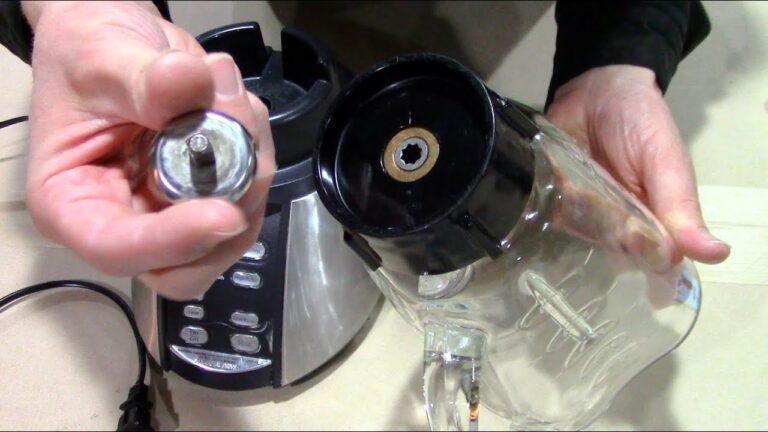
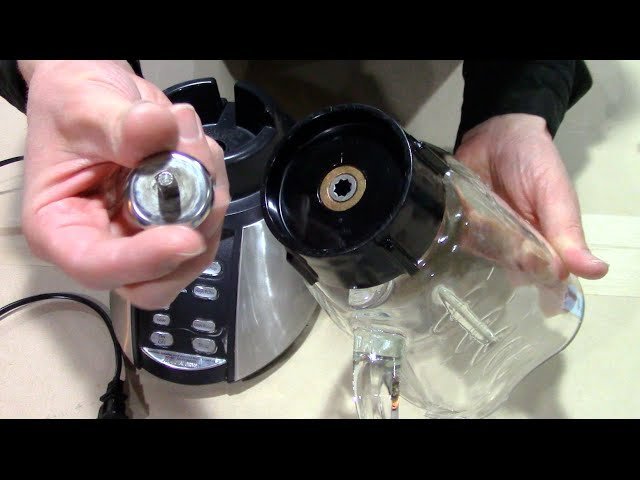
The drive coupling is the one people miss. It’s the rubber or plastic piece where the jar meets the motor. Pull the jar off and look at it. Worn teeth, a crack, or a smooth worn center means the motor spins and nothing reaches the blades.
One caution on that repair: the coupling is often held by a reverse thread. Turning it the normal way tightens it and can crack the housing. Check your model’s manual before you put a wrench on it.
If the motor is silent, with no hum and no light, stop. That’s a switch or motor fault, and it isn’t a home repair.
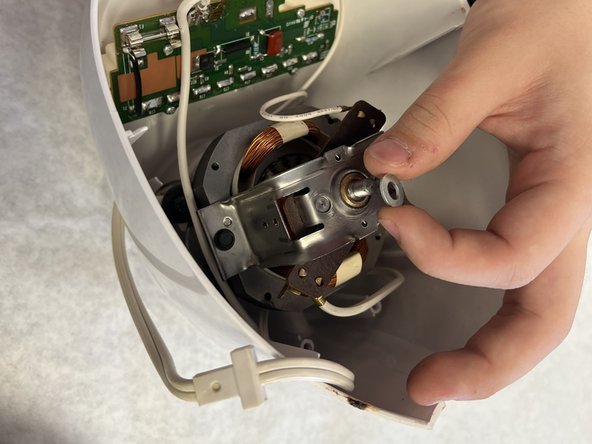
Safety: Inside a mains-powered machine, the parts behind the outer cover can hold a dangerous electrical charge even after it has been unplugged — that’s why they sit behind a cover. Opening the housing, or testing or replacing anything behind it, is a job for a qualified technician, never a home repair.
The jar isn’t locked onto the base
An Oster jar has to drop straight down and twist until it stops, and if it’s sitting a little high, the base never engages the coupling. The motor runs, the sound is normal, and the blades don’t move. That’s the classic “it’s running but nothing’s happening” symptom.
Here’s the confirming test. Take the jar off completely, look at the bottom of the jar and the top of the base, and check for food stuck in either one. Set the jar back on, press down gently, and turn it clockwise until it won’t turn any more. Most Oster models lock with a short twist of about an inch. If the jar still rocks when you let go, it isn’t seated.
The fix costs you nothing but thirty seconds. Wipe the mating surfaces with a damp cloth, dry them, and reseat the jar. Run one cup of water on the lowest speed to confirm.
Two things trip people up here. First, a jar with a wet or greasy base can feel locked when it isn’t — dry it. Second, on models with a separate blade assembly that screws into the jar collar, the collar itself can loosen. Hand-tighten it; don’t force it with a tool, because a cracked collar means a new jar.
If the jar seats firmly, the coupling looks clean, and the blades still don’t turn, move to the next cause. This one is free to rule out, so always rule it out first.
The drive coupling has worn smooth
The drive coupling is the rubber or plastic piece that connects the motor shaft to the blade assembly, and it’s designed to fail before anything expensive does. When it wears, its teeth go smooth, it spins against nothing, and you get the loudest, most frustrating version of this problem: a motor that sounds perfectly healthy and blades that never move.
You tell this apart from a seating problem by feel. A jar that isn’t seated is loose in your hand. A worn coupling sits tight and solid — it just doesn’t grip.
The confirming test: unplug the blender, take the jar off, and look at the coupling on the base. If the teeth are rounded, shiny, or packed with black dust, that’s your answer. Compare it to the photos in your model’s manual, which Oster publishes on its own site.
Replacing a coupling is a genuine do-it-yourself job on most Oster models. It’s a push-on part on the base, and you don’t open the housing or touch anything electrical. Buy the coupling listed for your exact model number — the number is on a label under the base — because sizes differ between Oster lines. Time: about ten minutes. Cost: a small part, far less than a new blender.
If your model’s coupling is inside the base rather than on top of it, stop there. That’s a technician’s job, not yours.
The blades are seized, dull, or jammed
Blades that won’t spin by hand are a different fault from a coupling that spins freely. Unplug the blender, then try to turn the blades with a spoon handle. They should move with light resistance. If they won’t budge, something is jammed in the shaft or the bearing has seized.
Food is the usual culprit. Fibrous things — celery strings, pineapple core, thick stems — wrap around the shaft under the blade and dry there. Soak the blade assembly in warm soapy water for fifteen minutes, then work the blades back and forth by hand. Never put your fingers near the blade edge to test it; use a utensil.
Dull blades cause a subtler problem. The motor runs, the blades turn, and the food just sits there or spins in a ring without breaking down. Oster blades aren’t sold as a sharpening item, so a genuinely dull set means a new blade assembly or a new jar, depending on your model.
One more thing: ice and frozen fruit need a little liquid in the jar, about half a cup, or the blades spin in an air pocket and never catch. That’s not a fault. Add the liquid and pulse.
Less common reasons it won’t blend
These come up far less often, but each has one clear clue that points to it.
- Overfilled jar. Food packed above the max line can’t circulate, so the blades spin in a hollow space — fill to the line, never past it.
- Loose lid or filler cap. Many Oster models cut the motor when the lid isn’t locked; if it stops the moment you let go, look here.
- Wrong speed for the load. Starting thick mixtures on the highest speed stalls them; start low, then turn up.
- A tripped outlet or a bad cord. If there’s no sound at all, test the blender on another outlet before you blame the blender.
- A failing motor or switch. No sound, no light, no movement on a known-good outlet means the motor or the switch has failed.
Two of these look identical from the outside, and the order you test them in saves you a wasted trip. A dead outlet and a dead motor both give you silence. Plug a lamp into the same outlet. If the lamp lights, the outlet is fine and the fault is in the blender. If it doesn’t, reset the breaker or try another outlet before you touch the blender at all.
The overfilled jar and the wrong speed also get confused, because both leave you with unchopped food and a motor that sounds like it’s straining. The difference is what happens when you stop. An overfilled jar stalls every time, at every speed, until you remove some food. A wrong-speed stall clears the moment you drop to the lowest setting and pulse.
That last one is where your own checks end. Motor, switch, and internal wiring work means opening the housing, and a blender’s internal capacitor can hold a dangerous charge even when it’s unplugged. Don’t open it. Take it to an authorized Oster service center or a small-appliance repair shop, and get a quote before you agree to anything.
What fixing an Oster blender really takes
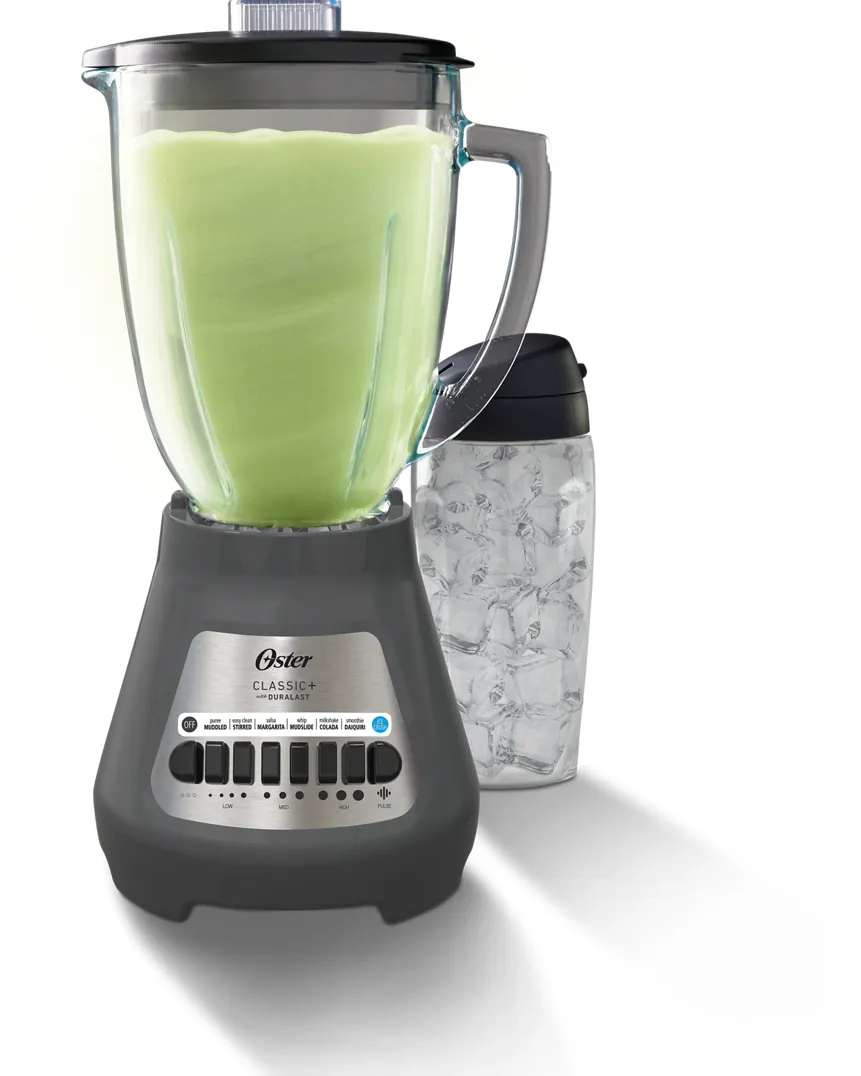
Reseating the jar costs nothing and takes half a minute. That’s the fix for the most common cause, and it’s worth doing before you spend anything at all.
A new drive coupling is the next step. It’s a small part — think of it as costing about the same as a couple of coffees, not a fraction of a new blender — and it’s a ten-minute job with no tools on most models. The price depends on your model number and where you buy it, so check Oster’s own parts page or the label under your base before you order.
A new blade assembly or jar is the middle option. On most Oster models the jar and blade come as one unit, so you’re replacing both. That’s a bigger spend than a coupling but still well under a new machine. Confirm the part number against your model before ordering — Oster lists them by model.
A motor or switch repair is the point where the math changes. A shop will charge for the diagnosis plus the part, and on a basic Oster that can approach the price of a new one.
If you’re not sure which part you need, the model number under the base is the one thing that settles it. Put that number into Oster’s parts lookup and you’ll see exactly what’s available for your machine.
Frequently asked questions
Why is my Oster blender running but not spinning?
The drive coupling has worn smooth, or the jar isn’t seated all the way down. Take the jar off and look at the coupling on the base — rounded, shiny teeth mean it’s worn and needs replacing. If the teeth look sharp and clean, reseat the jar with a firm clockwise twist and test again with one cup of water.
Can I fix an Oster blender myself?
Yes, for the common causes. Reseating the jar, replacing a push-on drive coupling, and cleaning a jammed blade assembly are all safe home jobs. Anything that means opening the base — the motor, the switch, or internal wiring — is not. A capacitor inside can hold a dangerous charge even when the blender is unplugged, so that work belongs to a repair shop.
How long does a drive coupling replacement take?
About ten minutes on most Oster models, assuming the coupling sits on top of the base and you already have the right part. Add a few days if you have to order it, since most people buy couplings online rather than in a store. If your model’s coupling is inside the housing, it’s a shop job and takes longer.
Is it safe to use a blender with a worn coupling?
No — stop using it. A worn coupling lets the motor spin without turning the blades, so the blender does no useful work and the coupling wears further. It’s also designed as the weak link that protects the motor, so running it worn can turn a cheap part into an expensive repair. Replace the coupling before you blend again.
What happens if I overfill my Oster blender?
The blades spin in a hollow pocket and the food never circulates, so nothing breaks down no matter how long you run it. It can also push liquid past the lid and onto the base. Fill to the max line marked on the jar, and for thick mixtures stay a little below it. Add liquid rather than more solid food.
How do I find the right part for my Oster blender?
Read the model number on the label under the base, then look it up on Oster’s own parts page. Oster lists couplings, jars, and blade assemblies by model, and the sizes aren’t interchangeable between lines. If the label is worn, search your model’s manual on Oster’s site using the blender’s name and approximate year.
Does it matter which speed I start on?
Yes, especially for thick mixtures. Starting a heavy load on the highest speed stalls the blades and can wear the coupling faster. Start on the lowest setting, let the food break up, then turn the speed up. For ice and frozen fruit, add about half a cup of liquid first so the blades have something to pull.
When should I replace the blender instead of repairing it?
Repair is usually the better call on a basic Oster. Couplings, jars, and blade assemblies are cheap parts and quick jobs. Only a failed motor or switch, where the diagnosis plus the part can approach the price of a new one, makes replacement worth considering.
Conclusion
If none of that gets the blades spinning again, it’s probably time to replace the drive coupling or the blade assembly itself — both are cheap and easy to swap out. You’ll find the exact part number stamped on the bottom of your jar, so snap a photo before you order.