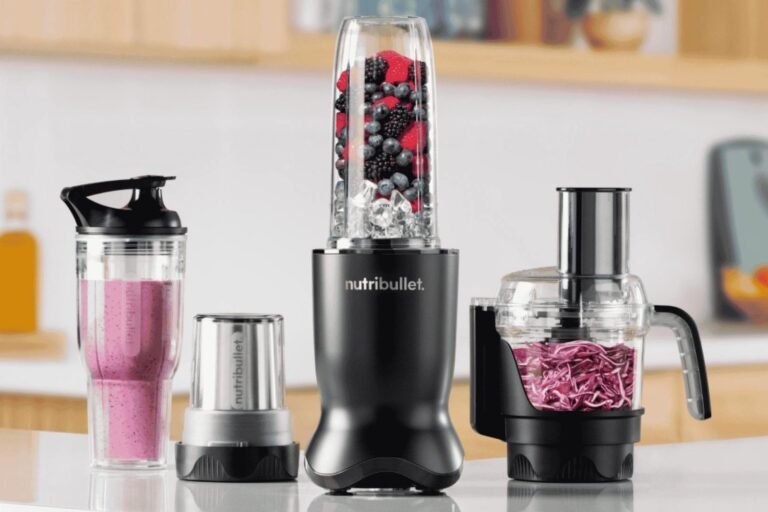
How Long to Blend in a Nutribullet: Times by Ingredient
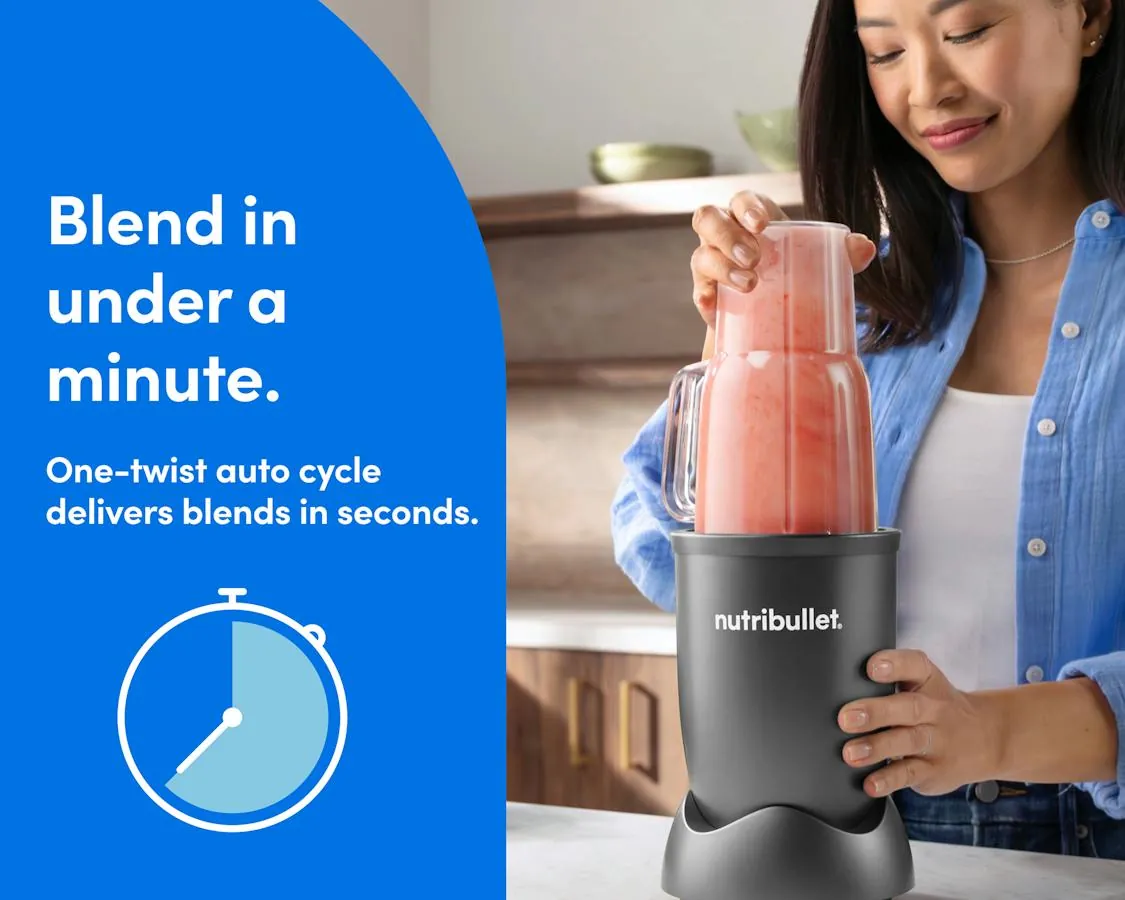
Most blends in a Nutribullet take 30 to 60 seconds. Soft fruit like bananas and berries needs about 30 seconds; frozen fruit, ice and leafy greens usually need 45 to 60 seconds. You rarely need more than a minute.
Three things change that number: what you put in the cup, how full it is, and which Nutribullet model you own. The rest of this page covers each one, plus the steps, the mistakes and the signs that tell you to stop.
Who this page is actually for
Anyone who owns a Nutribullet and wants to stop guessing at the timer. That’s the main reader here. You’ve used the machine a few times, you’ve had a smoothie come out lumpy or warm, and you want a number you can trust instead of pressing the button and hoping.
A second reader is shopping for one. You’ve seen the blending demos, you don’t own the machine yet, and you want to know if a 30-second blend is realistic before you spend money. This page helps you a little, but a buying guide serves you better.
A third reader already blends daily and wants to fine-tune: less heat, smoother texture, longer blade life. You’ll get the most out of the sections on technique and on what goes wrong.
This page assumes you own a Nutribullet with a blade base and a cup, and that you’re blending food, not ice alone. If you own a full-size countertop blender, the timings here run short for you — those machines have bigger jars and slower blades, and they usually need longer.
What decides your blend time
Four things move the number up or down. Get these right and 45 seconds does the job.
What’s in the cup. Frozen strawberries, ice cubes and raw kale are the slow ones. A cup of frozen fruit can take the full 60 seconds, while a banana and milk blend is done in 30. The test is simple: shake the cup before you blend. If it rattles, you’ve got hard pieces that need the longer time.
How full the cup is. Nutribullet’s own guidance says to fill the cup no higher than the MAX line. Overfilling is the mistake people make most often, and it costs them. The blades can’t pull the food down, so you get a warm, half-blended mess and you end up running it twice as long as you needed.
The model. A 600-watt Nutribullet and a 1200-watt Nutribullet Pro don’t behave the same. The higher-wattage motor pulls frozen food down faster, so shave 10 to 15 seconds off the times above. Your manual lists your model’s wattage — check the sticker on the base or the spec page on Nutribullet’s own site.
The order you load it. Liquid first, then soft items, then leafy greens, then frozen fruit and ice on top. Load it the other way and the blades sit in a pocket of air, and you’ll stand there pulsing for two minutes.
Step by step: blending a Nutribullet properly
Fill the cup with liquid first. Pour in 1 cup of milk, water or juice for a standard 24-ounce cup. Stop when the liquid reaches about a third of the cup. Sign it worked: the liquid sits at the bottom with nothing floating above it yet.
Add soft ingredients. Drop in banana, yogurt, nut butter or soft fruit — about 1 cup, loosely packed. Don’t press them down. Sign it worked: the cup is now roughly half full.
Add leafy greens if you’re using them. Push in 1 to 2 handfuls of spinach or kale, no more. Sign it worked: the greens sit above the soft layer, not jammed against the blades.
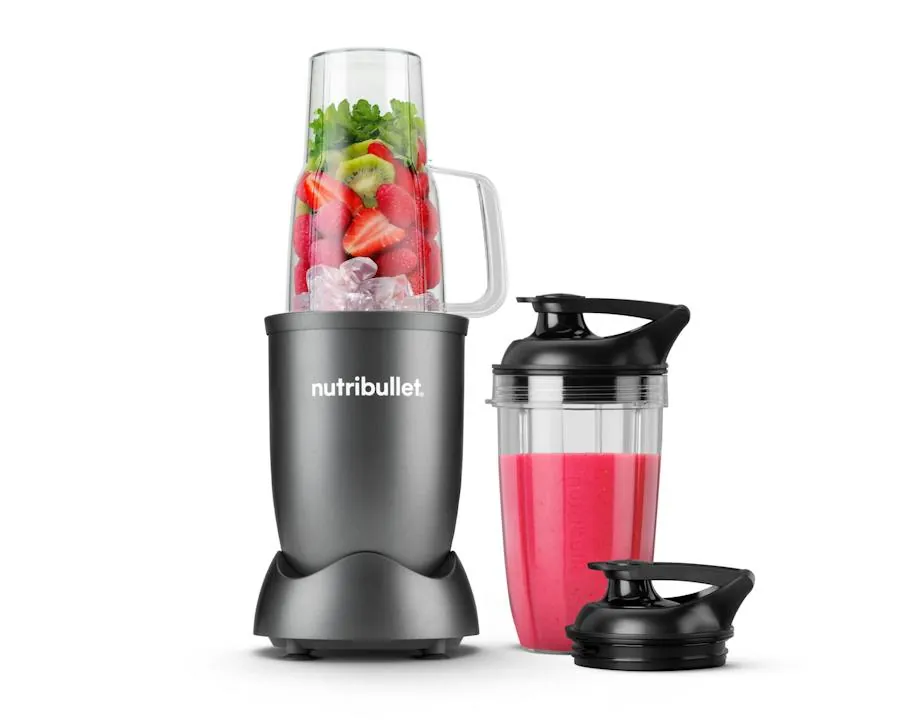
Add frozen fruit or ice last. Use 1 cup of frozen fruit, or 4 to 6 ice cubes, and keep everything below the MAX line. Sign it worked: you can still see the MAX line above the food.
Twist the blade base on until it locks. Turn it clockwise until you feel it stop. Sign it worked: the base won’t move when you press the cup down.
Press and hold for 30 seconds for soft mixes. Hold the cup down and count. Sign it worked: the sound goes from chunky to steady, and the mixture spins in a smooth ring.
Run 45 to 60 seconds for frozen or leafy mixes. Release and press again if your model needs it. Sign it worked: no chunks are visible through the cup wall.
Stop the moment the sound changes to a high whine. That’s the blades spinning free with nothing left to cut. Sign it worked: you stopped before the cup got warm.
Twist the cup off and check the texture. Tip it and look for lumps at the bottom. Sign it worked: it pours in one smooth stream.
Pulse 5 seconds at a time if lumps remain. Never restart a full 60-second cycle. Sign it worked: two or three pulses clear it.
The judgement call is knowing when to stop rather than when to start. A blend that looks slightly grainy but moves freely is finished. Running it another 30 seconds won’t fix the texture — it just warms the drink and dulls the blades faster.
Blend times for common recipes
Here’s how the main drink types compare. Times assume a standard 24-ounce cup and a 600-watt base; drop them by 10 to 15 seconds on a higher-wattage model.
| What you’re making | What to do | Time it takes | What to watch for |
|---|---|---|---|
| Banana and milk smoothie | Blend 30 seconds | About 30 seconds | Don’t overfill past MAX |
| Berry smoothie, fresh fruit | Blend 40 seconds | 35 to 45 seconds | Seeds stay grainy |
| Berry smoothie, frozen fruit | Blend 60 seconds | 55 to 60 seconds | Add ¼ cup more liquid |
| Green smoothie with kale | Blend 60 seconds | 50 to 60 seconds | Stems left whole |
| Protein shake with ice | Pulse, then blend | 45 to 60 seconds | Ice needs liquid around it |
| Nut butter or dates | Pulse in short bursts | 60 seconds or more | Stop before the cup warms |
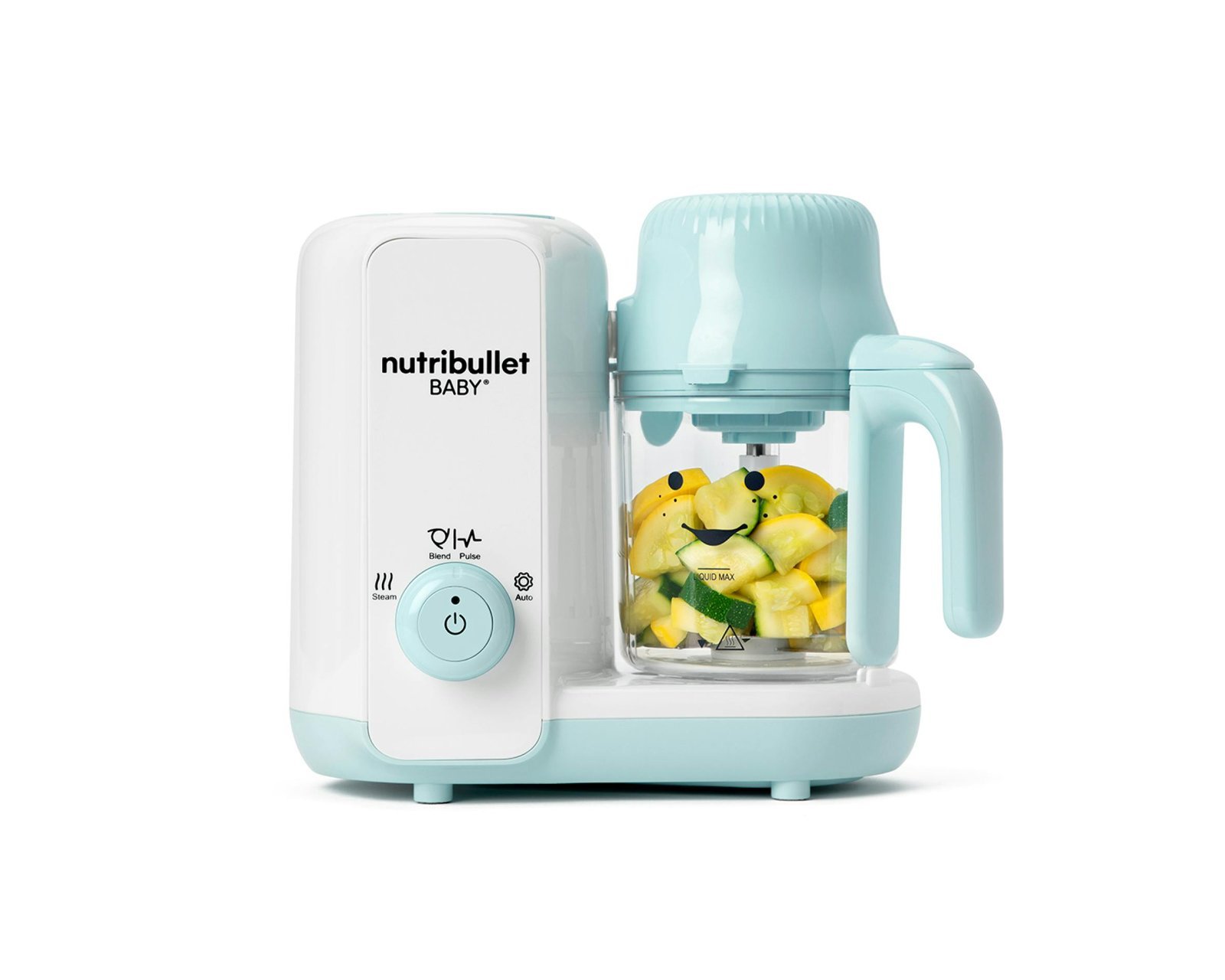
| Baby food or puree | Blend, then check | 45 to 60 seconds | Texture must be smooth |
What experienced users do differently
The gap between a smooth blend and a lumpy one is almost never the machine. It’s what happens before the button goes down.
They load in layers, not all at once
Dumping everything in together is what causes most bad blends. Liquid goes in first because the blades need something to pull the food into. Frozen items go on top because gravity does half the work for you.
Experienced users also cut hard items small. A whole frozen strawberry is a rock; halved, it blends in half the time. And they leave the cup on the base for a few seconds after blending, so the last of the mixture drains down instead of splashing when they lift it.
They stop early and check
The habit that separates a good result from a poor one is stopping at 30 seconds to look, then adding time only if you need it. Running a full minute on a soft smoothie doesn’t make it smoother — it makes it warm, and warm smoothies taste flat.
They also leave the machine alone when it’s struggling. If the blades stall, the fix is more liquid or a shake of the cup, not another 30 seconds of pressing. Forcing it just heats the motor.
What goes wrong, and what to do
Most problems have one cause, and most fixes take under a minute.
| What you notice | What it usually means | What to do first | How to stop it happening again |
|---|---|---|---|
| Lumps at the bottom | Cup was overfilled | Remove a third, blend 15 seconds | Keep below the MAX line |
| Drink comes out warm | Blended far too long | Stop, add cold liquid | Cap blends at 60 seconds |
| Blades won’t spin | Too much frozen food | Add ¼ cup liquid, shake | Load liquid first, always |
| Mixture stuck on the walls | Not enough liquid | Scrape down, pulse 5 seconds | Use 1 cup of liquid minimum |
| Leaking from the base | Gasket missing or loose | Check the rubber ring | Rinse the gasket after each use |
| Burning smell from the base | Motor overheating | Stop and let it cool | Blend in shorter bursts |
| Gritty texture | Seeds or skin left in | Strain, or blend 15 more seconds | Remove seeds before blending |
The rules that apply here
Nutribullet’s own user guide sets the limits that matter. It says never to fill the cup past the MAX line, and never to run the machine continuously for more than 1 minute at a time. If you need longer, you let it rest before you press again.
The guide also says not to blend hot liquids in a sealed cup — pressure builds and the lid can come off. Let hot food cool first. And don’t put the cup or blade base in the dishwasher unless your manual says they’re dishwasher-safe; some models aren’t.
Your model’s exact limits are in the booklet that came in the box, and the same guide is on Nutribullet’s official site under your model name. Read that page for your machine, not this one — wattage and cup sizes differ between models.
What this really costs you
The money side is small. You already own the machine, so a blend costs you the price of the ingredients and a few cents of electricity. Running a 600-watt motor for 60 seconds uses very little power, and even daily use adds only a small amount to a monthly bill.
The real cost is time and wear. A blend takes 30 to 60 seconds, plus about 2 minutes to load and rinse the cup. That’s under 5 minutes start to finish.
What pushes the cost up is over-blending. Running the motor longer than it needs shortens blade life, and replacement blade bases and cups cost money — check Nutribullet’s site or your retailer for today’s price, since it changes. Overfilling costs you a wasted batch of ingredients. Both are avoidable with a timer.
Keeping the machine right afterwards
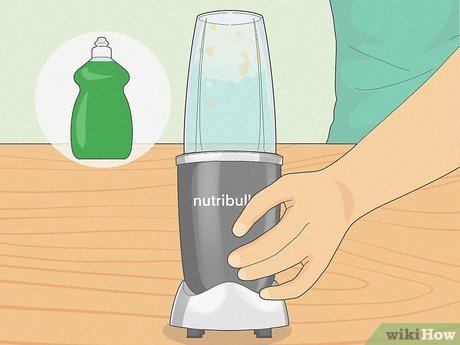
Rinse the cup and blade base with warm water within a few minutes of blending. Dried smoothie sets like glue on the gasket, and that’s what causes leaks later.
The sign your machine needs attention is a change in sound — a rattle, a grind, or a motor that sounds slower than it used to. A dull blade also leaves chunks where it used to blend clean, and that’s your cue to replace the blade base rather than blend longer.
If a blend goes wrong, you don’t start over. Add liquid, pulse in 5-second bursts, and check. Most fixes take under 30 seconds.
When a Nutribullet isn’t the right tool
A Nutribullet is the wrong choice if you’re blending for four or more people at once. The cups are small, so you’ll run batch after batch. A full-size blender with a 64-ounce jar handles that in one go.
It’s also wrong for hot soup straight from the pot. Sealed cups plus hot liquid equals pressure, and Nutribullet’s own guide warns against it. Use a blender with a vented lid, or let the soup cool first.
And it’s wrong for crushing ice on its own, or for grinding coffee and dry spices in most models. Those jobs need a machine built for them. If you’re not sure whether your model is rated for ice, check your manual before you try — the answer differs by model.
Frequently asked questions
How long should you blend a Nutribullet?
30 to 60 seconds for most recipes. Soft fruit and milk take about 30 seconds; frozen fruit, ice and leafy greens take 45 to 60. Don’t run it continuously past 1 minute — Nutribullet’s own guide sets that limit, and you should let the motor rest before pressing again.
Can you blend a Nutribullet for too long?
Yes. Past 60 seconds the friction warms the drink, and warm smoothies taste flat. Long runs also wear the blade and heat the motor. If your blend isn’t smooth at 60 seconds, the problem is the load, not the time — add liquid or remove some food.
Why is my Nutribullet not blending frozen fruit?
Usually the cup is overfilled or there’s too little liquid. Frozen fruit needs liquid around it so the blades can pull it down. Add ¼ cup of water or milk, shake the cup, and blend in 15-second bursts instead of one long run.
How long does a Nutribullet take to blend ice?
About 45 to 60 seconds, and only with liquid in the cup. Ice alone, with nothing around it, just spins. Use 4 to 6 cubes with at least 1 cup of liquid, and check your manual first — not every model is rated for ice.
Is it safe to run a Nutribullet for 2 minutes?
No. Nutribullet’s guide caps continuous running at 1 minute. Two minutes straight can overheat the motor and leave a burning smell. If you need more time, stop, let it rest, then run another short cycle.
Does blending longer make a smoother smoothie?
No. Past a point, extra time doesn’t break down more fiber — it just adds heat. If your smoothie is still grainy at 60 seconds, the cause is usually seeds, skin or too little liquid, not blend time.
What happens if you overfill a Nutribullet cup?
The blades can’t reach the food at the top, so you get lumps and a stalled motor. Nutribullet’s guide says to stay below the MAX line. If you’ve overfilled, pour some out and blend again — don’t just run it longer.
How many seconds should you pulse a Nutribullet?
5 seconds per pulse, with a short pause between each. Pulsing suits thick mixes like nut butter, dates and dips, where a long run would heat the food. Three or four pulses usually does what one 20-second run can’t.
Conclusion
Start with 30 seconds on your next soft blend and 60 on anything frozen, then look before you add time. You’ll know it worked when the drink pours in one smooth stream and the cup feels cool, not warm. If the motor starts to smell hot or the blades stop turning even with liquid in the cup, stop and contact Nutribullet support or a repair shop — that’s past what you can fix at home.