Is a Nutribullet a Blender or Juicer? The Straight Answer
A Nutribullet is a blender, not a juicer. Specifically, it’s a high-speed personal blender — a compact countertop appliance that spins a blade at the bottom of a cup to pulverize whatever you put in it, including the fiber that a juicer would strip out and discard.
That distinction matters more than most people expect, because it changes what you can make, how much cleanup you’re signing up for, and whether you’re actually getting the nutrition you think you are. If you bought a Nutribullet expecting fresh orange juice and got a thick smoothie instead, nothing is broken. You just have a blender.
Key Takeaways
- A Nutribullet is a personal blender, not a juicer — it blends whole ingredients instead of extracting liquid and discarding pulp.
- Because it keeps the pulp, a Nutribullet smoothie retains dietary fiber that a juicer removes almost entirely.
- True juicers separate juice from pulp using either a fast spinning basket (centrifugal) or a slow crushing auger (masticating).
- Nutribullet cups and blades are generally not interchangeable across models, so replacement parts must match your specific machine.
- You can make juice-adjacent drinks in a Nutribullet by blending and straining through a nut milk bag, but it takes extra time and yields less.
- Hot liquids are the biggest safety risk with any sealed personal blender — steam pressure can blow the lid off.
The Short Answer In One Line
A blender and a juicer do opposite things with the same fruit. A blender keeps everything — skin, pulp, fiber, seeds — and turns it into a uniform drink. A juicer keeps only the liquid and ejects the rest as waste.
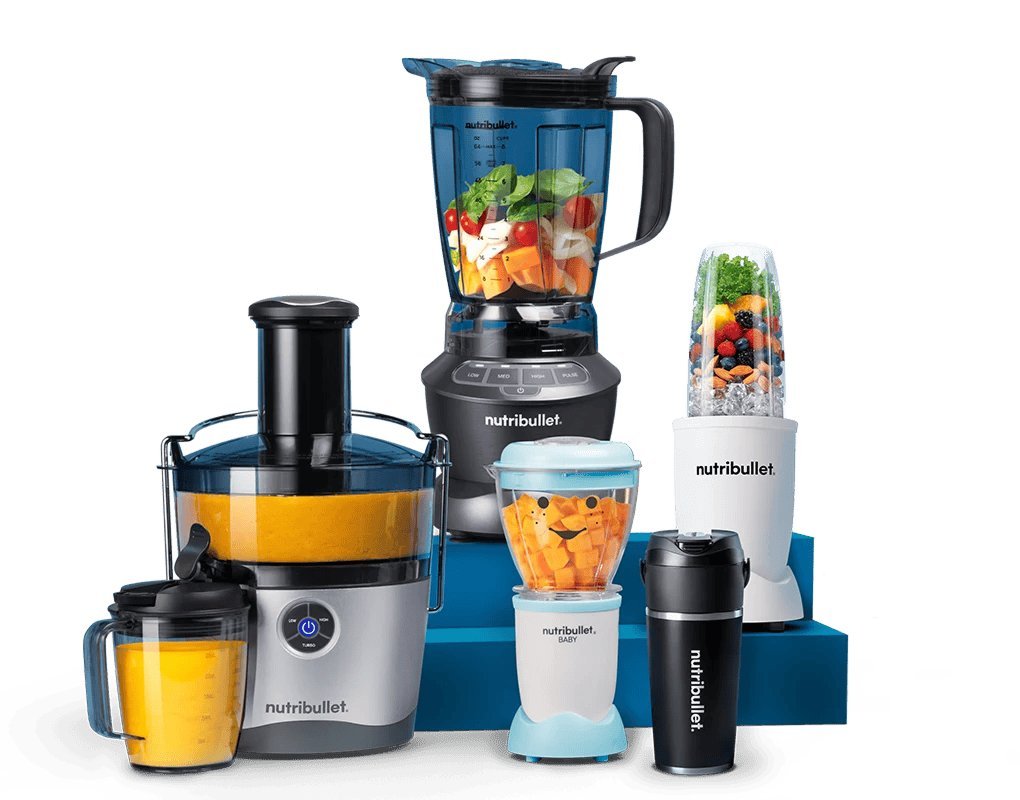
A Nutribullet sits firmly in the blender category. It belongs to a subcategory sometimes called a nutrient extractor or personal blender, which is marketing language for a small, high-RPM blender designed to be used with its own cup rather than a large pitcher.
So when someone asks whether a Nutribullet is a blender or a juicer, the honest answer is: it’s a blender with a very effective blade and a very small jar.
What A Nutribullet Actually Is
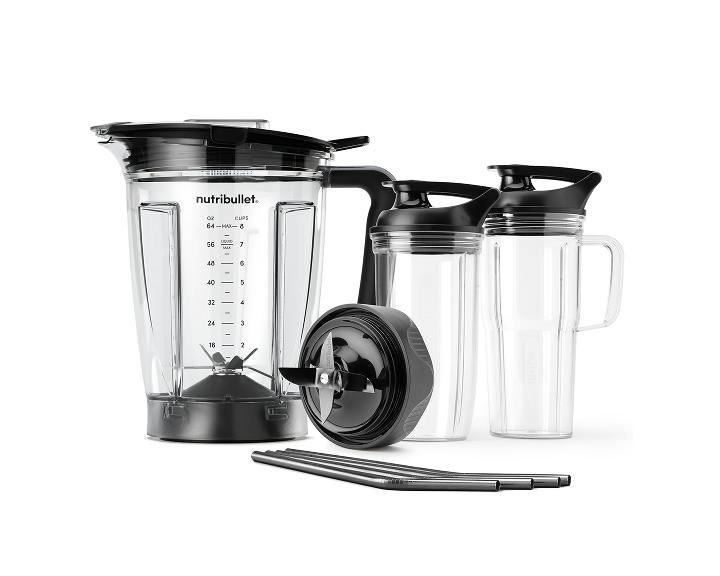
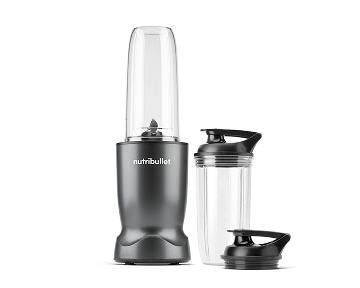
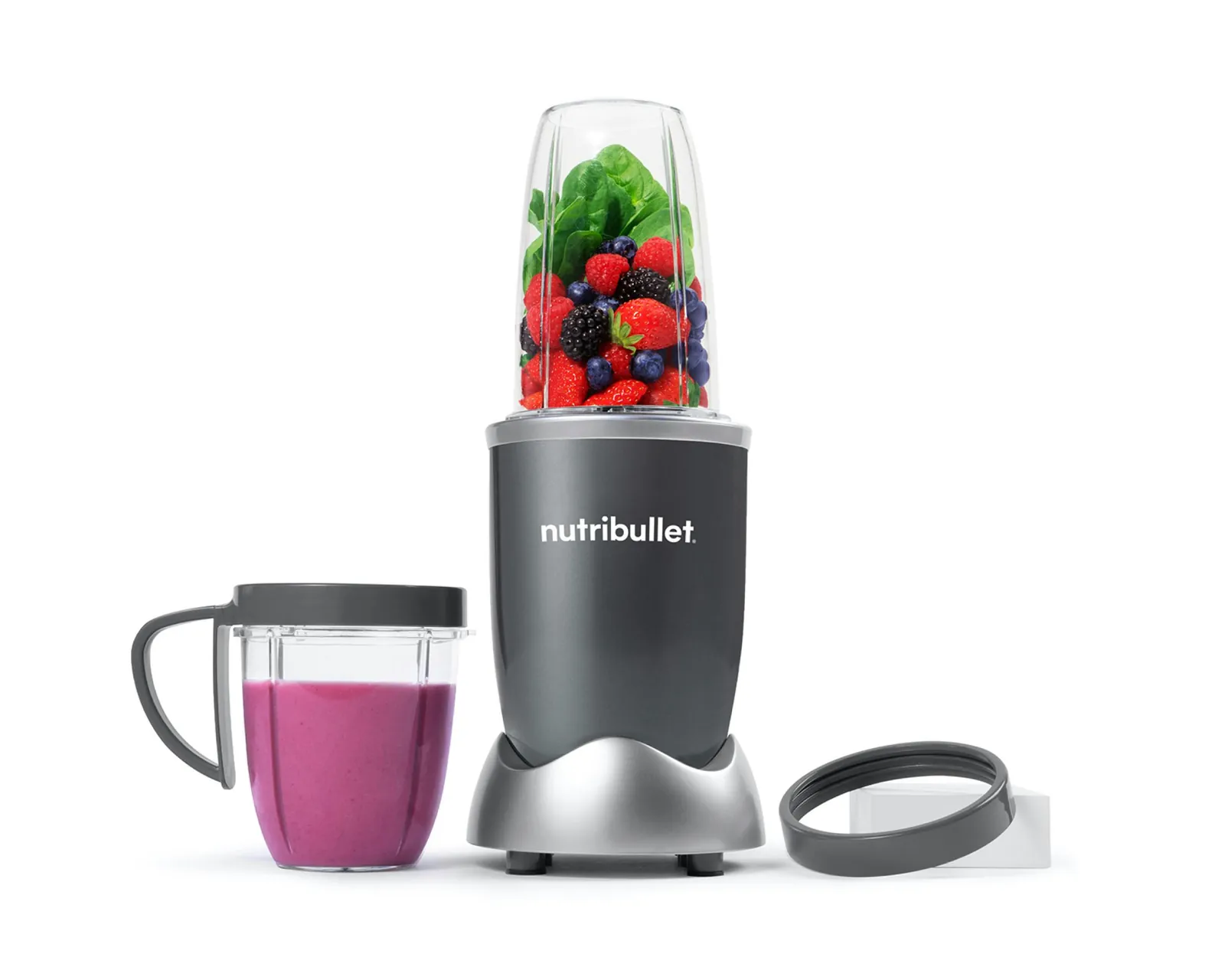
Nutribullet is a brand line made by Capital Brands, and the core design has stayed consistent since the original model launched: a motor base, a blade assembly that screws onto a cup, and a cup that doubles as your drinking glass.
The blade spins at high speed and creates a vortex that pulls ingredients down into the blades rather than pushing them against a spinning disc. That’s why frozen fruit, leafy greens, and ice all break down quickly in a small volume of liquid.
The parts that define it
- Motor base — the only part with a cord; it holds the motor and the activation switch.
- Extractor blade — a flat blade with two or more prongs, used for smoothies and shakes.
- Milling blade — a shorter, flatter blade meant for dry goods like oats, coffee beans, and spices.
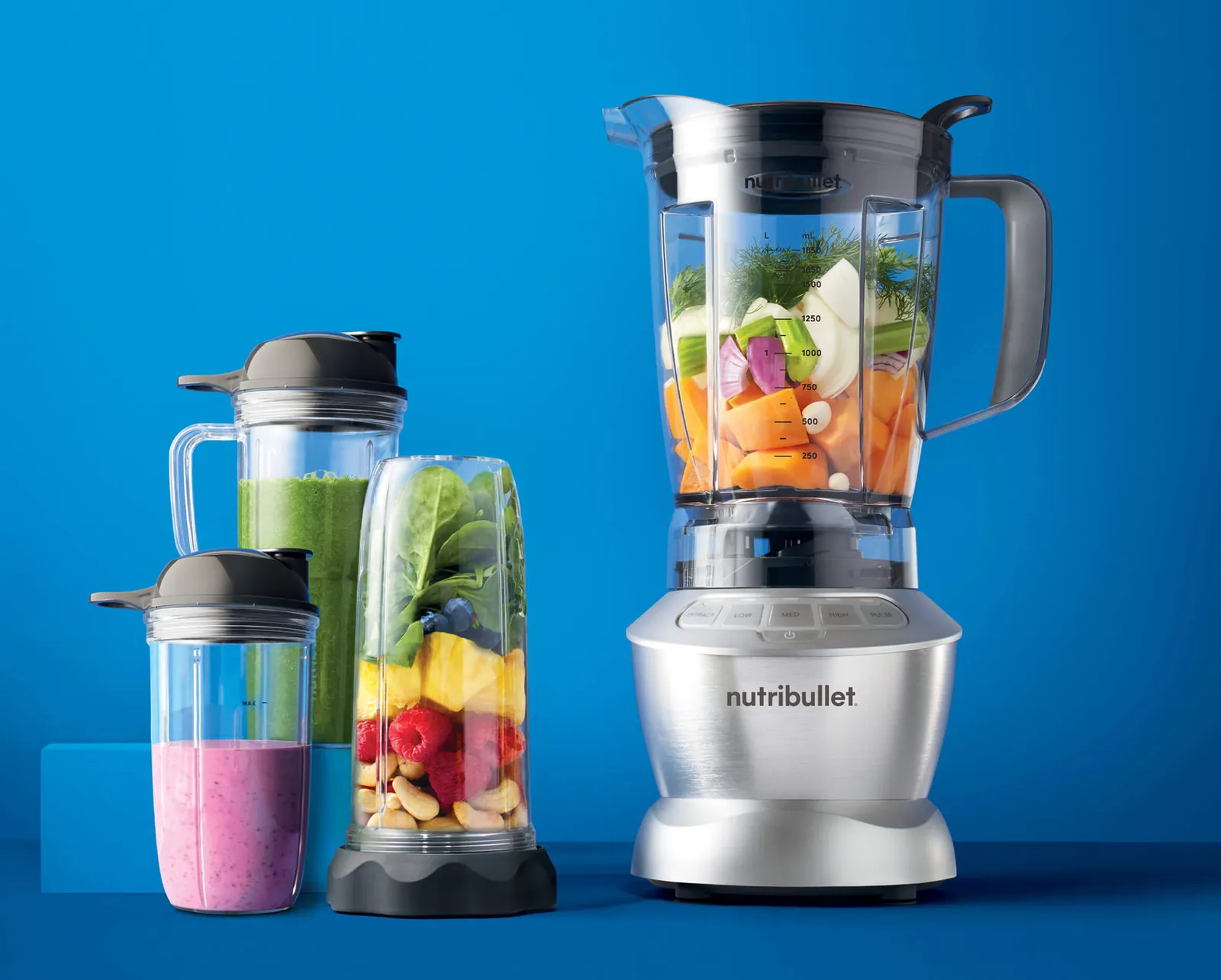
- Cups — the short cup (around 18 oz) and the tall cup (around 24 oz) on most models.
- To-go lid — a screw-on lid with a flip top so the cup becomes a travel bottle.
Where it sits in the blender family
| Category | Example | Jar size | Typical use |
|---|---|---|---|
| Full-size blender | Vitamix, Ninja pitcher models | 48–72 oz | Family smoothies, soups, batters |
| Personal blender | Nutribullet, Magic Bullet | 12–32 oz | Single servings, protein shakes |
| Immersion blender | Braun, KitchenAid hand blender | N/A | Soups in the pot, purees |
| Centrifugal juicer | Breville Juice Fountain | N/A | Fast juice, high foam |
| Masticating juicer | Omega, Hurom | N/A | Slow juice, max yield, leafy greens |
If you want the official word on what the brand itself calls these machines, Nutribullet’s own product pages describe them as blenders throughout — the company positions the line as blenders with extraction blades, not as juicers.
Blender vs Juicer: The Real Difference
The single mechanical difference is what happens to the pulp. Everything else — price, cleanup, noise, nutrition — flows from that one fact.
A blender macerates the entire ingredient. The pulp stays in the liquid, which is why a smoothie is thick and opaque. A juicer grinds or crushes the ingredient and then forces the liquid through a fine mesh, sending the pulp out a separate chute into a waste container.
Side-by-side comparison
| Factor | Nutribullet (blender) | Centrifugal juicer | Masticating juicer |
|---|---|---|---|
| Keeps pulp | Yes | No | No |
| Dietary fiber | Retained | Mostly removed | Mostly removed |
| Texture | Thick, creamy | Thin, watery | Thin, clean |
| Prep time | Chop roughly, blend 30–60 sec | Chop to fit feed chute | Chop small, feed slowly |
| Cleanup | Rinse cup and blade | Strainer basket is fiddly | Multiple parts, slow rinse |
| Noise | Loud, brief | Very loud, sustained | Quiet |
| Typical yield from 1 orange | ~½ cup thick drink | ~⅓ cup juice | ~⅓ cup juice |
| Best for | Smoothies, shakes, sauces | Carrots, apples, celery | Greens, wheatgrass, ginger |
What “juice” means legally
In the US, a product labeled as juice has to meet specific identity standards, and freshly squeezed juice sold at retail falls under food safety rules. The FDA publishes guidance on juice hazards and controls because unpasteurized juice carries real microbiological risk — which is a useful reminder that “juicing” is a food production process, not just a kitchen verb.
Why Your Nutribullet Feels Like A Juicer
Three design features make people assume they’ve bought a juicer.
First, the blade geometry. The extractor blade sits flat at the bottom of the cup, so when you blend soft fruit, you get a smooth, pourable liquid that looks a lot like juice.
Second, the small cup size. A full-size blender gives you a big pitcher of thick smoothie. A Nutribullet gives you one cup of something you can drink in a minute, which is exactly how people drink juice.
Third, the marketing vocabulary. Words like “extract,” “nutrient extractor,” and “extraction blade” sound like juicing language. In practice, “extraction” here just means the blade pulls ingredients into the vortex so they get fully blended.
Pro Tip: If your goal is a thinner, more juice-like drink, blend with more water or coconut water and strain through a fine mesh bag. You’ll lose the fiber, but you’ll get a texture much closer to real juice.
What You Can And Can’t Make
This is where the blender-versus-juicer distinction becomes practical.
Things a Nutribullet handles well
- Smoothies with frozen berries, banana, yogurt, and milk or plant milk.
- Protein shakes — powder dissolves fast in the vortex.
- Green smoothies with spinach, kale, or romaine, provided you add liquid first.
- Nut butters and nut milks — soak nuts first, and expect a slightly grainy result.
- Sauces and dressings like pesto, hummus, tahini dressing, and tomato sauce.
- Frozen cocktails and blended coffee drinks.
- Dry milling of oats, flaxseed, and coffee beans with the milling blade.
Things it struggles with
- Hard whole vegetables like raw beet, whole carrot, and sweet potato — you’ll need to chop small and add water.
- Large volumes — you’re making one or two servings, not a pitcher for four.
- Truly pulp-free juice — you’ll always have fine particles unless you strain.
- Hot soup straight from the pot — see the safety section below.
- Wheatgrass and fibrous stalks — these wrap around the blade rather than blending.
The fiber question
When you juice, you remove most of the fiber and a portion of the micronutrients that ride along with it. When you blend, you keep them. For most people, that’s a point in the blender’s favor — fiber supports satiety and digestive health, and a smoothie is more filling than the same volume of juice.
That said, blending does break cell walls, which can affect how quickly sugars are absorbed compared to eating the whole fruit. It’s still not equivalent to juice, but it’s also not identical to biting into an apple.
How To Use A Nutribullet Properly
The most common complaints — gritty texture, leaking cups, burned-out motors — come from technique, not defects.
The loading order that actually works
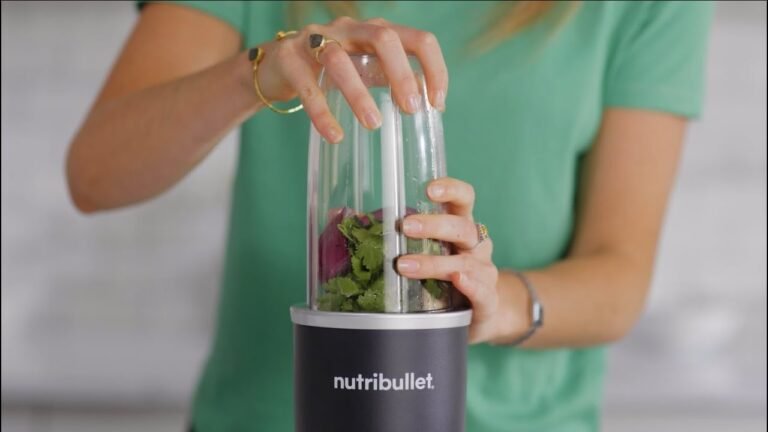
- Liquid first. Pour milk, water, or juice in before anything else, up to the fill line.
- Soft ingredients next. Yogurt, banana, avocado, nut butter.
- Leafy greens and powders. These need to be surrounded by liquid to move.
- Frozen and hard items last. Frozen berries, ice, apple chunks go on top, closest to the blade.
The blending technique
- Screw the blade onto the cup until it’s snug — hand-tight, not cranked.
- Invert the cup onto the base and press down to activate.
- Run for 30 seconds, then stop and check.
- If it stalls, shake the cup and pulse in short bursts rather than running continuously.
- Never run longer than about a minute at a time; let the motor rest.
Warning: Never fill past the max line. Overfilling is the number-one cause of leaking cups and overflow, and it also starves the vortex so ingredients stop circulating.
Cleaning in under two minutes
- Rinse the cup immediately — dried smoothie residue sets like cement.
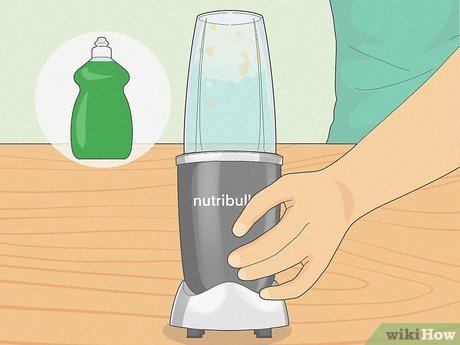
- Add warm water and a drop of dish soap to the cup, screw on the blade, and pulse for 10 seconds.
- Unscrew, rinse both parts, and air-dry upside down.
- Wash blade assemblies by hand. Most aren’t dishwasher safe, and the heat can degrade the gasket.
Common Mistakes And Fixes
| Problem | Likely cause | Fix |
|---|---|---|
| Gritty texture | Not enough liquid, or too much frozen fruit | Add liquid to the fill line, blend longer |
| Leaking at the blade | Overfilled, or gasket worn or misaligned | Fill to the line, check the rubber ring |
| Motor smells hot | Running too long, or too-thick mixture | Blend in bursts, thin with liquid |
| Ingredients stuck on the walls | Loaded in the wrong order | Liquid first, frozen last |
| Blade won’t spin | Cup not seated fully on the base | Press down firmly and twist into position |
| Plastic cup cracked | Hot liquid, or dishwasher heat | Hand wash, never blend hot |
When to replace parts
Blade assemblies dull. If your Nutribullet starts leaving chunks where it used to purée, the blade is likely the culprit rather than the motor. Gaskets also flatten and harden over time, which causes leaks. Both are inexpensive replacement parts, but they must match your model — a blade for a Nutribullet Pro won’t fit a Nutribullet 600 watt base.
Safety Rules Worth Knowing
Personal blenders are sealed systems, and that creates one specific hazard: pressure.
When you blend hot ingredients in a sealed cup, steam builds up with nowhere to go. When you open it, that pressure releases suddenly and can spray scalding liquid. The US Consumer Product Safety Commission maintains recall and safety information on blenders and similar kitchen appliances, and hot-liquid accidents are a recurring theme across the category.
Warning: Never blend anything hot in a Nutribullet. Let soup, sauce, or cooked vegetables cool to room temperature first, and even then, vent the cup carefully and keep your face back.
Other rules that prevent real injuries:
- Never put your hand or a utensil into the cup while the blade is attached.
- Keep the blade away from water while plugged in — unplug the base before cleaning around it.
- Check the gasket every few weeks; a missing ring means liquid goes straight into the motor housing.
- Don’t run it empty — the blade needs resistance and liquid to stay cool.
- Keep cords away from the edge of the counter if you have kids or pets.
Nutribullet Vs A Real Juicer
If you’re choosing between the two, the decision usually comes down to what you’ll actually drink.
Choose a Nutribullet if you want:
- Thick smoothies and protein shakes
- To keep fiber and feel full
- One-cup portions with almost no cleanup
- To blend nut butters, sauces, and dressings too
- A smaller footprint on the counter
Choose a juicer if you want:
- Thin, clear juice with no pulp
- To process large amounts of produce quickly
- Juice from things you’d never blend, like wheatgrass
- A drink you can make in bulk and refrigerate
The hybrid approach
Plenty of people own both, and it’s not redundant. A juicer handles a big bag of carrots and apples on Sunday; a Nutribullet handles a Tuesday morning smoothie in 45 seconds. If you only want one appliance and you’re not committed to pulp-free juice, the blender is the more versatile pick.
Pro Tip: If you want juice occasionally but don’t want a second machine, blend in the Nutribullet with extra water, then strain through a nut milk bag or a fine sieve. It’s slower and yields less, but it works for a single glass.
Frequently Asked Questions
Can a Nutribullet make juice?
It can make a juice-like drink, but not true juice. You blend whole fruit with liquid, then strain the pulp out through a fine mesh bag or sieve if you want a thin result. Without straining, you get a thick smoothie. A dedicated juicer does the separating automatically and yields more liquid per piece of fruit.
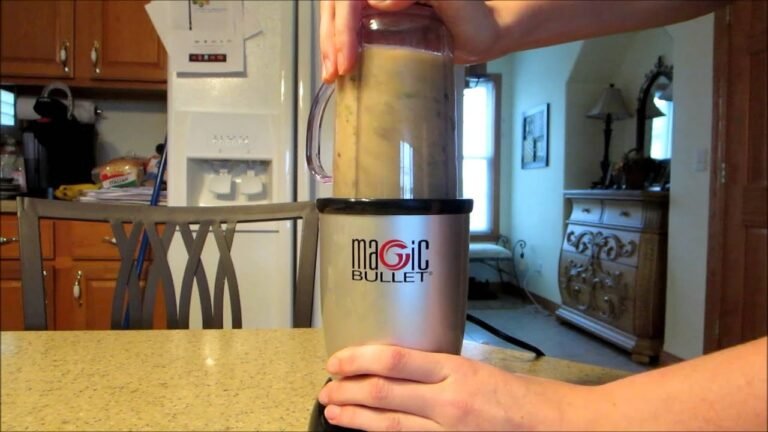
Is a Nutribullet the same as a Magic Bullet?
They’re made by the same parent company and share the same basic concept, but they’re different product lines. Magic Bullet units are generally smaller and lower-powered, aimed at small tasks. Nutribullet models tend to have stronger motors and larger cups, and their blades and cups aren’t interchangeable between the two lines.
Do you lose nutrients when you blend instead of juice?
You generally lose less. Blending keeps the pulp, which contains fiber and many of the nutrients bound up in the cell walls. Juicing discards that pulp, so you get fewer nutrients per piece of produce. Blending does break down cell walls, which can speed up how quickly sugars are absorbed compared to eating whole fruit.
Can I put frozen fruit in a Nutribullet?
Yes, and it’s one of the things it does best. Add liquid first, then soft ingredients, then frozen fruit on top so it sits closest to the blade. Use short pulses if the motor labors, and don’t pack the cup past the max line — frozen fruit expands the mixture as it breaks down.
Why does my Nutribullet leak?
The three usual causes are overfilling past the max line, a gasket that’s missing or misaligned inside the blade assembly, and a blade that isn’t screwed on tight enough. Check the rubber ring first — it falls out easily during washing and is the most common culprit. Hand-tighten the blade and never fill above the line.
Can I blend hot soup in a Nutribullet?
No. Sealed personal blenders trap steam, and pressure can force the lid off when you open it, spraying scalding liquid. Let soup cool to room temperature first, blend in small batches, and vent the cup away from your face. For hot soups, an immersion blender is the safer tool.
Conclusion
If you came here unsure what you bought, the answer is simple: you have a blender, and a good one for single servings. The practical next step is to stop trying to make it behave like a juicer and instead lean into what it does well — load liquid first, frozen fruit last, blend in 30-second bursts, and hand-wash the blade. If pulp-free juice is genuinely what you want, buy a juicer and keep the Nutribullet for everything else.