Is a Nutribullet a High Speed Blender? The Honest Answer
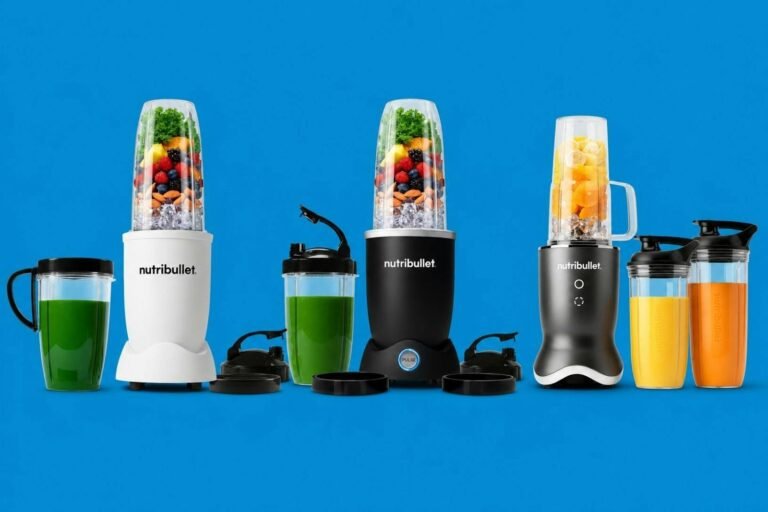
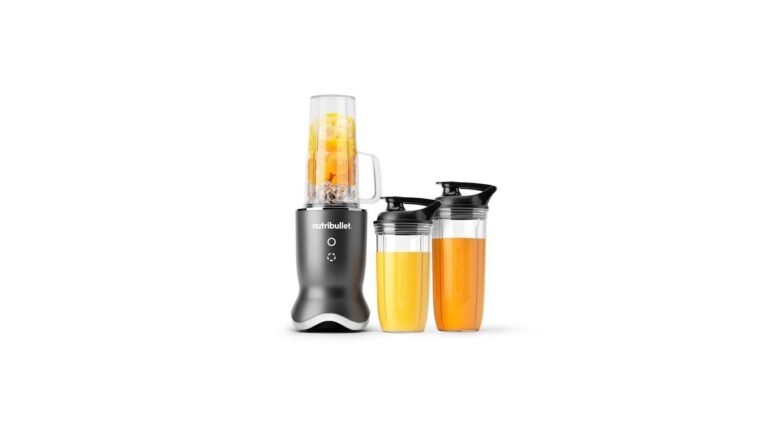
A Nutribullet isn’t a high-speed blender in the technical sense, though the two machines look similar on a kitchen counter and both turn solid food into liquid. The Nutribullet is a personal, single-serve blending system built around a 600 to 1200-watt motor and a short, narrow cup, while a true high-speed blender such as a Vitamix or a Blendtec runs a 1380 to 1800-watt motor turning a wide, tall jar with a tamper. That difference in wattage, jar geometry, and blade design is why one makes smoothies and the other makes hot soup, nut butter, and flour.
Key Takeaways
- Wattage gap is real: Nutribullet motors run roughly 600 to 1200 watts; high-speed blenders run roughly 1380 to 1800 watts and spin blades past 20,000 RPM.
- Jar shape matters more than watts: the Nutribullet’s narrow cup creates a vortex that stalls on thick mixtures, while a wide high-speed jar keeps ingredients circulating.
- You can’t tamp a Nutribullet: there’s no tamper port, so thick blends require stopping, scraping, and restarting.
- Nutribullet wins on price and footprint: expect roughly $60 to $120 for most models versus roughly $300 to $600 for a full-size high-speed blender.
- Buy a Nutribullet for smoothies, shakes, and small batches; buy a high-speed blender for nut butter, hot soup, grain flour, and large volumes.
- A “high-speed” label on a Nutribullet box refers to blade RPM marketing, not to the high-speed blender category.
What Counts as a High-Speed Blender
The blender industry has no single legal definition, but the term “high-speed blender” is used consistently by manufacturers and reviewers to describe a specific class of machine. Three specifications separate it from an ordinary countertop blender.
Blade tip speed is the first. High-speed blenders push blade tips past roughly 20,000 revolutions per minute, which is fast enough to create friction heat and to rupture plant cell walls. Ordinary blenders, including most Nutribullet models, spin considerably slower.
Motor wattage is the second. The high-speed category generally starts around 1380 watts and climbs to about 1800 watts. Nutribullet’s lineup sits below that ceiling, with most models in the 600 to 1200-watt band.
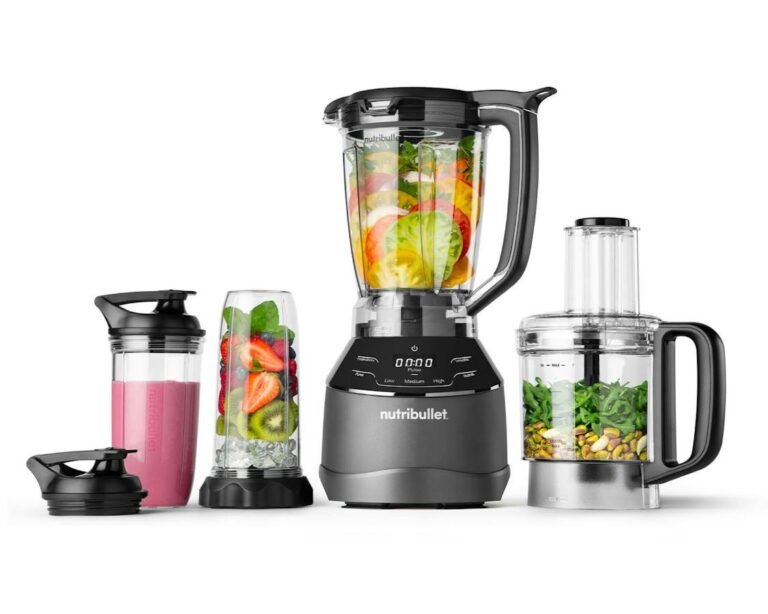
Jar geometry and tamper access is the third, and it’s the one people overlook. A high-speed blender uses a wide, tall container with a removable lid plug so you can insert a tamper and push ingredients into the blades while the motor runs. That single feature is what makes nut butter and frozen desserts possible.
The RPM and Wattage Numbers
Wattage tells you how much work the motor can do under load. RPM tells you how fast the blades move when nothing is resisting them. A blender can advertise a high RPM figure and still stall the moment you add frozen mango, because RPM measured in air isn’t the same as RPM under load. When you compare machines, weight the wattage and the jar design more heavily than the RPM printed on the box.
Why Jar Shape Beats Raw Power
A wide jar lets gravity and the vortex do the work. Ingredients fall back into the blades on their own. A narrow personal cup does the opposite: once a thick mixture climbs the walls, it stops moving, and the blades spin in a hollow pocket of air. This is why a 1400-watt blender with a wide jar outperforms a 900-watt personal blender on thick mixtures, and why the reverse is often true for a single-serve smoothie.
Is A Nutribullet A High Speed Blender?
No. A Nutribullet is a personal blender, which is a distinct category. It’s fast for its size, it’s genuinely effective on soft and frozen fruit with enough liquid, and it’s far more capable than a $25 drugstore blender. But it doesn’t meet the wattage, jar-size, or tamper-access standards that define the high-speed class.
The confusion is understandable because Nutribullet’s marketing emphasizes speed and extraction. The brand’s core claim has always been about nutrient extraction from whole fruits and vegetables rather than about competing with Vitamix on nut butter. Those are different promises.
If your question is really “will this Nutribullet do what I saw a high-speed blender do in a video,” the honest answer is: for smoothies, usually yes; for everything else in that video, usually no.
Nutribullet vs High-Speed Blender
The table below compares the two categories on the specifications that actually change what you can cook.
| Feature | Nutribullet (personal blender) | High-speed blender (Vitamix, Blendtec, Breville) |
|---|---|---|
| Typical motor wattage | 600–1200 W | 1380–1800 W |
| Jar or cup size | 18–32 oz single-serve cups | 48–64 oz wide jars |
| Tamper included | No | Yes, via lid plug |
| Blade tip speed | Moderate | Above roughly 20,000 RPM |
| Nut butter | Not recommended | Yes |
| Hot soup from friction | No | Yes |
| Grain flour | No | Yes |
| Typical price | $60–$120 | $300–$600 |
| Dishwasher-safe parts | Yes | Yes |
| Footprint | Small, fits under cabinets | Tall, needs clearance |
Where the Nutribullet Actually Wins
For a single person making one smoothie a day, the Nutribullet is often the better purchase. It takes up a fraction of the counter, the cup becomes your drinking glass so there’s one less dish, and the price difference buys a lot of frozen fruit. It also handles ice and frozen banana well when you add liquid first.
Where the High-Speed Blender Wins
Nut butter, hot soup, oat flour, rice flour, emulsified sauces, and anything you want to make in a 64-ounce batch. These aren’t marginal advantages. They’re tasks the Nutribullet physically can’t complete, because there’s no way to keep thick ingredients moving and no way to safely reach into a running machine.
Pro Tip: If nut butter or hot soup is on your list even occasionally, skip the personal blender category entirely. Buying a Nutribullet first and a high-speed blender second costs more than buying the high-speed blender once.
The Nutribullet Model Lineup
Nutribullet sells several distinct machines, and their capabilities differ enough that “Nutribullet” alone isn’t a useful specification.
| Model | Wattage (typical) | Best for | High-speed class? |
|---|---|---|---|
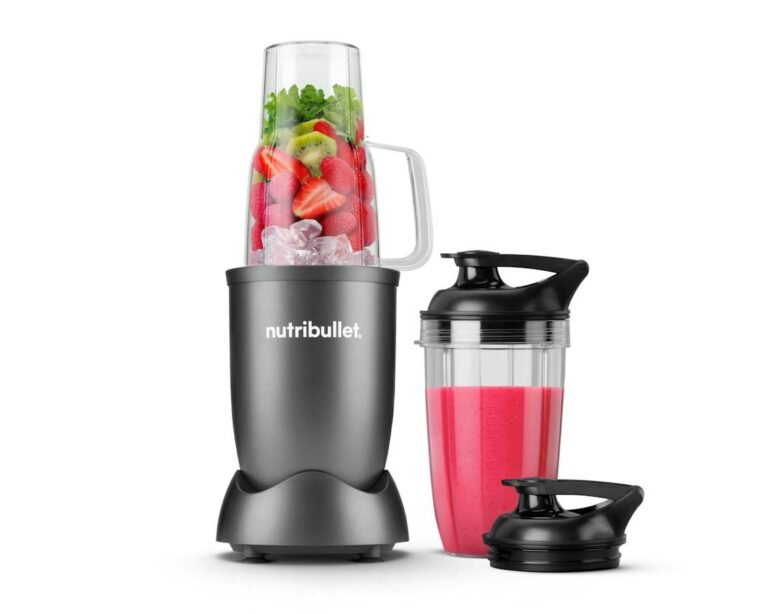
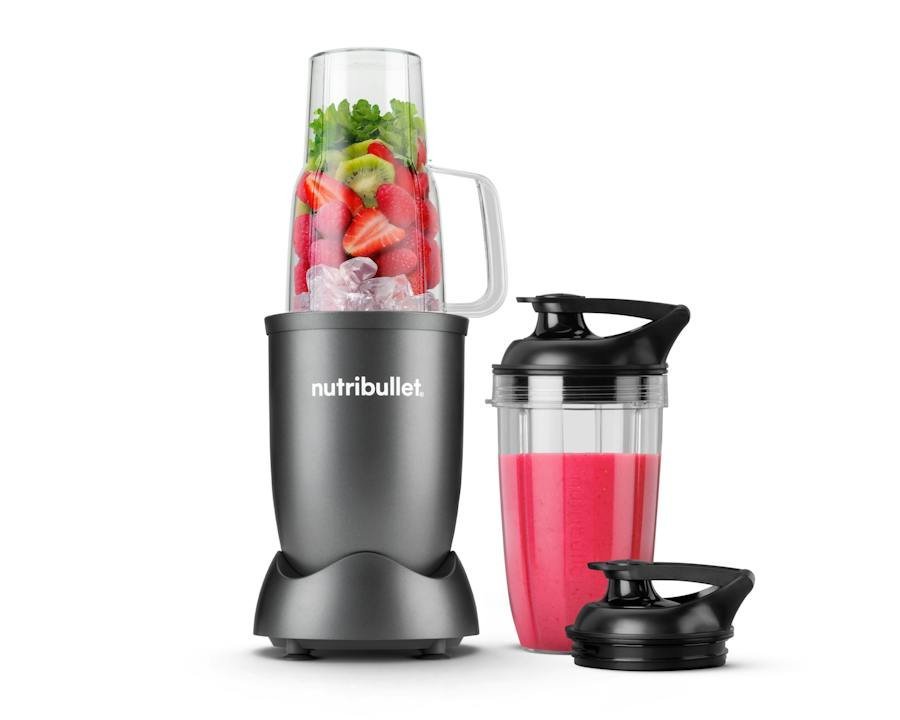
| Nutribullet Pro 900 | 900 W | Daily smoothies, frozen fruit | No |
| Nutribullet Pro 1200 | 1200 W | Thick smoothies, ice | No |
| Nutribullet Rx | 1700 W | Soup and sauce cycles | Closest, but still a personal design |
| Nutribullet Baby | Low wattage | Purees for infants | No |
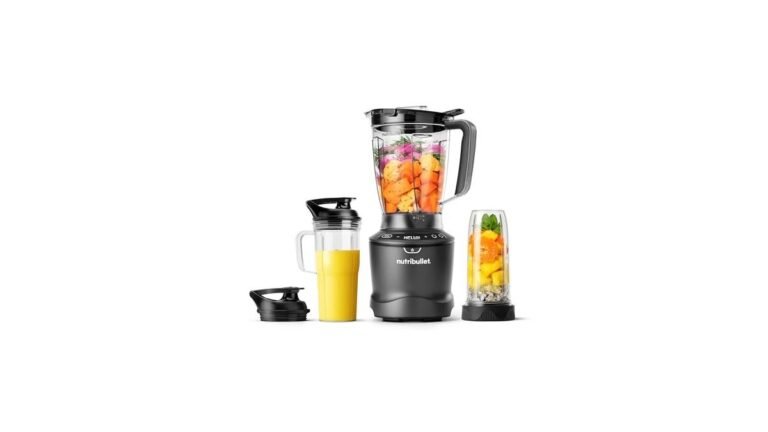
| Nutribullet Blender Combo | 1200 W | Smoothies plus a full-size pitcher | No |
The Nutribullet Rx is the model most often mistaken for a high-speed blender because its wattage overlaps the low end of the category. It does include a soup-making cycle that heats food through friction. Even so, it uses the personal-blender cup format, has no tamper, and isn’t sold as a competitor to full-size high-speed machines.
Tasks Each Machine Can Handle
This is the practical test. Match your actual cooking habits to the list below.
Nutribullet handles well:
- Green smoothies with spinach, banana, and liquid
- Protein shakes and meal-replacement drinks
- Frozen fruit blends with adequate liquid
- Small batches of pancake batter or salad dressing
- Baby food purees in the Baby model
- Grinding small quantities of nuts into coarse meal
Nutribullet struggles with or can’t do:
- Drippy nut butter from raw almonds
- Hot soup made entirely by friction
- Grain flour in any quantity
- Dough of any kind
- More than about 32 ounces at a time
- Anything requiring a tamper mid-blend
High-speed blender handles well:
- Everything in the Nutribullet list, in larger batches
- Nut butter and seed butter
- Hot soup, from cold ingredients to steaming
- Whole-grain flour
- Frozen desserts and nice cream
- Emulsions like mayonnaise and hollandaise
- Batters and some doughs
How to Get Smooth Results From a Nutribullet
If you already own a Nutribullet, these techniques close part of the gap.
- Load liquids first. Pour milk, water, or juice in before the solids. This gives the blades something to grab immediately.
- Cut frozen fruit smaller. Halve strawberries and break up frozen mango chunks. Large frozen pieces are what stall the motor.
- Fill to the max line, not above it. Overfilling is the single most common cause of a stalled personal blender.
- Pulse, then run. Start with short pulses to break up the load, then hold for a continuous run.
- Stop and shake. If the blend stalls, unplug, remove the cup, and shake it. Never reach in with a spatula while it’s running.
- Add fat or liquid for nut-based blends. A spoonful of oil or a splash more liquid keeps the mixture moving.
Warning: Never insert a spoon, spatula, or any other tool into a Nutribullet cup while the motor is running or plugged in. Personal blenders have no tamper port for a reason, and the blades are sharp and unguarded at the bottom of the cup.
Safety and Cleaning Differences
Both categories are dishwasher-safe on most removable parts, but the cleaning experience differs. A Nutribullet cup is narrow, so a bottle brush helps, and the blade assembly is a separate piece you unscrew and wash by hand carefully. A high-speed blender jar is wide enough to rinse clean by hand in seconds, and the blade assembly is fixed to the jar, which removes one handling step but makes the jar heavier.
On the safety side, the relevant guidance for kitchen appliances in the US comes from the Consumer Product Safety Commission, which maintains recall and safety information for blenders and food processors. Check any model you buy against that database, particularly if you’re buying used.
Pro Tip: Rinse the cup immediately after blending, before the residue dries. Dried smoothie residue on a narrow cup wall is the main reason people give up on personal blenders.
Price, Value, and Who Should Buy What
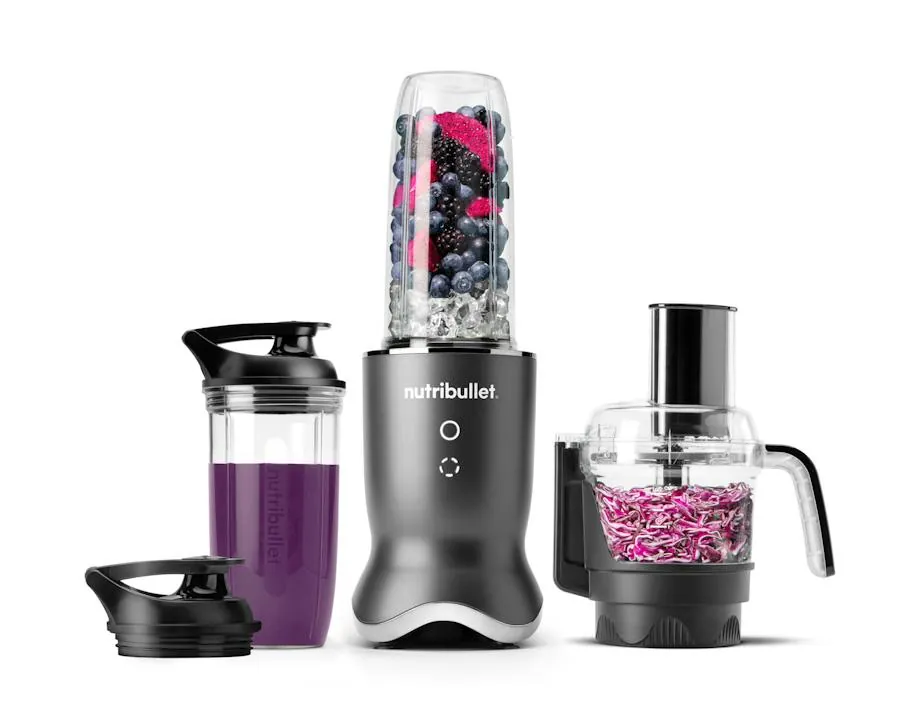
Price is where the categories diverge most sharply. A Nutribullet typically costs roughly $60 to $120 depending on the model and whether it’s on sale. A full-size high-speed blender typically costs roughly $300 to $600, with premium models above that.
That gap means the right question is not “which is better” but “how many of the high-speed-only tasks will I actually do.” If the answer is zero, the Nutribullet is the better value and the better use of counter space. If the answer is even one task you care about weekly, the high-speed blender pays for itself in avoided frustration.
Buy a Nutribullet if you:
- Make one or two smoothies a day
- Have limited counter or cabinet space
- Want a cup that doubles as your glass
- Are shopping on a budget under about $150
- Don’t need nut butter, flour, or hot soup
Buy a high-speed blender if you:
- Make nut butter, seed butter, or nut milk regularly
- Want hot soup without a stove
- Grind grains into flour
- Blend for a family in batches larger than 32 ounces
- Plan to keep the machine for a decade or more
Frequently Asked Questions
Is a Nutribullet considered a high-speed blender?
No. A Nutribullet is a personal blender. High-speed blenders are defined by roughly 1380 watts or more, a wide jar, and a tamper. Nutribullet motors generally run 600 to 1200 watts, with the Nutribullet Rx reaching about 1700 watts while still using a personal cup design and no tamper.
Can a Nutribullet make nut butter?
Not reliably. Nut butter requires constant circulation and the ability to push ingredients back into the blades with a tamper. A Nutribullet cup stalls once the mixture thickens, and you can’t safely reach in while it runs. You’ll end up with coarse nut meal or a burnt-smelling motor rather than smooth butter.
Can a Nutribullet make hot soup?
Only the Nutribullet Rx has a soup cycle, and it works by friction heating. Standard Nutribullet models can’t heat food. Even on the Rx, you’re blending in a personal cup rather than a wide jar, so batch size is limited and results are less uniform than a full-size high-speed blender.
Why does my Nutribullet stall on frozen fruit?
Usually because there isn’t enough liquid, the frozen pieces are too large, or the cup is overfilled. Add liquid first, break large frozen chunks in half, keep the load below the max line, and start with pulses rather than a continuous run.
Is a Vitamix worth it over a Nutribullet?
It depends entirely on your tasks. For smoothies alone, a Nutribullet delivers most of the result for a fraction of the price. For nut butter, hot soup, grain flour, and large batches, a Vitamix or comparable high-speed blender does things a Nutribullet can’t do at all, which makes it worth the money if you need those functions.
What is the fastest Nutribullet model?
The Nutribullet Rx is the highest-wattage model in the lineup at roughly 1700 watts, which places it near the bottom of the high-speed blender wattage range. It remains a personal blender in design, so wattage alone doesn’t move it into the high-speed category.
Conclusion
If you’re still deciding, write down the three things you blend most often and check them against the task lists above. If all three appear on the Nutribullet side, buy the Nutribullet and put the savings toward good frozen fruit; if even one appears on the high-speed side, save for the bigger machine.