Nutribullet vs Blender: What’s the Difference?
The difference between a Nutribullet and a blender comes down to size and purpose. A Nutribullet is a personal, single-serve blending system built around a high-speed motor and a cup you drink straight from, while a standard blender is a full-size countertop appliance with a large pitcher designed for batches, ice crushing, and cooking tasks. The short version: a Nutribullet is a specialty tool for smoothies and single servings, and a blender is a general-purpose kitchen workhorse.
Key Takeaways
- Nutribullet = personal blender. It blends in the cup you drink from, so cleanup is one rinse instead of a pitcher, lid, and blade assembly.
- A full-size blender wins on volume. Most standard pitchers hold 48–72 oz, while Nutribullet cups typically run 12–32 oz.
- Blenders handle hot and fibrous jobs better. Soups, nut butters, frozen fruit packs, and large ice loads are easier in a 64-oz pitcher with a tamper.
- Nutribullets cost less upfront. Typical personal units run $40–$120; full-size blenders run $30–$600 depending on motor wattage and brand tier.
- Motor wattage isn’t everything. Blade design, jar shape, and how much you load at once matter as much as the number on the box.
- If you make one smoothie a day, buy the Nutribullet. If you cook for two or more people, buy the blender.
Nutribullet vs Blender: The Core Difference
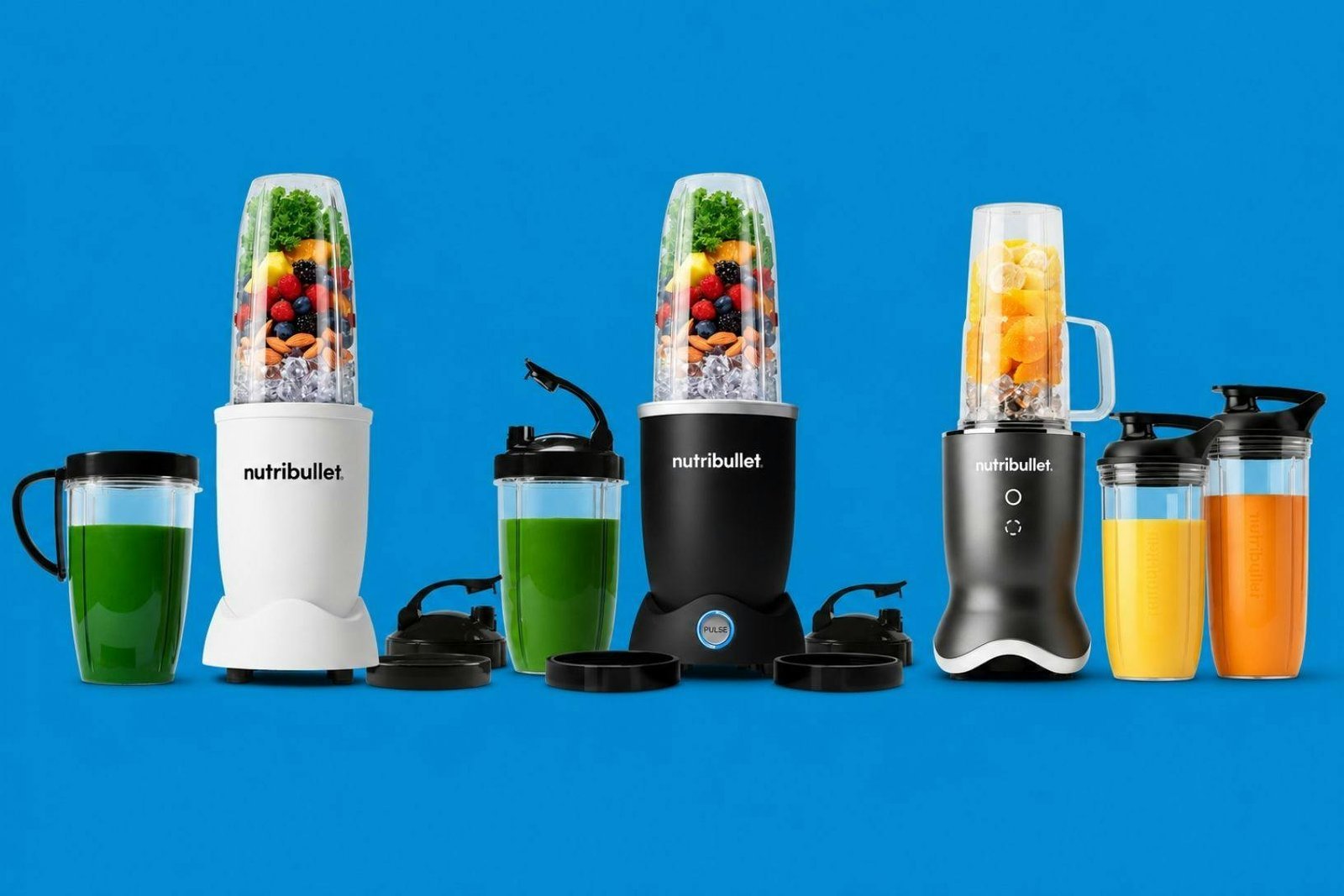
The clearest way to think about it is format versus function. A Nutribullet is a personal blender — a category that includes the original Nutribullet, the Nutribullet Pro, the Nutribullet Pro 900, and the Nutribullet Rx. A “blender” in the everyday sense means a full-size countertop machine like a Vitamix, a Ninja, a Breville, or a KitchenAid.
Here’s what actually separates them:
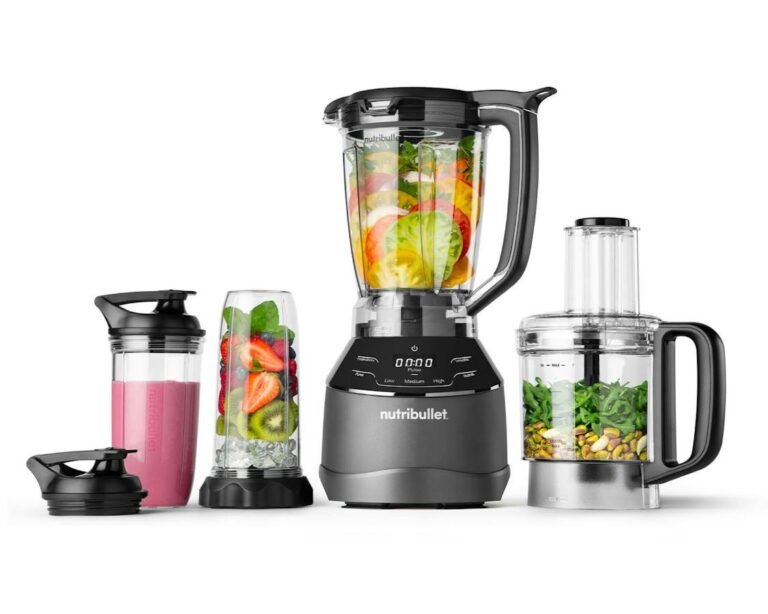
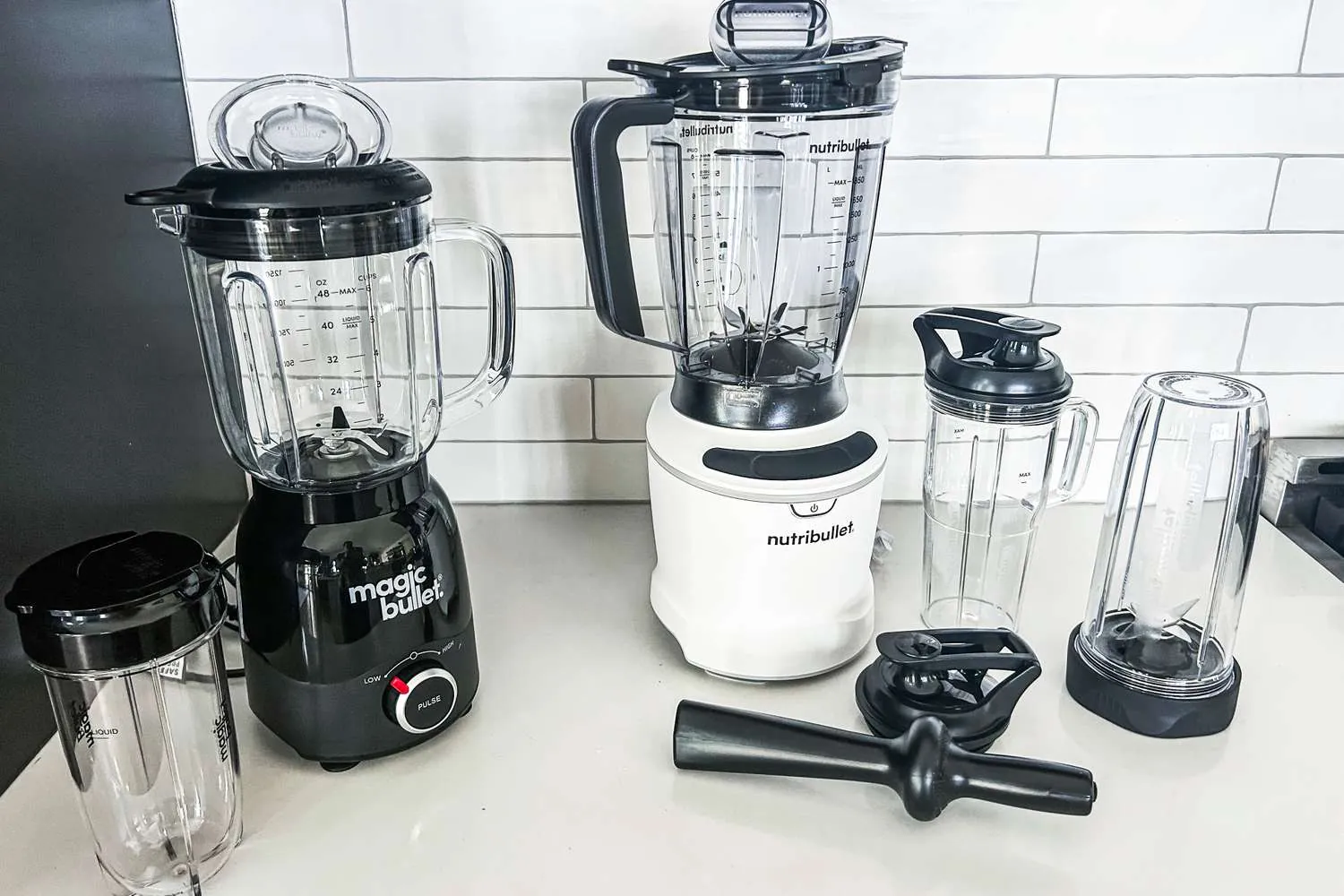
- The container. Nutribullet uses a cup that screws onto a blade base and flips over onto the motor. A blender uses a pitcher that sits on top of the motor base.
- The serving size. Nutribullet is designed for one person, one drink. A blender is designed for a family, a batch of soup, or a pitcher of margaritas.
- The motor orientation. Nutribullet motors are typically 500–1200 watts and spin fast in a compact housing. Full-size blenders range from 300 watts on budget models to 1500+ watts on high-performance machines.
- The blade. Nutribullet uses a single extractor blade with offset blades. Blenders use a larger blade assembly at the bottom of a wide pitcher, sometimes with a tamper to push food down.
- The intended job. Nutribullet is for smoothies, shakes, and quick blends. A blender is for smoothies, soups, sauces, batters, crushed ice, nut butters, and frozen desserts.
Pro Tip: If you’re choosing between the two and you already own a food processor, you probably don’t need a full-size blender — the Nutribullet covers the gap. If you don’t own a food processor, a full-size blender does more of both jobs.
Side-by-Side Comparison Table
| Feature | Nutribullet (Personal) | Full-Size Blender |
|---|---|---|
| Typical capacity | 12–32 oz cup | 48–72 oz pitcher |
| Typical wattage | 500–1200 W | 300–1500+ W |
| Typical price range | $40–$120 | $30–$600 |
| Best for | Single smoothies, protein shakes, dressings | Family batches, soup, ice, nut butter |
| Cleanup | Rinse the cup and blade | Wash pitcher, lid, and blade |
| Hot liquids | Not recommended | Often supported with vented lid |
| Counter footprint | Small, stores in a cabinet | Large, usually stays out |
| Noise | High-pitched, brief | Lower, longer |
| Dishwasher safe parts | Cup and blade (top rack) | Pitcher, lid, blade (varies) |
| Warranty (typical) | 1–2 years | 1–10 years depending on brand |
Where The Nutribullet Actually Wins
Single-Serve Convenience
The Nutribullet’s real advantage isn’t power — it’s workflow. You load the cup, screw on the blade, invert it onto the base, blend, unscrew, and add a lid. There’s no pouring, no second container, and no pitcher to scrub. For someone making one smoothie every morning before work, that’s a meaningful daily difference.
Small Kitchens And Dorms
A Nutribullet base is roughly the footprint of a coffee mug. It fits under upper cabinets, in a dorm drawer, or on a narrow apartment counter. Full-size blenders need vertical clearance for the pitcher and usually live permanently on the counter because they’re annoying to move.
Protein Shakes And Powders
Powders, frozen banana, ice, and milk blend into a smooth texture fast in a Nutribullet because the narrow cup keeps everything in contact with the blades. In a wide pitcher, powder tends to stick to the sides and ice floats above the blade.
Lower Entry Price
You can get a genuinely capable Nutribullet for under $100. Getting equivalent blending performance in a full-size machine usually means spending $150–$400 on a mid-tier or high-performance model.
Warning: Nutribullet cups and blades are model-specific. A blade from a Nutribullet Pro 900 won’t fit a Nutribullet 600 cup, and third-party blades can void your warranty. Buy replacements by exact model number.
Where A Full-Size Blender Wins
Volume And Batch Blending
If you’re making smoothies for three people, a pitcher of soup, or a batch of pancake batter, a Nutribullet means blending in rounds. A 64-oz pitcher does it in one pass. That’s not a small inconvenience — it’s the single biggest reason people outgrow a personal blender.
Hot Liquids And Soup
Many full-size blenders are rated for hot soup, either because the pitcher is heat-resistant or because the lid has a vented cap you remove to let steam escape. Nutribullets aren’t designed for hot liquids — pressure builds in the sealed cup and can blow the lid off.
Nut Butters And Dense Pastes
Making peanut butter, almond butter, or thick hummus requires a motor that can run for minutes under load and a jar wide enough to scrape down. Full-size high-performance blenders handle this. Nutribullets typically overheat and shut down.
Crushed Ice And Frozen Desserts
A wide pitcher with a tamper lets you push frozen fruit and ice into the blade zone continuously. In a Nutribullet, you have to stop, unscrew, shake, and restart — which is why the manual tells you to add liquid first.
Longer Warranty And Repairability
High-end blender brands commonly offer 7–10 year warranties on the motor base. Nutribullet warranties are typically 1–2 years. If you blend daily for years, the full-size machine often costs less per year of use.
Nutribullet Models Compared
| Model | Wattage | Cup Size | Typical Price | Best For |
|---|---|---|---|---|
| Nutribullet 600 | 600 W | 24 oz | $50–$70 | Basic smoothies, one person |
| Nutribullet Pro 900 | 900 W | 32 oz | $80–$110 | Frozen fruit, ice, daily use |
| Nutribullet Rx | 1700 W | 30 oz | $130–$170 | Hot soup, heavy-duty blending |
| Nutribullet Baby | 200 W | 6 oz | $60–$90 | Baby food purees, small batches |
| Nutribullet Select | 1000 W | 32 oz | $90–$130 | Quiet operation, easy twist blade |
These are the mainstream models most retailers carry. Names and specs shift as the brand refreshes its lineup, so check the box for the current wattage before buying.
Full-Size Blender Tiers Compared
| Tier | Typical Wattage | Typical Price | Examples | Best For |
|---|---|---|---|---|
| Budget | 300–500 W | $30–$60 | Basic Oster, Hamilton Beach | Occasional smoothies, milkshakes |
| Mid-range | 700–1000 W | $80–$180 | Ninja, mid Breville | Daily smoothies, frozen drinks |
| High-performance | 1200–1500+ W | $200–$400 | Vitamix, Ninja Professional Plus | Soup, nut butter, daily heavy use |
| Commercial-grade | 1400–1800 W | $400–$600 | Vitamix Ascent, Blendtec | Restaurants, very heavy home use |
Which One Should You Buy?
Answer these five questions honestly:
- How many people are you blending for? One → Nutribullet. Two or more → blender.
- Do you want to blend hot soup? Yes → blender. No → Nutribullet is fine.
- How much counter space do you have? Under 12 inches of clearance → Nutribullet.
- Will you make nut butter or crush large ice loads? Yes → high-performance blender.
- What’s your budget? Under $100 → Nutribullet. Over $200 → a high-performance blender will outlast three personal blenders.
If you answered “one person, cold smoothies, tight space, under $100,” buy the Nutribullet Pro 900. If you answered “family, soup, ice, nut butter, I want it to last a decade,” buy a Vitamix or a Ninja Professional Plus.
Can You Use A Nutribullet As A Blender?
Partially. A Nutribullet can do many of the same jobs at smaller scale — smoothies, shakes, sauces, dressings, pureed baby food, and small batches of frozen drinks. It can’t replace a full-size blender for large volumes, hot liquids, or extended heavy-duty blending.
The practical rule: if the recipe fits in the cup and doesn’t need heat, the Nutribullet can probably do it. If it needs a pitcher, a tamper, or a vented lid, it can’t.
Cleanup And Maintenance Differences
- Nutribullet: Rinse the cup and blade immediately after use. Most cups and blades are top-rack dishwasher safe, but hand washing extends blade life. Never submerge the motor base.
- Blender: Fill the pitcher a third full with warm water and a drop of dish soap, run it for 20 seconds, rinse. That handles 90% of cleanup without disassembly.
- Blade care: Both types dull over time. Nutribullet replacement blades typically cost $15–$30; full-size replacement blades run $20–$60 depending on brand.
- Gaskets: The rubber gasket in the blade base is the most common failure point on both. If your Nutribullet leaks, check the gasket before buying a new blade.
Pro Tip: Never blend dry ingredients alone in either machine. Powders need liquid to move, and running a blender empty or with dry powder only can burn out the motor and score the jar.
Common Mistakes That Ruin Both Machines
- Overfilling. Nutribullet cups have a max fill line for a reason. Going past it forces liquid into the blade base and out the seal.
- Adding ice first. Always put liquid in first, then soft ingredients, then frozen items and ice on top. This is the single biggest cause of “my blender won’t blend.”
- Running too long without a break. Most consumer motors need a rest after 60 seconds of continuous use. Check your manual for the duty cycle.
- Blending hot liquid in a sealed cup. Pressure builds. The lid pops. You get burned.
- Ignoring the tamper. If your full-size blender came with a tamper, use it instead of stopping and shaking.
- Putting the motor base in water. Wipe it with a damp cloth. Never immerse it.
Noise, Speed, And Power Realities
Wattage is a rough proxy for power, not a guarantee of performance. A 900-watt Nutribullet with a well-designed narrow cup can produce a smoother smoothie than a 1000-watt blender with a poorly shaped wide pitcher, because blade-to-food contact matters more than raw motor output.
That said, wattage matters for endurance. If you’re blending frozen fruit and ice daily, a 1200+ watt motor will handle the load without tripping a thermal cutoff. A 300-watt budget blender will not.
On noise: personal blenders produce a higher-pitched whine because they spin faster in a smaller housing. Full-size blenders produce a lower, louder rumble. Neither is quiet. If noise matters, look for models marketed with sound enclosures or “quiet” technology, and expect to pay more.
Cost Of Ownership Over Five Years
| Cost Item | Nutribullet | Full-Size Blender |
|---|---|---|
| Purchase price | $40–$120 | $30–$600 |
| Replacement blades (5 yrs) | $30–$60 | $20–$60 |
| Replacement cups/pitchers | $20–$40 | $30–$80 |
| Likely replacement of whole unit | Possible by year 3–5 | Unlikely on high-end models |
| Estimated 5-year total | $90–$220 | $80–$740 |
The math favors the Nutribullet on pure dollars if you only make single smoothies. It favors a high-performance blender if you use it heavily, because the long warranty and durable motor spread the cost over many more years.
Frequently Asked Questions
Is a Nutribullet just a small blender?
Functionally, yes — it’s a personal blender. The key differences are the sealed cup instead of an open pitcher, the smaller motor housing, and the fact that you drink directly from the blending container. It performs the same basic task at a smaller scale with less capacity and no hot-liquid capability.
Can a Nutribullet crush ice?
Yes, the higher-wattage models can. The Nutribullet Pro 900 and Rx handle ice well when you add liquid first and use the pulse technique. Lower-wattage models like the 600 struggle with large ice cubes and may leave chunks. Always use small cubes or crushed ice for best results.
Which is better for protein shakes?
A Nutribullet is generally better for protein shakes because the narrow cup keeps powder from sticking to the walls, and you drink straight from the same container. A full-size blender works too, but you’ll use a bigger pitcher for one serving and have more to wash.
Do I need both a Nutribullet and a blender?
Only if you have distinct uses for each. A common setup is a Nutribullet for daily single-serve smoothies and a full-size blender for soup, batch cooking, and entertaining. If you only make one smoothie a day, one machine is enough.
Why does my Nutribullet leak?
The most common cause is a worn or misplaced rubber gasket in the blade base. Other causes include overfilling past the max line, not screwing the blade on tightly enough, or blending hot liquids that build pressure. Inspect the gasket first, then check your fill level.
How long do these machines typically last?
With daily use, a Nutribullet typically lasts 2–4 years before the motor or blade assembly wears out. A high-performance full-size blender with a 7–10 year warranty is designed to last well beyond that. Budget full-size blenders often last 1–3 years under heavy use.
What To Do Next
Pick the machine that matches your actual daily habit, not the one with the biggest wattage number. If you make one cold smoothie a day and hate washing a pitcher, order a Nutribullet Pro 900 and a spare blade base so you’re never stuck mid-week.
If you cook for a household, blend soup, or want one appliance that lasts a decade, put the money toward a high-performance full-size blender instead — and read the warranty length before you check out, because that number tells you more about build quality than the marketing copy ever will.