Can You Blend Carrots in a Nutribullet? Yes, Here’s How
Yes, you can blend carrots in a Nutribullet, but you need to cut them into small pieces first and add enough liquid, because raw carrots are dense and the standard Nutribullet blade is designed for soft and semi-firm ingredients rather than hard, fibrous vegetables on their own.
Key Takeaways
- Cut carrots small. Chop raw carrots into ½-inch or smaller chunks before they go in the cup. Whole or thick coins will stall the blade and leave gritty chunks.
- Add liquid first. Pour ½ to 1 cup of water, juice, or milk into the cup before the carrots. Liquid creates the vortex that pulls pieces down into the blade.
- Expect a coarse result, not silk. A Nutribullet (600–900 watts on most models) will make a drinkable carrot puree, but it won’t reach the glass-smooth texture of a high-power blender.
- Cook them for smoothness. Steaming, boiling, or microwaving carrots for 5–10 minutes first softens the fiber and gives you a genuinely smooth blend.
- Don’t overfill. Keep the cup at or below the MAX line. Carrots plus liquid expand, and an overloaded cup won’t circulate.
- Pulse, then run. Start with short pulses to break the pieces down, then hold for 30–60 seconds until the mixture moves freely.
Can You Blend Carrots In A Nutribullet?
Short answer: yes, with prep. A Nutribullet is a personal blender, not a full-size Vitamix or Blendtec. Its motor typically runs between 600 and 900 watts depending on the model, and the extractor blade is a flat four-blade design that spins fast but has limited torque. That combination handles carrots well when they’re reduced in size and surrounded by liquid, and struggles when you drop in a whole carrot and expect magic.
The real issue is fiber. Carrots are roughly 88% water, but the remaining 12% is stiff cellulose and lignin, the same structural material that makes wood hard. A personal blender’s blade can cut that fiber into small pieces, but it can’t fully rupture it the way a 1,400-watt machine can. That’s why raw carrot blends come out slightly grainy and cooked carrot blends come out creamy.
If your goal is a carrot juice-style drink, a Nutribullet will get you a thick, pulpy carrot beverage rather than clear juice. If your goal is carrot puree for soup, baby food, or a smoothie base, it works well — especially if you soften the carrots first.
Which Nutribullet Models Handle Carrots Best
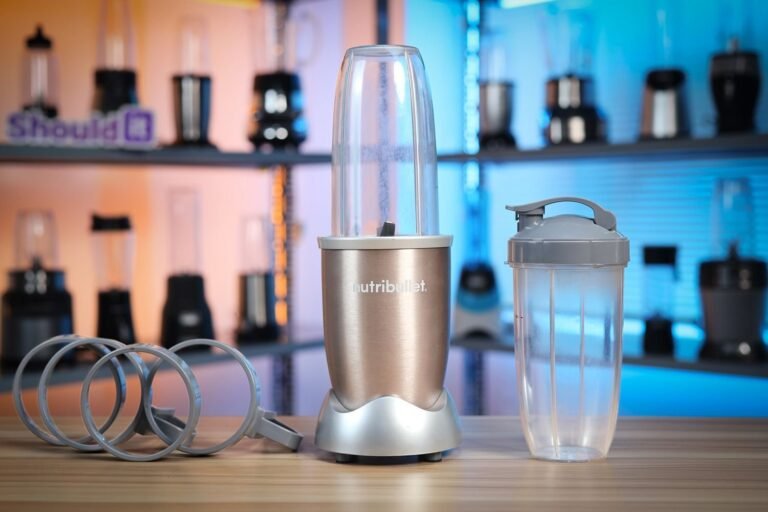
Not every Nutribullet is built the same. Motor wattage and cup size vary significantly across the lineup, and that changes how well each one manages a hard vegetable.
| Model | Typical Motor | Carrot Performance | Best Approach |
|---|---|---|---|
| Nutribullet Pro 900 | 900 watts | Good for raw carrots in small pieces | Pulse 10 times, then blend 45–60 seconds |
| Nutribullet Original 600 | 600 watts | Fair; needs cooked or very small raw pieces | Steam carrots first for best results |
| Nutribullet Pro 1000 | 1000 watts | Very good; handles raw chunks well | Blend 60 seconds, add liquid as needed |
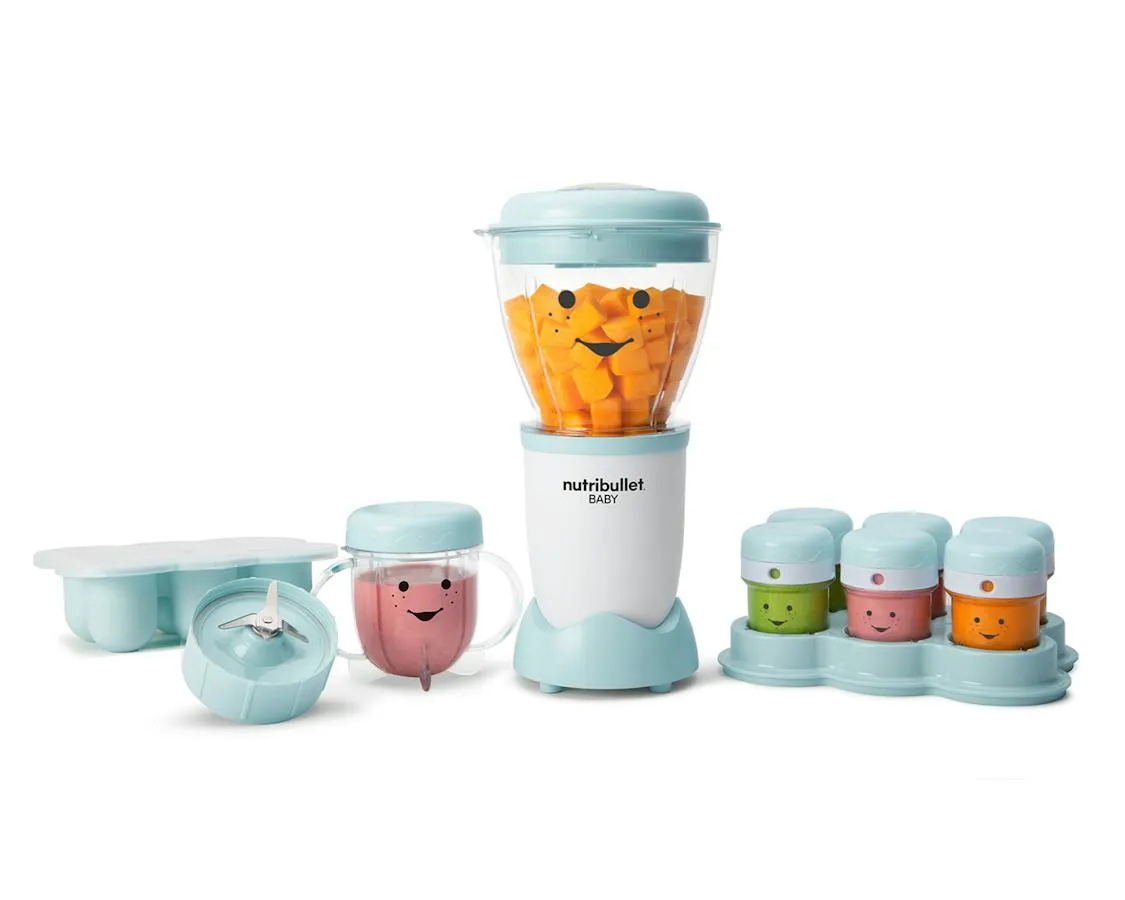
| Nutribullet Baby | ~200 watts | Only for cooked, soft carrots | Puree steamed carrots with water or breast milk |
| Nutribullet Select | 700–900 watts | Good with the pulse setting | Use the extractor blade, not the milling blade |
Two blade types matter here. The extractor blade is the standard four-blade cross that comes with the cups — that’s the one for carrots. The milling blade is a flat two-blade disc meant for dry grinding (coffee, grains, spices). Never use the milling blade for carrots; it won’t circulate the contents and can overheat the motor.
Step-By-Step: Blending Raw Carrots
Here’s the method that works reliably on a standard Nutribullet. Follow the order — it matters more than the timing.
- Wash and peel the carrots. Peeling isn’t strictly required, but peels add extra fiber that makes the texture grittier.
- Cut into ½-inch chunks. Halve the carrot lengthwise, then slice crosswise. Thick coins the width of the cup will jam.
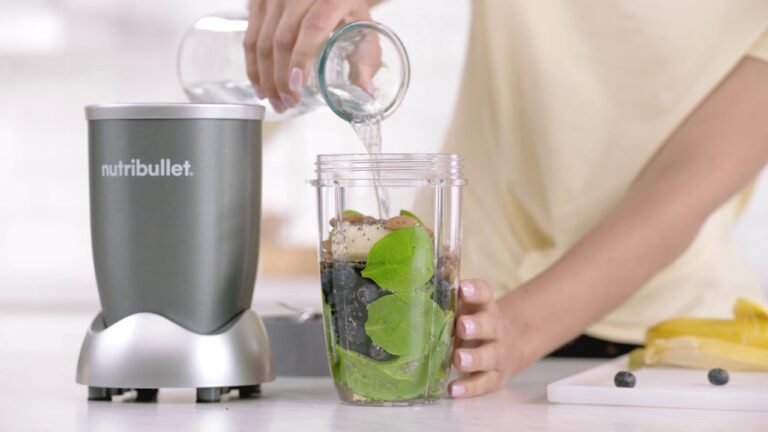
- Add liquid to the cup first. Pour in ½ to 1 cup of water, orange juice, milk, or plant milk. Liquid at the bottom lets the blade create suction.
- Add the carrots. Fill no more than halfway with carrot pieces. Leave headroom.
- Add soft ingredients on top. Banana, mango, yogurt, or cooked sweet potato help push the carrots down and improve texture.
- Twist on the extractor blade and lock it onto the base.
- Pulse 8–10 times, one second each. This breaks the chunks before the motor has to work hard.
- Blend continuously for 45–60 seconds. If the sound changes to a high whine, stop — that means the blade is spinning freely with nothing to cut.
- Scrape down and repeat if needed. Remove the cup, shake it, and blend again for 30 seconds.
- Strain if you want juice. Pour through a fine-mesh strainer or nut milk bag to remove pulp.
Pro Tip: Freeze your carrot chunks for 20 minutes before blending. Frozen carrots are slightly more brittle, so the blade shatters them into finer particles instead of mashing them into fibrous strings.
Step-By-Step: Blending Cooked Carrots
If you want genuinely smooth results — the kind you’d serve as soup or feed to a baby — cook the carrots first. This is the single biggest upgrade you can make.
- Steam, boil, or microwave the carrots until a fork slides in easily. Steaming takes about 8–10 minutes for ½-inch slices; boiling takes 6–8; microwaving with a splash of water takes 4–5.
- Let them cool for at least 5 minutes. Hot liquid in a sealed blender cup builds pressure and can pop the lid.
- Add ½ cup of the cooking water (it holds nutrients and flavor) or fresh water to the cup.
- Add the cooked carrots — you can fill to about two-thirds of the cup now, since soft food blends easily.
- Blend for 30–45 seconds. No pulsing needed. The result should be a smooth, pourable puree.
- Thin as desired with more liquid, or thicken with Greek yogurt, nut butter, or oats.
Cooked carrots also blend well with roasted garlic, ginger, coconut milk, and curry powder if you’re making a soup base.
Common Problems And How To Fix Them
Carrot blending goes wrong in predictable ways. Here’s the diagnostic table.
| Problem | Likely Cause | Fix |
|---|---|---|
| Chunks left at the top | Not enough liquid; pieces too large | Add ¼ cup liquid, shake, blend 30 more seconds |
| Blade spins but nothing moves | Air pocket around the blade | Stop, remove cup, shake hard, resume |
| Gritty, fibrous texture | Raw carrots, insufficient blend time | Cook the carrots, or strain the pulp out |
| Motor smells hot or shuts off | Overloaded cup, ran too long continuously | Let it cool 10–15 minutes, blend in shorter bursts |
| Leaking from the blade base | Overfilled past MAX, or gasket misaligned | Fill below MAX line; reseat the silicone gasket |
| Mixture turns brown | Oxidation from blending too long | Add a squeeze of lemon or a piece of apple |
Warning: Never run a Nutribullet for more than 60 seconds continuously with a thick mixture. The motor is designed for short bursts, and repeated overheating shortens its life. If your unit shuts off automatically, that’s a thermal cutoff — let it rest before trying again.
Liquid Ratios That Actually Work
Getting the liquid-to-carrot ratio right is the difference between a smoothie and a paste. These ratios are for a standard 24-ounce Nutribullet cup.
- For a drinkable smoothie: 1 cup liquid to 1 cup raw carrot chunks, plus 1 cup soft fruit.
- For a thick puree: ½ cup liquid to 2 cups cooked carrot.
- For soup base: ¾ cup broth to 2 cups cooked carrot, blended until pourable.
- For baby food: ¼ cup water, breast milk, or formula to 1 cup steamed carrot.
- For carrot juice substitute: 1½ cups water to 1 cup raw carrot, blended 90 seconds, then strained.
Water is neutral and lets the carrot flavor lead. Orange juice adds sweetness and vitamin C, which also slows oxidation. Milk and plant milks make it creamier but can curdle if you’re blending with acidic fruit like pineapple. Coconut water is a good middle ground for a lighter drink.
What To Blend With Carrots
Carrots pair well with a lot of things, but texture compatibility matters. Soft ingredients blend into the carrot; hard ones compete with it.
Good blending partners:
- Banana — adds creaminess and natural sweetness
- Mango — soft, sweet, masks carrot earthiness
- Cooked sweet potato — boosts creaminess and beta-carotene
- Greek yogurt — adds protein and tang
- Ginger — a small knob cuts the sweetness and adds heat
- Orange — classic pairing, high in vitamin C
- Apple — adds sweetness and pectin for body
- Coconut milk — makes a rich, soup-friendly base
Partners that fight the blade:
- Whole almonds — too hard; use almond butter instead
- Ice cubes in large amounts — can stall a 600-watt motor
- Raw beet — even denser than carrot; cook it first
- Whole frozen strawberries — blend them separately or thaw slightly
Pro Tip: Add a tablespoon of nut butter or half an avocado to a carrot smoothie. The fat helps your body absorb beta-carotene, which is a fat-soluble nutrient. Without some fat, you absorb noticeably less of it.
Raw Vs Cooked: Which Should You Use?
This is the core decision, and it depends entirely on what you’re making.
| Factor | Raw Carrots | Cooked Carrots |
|---|---|---|
| Texture in a Nutribullet | Grainy to slightly chunky | Smooth and creamy |
| Blend time needed | 60–90 seconds with pulsing | 30–45 seconds |
| Nutrient retention | Higher vitamin C, more intact fiber | Slightly lower vitamin C, better beta-carotene absorption |
| Best for | Juice-style drinks, slaws, quick smoothies | Soups, baby food, purees, sauces |
| Motor strain | Higher | Low |
| Taste | Fresher, more vegetal | Sweeter, mellower |
Cooking breaks down cell walls, which does two things: it makes the carrot easier to blend, and it makes beta-carotene more bioavailable. Raw carrots keep more vitamin C and heat-sensitive compounds intact. Neither is objectively better — pick based on what you’re making.
How To Get A Smoother Texture
If you’ve blended raw carrots and ended up with something that feels like wet sawdust, these techniques fix it.
- Strain the pulp. Pour the blend through a fine-mesh sieve or nut milk bag. You lose fiber but gain a silky liquid.
- Blend twice. Run the cycle, let it sit for 2 minutes so the fiber softens in the liquid, then blend again.
- Add a creamy base. Half a banana, ¼ cup yogurt, or 2 tablespoons of oats blended in will coat the fibrous particles and make the mouthfeel smoother.
- Use warm liquid. Warm (not boiling) water softens carrot fiber faster than cold. Just keep the cup vented or cooled before sealing.
- Grate before blending. A box grater turns a carrot into shreds in 30 seconds and cuts your blend time roughly in half.
- Freeze, then blend. Frozen carrot chunks shatter rather than mash, producing finer particles.
Safety And Equipment Notes
A few things are worth knowing before you make carrot blending a habit.
- Never fill past the MAX line. Carrot plus liquid expands, and an overfilled cup will leak or pop.
- Always check the gasket. The silicone ring inside the blade base must sit flat. A missing or twisted gasket is the number one cause of leaks.
- Hold the cup firmly. Twist until you feel it lock. A loose cup can detach mid-blend.
- Don’t blend dry. Running the motor with no liquid and hard chunks is the fastest way to burn it out.
- Vent hot mixtures. If you’re blending cooked carrots straight from the pot, let them cool to warm before sealing. Pressure builds fast.
- Hand wash the blade base. Most Nutribullet blade assemblies aren’t dishwasher safe on the bottom, and the bearings can rust.
Warning: If your Nutribullet starts smoking, grinding loudly, or smelling like burning rubber, stop immediately and unplug it. Those are signs of motor failure, not a blending problem you can fix with technique.
Carrot Recipes That Work In A Nutribullet
These are built specifically around the limits of a personal blender.
Carrot-orange morning smoothie. 1 cup chopped raw carrot, 1 peeled orange, ½ banana, 1 cup water, 1 teaspoon fresh ginger. Pulse 10 times, blend 60 seconds, strain if desired.
Carrot-ginger soup base. 2 cups steamed carrot, ¾ cup vegetable broth, 1 small knob ginger, 1 clove roasted garlic, ¼ cup coconut milk. Blend 45 seconds. Heat on the stove and season.
Carrot cake smoothie. 1 cup steamed carrot, ½ frozen banana, ¼ cup Greek yogurt, ½ cup milk, 1 tablespoon almond butter, pinch of cinnamon and nutmeg. Blend 45 seconds.
Baby carrot puree. 1 cup steamed carrot, ¼ cup water or breast milk. Blend 30–40 seconds until completely smooth. Thin further for younger babies.
Carrot-apple juice. 1 cup raw carrot chunks, 1 cored apple, 1½ cups water, squeeze of lemon. Blend 90 seconds, then strain through a nut milk bag.
Frequently Asked Questions
Can you put whole carrots in a Nutribullet?
No. A whole carrot is too long and too dense for the blade to catch. It will sit on top of the blade and spin without being cut, and the motor will strain. Always cut carrots into ½-inch chunks or smaller before blending.
Do you need to peel carrots before blending?
Peeling is optional. The skin is edible and adds fiber, but it also makes the texture slightly grittier. If you’re straining the blend or cooking the carrots first, skip peeling. If you want the smoothest possible raw blend, peel them.
Why is my carrot smoothie gritty?
Raw carrot fiber doesn’t fully break down in a personal blender. The fix is either cooking the carrots first, blending longer with more liquid, or straining the finished drink through a fine-mesh sieve. Adding a creamy ingredient like banana or yogurt also masks the grittiness.
Can a Nutribullet make carrot juice?
It makes a thick, pulpy carrot beverage rather than true juice. To get closer to juice, blend 1 cup of raw carrot chunks with 1½ cups of water for 90 seconds, then strain through a nut milk bag or fine sieve. You’ll get roughly 1 cup of juice from 2 medium carrots.
How long should you blend carrots in a Nutribullet?
Raw carrots need 60–90 seconds total, done in pulses followed by a continuous run. Cooked carrots need only 30–45 seconds. Never run the motor continuously for more than 60 seconds at a time, or it may overheat and shut off.
Is it safe to blend carrots every day?
Yes, for most people. Carrots are high in beta-carotene, and eating large amounts over time can cause a harmless orange tint to the skin called carotonemia. It fades when you cut back. If you’re on blood thinners, talk to your doctor, since carrots contain vitamin K.
Conclusion
Once you’ve got the chopping and liquid ratio down, carrots become one of the most useful things in your Nutribullet rotation — cheap, shelf-stable, and a solid base for smoothies, soups, and baby food. Start with cooked carrots and a ½-cup liquid ratio for your first batch, then work toward raw as you get a feel for how your specific model handles the load.