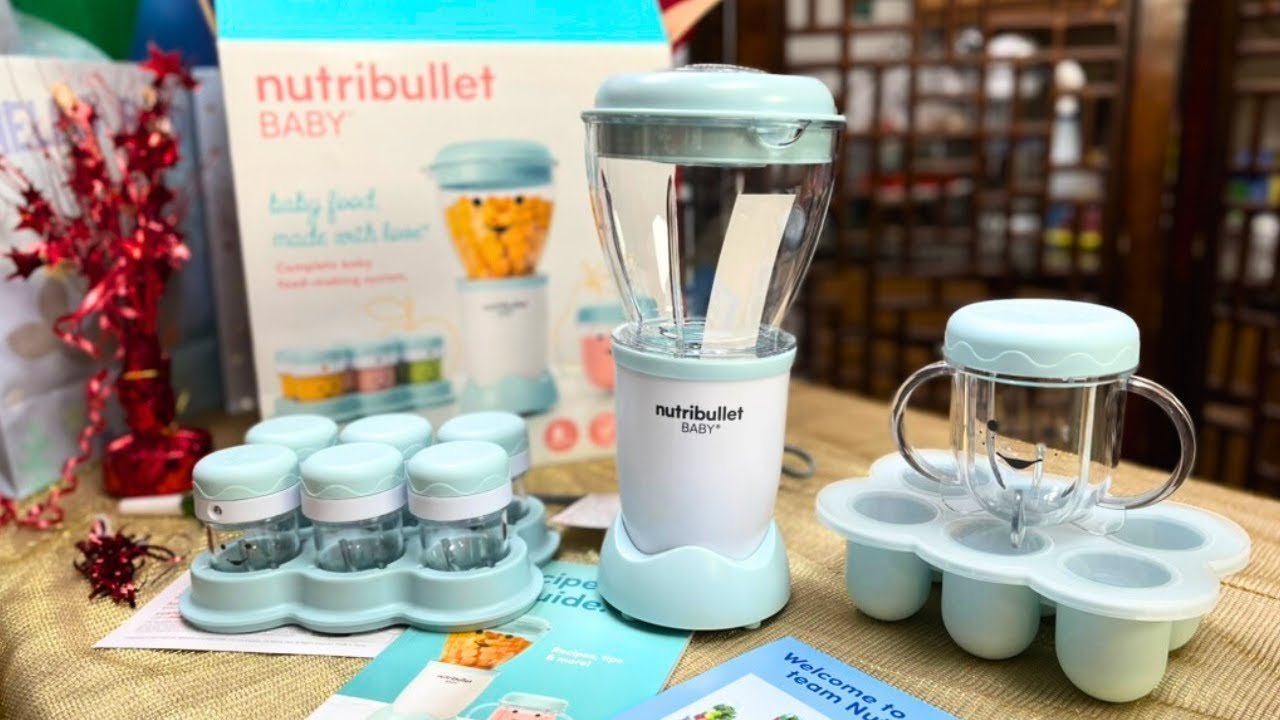
How To Use Nutribullet Baby Blender: Step-by-Step
Using the Nutribullet Baby blender comes down to four things: lock the cup into the base, press down to blend, run it in short pulses until the food is smooth, and stop when the texture suits your baby’s age. Most batches take 20 to 60 seconds.
Three things change that answer. Your baby’s age sets how smooth the purée needs to be. The food’s hardness sets the time — soft steamed carrot blends faster than raw apple. And the batch size changes how long you press, because a full cup needs more pulses than a half cup.
Pulse in one-second bursts rather than holding the button down. Holding it runs the blades continuously and can warm the food slightly, so short pulses give you more control over the texture.
Stop and scrape the sides once or twice per batch. Food packs above the blades and sits there untouched, so you get a smooth bottom and a lumpy top. Scraping takes five seconds and fixes it.
If the purée is for a baby under six months, blend until no lumps remain at all. From about eight months, leave small soft pieces — that’s the texture they’re learning to handle. Between those ages, go smooth for first tastes and thicken gradually.
Test the texture by rubbing a little of the purée between your fingers. If you can still feel grit, pulse twice more and check again.
Who’s actually reading this
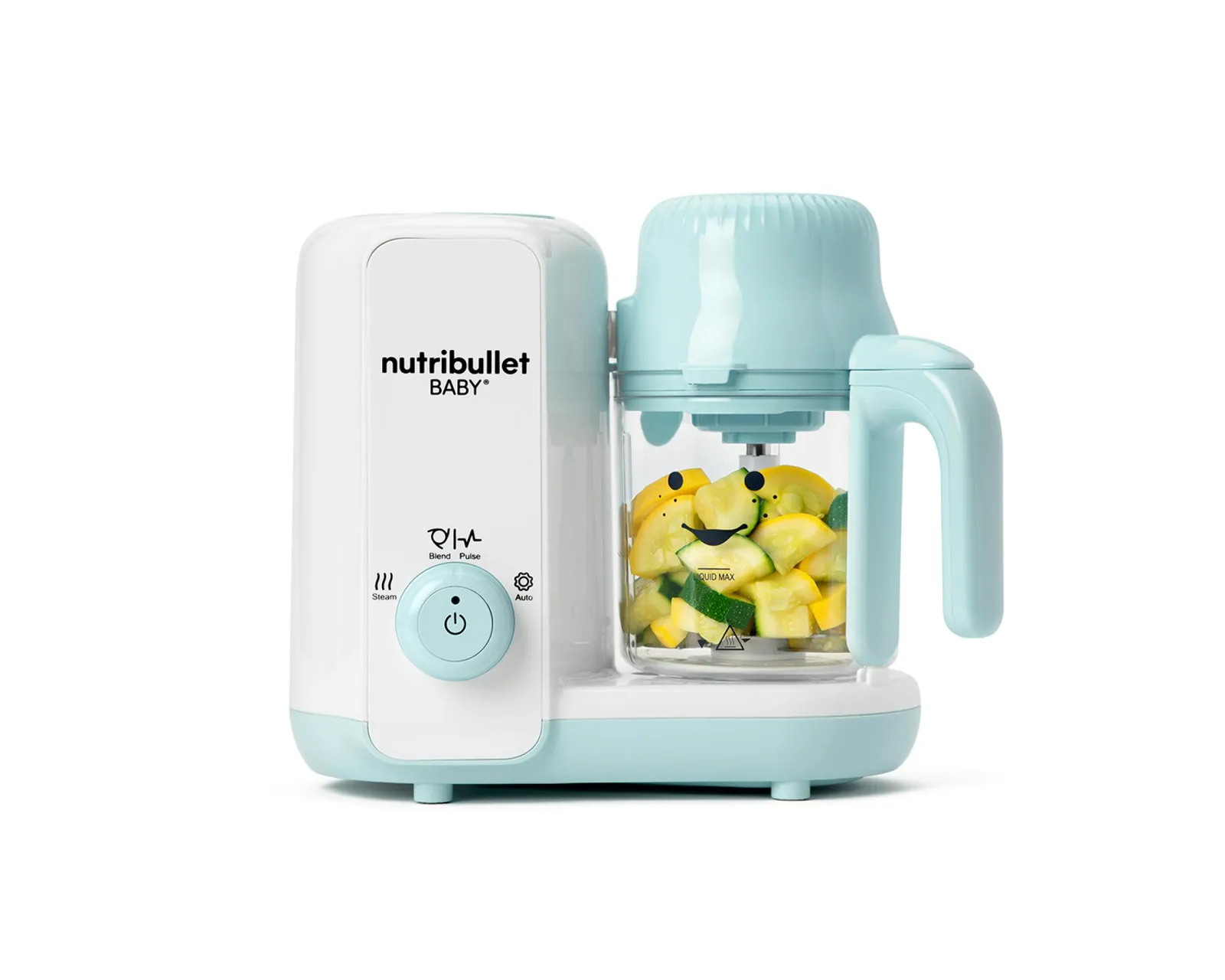
Three kinds of people search for this. The first is a parent starting solids this month, who has the blender box on the counter and no idea what the buttons do. They need the basic loop: load, lock, pulse, thin, store.
The second is a parent who already owns a full-size blender and wants to know if the small one is worth the counter space. They need to know it’s a small-batch tool, best for 1 to 4 servings at a time, not a replacement for a big blender.
The third is someone who bought it secondhand, with no manual in the box. They need the safety basics and the cleaning rules more than they need recipes.
This page serves the first and third readers best. It assumes you have the blender, the short cup, the blade, and a way to steam food. If you want full meal plans, a pediatric feeding guide will help you more than this page.
What changes your result
Your baby’s age decides the texture you’re aiming for. A 6-month-old needs a thin, smooth purée with no lumps. By 9 to 12 months, many babies handle soft mash with small pieces. Check your own pediatrician’s guidance on when to move up a texture, because it varies by child.
The food’s water content decides how much liquid you add. Steamed zucchini and pear release water as they blend. Sweet potato, chicken, and lentils don’t — they need added water, breast milk, or formula.
How much you fill the cup decides whether it works at all. Overfill it and the blade can’t move the food. The Nutribullet Baby cup has a fill line printed on the side; stay under it.
Food temperature matters too. Let steamed food cool to room temperature before blending. Hot food in a sealed cup builds pressure, and steam can push the lid loose.
The one people get wrong most often is batch size. They fill the cup to the top, the blade stalls, and they assume the machine is broken. It isn’t — it’s overloaded.
Step-by-step: blending a batch
- Wash and cut the food into pieces about 1 inch (2.5 cm) across. Hard foods like carrot, apple, and potato must be steamed first. The sign it worked: a fork slides in with no resistance.
- Steam until soft, then let it cool to room temperature. Steaming time depends on the food and piece size — check with a fork rather than a clock.
- Add the food to the short cup, staying below the fill line. Leave about 1 inch of space at the top so the blade can move. The sign it worked: the food sits loose, not packed.
- Add liquid — start with 1 to 2 tablespoons per cup. Use water, breast milk, or formula. You can always add more; you can’t take it out.
- Twist the blade onto the cup until it’s finger-tight. The sign it worked: the blade sits flat and doesn’t wobble when you press the cup.
- Turn the cup upside down and press it onto the base. Push down and twist until it locks. The sign it worked: the cup sits level and won’t lift without a twist.
- Press straight down to blend in 5-second pulses. Release between pulses. Run 4 to 8 pulses for soft food, more for dense food.
- Stop and check the texture. Lift the cup, unscrew the blade, and look. Add 1 tablespoon of liquid at a time if it’s too thick.
- Spoon out what you need and store the rest. Refrigerate or freeze within 2 hours of blending.
The judgement call is knowing when to stop pulsing. A purée that looks smooth in the cup can still have a gritty grain between your fingers. Rub a little between two fingers before you serve it — if you feel grit, pulse twice more.
Which batch fits your situation
| Your situation | What to do | What it takes | What to watch for |
|---|---|---|---|
| First food, 6 months | Blend smooth, thin with water | 2 to 3 minutes total | Any lumps at all |
| Baby now 9 months | Pulse less, leave soft texture | 1 to 2 minutes total | Pieces bigger than a pea |
| Small batch, 1 serving | Half-fill the cup, 2 pulses | Under 1 minute | Blade spinning in air |
| Freezing for later | Fill trays, freeze, then pop out | 3 to 4 hours to freeze | Ice crystals on the surface |
| Using formula or breast milk | Add after blending, stir in | 30 seconds | Never re-freeze thawed milk |
| Dense food like chicken | Add extra liquid, pulse longer | 3 to 4 minutes total | Dry, paste-like texture |
| Blender seems stuck | Stop, unplug, loosen the food | 1 minute | Never press harder |
What careful hands do differently
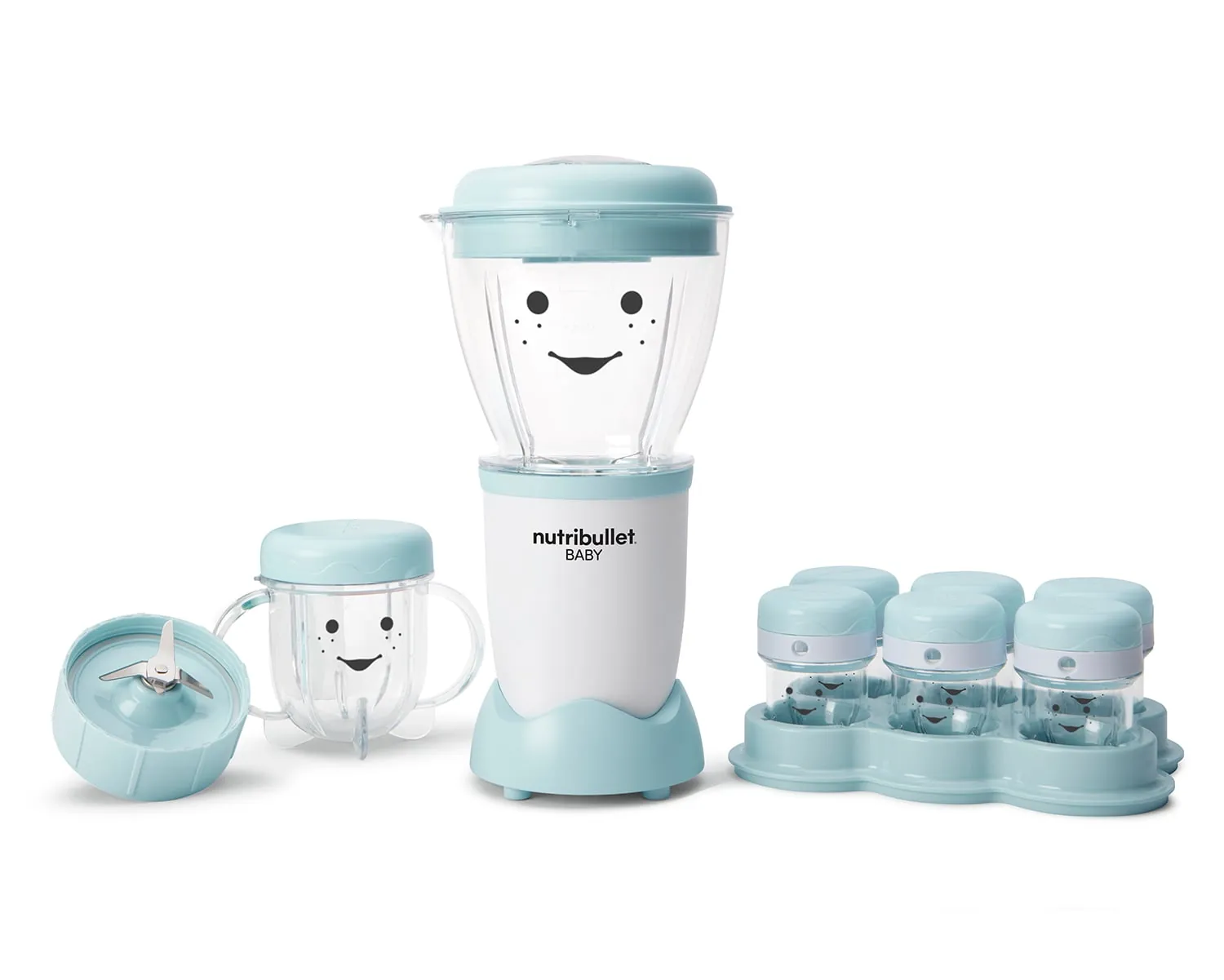
They prep before they blend
Cooked food goes into the cup in small, even pieces, not one big lump. Even pieces blend at the same speed, so you don’t get a smooth bottom and a chunky top. They also cool food fully first — a warm cup fogs, and you can’t see the texture through it.
Cooling takes longer than people expect. A steamed carrot chunk straight from the pot can hold heat for fifteen minutes or more, and a sealed cup traps that steam. Spread pieces on a plate in a single layer instead of leaving them piled in the pan.
Starchy foods — potato, sweet potato, winter squash — can turn gluey if you push them past the point of smooth, so stop at the first fully smooth pass. Stop at the first fully smooth pass. If the purée pulls into a sticky ball around the blade, you have gone too far; thin it with a little more liquid and stop pulsing sooner next time.
They check texture with their hands, not their eyes
A purée can look perfect and still be gritty. Rubbing a dab between your fingers catches grain the eye misses. If it feels sandy, add a tablespoon of liquid and pulse twice more. That single check is the difference between a batch your baby eats and one they spit out.
Some grit isn’t a blending problem. Peas, lentils, and berry seeds stay grainy no matter how long you run the machine, and that’s normal for the food, not a sign you did it wrong.
When something goes wrong
| What you notice | What it usually means | What to do first | How to stop it happening again |
|---|---|---|---|
| Blade won’t turn | Cup isn’t locked on the base | Twist the cup until it clicks | Press down and twist every time |
| Food stays chunky on top | Too much food in the cup | Remove half, pulse again | Stay under the fill line |
| Purée is thick and pasty | Not enough liquid | Add 1 tablespoon at a time | Start with 1 to 2 tablespoons |
| Liquid leaks out | Blade not tight enough | Unplug, dry, retighten blade | Twist finger-tight before locking |
| Motor smells warm | Too many long pulses | Stop, unplug, wait 10 minutes | Use 5-second pulses, not long runs |
| Baby refuses the food | Texture or temperature off | Check texture with your fingers | Serve at room temperature |
Food safety rules that apply
Cooked food isn’t safe just because it’s been heated once. The USDA Food Safety and Inspection Service advises refrigerating cooked food within 2 hours, and 1 hour if the room is above 90°F (32°C). It also advises reheating leftovers to 165°F (74°C) before serving.
Never re-freeze breast milk or formula that has already been thawed. The CDC publishes guidance on how long breast milk keeps at room temperature, in the fridge, and in the freezer, and those times differ — check the CDC’s page for your storage situation.
Don’t add salt or honey to a baby’s food. Honey isn’t safe for babies under 12 months because of infant botulism risk, per the CDC and the American Academy of Pediatrics.
If your baby has allergies, reflux, or trouble swallowing, talk to your pediatrician before starting a new food. That’s a medical question, not a blending one.
What this really costs you
The money side is simple: the blender itself, plus the food. Prices change by store and by country, so check the current listing rather than trusting a number here. Frozen and fresh produce both work fine, and frozen is often cheaper.
The real cost is time. A single batch runs 2 to 4 minutes of hands-on work, plus steaming and cooling. Steaming adds 10 to 20 minutes depending on the food and piece size, and cooling adds another 10 to 15 minutes.
Batch cooking drops the cost per serving. Make 3 or 4 foods in one session, freeze them in trays, and you’ve covered a week of meals in about an hour of work. Doing one food at a time, every day, costs you far more minutes for the same result.
The hidden cost is waste. A batch your baby rejects gets thrown out, and that’s food and time gone.
Keeping it right afterwards
Store purée in small, covered containers in the fridge, and use it within 1 to 2 days. Small containers cool faster than one big tub, which is the whole point: a deep batch sits warm in the middle long after the edges are cold.
For longer storage, freeze it in ice-cube trays, then move the cubes to a freezer bag once solid. The cubes let you pull out roughly the amount you need for a serving.
Label the bag with the food and the date — you won’t remember in three weeks. Frozen purée keeps well for a few months; check the USDA’s food storage guidance for the exact time by food type.
The sign a batch needs attention is separation: water pooling on top, or a grainy texture after thawing. Stir it and check how long it has been left out and whether it was kept cold enough. If it has sat out too long or looks spoiled, throw it out.
To fix a separated purée, stir it well and, if it still looks grainy, re-blend it briefly in the cup.
Clean the blade and cup right after each use. Food dries hard on the blade, and dried bits are much harder to remove than fresh ones. If you can’t wash it straight away, fill the cup with warm water and let it soak, then wash it by hand.
When this isn’t the right tool
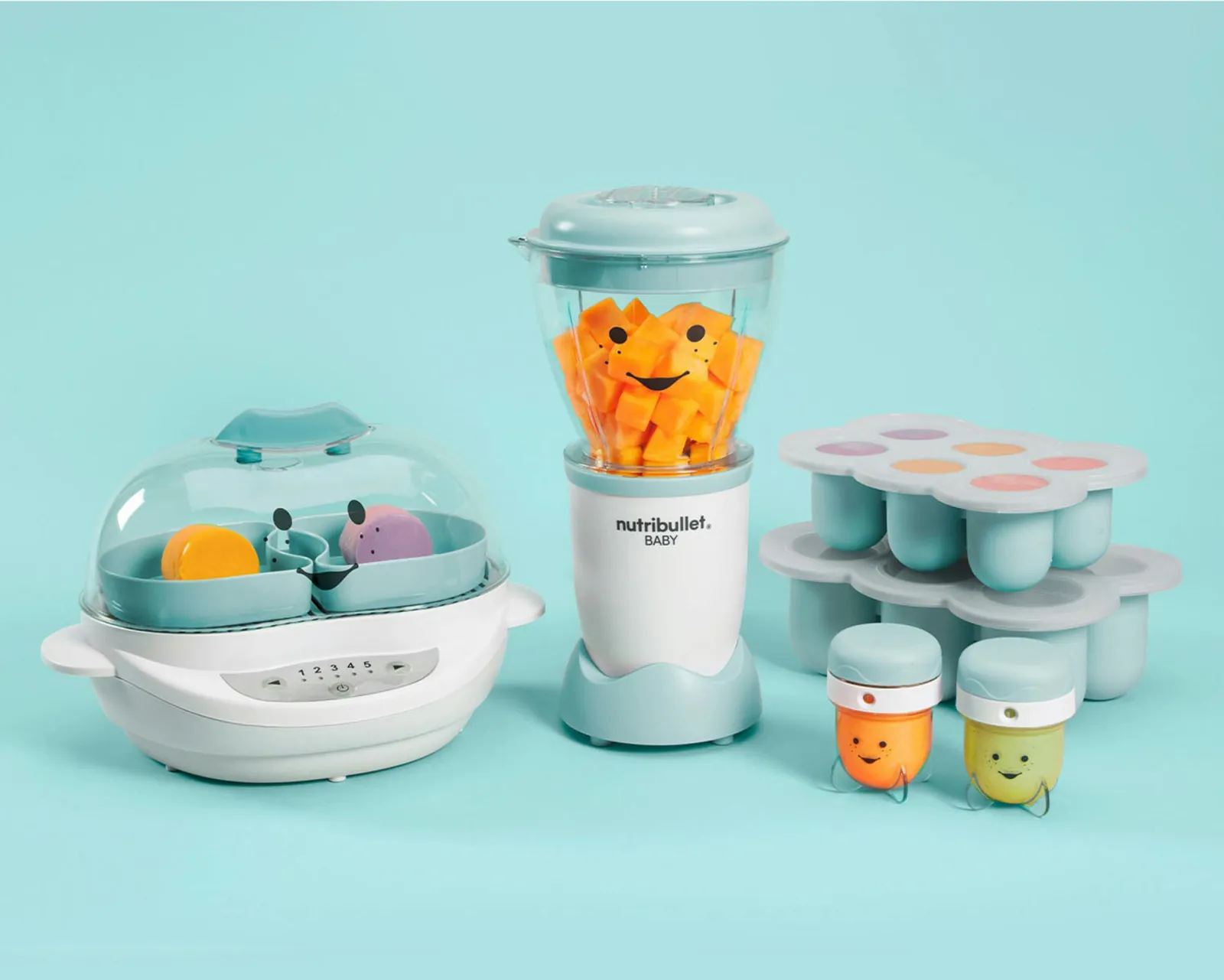
This blender is wrong for you if you’re feeding more than one child at once, or making batches bigger than about 2 cups. A full-size blender or a food processor handles volume better and won’t stall.
It’s also the wrong choice if you want to blend hot food straight from the pot. This tool needs cooled food, so a stick blender used directly in the pot saves you the cooling step.
And if your baby has a feeding difficulty, a texture problem, or a diagnosed swallowing issue, don’t work this out alone. Ask your pediatrician or a feeding therapist — they’ll tell you the texture and thickness that’s safe.
Two children on the same puree is the case people get wrong most often. One batch of about 2 cups covers roughly four to six ice-cube servings, which is two or three days for a single baby. Two babies eating the same thing will empty that in a day and a half, so you’ll be blending twice as often as you planned.
If you’re cooking once a week and freezing, buy the full-size machine. If you’re making one fresh serving at a time, this one is faster to rinse and takes up less counter space.
The mistake is buying small to save money, then discovering you blend every day instead of every third day. The daily version is the one that ends up in a cupboard.
Frequently asked questions
How long does the Nutribullet Baby take to blend?
About 20 to 60 seconds of pulsing for soft food, and 1 to 2 minutes for dense food like chicken or lentils. Those times assume small, steamed pieces and enough liquid. If the blade stalls, stop and remove some food rather than pressing longer.
Can you put hot food in the Nutribullet Baby?
No. Let food cool to room temperature first. Hot food in a sealed cup builds pressure, and steam can push the blade or lid loose while you’re holding it. Cooling takes about 10 to 15 minutes for a small batch.
Why is my Nutribullet Baby not blending?
The cup probably isn’t locked onto the base, or there’s too much food in it. Press down and twist until it clicks. If it’s locked and still stuck, unplug it, remove half the food, and try again with more liquid.
How much liquid do you add to baby purée?
Start with 1 to 2 tablespoons per cup and add more 1 tablespoon at a time. Watery foods like pear and zucchini need less; dense foods like sweet potato and chicken need more. You can always thin a purée, but you can’t thicken it back.
Is it safe to reheat baby purée?
Yes, reheat to 165°F (74°C), per USDA guidance, then let it cool to a safe eating temperature before serving. Reheat only the portion you’re using. Never reheat a batch twice, and never re-freeze milk or purée that’s already been thawed.
How long does homemade baby food last in the fridge?
Use refrigerated purée within 1 to 2 days. The USDA advises refrigerating cooked food within 2 hours of cooking. Frozen purée keeps much longer — check the USDA’s food storage guidance for the exact time by food type.
Does it matter which cup I use?
Yes. Use the short cup that came with the blender, and stay under its printed fill line. A different cup may not lock onto the base, and an overfilled cup stalls the blade. If you’ve lost the original, order a replacement from the manufacturer.
Can I blend raw fruit without steaming?
Soft fruits like banana, avocado, and ripe pear blend raw. Hard fruits like apple and unripe pear need steaming first, or the purée comes out gritty. If it feels sandy between your fingers, it needed cooking.
Conclusion
Start with one soft food — banana or steamed carrot — and blend a half-cup batch with 1 tablespoon of water. You’ll get a smooth purée in under a minute, and the texture between your fingers will tell you it’s right. If the blade stalls, the cup leaks, or the motor smells warm no matter what you try, stop and contact Nutribullet support rather than forcing it.