How To Blend Celery In A Nutribullet
Cut the celery into 1-inch pieces, add 1/4 cup of water or juice per cup of celery, and blend for 45 to 60 seconds. Celery is mostly water and fiber, so it needs liquid to move. Without it, the blades spin and the celery just sits there.
Three things change that answer. How fibrous your stalks are, how much you load at once, and whether your Nutribullet is a 600-watt or 900-watt model. Each one moves the time and the amount of liquid you’ll need.
Start with the low end of the liquid and add more in 1-tablespoon splashes, pulsing between each. You want the celery to stop climbing the cup walls and start moving as one mass. If it still clumps after two splashes, you overloaded the cup. Pull out a third of it and blend in two batches.
Stalks from the outer edge of the bunch are stringier than the pale inner ones. Cut those crosswise into 1/2-inch pieces instead, and expect the full 60 seconds. Inner stalks break down in about 45.
Never fill past the max line to save a batch. The motor strains, the lid can leak, and you’ll spend longer cleaning than you saved.
Who’s actually blending celery
Three kinds of people type this. The first has a Nutribullet on the counter and a bag of celery going soft in the fridge. They want juice or a smoothie base, fast, and they don’t want to drag out a big machine. They usually have the standard 24-ounce cup and the basic extractor blade that came in the box.
The second is making a green smoothie and adding celery as one ingredient among five. They care less about celery itself and more about whether it’ll wreck the texture of everything else. They need to know the order to load things in.
The third has a medical or diet reason — a doctor said to add more fiber, or they’re following a low-sodium plan. They’re blending daily, not once. They need consistency and a routine that doesn’t clog the blade every morning.
This page serves the first two best. If you’re blending for a medical reason, follow your doctor’s or dietitian’s guidance on amounts, not a recipe here.
What decides how well it blends
Stalk thickness and age. Older, thicker stalks have more stringy fiber and take longer. Bend a stalk — if it snaps clean, it’s fresh and blends fast. If it bends like a rope, add an extra 2 tablespoons of liquid and blend 15 seconds longer.
The liquid-to-solids ratio. This is the one people get wrong most. Celery won’t circulate without liquid. The rough starting point is 1/4 cup of liquid for every 1 cup of chopped celery. Go by what you see: if the mixture isn’t moving, add 2 tablespoons at a time.
Your motor size. Nutribullet sells 600-watt and 900-watt models, and the wattage is printed on the base. A 900-watt unit handles a full cup of celery in about 45 seconds. A 600-watt unit needs smaller batches and closer to 60 seconds.
How full you load the cup. Never fill past the MAX line. An overfilled cup either stalls or leaks because there’s no room for the mixture to move.
Whether you remove the strings. Peeling the outer ribs with a vegetable peeler cuts blending time and gives a smoother drink. It’s optional, but it’s the difference between a smooth sip and a chewy one.
Step-by-step blending
Wash and dry the stalks. Rinse under cold water and pat dry. Wet stalks add water you didn’t measure, which throws off your ratio. You’re done when the stalk feels dry to the touch.
Cut off the base and tips. Slice about 1/2 inch off the bottom of the bunch and trim any brown ends. Discard those pieces — they’re bitter.
Chop into 1-inch pieces. Cut across the stalk, not lengthwise. Pieces longer than about 1.5 inches tend to wrap around the blade instead of chopping. You’ll get roughly 1 cup from 2 medium stalks.
Peel the strings if you want a smoother drink. Run a vegetable peeler down the outside curve of each piece. Skip this if you don’t mind texture.
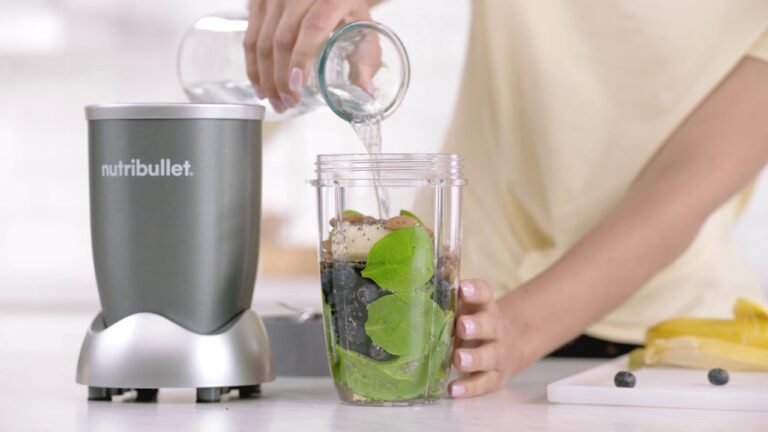
Add liquid first. Pour 1/4 cup of water, coconut water, or apple juice into the cup. Liquid at the bottom lets the blades create a vortex. For 2 cups of celery, use 1/2 cup.
Add the celery on top. Fill to no more than two-thirds of the cup. Leave the top third empty for movement.
Twist on the extractor blade and lock it. Line up the tabs and turn until it clicks. Tug the cup gently — if it moves, it isn’t locked.
Blend for 45 to 60 seconds. Press down and hold. If the motor sounds strained or the mixture stops moving, stop and shake the cup. Never run it longer than 60 seconds at a time.
Check the texture. Stop when you see no pieces bigger than a grain of rice. If chunks remain, add 2 tablespoons of liquid and go another 15 seconds.
Pour through a strainer if you want juice. A fine mesh strainer separates the pulp from the liquid. Press the pulp with a spoon to get the rest out.
The judgement call is knowing when to stop adding liquid. Too little and the blade stalls; too much and you’ve made celery water. Aim for a mixture that moves like a thick soup, not a thin one.
If you’re blending for someone with swallowing trouble, stop here and talk to a speech therapist or dietitian. Texture matters medically, and this page can’t judge that.
Different situations, different approach
| Your situation | What to do | What it takes | What to watch for |
|---|---|---|---|
| Fresh, thin stalks | Blend 45 seconds | 1/4 cup liquid per cup | Almost nothing goes wrong |
| Thick, older stalks | Peel, blend 60 seconds | 1/3 cup liquid per cup | Strings wrap the blade |
| 600-watt base | Half batches only | Two rounds, 60 seconds each | Motor smells hot |
| Full smoothie with fruit | Celery in first, fruit on top | Same liquid as normal | Cup over the MAX line |
| Want clear juice | Strain after blending | Extra 2 minutes, mesh strainer | Pulp still wet |
| Blending for a child | Strain fully, thin with water | Extra liquid, 1-2 minutes | Choking texture left in |
| Daily habit | Pre-chop a week’s worth | 10 minutes once | Cut celery dries out |
Two rows trip up more people than the rest, so read them twice.
The 600-watt row is the one to respect. If your base is under 700 watts, never fill past half. A full cup stalls the blade, and a stalled blade heats the motor instead of the celery.
Run 60 seconds, stop, let it rest a minute, then run the second round. If the housing is too hot to hold against your wrist, stop for the day. Motors that smell hot are already losing life, and a burnt base costs more than a new bunch of celery.
The child row is the other one. A standard blend leaves fibrous threads that a small throat can’t move, so strain through the finest mesh you own, then thin with water until it pours like milk. If it still coats a spoon, strain again.
For everything else, the table holds. When two rows seem to apply, follow the stricter one: a thick stalk in a weak base gets peeled and blended in half batches, not one or the other.
What separates a good blend from a bad one
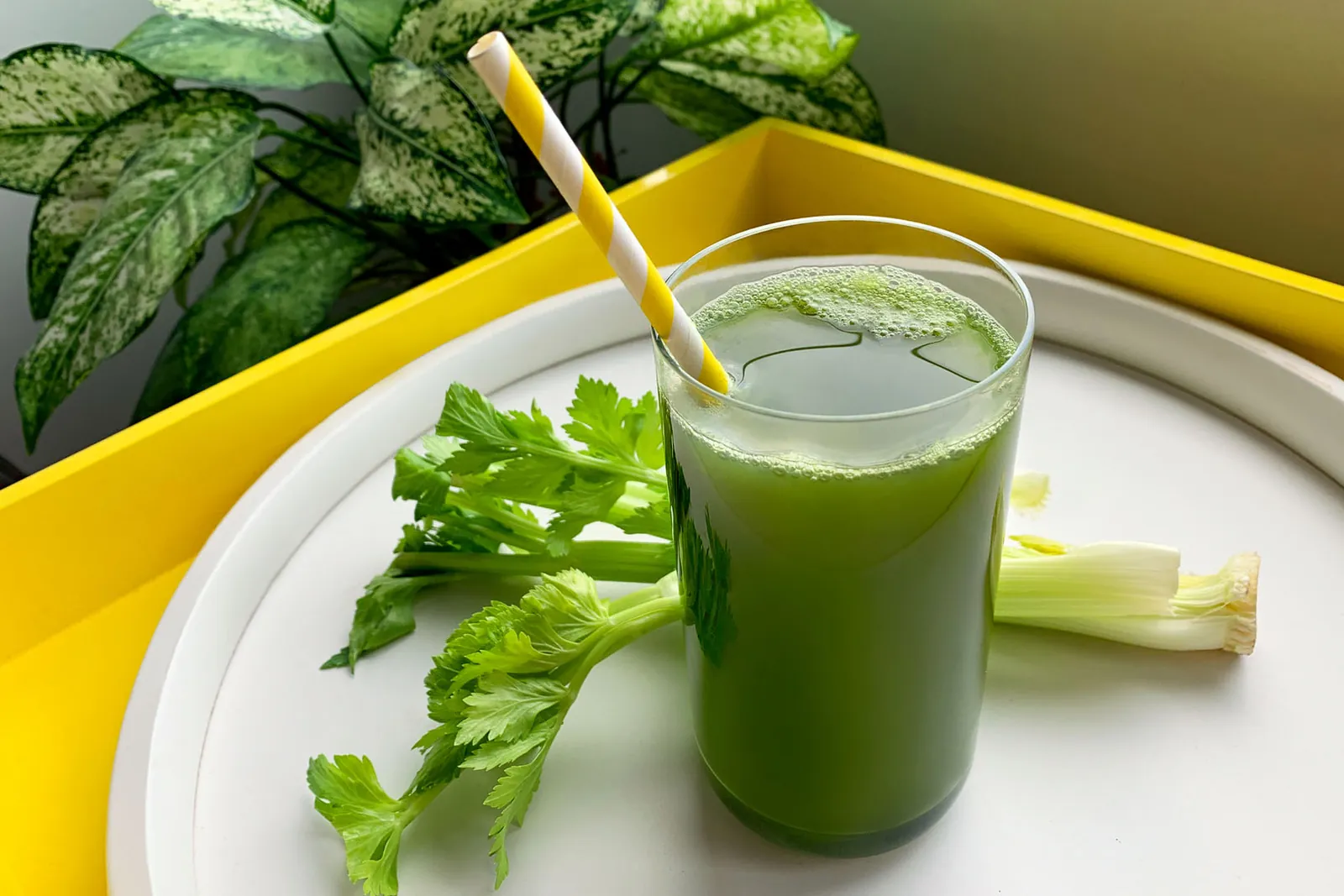
Prep and loading order
Experienced blenders chop everything before the cup comes out. Celery goes in first, soft items like banana or yogurt go on top, and liquid goes in at the very bottom. That order matters because the blade needs liquid at the base to start the vortex, and soft items at the top get pulled down last.
They also cut celery to a consistent 1 inch. Mixed sizes mean small pieces turn to mush while big ones stay whole. Check your pieces against each other before you load — if they vary by more than half an inch, re-cut them.
What they check and what they leave alone
While it’s running, they listen. A smooth hum means it’s working. A rattling or grinding sound means a piece is stuck, and the fix is to stop, shake, and restart — not to run it longer.
They leave the pulp in for smoothies and strain it only for juice. They also don’t add extra liquid “just in case.” Adding 2 tablespoons at a time and checking is slower but wastes less.
What goes wrong and how to fix it
| What you notice | What it usually means | What to do first | How to stop it again |
|---|---|---|---|
| Blade spins, celery sits still | Not enough liquid | Add 2 tablespoons, shake, blend | Start with liquid at the bottom |
| Motor smells hot | Overloaded cup | Stop, let it cool 10 minutes | Fill only two-thirds full |
| Drink is stringy | Outer ribs left on | Strain through mesh | Peel stalks first |
| Mixture won’t move | Too much celery at once | Split into two batches | Half-fill the cup |
| Leaks from the blade | Cup not locked | Re-seat and twist to click | Tug-test before blending |
| Bitter taste | Base or brown ends left in | Discard those pieces next time | Trim 1/2 inch off the bottom |
| Thin, watery result | Too much liquid added | Add more celery next time | Measure 1/4 cup per cup |
What the rules and guidance say
There’s no law about blending celery, but food safety guidance from the USDA and the FDA does apply to what you do with it afterward. FoodSafety.gov guidance says cut produce should be refrigerated within 2 hours at room temperature.
Freshly blended celery juice is a cut, moist, low-acid food. That’s the category where bacteria grow fastest. Refrigerate it promptly and check FoodSafety.gov’s “Refrigerator and Freezer Storage Chart” for current published storage times.
The clock starts when you cut, not when you finish juicing. Celery washed and left whole on the counter is intact produce and isn’t covered by the 2-hour rule; the moment the knife goes in, it is. So a batch you chop at noon and blend at four has already spent four hours in the danger zone, not zero.
If you’re on a low-sodium or renal diet, celery contains potassium, so ask your doctor or a registered dietitian how much fits your plan. Ask your doctor or a registered dietitian how much fits your plan before making it a daily habit.
What this costs you
The money side is small. A bunch of celery runs a few dollars at most US grocery stores, and prices move by season and region — check your store’s current price rather than trusting any number here. Water is free. If you’re buying juice instead, that’s where the cost jumps, and you’d compare per-ounce prices at your store.
The real cost is time and cleanup. Chopping takes about 3 minutes for 2 cups if you’re not practiced, and closer to 90 seconds once you’ve done it a few times. Blending is 45 to 60 seconds. Rinsing the cup and blade takes another minute, and you should do it right away — dried celery pulp is much harder to remove.
The cost that moves up fastest is waste. Pre-chopping and freezing what you won’t use in 3 days cuts that waste to near zero.
Keeping it right afterwards
Drink it the same day if you can. If you can’t, pour it into a sealed jar, fill it to the top to limit air contact, and refrigerate. The sign it’s still good is a fresh green color and a clean smell. The sign it’s gone is a dull brownish tint, separation that won’t shake back, or any sour smell — toss it at that point.
A jar that’s been open and half-empty is the case people get wrong. Air exposure speeds spoilage, so a partly full jar can spoil sooner than a full one. If you only got halfway through, transfer the rest to the smallest jar it fits in.
The pulp you strain out doesn’t have to be waste. It freezes well in a small bag and works in soups, stocks, or muffin batter. Freeze it flat so it thaws fast. Press the bag to squeeze out air before sealing, or the pulp picks up a freezer taste within a couple of weeks.
For the celery itself, wrap dry stalks in aluminum foil and keep them in the fridge crisper. They’ll hold noticeably longer than in the plastic bag from the store. If stalks go limp, cut 1/2 inch off the base and stand them in cold water for 30 minutes — they’ll firm up enough to blend.
When blending celery isn’t the right move
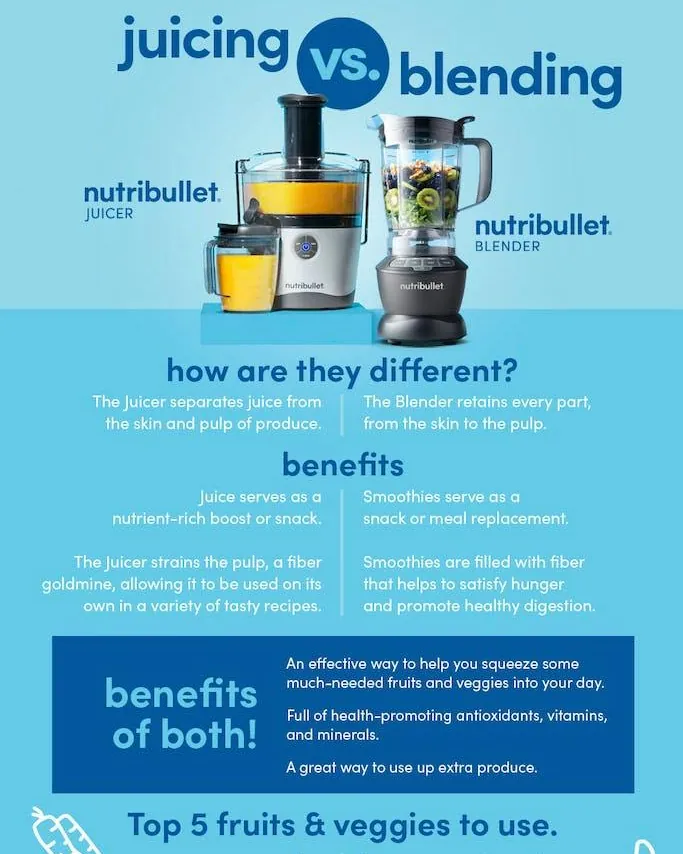
If you need clear, pulp-free juice in volume, a dedicated juicer does that job better. A Nutribullet blends; it doesn’t extract. You’ll get more yield and less straining from a masticating juicer.
If you’re dealing with a medical condition that needs precise potassium or fiber control, don’t build a routine from a recipe page. Work with a registered dietitian who can set your amounts.
If your Nutribullet base is cracked, the blade is dull, or the motor has started smoking, stop using it. Replace the part through Nutribullet’s official support rather than pushing a failing machine.
One more case worth knowing: celery is stringy, and those strings wrap around a blade rather than cutting. If you’re blending it for a sauce or a soup base, peel the outer stalks first with a vegetable peeler. The fibers come off in strips and the texture turns smooth in seconds.
If you’re blending celery only to flavor a stock or a braise and then straining it out, skip the blender entirely. Drop the stalks in whole, simmer, and lift them out. You get the flavor without the cleanup.
Frequently asked questions
Can you blend celery in a Nutribullet without water?
No — you need at least 1/4 cup of liquid per cup of celery. Celery is roughly 95% water, but that water stays locked inside the cell walls until the blade breaks them. Without added liquid, the blades spin freely and the celery just sits against the sides.
Why is my celery not blending?
The most common cause is too little liquid, followed by an overfilled cup. Add 2 tablespoons of water, shake the cup, and blend another 15 seconds. If it still won’t move, remove half the celery and blend in two batches instead.
How long does it take to blend celery?
About 45 to 60 seconds in a 900-watt Nutribullet, and closer to 60 seconds in a 600-watt model. Thick, older stalks need the longer end of that range. Stop when no pieces bigger than a grain of rice remain.
Is it safe to drink celery juice every day?
For most healthy adults, a glass a day is fine. Celery is high in potassium, so if you have kidney disease or take potassium-sparing diuretics, ask your doctor first. FoodSafety.gov’s storage guidance also applies — keep it refrigerated and use it within a few days.
What happens if you blend celery too long?
The motor can overheat and the drink warms up, which affects taste and texture. Never run the machine more than 60 seconds at a stretch. If it feels hot, let it cool for 10 minutes before the next batch.
Does blending celery destroy the fiber?
No. Blending breaks the fiber into smaller pieces but doesn’t remove it. You’ll still get the fiber unless you strain the pulp out. Straining gives you a thinner drink and less fiber.
How much celery should I put in at once?
Keep it to about 1 cup of chopped celery per 1/4 cup of liquid, and never fill the cup past two-thirds. That leaves room for the mixture to move. For a 24-ounce cup, that’s roughly 2 cups of celery maximum.
Can I blend celery leaves too?
Yes, and they blend faster than the stalks because they’re softer. Add them last, on top of the chopped stalks. They have a stronger, slightly bitter flavor, so start with a small handful and adjust.
Conclusion
Start with 2 stalks, 1/4 cup of water, and a 45-second blend. You’ll know it worked when the mixture moves smoothly and no chunks bigger than a grain of rice are left. If the motor smells hot, the cup leaks, or the base is cracked, stop and contact Nutribullet support instead of pushing through.