Can I Blend Hot Soup in My Nutribullet? The Safe Answer
Yes, you can blend hot soup in a Nutribullet, but only if you let it cool to room temperature first. The one thing that flips this answer is steam: a sealed blender cup turns hot liquid into pressure, and pressure pops lids. So take the soup off the heat and leave it uncovered for 15-20 minutes. Once it’s warm, not steaming, you can blend it safely and get a smooth result in under a minute.
When hot soup works in a Nutribullet and when it doesn’t
The answer depends less on the soup and more on three things: how hot it is, how full the cup is, and whether the cup is sealed. Most people get this wrong because they treat a blender cup like a pot — it isn’t. A pot lets steam escape; a sealed cup traps it.
Here’s how common situations sort out:
| Your situation | Answer | Why |
|---|---|---|
| Soup cooled to room temp | Yes, safe | No steam pressure builds |
| Soup still steaming | No | Steam expands and pops the lid |
| Cup filled past the max line | No | Liquid has nowhere to expand |
| Thick soup, like potato | Yes, with liquid added | Too thick to circulate |
| Thin broth, fully cooled | Yes | Flows freely, blends fast |
| Soup with whole chunks | Yes, in two stages | Chunks jam the blade first |
| Cup sealed while hot | No | Pressure has no release path |
The one row that flips the verdict is the last one. The same soup that’s safe at room temperature becomes dangerous the moment you seal it while hot. That’s the whole rule in one line.
If your soup is thicker than heavy cream, add 1/4 cup of warm water or broth per 2 cups of soup before blending. Without that liquid, the blade spins in a pocket of air and the soup stays lumpy.
Why temperature decides everything
Heat is the deciding factor, and it decides because of physics, not preference. When you blend hot liquid in a sealed cup, the hot liquid gives off steam, and steam needs roughly 1,600 times more space than the water it came from. In a closed cup, that steam has nowhere to go.
The lid is the weakest point. It lifts, then it fails, and hot soup lands on your hands, your face, and your ceiling. This isn’t a Nutribullet problem — it’s true of every sealed blender, from a $30 model to a $500 one. The brand doesn’t matter. The seal does.
There’s a second reason, and it’s about texture. Very hot liquid blended at high speed can turn slightly foamy, because air gets whipped into it. The soup still tastes fine, but the mouthfeel changes. Letting it cool 15-20 minutes fixes both problems at once.
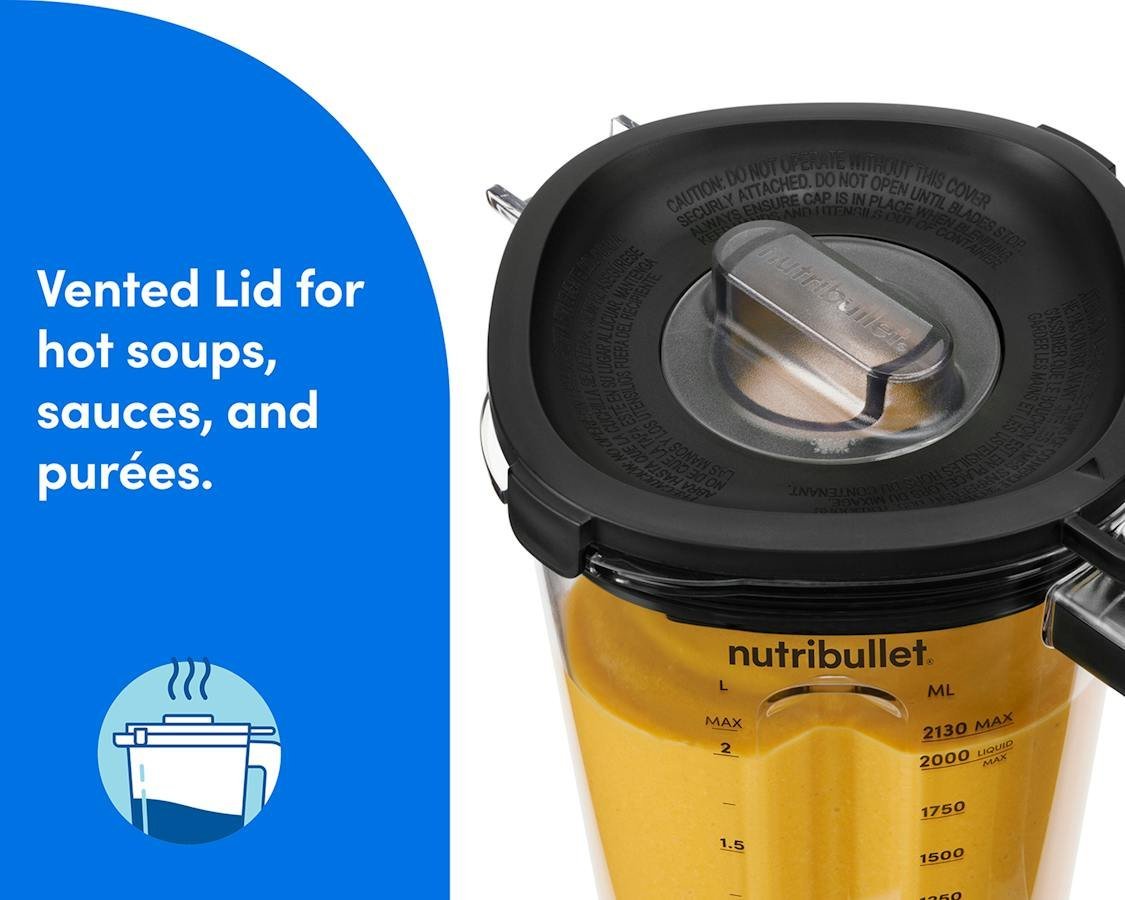
Some blenders have a vented lid designed for hot liquids. A Nutribullet’s standard cup lid doesn’t. Check your own lid before you assume — if it has a small removable cap in the center, you can blend warm soup with that cap off and a towel held loosely over the top. If it’s a solid sealed lid, wait.
If your soup still feels warm to the touch, wait or vent it; if it’s at room temperature, blend normally. A quick check: hold your hand 2 inches above the surface. If you feel steady heat, it’s too hot.
How to blend hot soup safely, step by step
Follow these steps in order. Each one has a sign that tells you it worked, so you’re not guessing.
Cool the soup to room temperature. Take it off the heat and leave it uncovered for 15-20 minutes, stirring once halfway. It’s ready when you feel no warmth on your palm held just above the surface. For a big pot, 30 minutes is more realistic — the wider the pot, the faster it cools.
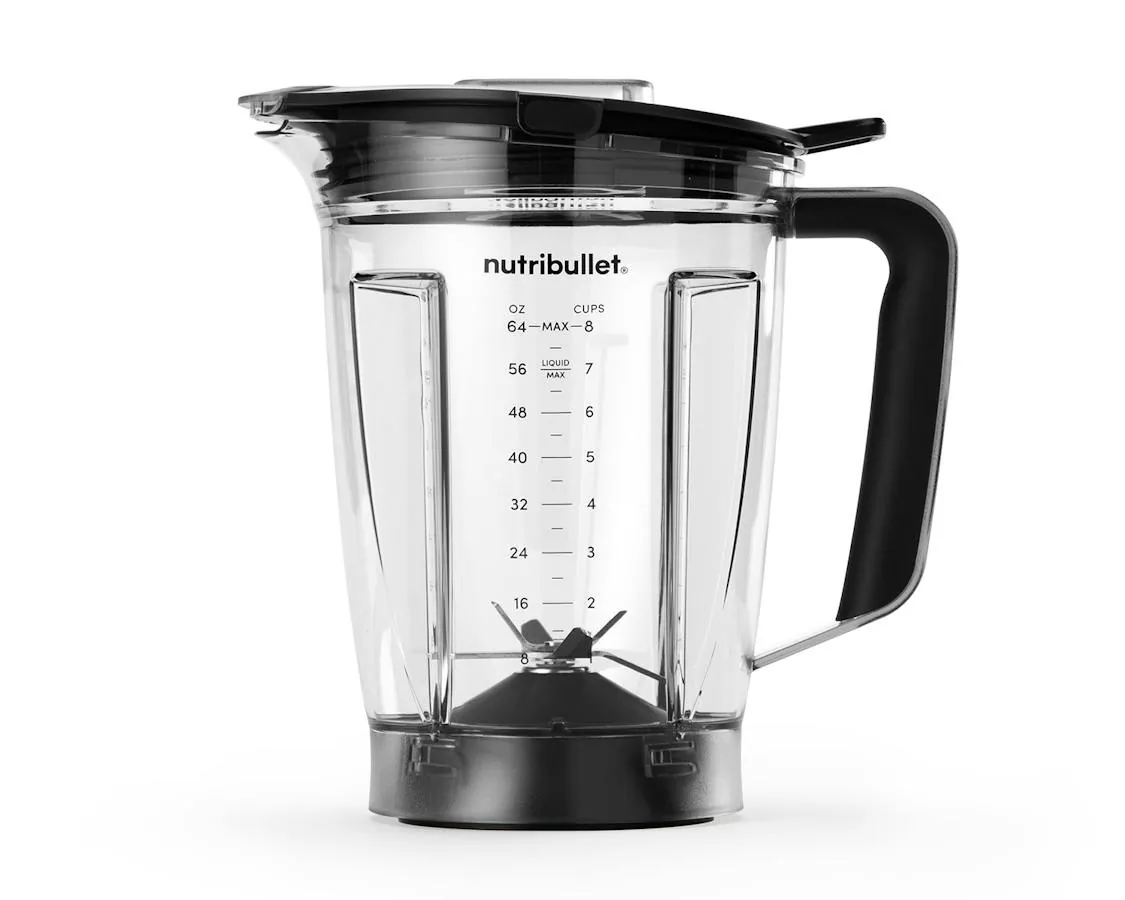
Fill the cup no more than halfway. For a 24-ounce cup, that’s about 12 ounces of soup. Leave the top half empty so steam and liquid have room to move. Overfilling is the single most common cause of lid failure.
Add liquid if the soup is thick. Stir in 1/4 cup of warm water or broth for every 2 cups of soup. The sign it’s right: the soup pours off a spoon in a steady stream, not in clumps.
Vent the lid if yours allows it. If your lid has a removable center cap, take it out and hold a folded towel loosely over the hole. Don’t press the towel down — you want steam to escape, not to be trapped.
Pulse in 3-second bursts, not one long run. Press, release, wait 2 seconds, press again. Four to six pulses is usually enough for a smooth soup. The sign it worked: the sound changes from a heavy churn to a steady hum.
Let it rest 30 seconds before opening. Steam settles during that pause. Then open the lid facing away from you, so any leftover steam escapes sideways, not up into your face.
Reheat the blended soup gently. Pour it back into the pot and warm it over medium heat, stirring often. Bring it to a gentle simmer — small bubbles around the edge, not a rolling boil.
A note on thickness: if the blade stalls, stop. Don’t add more speed. Add 2 tablespoons of liquid and pulse again. Stalling means the soup is too thick for the blade to catch, and forcing it wears the motor.
The mistake that ruins the batch
The biggest mistake is blending soup while it’s still hot because you want to save time, and it costs you more than time. A sealed cup of hot soup can blow its lid within seconds. The result is a burn risk, a kitchen covered in soup, and often a cracked cup or a bent blade assembly.
The burn is the real cost. Hot soup at simmering temperature causes scalds fast, and a lid that pops upward sends liquid toward your face and chest, not your feet. That’s the worst possible direction.
People also skip the two-stage blend for chunky soups. They load in carrots, potatoes and broth all at once, and the blade jams against a hard chunk while the liquid spins freely around it. The motor strains, the soup stays lumpy, and you end up blending twice anyway — which takes longer than doing it right the first time.
The one check that avoids all of this: before the lid goes on, touch the outside of the cup. If it feels warm against your hand, wait. That single test takes two seconds and replaces every other rule on this page.
One more thing worth knowing: a Nutribullet isn’t built for long, continuous blending. It’s designed for short bursts. Treating it like a full-size blender with a 60-second run is how motors burn out, and that’s a replacement cost, not a repair.
Cooling takes longer than people expect. A full pot of soup straight off the stove can need an hour or more before it stops feeling warm to the touch, and a thick potato or squash soup sits at the top of that range. If you’re in a hurry, divide it between two cups and set them in a bowl of cold water. That speeds cooling considerably, though it still takes longer than a few minutes.
Chunky soups need the two-stage order for a second reason. Blend the solids with just enough broth to cover the blade first, then thin it with the rest. If you pour in all the liquid up front, the chunks float above the blade and never get pulled down.
If your cup already smells like hot plastic or the motor note drops, stop and let it rest. Running it again is what turns a strained motor into a dead one.
When to stop and get help
Most soup blending is a kitchen task you can handle yourself. But some situations sit past the line where a home fix makes sense.
The cup is cracked or the blade seal looks worn. A damaged seal can fail under pressure and spray hot liquid. Replace the cup or blade assembly — Nutribullet sells these as separate parts, and the official site lists what fits your model.
The motor smells hot or shuts off mid-blend. This usually means the motor’s thermal protection tripped. Let it cool 30 minutes and try again; if it trips a second time, contact Nutribullet support rather than pushing it.
You’ve been scalded by hot liquid. Cool the burn under running water for 20 minutes and seek medical advice for anything larger than a small area or on the face. Don’t apply ice or butter.
You need to blend large volumes for a crowd. A Nutribullet handles small batches. For large volumes, a full-size blender or an immersion blender is the right tool, and no amount of technique changes that.
Your soup contains bones, shells or very hard pieces. These can damage the blade and aren’t a do-it-yourself blending job — strain them out first, or use a different appliance.
Two of these are judgment calls rather than clear-cut failures, and it helps to know which one you’re in.
A seal that looks slightly dull is fine. A seal that’s torn, flattened, or no longer sits flush in its groove is not — that’s the one that lets go. Run a fingernail along it; if it catches on a split, replace it before your next hot batch.
A motor that shuts off once on a thick, cold batch is telling you the load was too heavy, not that the machine is dying. Thin the soup, blend in smaller amounts, and it will likely run for years. A motor that shuts off on a thin batch, or smells hot within seconds of starting, is a different problem. Stop using it and call support.
Frequently asked questions
Can I blend hot soup in my Nutribullet?
No, not while it’s hot. Let it cool to room temperature first — about 15-20 minutes for a normal batch, longer for a big pot. A sealed Nutribullet cup traps steam, and steam expands fast enough to pop the lid and spray hot liquid. Once the soup is warm to the touch rather than steaming, blending is safe.
How long should I let soup cool before blending?
15-20 minutes for a standard 2-4 cup batch, and up to 30 minutes for a full pot. The condition that changes this is volume and pot width — a wide shallow pot cools faster than a tall narrow one. The check that works every time: hold your palm 2 inches above the surface. No steady warmth means it’s ready.
Why did my Nutribullet lid pop off?
Steam pressure. When you blend hot liquid in a sealed cup, the hot liquid gives off steam, and that steam needs about 1,600 times more space than the water it came from. In a closed cup there’s nowhere for it to go, so the lid becomes the release point. Cooling the soup first prevents it completely.
Is it safe to blend soup in a Nutribullet?
Yes, once it’s cooled, and with the cup no more than half full. The risks come from heat and overfilling, not from the appliance itself. Keep the cup at or below the halfway mark, pulse in short bursts instead of one long run, and open the lid facing away from you after a 30-second rest.
What happens if I blend hot soup anyway?
The lid can lift or blow off within seconds, sending hot liquid upward toward your face and chest. Beyond the burn risk, you may crack the cup or damage the blade assembly. If it happens, turn the machine off, step back, and let everything cool before you clean up.
Does it matter if my soup is thick or thin?
Yes, a lot. Thin broth blends easily once cooled. Thick soups like potato, squash or lentil need added liquid — about 1/4 cup of warm water or broth per 2 cups of soup — or the blade spins in an air pocket and leaves lumps. If the blade stalls, add 2 more tablespoons of liquid and pulse again.
Can I use a Nutribullet for large batches of soup?
No. A typical Nutribullet cup holds around 24 ounces, and you should only fill it halfway with soup, so each batch is about 12 ounces. For 2 gallons or more, use a full-size blender or an immersion blender. An immersion blender also lets you blend directly in the pot, which skips the cooling step entirely.
How do I clean soup out of the Nutribullet cup?
Rinse the cup with warm water right after use, then fill it halfway with warm water and a drop of dish soap and pulse for 5 seconds. Never put the blade assembly in the dishwasher unless the manufacturer says it’s dishwasher-safe — check your model’s documentation. Hand-wash the blade with a brush, holding it by the base, away from the cutting edge.
Start with the pot, not the blender
The first thing to do is simple: leave the soup on the stove and walk away for 15-20 minutes. That pause is the entire difference between a smooth soup and a kitchen cleanup. When you come back, touch the outside of the cup after you fill it — if it feels warm, wait a little longer.
Expect a smooth, even texture after four to six short pulses, with no lumps and no foam on top. That’s the sign it worked. If the lid ever feels like it’s pushing back against your hand, or the motor smells hot, stop right there and let everything cool down before you try again.
The pause matters more with thick soups than thin ones. A broth-heavy soup loses heat fast and can be ready in 10 minutes. A pot of potato and cream holds heat for half an hour, so give it the full 20 and check again. When in doubt, wait.
Fill the cup only halfway when the soup is warm. A full cup of hot liquid has nowhere to expand, and that’s how lids pop off. Two half batches take a minute longer and never redecorate your ceiling.
If you get scalded, or the cup is cracked, or the motor keeps shutting off, that’s your signal to stop and get proper help — a doctor for a burn, Nutribullet support for the machine. Everything before that point is yours to handle.