How To Clean a Nutribullet Without Blending
You clean a Nutribullet without blending by hand: fill the cup one-third with warm water, add 1 drop of dish soap, close the blade base, and shake hard for 10 seconds. Then rinse the cup and scrub the blade base with a soft brush. Never put the blade base in a dishwasher.
Three things change this answer. The blade base is the part that decides how careful you have to be. Stuck-on food like nut butter or protein powder needs a soak first. And the cup material — plastic or the brand’s own Tritan — changes how hot your water can be.
For nut butter, protein powder, or anything that has dried on, skip the shake and soak instead. Fill the cup halfway with warm water and a drop of soap, screw the blade base on, and let it stand for 15 minutes. Pour it out, then scrub the blade base with the brush. Soaking loosens the residue so the brush does the work instead of your wrist.
On water temperature, stay at warm, not hot. Hot water can warp a plastic cup and cloud Tritan over time, and the blade base has a gasket you don’t want to cook. If the cup has held something greasy, one extra drop of soap does more than hotter water ever will.
Two mistakes cost people the part. Running the blade base through the dishwasher dulls the blades and ruins the gasket, which isn’t sold separately. And filling past the max line before shaking sends water up into the base, where it sits and smells.
Which Nutribullet owner are you?
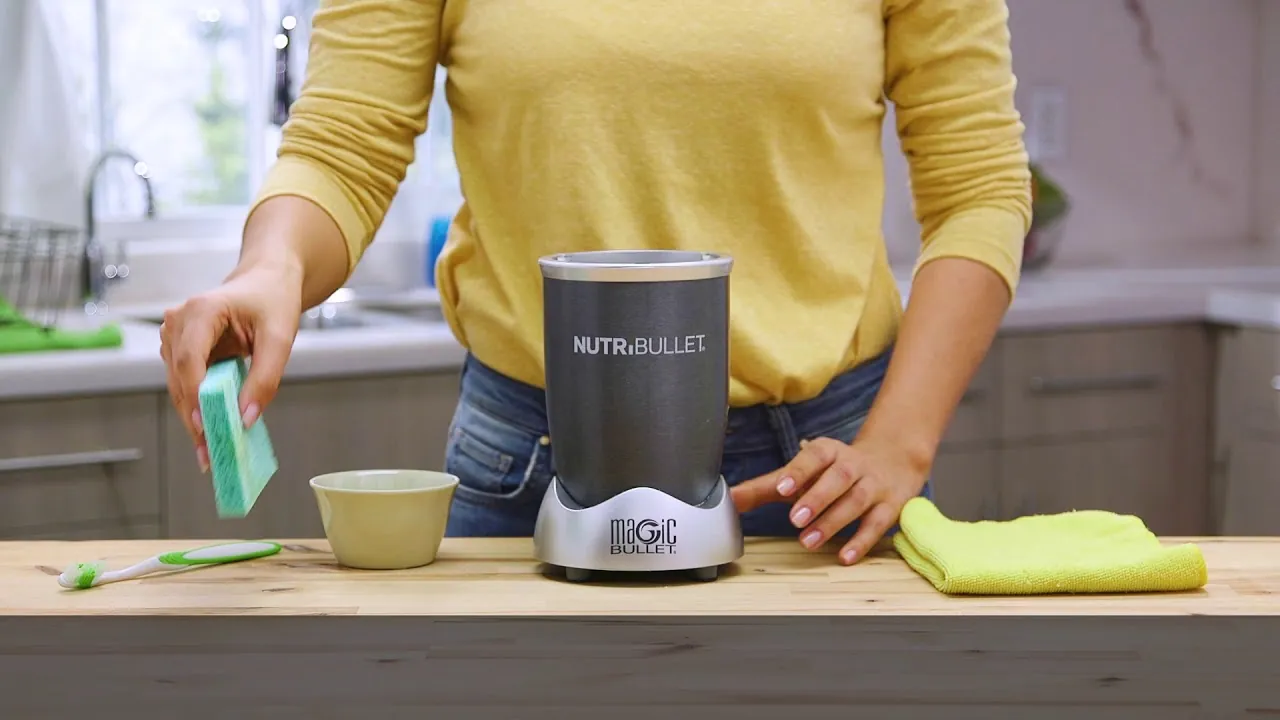
People who type this title fall into a few clear groups, and they don’t all need the same page. The first group owns a Nutribullet and just made something thick — nut butter, hummus, a protein shake — and the blades have stopped turning. They need a fix that works right now, with what’s already in the kitchen.
The second group is cleaning up after a normal smoothie and doesn’t want to run the motor just to rinse the cup. They already know the machine works. What they want is a faster routine that saves electricity and wear on the motor.
The third group has a blade base that’s been sitting in the sink for a day or two. Food has dried onto the seal and under the blades. They need to know what’s safe to scrub and what isn’t.
This page serves the first two groups best. It assumes you have a Nutribullet, warm water, dish soap and a soft brush. If your blade base is cracked, or the seal is torn, stop reading and contact the manufacturer — a damaged blade base isn’t a cleaning problem.
What actually decides the result
The single biggest factor is whether the blade base gets wet on the inside. The blade base holds the motor connection on top and the blades underneath. Water that gets into the top part can reach the motor coupling. So the rule is simple: wash the blades, keep the top dry.
The second factor is how long the food has been sitting. Fresh residue lifts in seconds. Dried residue — anything left more than a few hours — needs a soak of 10 to 15 minutes in warm soapy water before you scrub. The longer it sits, the longer the soak. This is the step people skip most often, and it’s why they end up scraping with a knife.
Third is water temperature. Warm water works best. Very hot water can warp some plastic cups and can soften the rubber gasket over time. If your cup is the brand’s Tritan material, check the care instructions that came with it — the maker’s own guidance is the only source that’s right for your exact model.
Fourth is the gasket, the rubber ring inside the blade base. A worn or loose gasket lets liquid leak into places you can’t reach. Press it with a fingertip: if it moves freely or looks flattened, that’s your problem, not your cleaning method.
How to clean it, step by step
Unplug the motor base. Pull the cord from the wall. Wait until the blades have fully stopped — this takes a few seconds. You’ll know it’s safe when the blades don’t move at all when you tilt the cup.
Twist the blade base off the cup. Turn it counterclockwise until it releases. Set the blade base down with the blades facing up, so you don’t dull them on the counter.
Scrape out the solids first. Use a rubber spatula, not your fingers and not a knife. Push the thick paste into the trash, not the sink — nut butter and protein powder clog drains. You’ll know it worked when the cup looks mostly empty.
Fill the cup one-third with warm water. That’s about 8 ounces (240 ml) for a standard 24-ounce cup. Add 1 drop of dish soap — no more, or you’ll be rinsing for five minutes.
Close the blade base onto the cup and shake for 10 seconds. Hold the base firmly with one hand and the cup with the other. Shake over the sink. The water should turn cloudy with food bits.
Pour out the dirty water and rinse the cup. Use warm running water. If residue remains, repeat steps 4 and 5 once. Two rounds handle almost everything.
Scrub the blade base with a soft brush. Hold the base by its outer rim, blades pointing away from you. Brush the blades and the underside with warm soapy water. Never touch the blade edges with bare fingers.
Rinse the blade base by holding it blade-side down. Let warm water run over the blades only. Keep the top — the side that connects to the motor — completely dry. Dry it with a towel right away.
The judgement call is knowing when to stop scrubbing and start soaking. If a brush isn’t lifting the residue after 30 seconds, more scrubbing won’t help. Soak it in warm soapy water for 10 to 15 minutes, then try again. Scrubbing harder just dulls the blades and scratches the plastic.
Different situations, different methods
| Your situation | What to do | What it takes | What to watch for |
|---|---|---|---|
| Fresh smoothie residue | Shake with warm water and 1 drop soap | About 1 minute | Rinse the gasket area well |
| Dried-on protein powder | Soak 10-15 minutes, then brush | 15-20 minutes | Don’t let it sit overnight again |
| Nut butter or thick paste | Scrape first, then soak and shake | 20 minutes | Never pour grease down the drain |
| Stained plastic cup | Scrub with baking soda paste | 5 minutes | Stains are cosmetic, not dirt |
| Smelly cup or lid | Soak in warm water with white vinegar | 30 minutes | Rinse fully before next use |
| Blade base feels loose | Check the gasket sits flat | 2 minutes | A torn gasket needs replacing |
| Cup is cracked | Stop using it | Replace the cup | Cracks can leak into the motor base |
What careful cleaners do differently
They protect the blade base before anything else
The blade base is the expensive part, and it’s the one that fails first. Careful cleaners never submerge it. They hold it under running water with the blades angled down, so gravity keeps water away from the top. Then they dry the top immediately with a cloth.
They also check the gasket every time. A gasket that’s sitting crooked lets liquid seep toward the motor. Press it flat with a fingertip before you screw the base back on. If it won’t sit flat, it’s worn out, and the fix is a replacement gasket or a new blade base — not more cleaning.
They work in the right order and leave the rest alone
The order matters: scrape, soak, shake, brush, rinse, dry. Skipping the scrape means the shake does nothing. Skipping the dry means water sits in the base overnight.
What they deliberately leave alone is just as important. They don’t put any part in the dishwasher except the cup and lid, and only if the maker’s instructions for that model say it’s safe. They don’t use abrasive pads on the cup. They don’t run the motor to clean it — that’s the whole point here. And they don’t use bleach on the gasket, because it breaks rubber down over time.
When something goes wrong
Cleaning problems usually show up as a smell, a leak, or a blade that won’t spin. Most of them have a simple cause and a fix you can do at the sink.
| What you notice | What it usually means | What to do first | How to stop it happening again |
|---|---|---|---|
| Water in the motor base top | Base was submerged or rinsed wrong | Dry it fully with a towel | Always rinse blades-down only |
| Lingering sour smell | Residue trapped under the gasket | Lift the gasket and clean under it | Check the gasket after every use |
| Liquid leaks when blending | Gasket is worn or sitting crooked | Reseat it flat, or replace it | Inspect the gasket weekly |
| Blades feel dull or slow | Food residue dried on the blades | Soak 15 minutes, then brush | Clean right after each use |
| Cup looks cloudy | Fine scratches from abrasive pads | Accept it, or replace the cup | Use only soft sponges |
| Black specks in the cup | Gasket breaking down | Replace the gasket | Avoid bleach on rubber parts |
The rules worth knowing

The main rule is the manufacturer’s own care instructions, and they differ by model. Nutribullet publishes a user guide for each product line, and that guide is the only source that’s right for the exact unit you own. Read the cleaning page for your model before you try anything new.
Most people who damage a base do it by guessing from a video for a different model. The cups and blades aren’t interchangeable across lines, so a method that works on one can crack the base on another. Find your model number on the bottom of the base, then match it to the guide.
In the US, the Consumer Product Safety Commission handles reports of injury from consumer products, including kitchen appliances. If a blade base fails in a way that hurts someone, that’s a report to the CPSC, not a cleaning problem.
One hard limit: never try to remove, sharpen or straighten the blades yourself. They’re fixed in the base by design. A loose blade is a replacement part, full stop.
What this really costs you
The hand-cleaning method costs almost nothing. One drop of dish soap, warm water, and a soft brush you probably already own. A basic bottle brush or dish brush runs a few dollars at any grocery store, and it lasts months. Compare that to running the motor for a full cleaning cycle, which uses electricity and puts wear on a part that isn’t cheap to replace.
The real cost is time, and it’s small. A fresh rinse takes about 1 minute. Dried-on food takes 15 to 20 minutes because of the soak. That soak time is the whole difference — it’s not effort, it’s waiting.
Replacement parts are where money actually leaves your pocket. Blade bases are sold separately, and prices change by model and by retailer. Check the manufacturer’s site or your retailer’s listing for today’s price rather than trusting an old number. A stained cup isn’t a reason to spend anything — it’s cosmetic.
Keeping it clean after the first time
The habit that keeps a Nutribullet clean is cleaning it within a few minutes of use. Residue that’s still wet lifts in seconds. Residue that’s dried needs a soak. That’s the whole difference between a 1-minute job and a 20-minute one.
Store the cup and blade base separately, both fully dry, with the lid off. A closed, damp cup grows that sour smell. If you notice the smell returning, lift the gasket and clean underneath it — that’s where it hides.
The sign it needs attention again is simple: a smell that comes back after one rinse, or water appearing where it shouldn’t. Fix those with a soak and a gasket reseat. If a gasket is torn or a cup is cracked, don’t start over — replace that one part.
When hand-cleaning isn’t the right answer
If your blade base has a crack, a wobble, or a blade that moves when you press it, stop. Cleaning won’t fix a structural fault, and using it can send metal into your drink. Contact Nutribullet support or buy a replacement blade base.
If your motor base got wet inside and now smells like burning or won’t start, don’t open it. Small appliances hold capacitors that stay charged after unplugging. Take it to a qualified repair technician or replace the unit.
A blade that spins freely but cuts poorly is a different problem. That’s usually a dull or bent blade, not a broken base, and no amount of soaking brings an edge back. Replace the blade base rather than working harder at cleaning it.
And if you’re cleaning a blender that isn’t a Nutribullet, don’t assume the same rules apply. Check that maker’s own guide. Some models have dishwasher-safe blade assemblies; most Nutribullet ones don’t.
Frequently asked questions
Can I clean a Nutribullet without the blades?
Yes. Unscrew the blade base and clean the cup on its own with warm water and 1 drop of dish soap. The blade base is a separate part, so you can wash, rinse and dry the cup without touching the blades at all.
Why does my Nutribullet cup still smell after washing?
Residue trapped under the rubber gasket is the usual cause. Lift the gasket with a fingernail, clean underneath it with warm soapy water, then press it flat again. If the smell returns within a day, the gasket is breaking down and needs replacing.
How long should I soak a Nutribullet blade base?
Soak it 10 to 15 minutes in warm soapy water, blades only — never the top. Dried nut butter may need a second 10-minute soak. Longer than 30 minutes doesn’t help and risks water reaching the motor coupling.
Is it safe to put Nutribullet parts in the dishwasher?
Only the cup and lid, and only if your model’s user guide says they’re dishwasher-safe. The blade base should never go in a dishwasher. Check the guide that came with your unit, since it varies by product line.
What happens if water gets into the blade base?
Water in the top of the blade base can reach the motor coupling and cause rust or a burning smell. Dry it fully with a towel before using it again. If it still smells like burning, stop and replace the base.
Does it matter which soap I use?
Yes, a little. Use a plain liquid dish soap, 1 drop per wash. Avoid bleach on the gasket, since it breaks rubber down over time. Abrasive powders scratch plastic cups, so save baking soda for stains only.
How often should I replace the gasket?
Replace it when it stops sitting flat, feels flattened, or lets liquid leak during blending. There’s no fixed schedule — it depends on how often you blend and how you clean. Inspect it each time you wash the base.
Can I clean it with hot water only, no soap?
Warm water alone handles light residue from fruit and thin smoothies. For anything with fat, protein powder or nut butter, you need 1 drop of dish soap to break the oils down. Hot water alone leaves a film that turns into the smell later.
Conclusion
Start with the shake method: one-third warm water, 1 drop of soap, 10 seconds of shaking. Most cups come out clean on the first try. If residue stays after two rounds, it’s time to soak rather than scrub. And if you see a cracked cup, a torn gasket or water inside the motor base, stop and replace that part or call a technician — that’s past what cleaning can fix.