Can a Nutribullet Blender Crush Ice? Yes, With the Right Method
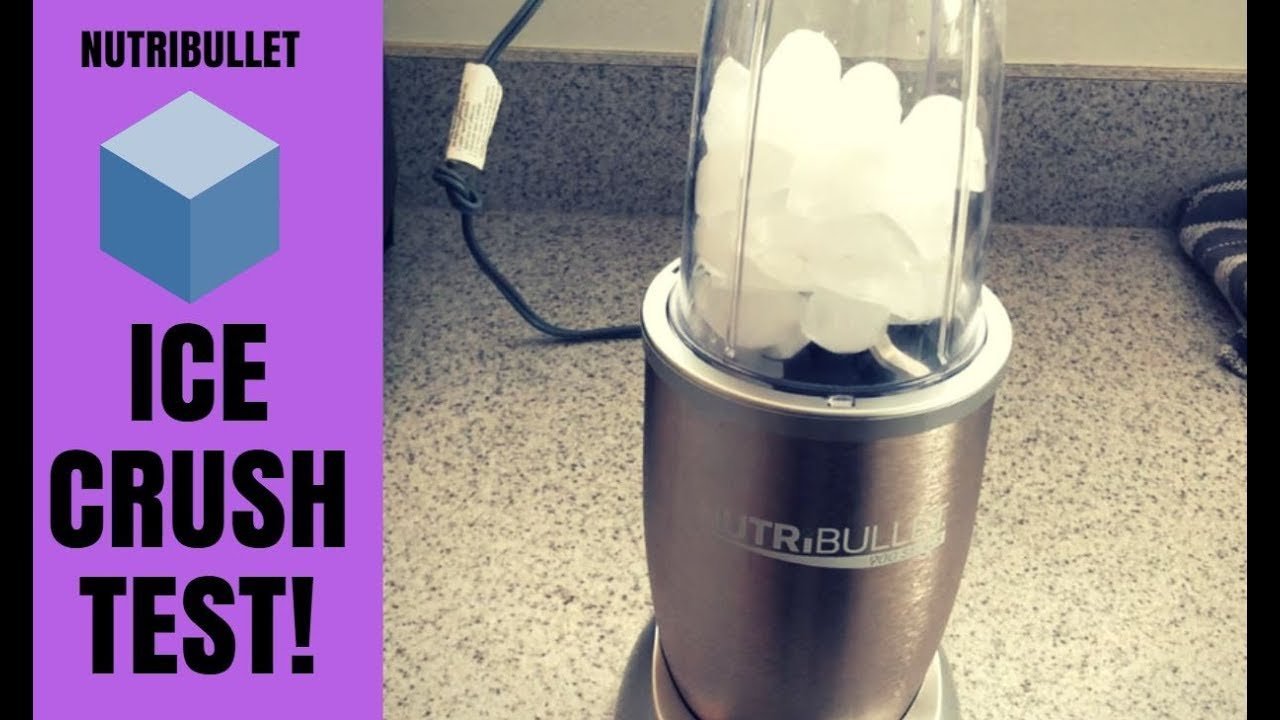
Yes, a Nutribullet blender can crush ice, but only when you follow the method the cups and blades were designed for. The one condition that flips the answer is quantity: a few small cubes with enough liquid work fine, while a cup packed solid with ice can stall the motor or crack the pitcher. So check your model’s manual before your next frozen drink, and use the pulse technique described below.
When a Nutribullet handles ice and when it doesn’t
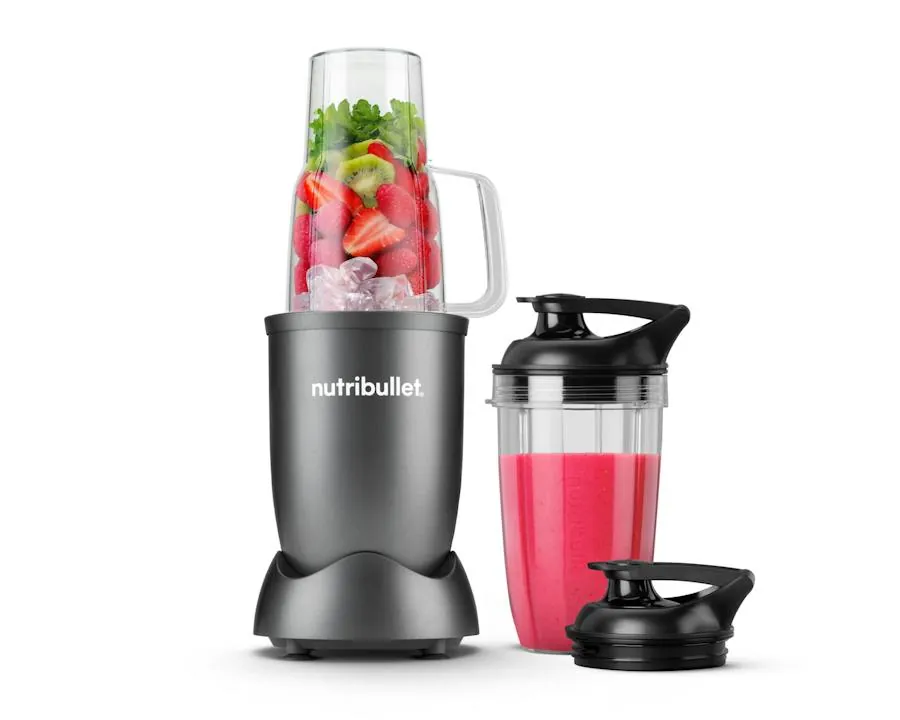
Whether your situation fits depends on the model, the blade and how much ice you’re using. Here’s a quick sort of the most common cases:
| Your situation | Answer | Why |
|---|---|---|
| A few cubes with liquid in a full-size Nutribullet | Yes | Liquid pulls the ice down into the blades |
| Ice as the main ingredient, no liquid | No | Nothing moves the ice toward the blade |
| Nutribullet Rx or models rated 1,000 watts and up | Yes | Bigger motor handles frozen loads better |
| 600-watt original model, ice-heavy smoothie | Risky | Small motor can stall or overheat |
| Crushing ice for cocktails, large batches | No | Cups are small; this is a blender job |
| Ice plus frozen fruit and yogurt | Yes | Standard smoothie use, if you add liquid |
| Chewing-grade crushed ice for drinks | No | It makes a slush, not chips or cubes |
The last two rows matter most. A Nutribullet turns ice into a fine slush mixed with your other ingredients — it doesn’t produce the crunchy chips you get from an ice crusher or a dedicated blender like a Vitamix. If you want cocktail ice, this isn’t the tool.
The order you load the cup decides more outcomes than the wattage does. Put the liquid in first, then the soft ingredients, then the ice on top, close to the blade. Ice sitting at the bottom, against the blade with nothing above it, is the single most common way people stall a 600-watt motor.
Keep the ice to about a quarter of the cup. Beyond that, even a strong motor is grinding frozen blocks rather than cubes, and you get the slush anyway with more wear on the machine.
Pulse instead of holding the button down. Three or four short bursts break the cubes, then a longer run smooths them. Holding it from a standing start is what overheats the small models.
If your drink comes out gritty rather than smooth, the ice was fine — you just stopped too early. Run it another twenty seconds before you add anything.
The one case where none of this helps is a cup packed with ice and no liquid at all. No technique fixes that, because there’s nothing to carry the ice into the blade. Add a splash of water, juice or milk and it becomes an ordinary smoothie job.
What actually decides whether it works
Three things decide the outcome: motor power, blade type and the ratio of liquid to ice. Miss any one and you’ll either get chunky results or a stalled motor.
Motor power. Nutribullet sells models from 600 watts (the original) to well over 1,000 watts (the Rx and combo lines). A 600-watt motor can handle a handful of cubes in a smoothie, but it doesn’t have the reserve for a cup that’s mostly ice. The higher-watt models spin the blade fast enough to shatter cubes on contact. Check the wattage printed on the base of your unit — that number tells you which side of the line you’re on.
Blade design. The standard Nutribullet has an “extractor” blade, a flat six-prong design built to pulverise soft and semi-frozen food in liquid. If you only have the extractor blade, treat ice as an ingredient, not the main event.
The liquid rule. This is the one that decides almost every result. Ice needs liquid around it so the vortex — the swirling motion a blender creates — can drag the cubes down into the blade. Fill order matters too: liquid first, then soft ingredients, then ice on top. Without enough liquid, the blade spins in an air pocket and the ice just sits there, or worse, the motor strains against a solid load. A good starting point is roughly one part ice to two or three parts liquid by volume in the cup.
So the rule in one line: if your model is 1,000 watts or more and ice is less than a third of the cup with liquid added, blend away; if it’s a 600-watt unit or the cup is mostly ice, add more liquid or cut the ice back.
How to crush ice in a Nutribullet without hurting it
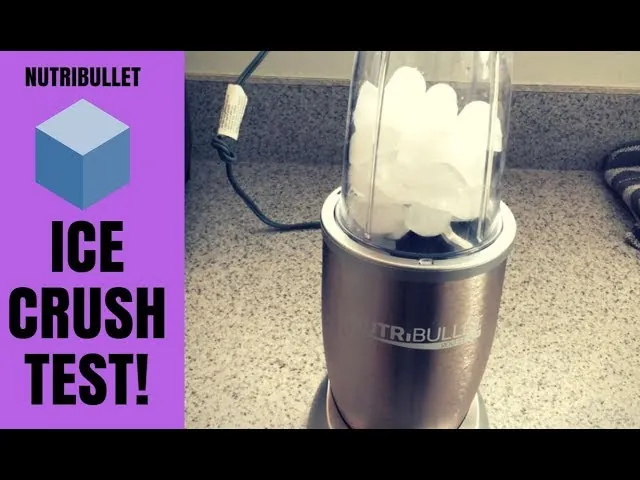
If your model and ratio pass the check above, this method gets smooth results and protects the motor. Total time is under two minutes.
- Check your wattage and blade. Look at the base for the watt rating and confirm you’re using the right blade for your model. If you’re on a 600-watt unit with an extractor blade, keep ice to a small handful. The sign you’re set: the rating is visible and the blade screws on firmly.
- Add liquid first. Pour in 4 to 6 ounces of water, juice or milk, depending on your cup size — enough to cover the blade when it’s attached. Liquid first is what creates the vortex. You’ll know it’s enough if the blade sits fully submerged.
- Add your other ingredients. Fruit, yogurt, protein powder — whatever the recipe calls for — go in now, before the ice. This keeps soft food from getting stuck above the ice. The cup should be no more than two-thirds full at this point.
- Add the ice last, on top. Drop in a few cubes at a time — 3 or 4 small cubes for a 600-watt model, up to 6 to 8 for a 1,000-watt or higher unit. Ice on top falls into the vortex as it forms. The sign it’s right: the cubes sit loose, not packed.
- Pulse, don’t hold. Twist the cup and run it in 1-to-2-second bursts, 3 to 5 times, until you hear the cubes break apart. Then blend continuously for 20 to 30 seconds. Pulsing keeps the motor from fighting a solid mass. The sign it worked: no audible cube-rattling, and the mix sounds smooth.
- Check the texture and stop. Open the cup and look — you want an even, slushy blend with no floating chunks. If you see chunks, pulse 2 or 3 more times. Don’t run the motor past 60 seconds total; if it’s not done by then, the ratio is off, not the machine.
One trade-off to accept going in: you’re trading texture for convenience. A Nutribullet makes a drink-ready slush, not dry crushed ice. If a recipe needs scoopable crushed ice, a dedicated crusher or a high-power blender does it better.
The mistake that kills Nutribullets
The most common error is filling the cup with ice alone — or mostly ice — and hitting the switch. It feels like the obvious way to “crush” ice, and it’s the fastest way to break the machine.
Here’s what happens. With no liquid, the blade can’t create a vortex, so it either spins in an air pocket or jams against a solid pack of cubes. The motor draws more current than it’s designed for and overheats; many Nutribullet models have a thermal breaker that cuts power, and repeated trips wear it out.
In the worst case, the strain cracks the cup or damages the blade coupling, which costs you a new blade or cup — and neither is covered if the manual says ice-only blending isn’t supported for your model.
Ice isn’t the enemy. Dumping it in dry is. A short burst on its own, with nothing else in the cup, is the one version of this that does damage fast.
The fix is proportion, not avoidance. Add enough liquid that the cubes float instead of packing — roughly two or three parts liquid to one part ice. If you want a thick, spoonable result, start with that ratio and add ice a cube at a time, pulsing between additions.
Stop the moment the sound changes from a steady whir to a rattle or a strained hum; that noise is the blade losing grip, and another second of it’s what actually cracks cups.
The check that avoids all of this takes three seconds: before you press down, tilt the cup and look. If you can’t see liquid reaching the blade, add some. That single habit prevents nearly every ice-related failure.
When to stop and get help
Ice blending is a normal job for the right model, but a few signs mean stop using the machine:
- The motor won’t start after a heavy load — the thermal breaker may have tripped; unplug it and let it cool for 20 to 30 minutes, then try again. If it still won’t run, contact Nutribullet support.
- You smell burning or hear grinding — stop immediately. A worn blade coupling or a strained motor needs a replacement part, not another pulse.
- The cup or blade shows cracks — a cracked cup can fail under load and spill or send plastic into your drink. Order a replacement cup; don’t tape it.
- Liquid leaks into the base — the seal or bearing has failed, and that’s an internal repair. Don’t open the housing; unplug the unit and contact the manufacturer or an authorised repair service.
None of these are do-it-yourself fixes. Opening the motor base exposes wiring and parts you shouldn’t touch, and it can void your warranty, which typically runs a year or more depending on model — check the paperwork that came with yours.
One more thing worth knowing: a machine that stops mid-blend isn’t always broken. If the cup was overfilled, the blade stalled against a solid pack of frozen fruit, or you ran it past a minute without a break, the motor may simply be protecting itself. Let it cool, then restart with less in the cup.
If it stops again on a lighter load, that’s a real fault, not a safety pause. Repeated shutdowns on small batches point to a failing motor or a damaged coupling, and no amount of cooling will fix it.
Keep a note of when it cuts out and what was in the cup. Support will ask, and a clear pattern — always on frozen fruit, never on soft — tells them which part to send.
Related guides
- Where Can I Buy a Cheap Vitamix Blender: Best Proven Methods
- Can a Nutribullet Blend Frozen Fruit? Yes, With the Right Ratio
- Best Immersion Blender For Crushing Ice: 10 Top Picks
Frequently asked questions
Can a Nutribullet crush ice without liquid?
No — don’t try it. Without liquid the blade can’t pull the ice down, so it spins in an air pocket or jams. The motor overheats and can trip its thermal breaker, and a jammed load can crack the cup or damage the blade coupling. Always add enough water, juice or milk to cover the blade before any ice goes in.
How much ice can I put in a Nutribullet?
It depends on your wattage and cup size. As a working guide: 3 or 4 small cubes in a 600-watt model, and up to 6 to 8 cubes in a 1,000-watt or higher unit, in a standard 24-ounce cup — with ice making up no more than about a third of the cup and liquid covering the blade. If your blend comes out chunky, add liquid rather than more ice.
Which Nutribullet models can crush ice?
The higher-wattage models handle it best — the Nutribullet Rx and the combo lines rated at 1,000 watts or more. The original 600-watt model can blend a small amount of ice in a smoothie but isn’t built for ice-heavy loads. Check the wattage printed on the base of your unit and the ice guidance in your model’s manual.
Is it safe to put ice in a Nutribullet?
Yes, if your model supports it and you use liquid. The two real risks are mechanical, not food-safety ones: a stalled motor overheating, and a cracked cup failing under load. Both come from overloading with ice or blending without liquid. Keep ice under a third of the cup, add liquid first, and pulse in short bursts.
What happens if I blend only ice in my Nutribullet?
Usually one of three things, in order of likelihood: the blade spins uselessly in an air pocket and nothing crushes; the motor strains, overheats and trips its thermal breaker, cutting power until it cools; or a jam cracks the cup or damages the blade coupling. The breaker trip is recoverable — unplug and wait 20 to 30 minutes. A cracked cup or damaged blade means buying replacements.
How long should I blend ice in a Nutribullet?
Under a minute of total run time. Pulse in 1-to-2-second bursts, 3 to 5 times, to break the cubes, then blend continuously for 20 to 30 seconds to smooth it out. If it’s still chunky after that, stop and add liquid instead of running the motor longer — a mix that won’t finish in 60 seconds has too much ice or too little liquid.
Does crushing ice in a Nutribullet dull the blade?
Yes, faster than soft-food blending — but not overnight. Ice is hard, and every blade dulls with use; crushing ice regularly just speeds that up. A dull blade leaves chunks and takes longer to blend, which strains the motor. If your smoothies start coming out chunky on the same settings that used to work, that’s your sign.
Can I make a frozen margarita in a Nutribullet?
Yes, and it’s actually a good fit for one or two servings. Combine roughly 2 ounces of tequila, 1 ounce of lime juice and a splash of triple sec with 4 to 6 ice cubes in the cup, liquid first. Pulse to break the cubes, then blend 20 to 30 seconds until it’s an even slush. What you won’t get is the dry, chip-style crushed ice a bar blender makes.
What to do first
Check the wattage on the base of your Nutribullet, then pour in your liquid before anything else. Liquid goes in first for a reason: it keeps the blades from spinning against dry ice and hard fruit, which is what wears the motor down over time.
When you blend, expect a smooth, slushy drink with no floating chunks. If you hear cube-rattling after 30 seconds, stop and add more liquid. Give it another short run rather than a long one, and let the motor rest between bursts.
If you ever smell burning or hear grinding from the motor, unplug the unit and contact Nutribullet support before using it again. A burning smell means the motor is overheating, and running it once more usually turns a warranty question into a replacement.