Can Nutribullet Blend Carrots? Yes, With These Steps
Yes, a Nutribullet can blend carrots, but only if you cut them into small pieces first and add enough liquid. Raw carrot is hard and dense, and a Nutribullet is a small personal blender, not a full-size machine. Pieces under about 1 inch blend fine, bigger chunks don’t. So right now, cut your carrot into short chunks, add water or milk to the fill line, and pulse in short bursts.
When carrots blend well and when they don’t
Carrots are one of the hardest vegetables you can put in a small blender, so the result depends almost entirely on how you prepare them. The table below sorts the common situations. Find the row that sounds like yours.
| Your situation | Answer | Why |
|---|---|---|
| Carrot cut into ½-inch cubes, liquid added | Yes, blends smooth | Small pieces sit low, liquid carries them into the blade |
| Whole or large carrot chunks | No, it won’t blend | Pieces are too big to reach the blade |
| Cooked or boiled carrot | Yes, blends very fast | Heat softens the fiber, so the blade cuts through easily |
| Frozen carrot pieces | Usually not | Frozen carrot is too hard and can dull the blade |
| Carrot plus apple or ginger | Yes | The watery fruit helps move the carrot around |
| Dry blend, no liquid at all | No | Without liquid, the carrot just spins against the walls |
| Large carrot load, past the max line | No, and it’s risky | Overfilling can stress the motor and leak |
The pattern is simple. Soft carrot blends. Hard carrot doesn’t. The smaller and wetter your carrot is, the better your result.
The ½-inch cube isn’t a suggestion, it’s the line between working and not. A carrot chunk the size of a walnut will ride on top of the blade and circle the jar until you stop. Cut to ½ inch and it drops into the flow.
Liquid is the second half of that. Two tablespoons in a small jar is enough to start a vortex; none at all means the carrot only polishes the wall. Add liquid in a thin stream while the machine runs, not all at once.
Cooked carrot is the exception worth knowing. Ten minutes in boiling water and it blends in seconds, which is why soups and baby food are the easy jobs. Raw carrot in a smoothie is the hard one.
If your blender stalls, stop. Lift the jar, shake it, add a splash of water, and pulse. Running a stalled blade for thirty seconds heats the motor and shortens its life. Three or four pulses beat one long hold every time.
Frozen carrot is the case people get wrong most often. It never softens in the jar, and the hard pieces grind against the blade edges. Thaw it first, or cook it, or leave it out.
One more thing: peel or don’t. The peel isn’t the problem. Size and moisture are. A peeled whole carrot fails exactly like an unpeeled one.
What actually decides if the carrot blends
Piece size is the thing that decides everything here. A Nutribullet blade spins at high speed, but the blade only cuts what touches it. A big carrot chunk sits on the blade without being drawn into the flow, so the blade skims past it instead of cutting it. Cut that same carrot into small cubes and the liquid in the cup lifts them up into the blade path.
The target is ½ inch or smaller. That’s roughly the width of a chickpea, and it’s the size where carrot stops behaving like a rock and starts behaving like a grain. A whole baby carrot is four to five times that in every direction, which is why it rattles around untouched.
Liquid matters just as much. Carrot has very little water of its own compared to a tomato or a cucumber. Without added liquid, the pieces can’t move. They stick to the sides and the blade spins free. This is why a carrot-only blend fails while a carrot-and-orange blend works fine.
The third factor is how full the cup is. A Nutribullet cup has a maximum fill line, and you should respect it. If you pack carrot past that line, there’s no room for the liquid to swirl, and the motor works harder than it should.
Cooked carrot changes the math completely. Boiling or steaming breaks down the carrot’s cell walls, so the fiber goes soft. A cooked carrot blends in seconds, though it still needs enough liquid to circulate. If you’re making soup or baby food, cook the carrot first and save yourself the trouble.
If your carrot is raw and cut into ½-inch pieces with liquid to the fill line, blend it. If your carrot is in big chunks or the cup is dry, don’t — prep it more first.
The common mistake is adding more liquid to fix a jam. That buys you movement, but it also buys you a thin, gritty drink, because the pieces still aren’t small enough to break down clean. You end up with carrot water. Fix the cut first, then the liquid.
How to blend carrots in a Nutribullet
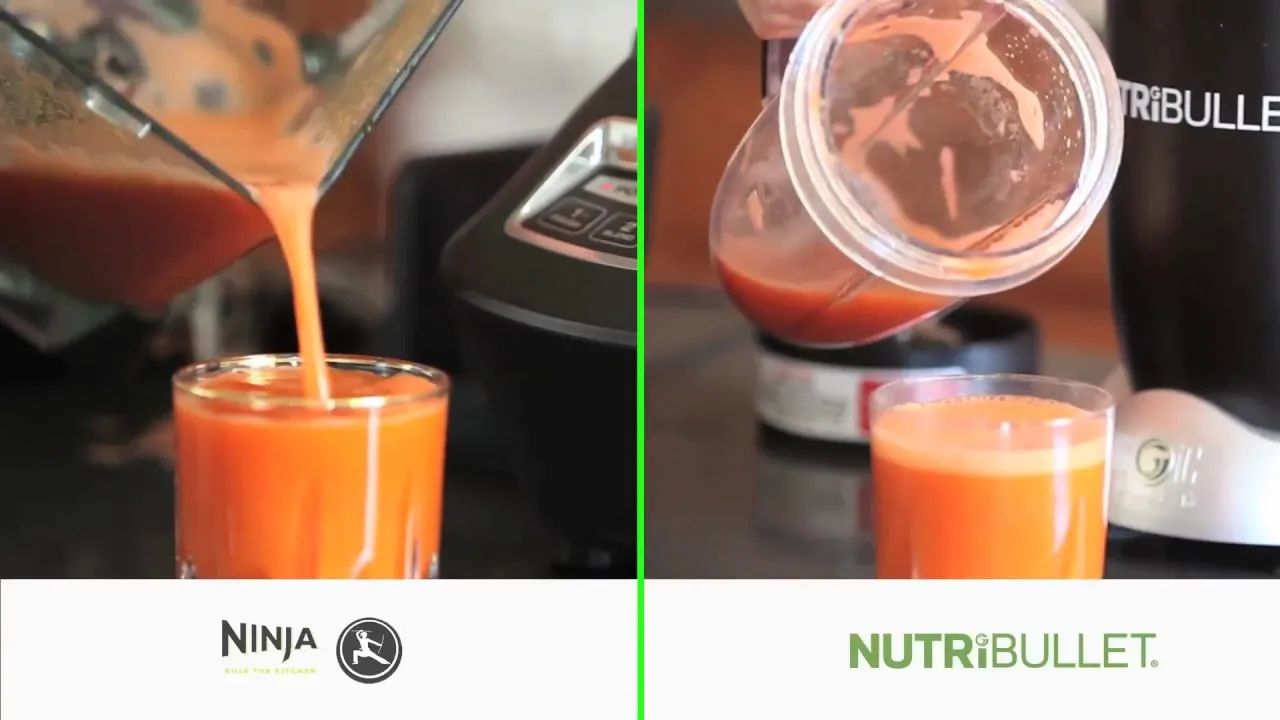
Follow these steps in order. Each one has a sign that tells you it worked.
Cut the carrot into ½-inch pieces. Use a sharp knife and cut across the carrot, not lengthwise. The sign it worked: no piece is bigger than your thumbnail. Bigger pieces will jam.
Add liquid first, then carrot. Pour 1 cup of water, milk, or juice into the cup before the carrot goes in. The sign it worked: the carrot floats instead of sitting dry. Liquid at the blade end is what lets the pieces circulate down into the blade.
Fill carrot only to the max line. Stop adding when the carrot reaches the line marked on the cup. The sign it worked: you can still see liquid moving when you tilt the cup. Overfilling is the fastest way to burn out the motor.
Twist the blade on and pulse in 5-second bursts. Press for 5 seconds, stop, shake, and repeat. The sign it worked: the carrot starts breaking into small grains. If nothing moves after 3 pulses, stop and add more liquid.
Blend for 30 to 60 seconds total. Run it until the mixture looks even, with no visible chunks. The sign it worked: you can’t see any orange pieces against the cup wall. For a smoother result, blend closer to 60 seconds.
Check the texture and strain if needed. If you want clear juice, pour the blend through a fine mesh strainer or nut milk bag. The sign it worked: the liquid runs through and the pulp stays behind. For a smoothie, skip this step.
One trade-off to know: more liquid makes blending easier but gives you a thinner drink. Less liquid keeps it thick but takes longer and risks jamming. Start with 1 cup of liquid per 1 cup of carrot and adjust from there.
Hard carrots are the usual reason a batch stalls. A carrot that has turned woody and brittle is old, and no amount of pulsing will smooth it out. Bend one before you cut. If it snaps cleanly, it’s fresh and fine to blend raw.
Cold matters too. Carrot straight from the fridge is firmer and takes longer to break down than carrot left on the counter for an hour. If your cup stalls on step 4, let the pieces sit out while you prep the rest.
Watch the motor, not just the carrot. If the base feels hot to the touch or smells like hot plastic, stop and let it cool for 10 minutes. Running it hot is how these motors die, and a replacement costs more than a bag of carrots.
For one drink, 1 medium carrot is about right. Two large carrots will hit the max line before you finish adding them, so use less carrot and keep the liquid at the fill line.
The mistake that ruins the motor
The most common mistake is blending carrot with no liquid and too many pieces at once. People fill the cup with big carrot chunks, press the button, and hold it. Nothing moves. So they keep holding it, hoping the blade will catch.
That’s when the damage happens. The motor heats up because it’s working against a load it can’t move. On a Nutribullet, the motor has a thermal cut-off, so it will shut itself off before it burns out in most cases. But repeated overheating shortens the life of the machine, and you’ve wasted 5 minutes and a whole carrot.
The cost isn’t just money. You lose the batch, you have to clean the cup, and you still have no juice. Some people give up and decide the blender “can’t do carrots,” when the real problem was the prep.
Watch how the machine sounds on the first two seconds. A healthy blend starts with a fast whir that settles into a steady hum. A strained motor drops in pitch right away and stays low, like it’s laboring. If you hear that, stop. Don’t wait to see if it clears.
The check that avoids all of this: before you press the button, tilt the cup. If the carrot pieces don’t move when you tilt it, they won’t move for the blade either. Add liquid until they do. That single check takes two seconds and saves the batch.
If you’ve already overheated it, unplug the machine and let it cool for at least 15 minutes before trying again. Running it warm, even for a few seconds, is how a cut-off that used to reset starts tripping earlier every time.
Cut the carrot into pieces no bigger than your thumb, and keep the cup at most two-thirds full. Those two habits, plus the tilt check, cover nearly every carrot failure.
When to stop and get help
Blending carrots in a Nutribullet is a kitchen task, not a repair job. But some problems aren’t for you to fix.
- The motor smells like burning or won’t restart. This means the thermal protection tripped or the motor is failing. Contact Nutribullet support or a small-appliance repair shop — don’t open the base yourself.
- The blade is bent, cracked, or loose. A damaged blade can break apart at speed. Replace the blade assembly from the manufacturer, and never try to straighten it.
- Liquid leaks from the base while running. This points to a worn seal or a cracked cup. Stop using it and replace the part. Running it wet can damage the motor.
- The machine trips your kitchen circuit. That’s an electrical problem, not a blending problem. Have a qualified electrician check the outlet.
A burning smell that fades once the machine cools is the thermal cutoff doing its job. Let it sit unplugged for 30 minutes, then run it empty for a few seconds. If it spins normally, you overloaded the cup — blend in smaller batches and give it a rest between them. If it smells again on an empty run, stop and call support.
A leaking cup is often just an overtightened lid, which flattens the gasket. Screw the blade on until it seats, then stop. If it still leaks, the gasket or cup is done.
Never reach into the cup with your fingers or a utensil while the blade is attached. If you need to scrape, remove the blade first. A blender blade is sharp enough to cut you badly, and that’s the one injury this task can cause.
If you’re ever unsure whether a fix is safe, don’t guess. Call support, or take it to a repair shop and let them look.
Frequently asked questions
Can a Nutribullet blend raw carrots?
Yes, if you cut them into ½-inch pieces and add at least 1 cup of liquid per cup of carrot. Raw carrot is dense, so it takes longer than soft fruit — expect 30 to 60 seconds of pulsing. Whole or large chunks won’t blend and can strain the motor. Smaller pieces and more liquid always help.
Why is my Nutribullet not blending carrots?
The pieces are too big, or there’s not enough liquid. Carrot has little water of its own, so the chunks can’t reach the blade. Add liquid to the fill line, cut the carrot smaller, and pulse in short bursts. If it still won’t move, you’ve overloaded the cup — remove some and try again.
How long does it take to blend carrots?
About 30 to 60 seconds of pulsing for raw carrot cut into ½-inch pieces with liquid added. Cooked carrot takes only 10 to 20 seconds because the heat has already softened the fiber. If nothing is moving after 3 pulses, stop — more time won’t help, more liquid will.
Is it safe to blend carrots in a Nutribullet?
Yes, it’s safe if you keep your hands out of the cup and don’t overfill it. The real risk is the blade, which is sharp enough to cut you. Never use your fingers or a utensil to push carrot down while the blade is attached. Unplug the base before you clean anything.
What happens if I blend carrots with no liquid?
The carrot just spins against the cup walls and the blade turns in empty space. Nothing blends. If you keep holding the button, the motor heats up and may shut off on its own. Always add liquid first — water, milk, or juice all work.
Does it matter if the carrot is cooked or raw?
Yes, it changes the time a lot. Cooked carrot blends in 10 to 20 seconds because boiling breaks down the cell walls. Raw carrot needs 30 to 60 seconds and smaller pieces. For soup or baby food, cook the carrot first and save both time and wear on the motor.
Can I blend a whole carrot without cutting it?
No. A whole carrot is too long and too hard for the blade to cut in a small cup. It just rattles on the blade without breaking down. Cut it into ½-inch pieces first. This one step is the difference between smooth juice and a jammed motor.
How much carrot can I put in at once?
Fill carrot only to the max line marked on your cup, and add liquid to that same line. That’s roughly 1 cup of carrot pieces for a standard cup. Past the line, there’s no room for liquid to swirl, and the motor works harder than it should.
Conclusion
Start by cutting one carrot into ½-inch pieces, adding 1 cup of liquid, and pulsing in 5-second bursts. You should get a smooth, even blend in under a minute, with no orange chunks left against the cup. If the motor smells hot, the blade looks damaged, or liquid leaks from the base, stop and contact Nutribullet support or a repair shop — that’s past what you can safely fix at home.