Best Juicer For Pomegranate: 5 Picks That Handle Tough Seeds
Pomegranate juice is stubborn. The seeds sit inside a bitter white pith, and the fruit doesn’t give up its juice to a gentle twist of the wrist. You’ve probably tried a flimsy handheld squeezer that flexes under pressure and ended up with red-stained hands and a glass that’s half full at best. That’s the real problem, and it’s the one thing that separates a good buy from a bad one here: how the machine gets force onto the fruit without the whole thing sliding across your counter.
That’s why the tools that work for pomegranate tend to be lever presses. You cut the fruit, place it face down, and pull a handle down. The machine does the pushing. Your job is just to hold on. A press with a clamping system or suction base is built to stay put.
There’s a second path too. An electric cold press juicer handles pomegranate arils in bulk, and it does other jobs as well. It asks more of you in prep and cleanup, but it can process a lot more fruit in one sitting.
So the question isn’t really “which juicer is best.” It’s which of those two jobs you actually have. Are you making a glass for yourself in the morning, or juice for a crowd? Do you want one machine that does everything, or one that does pomegranate and citrus really well? A juicer that’s wrong for your routine sits in a cupboard, no matter how well it’s built.
This guide to the best juicer for pomegranate walks through what each listing actually gives you — the materials, the clamping or suction system, what comes apart for washing, and how long the maker says it will last. Judge on those things, because they’re what you’ll live with every time you use it.

- Lasts over 10 years in domestic use without repair
- Clamping system for intense use
- Juice presses without high force
- Device stays stable during pressing

- Heavy duty cast iron for continuous juicing
- Lever squeezes more juice with less effort
- Cut fruit in half, place face down, pull lever
- Fruit-contact parts are dishwasher safe

- Lever handle presses juice from soft and hard fruits
- Cast iron withstands over 2300 psi
- 304 food-grade stainless steel on fruit-contact parts
- Extra-long lever handle with rubber grip

- 304 food-grade stainless steel and cast iron
- Pull the handle down for citrus juicing
- Strainer and funnel are removable and dishwasher safe
- Rubber handle withstands 2,300 PSI strength

- Two interchangeable strainers for juice and sorbet
- 6.5-inch feed chute takes whole fruits
- 100-ounce hopper capacity
- High-torque AC brushless motor
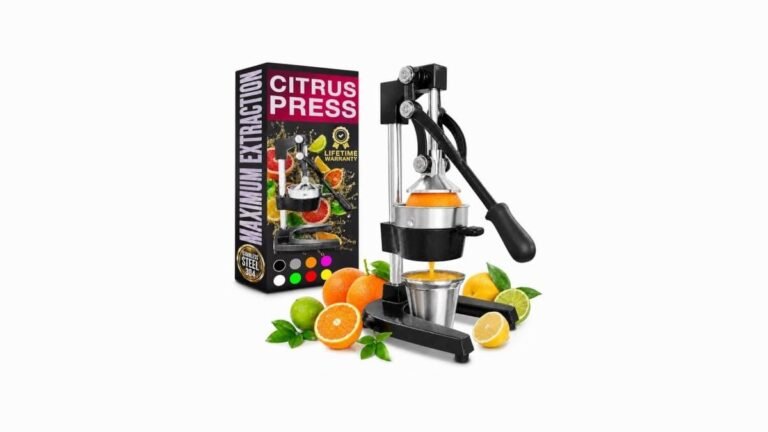
1. Commercial Grade Can-Can Pomegranate and Citrus Juicer
Best for: Heavy, repeated pressing without the machine shifting
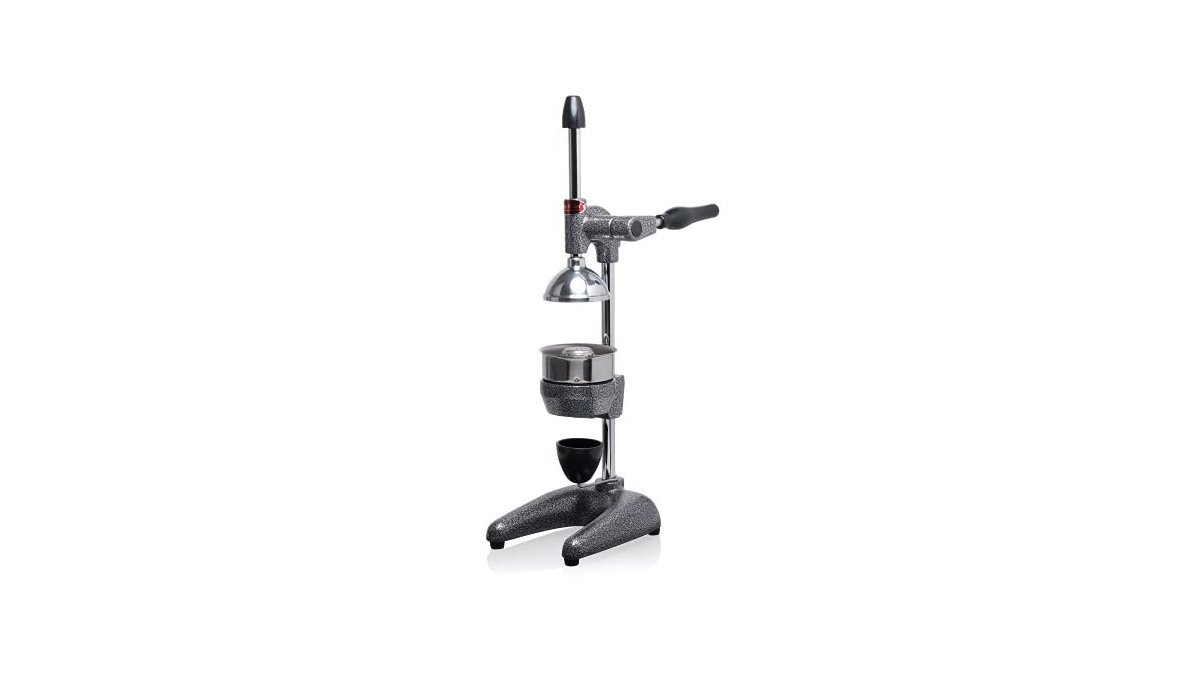
This is a commercial-grade press built around a clamping system, and that’s the detail that matters most. A clamp holds the fruit and the machine together, so when you press hard, the unit stays put instead of fighting you. The listing also says the juice can be prepared without needing high force, and that the device doesn’t destabilize during pressing. Those two claims describe the same thing: a press that absorbs the effort so your arm doesn’t have to.
The other listed point is lifespan. The seller states that, given the materials and the squeezing principle, domestic use can reach over ten years without needing a repair.
Who it fits: Anyone who presses pomegranate often and wants the machine to stay still under real force.
Who should pass: If you want a single appliance that also handles other kitchen tasks beyond pressing, this isn’t that machine.
2. Eurolux Ultra-Premium Cast Iron Juicer
Best for: Large fruit and long juicing sessions
This one is cast iron with an extra-large bowl, and it uses a lever rather than a clamp. The listing says the dependable lever helps you squeeze more juice with less effort, and that the machine is built for continuous juicing. The process is simple: cut the citrus or pomegranate in half, place it face down in the bowl, and pull the lever down.
Two listed features change daily use. First, the parts that touch the fruit come off and go in the dishwasher, so cleanup isn’t a hand-scrub job. Second, suction cups on the bottom hold the press in place, and the listing notes those suction pieces can be removed and replaced with a small rubber piece. A stainless steel cup is included, so you’re not hunting for a container that fits.
What goes smoothly:
- Cut fruit in half, place it face down, pull the lever
- Fruit-contact parts detach and are dishwasher safe
- Suction cups keep the base from sliding
- A stainless steel cup comes with it
- The lever does the pressing, not your grip strength
What you have to accept:
3. CO-Z Manual Citrus Juicer
Best for: Getting maximum juice out of hard fruit
The headline number here is pressure. The listing says the reinforced cast iron withstands over 2300 psi, and that all fruit-contact parts are 304 food-grade stainless steel. That combination is the reason this press can take on tough pomegranates without the frame flexing. The extra-long lever handle has a rubber grip, which spreads the load across your palm rather than digging into it.
The funnel is listed at 5 inches, and the listing says it accommodates fruits of all sizes. A stainless steel strainer keeps seeds and pulp out of the glass, and the detachable parts can be rinsed or put in the dishwasher. A nonslip suction base holds it steady while you press.
Snapshot:
- Reinforced cast iron rated by the listing at over 2300 psi
- 304 food-grade stainless steel on all fruit-contact parts
- Extra-long lever handle with a rubber grip
- 5-inch funnel listed as fitting fruit of all sizes
- Stainless steel strainer catches seeds and pulp
- Nonslip suction base; detachable parts are dishwasher safe
4. Gowintech Commercial Heavy Duty Cast Iron Hand Press Manual Orange
Best for: Fast cleanup in a small kitchen
The listed dimensions are 8.5 by 6.7 by 15.5 inches, and the seller says it fits under a kitchen or cupboard cabinet. The body is solid cast iron with 304 food-grade stainless steel, and the rubber handle is listed as withstanding 2300 PSI of strength.
Cleanup is the other focus. The strainer and funnel are removable and dishwasher safe, and the listing says a water wash and a wipe with a cloth takes seconds after each use. Rubber bottoms keep the machine from moving around or slipping, which the listing notes also protects your countertop. It arrives fully assembled, and the listing covers oranges, lemons, limes, pomegranates, grapefruit, watermelon and cantaloupe.
Who it fits: Home users who want a press they can wipe down fast and leave out on the counter.
Who should pass: If you need to juice a large volume in one go, a hand press means feeding fruit through individually. An electric machine suits batch work better.
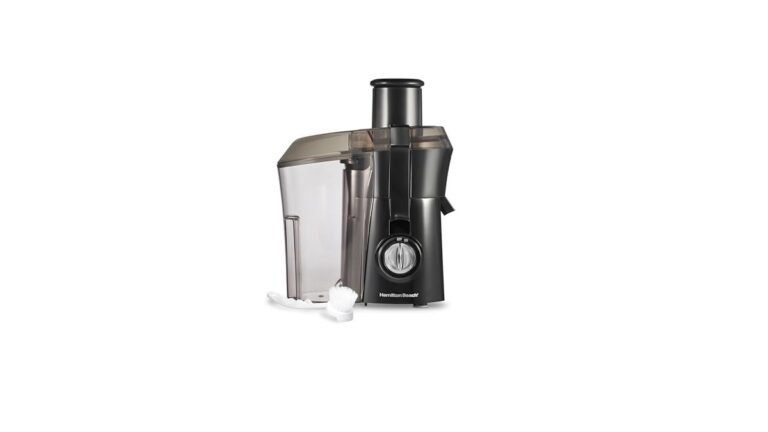
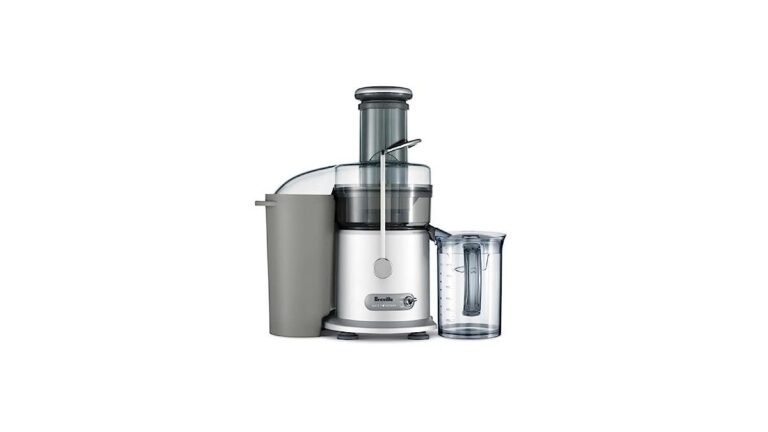
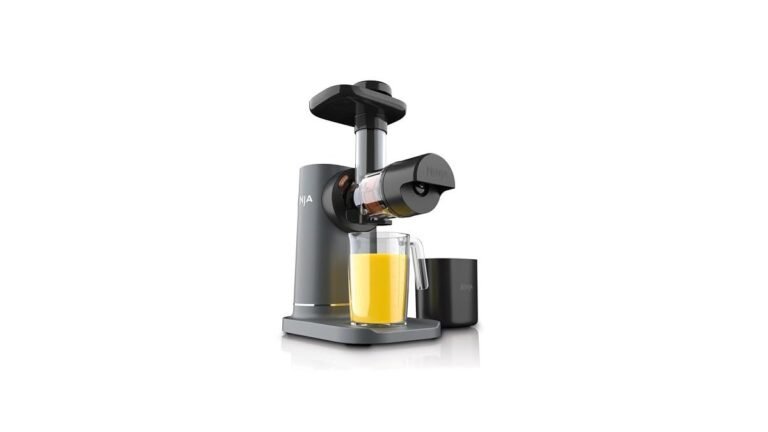
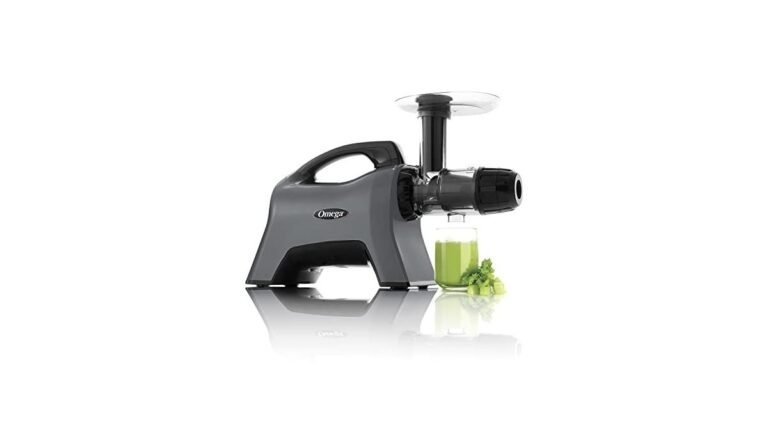
5. EanOruus 3-in-1 Cold Press Juicer
Best for: Batch juicing and more than just pomegranate
This is the electric option, and it’s a different kind of tool. It has two interchangeable strainers, so you can switch between juice and sorbet, and the listing says it also makes nut milk. The feed chute is 6.5 inches wide, which the listing says accepts large whole fruits like apples and oranges — that cuts prep time, though pomegranate still needs its arils separated before they go in.
The hopper holds 100 ounces, so the listing positions it for families and meal preppers who want several days of juice in one session. The motor is a high-torque AC brushless design, listed as crushing hard fibrous ingredients and built for heavy daily use. All detachable parts come off for cleaning, including a detachable pulp outlet.
What goes smoothly:
- Two strainers cover juice, sorbet and nut milk
- 6.5-inch chute takes large whole fruits
- 100-ounce hopper means fewer refills
- AC brushless motor listed for heavy daily use
- Detachable parts and pulp outlet for cleanup
What you have to accept:
- Pomegranate arils still need separating from the pith first
Also Worth Considering
Zeluna Press Juicer Citrus Pomegranate is a cast iron hand press with a stainless steel build, listed as easy to clean and using an effortless lever-press design. The listing points it at home cooks, health enthusiasts and bartenders, so it’s positioned as a home unit rather than a commercial one.
NCUE Cast Iron Juicer is a heavy-duty hand press with a food-grade 304 stainless steel body, a detachable design for easy cleaning, an ergonomic lever and a non-slip base. The listing covers both home and commercial use.
NJSZBDZJ Cast Iron Juicer is a hand press listed as effortless, stable and easy to clean, for home, bar and commercial use. It’s built for orange, lemon and pomegranate.
The NJSZBDZJ listing is the one that spells out what the pressing actually does. It puts the extraction rate at up to 90%, and says the seeds and residue are filtered off automatically, so the juice comes out without a separate straining step.
It also describes the method as manual cold pressing, which it says retains more vitamins, enzymes and antioxidants than the alternative.
On prep, the same listing says there’s no need to peel. You cut the fruit in half and press it, core and all, and the stainless steel cone separates the seeds and pulp. The listing frames that as the reason it suits busy mornings and commercial settings where time matters.
For the body, it describes a cast iron structure reinforced with a 304 stainless steel cone, built to take day-after-day high-pressure juicing without rusting, deforming or aging. The non-slip rubber base keeps it steady while you press.
The Decision Filter
Answer one question first: are you juicing for a small household at a time, or for a crowd? If it’s a small household, a manual lever press is the simpler tool. It presses pomegranate well. If it’s a crowd, or you want a single machine that handles multiple frozen and liquid outputs, the electric route makes more sense.
Most people miss this: the base. A press is only as good as its grip on your counter. Suction cups or a clamping system are what let you apply real force without the machine walking away from you.
If you already own a blender and hate the cleanup, rule out electric. If you juice citrus more than pomegranate, a press still covers both.
The Quick Checklist
- Will you use this weekly, or only when pomegranates are in season?
- Does anyone else in the house need to use it without a demo?
- Will it fit under your cabinets and stay out on the counter?
- Do you need it to handle citrus and pomegranate, or just one?
- Can you wash the fruit-contact parts by hand, or do you need a dishwasher?
- If it’s the wrong one, do you have space to store it anyway?
Two of these questions do most of the work. If you juice weekly, a heavy cast iron press earns its counter space; if it comes out for a short season each year, it will spend the rest of the year in a cupboard, and the weight that makes it stable becomes the reason you avoid lifting it.
The second is who else will use it. A lever press asks for no demo, so a household where several people pour a glass before work is a household that gets value from it.
If the answer to the dishwasher question is yes, check that the parts touching fruit come off before you buy. On most of these models they do.
Three Regrets Worth Avoiding
Regret #1: Buying a press that slides. A machine that won’t stay put under pressure turns juicing into a wrestling match, and you stop using it. The fix is simple: check the base before you commit. Suction cups or a clamping system are what keep the unit planted, and the listings that mention them are telling you something useful.
Regret #2: Assuming a single appliance covers every task. The fix is to write down what you actually want to make in a normal week, then match the tool to that list rather than to the widest possible one.
Regret #3: Overlooking cleanup. A press you dread washing is a press that stays in the cupboard. The fix is to look for detachable fruit-contact parts and dishwasher-safe components before you buy, because that’s the difference between a daily habit and a short-lived experiment.
If You Want This, Look for That
One lead rule: match the tool to the job, not to the longest feature list.
| If you want… | Look for | Avoid |
|---|---|---|
| Maximum juice from hard pomegranate | Long lever and reinforced cast iron | Thin frames that flex under load |
| A machine that stays put | Suction cups or a clamping system | Smooth bases with no grip |
| Fast cleanup | Detachable, dishwasher-safe parts | Fixed parts you scrub by hand |
| Juice for a crowd | Large hopper and wide feed chute | Small funnels needing trimmed fruit |
| More than juice | Interchangeable strainers | Single-purpose presses |
| Countertop storage | Listed height that clears cabinets | Units taller than your shelf gap |
A couple of rows deserve a second look before you buy.
The first is stability. A clamping system is the answer when you juice very intensely, because the machine is fixed rather than merely weighted. Suction cups and rubber pads suit normal countertop use, and on some models the suction pieces can be removed and replaced with a tiny rubber piece.
The second is the lever. A gravity-assisted lever maximizes pressing power while minimizing effort, and the extra-long handle with a rubber grip makes tough pomegranates effortless. If you press only soft fruit, a shorter handle is fine. If you press pomegranate daily, buy the long one.
Where the categories overlap, buy the heavier machine.
Related guides
Frequently Asked Questions
Can a manual press really juice a pomegranate?
Yes, and it’s often better at it than an electric machine. A lever press applies direct force to a halved fruit, and the listings here describe pressing pomegranate alongside citrus. The catch is that you cut the fruit in half first and place it face down in the bowl.
Do I need to peel or deseed pomegranate before pressing?
For a manual press, no. The listing instructions say to cut the fruit in half, place it face down, and pull the lever. The strainer and funnel catch the seeds and pulp. For an electric juicer, yes — you want the arils loose so they feed through the chute. That’s the trade-off between the two types: a press asks less prep, an electric machine asks more but handles larger batches.
How much force does a pomegranate actually need?
More than an orange, which is why the pressure ratings in these listings matter. One press is listed as withstanding over 2300 psi, and another lists its rubber handle at 2300 PSI strength. Those figures tell you the frame and handle are built for hard fruit. Just as important is the base — suction cups or a clamp are what let you apply that force without the machine moving.
Will these presses work on other fruit too?
The listings cover a wide range. One names orange, lemon, lime, pomegranate, grapefruit, watermelon and cantaloupe. Another covers orange, lemon, lime, pomegranate and grapefruit. The electric option goes further, with strainers for juice and sorbet plus nut milk. So if you want one tool for citrus and pomegranate, a press covers it. If you want sorbet and nut milk, that’s the electric route.
What needs washing after each use?
On the manual presses, the parts that touch the fruit come off. Several listings say those parts are dishwasher safe, and one says a water wash and a wipe with a cloth takes seconds. The cast iron body itself gets wiped, not soaked. On the electric juicer, all detachable parts come off, including a detachable pulp outlet. Either way, the fruit-contact pieces are the ones that need attention.
How long should one of these last?
The listings make different claims, so treat them as claims rather than guarantees. One states that with its materials and squeezing principle, domestic use can reach over ten years without a repair. Others emphasize heavy-duty cast iron construction and continuous juicing. Electric machines depend on the motor, and one listing describes an AC brushless design for heavy daily use.
Are these safe to use on a regular countertop?
The listings address this directly. One says the rubber bottoms keep the machine in place and prevent damage to your countertops or tables. Another uses suction cups for the same reason. The weight of cast iron is the other factor — a heavy base doesn’t skate. If your counter is delicate, a rubber or suction base is the feature to look for, and both types appear across these listings.
Closing
When two picks still look equal, use this tie-break: pick the one whose base grips better. Force is the whole game with pomegranate, and a press that stays planted lets you use it. A press that slides doesn’t, no matter what else it offers.
Then do one thing next. Measure the gap under your cabinets and the space on your counter, and decide whether you want a hand press or an electric machine. Those answers cut this list down fast.
If you’re leaning toward a hand press, the choice is really between cast iron and everything else. Cast iron is what the heavy-duty models are built from, and it’s why they hold up to day-after-day pressing without rusting, deforming or aging. One brand puts a number on that: over 10 years of domestic use with no repair needed.
That matters most if you juice pomegranate often. Pomegranate is the fruit that punishes a weak press, and it’s the reason the sturdy models exist.
After that, read the listing for the one you’ve picked and check the fruit-contact materials and what comes apart for washing. That’s the part you’ll deal with every single time you use it.