The 10 Best Celery Juicers for Dry Pulp and More Juice
You’ve got a bunch of celery in the fridge, a glass on the counter, and a stubborn problem: the stalks keep coming out dry while the pulp bin fills up. You’ve seen the green juice at the store, you know what it costs, and you’d rather make it at home. So you started comparing celery juicers, and that’s when the wall of options hit.
Here’s what makes this hard. Celery is stringy, watery, and low in yield, so two things fight each other in every machine: how much juice you actually get out of a stalk, and how much work you sign up for afterward. A fast machine saves you minutes at the counter. A slow one saves you celery. You can’t have both, and most listings won’t tell you which one you’re buying.
This page sorts that out. It compares what each listing actually promises, who it suits, and where it gives ground — so you can pick the one that matches your mornings.
All 10 products side by side — scroll sideways to see every column.
| Top Pick | Best for Less Pulp | Best for Whole Fruits | Best for Wheatgrass | Best for Small Kitchens | Best for Nut Milk | Best for Wide Chute | ||||
| Preview |  |  |  |  |  |  |  |  |  |  |
|---|---|---|---|---|---|---|---|---|---|---|
| Product | Omega Celery Juicer | Ninja NeverClog JC151 | Breville Juice Fountain Plus | Omega H3000RWH13 | Breville BJE200XL Compact Centrifugal Juicer | Hamilton Beach Big Mouth | Elite Gourmet EJX600 | Canoly C16 | AMZCHEF Slow Juicer | HOMEASY Cold Press Juicer |
| Brand | Omega | Ninja | Breville | Omega | Breville | Hamilton Beach | Elite Gourmet | Canoly | AMZCHEF | homeasy |
| Best for | Best for Celery | Best for Less Pulp | Best for Whole Fruits | Best for Wheatgrass | Best for Small Kitchens | — | — | Best for Nut Milk | Best for Wide Chute | — |
| The listing says | Operates at 80 RPM to reduce heat and oxidation Squeezes celery longer for more juice and less waste | High-torque motor handles apples, carrots, celery, leafy greens Includes 2 interchangeable pulp filters for less or more pulp | 3 inch extra wide fruit chute, dual speeds Titanium reinforced disc and Italian-made micro mesh filter basket | Juices at 90-110 RPM to reduce heat and oxidation Cold press juicing for enzymes and antioxidants | 3 inch wide chute juices whole fruits and vegetables Titanium-reinforced disc and Italian-made micro mesh filter basket | Backed by a 3-year limited warranty from Hamilton Beach Extra-large 3” chute, 800 watts, 80 oz. pulp bin | Mini compact juicer for 1–2 servings, includes 16 oz juice cup Slow cold press juicing at 70 RPM | Two strainers for juice, sorbet and nut milk 6-inch feed throat fits whole fruits and large celery bunches | 5.2-inch wide feed chute with built-in cutting blades Operates at 60 RPM, Triple Strainers separate pulp from juice | Operates at 50 RPM to reduce heat buildup 0.33mm fine filter separates juice and pulp |
| More information | Buy on Amazon | Buy on Amazon | Buy on Amazon | Buy on Amazon | Buy on Amazon | Buy on Amazon | Buy on Amazon | Buy on Amazon | Buy on Amazon | Buy on Amazon |
1. Omega Celery Juicer and Nutrition System Masticating Juicer
Right for: The daily celery juicer who wants maximum yield per stalk.
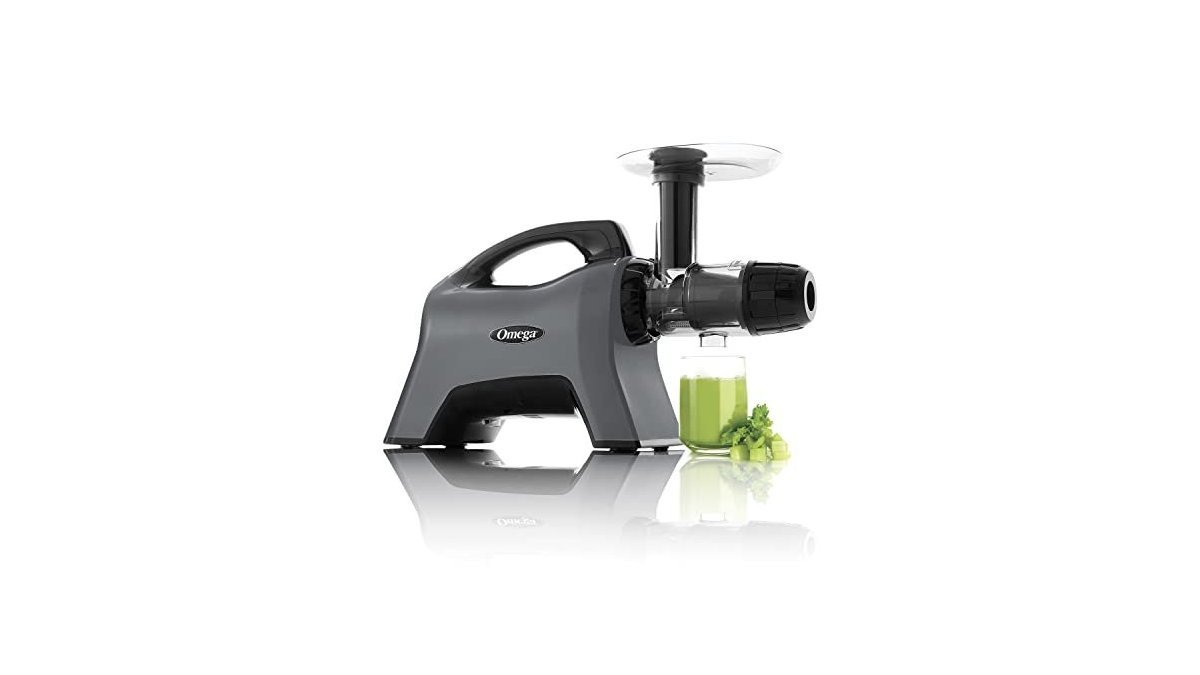
This listing is built around one job. It’s a masticating machine running at 80 RPM, and the seller says that slow speed keeps heat and oxidation down so you get more nutrients in the glass. The celery claim is specific: it squeezes celery longer for more juice and less waste, and the seller says to feed whole cold stalks through the chute rather than cutting them small. You also get a dedicated celery end cap that the listing says isn’t meant for any other produce.
That last detail matters more than it sounds. A separate end cap for celery means the machine is set up for exactly the ingredient you’re juicing most, and the standard cap covers everything else. On an ordinary morning, you’d rinse a few stalks, drop them in whole, and let it run — no chopping board, no knife. The trade is time: 80 RPM is slow by design, so a full glass takes a while. The Nutrition System side also means the same base does nut butter, pasta, coffee grinding, and baby food, which is a lot of counter space claimed back.
What works:
- Dedicated celery end cap tuned for fibrous stalks
- 80 RPM slow press limits heat and oxidation
- Whole stalks feed in without pre-cutting
- Nutrition System handles nut butter, pasta, and more
- Triple-stage masticating technology for leafy greens
Where it gives ground:
- Celery end cap isn’t meant for other produce
- Slow 80 RPM pace means a longer session per glass
Skip it if: You want one fast glass and you’re out the door.
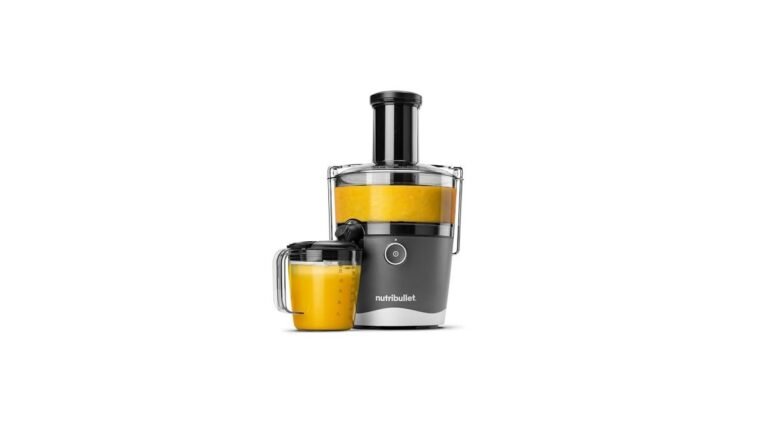
2. Ninja NeverClog Cold Press Juicer
Right for: The everyday juicer who hates stopping to unclog the machine.
The headline here is the name itself. This is a 150-watt high-torque auger machine, and the listing says it powers through apples, carrots, celery, and leafy greens without clogging. Two interchangeable pulp filters let you pick between Less Pulp and Lots of Pulp, so you control the texture rather than accepting whatever comes out. There are two one-touch programs — Start/Stop and Reverse — and the reverse function is there to break up jams.
For a celery drinker, the pulp filter choice is the interesting part. Celery pulp is wet and stringy, and being able to push toward Less Pulp means a cleaner glass without a second straining step. The anti-drip lever lets you pause mid-session and pour without a mess on the counter. Cleanup is a real consideration here: the listing says all juice-contact parts are dishwasher safe and that it’s designed to be easier to clean than many centrifugal juicers.
What works:
- 150-watt high-torque auger handles fibrous produce
- Two pulp filters for Less Pulp or Lots of Pulp
- Reverse function helps clear jams
- Anti-drip lever prevents spills when pouring
- Juice-contact parts are dishwasher safe
Where it gives ground:
- 24 oz juice jug limits how much you make at once
- Pulp container needs emptying during bigger sessions
Skip it if: You juice in large batches for several people at once.
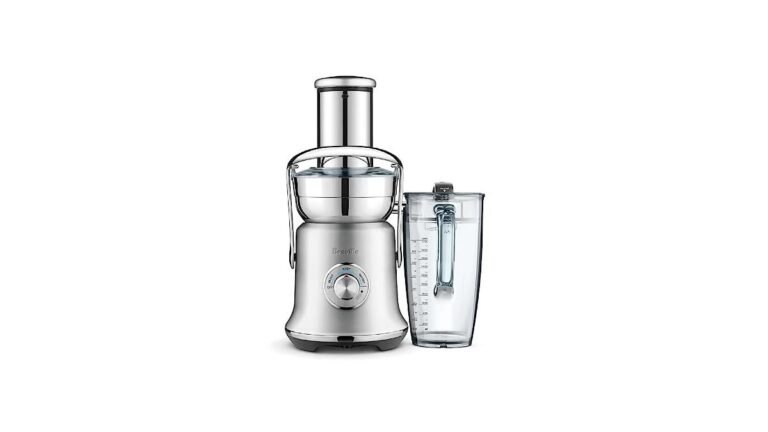
3. Breville Juice Fountain Plus
Right for: The impatient juicer who wants a glass in minutes.
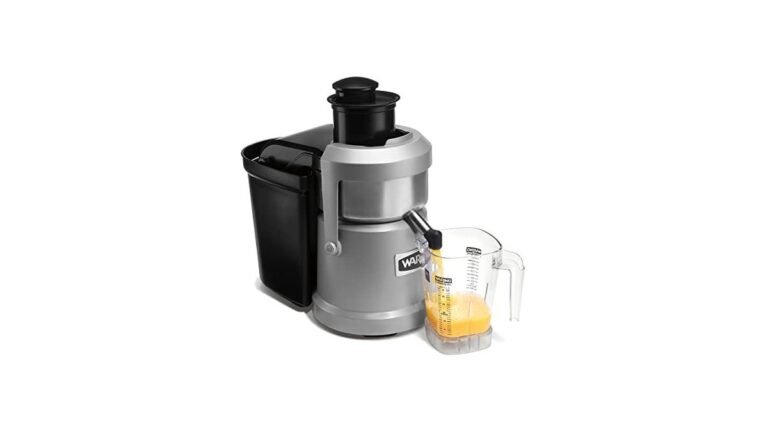
Speed is the whole story with this one. It’s a centrifugal juicer with an 850W motor and dual speeds — low for softer fruits and leafy vegetables, high for denser fruits and harder vegetables. The 3-inch extra-wide chute is the practical part: the listing says you can juice whole fruits and vegetables without pre-cutting, which removes the chopping step entirely. A titanium-reinforced disc and an Italian-made micro mesh filter basket handle extraction.
Here’s the honest trade with centrifugal juicing. You get your glass fast, and you get froth with it. The listing addresses that directly with a built-in froth separator in the juice jug, so you pour more juice and less foam. Capacity is generous: a 35.2 fl oz juice jug and a 2.6 qt pulp container, so you’re not stopping to empty things constantly. The pulp container is detachable and the cord wraps around the feet underneath, which helps at storage time. For someone juicing a big bunch of celery on a weekend, the volume and the speed line up well.
What works:
- 850W motor with dual speeds for soft and hard produce
- 3-inch chute takes whole produce, no pre-cutting
- Froth separator in the jug pours less foam
- 35.2 fl oz jug and 2.6 qt pulp container
- Detachable pulp container and wrap-around cord
Where it gives ground:
- Centrifugal design produces froth on some produce
Skip it if: You want the slow-press style and the texture that comes with it.
4. Omega H3000RWH13 Cold Press 365 Juicer Slow Masticating Extractor Creates
Right for: The small-kitchen juicer who still wants cold press.
This is a slow masticating machine running at 90–110 RPM, and the listing says that low speed minimizes heat build-up and oxidation. It’s BPA free, which the seller frames as a healthier way to juice. The listed range covers celery, carrots, leafy greens, other fruits and vegetables, and wheatgrass — so celery sits inside a broad set rather than being the only thing it handles.
The practical draw is cleanup and size. The listing describes cleanup as a rinse, with most removable parts top rack dishwasher safe, excluding the drum. The immunity angle the seller pushes is about enzymes and antioxidants from cold press juicing, which is the general case for slow juicing rather than a claim about this unit alone. On a normal morning, this is the machine for one or two glasses, a quick rinse, and back on the counter.
What works:
- 90–110 RPM slow masticating extraction
- BPA-free construction
- Handles celery, carrots, leafy greens, and wheatgrass
- Cleanup is a rinse for most parts
- Most removable parts are top rack dishwasher safe
Where it gives ground:
- Drum isn’t dishwasher safe
- Modest pace suits single servings more than batches
Skip it if: You need to fill several bottles in one sitting.
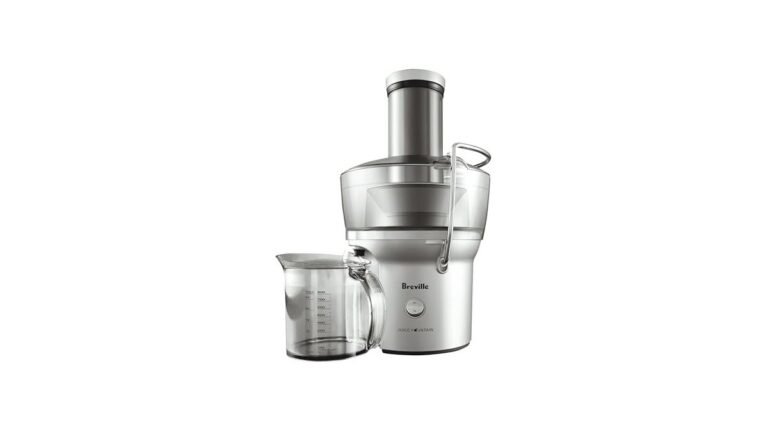
5. Breville BJE200XL Juice Fountain Compact Centrifugal Juicer
Right for: The small-counter cook who wants whole produce in fast.
This is the compact version of the centrifugal approach, and the listing is clear about what it keeps. You still get the 3-inch wide chute that takes whole fruits and vegetables without pre-cutting, including carrots, apples, and oranges. The extraction system is the same idea as its bigger sibling: a titanium-reinforced disc and an Italian-made micro mesh filter basket, both stainless steel. The difference is where the pulp goes — it collects inside the unit’s footprint, which conserves counter space.
That design choice is the whole pitch. If your kitchen has one free square of counter, this is the shape that fits it. Capacity is smaller, with a 25 fl oz juice jug and a 1.6 qt pulp container, so you’re making a glass or two rather than a pitcher. There’s a built-in froth separator in the jug for smoother pours, a safety locking arm that stops the machine unless the cover is in place, and a cord that wraps under the base for storage. For a single person juicing celery most mornings, the 25 fl oz jug is the listed capacity.
What works:
- A wide chute juices whole produce without pre-cutting
- Pulp collects within the unit’s footprint
- Titanium-reinforced disc and stainless steel filter basket
- Safety locking arm prevents operation when open
- Cord wraps under the base for storage
Where it gives ground:
- 25 fl oz jug suits one or two glasses
- 1.6 qt pulp container fills faster than larger bins
Skip it if: You’re juicing for a family and want a bigger jug.
6. Hamilton Beach Centrifugal Juicer Machine With Big Mouth 3” Feed
Right for: The household juicer who wants volume and a long warranty.
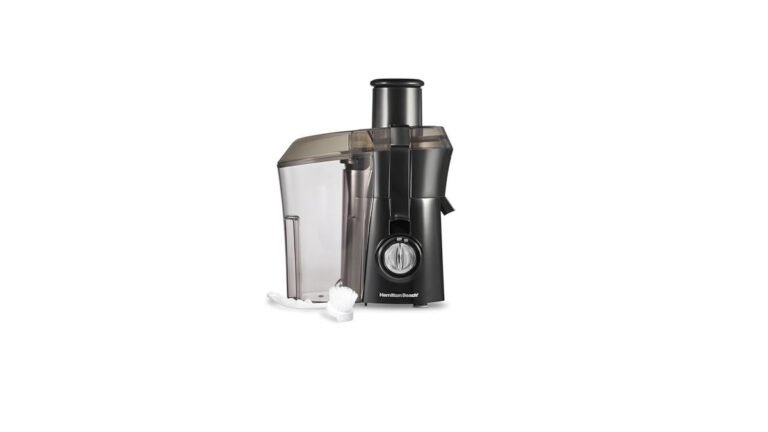
The Big Mouth name is about the chute, and the chute is wide enough to swallow produce whole. The listing says that fits a whole apple, a bunch of celery, or a handful of carrots, so you skip pre-cutting. Power comes from an 800-watt rated motor, and the seller claims maximum juice yield across hard and soft foods, from oranges and apples to cucumbers and leafy greens. The pulp bin is 80 oz.
Two things stand out for a celery buyer. First, the 80 oz pulp bin means fewer emptying stops during a long session. Second, the warranty: this carries a 3-year limited warranty, and the seller notes Hamilton Beach as the number one juice extractor brand in America. Cleaning is handled with an included strainer cleaning brush, and the pulp bin, juice bowl, lid, and pusher are all dishwasher safe. This is the machine for someone who wants an 80 oz pulp bin and a 3-year limited warranty.
What works:
- Big Mouth chute takes whole produce
- 800-watt rated motor for hard and soft foods
- 80 oz pulp bin holds a long session’s waste
- 3-year limited warranty
- Pulp bin, juice bowl, lid, and pusher are dishwasher safe
Where it gives ground:
- Centrifugal design, so froth is possible on some produce
Skip it if: You want a slow-press machine and a smaller footprint.
7. Elite Gourmet EJX600 BPA-Free Cold Press Juicer
Right for: The juicer for a single daily glass, with almost no counter space.
This listing is unusually straight with you. It’s a mini, compact juicer — the seller says it’s smaller than standard countertop juicers and designed for 1–2 servings at a time, with a 16 oz juice cup. It also says plainly that it’s not intended for large-batch juicing or filling multiple bottles, and asks you to confirm the size before ordering. That kind of honesty is worth something when you’re comparing listings.
The mechanics are slow cold press at 70 RPM, which the listing says gives smoother juice with less foam and less oxidation than high-speed centrifugal juicers. The feed chute is 3/4 inch, and the seller recommends cutting produce into smaller pieces for best performance, especially hard items like apples, carrots, beets, and ginger. So the trade is clear: tiny footprint and easy storage, but more knife work before you start. Cleanup is short — only 3 removable parts, a cleaning brush included, and removable parts are top rack dishwasher safe, excluding the motor base and cord. Overload and overheat protection are built in.
What works:
- 70 RPM slow cold press for less foam and oxidation
- Only 3 removable parts for quick cleanup
- 16 oz juice cup included
- Overload and overheat protection built in
- Compact size suits very small kitchens
Where it gives ground:
- 3/4 inch chute means cutting produce into smaller pieces
- Designed for 1–2 servings, not large batches
Skip it if: You want to juice a whole bunch of celery in one go.
8. Canoly 3-in-1 Cold Press Juicer C16
Right for: The family juicer who wants juice, sorbet, and nut milk.
This is a 3-in-1 machine, and the listing spells out the three: two strainers for Juice and Sorbet, so you get fresh fruit and vegetable juice, zero-waste frozen fruit sorbets, and creamy nut milk. The chute is 6 inches, which the seller says takes whole fruits like apples and pears plus large celery bunches, cutting prep time on busy mornings. The hopper holds 90 oz, which the listing frames around large-batch juicing, meal prepping, and serving a whole family in one session.
The motor is the other headline. It’s an AC brushless motor that the listing says runs at a whisper-quiet 35dB, and it’s backed by a 15-year motor warranty, with the seller pointing to the warranty section for details. The AC brushless motor runs at 35dB and the 6-inch chute takes large celery bunches. Cleanup gets attention too: a detachable pulp outlet prevents residue buildup, and all removable parts are BPA-free. This is the machine for a household, not a single glass.
What works:
- 6-inch chute takes whole fruits and large celery bunches
- Three functions: juice, sorbet, and nut milk
- 90 oz hopper for large-batch juicing
- AC brushless motor listed at 35dB
- 15-year motor warranty per the listing
Where it gives ground:
- Large capacity and footprint suit big kitchens
- Three functions mean more parts to manage
Skip it if: You live alone and juice a single glass at a time.
9. AMZCHEF Cold Press Juicer
Right for: The set-and-forget juicer who dislikes chopping.
The pitch here is self-feeding. The feed chute is 5.2 inches with built-in cutting blades, and the listing says it handles larger fruits and vegetables while reducing how much chopping you do beforehand. The machine runs at 60 RPM, a slow cold press speed, and the seller says that pace supports smoother processing and helps reduce clogging. Three strainers work together to separate pulp from juice for a cleaner texture.
The build is stainless steel on the outside, and the listing mentions side ventilation openings that support stable operation during longer sessions. Assembly is where this one stands out: the seller describes a one-piece design with 3 components that go together in about 5 seconds, and cleanup means detaching the body and using the included brush. There’s one instruction worth noting — keep the lid open when assembling or removing the chute. For someone who wants to load a chute and walk away while coffee brews, the self-feeding design and the quick assembly line up neatly.
What works:
- 5.2-inch chute with built-in cutting blades
- 60 RPM slow cold press operation
- Triple strainers separate pulp from juice
- Stainless steel exterior with side ventilation
- 3-component assembly described as about 5 seconds
Where it gives ground:
- Lid must stay open when assembling or removing the chute
- Slow 60 RPM pace takes time per glass
Skip it if: You want the fastest possible glass and don’t mind froth.
10. HOMEASY Cold Press Juicer Machines
Right for: The celery devotee who wants a cleaner, pulp-free glass.
This one names celery directly, and it names the problem celery creates. The machine runs at 50 RPM, and the listing says that low speed reduces heat buildup and gives smoother juice with less foam than a high-speed extractor. The filtration figure is 0.33mm, a fine filter the seller says separates juice and pulp for a more consistent texture — and specifically says it helps reduce excess pulp when juicing fibrous ingredients like celery or leafy greens. That’s the exact issue a celery juicer runs into.
The second celery-specific detail is the pulp outlet. The listing asks the question outright — celery fibers clogging the pulp outlet? — and answers with a flip-open cover that lets you clear built-up fiber without digging or tools. Only 4 detachable parts need washing, and a cleaning brush is included. The feed chute is 5.8 inches for whole apples and long carrots, though the seller still recommends cutting very hard or oversized ingredients smaller. There’s a blade-free auger, a dual safety lock that stops operation unless properly assembled, and a recipe booklet in the box.
What works:
- 50 RPM low-speed cold press extraction
- 0.33mm fine filter reduces pulp in fibrous juice
- Flip-open pulp outlet clears celery fiber easily
- 5.8-inch chute fits whole apples and long carrots
- Dual safety lock and blade-free auger system
Where it gives ground:
- Very hard or oversized produce still needs cutting
- Only 4 detachable parts, but all need washing each time
Skip it if: You want a machine that also makes sorbet and nut milk.
Also Worth Considering
TUUMIIST 3-in-1 Press Juicer Machine is a cold press masticating juicer built for whole fruit and vegetables, with a 6.5-inch wide chute and a 100 oz capacity. It also makes nut milk and sorbet, and it uses a smart touch control panel. The wide chute and large capacity point at batch juicing for a household rather than a single glass.
TUUMIIST 3-in-1 Juicer Machines covers the same ground with a slightly different listing: a 6.5-inch large feed chute, cold press operation for whole fruits and vegetables, and juice, sorbet, and nut milk functions. The listing emphasizes easy cleaning. If you’re comparing the two TUUMIIST models, the functions look aligned, so the deciding factor is which listing’s details match your kitchen.
Omega Premium Nutrition System is a 150-watt slow masticating juicer running at 80 RPM with adjustable pressure settings. It makes nut milks, baby food, and sorbets, and it’s the broader nutrition-system take on slow juicing — the same family of approach as the Omega Celery Juicer above, aimed at buyers who want one base for several jobs.
How to Think Before You Choose
Slow Press or Fast Spin
This is the first fork in the road, and it decides everything after it. A slow masticating machine turns an auger at low speed and presses the juice out. A centrifugal machine spins a basket fast and throws the juice through a filter. The listings here split cleanly: 50, 60, 70, 80, and 90–110 RPM on one side, and 800W and 850W motors on the other.
For celery, most people should lean slow. Celery is mostly water held in fibrous walls, and the slow machines here are the ones whose listings talk about squeezing longer, reducing waste, and cutting pulp. The centrifugal listings talk about speed, wide chutes, and froth separators — which tells you what they’re solving for. Froth isn’t a flaw, but it’s a step you don’t have with a press.
There’s a real trade-off with slow, and it’s time. A glass that comes out quickly on a fast machine can take considerably longer on a press. If you juice once a day and you’re not in a rush, slow wins. If you’re making a glass in the moments before you leave, fast wins, and you accept the foam.
One thing you can check at home before deciding: count how many stalks go into your usual glass, and how much celery you buy each week.
Chute Width and Prep Work
Chute width decides how much knife work happens before the machine ever runs. This listing states a 3/4-inch chute. In between sit 3-inch, 5.2-inch, 5.8-inch, and 6-inch chutes, and the difference between them isn’t cosmetic.
A 3-inch chute takes a whole apple, a bunch of celery, or a handful of carrots, according to the listings that have one. A 5.8-inch or 6-inch chute takes whole fruits and large celery bunches. A 3/4-inch chute asks you to cut produce into smaller pieces, and the listing that has it says so directly, especially for hard items like apples, carrots, beets, and ginger.
Most people should lean wide if they juice celery often, because celery stalks are long and awkward. Wide chutes remove the trimming step, and that step is the one people quit over. But wide chutes usually come with bigger machines and bigger footprints, so if your counter is tight, a narrower chute plus a cutting board may be the honest answer.
Check this at home: measure the longest celery stalk you’d realistically feed in, and measure the free counter width where the machine would live. If the stalk is longer than the chute, you’re cutting it — every single time.
Cleaning and What You Sign Up For
Nobody talks about this part, and it’s the reason juicers end up in closets. Every session ends with pulp to empty and parts to wash, and the listings here differ a lot in how much of that you take on.
The counts are stated plainly in several listings. One machine has only 3 removable parts. Another has 4 detachable parts. One says all juice-contact parts are dishwasher safe. Another says most removable parts are top rack dishwasher safe, excluding the drum. One notes that the motor base and cord can’t go in the dishwasher. Those details decide whether cleanup is a rinse or a project.
Most people should lean toward fewer parts and dishwasher-safe components, because the gap between a two-minute rinse and a ten-minute disassembly is what decides whether you juice tomorrow. If you juice celery daily, the cleaning routine is worth weighing carefully.
There’s a middle path worth knowing about: some listings include a flip-open pulp outlet specifically for clearing fibrous buildup. A machine that addresses it directly is solving a real problem rather than a hypothetical one.
Check this at home: count the parts on your current blender or food processor that you actually wash by hand. If that number annoys you already, buy the machine with the fewest parts.
Who Should Skip These Altogether
Juicing celery is a habit, and a habit needs a reason. If any of these describe you, the honest move is to spend nothing here.
- If you already own a masticating juicer that handles leafy greens, check its chute before you shop.
Frequently Asked Questions
What do I need to know before my first celery session?
Read the manual and wash the detachable parts first. Several listings here say the machine will only run when properly assembled, and one states that directly as a safety feature. Celery prep depends on your chute, so check your chute width and follow that listing’s own guidance rather than a general rule.
How much juice does a bunch of celery actually give?
Less than you’d expect, and that’s why yield claims matter here. Celery is mostly water, but it’s held inside fibrous walls, so how hard the machine presses decides how much ends up in the glass versus the pulp bin. The slow machines in this guide lean on that, and the listings that talk about yield per stalk are the slow ones.
What goes wrong first with a celery juicer?
Pulp outlet clogging, and the listings know it. Celery fiber is stringy, and it builds up where the pulp exits. The HOMEASY listing asks the question directly — celery fibers clogging the pulp outlet? — and answers with a flip-open cover that clears built-up fiber without tools. A machine with a reverse function or a clearable outlet handles it better than one without.
Is the simplest pick here enough?
Usually, yes. If you juice one or two glasses a day and you’re not chasing maximum yield, the compact and single-serve machines cover it. The Elite Gourmet EJX600 is designed for 1–2 servings with a 16 oz cup, and the listing is upfront that it’s not for large batches. If your goal is a fresh glass each morning, the simple machine you actually use beats the complex one you avoid.
What should I confirm before I order?
Four things, and you can check all of them from the listing. First, chute width — from 3/4 inch up to 6.5 inches here, and it decides your prep work. Second, capacity, both the juice jug and the pulp container. Third, cleaning: how many parts come off, and which are dishwasher safe. Fourth, warranty. Confirm those four against your own kitchen, and the choice gets much easier.
Closing
For most people, the Ninja NeverClog JC151 is the pick — the anti-clog claim, the two pulp filters, and the dishwasher-safe juice-contact parts cover the celery problem and the cleanup problem in one machine. For the harder case, where you’re juicing a big bunch at once and want the most out of every stalk, the Omega Celery Juicer is built around that single job, with a dedicated celery end cap and a slow 80 RPM press. Before you order, do one thing: measure your counter, and measure your longest celery stalk against the chute width you’re considering.