The 10 Best Compact Juicers for Small Kitchens
Best Compact Juicer
You’ve got a small kitchen, a short counter, and a bag of carrots going soft in the fridge. You want fresh juice in the morning without a machine that eats the whole worktop, and that’s what sent you looking for the best compact juicer. The search gets loud fast, because every listing promises the same thing.
Here’s the real problem. Compact juicers split into two families, and they ask opposite things of you. Centrifugal machines spin fast, take bigger pieces, and give you juice in seconds — but they’re louder and leave more foam. Slow masticating machines press gently, handle greens and ginger better, and run quiet — but they’re slower and want smaller pieces.
Add the size question on top: a small footprint often means a small feed chute, so you chop more. This page sorts that out for you, pick by pick.
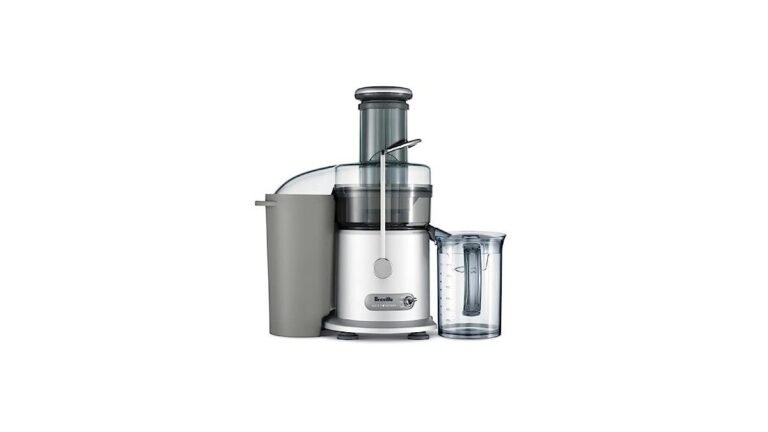
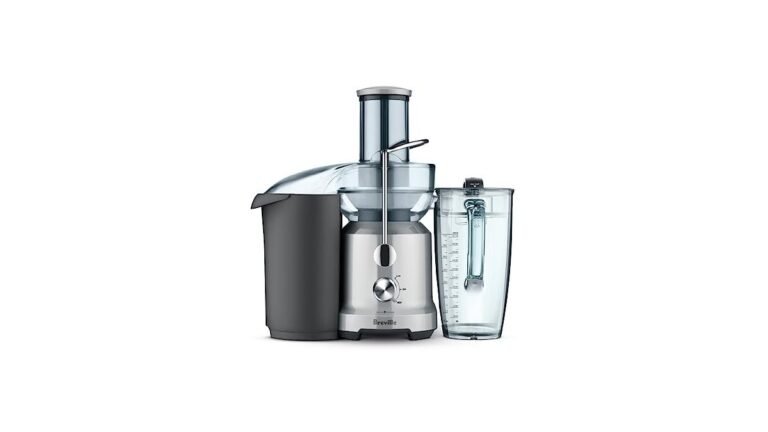
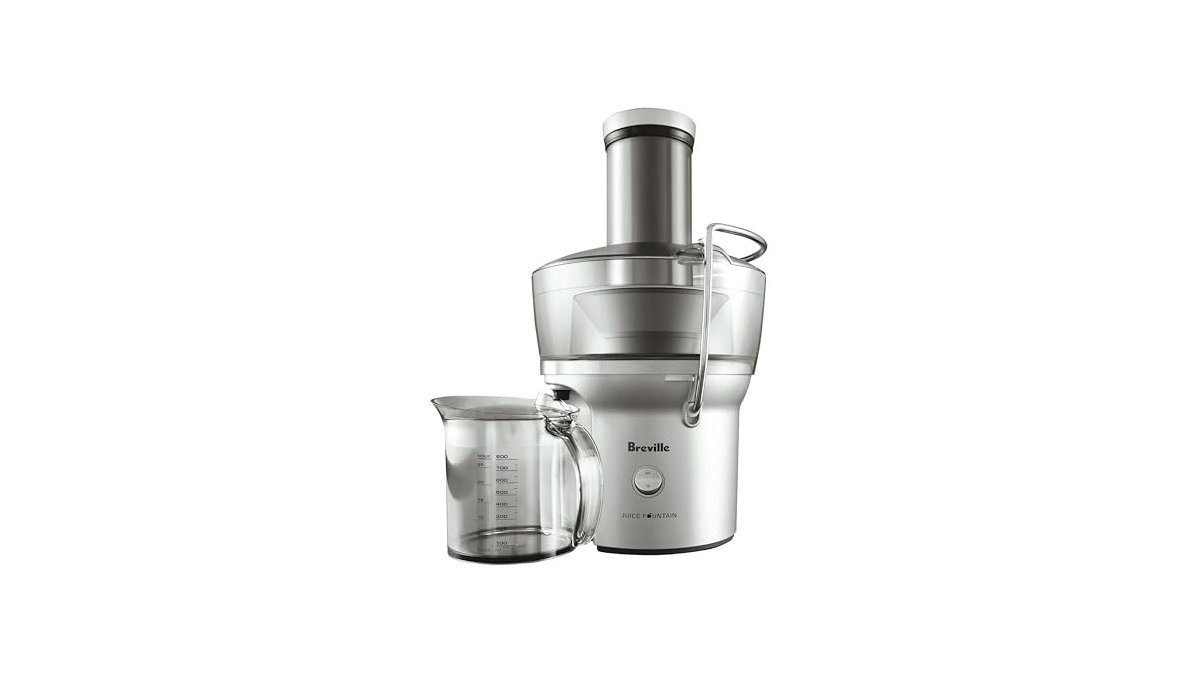
1. Breville BJE200XL Juice Fountain Compact Centrifugal Juicer

Right for: The busy cook who juices whole apples and carrots daily.
This is a centrifugal juicer built around speed and a wide mouth. The listing says the 3-inch chute takes whole fruits and vegetables — carrots, apples, and oranges — with no pre-cutting, and that the titanium-reinforced disc and Italian-made stainless steel micro mesh filter basket work together for thorough extraction. There’s a safety locking arm, so the machine won’t run unless the cover sits in place, and the pulp collects inside the unit’s own footprint rather than in a separate bin beside it.
On an ordinary weekday that means you rinse three apples, drop them in whole, and you’re done before the coffee finishes brewing. The 25 fl oz jug has a built-in froth separator, so you pour smoother juice instead of a glass of foam. The cord wraps under the base, which matters in a kitchen where every inch of counter is already spoken for. It’s a fast machine for firm produce — and that’s the job it’s designed to do.
What works:
- 3-inch chute takes whole apples, carrots, oranges
- Titanium-reinforced disc with stainless steel mesh filter
- Froth separator built into the 25 fl oz juice jug
- Pulp collects within the unit’s footprint
- Safety locking arm prevents operation without the cover
Where it gives ground:
- Centrifugal design, not a slow cold press
- 25 fl oz jug suits one or two glasses
Skip it if: You mainly juice leafy greens and want a slow press.
2. Ninja NeverClog Cold Press Juicer

Right for: The cold press buyer who wants less pulp and easy cleanup.
Ninja’s angle here is clogging. The listing describes a 150-watt high-torque motor turning an auger at low speed, powering through apples, carrots, celery, and leafy greens without clogging, and it includes two interchangeable pulp filters — one for Less Pulp, one for Lots of Pulp. There are two one-touch programs, Start/Stop and Reverse, and the reverse function helps clear jams and push extraction further.
Think about what the pulp filters actually change. If you like a thick, cloudy green juice, you fit the Lots of Pulp filter and drink something closer to a smoothie. If you want clear apple juice, you switch to Less Pulp and the texture tightens right up. That’s a single appliance covering two habits. The anti-drip lever lets you pause mid-pour without a puddle, all juice-contact parts are dishwasher safe, and the 31.5-inch cord gives you room to reach a socket.
What works:
- Two pulp filters: Less Pulp or Lots of Pulp
- Reverse program helps clear jams
- Anti-drip lever prevents spills mid-pour
- Juice-contact parts are dishwasher safe
- 24 oz juice jug and 36 oz pulp container included
Where it gives ground:
- Low-speed auger means slower juicing than centrifugal
Skip it if: You want one-button speed and don’t care about pulp control.
3. Nama J3

Right for: The multitasker who wants to load produce and walk away.
The J3’s headline feature is a self-feeding hopper. The listing says you load your entire recipe at once instead of adding produce one piece at a time, then walk away while the machine processes everything. It runs a 130-watt motor at 50 RPM, which is a genuinely slow press, and the listing says that slow speed keeps nutrients intact by minimizing oxidation and heat. It’s also described as travel-ready and built for smaller kitchens.
Picture the morning routine this changes. You chop, load the hopper, and go get dressed while it works — no standing over a chute feeding sticks of celery one by one. The slow 50 RPM press is the reason it can be left alone: nothing is spinning hard enough to need your hand on a pusher. Quick-release parts make it easy to break down afterward, and the 15-year warranty is the longest coverage on this list.
What works:
- Self-feeding hopper takes a full recipe at once
- Runs at 50 RPM for a true slow press
- 15-year warranty
- Quick-release parts for easy assembly and cleanup
- Compact, lightweight, and described as travel-ready
Where it gives ground:
- 130-watt motor is modest next to higher-wattage models
- Hopper loading works best with produce cut to fit
Skip it if: You want a fast centrifugal machine and don’t need hands-free loading.
4. Omega Juicer Cold Press 365 Vertical 65 RPM Slow Masticating

Right for: The buyer who wants a proven slow juicer for greens and ginger.
This vertical model is built around a three-stage auger. The listing gives a slow range across two speeds, plus a reverse function for clearing clogs, and a three-stage auger. It’s a vertical design, so it stands tall and slim rather than spreading across the counter. There’s a no-drip tap you can close to mix juices before dispensing, then open to pour straight into the included container or your own glass.
The no-drip tap is the detail that matters day to day. If you’re juicing apple, then beet, then ginger, you can let them collect and blend before you pour, instead of three separate glasses and three separate cleanups. The listing says cold press technology preserves vitamins, minerals, enzymes, and antioxidants. A safety interlock means the machine won’t run unless it’s properly engaged. The BPA-free container is included, and the slim body fits under most cabinets.
What works:
- Slow juicing across two speeds
- Three-stage auger for fruits, vegetables, and leafy greens
- No-drip tap lets you mix juices before pouring
- Reverse function clears clogs
- Slim vertical body fits under most cabinets
Where it gives ground:
- Two-speed operation, not a programmable interface
- Vertical design is tall rather than wide
Skip it if: You want a wide chute that swallows whole fruit.
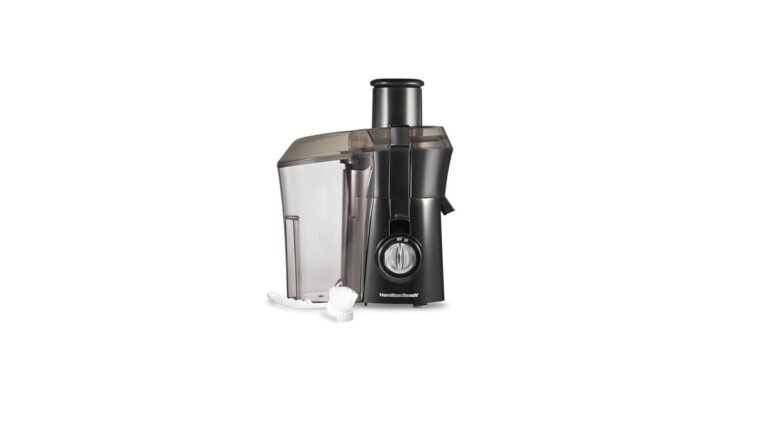
5. Hamilton Beach HealthSmart Compact Centrifugal Juicer Machine

Right for: The beginner who wants fast juice with the least chopping.
This is a centrifugal machine, and its whole pitch is prep time. The listing states a 2.4-inch round chute that fits more produce and larger pieces, and cites a 50% reduction in precutting versus the leading competitor. It runs a 400-watt motor with a stainless steel strainer, and there’s a motor protection system meant to extend motor life. The on/off button is the entire control panel.
That simplicity is the point. You press a single button, the spout sends juice straight into your glass, cup, or pitcher, and you’re finished. No programs, no dials, nothing to learn. The motor protection system is worth knowing about too — if you push hard root vegetables through too fast, it’s designed to cut out rather than burn up. The compact body fits in a cabinet for storage. One thing to note from the listing: the juice cup isn’t included, so plan to juice into your own glass.
What works:
- 2.4-inch chute reduces precutting by 50% per the listing
- 400-watt motor with stainless steel strainer
- Motor protection system to help extend motor life
- Removable parts are dishwasher safe
- Simple push-button operation
Where it gives ground:
- Juice cup not included
- Centrifugal design, so it’s not a cold press
Skip it if: You want a slow press for leafy greens and nut milks.
6. NutriBullet Juicer

Right for: The batch juicer who wants to store juice for later.
The NutriBullet Juicer leans on two numbers: a wide feed chute and a generous pitcher. The listing says the chute takes whole fruits and vegetables with no slicing or dicing, and that the sealing pitcher lid lets you store fresh juice for up to 48 hours. Dual speeds give you control over soft and hard produce, and a no-drip spout keeps the counter clean. The listing gives an 800-watt motor.
Most compact juicers make juice you drink right away. This one is built for make-ahead: juice on Sunday evening, seal the pitcher, and grab it on your way out for the next two mornings. The self-contained pulp basin lifts off and goes to the sink in one piece, and the sieve, pulp basin, and pitcher are all dishwasher safe. The sieve is stainless steel; the basin and pitcher are BPA-free plastic.
What works:
- 3-inch feed chute takes whole fruits and vegetables
- 27 oz sealing pitcher stores juice up to 48 hours
- Dual speeds for soft and hard produce
- 800-watt motor
- Sieve, pulp basin, and pitcher are dishwasher safe
Where it gives ground:
- Centrifugal design, not a slow cold press
- 16-inch height needs cabinet clearance
Skip it if: You only ever make a single serving and drink it standing up.
7. Dash Deluxe Compact Cold Press Juicer

Right for: The green juice drinker who also wants frozen treats.
Dash built this for greens and then added a bonus. The listing describes a slow masticating press that delivers fresh juice with less pulp, and names celery juice, wheatgrass, leafy greens, and ginger shots as its targets. Then it goes further: the included frozen attachment turns it into a frozen treat maker, and it also works as a nut milk press. The 130-watt motor runs at low speed, which the listing says makes it quieter than traditional juicers.
Quiet matters more than people expect. This one is designed for early-morning or late-night use. The frozen attachment makes frozen treats and it also works as a nut milk press. Everything removable is dishwasher safe, and the box includes a juice cup, pulp cup, ingredient pusher, frozen attachment, cleaning brush, and recipe guide.
What works:
- Slow masticating press for celery, wheatgrass, leafy greens
- Frozen attachment for frozen treats
- Doubles as a nut milk press
- Low-speed 130-watt motor runs quieter
- Juice cup, pulp cup, pusher, brush, and recipe guide included
Where it gives ground:
- Slow press means a longer session per glass
Skip it if: You want to juice a week of carrots in one fast pass.
8. Elite Gourmet EJX600 BPA-Free Cold Press Juicer

Right for: The single person making a small serving a day.
The listing describes it as a mini compact juicer designed for 1-2 servings at a time with a 16 oz cup, and the listing says plainly it’s not intended for large-batch juicing or filling multiple bottles. It runs at 70 RPM, which the listing says produces smooth juice with less foam and less oxidation than high-speed centrifugal juicers. The feed chute is 3/4 inch, so the listing advises cutting produce into smaller pieces.
Read those two facts together and you know exactly what you’re buying. In exchange, you get a machine that takes up almost nothing, has just three removable parts, and cleans up in a couple of minutes. There’s built-in overload and overheat protection, the removable parts are top-rack dishwasher safe, and the brand has been making kitchen gear for over 40 years with US-based support.
What works:
- 70 RPM slow cold press with less foam and oxidation
- Only three removable parts for quick cleanup
- Overload and overheat protection built in
- 16 oz Tritan juice cup included
- Top-rack dishwasher safe removable parts
Where it gives ground:
- 3/4-inch chute requires cutting produce small
- Designed for 1-2 servings, not batch juicing
Skip it if: You juice for a family or fill bottles for the week.
9. Cuisinart Compact Blender Juicer/Extractor

Right for: The small-kitchen cook who wants a juicer and a blender in one.
This is two appliances sharing a base. The listing describes a compact blender and juice extractor combo with a 450-watt peak motor, where the blender side includes a 16 oz blending cup with a flip travel lid, and the juice extractor side produces 8 to 16 ounces of fresh juice. Controls are an illuminated LED panel plus a rotary dial with High, Low, and Pulse. There’s a pulp container for easy cleaning and a lid buckle closing safety feature.
The trade-off is honest and worth naming. You’re not getting a dedicated juicer’s capacity — each batch yields just a glass or two. What you get instead is one footprint doing two jobs. Blend a smoothie Monday, juice Tuesday, and nothing extra lives on your counter. That’s a real answer for someone in a studio apartment or a dorm where a second appliance simply isn’t happening. If you mostly want juice and only occasionally blend, a single-purpose machine gives you more of it.
What works:
- Blender and juice extractor combined in a compact unit
- 16 oz blending cup with flip travel lid
- High, Low, and Pulse on a rotary dial
- Pulp container for easy cleaning
- Lid buckle closing safety feature
Where it gives ground:
- Juice extractor produces 8 to 16 ounces per batch
- Shared base means one job at a time
Skip it if: You want maximum juice yield from a dedicated machine.
10. Magic Bullet Mini Juicer with Cup

Right for: The first-time juicer who wants the simplest possible start.
Magic Bullet keeps this one basic on purpose. The listing gives a 400-watt motor, a 2-inch feed chute that fits larger chunks so you chop less, and top-rack dishwasher-safe attachments. There’s a silicone spout cap that catches drips before they reach the counter, and you juice straight into the included 16 oz cup, which comes with a twist-on to-go lid. The listing says it takes up far less space than standard models.
The to-go lid is the small thing that changes the habit. You juice into the cup, twist the lid on, and leave — no pouring into a second container and no glass to wash. The trade-off is coverage: this carries a 1-year limited warranty, and it’s a centrifugal design rather than a slow press. It’s built to North American and Canadian electrical standards.
What works:
- 400-watt motor
- 2-inch feed chute fits larger chunks
- 16 oz cup with twist-on to-go lid
- Silicone spout cap catches drips
- Top-rack dishwasher-safe attachments
Where it gives ground:
- 1-year limited warranty
- Centrifugal design, not a slow press
Skip it if: You want long warranty coverage and gentle green juicing.
Also Worth Considering
Three more compact juicers crossed the desk and are worth a look, though they didn’t make the main list.
The Fretta Juicer Machines is a cold press model with a wide mouth feed chute, and the title says it fits whole fruits and vegetables. It’s described as easy to clean and compact, in black. If you want a slow press with a wider opening than most masticating machines offer, this is the shape of thing to look at.
The LINKChef Cold Press Juicer Machine goes bigger on the chute — the title names a 4.53-inch whole fruit opening with auto cutting, which is unusually wide for a slow juicer. It lists a 200-watt quiet motor, high juice yield, easy cleaning, and a recipe guide, in green.
The Reemix Masticating Juicer Machines is a compact, small-size cold press extractor. The title highlights nutrient and vitamin dense juicing, BPA-free Tritan parts, and easy cleaning, in black. A straightforward slow juicer for a small counter.
How to Think Before You Choose
Fast Spin or Slow Press
This is the first fork in the road, and it decides almost everything else. Centrifugal juicers spin a blade and a mesh basket at high speed. Produce goes in, juice comes out in seconds, and the machine handles bigger pieces with less chopping. Slow masticating juicers crush and press at low speed instead — the listings here quote 45, 50, 65, and 70 RPM.
Most people should lean centrifugal if they drink juice a few times a week and want it now. Lean slow press if greens, wheatgrass, ginger, or nut milk are regulars in your rotation, because a fast spin leaves more foam and the slow press is gentler on delicate produce. The noise difference is real too — a low-speed motor is quieter, which matters in an apartment or an early-morning kitchen.
Before you decide, count how many mornings a week you’d actually juice. If it’s one or two, the speed advantage wins. If it’s five or more, the slow press pays you back in yield and quiet. Then check your fridge: if it’s mostly apples, oranges, and carrots, either type works. If it’s spinach, kale, and celery, go slow.
How Much Chopping You’ll Actually Do
Feed chute size is the number that decides how much time you spend with a knife. The listings here range from 3/4 inch up to 4.53 inches on one of the alternatives. That’s not a small spread — it’s the difference between dropping an apple in whole and quartering it first.
Most people should lean toward the widest chute they can fit on their counter, because prep is the part of juicing that makes people quit. A machine that takes whole fruit gets used on a rushed Tuesday. A machine that needs everything diced gets used twice and then lives in a cabinet.
Here’s the check to run at home. Take a whole apple and a whole carrot and hold them against a ruler. If your produce is wider than the chute, you’re cutting it. Do that once before you buy and you’ll know exactly what your mornings will look like. The wide-chute trade-off is size — a bigger opening usually means a bigger body, so measure your counter and your cabinet clearance too.
What Cleanup Costs You Afterward
Nobody enjoys this part, and it’s the reason a lot of juicers end up unused. The good news is that the listings here are unusually clear about it. Several say all juice-contact parts are dishwasher safe. One has only three removable parts. One has a self-contained pulp basin that lifts off in a single piece.
Most people should lean toward fewer parts and dishwasher-safe ones, even if that means a slightly smaller machine. The pulp container matters as much as the juicer — a big one means fewer trips to the bin mid-session.
Before you order, count the parts in the listing’s “what’s included” line and ask how many of them touch juice. Then check whether your dishwasher takes them on the top rack. If you don’t have a dishwasher, look for a model with a cleaning brush included and the fewest removable pieces. Five minutes of cleanup is fine. Twenty is a machine you’ll stop using.
Who Should Skip These Altogether
A compact juicer is a great tool for some kitchens and the wrong answer for others. Here are four readers who should hold off.
- If you’re juicing for a household every morning, a compact machine’s small jug and pulp container will have you emptying and refilling often, and a full-size model suits that better.
- If you want one green juice to see whether you like juicing at all, buy a single glass from a juice bar first and save the counter space until you know.
Frequently Asked Questions
Do I need to peel or cut produce before juicing?
It depends on the machine’s feed chute, and the listings here are specific about it. The Breville Juice Fountain Compact and the NutriBullet Juicer both state a 3-inch chute that takes whole fruits and vegetables without pre-cutting. The Elite Gourmet EJX600 is the opposite case — its listing states a 3/4-inch chute and advises cutting produce into smaller pieces.
How long does fresh juice stay good?
The NutriBullet Juicer’s listing is the only one here that states a storage time — it says the 27 oz sealing pitcher lets you store fresh juice for up to 48 hours. Other models don’t state a figure. As a general habit, juice is best drunk soon after it’s made.
What’s the difference between centrifugal and masticating juicers?
Centrifugal juicers spin a blade and mesh basket fast, so juice comes out in seconds and the machine takes bigger pieces — the Breville Juice Fountain Compact and the NutriBullet Juicer are centrifugal. Masticating juicers crush and press slowly, and the listings here quote speeds from 45 RPM on the Omega Cold Press 365 up to 70 RPM on the Elite Gourmet EJX600. Neither is better in the abstract; it depends on what you juice most.
Can a compact juicer handle leafy greens?
Some can, and the listings say which. The Dash Deluxe Compact names celery juice, wheatgrass, leafy greens, and ginger shots directly, and its listing describes a slow masticating press. The Ninja NeverClog JC151 lists leafy greens among the produce its auger powers through. If greens are your main ingredient, a slow masticating machine is the safer choice.
What should I check before ordering?
Five things. First, the feed chute size, because it decides your prep time — the range here runs from 3/4 inch to 3 inches. Second, the height and footprint, so it fits under your cabinets and on your counter. Third, the jug and pulp container capacity, since small containers mean more emptying mid-session. Fourth, how many parts touch juice and whether they’re dishwasher safe. Fifth, the warranty — the Nama J3 lists 15 years and the Magic Bullet Mini Juicer lists 1 year limited, so read that line carefully before you commit.
Closing
For most people, the Breville Juice Fountain Compact is the pick — a 3-inch chute that takes whole apples and carrots and a froth separator in the jug make it the easiest machine here to actually use every morning. If your harder case is greens, ginger, and wheatgrass, the Omega Cold Press 365 is the one, with 45-65 RPM and a no-drip tap that lets you blend juices before pouring. Before you order, do one thing: measure your counter depth and the clearance under your cabinets, then check that number against the machine’s height. That single measurement decides whether your juicer lives on the counter where you’ll use it, or in a cabinet where you won’t.