The 5 Best Juicing Recipe Books to Keep You Inspired
Juicing at home is simple. You wash the produce, you feed it in, you drink it. The hard part comes later, when the machine is sitting on the counter and you’ve run out of ideas. That’s where a good recipe book earns its place. The best juicing recipe book isn’t the one with the most pages on the shelf. It’s the one you actually open on a Tuesday morning when you’ve got three carrots, a sad bunch of spinach, and no plan.
Here’s the one thing that separates a book you’ll use from one you won’t: how the recipes are organized. A book sorted by ingredient helps you use up what’s in the fridge. A book sorted by goal — energy, digestion, skin — helps you pick something when you don’t know what you want. Both work. A book with no clear system at all just becomes a pile of pages you flip past.
The second thing is whether the book assumes you own a specific machine. Some recipes want a slow masticating juicer. Others are written for the fast centrifugal kind most people start with. If the book never says, you’ll find out the hard way when a recipe calls for wheatgrass.
You also want to know what you’re getting before you commit. Some of these books are pure recipe collections. Others mix in chapters on cleanses, fasting, and how to store juice so it doesn’t separate by lunchtime. Neither is wrong — they just suit different people. A beginner who wants to start tomorrow needs clear steps. Someone who’s been juicing for a year wants variety and a few odd combinations they’d never have thought of.
That’s what this guide sorts out. Five books, each built for a different kind of juicer, plus three more worth a look if none of them quite fit. No machine required to read it — just a sense of how you’ll actually use the thing once it’s on your shelf.
All 5 products side by side — scroll sideways to see every column.
| Top Pick | Runner-Up | Best for Beginners | Best for Cleansing | ||
| Preview |  |  |  |  |  |
|---|---|---|---|---|---|
| Product | Robert The Juicing Bible | Callisto The Complete Juicing Recipe | Juicing for Beginners Callisto | Countryman The Ultimate Book of | Skyhorse The Big Book of |
| Brand | Robert Rose | Callisto | Callisto | Countryman Press | Skyhorse |
| Best for | Best Overall | Runner-Up | Best for Beginners | Best for Cleansing | — |
| The listing says | The Juicing Bible | Not stated | Not stated | Not stated | Not stated |
| More information | Check Price on Amazon | Check Price on Amazon | Check Price on Amazon | Check Price on Amazon | Check Price on Amazon |
1. Robert The Juicing Bible
Best for: Readers who want one book to keep for years
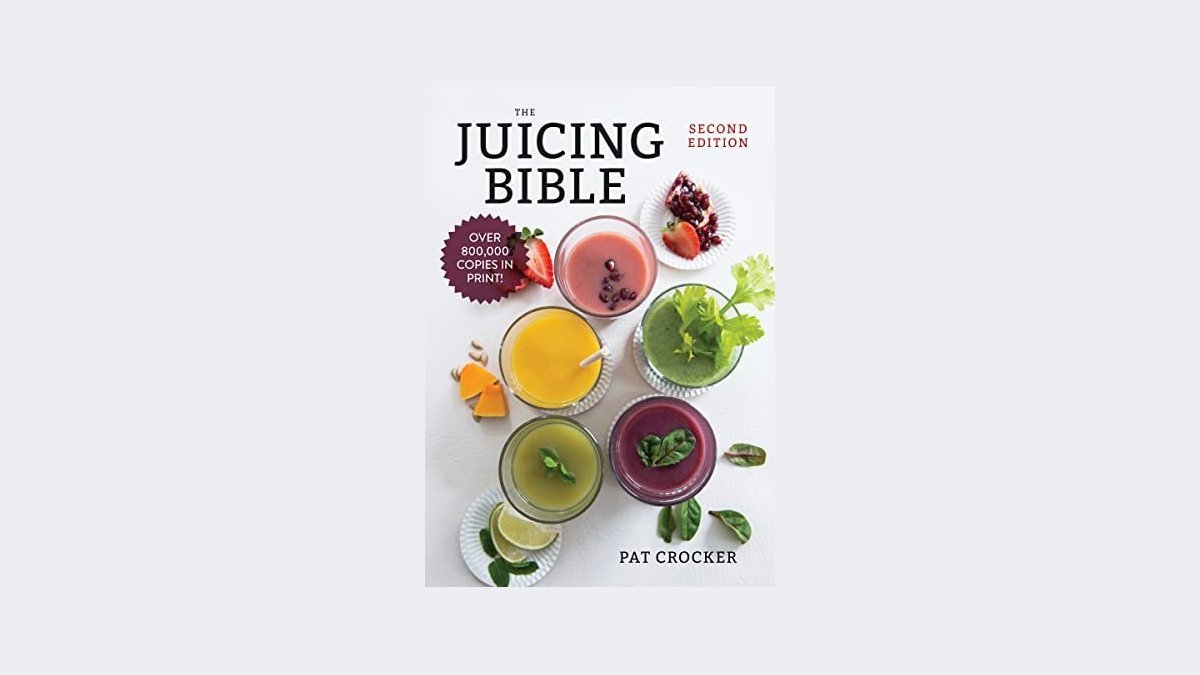
This is the classic in the category, and it carries the Robert Rose name. The listing gives it plainly as The Juicing Bible, and that title is doing a lot of work — it signals a reference book, not a quick-start pamphlet.
The trade-off is real. If you want to open a page, pick a recipe, and start, the depth here is extra reading you didn’t ask for.
What goes smoothly:
- One book covers both the how and the what
- Useful as a lookup when a juice doesn’t turn out right
- Built to stay relevant as your taste changes
- A name that’s easy to remember when you recommend it
What you have to accept:
- Reference-style books ask for more reading time up front
- Less of a grab-and-go format than a plain recipe collection
2. Callisto The Complete Juicing Recipe
Best for: Anyone who wants a huge pile of options
That’s the whole pitch, and it’s a strong one if your problem is boredom rather than technique. A large recipe count gives you plenty to browse when you want something different. Variety is the feature here — nothing else about the book needs to carry it.
In daily use, that volume changes how you cook. You stop planning and start browsing, which suits people who like to improvise with whatever’s in the fridge.
Snapshot:
- 360 recipes in one book
- A title that tells you exactly what you’re getting
- Good for beating repetition
- Suits browsers more than planners
- Best once you’re past the basics
3. Juicing for Beginners Callisto
Best for: First-time juicers who want a clear starting point
This one is aimed at you if you’ve just unboxed a juicer. The title names two things: essential juicing recipes, and juicing for weight loss. It’s a starting line, not a reference shelf.
What owning it would be like: short sessions, one recipe at a time, building a small set of drinks you actually like. That’s how most people get past the early days, which is where juicers usually get abandoned. The limit is scope. A beginner book stays a beginner book — once you know what you’re doing, you’ll likely want a bigger collection alongside it. That’s a fine path, just plan to add a second title down the road.
Who it fits: Someone who just bought a juicer and wants to start today without overthinking it. If you want a guided first month, this is built for that.
Who should pass: Experienced juicers looking for unusual combinations or deep background. You’d outgrow the beginner framing quickly.
4. Countryman The Ultimate Book of
Best for: Readers who want depth on cleansing and health goals
That’s a book organized around outcomes, not just flavors. If you came to juicing with a specific aim — a reset, a cleaner diet, more vegetables in your week — a structure built around those aims does a lot of the thinking for you. It sits between a recipe collection and a health guide.
In practice, that means you’d use it in phases. You’d pick a stretch of days, follow the recipes that fit, and then move on. That’s a different rhythm from a book you dip into randomly. The trade-off is that goal-driven books ask you to commit to the plan. If you just want a nice drink with breakfast, the framing is more structure than you need.
| What this gives you | What you have to accept |
|---|---|
| Recipes grouped around health goals | More of a plan than a casual browse |
| More than 200 recipes | Structure you’re expected to follow |
| A cleansing and wellness focus | Less useful if you just want variety |
| Depth beyond plain recipe lists | Committing to phases, not single drinks |
5. Skyhorse The Big Book of
Best for: People who want more than juice in a glass
This one widens the net. That’s the difference: if your blender and your juicer both live on the counter, a book that covers smoothies and fermented drinks means you’re not buying three separate titles. It suits a household where one person juices and another makes smoothies.
Day to day, that range keeps things interesting. You’d move between a green juice in the morning and something probiotic later, which is a broader routine than juice alone. The thing to weigh is focus. A book spread across three drink types goes less deep on any one of them than a dedicated juicing book would. If juice is your whole plan, the extra categories are pages you’ll skip.
- What goes smoothly: one book for juices, smoothies, and probiotic drinks; 150 recipes to work through; covers a mixed household; good for people who like variety
- What you have to accept: less depth per drink type; smoothie and probiotic sections are wasted if you only juice
Also Worth Considering
The Power Your Juicer Machine — the full title promises 150 healthy recipes built to unleash the nutritional power of your juicer machine. Worth a look if your juicer came with a manual and nothing else.
Grand Juicing — this one covers juicing, fasting, and detoxing for life, with a focus on fresh juices and cleansing diets. It has the broadest scope of the three, reaching past recipes into fasting and detox routines. Suits a reader who wants the whole lifestyle approach between two covers, not just drink ideas.
Page Street Publishing Co. Recipes — juices for total wellness, described as gut-healing recipes to help you look and feel your best. The gut-health angle sets it apart from the general collections above. A reasonable pick if digestion is the reason you started juicing in the first place.
The Decision Filter
Start with one question: do you already know how to juice, or are you starting from zero? Everything else follows from that. If you’re new, a beginner-focused guide gets you moving and you can add a bigger collection later. If you’ve been at it a while, you want volume and range, not a primer.
Then ask what you’re juicing for. If it’s a specific goal — weight, digestion, a reset — a book organized around health outcomes saves you the sorting. If it’s just more vegetables in your day, a plain recipe collection is the easier tool.
Most people miss this: they buy for the recipe count and never check whether the book explains how to store juice or how to pick produce. Those two chapters are what you’ll actually reread. A book with a large recipe count and no guidance on keeping juice fresh leaves you figuring out the basics alone.
The Thirty-Second Checklist
- Will you really juice more than twice a week once the newness wears off?
- Does anyone else in the house need to follow these recipes too?
- Does your juicer handle the ingredients these recipes call for?
- Do you want a plan to follow, or just ideas to pick from?
- Will you read background chapters, or skip straight to the recipes?
- If it turns out wrong for you, can you tell before you’ve made ten drinks?
Three Regrets Worth Avoiding
Regret #1: Buying for the biggest recipe count and getting a book that never explains anything. A huge list is only useful once you know what you’re doing. If you’re new, you’ll flip through hundreds of recipes and still not know which one to start with. The fix is simple: match the book to your experience level first, and the recipe count second.
Regret #2: Picking a book built around a goal you don’t actually have. A cleansing and fasting plan is a commitment, and if you wanted a pleasant drink with breakfast, that structure becomes a chore you skip. The fix is to be honest about how you’ll use it — daily habit or short reset — and pick the framing that fits.
Regret #3: Assuming every book works with every machine. Recipes written for one type of juicer can call for ingredients another type handles poorly, and you’ll only find out mid-recipe. The fix is to check whether the book speaks to your kind of juicer before you commit, and lean toward books that cover a range of drinks if you own more than one appliance.
If You Want This, Look for That
The table below maps what you’re after to what to check on the listing, and what to walk past.
| If you want… | Look for | Avoid |
|---|---|---|
| A book to keep for years | Background chapters plus recipes | Thin pamphlets with no guidance |
| Hundreds of options | A stated recipe count | Vague “many recipes” claims |
| A gentle start | Beginner-focused framing | Assumed prior knowledge |
| A health plan | Recipes grouped by goal | Random recipe order |
| Smoothies and juices | Multiple drink types covered | Juice-only collections |
| Gut or digestion focus | Wellness-specific framing | General collections |
Related guides
- Best Juicer For Beginners: 10 Easy Picks to Start Juicing
- The 10 Best Juicer Machines for Easy, Fast Juicing
Frequently Asked Questions
Will these books work with my juicer?
Leafy greens and wheatgrass behave very differently in a fast centrifugal juicer than in a slow masticating one. Before you buy, look at whether the book mentions machine types at all. If it doesn’t, check a few sample recipes — if they call for soft fruit and root vegetables, you’re likely fine on any machine.
Do I need a juicer, or can I use a blender?
A blender makes smoothies, not juice — you keep the fiber and the texture is dense. Some books in this category cover both, which is handy if you own one appliance and not the other. If a recipe calls for juice and you only have a blender, you’ll need to strain it through a cloth or fine sieve, and the result won’t be identical. Check the guide’s drink types before you buy.
How many recipes do I actually need?
Fewer than you’d think. A large collection helps you find those few, but it doesn’t mean you’ll use all of them. If you’re new, a smaller beginner-focused book gets you to your shortlist quickly. If you’re bored of your shortlist, that’s when a big collection earns its place.
How long does fresh juice keep?
Fresh juice is best drunk soon after it’s made, and it separates as it sits — that’s normal, not a sign it’s gone off. Glass jars filled to the top and sealed slow that down. A book that covers storage will give you a realistic window for each type of juice. If yours doesn’t, keep it simple and drink it the same day.
Are these books good for weight loss?
Some are written with weight loss in mind and say so in the title. Others focus on general wellness or specific goals like digestion. Juice alone isn’t a meal plan, so treat any book as one part of how you eat, not the whole answer. If weight is your main aim, a book with that framing will at least point you at recipes built for it.
What if the book isn’t right for me?
Returns depend on where you bought it and that seller’s policy, so check the terms before ordering. The better move is to reduce the odds: read the table of contents and a sample if one is available, and match the book’s level to yours. A book aimed at beginners won’t serve an experienced juicer well, and the reverse is also true.
Do I need special ingredients?
No. Most recipes in these books use produce you can find in any grocery store — carrots, apples, celery, spinach, citrus, beets. Fancier books reach for things like wheatgrass or specific greens, which can be harder to source. If you want to juice from your regular shop, favor books built around common produce rather than specialty ingredients.
Closing
If two picks still look equal, use this tie-break: pick the one whose table of contents matches how you’ll actually use it. A book you open on a weekday morning beats one you admire from across the room. That’s the whole test — not which book has more pages, but which one fits the moment you’ll reach for it.
One thing to do next: before you commit, check what juicer you own and whether the book speaks to it. That single detail decides whether a recipe works on the first try or turns into a lesson in frustration. Get that right, and the rest is just picking flavors you’ll enjoy drinking.