The 5 Best Juicers for Celery Juice That Give You Clear Green Juice
You want celery juice every morning. Maybe you read about it somewhere, or a friend swears by it. So you pull out the blender, and you get a green smoothie instead — thick, foamy, nothing like the clear green juice you pictured.
That’s usually the moment people start searching for the best juicer for celery juice. Celery is one of the hardest things to juice. It’s all long, stringy fiber, and it gives up its liquid slowly. So the choice comes down to two things pulling against each other: how much juice you get out of each stalk, and how much of your morning disappears into chopping, feeding, and scrubbing parts. This page looks at five juicers and what each listing actually promises, so you can pick the one that fits your counter and your patience.
All 5 products side by side — scroll sideways to see every column.
| Top Pick | Best for Less Pulp | Best for Whole Fruits | Best for High Yield | Best for Small Kitchens | |
| Preview |  |  |  |  |  |
|---|---|---|---|---|---|
| Product | Omega Celery Juicer | Ninja NeverClog JC151 | Breville Juice Fountain Plus | EUHOMY Cold Press Juicer | SIFENE Cold Press Juicer |
| Brand | Omega | Ninja | Breville | EUHOMY | SIFENE |
| Best for | Best Overall | Best for Less Pulp | Best for Whole Fruits | Best for High Yield | Best for Small Kitchens |
| The listing says | Operates at 80 RPM to reduce heat and oxidation Squeezes celery longer for more juice and less waste | High-torque motor handles apples, carrots, celery and greens Includes 2 pulp filters for less or more pulp | Centrifugal juicer with 3 inch extra wide fruit chute Dual speeds and quick operation | 5.8-inch extra-wide feed chute fits whole fruits 400W motor runs at 43 RPM | Dual feed chute for celery and fruit pieces Compact slow masticating design for small kitchens |
| More information | Buy on Amazon | Buy on Amazon | Buy on Amazon | Buy on Amazon | Buy on Amazon |
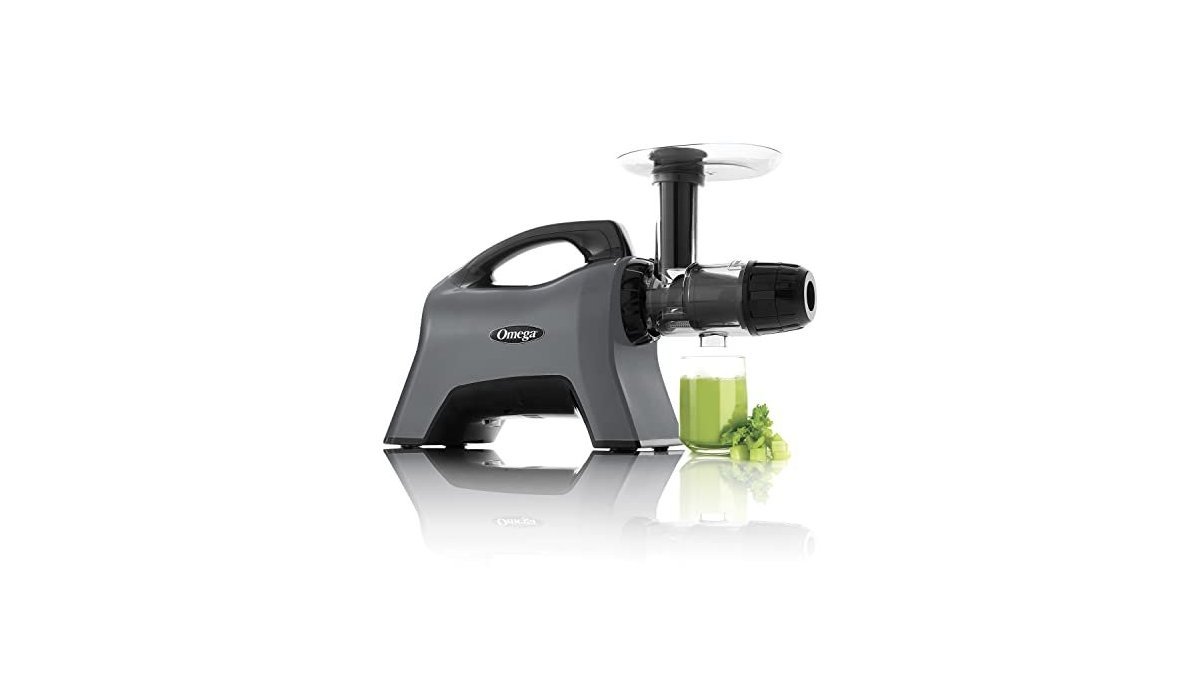
1. Omega Celery Juicer and Nutrition System Masticating Juicer
Right for: The daily celery juicer who wants one machine to do more.
This listing makes a big claim right in the name: it’s built around celery. The seller says the juicer squeezes celery longer to get more juice and less waste, and that you can feed whole cold stalks straight into the chute instead of cutting them into small pieces. It runs at 80 RPM, which the listing says keeps heat and oxidation down. And it doesn’t stop at juice — the same machine is listed for nut butter, pasta, coffee grinding, minced garlic, baby food, frozen desserts, and soy milk.
On an ordinary morning, that means you rinse a few stalks, drop them in whole, and skip the cutting board. The 80 RPM figure matters here because slow turning is the whole idea behind cold press: less heat, and the listing ties that to more nutrients left in the glass. The celery end cap is worth understanding. The seller states plainly that it’s NOT meant for any other fruit or vegetable, so you swap caps when you switch produce. The second, standard cap covers everything else.
The wider point is that this is a system, not just a juicer. If you already own a blender and a food processor, some of those extra jobs may not add much for you — but if you don’t, one machine covering juice, nut butter, and baby food is a real difference in counter space.
What works:
- 80 RPM slow turning, listed to reduce heat and oxidation
- Celery-specific end cap plus a standard cap for other produce
- Whole stalks go in without cutting into small pieces
- Triple-stage masticating tech, listed for leafy greens and wheatgrass
- Extra jobs: nut butter, pasta, coffee, baby food, soy milk
Where it gives ground:
- Celery end cap isn’t meant for any other produce
- Extra functions add parts to store and clean
Skip it if: You only ever juice celery and want the simplest machine.
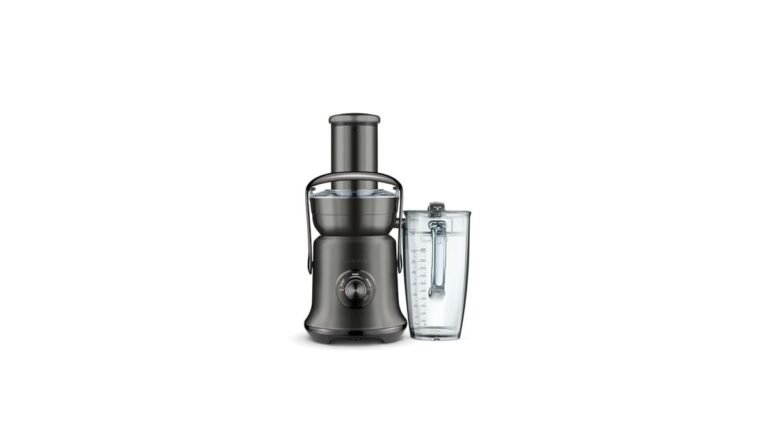
2. Ninja NeverClog Cold Press Juicer
Right for: The busy juicer who hates stopping to unclog the machine.
The name says what the listing promises: no clogging. A 150-watt high-torque motor turns the auger at low speed, and the seller lists apples, carrots, celery, and leafy greens as things it powers through for cold press juice. There are two one-touch programs — Start/Stop and Reverse — and the reverse button is there to reduce jams and pull more juice out. You also get two interchangeable pulp filters, so you choose Less Pulp or Lots of Pulp.
That pulp choice is the detail that changes your routine most. Celery juice drinkers usually want it clear, so the Less Pulp filter is the one you’d reach for daily. But if you also make thicker vegetable juices or want some body in the glass, the second filter is sitting right there. The anti-drip lever means you can pause mid-batch and pour without a puddle forming on the counter — a small thing that matters when you juice before work.
The listing also says it’s compact enough to fit under kitchen cabinets, and that all juice-contact parts are dishwasher safe. The jug holds 24 oz and the pulp container holds 36 oz, so you’re not emptying pulp constantly. A 31.5-inch cord is listed, along with a guide of 15 recipes.
The two programs are the whole control panel, and that’s the trade you’re making. Start/Stop runs the auger; Reverse backs it up when something jams. There’s no dial to slow the auger for soft fruit or speed it up for dense roots, so the machine sets the pace and you set the recipe.
If your produce list is mostly celery, apples, carrots, and greens, the fixed pace isn’t a problem — those are the ingredients the seller names. If you want to run soft berries at one speed and beets at another, this isn’t that machine.
On a big juicing day that’s a pause you take more than once, so keep a bowl or a bag beside the machine rather than walking to the bin each time.
What works:
- High-torque motor listed for celery, apples, carrots, leafy greens
- Two pulp filters: Less Pulp or Lots of Pulp
- Reverse function helps clear jams
- Anti-drip lever lets you pause and pour cleanly
- Juice-contact parts are dishwasher safe
Where it gives ground:
- Two programs only — no separate speed settings to adjust
- Pulp container must be emptied once it fills
Skip it if: You want fine control over speed for different produce.
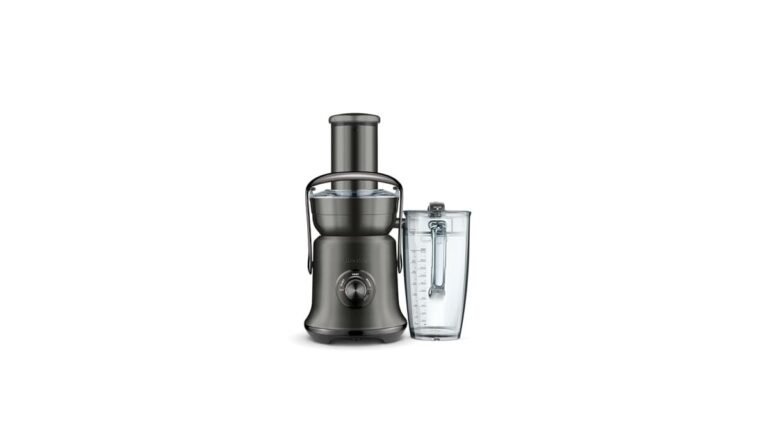
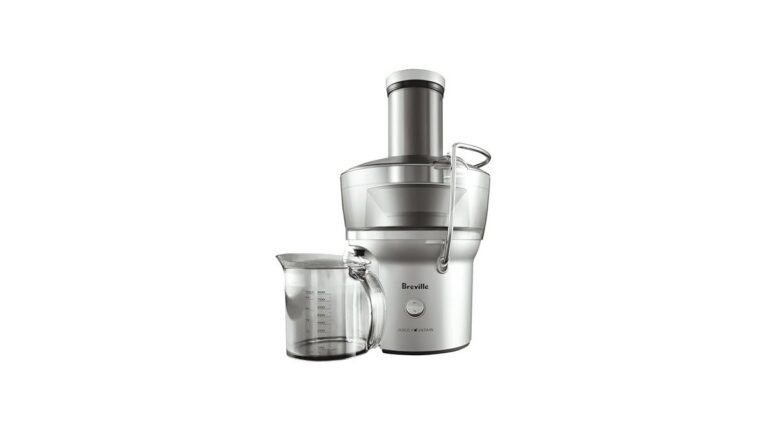
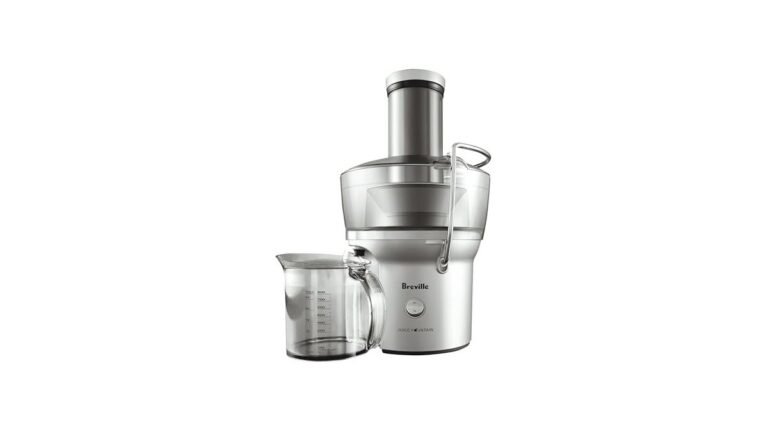
3. Breville Juice Fountain Plus
Right for: The fast-start juicer who wants juice in a hurry.
This is a different animal from the slow juicers above. It’s centrifugal, with an 850-watt motor and dual speeds, and the listing leans hard on speed: lightning-quick operation, a 3-inch extra-wide chute, and no pre-cutting of whole fruits and vegetables. The extraction system pairs a titanium-reinforced disc with an Italian-made micro mesh filter basket, both stainless steel, which the seller says is designed for optimum juice and nutrient extraction.
For celery specifically, the wide chute is the selling point. You can push whole stalks in without chopping, which is exactly the prep step that makes people quit juicing. The two speeds split the work: low for softer fruits and leafy vegetables, high for denser fruits and harder vegetables. Celery sits somewhere in between, so you’d try both and see what your stalks do.
The listing includes a froth separator built into the juice jug, because some produce foams up when juiced — the separator lets you pour more juice and less froth. Capacity is listed at 35.2 fl oz for the jug and 2.6 qt for the pulp container, both generous. The cord wraps around the feet underneath, and the pulp container detaches, so storage is tidier than the size suggests. A cleaning brush comes in the box.
The gap between this and a slow juicer isn’t a small one, and it’s worth naming before you buy. A centrifugal machine spins produce against a filter basket at speed. A cold press machine crushes it slowly instead. The Breville does the first, and no setting on it does the second.
The listing puts leafy vegetables on the low speed, the same setting as soft fruit. If your celery is a garnish on a fruit juice habit, the trade is easy. If celery juice is the whole point and you plan to drink it daily, a slow cold press machine may suit you better.
What works:
- 850-watt motor with dual speeds
- 3-inch chute takes whole fruits and vegetables
- Froth separator built into the juice jug
- Large 35.2 fl oz jug and 2.6 qt pulp container
- Cord wraps under the base for storage
Where it gives ground:
- Centrifugal extraction, not a slow cold press method
- Two speeds only, split by soft and hard produce
Skip it if: You’ve decided you want slow, cold press extraction only.
4. EUHOMY Cold Press Juicer
Right for: The batch juicer who doesn’t want to chop anything.
The headline here is the chute: 5.8 inches wide, which the listing calls significantly larger than most juicer machines. Whole apples, oranges, carrots, and celery fit without pre-cutting. That’s the single biggest time-saver in this group on paper, because it removes the knife work entirely.
The motor is 400 watts and turns at an ultra-low 43 RPM, with multi-stage cold press technology the seller says cuts heat and oxidation.
There’s also a reverse function to clear blockages instantly, which pairs with the anti-clog framing. The listing positions it for both jobs: a juicer press for hard vegetables and a gentler juice maker for soft fruits. If something jams, you press reverse rather than take the machine apart.
Setup and cleanup are pitched as simple: a design with only a few core parts, plus a cleaning brush in the box. The listing also mentions a quick guide and a warranty. It notes that if you hit issues, common causes include the handle not being aligned or the lid not being closed tightly. That’s useful to know before you assume something is broken. If the troubleshooting steps don’t fix it, the seller says customer service provides technical support.
What works:
- 5.8-inch chute fits whole celery, apples, oranges, carrots
- 43 RPM slow masticating, listed to reduce heat and oxidation
- Reverse function clears blockages instantly
- Three core parts for assembly and disassembly
- Cleaning brush included
Where it gives ground:
- Lid and handle must be aligned and closed to run
Skip it if: Your counter space is tight and you want something small.
5. SIFENE Cold Press Juicer
Right for: The small-kitchen juicer who still wants cold press.
This one is built for cramped counters. The listing describes a mini slow masticating format aimed at small kitchens, apartments, dorms, and RV setups, while still handling everyday fruit and vegetable juicing. The dual feed chute is the clever part: one opening takes long ingredients like celery, the other takes fruit pieces. That means less chopping and a faster start on busy mornings.
The motor is high torque with a reverse function, and the listing says slow masticating extraction works with reverse to process fibrous produce more smoothly. Juice-contact parts are BPA free, and the listing describes a quiet countertop design that fits morning routines without feeling like a bulky juicer.
Cleanup is covered by dishwasher-safe removable parts and an included cleaning brush. Nothing here promises the yield figures or the wide chute of the bigger machines, and the listing doesn’t claim them. What it does promise is a cold press machine that fits where a full-size juicer won’t, and a two-opening chute that shortens prep.
The prep claim is worth reading closely, because it’s about chopping, not about speed of extraction. Long celery goes in whole through its own opening. Fruit pieces go through the other. If your mornings stall at the cutting board, that’s the bottleneck this machine removes.
The reverse function is the other detail that earns its place — the listing says it helps process fibrous produce more smoothly.
What works:
- Dual feed chute: one for long celery, one for fruit
- Compact format for small kitchens, dorms, RVs
- High torque motor with reverse function
- BPA free juice-contact parts
- Dishwasher-safe removable parts and cleaning brush
Where it gives ground:
- Smaller format means smaller batches per session
- Listing makes no yield or RPM claims
Skip it if: You juice large batches daily and need bigger capacity.
Also Worth Considering
The Omega Juicer Vegetable Fruit Juice is another 80-RPM slow masticating machine at 150 watts, with adjustable pressure settings. Its listing covers nut milks, baby food, and sorbets — a similar multi-job approach to the Omega above, in a different body.
That second Omega runs on five pressure settings, and its listing mentions an automatic pulp ejection system. It also carries an extra-large feed tray and a built-in handle. If the multi-job list is what draws you to Omega, this is the same promise in a different body; if you want the celery-specific end cap, the model above is the one that has it.
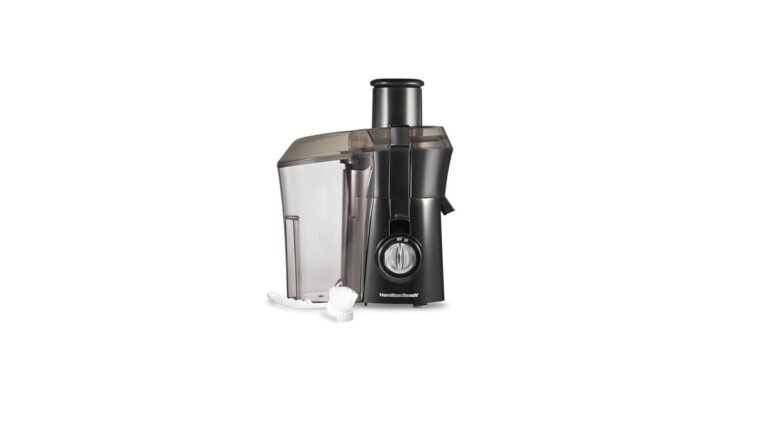
The Hamilton Beach Centrifugal Juicer Machine takes the fast lane: an 800-watt motor and a Big Mouth 3-inch feed chute for whole fruit and vegetables. Parts are BPA free and dishwasher safe. Centrifugal, so expect speed over slow extraction.
That chute fits a whole apple, a bunch of celery, or a handful of carrots, so you skip pre-cutting. If you juice in batches and hate chopping, the wide chute and big bin matter more than extraction speed.
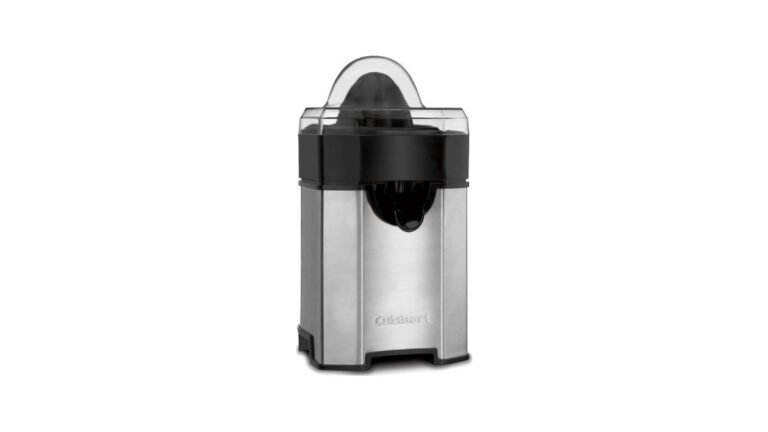
The Cuisinart Juicer Machine is a die-cast juice extractor listed for vegetables, lemons, oranges, and more. It’s a centrifugal design in silver and black, and it rounds out the fast-extraction end of this group.
It runs a 1000-watt motor with multiple speeds and a narrow chute, plus an anti-drip adjustable flow spout and a foam-reducing filter basket. The pulp container holds 2 liters and the pitcher 1 quart.
How to Think Before You Choose
Slow Press or Fast Spin
This is the first fork in the road. Slow masticating juicers turn an auger at low speed — the listings here name 43 RPM and 80 RPM — and the sellers tie that low speed to less heat and less oxidation, which they say protects nutrients and flavor. Centrifugal juicers spin a disc fast, and the Breville listing names an 850-watt motor. They’re quicker to feed and often take whole produce, but they’re a different extraction method.
For celery, most people lean toward a slow press. Celery is fibrous and watery, and a slow press squeezes it rather than shredding it. If you juice one glass each morning, the time difference is small. If you juice for a family, it adds up.
Before you decide, check two things at home. First, count how many stalks you actually use in a session. Second, time your current routine from fridge to clean counter.
The Chute Decides Your Mornings
The feed chute is the most underrated spec on any juicer, and it’s where these listings differ most. The EUHOMY lists a 5.8-inch chute. The Breville lists 3 inches. The Omega says you can feed whole cold stalks rather than cutting them small. The SIFENE splits it in two, with one opening shaped for long ingredients like celery.
Why does it matter? Because chopping is the step people skip — and then the machine jams. A wide chute means celery goes in whole, which is faster. A narrow chute means knife work before every glass.
Measure your tallest celery stalk before you buy. Then check the chute size in the listing against it. If your stalks are long and the chute is short, you’ll be snapping them anyway. Also check whether the listing says whole produce fits, or only that pieces fit — those are different promises.
What You Clean Every Single Day
Nobody talks about cleanup until they’ve owned a juicer for a month. Then it’s the only thing they talk about. Every listing here addresses it, and the details differ: dishwasher-safe juice-contact parts on the Ninja, dishwasher-safe removable parts on the SIFENE, a three-part one-piece design on the EUHOMY, a cleaning brush included with the Breville, and a standard cap plus a celery cap to handle on the Omega.
The pattern is simple. More parts means more rinsing. More functions — nut butter, pasta, baby food — means more accessories to store and wash. A machine with three core parts gets cleaned in minutes; a system with specialty caps takes longer.
Before you buy, count the parts you’d have to wash after one glass of celery juice. Then ask whether you’d still do it on a Wednesday. If the answer is no, pick the machine with the fewest pieces, even if it does less. A juicer you avoid is worse than one that only juices.
Who Should Skip These Altogether
A juicer is a commitment, and it isn’t the right answer for everyone. Here’s who should keep their counter clear.
- If you want one glass a week, a blender and a strainer bag will do the job with less to wash and nothing to store.
- If you already own a slow juicer or a high-powered blender you use for greens, you have the tool — change the recipe, not the machine.
- If you need juice for a crowd or a family every morning, a single compact unit will have you refilling and re-feeding constantly, and a bigger batch setup serves you better.
- If you’re curious about celery juice but not sure you’ll stick with it, try it for two weeks with what you own before buying anything new.
There’s a narrower case worth naming, because it’s the one people get wrong. Celery is fibrous, and the machines built for it are built for little else. One of the Omega models ships with a dedicated celery end cap that’s explicitly not meant to juice any other fruit or vegetable.
So if celery is the whole plan, that cap is a feature. If you also want apples, oranges, carrots or leafy greens in the same machine, you’ll be swapping end caps or running a second unit, and the celery-specific purchase stops covering everything you juice.
Check what you actually juice in a normal week before you decide which of those two you are.
Frequently Asked Questions
What do I actually need to make celery juice?
You need a machine that separates liquid from fiber, and celery is the test. Its stalks are long, stringy, and low in liquid per inch, so they jam narrow chutes and wrap around fast-spinning parts. Every juicer here addresses that: the Omega with a celery-specific end cap, the Ninja with a high-torque motor listed for celery, the Breville with a 3-inch chute, the EUHOMY with a 5.8-inch chute, and the SIFENE with a feed opening shaped for long ingredients.
How much work is it after the juice is poured?
More than most people expect, and it’s the reason juicers get shelved. Every model here lists some cleanup help: dishwasher-safe juice-contact parts on the Ninja, dishwasher-safe removable parts on the SIFENE, only three core parts on the EUHOMY, a cleaning brush with the Breville, and two end caps on the Omega. Rinse the parts right after juicing, before the fiber dries.
What tends to go wrong first?
Clogging and jams top the list with fibrous produce like celery, which is why so many listings here mention a reverse function. The Ninja, EUHOMY, and SIFENE all list reverse, and the Ninja’s whole name is about not clogging. The EUHOMY listing also names two common causes of a machine that won’t run: the handle not being aligned and the lid not being closed tightly.
Is the simplest pick here enough?
For most people, yes. If you juice celery and a few other vegetables each morning, a compact slow masticating machine with a reverse function covers it. The SIFENE is built for exactly that, and the Ninja covers it with more capacity and two pulp filters. You only need to step up for a much wider chute, like the EUHOMY’s 5.8 inches, or extra jobs beyond juice, like the Omega’s nut butter, pasta, and baby food functions.
What should I confirm before ordering?
Check four things. First, the chute size against your celery stalks — the EUHOMY lists 5.8 inches, the Breville 3 inches, and the SIFENE splits its chute for long ingredients. Second, whether the parts you’ll touch are dishwasher safe, which the Ninja and SIFENE both state. Third, the footprint, since the Ninja is listed to fit under kitchen cabinets and the SIFENE is built for small kitchens. Fourth, what’s in the box — jug, pulp container, filters, brush, and any specialty caps, like the two on the Omega.
Conclusion
Pick one machine and use it daily for a week. You’ll learn how much celery you actually need, and you’ll stop guessing. If the juice tastes too strong at first, add a cucumber or an apple. Small tweaks like that keep the habit going.