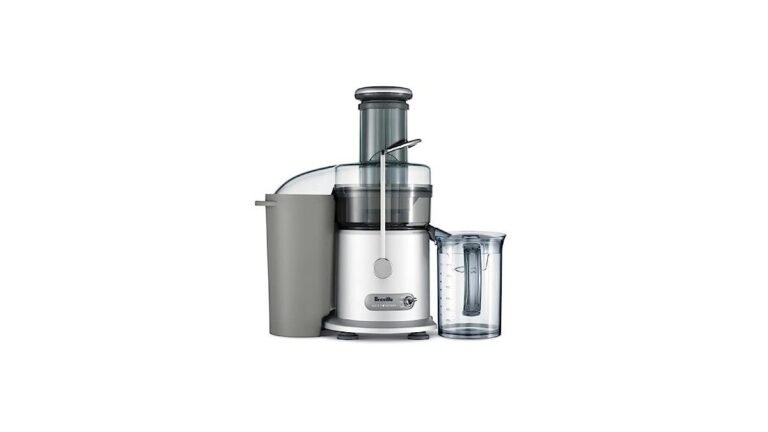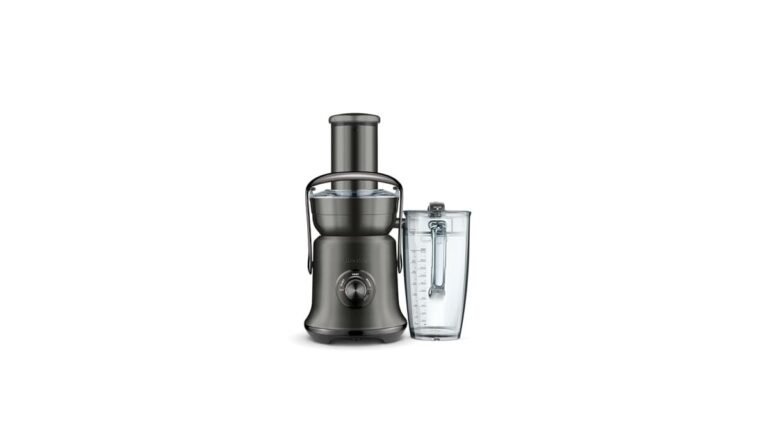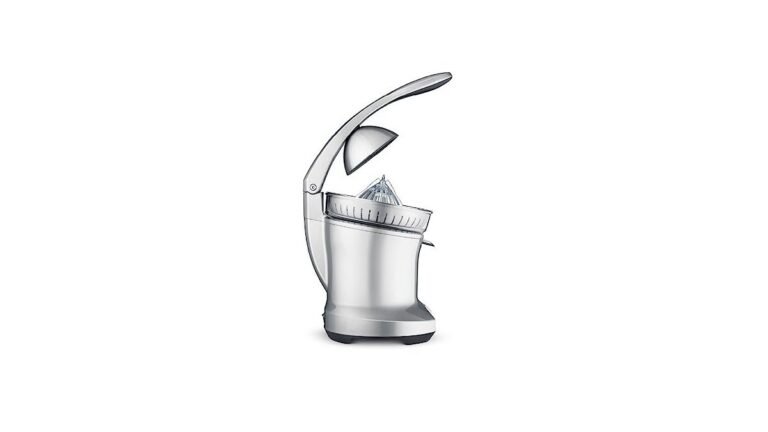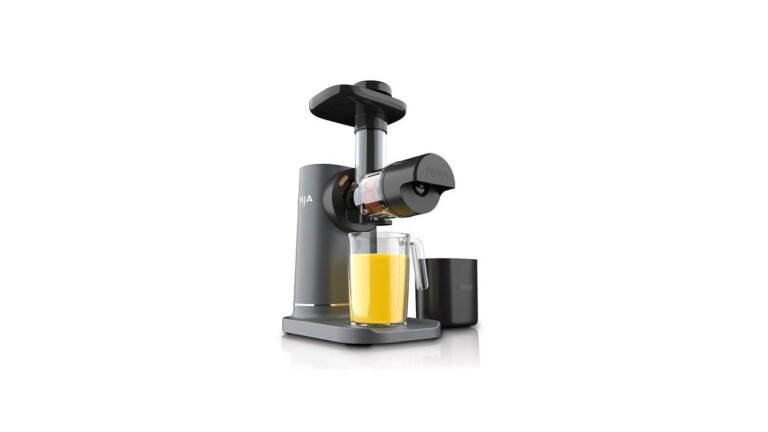
Best OJ Juicer: 5 Picks for Fresh Orange Juice at Home
You cut a lemon in half, pressed it on a little cone, and got three drops and a sticky counter. So you went looking for a better way to make fresh orange juice at home, and now you’re staring at a page of machines that all look the same. That’s how most people end up searching for the best OJ juicer — not for a hobby, just for a glass of juice without the mess.
The hard part is that these machines split on two things. One is how much of the work they do for you: some want your hand pressing down the whole time, others take the fruit and finish on their own. The other is how much juice they hold and how much pulp you can dial in or out. Those two pull against each other, and what suits a person juicing two oranges may not suit someone making a pitcher for the table. This page sorts the listings by what they actually promise, so you can match one to your own counter.
All 5 products side by side — scroll sideways to see every column.
| Top Pick | Best for Pulp Control | Also Great | Best for Large Batches | Best for Quiet Juicing | |
| Preview |  |  |  | 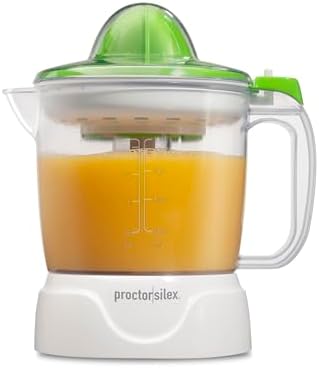 |  |
|---|---|---|---|---|---|
| Product | Vinci Electric Juicer | BLACK+DECKER CJ625 | Cuisinart Pulp Control Juicer | Proctor Silex 34 oz Juicer | Eurolux Electric Citrus Juicer |
| Brand | VINCI | BLACK+DECKER | Cuisinart | Proctor Silex | Eurolux |
| Best for | Best Overall | Best for Pulp Control | Also Great | Best for Large Batches | Best for Quiet Juicing |
| The listing says | Cut citrus in half, close lid, press Auto Juice Juicer presses fruit in enclosed chamber in about 10 seconds | Auto-reversing juicing cones for maximum extraction Adjustable pulp control with removable pulp basket | Fits smallest lime to largest grapefruit 3 pulp control settings: low, medium, high | Juices oranges, lemons, limes, grapefruits and more 2 nesting reamers for small to large fruit | 300W motor runs at 110 RPM Quiet juicing for oranges, lemons, and limes |
| More information | Buy on Amazon | Buy on Amazon | Buy on Amazon | Buy on Amazon | Buy on Amazon |
1. Vinci Electric Juicer
Right for: Someone who wants juice without standing there pressing fruit.
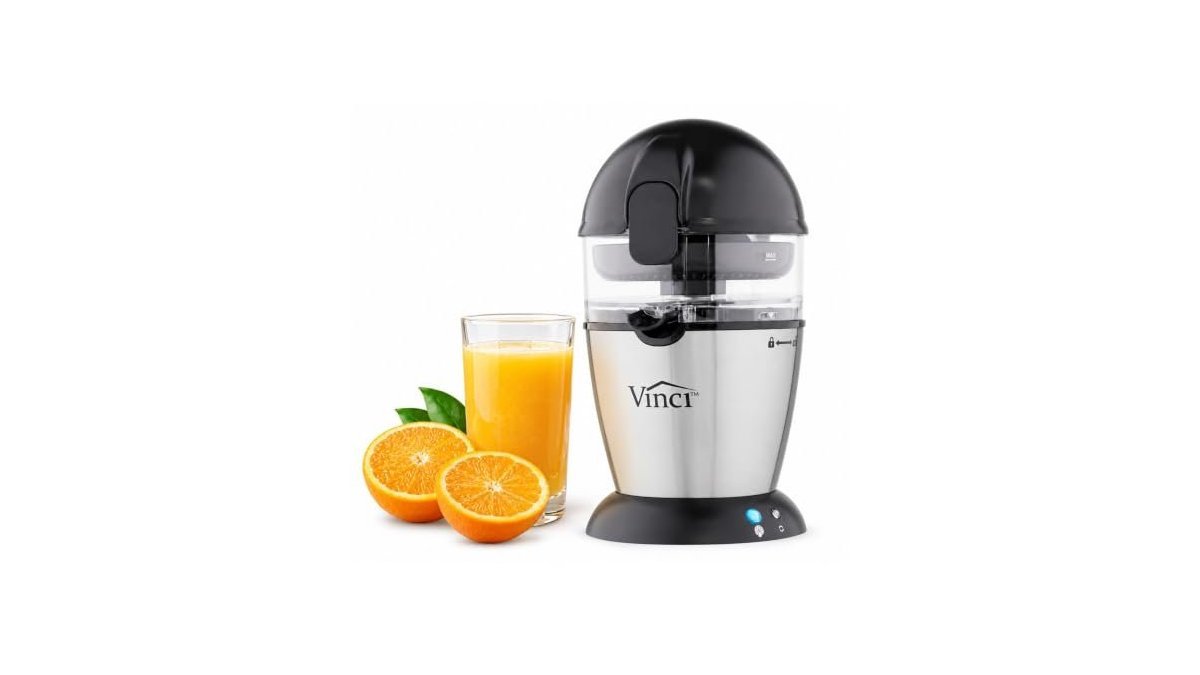
The Vinci Electric Juicer, Hands Free Automatic Compact Citrus Press Machine works differently from a cone you lean on. You cut the citrus, set a half on the reamer, close the lid, and press Auto Juice. The chamber is fully enclosed, so the pressing happens inside it in about 10 seconds and the juice stays contained instead of spraying your counter. The listing also says the pressure adjusts to the thickness of the rind, which it claims helps stop the reamer scraping too deep and pulling bitter notes into the juice.
On a normal morning, that means you can start it and step away to butter toast instead of holding a fruit down until your wrist aches. It takes key limes up to grapefruit of 4.5 inches across, so one machine covers the whole fruit bowl. The 12 oz Tritan bowl collects juice with the spout closed, or you lower the spout to fill a glass directly. Fine and Coarse filters set your pulp level, and the lid, bowl, reamer and filters are top-rack dishwasher safe.
What works:
- Fully enclosed chamber keeps juice in and splashing out
- Auto Juice button does the pressing, no hand strength needed
- Handles key limes through 4.5-inch grapefruit
- Fine and Coarse filters let you set pulp level
- Lid, bowl, reamer and filters are top-rack dishwasher safe
Where it gives ground:
- 12 oz bowl means emptying it between batches
- You must cut fruit to fit before each press
Skip it if: You juice one orange at a time and want nothing to assemble.
2. BLACK+DECKER 32oz Electric Citrus Juicer
Right for: Someone who wants a plain press-and-hold juicer that just works.
The BLACK+DECKER CJ625 is the straightforward version of this job. You press the fruit half down on the cone, the juicer runs, and you lift off when you’re done. The cones auto-reverse as they spin, which the listing says gives maximum juice extraction.
Pulp collects in a removable basket you can tip out or fold into a recipe. The container is clear with measurement markings, so you can see how much you’ve got without pouring it out to check. It holds 32 ounces.
That clear container doubles as a pitcher with a handle and a drip-free spout, which is the part that changes your routine. You can juice straight into it, carry it to the table, and pour without a funnel or a second jug.
For someone making dressing or a marinade, the markings take the guesswork out of “half a cup of lemon juice.” You squeeze until the line hits the number, then pour. No measuring cup in between, and nothing to wash afterward but the container itself.
The trade-off is that it’s a hands-on machine. Your arm does the pressing, and the yield depends on how long you keep going. A firm, steady push on each half gets more out than a quick jab, and the auto-reversing cones are what keep the fruit moving under that pressure instead of stalling in one spot.
If you’re juicing a large batch in one sitting, tip it out partway through.
What works:
- Auto-reversing cones for more juice from each half
- Removable pulp basket you can discard or reuse
- Clear container with measurement markings
- Container doubles as a pitcher with drip-free spout
Where it gives ground:
- You press and hold each fruit half yourself
Skip it if: You want the machine to finish the fruit while you do something else.
3. Cuisinart Pulp Control Citrus Juicer
Right for: Someone fussy about how much pulp ends up in the glass.
The Cuisinart Pulp Control Citrus Juicer, Orange Juicer Squeezer and Lemon Squeezer with 3 Pulp Control Settings, Accommodates Small Limes and Large Grapefruits, CCJ-500P1 is built around one idea: you decide the pulp. There are three settings — low, medium, high — on an adjustable reamer, and the cone auto-reverses for more efficient juicing. It takes the smallest lime through the largest grapefruit. A final-spin feature is listed as extracting more juice from the pulp, and the listing says it also protects against dust between uses. The snap-up spout is extra long, which the listing says fits more glasses and cuts drips.
If you like juice with body, the high setting does that without you fishing pulp out of a strainer. If you want it clear, low does that. That range is the whole point of this machine, and it’s the reason to pick it over a simpler press. The other listed detail worth knowing is the limited 3-year warranty. Dishwasher-safe parts keep cleanup simple.
What works:
- Three pulp settings: low, medium and high
- Auto-reversing universal cone for efficient juicing
- Final-spin feature extracts more juice from pulp
- Extra-long snap-up spout fits more glasses, cuts drips
- Limited 3-year warranty
Where it gives ground:
- You still press and hold each fruit half
- Pulp setting is the main control, not speed or yield
Skip it if: You don’t care about pulp level and want the simplest machine.
4. Proctor Silex 34 oz. Electric Citrus Juicer
Right for: Someone juicing a whole bag of citrus for a crowd.
The Proctor Silex 34 oz. Electric Citrus Juicer, Orange Juicer is the one built for volume. The pitcher holds 34 oz and detaches so you can take it to the table, with a pour spout and measurement markings for following recipes.
Two nesting reamers cover small to large fruit, so key limes and grapefruit both work, and it auto-reverses for maximum extraction. A pulp dial slides left to right to set how much pulp lands in the juice, and the pulp collects in a strainer you tip out.
The difference shows up when you’re making juice for a crowd rather than just yourself. The markings mean you can juice to a recipe instead of guessing.
Nested storage and a cord wrap keep it tidy in a cabinet, which matters if your counter space is tight. It’s still a pressure-activated machine, so your hand does the work for each half.
That combination is worth weighing before you buy. The 34 oz pitcher is what you’re paying for, so if you rarely fill it, you’re carrying the size without using it. If you do fill it, the reamers and the dial are what keep a long juicing session from turning into a chore.
This juicer also earns its place outside the breakfast table. The same fresh juice goes into salad dressings and marinades, so a batch you press on a Sunday can cover more than one meal. That’s the case for the larger pitcher: you aren’t just pouring glasses, you’re stocking an ingredient.
What works:
- Large 34 oz detachable pitcher with pour spout
- Two nesting reamers for small to large fruit
- Auto-reversing for maximum juice extraction
- Pulp dial slides to set pulp level
- Pitcher, reamers, lid and strainer are dishwasher safe
Where it gives ground:
- You press each fruit half by hand
- A full pitcher takes many fruits to fill
Skip it if: You only ever juice one or two pieces at a time.
5. Eurolux Electric Citrus Juicer Stainless Steel
Right for: Someone in a small flat who wants quiet, hands-off juicing.
The Eurolux Electric Citrus Juicer Stainless Steel is the one-touch, hands-free option with the motor specs spelled out. The listing gives a 300W motor running at 110 RPM, and describes the operation as quiet for early mornings or shared living spaces. You cut the fruit, set it on the cone, close the lid, and press one button. It’s compact at a listed 22x19x31.7 cm footprint with a stainless steel body, so it sits on a small counter without taking over. Detachable food-contact parts are top-rack dishwasher safe, and the listing suggests rinsing or washing soon after use to avoid residue building up.
For a shared flat or a kitchen next to a bedroom, the quiet claim is the reason to look here — a loud machine at 6am is a real problem, and this listing addresses it directly. The safety details are listed too: secure part locking, rest interval protection, and a stable base that resists moving. It’s built for oranges, lemons and limes, so if grapefruit is your main fruit, check the size against the cone before you commit.
What works:
- Listed 300W motor at 110 RPM
- One-touch, hands-free operation with a lid
- Compact stainless steel body for small counters
- Secure part locking and rest interval protection
- Detachable food-contact parts are top-rack dishwasher safe
Where it gives ground:
- Named for oranges, lemons and limes, not grapefruit
- Listing advises washing parts soon after use
Skip it if: You mainly juice large grapefruit and need the bigger fruit to fit.
Also Worth Considering
Three more listings came up in the same search and are worth a look if none of the five above fits.
The Reemix Electric Citrus Juicer is a brushed stainless steel machine with interchangeable cones, listed for orange, lemon and grapefruit, and described as easy to clean and use. Its two cones split the work by fruit size: the big cone takes oranges and grapefruit, the small one takes limes and lemons. It starts and stops on a pressure sensor at the push of a handle, and the parts come out for rinsing.
The OVENTE Electric Citrus Juicer Machine with 2 Cones, 24 oz, Black JE2572B is pressure activated with pulp control and an easy pour spout, listed for orange, lemon, lime or grapefruit. Its 24 oz container is listed as 2–3 servings, with measurement markings, a handle and a spout, and the cones reverse on their own. Pulp collects in the strainer to be thrown out.
The FOHERE Electric Citrus Juicer with 2 Cones, Automatic Orange Juicer Machine is a one-touch, hands-free design with two cones, listed as compact with high juice yield and easy cleanup, for oranges, lemons and limes.
Each of these is a pressure-activated or one-touch citrus press in the same family as the picks above.
How to Think Before You Choose
Hands-Free or Hand-Pressed
This is the first fork in the road, and it changes how juicing feels. A hands-free machine like the Vinci or the Eurolux takes the fruit, closes over it, and finishes the job while you do something else. A hand-pressed machine like the BLACK+DECKER or the Proctor Silex asks you to lean on each half until the juice stops running. Neither is better in the abstract — they suit different mornings. If you juice one orange for a glass before work, pressing by hand is quick and there’s less to rinse. If you juice six or eight fruits, or your hands or wrists ache, letting the machine press is the difference between doing it daily and not doing it at all.
Most people should lean hands-free if they juice more than a couple of fruits at a time, and hand-pressed if they juice a single glass and want the fewest parts to wash. Before you decide, count the parts that touch juice on each type. A hands-free machine adds a lid and a pressing mechanism to rinse; a simple press adds almost nothing. Then time yourself: how long does it take you to squeeze one lemon by hand right now? If that’s already fine, you may not need the automation. If it’s a chore you avoid, the hands-free route is the one that gets used.
How Much Juice You Need at Once
Bowl and pitcher size is the second thing that separates these machines, and it’s the one people underestimate. A 12 oz bowl is fine for a glass or two, but you’ll empty it between batches if you’re juicing for a family. A 34 oz pitcher lets you keep going and then carry the whole thing to the table. The listed capacities here run from 12 oz up to 34 oz, and that spread is the difference between a personal juicer and a table one. Bigger isn’t automatically better — a large pitcher takes more fruit to fill, and the listing notes it takes up more shelf space when it’s put away.
Most households are better served by matching the container to the biggest batch they actually make, not the biggest they imagine. If you’ve never juiced more than two glasses at a time, a large pitcher just means more to wash. Check your own habits with a simple count: how many oranges does your usual recipe or morning glass take? Multiply that by how often you’d want to juice before washing up. If the answer is under four or five fruits, a small bowl covers you. If it’s a dozen, the larger pitcher earns its space.
Pulp, Filters and Cleanup
Pulp control sounds like a small feature and it isn’t, because it decides whether you enjoy the juice. Some machines give you a dial or filters to set pulp low, medium or high; others collect pulp in a basket or strainer you tip out. If you like juice with texture, a high setting saves you from straining by hand. If you want it clear, a low setting or a fine filter does the work. The other half of this trade-off is cleanup: more settings and more filters usually mean more parts, and more parts mean more rinsing.
Most people should pick the pulp control they’ll actually use and not pay attention to the maximum setting. If you’ve always strained your juice, look for a fine filter or a low setting. If you drink it as it comes, a simple basket is enough. Before buying, look at which parts are listed as dishwasher safe and count them — that’s your real cleanup load. Then check the fine print on care: at least one listing here advises washing parts soon after use to stop residue building up, and that’s a habit worth keeping whatever you choose.
Who Should Skip These Altogether
These machines do a real job well, but they’re not right for everyone, and it’s better to know that now than after the box arrives.
- If you’d use it once for a party and then store it, borrow one or buy fresh juice that day instead of committing counter space.
There’s a second group who should think twice, and it’s about how much juice you actually want at once. The bowls and pitchers here run from 12 ounces on the Vinci up to 34 ounces on the Proctor Silex, with the OVENTE at 24 ounces. If you’re filling one glass, any of them is fine. If you’re juicing for a crowd or batch-cooking for the week, the small bowl means emptying it and starting again, fruit after fruit.
Then there’s the question of what you’ll do with the pulp. Every one of these collects it somewhere — a basket, a strainer, a filter you choose between fine and coarse. If you bake with it or compost it, that’s a bonus. If you’d just throw it out, you’re now cleaning one more part every single time.
And if quiet matters, that’s worth checking before you buy. One model here runs at 110 RPM with a 300W motor, another is built around a 100W motor, and a third uses 85W. They’re all described as quiet, but a machine you can run at 6 a.m. without waking the house is a different purchase than one you can’t.
None of this makes them bad machines. It just means the honest test is whether you juice often enough, and in enough volume, to justify the counter space and the parts.
Related guides
- Best Home Juicer: 10 Picks for Fresh Juice Daily
- 10 Best Juicers on Amazon for Fresh Juice at Home
- The 10 Best Fruit Juicers for Fresh Juice at Home
Frequently Asked Questions
What do I need to have ready before I start juicing?
You need citrus cut in half and a machine assembled with the reamer, filter and bowl in place. For the Vinci Electric Juicer, that means cutting the fruit, setting a half on the reamer, closing the lid and pressing Auto Juice. For a pressure-activated machine like the BLACK+DECKER CJ625, you just press the half down on the cone. No listing here requires pre-soaking or any other setup step.
How much work is it after juicing — what does cleanup involve?
Cleanup depends on how many parts touch the juice. The Vinci lists its lid, juice bowl, reamer and filters as top-rack dishwasher safe, and the Proctor Silex lists the pitcher, reamers, lid and pulp strainer as dishwasher safe. Expect to tip out pulp, rinse the reamer and filter, and either hand wash or load the rest.
What tends to go wrong first with a citrus juicer?
Two things to watch are pulp buildup and rind getting into the juice. Pulp collects in the basket, strainer or filter, and once it’s full, juice stops flowing well and you have to empty it mid-batch. The Vinci Electric Juicer addresses the second problem directly: its listing says the pressure adjusts to the thickness of the rind to help prevent excessive scraping, which it says can introduce bitter flavors.
Is the simplest machine here enough for most people?
Often, yes. The BLACK+DECKER CJ625 does the core job with no lid and no pressing mechanism — you press the fruit, the cones auto-reverse, and pulp collects in a basket you tip out. If you juice a glass or two at a time and don’t care about setting pulp precisely, that’s enough machine. Where the simpler option falls short is volume and hands-off juicing: a 32 oz container still needs you to press every half, and there’s no chamber doing the work.
What should I confirm before ordering?
Check three things against the listing. First, fruit size: the Vinci takes citrus up to 4.5 inches in diameter, while the Eurolux is listed for oranges, lemons and limes rather than grapefruit, so match the machine to what you actually buy. Second, capacity: containers here run from 12 oz up to 34 oz, so pick the size that matches your biggest real batch. Third, what’s covered and for how long — the Cuisinart Pulp Control Citrus Juicer carries a limited 3-year warranty, and coverage varies across the rest.
Closing
For most buyers, the Vinci Electric Juicer is the pick — it presses the fruit for you inside a closed chamber, takes everything from key limes to 4.5-inch grapefruit, and gives you a pulp choice without extra effort.
The Vinci runs on its own once you close the lid and press the button, so there’s no squeezing or holding by hand. Its pressure-sensitive extraction adjusts to the thickness of the rind, which helps keep the pith from scraping into the juice and turning it bitter. The 12 oz bowl has a locking spout: keep it closed to collect, lower it to pour straight into a glass.
For the harder case, where you’re juicing for a crowd or following recipes by volume, the Proctor Silex 34 oz Juicer and its detachable pitcher are the better fit. That pitcher doubles as a serving vessel with a pour spout, and its measurement markings let you juice to a number rather than to a glass.
Before you order, do one thing: count how many fruits your usual glass or recipe takes, and check that number against the bowl or pitcher size on the listing. That single check settles most of the choice.