The 10 Best Juicers for Beets That Handle Tough Roots
For anyone who’s ever hauled a bag of beets home from the market, full of good intentions, only to watch a juicer choke on the first wedge and spit out damp, gritty pulp — this one’s for you. You wanted that deep ruby glass of juice without babysitting a machine or scraping beet fiber out of a filter for ages. So you started hunting for the best juicer for beets, and the options got confusing fast.
Here’s the real problem. Beets are dense and fibrous, so the machine has to be built for hard produce — but the two main designs handle that job in opposite ways. A slow cold press crushes beets gently and gets more out of them; a fast centrifugal machine rips through them in seconds but asks more of the produce and the cleanup. You’re also weighing chute width against counter space, and pulp control against simplicity. This page sorts those trade-offs out for you, one machine at a time.

- High-torque motor handles tough fruits and vegetables
- 2 pulp filters for less or more pulp
- 2 programs: Start/Stop and Reverse
- 150-watt motor turns auger at low speeds

- Centrifugal juicer with 3 inch extra wide chute
- Titanium reinforced disc and stainless steel mesh filter
- 3 inch chute juices whole fruits without pre-cutting
- Juice jug has built-in froth separator

- 1000-watt 5-speed juice extractor
- 3-inch feeding chute
- Control dial with blue LED light ring
- Includes 2-liter pulp container, 1-quart juice pitcher, cleaning brush

- 3-year limited warranty from Hamilton Beach
- 3” chute, 800 watts, 80 oz. pulp bin
- Removable parts are dishwasher safe
- 800 watt motor for juice from hard and soft foods

- Dual speeds for soft or hard fruits and veggies
- No-drip spout
- 27 oz. sealing juice pitcher stores juice up to 48 hours
- 3” feed chute fits whole fruits and vegetables

- 3 inch wide chute juices whole fruits and vegetables
- Pulp collects within the unit's footprint
- Titanium-reinforced disc and stainless steel mesh filter
- Juice jug with integrated froth separator

- 1300 watt motor for high juice yield
- 3 speeds: 12000-15000 RPM, 15000-18000 RPM, and P
- 3’’ feed chute juices whole fruits and vegetables
- 304 Titanium-Plated Stainless Steel Filter with 13-row blades

- 5.8-inch feed chute fits whole fruits and vegetables
- On/Off/Reverse controls clear blockages
- Upgraded DC motor for efficient extraction
- 3-layer stainless steel filter in 2mm/0.8mm/0.5mm

- 5-year extended warranty with free replacement
- 180 N·m torque, 200W motor, up to 65 RPM
- Up to 98.9% juice yield
- 4.3-inch feed chute fits larger fruits and batches

- Canoly C16 3-in-1 with Juice and Sorbet strainers
- 6-inch feed chute fits whole fruits and celery bunches
- AC brushless motor runs at 35dB
- 15-Year Motor Warranty
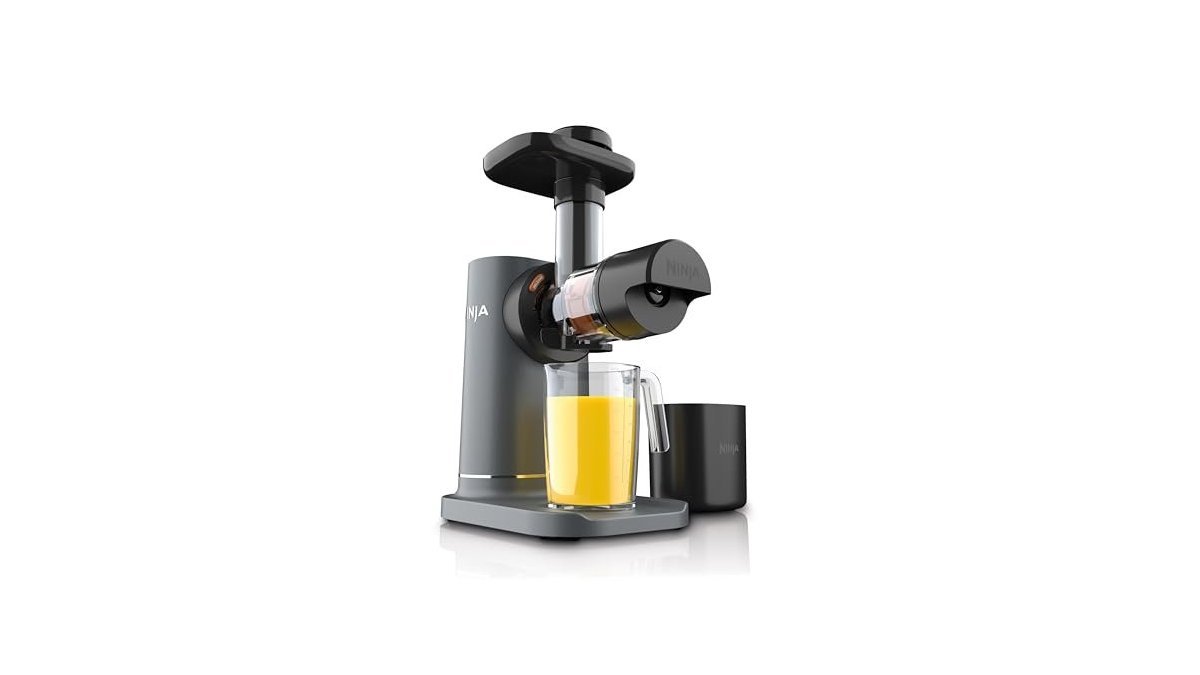
1. Ninja NeverClog Cold Press Juicer
Right for: The everyday juicer who wants beets and greens without fuss.
This listing promises a 150-watt high-torque auger that runs at low speed, which is the cold press method — the slow crush that handles fibrous roots like beets and carrots without the clogging a fast spinning blade invites. You get two interchangeable pulp filters, Less Pulp or Lots of Pulp, so you decide the texture instead of accepting whatever the machine gives you. There’s a Reverse function for clearing jams, and a built-in anti-drip lever so you can pause mid-pour without a puddle. All juice-contact parts are dishwasher safe, and the compact body is sized to sit under kitchen cabinets.
On an ordinary morning, that combination means you can drop in beet chunks, run the program, and pour a clean glass without standing over the machine. The 24 oz juice jug and 36 oz pulp container are sized for one or two people, not a family batch. The two-filter system is the part that earns its keep: beet juice with less pulp tastes very different from beet juice with body, and you get to pick per batch.
What works:
- High-torque auger built for fibrous produce like beets
- Interchangeable pulp filters for texture control
- Reverse function helps clear jams
- Anti-drip lever stops countertop spills
- Juice-contact parts are dishwasher safe
Where it gives ground:
- Compact jug suits a single serving or two, not a crowd
- Compact footprint means smaller batch capacity
Skip it if: You juice for a big household and want one large batch.
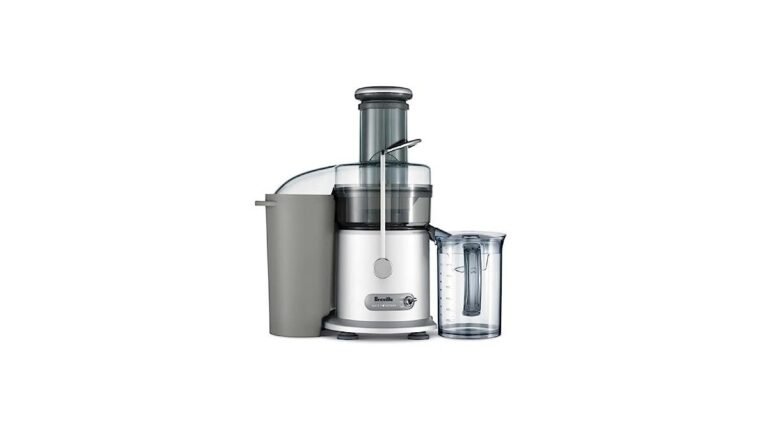
2. Breville Juice Fountain Plus
Right for: Someone who wants beet juice fast, with minimal chopping.
This is a centrifugal juicer, and the listing is upfront about the trade: an 850-watt motor and a 3-inch extra-wide chute that takes whole fruits and vegetables without pre-cutting. For beets, that chute matters — you still trim them, but you’re not dicing them into matchsticks first. The titanium-reinforced disc and Italian-made micro mesh filter basket are stainless steel, and the two-speed control lets you run low for softer produce and high for dense roots. There’s a froth separator in the 35.2 fl oz jug, plus a detachable 2.6 qt pulp container and a cleaning brush.
What that means day to day is speed. You feed beets, the machine extracts in seconds, and the froth separator pours you a cleaner glass. The listing doesn’t mention how much pulp this machine leaves behind. The parts come apart for cleaning, and the cord wraps under the base for storage.
What works:
- Chute takes whole produce, less prep
- Dual speeds for soft and hard ingredients
- Stainless steel filter basket and titanium disc
- Froth separator for cleaner pours
- Detachable pulp container and cleaning brush included
Where it gives ground:
- Several parts to wash after each session
Skip it if: You want maximum yield from every beet and don’t mind slower juicing.
3. Cuisinart Juicer Machine
Right for: The cook who wants power and speed without a big footprint.
The headline here is a 1000-watt, 5-speed juice extractor with a 3-inch feeding chute. Five speeds is more control than most centrifugal machines offer, which matters when you’re moving between soft oranges and hard beets in the same session. There’s a control dial with a blue LED ring, an anti-drip adjustable flow spout, and an easy unlock-and-lift system for taking the top off. The foam-reducing filter basket addresses the froth that beet juice throws off. Housing is die-cast and stainless steel, parts are dishwasher safe, and you get a 2-liter pulp container, a 1-quart juice pitcher, and a cleaning brush.
On a normal day, the 5-speed dial is what you’ll actually notice — you can dial in for beets rather than guessing between two settings. The 2-liter pulp container means fewer trips to empty it mid-batch. The die-cast housing is a heavier build, and that weight is the honest trade for the power.
What works:
- 1000-watt motor with 5 speed settings
- Extra-wide chute reduces prep cutting
- Foam-reducing filter basket
- Large pulp container holds a long session
- Dishwasher-safe parts and cleaning brush included
Where it gives ground:
- Die-cast housing makes it heavier to move
Skip it if: You want a light machine you can tuck away easily.
4. Hamilton Beach Centrifugal Juicer Machine With Big Mouth 3” Feed
Right for: The beginner who wants a simple, wide-chute machine.
Hamilton Beach calls itself America’s number one juice extractor brand, and this listing backs the machine with a 3-year limited warranty. The Big Mouth name comes from the extra-large 3-inch chute, wide enough for a whole apple, a bunch of celery, or a handful of carrots — so you skip the pre-cutting step that eats your morning. The 800-watt motor is rated for both hard and soft produce, from oranges and apples to cucumbers and leafy greens. The pulp bin holds 80 oz, and the pulp bin, juice bowl, lid, and pusher are all dishwasher safe. A strainer cleaning brush is included.
For beets, the wide chute is the practical win: fewer cuts, less mess, faster start. The 80 oz pulp bin is generous, so you’re not stopping to empty it constantly.
What works:
- Big Mouth chute fits whole produce
- 800-watt motor for hard and soft ingredients
- 80 oz pulp bin holds a long session
- 3-year limited warranty
- Dishwasher-safe removable parts and brush
Where it gives ground:
- Several removable parts need washing each time
Skip it if: You want a slow cold press for the highest yield per beet.
5. NutriBullet Juicer
Right for: The first-time juicer who wants the simplest possible routine.
NutriBullet’s pitch is that juicing shouldn’t be complicated, and the listing keeps the controls to dual speeds — low for soft produce, high for hard — with a no-drip spout so nothing is lost on the pour. The 3-inch feed chute takes whole fruits and vegetables, so no slicing or dicing. The 27 oz sealing juice pitcher stores fresh juice for up to 48 hours, which is the standout feature for anyone who wants to juice ahead. The pulp basin lifts off and goes right to the sink, and the sieve, pulp basin, and juice pitcher are all dishwasher safe. You get a food pusher, cleaning brush, and recipe guides, and the sieve is stainless steel while the basin and pitcher are BPA-free plastic.
For beets, the make-ahead angle is what changes your week: juice a batch, seal the pitcher, and drink it over two days instead of juicing daily. The dual-speed control is simple enough that you won’t need the manual after the first run.
What works:
- Dual speeds for soft and hard produce
- Feed chute takes whole fruits and vegetables
- 27 oz sealing pitcher stores juice up to 48 hours
- No-drip spout
- Sieve, basin, and pitcher are dishwasher safe
Where it gives ground:
- Dual speeds offer less control than a multi-speed dial
Skip it if: You want fine control over pulp texture in every batch.
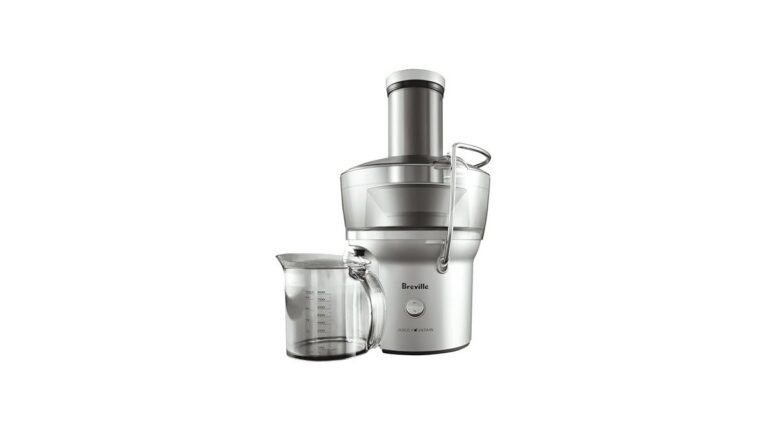
6. Breville BJE200XL Juice Fountain Compact Centrifugal Juicer
Right for: Small kitchens where counter space is the deciding factor.
This is the space-saving version of Breville’s centrifugal design. The listing promises a 3-inch wide chute for whole fruits and vegetables, including carrots, apples, and oranges, with pulp collected inside the unit’s own footprint to conserve counter space. The titanium-reinforced disc and Italian-made micro mesh filter basket are stainless steel. There’s a froth separator in the 25 fl oz juice jug, a safety locking arm that stops the machine running without the cover in place, and a cord that wraps under the base for storage. A cleaning brush is included, and the pulp container holds 1.6 qt.
The honest trade is capacity: a 25 fl oz jug and 1.6 qt pulp container, so this suits one or two glasses at a time rather than batch juicing. What you get in return is a machine that fits where a full-size juicer won’t, and the safety locking arm is a real feature for households with kids.
What works:
- Compact design collects pulp within its footprint
- 3-inch chute takes whole produce
- Safety locking arm prevents operation without cover
- Froth separator in the juice jug
- Cord wraps under base for storage
Where it gives ground:
- 25 fl oz jug and 1.6 qt pulp container are small
- Best for single servings, not family batches
Skip it if: You juice several glasses at once and need bigger capacity.
7. KOIOS 1300W Centrifugal Juicer Machine
Right for: The speed-focused juicer who wants a big batch fast.
KOIOS puts a 1300-watt full copper motor at the center of this machine, and the listing claims it can produce juice in seconds with 75% more juice and 60% more nutrients and minerals. There are three speed modes: low runs 12000 to 15000 RPM for softer fruits like oranges and tomatoes, fast runs 15000 to 18000 RPM for harder produce including beets, celery, and kale, and “P” is the highest speed. The 3-inch chute takes whole fruits and vegetables. The filter is 304 titanium-plated stainless steel with 13-row saw-pointed blades, and the listing says you can fill a 35 oz cup in seconds with no clogging and less foaming. Capacity is a 35 oz juice cup and a 100 oz pulp container, with a built-in foam separator. There’s a safety locking arm and overheat protection that shuts the machine down if it gets too hot. Parts are dishwasher safe or hand washable, and a brush is included.
Everyday, the 100 oz pulp container is the feature you’ll feel — you can run a long beet session without emptying it. The overheat protection is worth knowing about: it means the machine will stop itself during heavy use, which is a safeguard, not a fault.
What works:
- 1300-watt full copper motor
- Three speed modes with a dedicated high setting
- 3-inch chute takes whole produce
- 100 oz pulp container for long sessions
- Overheat protection and safety locking arm
Where it gives ground:
- Overheat protection can pause a long, heavy session
Skip it if: You want quiet, slow juicing and don’t care about speed.
8. AAOBOSI Cold Press 5.8″
Right for: The green-juice drinker who also wants smooth beet juice.
This is a slow masticating juicer with a 5.8-inch extra-large feed chute that takes whole fruits and vegetables with no pre-cutting. The controls are On, Off, and Reverse — the REV button clears blockages instantly. The listing says the upgraded DC motor delivers stronger torque than standard juicers and handles hard ingredients like wheatgrass, celery, and ginger. The filtration is the interesting part: three stainless steel filters at 2mm, 0.8mm, and 0.5mm work together for complete pomace separation, so you get smooth, pulp-free juice. Juice and pulp cups come in the box, along with a food-grade silicone cleaning shovel. There’s an independent juice collection platform to direct juice into your cup without drips, and four detachable parts assemble in about five seconds with no tools.
For beets, the triple filter is what you’ll notice — 0.5mm separation gives you a genuinely smooth glass rather than a gritty one.
What works:
- 5.8-inch chute takes whole produce
- Three stainless steel filters for smooth juice
- Reverse button clears blockages
- DC motor handles wheatgrass, celery, and ginger
- Four parts assemble without tools
Where it gives ground:
- Slow cold press takes longer per batch
- You feed at the machine’s pace, not your own
Skip it if: You want beet juice in seconds and won’t wait for slow extraction.
9. Anybear Cold Press Juicer 200W Masticating Slow Juicer 4.3″ Wide
Right for: The buyer who wants a long warranty and heavy-duty build.
Anybear leads with a 5-year extended warranty with free replacement, around-the-clock customer service, and guaranteed responses within 8 hours. The machine itself is a 200W masticating juicer with 180 N·m of torque running at up to 65 RPM — a genuinely low speed. The listing claims up to 98.9% juice yield while minimizing oxidation for fresher flavor. The feed chute is 4.3 inches, sized for larger fruits, vegetables, and bigger batches. The chute is made from USA Tritan, described as baby food-grade material, and the machine is BPA-free. Cleaning is a one-piece stainless steel filter with a three-step disassembly and a rinse under the tap with the included brush.
For beets, the low 65 RPM speed is the point: slow crushing limits oxidation, and the listing’s yield claim is the highest stated here. A 4.3-inch chute, sized for larger fruits, vegetables, and bigger batches. The warranty is the standout — 5 years with free replacement.
What works:
- 5-year extended warranty with free replacement
- 180 N·m torque at up to 65 RPM
- 4.3-inch chute for larger produce and batches
- One-piece stainless steel filter, three-step disassembly
- BPA-free Tritan feed chute
Where it gives ground:
- 4.3-inch chute still needs the largest beets cut
- Slow 65 RPM extraction takes time per batch
Skip it if: You want the widest possible chute and zero cutting.
10. Canoly 3-in-1 Cold Press Juicer C16
Right for: The household that wants juice, sorbet, and nut milk from one machine.
The Canoly C16 is a 3-in-1 cold press juicer with two strainers — Juice and Sorbet — so it makes fresh juice, zero-waste frozen fruit sorbet, and nut milk. The feed chute is 6 inches, and the listing says it takes whole apples, pears, and large celery bunches with no chopping. The AC brushless motor runs at a whisper-quiet 35dB and is backed by a 15-year motor warranty. The hopper holds 90 oz, built for large-batch juicing or nut milk in one session. The pulp outlet is detachable to prevent residue buildup, and all removable parts are BPA-free.
For beets, the 6-inch chute and 90 oz hopper mean you can process a whole market bag in one go with almost no prep. A 35dB operating level, which matters if you juice early.
What works:
- 6-inch chute, no chopping
- 3-in-1: juice, sorbet, and nut milk
- 90 oz hopper for large batches
- 35dB quiet AC brushless motor
- 15-year motor warranty
Where it gives ground:
- Large machine takes up counter or cabinet space
- 3-in-1 design means more parts to store
Skip it if: You want a small, single-purpose juicer and nothing more.
Also Worth Considering
AAOBOSI 3-in-1 Press Juicer Machine — This one pairs a 6.5-inch wide chute with a slow cold press design, and the listing frames it around faster juicing with whole fruits and vegetables. It’s clog-resistant and built for nut milk and sorbet as well as juice, so it suits a household that wants one machine to cover several jobs.
KIAMITH Cold Press Juicer — A 300W slow masticating juicer with a 5.8-inch extra-large feed chute, aimed at fruits and vegetables with high juice yield. The listing points to family use and easy cleaning, and it’s BPA free. If you want a cold press with a wide chute for batch juicing, this sits in the same territory as the wider cold press picks above.
PSIIDAN Cold Press Juicer Machines — A single-auger slow masticating juicer for vegetables and fruits with a rotary knob control and an anti-clog reverse function. The rotary knob is a different control style from the one-touch buttons on most machines here. The listing emphasizes easy cleaning for home use.
How to Think Before You Choose
Choosing a Juicer for Beets and Dense Roots
This is the decision that shapes everything else. A centrifugal juicer spins a blade and filter at high speed — the KOIOS, Breville, Cuisinart, Hamilton Beach, and NutriBullet models here all work this way. It’s fast, and a wide chute means little cutting. A cold press, or masticating, juicer crushes produce slowly through an auger — the Ninja NeverClog, AAOBOSI, Anybear, and Canoly models. Slow crushing tends to leave drier pulp, which usually means more juice from the same beet, and it limits the oxidation that dulls flavor.
For beets specifically, most people should lean cold press if yield and taste are the priority, and centrifugal if speed is. Beets are dense, so a centrifugal machine’s wetter pulp is where your juice is going. But a cold press takes minutes per batch, and if you juice once a week and want it over with, that wait is real.
Here’s what you can check at home before deciding. Take one beet, peel it, and weigh it on a kitchen scale. Juice it in whatever you have now, then weigh the pulp. If the pulp is heavy and damp, a cold press will likely get more out of each beet for you. If the pulp comes out nearly dry, your current method is already extracting well and speed may matter more.
Chute Width Against Counter Space
Chute width is the number that decides how much of your morning goes to chopping. The listings here range from 3 inches on the centrifugal machines up to 6.5 inches on the AAOBOSI 3-in-1. A 3-inch chute takes a whole apple or a handful of carrots but not a large beet. A 5.8-inch or 6-inch chute takes whole beets, which is the difference between a two-minute prep and a ten-minute one.
The Breville Juice Fountain Compact is the counterpoint here — a 3-inch chute in a body designed to fit where a full-size juicer won’t.
Most people should lean toward the widest chute their kitchen can hold, because prep time is what stops people juicing. Measure the space first. Take a tape measure, find the spot on your counter or shelf, and write down the height, width, and depth you actually have. Then compare that to the dimensions in each listing. A juicer that doesn’t fit where you planned to keep it becomes a juicer you stop using.
What Owning It Asks of You Afterward
The part no one thinks about until the first batch is done: cleaning, pulp handling, and storage.
Pulp is the second job. A 100 oz pulp container means one emptying per long session; a 1.6 qt container means several. If you don’t, you’re throwing away weight you paid for at the market.
Check your own routine before buying: count how many times a week you’d realistically juice, and how long you’re willing to stand at the sink afterward.
Who Should Skip These Altogether
Juicers are genuinely useful, but they’re not for everyone — and a few readers should keep their money.
- If you drink beet juice once a month, a blender and a strainer bag will do the job without a machine taking up your counter.
- If you already own a high-powered blender, you can blend beets with water and strain through a fine mesh bag for a similar glass.
- If your kitchen has no free counter or cabinet space, a full-size juicer will end up in a closet, and a compact model or a hand press suits you better.
- If you’re curious about juicing but not committed, borrow one or buy a single beet’s worth at a juice bar first and see if you actually drink it.
Frequently Asked Questions
What kind of juicer actually works for beets?
A slow cold press, or masticating, juicer handles beets best, because the auger crushes dense fiber slowly instead of shredding it at speed. That usually means drier pulp and more juice from each beet. Centrifugal juicers do work on beets, but they tend to leave wetter pulp, so you may get less from the same root.
Do I have to peel and cut beets before juicing?
That depends on the chute. A 3-inch chute, like the one on the Breville Juice Fountain Plus, takes whole apples and carrots but not a large beet. The AAOBOSI Cold Press 5.8″ and the Canoly C16 Cold Press both have chutes wide enough for whole beets, so prep drops to trimming the tops and roots.
How long does beet juice last in the fridge?
The NutriBullet Juicer listing says its 27 oz sealing pitcher stores fresh juice for up to 48 hours. That’s a useful benchmark for any machine here: seal the juice in a full, airtight container and refrigerate it, and you’re looking at roughly two days before flavor fades. Fill the container to the top so there’s little air space, since oxygen is what dulls the color and taste.
Is the simplest juicer here enough for beets?
If “enough” means a clean glass of beet juice without much fuss, yes. The NutriBullet Juicer has just two speeds and a 3-inch chute, and the Hamilton Beach Big Mouth keeps things to one wide chute and an 800-watt motor. Neither gives you fine pulp control or the highest yield, but both will turn beets into juice.
What should I check before ordering a juicer?
Four things. First, measure your counter or cabinet space and compare it to the machine’s dimensions — the Canoly C16 has a 90 oz hopper and is a large machine, while the Breville Juice Fountain Compact is built for tight kitchens. Second, check the chute width against the size of produce you buy. Third, look at the pulp container size: 100 oz means one emptying per session, 1.6 qt means several.
Closing
For most people, the Ninja NeverClog JC151 is the pick that balances the job: a cold press auger built for fibrous roots, two pulp filters so you control the texture, and a compact body that fits under a cabinet. For the harder case — a household juicing big batches, or someone who wants sorbet and nut milk from the same machine — the Canoly C16 Cold Press covers the most ground with its 6-inch chute and 90 oz hopper. Before you order, do one thing: measure the spot where the machine will live, and check that number against the dimensions in the listing. A juicer that fits is a juicer you’ll use.