Best Small Juicer: 10 Picks for Tiny Kitchens
Juicing at home sounds simple until you start shopping for a small juicer. Then you meet a wall of machines that all promise the same thing, and the labels stop helping. Cold press, centrifugal, masticating, citrus press — those words mean something, but they don’t tell you which one fits your counter, your produce, or your mornings.
Here’s what you’re really trying to get right: a machine small enough that you’ll actually leave it out, and strong enough that you’ll actually use it. That’s the whole game. The best small juicer isn’t the one with the biggest motor on the box. It’s the one that survives the first two weeks, when enthusiasm is high and counter space is not.
The one thing that separates a good buy from a bad one here is the feed chute. A wide chute means you drop in a whole apple or a whole carrot. A narrow chute means you chop first, every single time. That extra chopping is what kills juicing habits. It adds five minutes to a task you already talked yourself into. So before anything else, look at the chute size and ask yourself honestly whether you’ll do the prep.
The second thing is cleanup. Centrifugal juicers spin fast and leave pulp stuck to a mesh filter. Slow juicers press gently and leave less foam, but they take their time. Citrus presses only handle citrus, and they’re brilliant at it. None of these is wrong. They’re just built for different people.
You’ll also want to think about what you drink. If it’s mostly orange juice, a citrus press does the job with the least fuss. If it’s green juice and celery, you need something that won’t clog. If it’s a bit of everything, a compact centrifugal juicer is the middle path.
Pay attention to what comes in the box, too. A cleaning brush, a jug with a froth separator, spare pulp filters, a recipe guide — those small extras decide how often the machine gets used. And check the warranty, because motors are the part that fails.
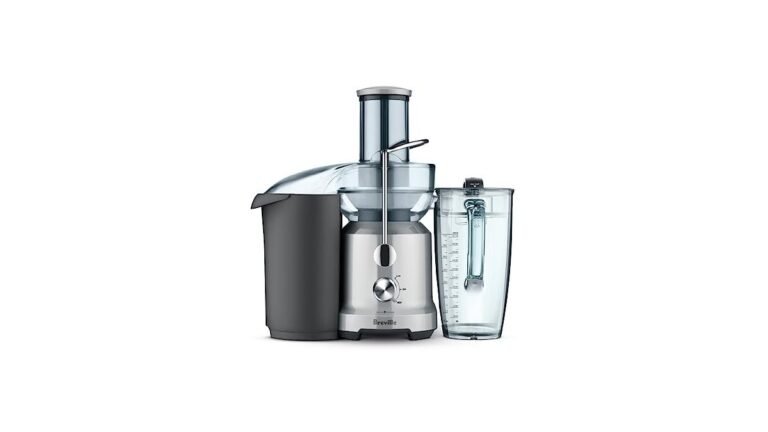
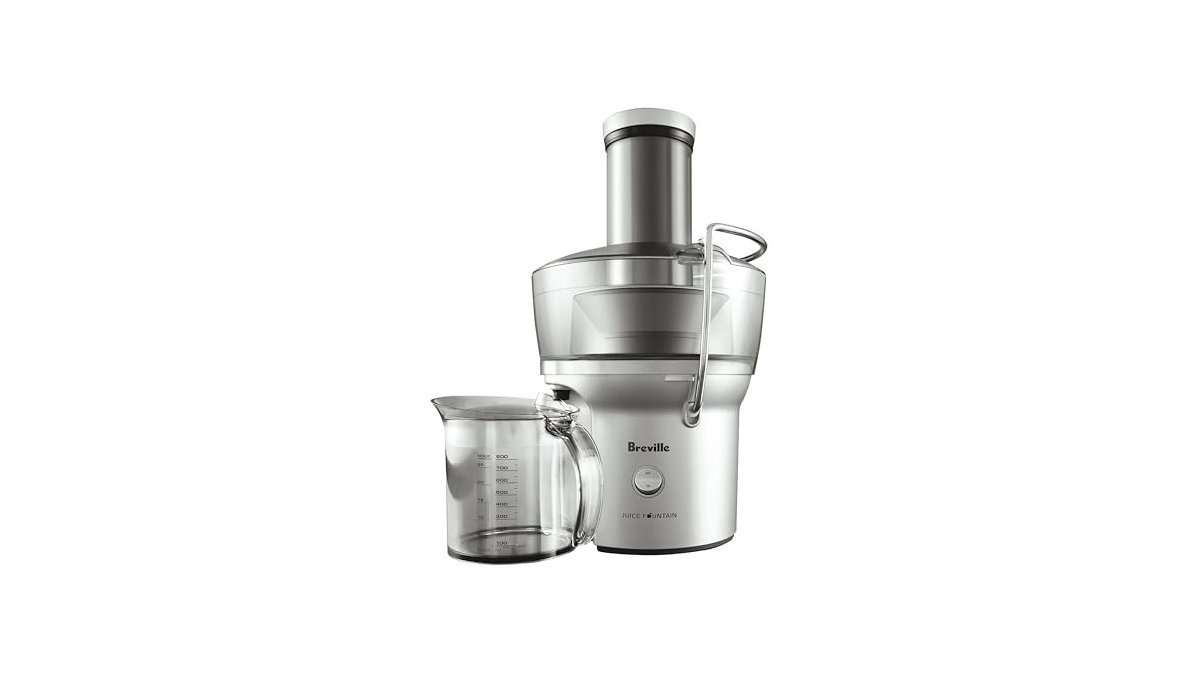
1. Breville BJE200XL Juice Fountain Compact Centrifugal Juicer

Best for: Small kitchens that want whole-produce juicing
This is a compact centrifugal juicer built around one idea: skip the knife. Inside, a titanium-reinforced disc and an Italian-made micro mesh filter basket work together, both in stainless steel, to pull juice and nutrients out of the pulp. The 25 fl oz juice jug has a built-in froth separator, which lets you pour less froth into your glass.
Owning it means one compact appliance sitting on the counter that takes up less room than most. The pulp collects inside the unit’s own footprint, so you’re not juggling a separate bin across the kitchen. The cord wraps around under the base, which helps if you store it away between uses. A safety locking arm stops the motor unless the cover is locked down, so there’s no way to run it open.
The pulp container holds 1.6 qt. Centrifugal juicing also leaves foam, which is exactly why the froth separator is there. The juice jug holds 25 fl oz.
| What it gives you | What you accept |
|---|---|
| 3-inch chute takes whole produce | 1.6 qt pulp container |
| Froth separator in the 25 fl oz jug | Foam still forms during juicing |
| Cord wraps under the base for storage | Counter space still needed while in use |
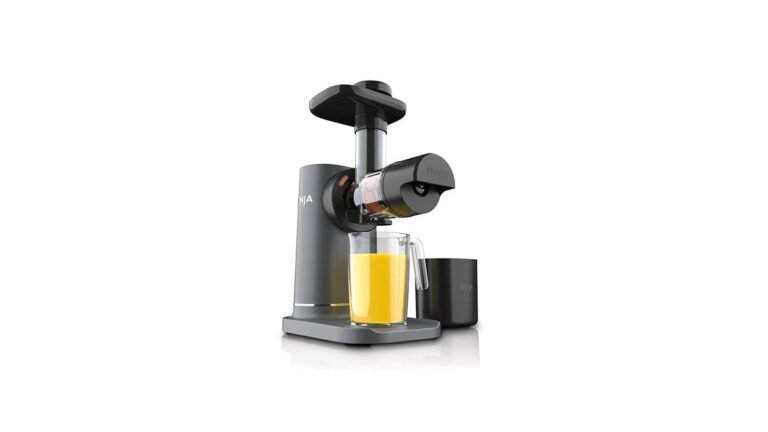
2. Ninja NeverClog Cold Press Juicer

Best for: Leafy greens, celery, and fibrous vegetables
The Ninja NeverClog is a cold press juicer, which means it doesn’t spin — it crushes. A 150-watt high-torque motor turns an auger at low speed, pushing through apples, carrots, celery, and leafy greens. Low speed means less heat and less oxidation, and the listing claims smooth, nutrient-rich juice without clogging. Two interchangeable pulp filters let you pick Less Pulp or Lots of Pulp, so you control the texture rather than accepting whatever comes out.
Two one-touch programs run it: Start/Stop and Reverse. The reverse function is the practical one. When pulp builds up and the auger stalls, you hit reverse, it clears, and you keep going without taking the machine apart. A built-in anti-drip lever lets you pause and pour cleanly instead of mopping the counter. All juice-contact parts are dishwasher safe, and the 24 oz jug plus 36 oz pulp container handle a decent batch.
This is the pick if your juice is green. Fibrous produce is where centrifugal machines struggle and where an auger earns its place. The trade-off is that this is a cold press machine, so it works at its own pace rather than a centrifugal machine’s.
What goes smoothly:
- Handles celery, kale, and other fibrous produce
- Reverse function clears jams without disassembly
- Two pulp filters change the texture
- Anti-drip lever prevents counter spills
- Dishwasher-safe juice-contact parts
What you have to accept:
- Slower than a centrifugal juicer
- 24 oz jug means smaller batches
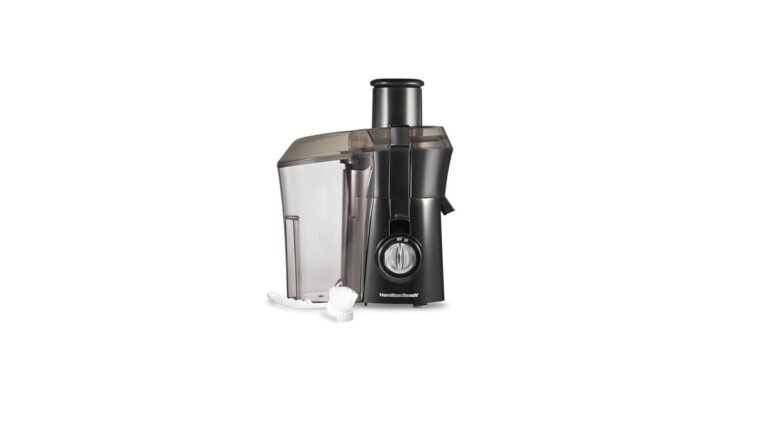
3. Hamilton Beach Centrifugal Juicer Machine With Big Mouth 3” Feed

Best for: Big batches and hard produce, daily
Hamilton Beach calls itself America’s number one juice extractor brand, and this model backs that with an 800-watt motor — the most power in this group. That power matters with hard foods. The listing says the 800-watt motor ensures maximum juice yield from hard and soft foods. The 3-inch Big Mouth chute fits a whole apple, a bunch of celery, or a handful of carrots, so pre-cutting mostly disappears. An 80 oz pulp bin means you’re not stopping to empty it halfway through.
The pulp bin, juice bowl, lid, and pusher are all dishwasher safe, and a strainer cleaning brush comes in the box for the mesh filter. That filter is the part that needs attention after every session, and the brush is the tool for it. The three-year limited warranty is backed by Hamilton Beach.
The catch is size. An 80 oz pulp bin and a full-size body take up real counter space, so this fits a kitchen with room to spare, not a studio apartment. If you’re juicing for a single person once a week, this is more machine than you need.
Snapshot:
- 800-watt motor powers through hard produce
- 3-inch chute fits whole apples and celery bunches
- 80 oz pulp bin holds a long juicing session
- Dishwasher-safe pulp bin, juice bowl, lid, and pusher
- Cleaning brush included for the mesh filter
- Three-year limited warranty on the machine
4. Magic Bullet Mini Juicer with Cup

Best for: Tiny kitchens and juice on the go
The Magic Bullet Mini Juicer is the most compact machine here, and it’s built for people who don’t have a counter to spare. A 400-watt motor drives a 2-inch feed chute that the listing says fits larger chunks of your ingredients. The real trick is the cup. You juice straight into a 16 oz cup, twist on the to-go lid, and walk out the door. No jug, no pouring, no second container to wash.
Cleanup is top-rack dishwasher safe on the attachments, and a silicone spout cap catches drips before they reach the counter. That cap is a small detail that saves a wipe-down every morning. The whole thing tucks away when you’re done, which is the point of a mini juicer.
What you accept is capacity and power. The 16 oz cup is the batch size, and the motor is 400 watts. It also comes with a one-year limited warranty. This is a personal juicer, not a family one.
Who it fits: A single user, small kitchens, renters, anyone who wants juice in a travel cup without extra dishes.
Who should pass: Households juicing for several people at once, or anyone who wants to process large amounts of hard produce in one go.
5. BLACK+DECKER 32oz Electric Citrus Juicer

Best for: Orange juice, every morning, no fuss
This is a citrus press, not an all-purpose juicer, and it’s good at exactly one thing. Auto-reversing cones rotate both ways to pull more juice out of each half. Adjustable pulp control with a removable pulp basket lets you decide how much pulp lands in the glass — throw the basket contents out, or save them for baking. Markings on the clear container let you juice straight to a recipe measurement instead of guessing.
The container doubles as a pitcher with a handle and a drip-free pour spout, so you squeeze, lift, and pour without a funnel or a mess. The clear plastic lets you watch the yield rise as you work, which is a small thing that makes batch juicing less tedious.
The limit is obvious: it only does citrus. No carrots, no greens, no apples. If your household drinks orange juice daily, that’s not a limitation, it’s a specialization.
What goes smoothly:
- Auto-reversing cones extract more from each half
- Adjustable pulp control with removable basket
- Container doubles as a pitcher with a pour spout
- Measurement markings make recipe juicing easy
- Clear container shows yield as you go
What you have to accept:
- Citrus only, no other produce
- You press each piece by hand
6. Cuisinart Pulp Control Citrus Juicer

Best for: Anyone who cares how much pulp is in the glass
Cuisinart’s citrus juicer handles the full range, from the smallest lime to the largest grapefruit, on one universal cone. Three pulp control settings — low, medium, high — change the texture of the finished juice, and an auto-reversing reamer works the fruit in both directions for better extraction. A final-spin feature pulls extra juice from the pulp and keeps dust off the cone between uses.
The extra-long snap-up spout reaches more glass sizes and stops drips when you lift the fruit away. Dishwasher-safe parts make cleanup straightforward, and the limited three-year warranty matches the longest coverage in this group.
The trade-off is the same as any citrus press: it’s citrus only. The three pulp settings are the reason to pick this over a simpler press, so if you don’t care about pulp levels, you’re paying for a feature you won’t use. It also needs counter space during use, though it stores smaller than it looks.
Who it fits: Households that go through a lot of citrus and want control over texture, plus anyone juicing limes and grapefruits on the same machine.
Who should pass: Anyone who wants to juice greens, carrots, or apples — this machine won’t do it.
7. Elite Gourmet ETS623 Electric Citrus Juicer

Best for: Simple citrus juicing with almost no learning curve
The Elite Gourmet ETS623 is the least complicated machine on this list. You cut citrus, press it down, and the auto-reversing reamer does the work. The listing points out its 40-watt motor against the 25-watt motors common in basic citrus juicers, which means faster yield from the same effort. A 24 oz (3-cup) capacity covers two to three servings in one go, and a built-in pour spout with an integrated pulp and seed filter means you pour straight into a glass.
Removable parts are top-rack dishwasher safe, though the listing recommends hand washing for the longest life. It’s BPA-free and ETL listed, and the compact body fits apartments, dorms, and RVs. That’s the honest pitch: small, simple, and easy to store.
What you accept is scope. It’s citrus only, and 40 watts is modest — this is for oranges, lemons, limes, and grapefruit, not a morning of hard vegetable juicing. The 24 oz capacity is also a ceiling, so a big batch means emptying and starting again.
Who it fits: Small households, students, RV owners, and anyone who wants fresh citrus juice with the least possible setup.
Who should pass: Anyone who wants a single machine for vegetables and fruit as well as citrus.
8. Vinci Electric Juicer

Best for: Hands-free citrus with no splashing
The Vinci does something none of the other citrus presses here do: it works with the lid closed. You cut citrus in half, place it on the reamer, close the lid, and press the Auto Juice button. The machine presses the fruit inside a fully enclosed chamber in about 10 seconds. No holding, no squeezing, no splash on the counter or your shirt.
The extraction is pressure-sensitive. The listing says the patented technology adjusts pressure based on rind thickness, which helps avoid scraping too deep into the pith and turning the juice bitter. It handles key limes up to grapefruits 4.5 inches across on the same machine. A 12 oz Tritan bowl with a locking spout lets you collect juice or dispense straight into a glass, and Fine and Coarse pulp filters set the texture. The lid, bowl, reamer, and filters are top-rack dishwasher safe.
The limit is the bowl. At 12 oz, that’s the citrus capacity, so a large batch means pouring between rounds. It’s also citrus only, and the enclosed design means you load one half at a time.
Snapshot:
- Fully enclosed chamber stops splashing
- Auto Juice button runs a cycle in about 10 seconds
- Pressure adjusts to rind thickness
- Fits key limes up to 4.5-inch grapefruits
- 12 oz bowl with locking spout
- Fine and Coarse pulp filters included
9. KMFurnila Slow Juicer

Best for: Quiet mornings and nutrient-focused juicing
The KMFurnila is a slow masticating juicer with a 200-watt motor that turns at low speed. Low speed means less heat and less oxidation, which the listing says preserves more vitamins, enzymes, and natural sweetness. The standout number is the 4.25-inch feed chute. Large carrot chunks, celery stalks, and medium fruits go in with minimal chopping, which is the single biggest time saver in daily juicing.
There are no sharp blades inside. A safety interlock shuts the motor down the moment the lid opens, which matters in a house with kids. When pulp builds up, a reverse function dislodges the blockage without disassembly. All removable parts come apart by hand with no tools, and a specialty brush is included for cleaning. The listing specifies rinsing with lukewarm water at or below 104°F.
The trade-off is speed and care. Slow juicing takes longer than centrifugal juicing, and the temperature guidance on cleaning means you can’t just blast the parts with hot water. It’s also a taller machine than a citrus press, so check your cabinet clearance.
Who it fits: Households that juice greens and fibrous vegetables daily and want a slower process with a wide chute.
Who should pass: Anyone who wants juice in under a minute, or who only ever juices citrus.
10. QCen Juicer Machine 500W Centrifugal Juicer with Extra Wide Feed

Best for: Quick setup with two speeds for different produce
The QCen runs a 500-watt motor with two speed settings: low (12,000 RPM) for soft fruits like watermelon, orange, and strawberry, and high (18,000 RPM) for hard produce like carrot, apple, and pear. That two-speed control is genuinely useful — soft fruit turns to foam at high speed, and hard vegetables stall at low speed. A 3-inch wide mouth reduces chopping, and the whole thing is built for countertop use with BPA-free parts.
Safety features are solid for the type. A locking system arm stops the machine unless the cover is locked in place, and an overload protection system shuts it off if it overheats. Detachable parts make cleaning manageable. The listing also gives a specific instruction worth noting: to remove the filter basket, grasp the edge and pull up, and avoid juicing things with low water content.
That last point is the catch. This is a centrifugal juicer, so very dry, starchy produce isn’t its job. The listing doesn’t mention noise level.
What goes smoothly:
- Two speeds match soft and hard produce
- 3-inch wide mouth cuts prep time
- Locking arm and overload protection built in
- Detachable parts for cleaning
- BPA-free components
What you have to accept:
- Not for low-water-content produce
- Centrifugal machines run loud
Also Worth Considering
If you only juice lemons and limes by the glass, a manual press beats a motor. The Zulay Kitchen Metal 2-in-1 Lemon squeezes citrus by hand with a stainless steel build, gets the last drops out, and cleans up in seconds. Nothing to plug in, nothing to store beyond a drawer.
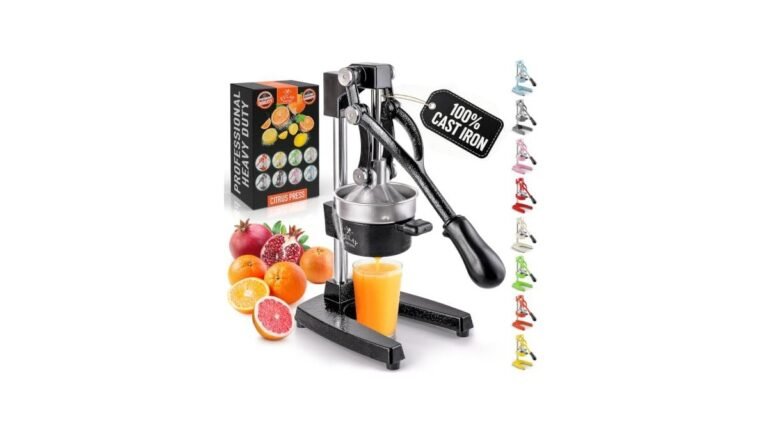
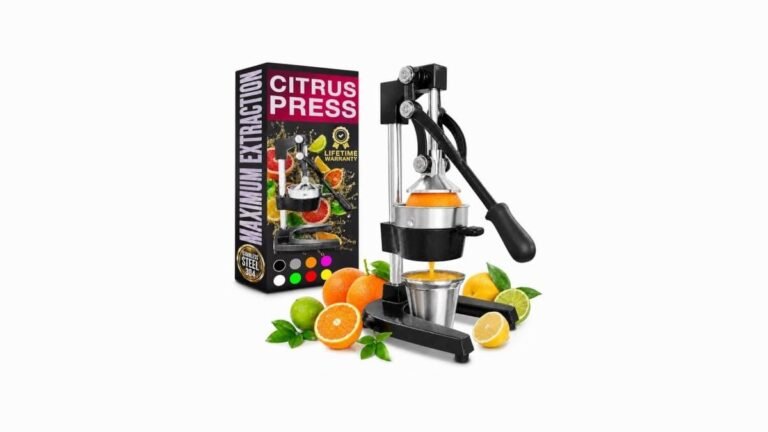
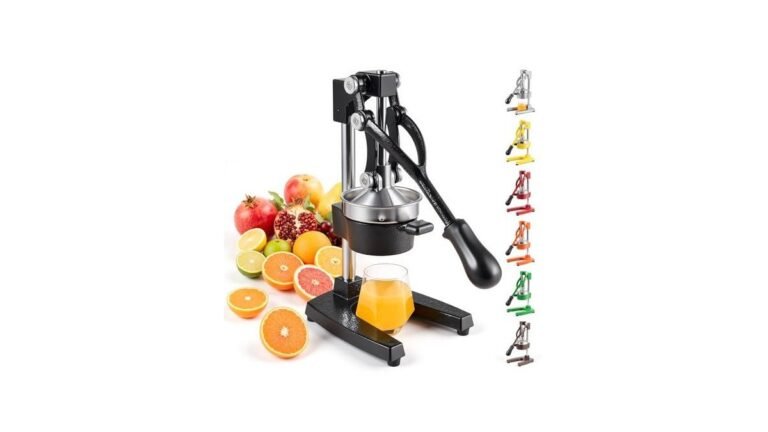
For heavier hand pressing, the Zulay Kitchen Cast Iron Juicer takes oranges and larger citrus with a heavy-duty stainless steel press.
The KitchenAid Citrus Juice Press Squeezer handles lemons and limes with a seed catcher and a pour spout. The 8-inch size gives you leverage on small fruit, and the seed catcher keeps the glass clean without a strainer.
The Decision Filter
Answer one question first: what will you actually put in it? If the answer is citrus, buy a citrus press and skip everything else. If it’s greens and celery, you need an auger. If it’s a mix of fruit and vegetables, you need a centrifugal machine with a wide chute.
That single answer rules out most of this list, which is the point. Most people miss this: the pulp container size. A small pulp bin means stopping mid-batch to empty it, and that interruption is what makes people quit juicing. Check the bin before the motor. Then check the chute, because chopping is the other habit killer. Get those two right and the rest is detail.
The Thirty-Second Checklist
- Will you really juice more than twice a week?
- Does anyone else in the house need to operate it?
- Will it fit under your cabinets with room to load it?
- Do you have counter space to leave it out?
- Will you actually wash the filter after every use?
- If it’s the wrong one, can you store it without resenting it?
Three Regrets Worth Avoiding
Regret #1: Buying on motor wattage alone. A bigger number on the box doesn’t help if the chute is narrow and you’re chopping carrots into sticks every morning. The fix is to check chute width and pulp bin size before you look at watts, because those two decide whether the machine gets used.
Regret #2: Assuming one juicer does everything. A citrus press makes the best orange juice and can’t touch a kale leaf. A slow juicer handles greens beautifully and takes its time with a single lime. The fix is to decide which job is yours, then buy the machine built for that job instead of the one that claims all of them.
Regret #3: Ignoring cleanup before you buy. Centrifugal juicers leave pulp pressed into a mesh filter that needs brushing, and some parts are dishwasher safe while others are not. Slow juicers ask for lukewarm water rather than hot. The fix is to read what the listing says about cleaning and warranty, then ask whether you’ll do that routine on a Tuesday morning.
What to Look for in a Small Juicer
Here’s how to translate a goal into a spec before you buy.
| If you want… | Look for | Avoid |
|---|---|---|
| Juice without chopping | 3-inch chute or wider | Narrow 2-inch feed tubes |
| Green juice that doesn’t clog | Auger with reverse function | High-speed centrifugal only |
| Orange juice every morning | Auto-reversing citrus cones | All-purpose juicers |
| Juice to take to work | Twist-on to-go lid and cup | Separate jug and glass |
| Less foam in the glass | Froth separator or slow press | Fast spinning without a separator |
| Easy cleanup | Dishwasher-safe contact parts | Hand-wash-only mesh filters |
Frequently Asked Questions
Will a small juicer fit under my kitchen cabinets?
Measure the clearance first, because juicers vary in height and some need room to lift the lid or feed produce. The Ninja NeverClog JC151 is described as fitting easily under kitchen cabinets, and the Elite Gourmet ETS623 is built as a space-saving design. If clearance is tight, check the assembled height with the lid on, not the base alone.
Can I juice leafy greens in a centrifugal juicer?
You can, but it’s the hardest job for that design. Centrifugal machines spin fast and leafy greens tend to fly past the blades, leaving less juice and more mess in the pulp bin. If greens are your main juice, an auger is the better fit.
Do I need to peel or cut fruit before juicing?
It depends on the chute. The Breville BJE200XL, Hamilton Beach Big Mouth, and QCen 500W all use a 3-inch chute that takes whole apples, carrots, and oranges without pre-cutting. The Magic Bullet Mini Juicer uses a 2-inch chute, so larger chunks need trimming. Always remove pits and thick skins that would taste bitter.
How do I clean a juicer without damaging it?
Check what the listing says about each part, because it varies. Most removable parts here are top-rack dishwasher safe, including those on the Cuisinart CCJ-500P1, the Vinci, and the Elite Gourmet ETS623. The KMFurnila specifies rinsing with lukewarm water at or below 104°F, so hot water is off the table there. Rinse before pulp dries and the whole job takes a minute.
Will a slow juicer make my juice taste different?
Yes, and the difference comes from heat and oxidation. A slow masticating juicer like the KMFurnila runs a 200-watt motor at low speed, which the listing says preserves more vitamins, enzymes, and natural sweetness. If you store juice for later, a slow press holds up better.
What’s the difference between a citrus press and a regular juicer?
A citrus press only handles citrus, and it does that one job with less effort than any all-purpose machine. The BLACK+DECKER CJ625, Cuisinart CCJ-500P1, Elite Gourmet ETS623, and Vinci all use a reamer that presses halved fruit, with pulp control and pour spouts built in. If citrus is most of what you drink, a press is the simpler and more reliable choice.
How long should a small juicer last?
Look at the warranty, because it’s the clearest signal the maker gives. The Hamilton Beach Big Mouth and the Cuisinart CCJ-500P1 both carry a three-year limited warranty. The Magic Bullet Mini Juicer comes with a one-year limited warranty. Rinsing promptly, using the included brush, and following the cleaning temperature guidance all extend the life of the parts you can’t replace.
Closing
When two picks still look equal, apply this tie-break: choose the one whose cleaning routine you’d actually do tomorrow morning. Motors and wattage are easy to compare, but the machine that gets washed is the machine that gets used, and an unwashed juicer becomes a shelf ornament fast. If both cleanups are equal, pick the wider chute — less chopping wins over more power almost every time.
Next step: measure your counter and your cabinet clearance, then check the pulp container size on the pick that fits your produce. If you mostly drink citrus, a press is the simpler answer. If you want greens and vegetables, go with an auger. Either way, buy for the juice you drink most, not the juice you imagine making.