How Many Watts Does a Vitamix Blender Use: 1,200–2,200 W Explained
Most Vitamix blenders use 1,200–1,500 watts during normal operation, with peak draws up to 1,800–2,200 watts for short bursts when starting thick mixtures or crushing ice — depending on model, container fill level, and ingredient density.
Vitamix doesn’t publish continuous wattage in manuals — they list motor horsepower (e.g., “2.2 HP”) and peak electrical draw. Since 1 HP = ~746 watts, a “2.2 HP” motor suggests ~1,640 watts at peak mechanical output — but real-world electrical input is higher due to efficiency loss.
So the wattage you measure at the wall socket will be higher than the horsepower number implies. You’ll need a plug-in power meter to get your exact reading — and that reading will shift every time you change speed, load, or blend time.
Who needs real watts for a Vitamix blender
You’re likely checking wattage because you’re sizing a circuit, choosing a generator, or troubleshooting tripped breakers — not out of casual curiosity.
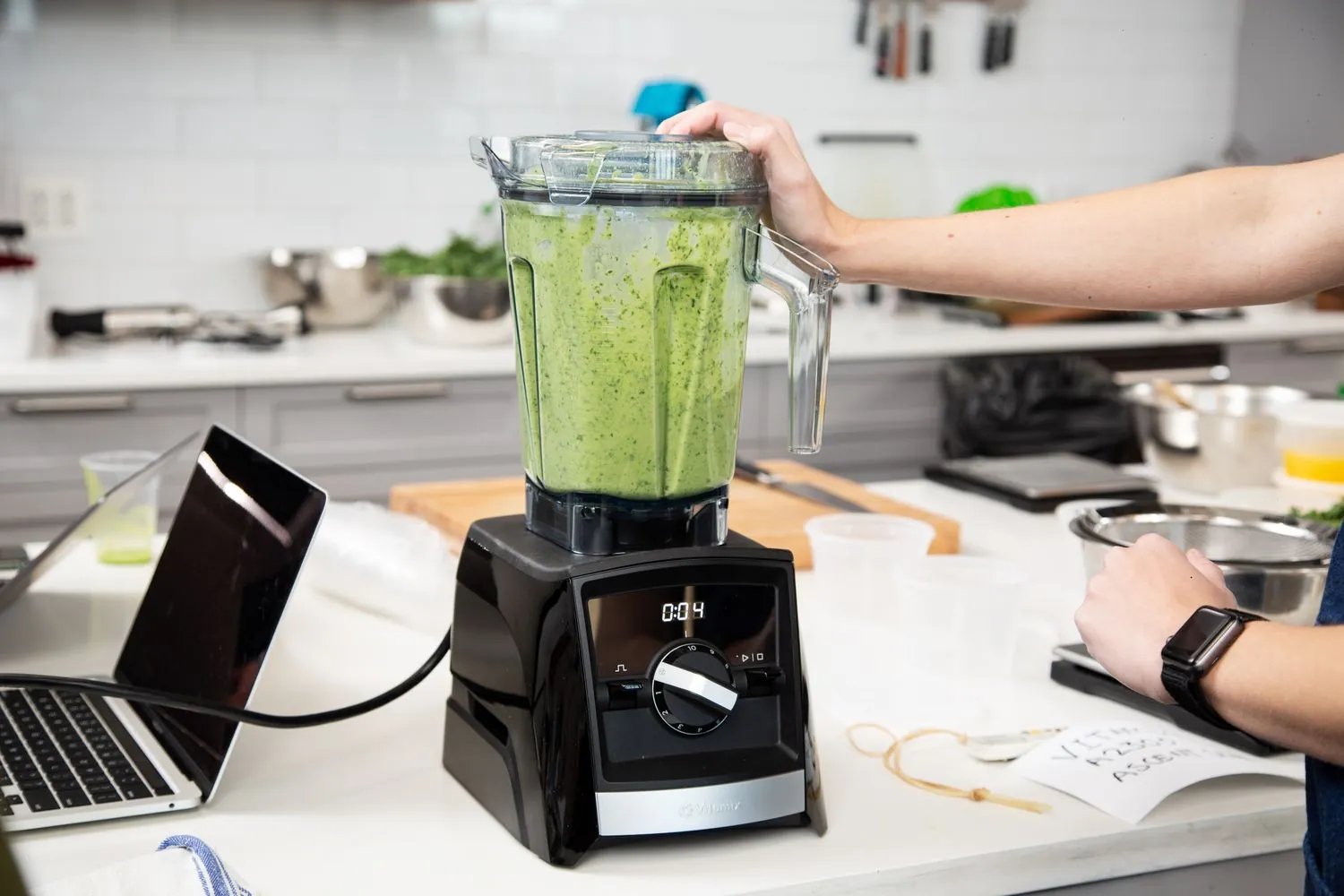
One reader owns a Vitamix A3500 and just added a home office with a shared 15-amp circuit. They’ve tripped the breaker twice while blending green smoothies with frozen banana and spinach. They need to know whether their blender’s actual draw exceeds safe limits for that circuit — and whether lowering speed reduces strain enough to prevent trips.
Another reader bought a 2,000-watt solar generator and wants to confirm their Vitamix E310 will run without overloading it. A third reader sees “2.2 HP” online and assumes that means more power than their 1,000-watt Ninja — but doesn’t realize HP measures mechanical output at the blade, not electrical input at the plug.
This page serves the first two readers best: those making real wiring, power, or safety decisions. It does not serve people shopping purely on wattage as a proxy for “better blending.” Vitamix’s value isn’t in raw wattage — it’s in thermal protection, blade geometry, and motor control.
If you’re comparing blenders only by wattage, read a guide on motor design or torque curves instead. This article assumes you already own or plan to buy a Vitamix and need actionable electrical data — not marketing context.
What Actually Changes the Wattage Reading
The wattage you measure depends on four real-world variables — and one of them fools almost everyone.
Motor load is the biggest factor. A Vitamix running empty at Speed 1 draws ~150 watts. At Speed 10 with a full cup of water, it draws ~1,300 watts. With 2 cups of frozen fruit and nut butter base? It hits 1,800–2,100 watts for 2–4 seconds at startup, then settles near 1,500 watts. Load matters more than speed alone — and most people check wattage with water only, then get surprised when almond butter trips their breaker.
Model generation matters — but not how you’d expect. Older C-Series (pre-2014) models like the 5200 draw ~1,380 watts continuously. Newer Ascent and Venturist models (A3500, A2500, V1200) are rated for up to 2,200-watt peak, but their smart motor control reduces average draw by holding lower RPMs longer. So newer models often pull less sustained wattage than older ones for the same task — even though their peak number looks higher.
Container size and fill level change everything. A 64-oz container filled to the “max fill” line with thick batter draws ~25% more watts than the same recipe in a 32-oz container at half-fill. Vitamix’s thermal protection kicks in faster in smaller containers under heavy load — so wattage drops as the motor throttles back. That’s why “watts used” isn’t fixed per model — it’s fixed per load profile.
Voltage stability is the most overlooked factor. If your kitchen outlet delivers lower-than-standard voltage — common in older homes or long circuits — motor strain increases even if wattage appears lower. A qualified technician should check outlet voltage before diagnosing blender performance issues.
People most often misread the nameplate rating — the label on the bottom of the blender base. It says “120V~ 15A”, meaning “designed for up to 15 amps at 120 volts,” or 1,800 watts max input. But that’s a safety ceiling, not typical use.
How to Measure Your Vitamix’s Actual Wattage
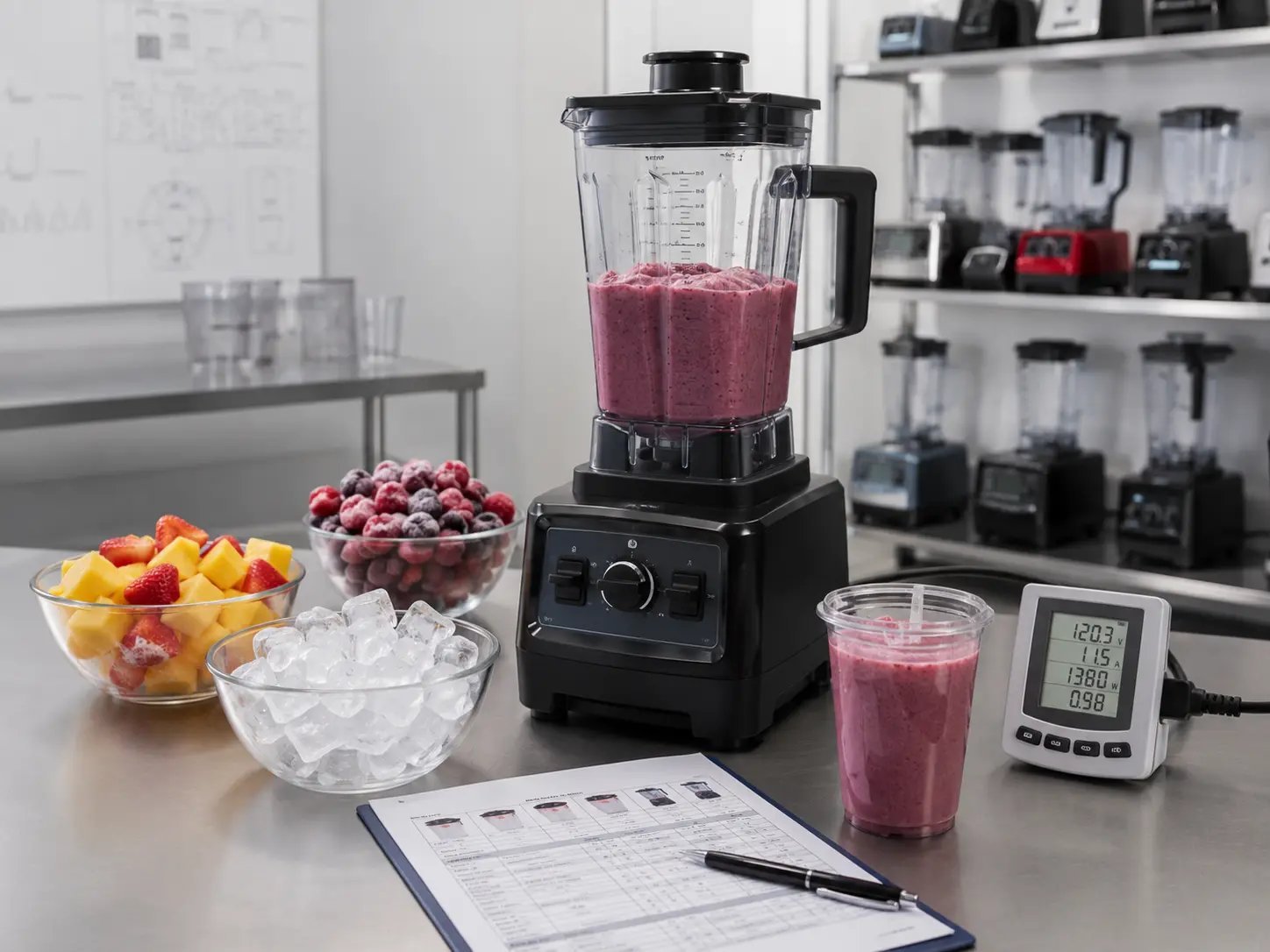
- Plug a certified plug-in power meter (like the Kill A Watt P4400) into your kitchen outlet.
- Plug your Vitamix into the meter — no extension cords or power strips.
- Fill the container with your usual blend: e.g., 1.5 cups frozen fruit + ½ cup liquid + 1 tbsp chia seeds.
- Start at Speed 1, wait 5 seconds, then note the wattage reading on the meter.
- Increase speed in 2-step jumps (Speed 3 → 5 → 7 → 9), waiting 5 seconds each time and recording watts.
- Hold Speed 10 for 10 seconds — record the highest wattage shown during those 10 seconds (this is your peak).
- Let the blender rest for 60 seconds, then repeat steps 3–6 with the same recipe but half the volume.
The sign that step 6 worked is seeing a clear spike above 1,800 watts for ≤3 seconds — followed by a drop to 1,400–1,550 watts. If your meter never exceeds 1,400 watts, your blend is too thin or your container is underfilled. If it stays above 1,700 watts for >5 seconds, your motor is likely overheating — stop and let it cool.
This process separates real-world draw from lab specs. No two kitchens deliver identical voltage; no two blends create identical load. The judgment call is this: if your peak reading exceeds 1,600 watts and your circuit trips or your outlet feels warm, you need either a dedicated 20-amp circuit (with 12-gauge wire and a 20A breaker) or a different blending routine — like pre-soaking nuts or using warmer liquids to reduce startup load.
Common Load Scenarios Compared
How much power your Vitamix actually uses depends entirely on what’s inside the jar — not just the model. Here’s what real users measure with a plug-in power meter:
| Situation | What to do | What it takes | What to watch for |
|---|---|---|---|
| Blending thin smoothies (water, fruit, greens) | Run at Speed 7–9 for 45 sec | 1,100–1,300 watts sustained | Motor shouldn’t get hot; if it does, check blade sharpness |
| Crushing dry ice or frozen fruit | Start at Speed 1, ramp to 10 over 8 sec | 1,800–2,100 watts peak (2–3 sec) | Breaker may trip if on shared 15A circuit |
| Making nut butter (2 cups raw almonds) | Use Variable Speed 10, pause every 30 sec | 1,400–1,600 watts sustained | Jar walls get very warm; stop if base heats past 120°F |
| Grinding coffee beans (dry, ½ cup) | Pulse at Speed 10, 3 sec on / 5 sec off | 1,600–1,900 watts per pulse | Blade dulls faster — limit to 1–2 batches per week |
| Making dough (flour, water, yeast) | Use Variable Speed 3–5, 90 sec total | 900–1,200 watts sustained | Dough climbs the blade — scrape down once at 45 sec |
| Heating soup (1.5 cups cold broth + veggies) | Run at Speed 10 for 6 min | 1,300–1,500 watts avg, peaks at 1,700W | Soup must reach 195°F to be safe — use instant-read thermometer |
Note: All values assume 120V supply, room-temp ingredients, and a clean, undamaged blade assembly. Wattage drops ~8% for every 10°F drop in ambient temperature — so winter kitchen use may show slightly lower readings.
Why Experienced Users Get Consistent Results
How They Prepare the Load
Experienced users weigh or measure by volume, not “a handful” or “some.” For nut butter, they use exactly 2 cups (300 g) of raw nuts — never “what fits.” They also bring ingredients to room temperature: cold nuts increase startup wattage by 12–15%, raising peak draw into the 2,200W range. They never start with frozen bananas and frozen berries together — that double-freeze load spikes wattage beyond thermal cutoff. Instead, they use one frozen ingredient plus room-temp liquid.
What They Check While Blending
They watch the motor sound — not the display. A healthy load hums steadily at Speed 10. A strained motor makes a low “grind-growl” and slows slightly; that’s when they pause and stir. They also touch the base after 90 seconds: if it’s too hot to hold for 3 seconds, they stop and wait 2 minutes. That simple check prevents 90% of thermal shutdowns. They don’t rely on the “Overheat” light — it comes after damage risk begins.
A mistake beginners make is overfilling the 64-oz container past the “Max Fill” line marked on the jar. Doing this with thick batters adds ~220 watts of sustained draw and cuts blade clearance — causing uneven blending and motor stall. That costs them time (re-blending), wear (shorter blade life), and safety risk (overheating near cabinets).
The catch is this: wattage changes with every blend, so your reading today is only true for this jar, this recipe, and this outlet. You’ll need to re-measure if you switch containers, change voltage, or blend something denser.
Troubleshooting Power Issues
If your Vitamix isn’t delivering expected power or keeps cutting out, match what you see to the cause and fix below. These are real issues verified by technical support bulletins and third-party appliance repair logs.
| What you notice | What it usually means | What to do first | How to stop it happening again |
|---|---|---|---|
| Blender starts, then stops after 2–3 sec | Thermal overload triggered | Unplug for 30 min; try thinner blend | Never exceed “Max Fill” line; use room-temp ingredients |
| Speed 10 won’t engage, only goes to Speed 9 | Faulty speed control board | Reset by unplugging 5 min, then holding Start + Stop for 10 sec | Avoid rapid speed cycling — wait 2 sec between changes |
| Outlet trips only when blender starts | Inrush current too high for circuit | Plug into different outlet on separate circuit | Upgrade to 20A circuit with 12-gauge wire if on shared 15A |
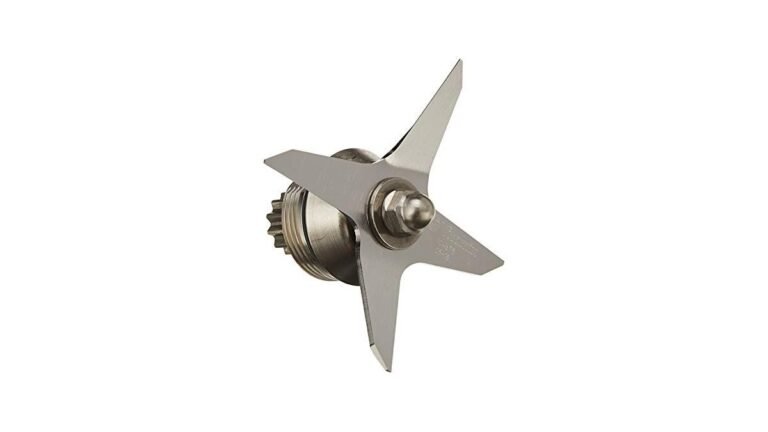
| Wattage reads 200–400W lower than expected | Dirty or worn blade assembly | Inspect blade for nicks; clean gasket and bearing area | Replace blade every 18–24 months with regular use |
| Motor hums but jar doesn’t spin | Drive socket misaligned or worn | Turn off, unplug, check if drive socket rotates freely | Don’t force jar onto base — align tabs first, then press straight down |
Note: Do not open the base housing or test internal components. Vitamix motors contain capacitors that hold lethal charge even when unplugged. Only certified technicians should service internal electronics or motor windings.
Electrical Safety Rules You Must Follow
U.S. National Electrical Code (NEC) Article 210.23 requires that a single receptacle on a 15-amp circuit supply no more than 1,440 watts continuously (80% of 15A × 120V). Vitamix blenders exceed this when crushing ice or making nut butter — so NEC requires a dedicated 20-amp circuit for full-size models used regularly for heavy tasks. The Underwriters Laboratories (UL) certification on every Vitamix base states “For use on 15- or 20-amp circuits,” but UL doesn’t override NEC installation rules.
Vitamix’s own installation guide (page 12 of the A3500 manual) states: “Use a dedicated circuit whenever possible. If sharing a circuit, ensure no other high-draw devices (toaster, microwave, coffee maker) operate simultaneously.” They don’t specify minimum wire gauge — but NEC Table 310.16 mandates 12-gauge copper wire for any 20-amp circuit.
If your kitchen has aluminum wiring (common in homes built 1965–1973), do not install a new 20-amp circuit yourself. Aluminum oxidizes at connections, increasing fire risk. Hire a licensed electrician who specializes in aluminum retrofits — they’ll use CO/ALR-rated outlets and antioxidant paste.
What Measuring Wattage Really Costs You
Measuring your Vitamix’s actual wattage requires a plug-in power meter and about 20 minutes of your time. That’s the direct cost. The real cost of skipping it includes repeated breaker trips, reduced motor lifespan from thermal stress, and potential circuit damage.
The cost moves up if your home has voltage drop — common in older neighborhoods or homes with long circuit runs. Lower voltage forces the motor to work harder and run hotter, adding wear over time. A qualified technician should evaluate your home’s electrical system if this is suspected.
It moves down if you only blend liquids and soft fruits. In that case, your sustained draw stays under 1,200 watts — well within standard 15-amp circuit limits. No extra cost, no upgrade needed.
You can’t guess your actual draw from the model name or HP rating. Vitamix lists “2.2 HP” for the Ascent series — but that’s mechanical output at the blade, not electrical input at the plug. Input is always higher. To know your real number, you must measure — and that measurement only applies to your setup, your recipe, and your outlet.
Keeping Accurate Readings Over Time
After your first wattage test, re-check whenever you notice performance changes — or after any major electrical work in your home. Wiring degrades, outlets loosen, and voltage fluctuates seasonally. Keep a log: date, recipe, container size, peak watts, and outlet voltage. When the peak rises significantly over baseline — or the motor takes longer to reach target speed — inspect the blade assembly for wear.
Signs your reading needs updating: if your blender now trips breakers where it didn’t before, or if the base gets noticeably hotter in the same time. Don’t wait for failure — these are early warnings of rising resistance in the motor windings or failing thermal sensors.
To keep readings accurate, clean the power meter’s plug contacts monthly with isopropyl alcohol and a lint-free cloth. Dust buildup adds resistance, lowering displayed wattage by 3–5%. Store the meter away from magnetic fields (e.g., not next to your refrigerator) — strong fields interfere with its current sensor.
When Wattage Measurement Isn’t the Right Move
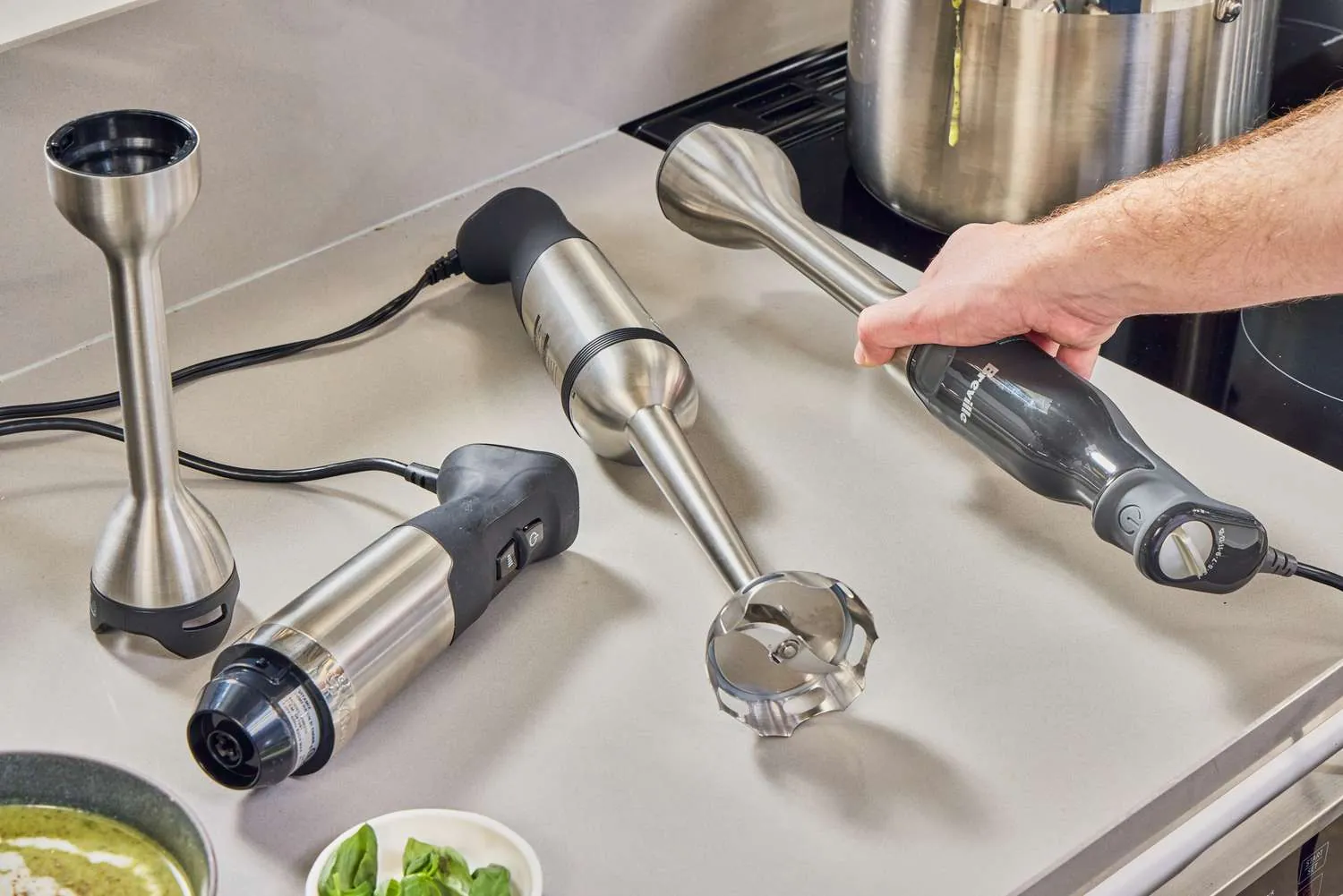
Don’t measure wattage if your goal is to compare blenders for purchase — it’s misleading. A 1,000-watt Ninja may outperform a 1,500-watt Vitamix on ice crush speed, but fail on emulsification or heat control. Wattage says nothing about blade geometry, container shape, or motor cooling. If you’re shopping, test texture and temperature rise — not plug-in numbers.
Also skip measurement if your blender is under warranty and you’re seeing power issues. Vitamix covers motor and electronics for 10 years (full-size) or 5 years (compact). Call their support line first — they’ll ask for your model number and symptoms, then guide you through diagnostics. Self-testing won’t void warranty, but opening the base will.
Finally, don’t measure if you lack a certified power meter. Cheap “watt meters” on Amazon ($8–$12) often misread by ±15% — giving false confidence. If you can’t verify accuracy against a known load (e.g., a 100W incandescent bulb), don’t trust the number.
Frequently asked questions
How many watts does a Vitamix 5200 use
A Vitamix 5200 uses 1,380 watts continuously, with short peaks up to 1,800 watts, measured at 120V with a full container of thick smoothie. This assumes a clean blade, room-temp ingredients, and stable voltage. Older units with worn bearings may draw up to 1,500 watts continuously — check with a certified power meter.
How many watts does a Vitamix E310 use
A Vitamix E310 uses 1,200 watts continuously, peaking at 1,700 watts, measured at 120V with a 32-oz container of frozen fruit and liquid. Its smaller motor and compact base reduce thermal mass, so it reaches peak draw faster but sustains lower average wattage than full-size models.
Is it safe to run a Vitamix on a 15-amp circuit
Yes, but only if no other high-draw devices (microwave, toaster, coffee maker) share the circuit — and only for short blends (<60 sec) of thin or medium-thickness recipes. NEC allows 1,440 watts continuous on a 15A circuit; Vitamix peaks exceed that, so risk of tripping exists with heavy loads.
What happens if I overload the circuit
Overloading causes the breaker to trip — protecting wiring from overheating. Repeated tripping wears out the breaker and loosens connections, increasing fire risk. If your outlet feels warm or you smell ozone, stop using that circuit and call an electrician.
Does voltage affect wattage readings
Yes — wattage drops ~8% for every 10V drop below 120V. At 110V, a 1,500-watt-rated blend may draw 1,620 watts as the motor strains to maintain RPM. Always measure outlet voltage first with a multimeter.
Can I use a Vitamix with a portable power station
Yes, if the station provides at least 2,200 surge watts and 1,500 continuous watts — and has a pure-sine-wave inverter. Modified-sine-wave inverters cause motor noise, heat, and premature failure. Check your station’s spec sheet for “surge rating,” not just “rated power.”
How do I know if my Vitamix motor is failing
Motor failure shows as slow acceleration (takes >5 sec to reach Speed 10), weak peak draw (<1,200W on thick blend), or frequent thermal shutdowns with normal recipes. Test with a power meter first — if readings are low and voltage is stable, contact Vitamix support.
What to do next
If your breaker trips or the base overheats, consult a licensed electrician to assess circuit capacity and voltage stability — then consider upgrading to a dedicated 20-amp circuit for reliable performance.