Is Oster Blender Dishwasher Safe? What You Can Wash
Usually, yes — most Oster blender jars and lids are dishwasher safe, but only on the top rack, and only the parts Oster lists as safe. The base is never dishwasher safe, and that’s the condition that decides it. Put the motor base in the dishwasher and water gets into the housing, which can ruin the motor and void your warranty. If you’re not sure, hand wash.
Which Oster blender parts can go in the dishwasher

The jar, the lid, and the blade assembly are the three parts people ask about, and they don’t all get the same answer. Glass jars and most plastic jars handle the top rack fine. The base never does.
| Situation | Safe? | Why |
|---|---|---|
| Glass jar, top rack | Yes | Glass handles heat and detergent |
| Plastic jar, top rack | Yes | Top rack heat is gentler |
| Jar on bottom rack | No | Heating element can warp plastic |
| Lid and filler cap | Yes | Small parts, top rack only |
| Blade assembly, one piece | With care | Water gets trapped in the collar |
| Blade that unscrews | Yes | Separate parts dry fully |
| Motor base | No | Water destroys the motor and wiring |
The “with care” row matters more than it looks. Shake it hard and let it air dry overnight, or just hand wash that one part.
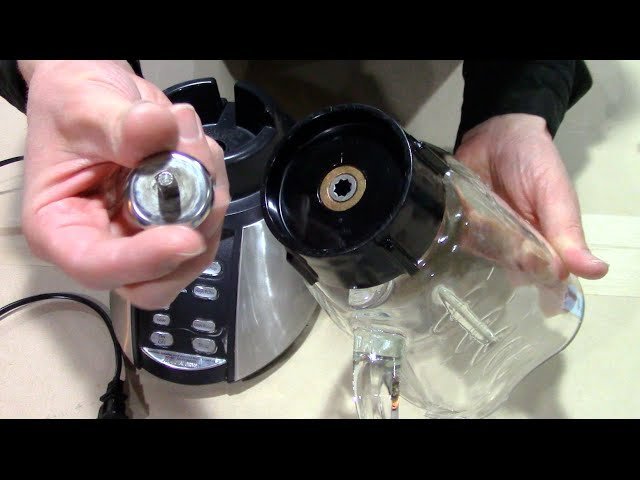
To tell which blade you have, turn the assembly over. If a nut or a threaded post sits at the center, it unscrews, and both halves can go on the top rack. If the underside is smooth with no fastener, it’s sealed as one piece and belongs in the sink.
The gasket is the part that quietly fails. That rubber ring inside the lid or the blade collar collects detergent film, dries out, and stops sealing. Pull it out by hand if it lifts, rinse it, and press it back flat. If it has stretched or gone hard, replace it.
Skip the heated dry cycle no matter which parts you load. Heated drying is a major cause of warping, so plastic jars and lids are safer on a normal cycle with air dry. Crack the door open instead and let them air dry.
What actually goes wrong in a dishwasher
The real damage isn’t the jar cracking — it’s the base and the blade collar. Water and steam reach places you can’t dry, and that’s where the problems start. Oster’s own care instructions say to wipe the base with a damp cloth and never immerse it, so the dishwasher is out by definition.
Heat is the second problem. Most dishwashers run a drying cycle that gets hot enough to soften some plastics. A plastic jar can cloud, warp, or develop a hairline crack near the threads. That crack lets liquid leak out the bottom while you blend. Glass jars don’t have this issue, which is why glass models are the safer dishwasher bet.
The blade collar is where people lose money without noticing. Water trapped inside the collar sits against the metal shaft. Over time, that shaft can rust or seize, and the blade stops spinning freely.
There’s also a warranty angle. Oster’s warranty covers defects in materials and workmanship, not damage from misuse. If water damage from a dishwasher cycle is what killed the motor, that’s usually not covered. The exact terms vary by model and by how old your blender is, so read the warranty sheet that came in the box or the one on Oster’s site for your specific model.
One more thing: dishwasher detergent is abrasive. Over many cycles it can dull a clear plastic jar until it looks foggy. The jar still works, but it stops looking clean even when it is. If the look matters to you, hand wash the jar and save the dishwasher for the lid.
Signs your Oster blender shouldn’t go in the dishwasher
The jar label says “top rack only” or shows no dishwasher symbol. That’s your answer from the maker — follow it over anything you read online. If the label is worn off, treat the jar as hand-wash only until you confirm otherwise.
The blade assembly doesn’t unscrew. A sealed one-piece collar traps water. Hand wash it and dry it upside down. If it does unscrew, the blade and gasket can go on the top rack, but the collar itself still washes better by hand.
The jar is clear plastic and already looks cloudy. More heat will make it worse, not better. Switch to hand washing now. Cloudiness you can see means the surface has already been etched, and dishwasher detergent speeds that up.
The base has a crack, a loose panel, or a burnt smell. Stop using it and don’t put it near water at all — this is an electrical fault, not a cleaning problem.
Water drips out of the blade collar after a cycle. That water is going into your next drink. Rewash by hand and dry fully. Check the gasket while you’re there; a hardened or flattened one lets water past no matter how you wash it.
The jar wobbles or leaks at the threads. Warping from heat has already happened. A new jar is the fix.
If the base sparks, smokes, or trips your breaker, stop there. Don’t open the housing — a blender base holds a capacitor that can carry a dangerous charge even when unplugged. That’s technician work. Contact Oster support or a qualified appliance repair shop instead.
How to clean an Oster blender the safe way
Unplug the base first, every time. Never clean any part while the blender is plugged in, even for a quick rinse. Pull the cord from the outlet, not from the cord itself.
Separate the jar, lid, filler cap, and blade assembly. If your blade unscrews from its collar, take it apart now. If it doesn’t, keep it whole and treat it as hand-wash only.
Hand wash the blade assembly in warm water with a drop of dish soap. Hold the blade by the collar, never by the cutting edge, and use a bottle brush. Rinse under running water and shake out the collar.
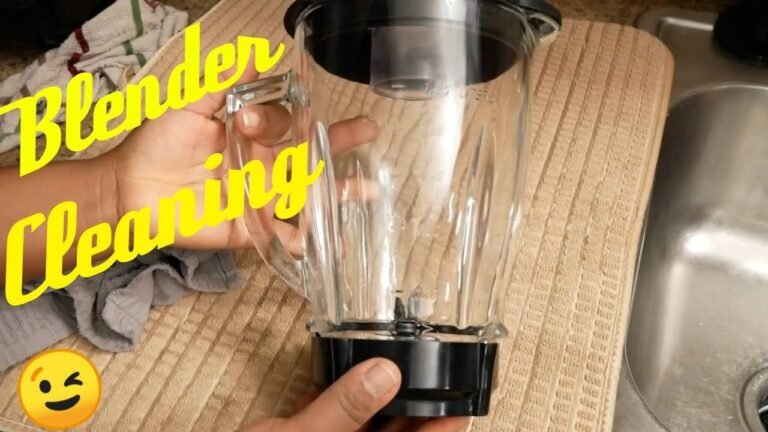
For the jar, fill it halfway with warm water and add one drop of dish soap. Run the blender on low for 10 to 15 seconds, then pour it out and rinse. This works for both glass and plastic jars.
If you’re using the dishwasher, load only the jar, lid, and filler cap on the top rack. Skip the heated dry cycle if your machine has that option — air dry instead. Bottom rack or heated dry is where plastic jars warp.
Dry everything upside down on a dish rack for at least a few hours. The blade collar needs the longest — overnight is better. Trapped water is the whole problem, so don’t rush this step.
Wipe the base with a damp cloth and dry it right away. Never spray water at the base, never dunk it, and never put it in the sink. A soft cloth and a little soap on the cloth is all it needs.
Check the blade before you reassemble. If it spins stiffly or the collar looks rusty, replace the assembly. Look up your model number on Oster’s parts page to get the right one.
Skip the dishwasher entirely if your jar is plastic and older than a few years. Cloudy plastic scratches hold onto smells, and heat speeds that up. Hand wash those jars only, and they will last longer.
Never pour boiling water into a cold glass jar. Thermal shock can crack it, and the crack often shows up later, mid-blend. Warm tap water cleans just as well.
If the jar still smells after washing, fill it with warm water and a spoonful of baking soda. Let it sit for an hour, then rinse. Skip vinegar on the blade collar; it speeds up corrosion on the metal.
Stuck-on food at the bottom? Let warm soapy water sit in the jar for 15 minutes before you blend. Scraping with a knife or spoon risks nicking the blade and your hand.
Reassemble only when every part is bone dry. A wet collar can drip into the base and damage the motor over time. If you blend daily, wash at night and let it air dry until morning.
If your Oster blender already went through the dishwasher
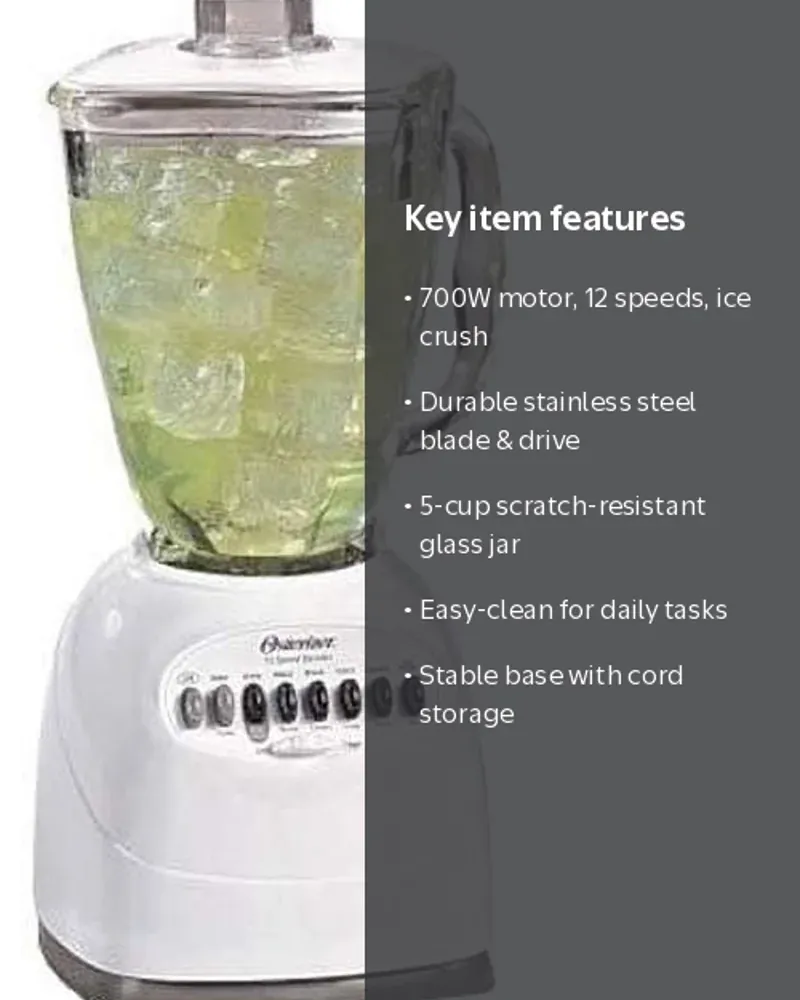
Take the base out first and don’t plug it in yet. Tip it upside down over a towel and let it drain for at least 24 hours in a warm, dry room. Water inside the housing needs time to leave. A warm room matters more than a fan; a cool garage slows the drying and can leave moisture sitting against the electronics for days.
After a full day, plug it in and listen. If it hums normally and runs, you got lucky — but don’t repeat the cycle. Hand-wash the base from now on with a damp cloth only.
If it trips your breaker, sparks, or smells burnt, stop. Unplug it and leave it alone. That’s an internal electrical fault, and opening the base yourself risks a shock from the capacitor. Call Oster support or a repair tech.
For the jar and blade, the fix is simpler. Rewash both by hand with warm soapy water, even if they look clean. Then dry the blade collar upside down overnight. If the jar came out warped, cracked, or leaking at the threads, it’s done — order a replacement jar using the model number on the base’s label.
The point where this stops being a home job is the motor. Anything inside the base is technician territory, and a repair usually costs more than a new base for a basic model. Check Oster’s site for your model’s replacement parts and current warranty terms before you decide. If the blender is still under warranty, contact Oster before you open or toss anything — a repair attempt can void coverage.
Related guides
- Is Vitamix Immersion Blender Dishwasher Safe: The Facts
- Is The Cuisinart Immersion Blender Dishwasher Safe? Find Out Now
- Is Cuisinart Immersion Blender Dishwasher Safe? Find Out Now
Frequently asked questions
Can I put my Oster blender jar in the dishwasher?
Yes, if it’s glass or a plastic jar Oster lists as dishwasher safe — top rack only. The bottom rack sits closer to the heating element, and that heat is what warps plastic jars and clouds clear ones. Check the label on the jar or your model’s manual first. If the jar has no dishwasher symbol, hand wash it.
Can the Oster blender base go in the dishwasher?
No, never. The base holds the motor and the wiring, and water getting inside can short it out, rust it, or kill it outright. Oster’s care instructions say to wipe the base with a damp cloth only. Put it in the dishwasher and you’re looking at a dead blender and likely a voided warranty.
Why did my Oster blender jar warp in the dishwasher?
Heat, almost always. Most dishwashers finish with a heated dry cycle, and that’s hot enough to soften some plastics. Bottom-rack placement makes it worse because the heating element sits right below. If your jar warped, switch to top rack with air dry, or hand wash it from now on. A warped jar usually leaks and needs replacing.
How long does an Oster blender last if I wash it in the dishwasher?
It depends on the parts, not a fixed number of years. A glass jar on the top rack can last the life of the blender. A plastic jar or a sealed blade collar washed this way may fail in months, because heat and trapped water do slow damage. Hand washing the blade is the single biggest thing that extends its life.
Is it safe to use a blender jar that came out of the dishwasher still wet?
No — dry it first, especially the blade collar. Water trapped in a one-piece collar drips into your next smoothie, and that water sat against metal. Shake the collar hard and let it air dry upside down overnight. If water still drips out after that, hand wash that part from now on.
What happens if water gets inside the Oster blender base?
It can short the motor, rust the internal parts, or trip your breaker when you plug it in. Unplug it and let it drain upside down for at least 24 hours before trying it. If it sparks, smells burnt, or trips the breaker after that, stop using it. Don’t open the base — the capacitor inside can shock you even unplugged.
Does it matter which dishwasher cycle I use for Oster blender parts?
Yes. Use a normal or light cycle and skip heated dry if your machine allows it. The wash water itself is usually fine for glass and top-rack plastic. It’s the hot drying phase that warps jars and softens plastic. Air dry or a low-heat setting gets parts just as clean without the risk.
Can I wash the Oster blade assembly in the dishwasher?
Only if it unscrews into separate pieces. A one-piece blade collar traps water inside, and that water sits against the metal shaft and can rust or seize it. If your blade comes apart, top rack is fine. If it doesn’t, hand wash it with a bottle brush and dry it upside down overnight.
Conclusion
The short version: jar and lid on the top rack, blade by hand unless it unscrews, and the base never. That one rule keeps most Oster blenders running for years. When in doubt, hand wash — it’s a couple of minutes, and it beats buying a replacement base.