How To Turn On An Oster Blender: Step-By-Step Fix
To turn on an Oster blender, press the button marked ON, LOW, or START on the front panel — most Oster countertop models won’t spin until the jar is locked on the base and the lid is seated. If nothing happens, the jar isn’t twisted fully clockwise, or the outlet has no power.
Three things change the exact button you press: the model (push-button, dial, or touchpad), whether it’s a corded countertop unit or a personal blender, and whether the jar is locked. The rest of this page covers each one.
On a dial model, the “button” is the dial itself. Turn it from OFF to the speed you want; there’s nothing to press, and hunting for a START pad that isn’t there’s the most common reason people think the machine is dead.
Personal blenders flip the order. You press and hold the button, and the motor only runs while you hold it. Release, and it stops — that’s the design, not a fault.
One test sorts a dead outlet from a dead blender: plug in a phone charger or a lamp at the same outlet. If that works, the problem is the jar lock or the lid, not the power.
Which Oster Blender You Actually Have
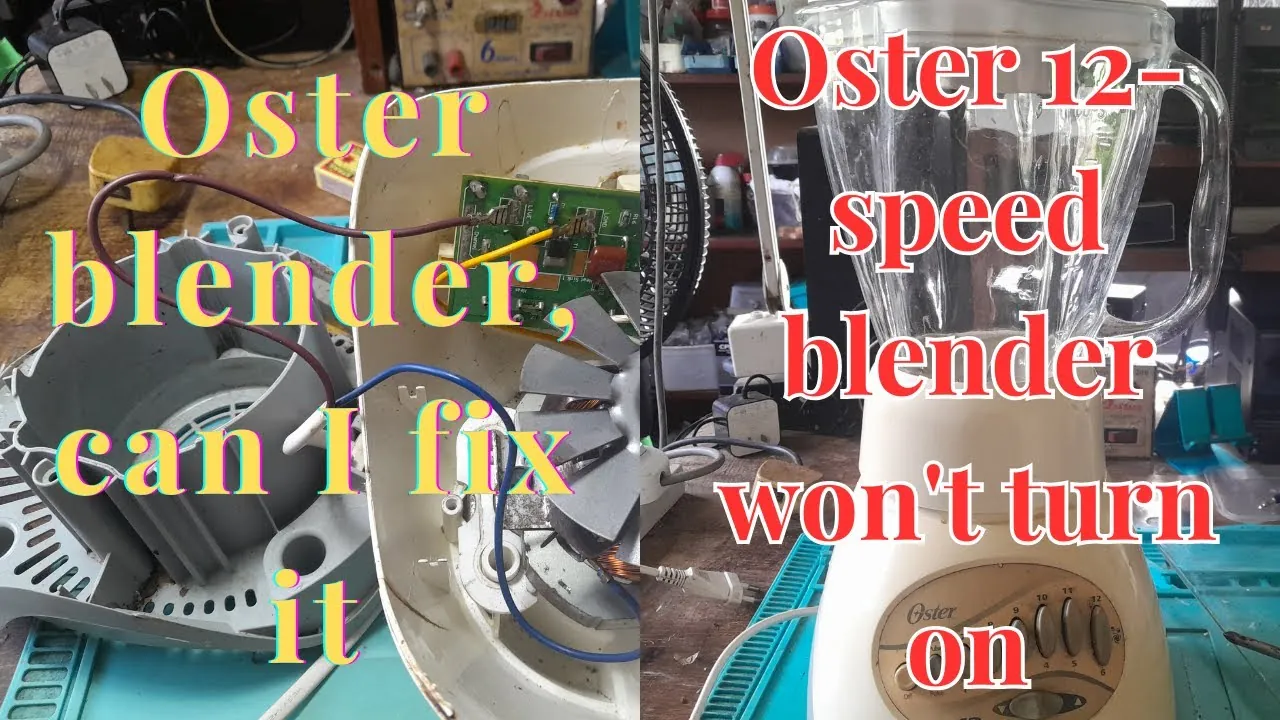
Three kinds of people type this search. The first just unboxed a standard Oster countertop blender and can’t find a power switch — that’s the reader this page serves best. The second has a personal blender, like an Oster MyBlend, where the cup twists onto the base and there’s no separate button at all. The third has a blender that used to work and now won’t start, which is a different problem with different steps.
The standard countertop unit is the main case here. It has a base with a control panel, a glass or plastic jar, a blade assembly, and a lid. Power comes from a cord, and the motor only runs when the jar is seated. If you have a personal blender, your “on” is the twist itself — skip to the steps and read step 4. If your blender worked yesterday and doesn’t today, go straight to the troubleshooting table.
This page assumes your blender is plugged into a working outlet and the jar is the one that came with it. If you’re using a jar from a different model, the interlock may not line up, and no button will help.
What Decides Whether It Starts
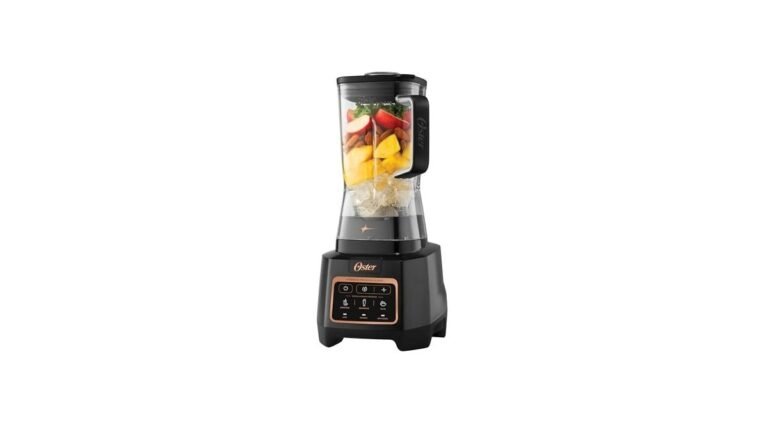
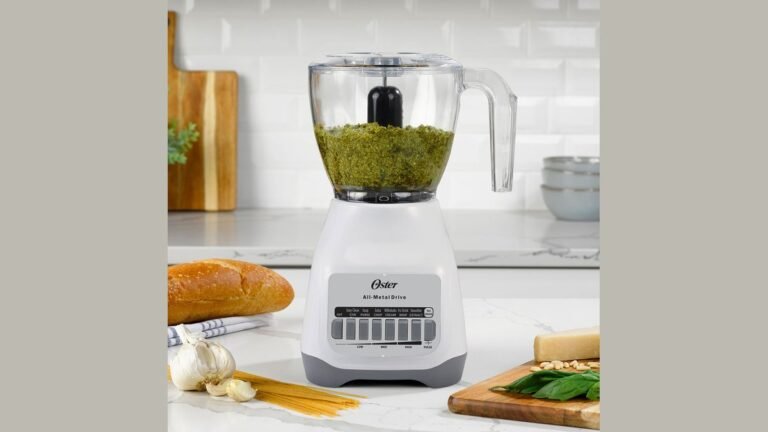
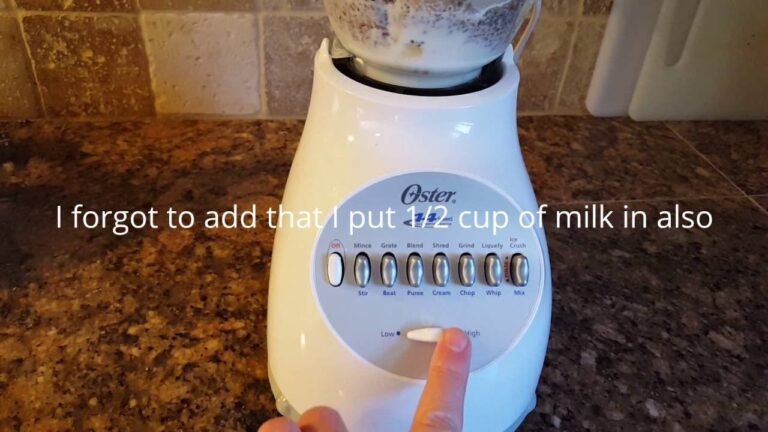
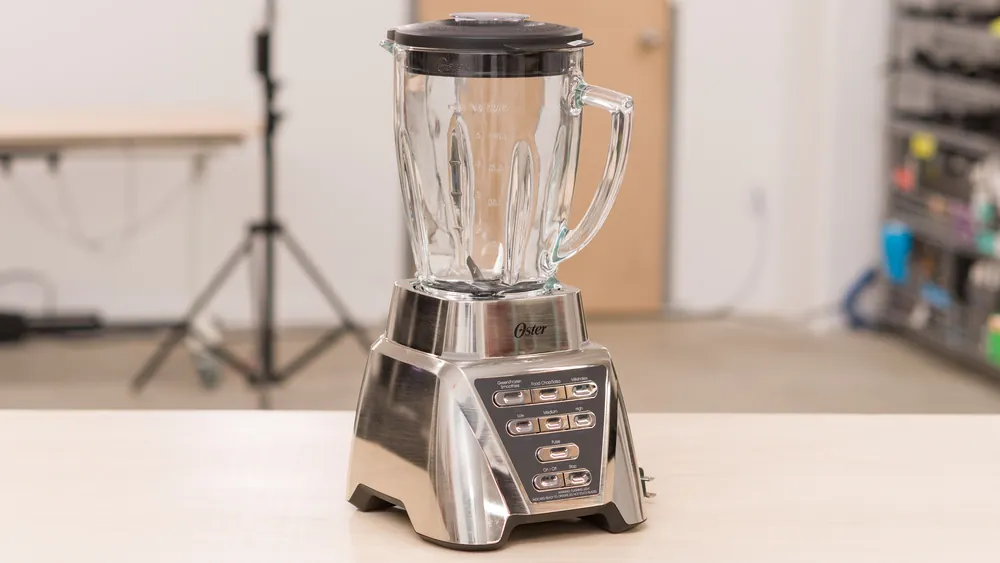
The control type is the biggest factor. Push-button models have labeled buttons — LOW, HIGH, PULSE, sometimes ICE CRUSH. Dial models have a rotary knob you turn from OFF to a speed. Touchpad models have flat buttons that need a firm, centered press. Check your panel first; the label tells you which one you own.
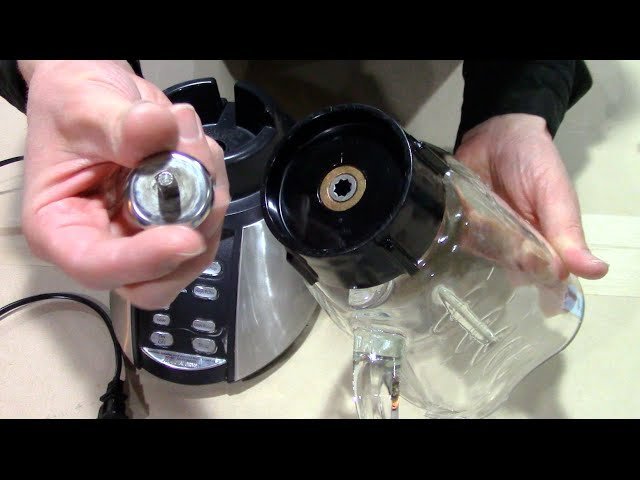
The jar interlock comes second, and it’s the one people get wrong most often. Most Oster countertop blenders won’t run unless the jar is twisted clockwise until it stops. If the jar sits loose, the safety switch stays open and the motor stays silent. Twist it firmly — you should feel it seat, not just rest.
Speed selection matters for the result, not the start. LOW is for drinks and soft fruit, HIGH for ice and frozen fruit, PULSE for short bursts. Starting on HIGH with a full jar of ice is how you burn out a motor over time.
Cord and outlet condition is third. A loose plug in a worn outlet cuts power without any warning light. Test the outlet with a phone charger before you blame the blender.
The lid is fourth. Press it down until the rim sits flush; on some models the motor will still run with the lid off, which is a spill risk. Press it down until the rim sits flush.
Turning It On, Step by Step
- Set the base on a flat, dry counter. Check that all four feet touch the surface — a rocking base can tip when the motor starts.
- Plug the cord into a grounded outlet. Push it in until it’s fully seated. Test the outlet with a phone charger first if you’re unsure it has power.
- Place the jar on the base with the handle facing you. Lower it straight down so the jar threads meet the base collar.
- Twist the jar clockwise until it stops. You’ll feel a firm stop, not a soft one — that’s the interlock engaging.
- Add your ingredients. Don’t fill past the maximum line on the jar; leave the top inch empty so the lid seats.
- Press the lid down until the rim is flush with the jar. Push the center cap in too if your lid has one.
- Press ON, LOW, or START — whichever your panel shows. On a dial model, turn the knob from OFF to LOW. The motor should start within a second.
- For ice or frozen fruit, press PULSE in 2-second bursts, 4 to 6 times, instead of running continuously. This keeps the blades from stalling.
- When you’re done, turn the dial to OFF or press STOP. Unplug the cord before you lift the jar off the base.
The judgement call is the jar twist. A jar that’s only resting on the base looks fine and feels fine, but the interlock never closes and the motor stays dead. Twist until it stops, every time, even when you’re in a hurry.
If the blender still won’t start after all nine steps, stop. Don’t open the base — a capacitor inside can hold a lethal charge even when the blender is unplugged. Take it to a qualified appliance technician or contact Oster support.
Variations at a Glance
The table below covers the situations readers actually arrive in. Find your row, follow the action, and note the watch-out before you start.
| Your situation | What to do | What it takes | What to watch for |
|---|---|---|---|
| Push-button countertop model | Press ON or LOW | One press, 1 second | Button must click fully |
| Dial countertop model | Turn knob OFF to LOW | A quarter turn | Knob must leave OFF |
| Touchpad model | Press flat button firmly | Firm centered press | Light touch may not register |
| Personal blender (MyBlend style) | Twist cup onto base | A firm clockwise twist | Cup must lock, not rest |
| Blender won’t start at all | Check jar lock and outlet | 2 minutes of checks | Loose plug mimics dead motor |
| Ice or frozen fruit | Use PULSE in short bursts | 4 to 6 bursts of 2 seconds | Continuous run stalls blades |
| Blender hums but won’t spin | Stop, unplug, check jar load | 5 minutes | Overloading strains the motor |
What Experienced Users Do Differently
They prep before they press anything
Experienced users cut fruit into chunks about 1 inch across before they load the jar. Big hunks sit on top of the blades and stall the motor, which is the most common reason a blender “won’t turn on” when it actually turns on fine. They also add liquid first — about 1 cup for every 2 cups of solid food — so the blades have something to pull the solids into.
They work in the right order
The order is: liquid first, then soft items, then ice or frozen fruit on top. That’s the reverse of what most people do, and it’s why their blends come out smooth in 30 to 45 seconds while a wrong-ordered jar takes twice as long and leaves chunks. They also pulse ice instead of running it steady, and they stop the motor before scraping the sides with a spatula — never while it’s running.
What Goes Wrong, and What to Do
Match what you notice to the likely cause, then take the first action. If the first action doesn’t fix it, move to the next row.
| What you notice | What it usually means | What to do first | How to stop it happening again |
|---|---|---|---|
| Nothing happens at all | Jar not locked or no power | Twist jar, test outlet | Lock jar before every use |
| Motor hums, blades don’t move | Jar overloaded or blades stuck | Unplug, remove food, restart | Load in smaller batches |
| Blender starts then stops | Motor overheating | Let it cool 10 minutes | Pulse instead of long runs |
| Button feels dead | Panel or switch fault | Try another speed button | Don’t press with wet hands |
| Burning smell | Motor strained or blocked | Stop and unplug at once | Cut food into 1-inch chunks |
| Loud grinding noise | Blade assembly loose | Unplug, tighten blade base | Check blade before each use |
| Jar leaks at the base | Gasket worn or jar loose | Tighten jar, check gasket | Replace gasket when cracked |
The Rules That Apply
Oster’s own user manual is the authority on what’s allowed for your specific model, and it ships in the box and sits on Oster’s website. Read the page for your model number before you use any function you haven’t tried — especially the cleaning instructions, which differ between dishwasher-safe and hand-wash-only jars.
Warranty terms are set by Oster and vary by model and by country. Opening the base yourself voids that warranty on nearly every model, and it also puts you near a capacitor that can hold a lethal charge even when unplugged. Motor, switch, and wiring repairs are technician work — not a home job.
If your blender is under warranty and won’t start, contact Oster support before you touch anything. They’ll tell you whether it’s a repair or a replacement. Keep your receipt; most warranty claims need proof of purchase.
What It Costs You
The money cost of turning on a blender is zero if it works — the real cost shows up when it doesn’t. A replacement jar gasket is a small part you can price on Oster’s site or at a hardware store, and it changes with the model.
A new blade assembly costs more than a gasket but far less than a new blender. A full motor repair often approaches the price of a basic new unit, which is why most people replace rather than repair.
The time cost is small when you follow the steps: about 2 minutes from counter to running motor. The cost climbs when you skip the checks — 10 minutes of cooling after an overheat, or a trip to the store for a part you could have tested at home.
The risk cost is the one that matters. Running the motor with a loose jar, a cracked gasket, or a jammed blade wears the motor faster. Pulsing ice instead of running it steady is free, and it’s the single habit that adds the most life to the unit.
Keeping It Right Afterwards
After each use, unplug the blender and wash the jar, lid, and blade assembly in warm soapy water — or in the dishwasher if your manual says the parts are dishwasher-safe. Dry the blade base fully before you put it back, because water left in the collar can rust the threads.
Check the gasket regularly. A gasket that’s cracked, stiff, or stretched will leak, and a leak at the base is the sign it’s time to replace it. How often depends on use, so follow the owner’s manual. Gaskets are cheap and swap in seconds — no need to replace the whole jar.
Store the blender with the jar off the base if you have counter space, or with the jar locked on if you don’t. Either way, keep the cord loosely coiled and away from the sink. If the motor starts sounding rough, or the blender needs more pulses to do the same job, that’s your signal to check the blade and the load before something bigger fails.
When This Isn’t the Right Fix
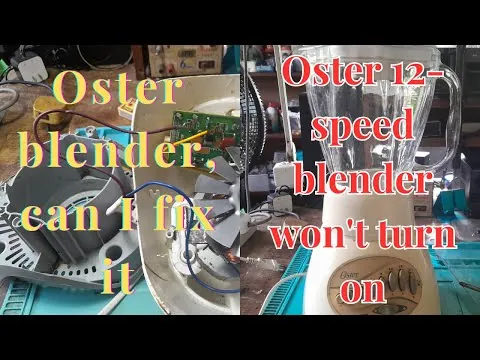
If your blender is under warranty and won’t start, don’t troubleshoot it yourself — contact Oster support first, because your own repairs can void the coverage. If you’ve already checked the jar lock, the outlet, and the load and it still won’t run, the fault is inside the base, and that’s technician work only.
If you need to blend hot liquids, this page’s steps don’t cover it safely. Hot liquid in a sealed blender jar can build pressure and burst the lid. Let food cool first, fill the jar only halfway, and vent the lid cap. If you need a blender for daily ice crushing or heavy commercial use, a standard Oster countertop unit isn’t built for that load — look at a high-power model instead.
Frequently asked questions
Can I turn on an Oster blender without the lid?
On most Oster countertop models, yes — the motor runs with the lid off. The jar interlock is the real safety switch, not the lid. But blending without the lid throws food out of the jar, so press the lid on before you start, every time.
Why won’t my Oster blender turn on even though it’s plugged in?
The jar isn’t locked. Twist it clockwise until it stops — a jar that only rests on the base leaves the interlock open and the motor dead. If the jar is locked and it still won’t start, test the outlet with a phone charger. A dead outlet looks exactly like a dead blender.
How long does it take to blend a smoothie in an Oster blender?
About 30 to 45 seconds on LOW or HIGH, assuming you loaded liquid first and cut fruit into 1-inch chunks. Ice takes longer — pulse it 4 to 6 times, 2 seconds each. A full jar of solid fruit with no liquid takes twice as long and strains the motor.
Is it safe to run an Oster blender with the jar loose?
No. A loose jar can lift off the base while the blades spin, and hot or heavy food can spill. Always twist the jar clockwise until it stops before you press any button. If the jar won’t lock, the threads or the collar may be damaged — stop and check them.
What happens if I press PULSE instead of ON?
Nothing bad — PULSE just runs the motor only while you hold the button. It’s the better choice for ice, frozen fruit, and short bursts. ON or LOW runs continuously until you press STOP, which is fine for soft foods and liquids.
Does it matter which speed button I press first?
Yes, for the result. Start on LOW for drinks and soft fruit, and use HIGH only for ice and frozen items. Starting a full jar on HIGH strains the motor and can stall the blades. When in doubt, start low and move up.
How do I know if my Oster blender motor is overheating?
The motor stops on its own, or the base feels hot to the touch and you smell something burning. Unplug it and let it cool for about 10 minutes before you try again. To avoid it, pulse ice in short bursts instead of running the motor continuously.
What should I do if my Oster blender still won’t start after all the checks?
Stop and get help. If it’s under warranty, contact Oster support. If it isn’t, take it to a qualified appliance technician.
Start With the Jar Lock
Twist the jar clockwise until it stops, press the lid down flush, then press ON or LOW. You’ll hear the motor catch within a second and see the blades spin — that’s your sign it worked.
One thing trips people up: the jar has to seat before the lid goes on. Set the jar on the base first, give it that clockwise turn, and only then press the lid down. If you press the lid first, the jar can sit a quarter inch high and the interlock never closes, so the blender looks dead when it isn’t.
If you’ve locked the jar, tested the outlet, and lightened the load, and it still won’t run, stop there and call Oster support or a technician. The base isn’t a home repair.