How To Use Oster 10 Speed Blender: Speeds, Pulses, and Lids
To use an Oster 10 speed blender, put the lid on, press the speed that matches your job, and start low. Most blends run 30 to 60 seconds. Hard foods like ice or frozen fruit need pulses first, then a higher speed. Never fill past the max line.
Three things change that answer for you: your jar size, whether your model has a glass or plastic jar, and how full you load it. The pages below cover each one, plus the speeds, the times, and what to do when things go wrong.
Who this page is really for
Three kinds of people search this title. They have the manual somewhere, maybe in the box, and they want a straight answer without reading ten pages of safety notes. What they need is the speed order and the fill limit.
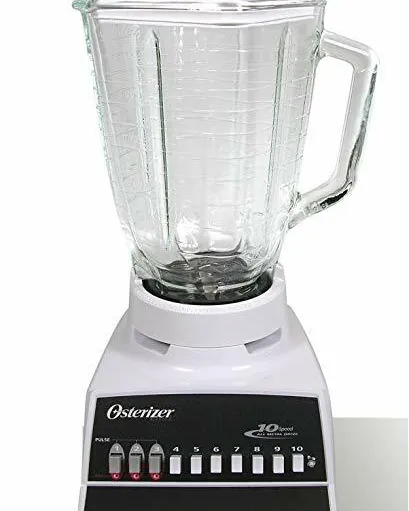
The second kind has used a blender before but not this one. They know smoothies, but they don’t know if speed 10 means “fast” or “pulse.” They need the dial layout and the difference between the blend and pulse settings.
The third is troubleshooting. Their old blender died, or this one smells hot, or the blades won’t turn. They need causes and fixes, not a recipe.
This page serves the first two best. It assumes you have the blender in front of you and the jar is clean. If your machine won’t power on at all, or the motor hums but nothing spins, that’s a repair question, not a how-to question — the manufacturer’s support line handles that, and opening the base yourself is dangerous.
If you want recipes with exact gram weights, this isn’t that page. And if you’re blending for a baby or for someone with a medical condition, follow your doctor’s guidance on texture, not a blender guide.
What decides how well your blend turns out
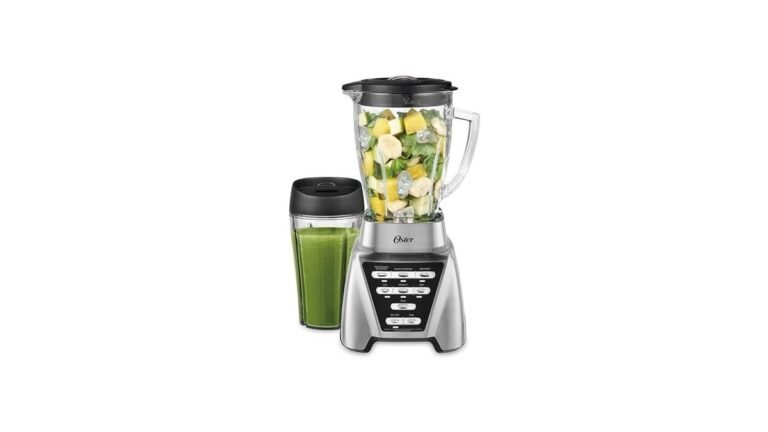
Load order matters more than speed. Liquids go in first, then soft foods, then hard foods, then ice on top. If you put ice in first, the blades can’t circulate the load and the motor strains. You’ll hear it — a high whine with no change in the mixture.
Fill level is the second thing. Every Oster jar has a max line, usually 5 or 6 cups on the standard jar. Going past it by even half a cup pushes liquid into the lid and out the top. If you need more, blend in two batches. That’s slower but it works.
Jar material changes the feel. Glass jars are heavier than plastic, but neither one is meant for hot liquid. Plastic jars scratch, and scratches hold onto smells from garlic or onion. Check your jar’s material on the base of the jar itself.
Speed choice is the third. Low speeds (1–3) are for folding and mixing. Middle speeds (4–7) handle most smoothies and batters. High speeds (8–10) are for ice, frozen fruit, and hard vegetables. The mistake people make most is starting on 10. That throws the food up the sides before the blades can catch it.
The fourth is batch size. A half-full jar blends better than a full one. If your smoothie keeps stalling, you probably have too much in the jar, not too little power.
Step by step
Set the base on a flat, dry counter. Check that all four feet touch the surface and the cord reaches an outlet without stretching. A wobbly base walks across the counter when the motor runs.
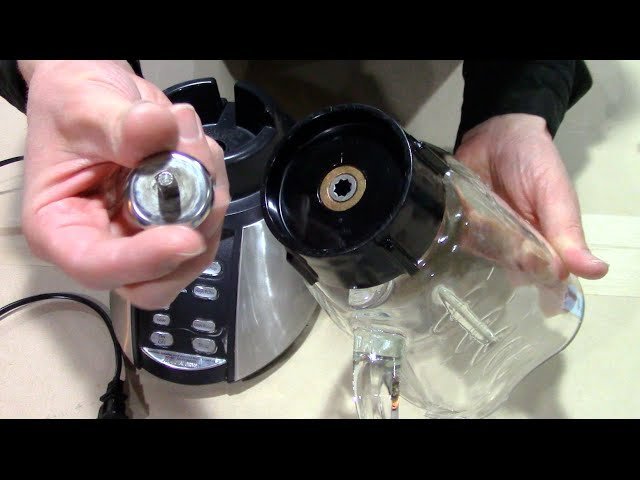
Seat the jar on the base. Line up the jar’s tabs with the slots and turn until it drops. It should sit flush with no gap. If it rocks, lift it and try again.
Add liquids first — 1 cup for a standard smoothie. Pour milk, water, or juice in before anything solid. This gives the blades something to pull the food into.
Add soft foods, then hard foods, then ice. Order: yogurt and banana, then leafy greens and apple, then ice cubes last. Fill no higher than the max line on your jar.
Put the lid on and press it down all the way. The center cap should click or seat firmly. If you can lift the lid edge with one finger, it’s not on.
Start on speed 1 and let it run 5 seconds. You should see the mixture start to move. If nothing moves, stop and shake the jar.
Move up one speed at a time, pausing 2–3 seconds at each. For a smoothie, stop at speed 5 or 6. For ice, go to 8 or 10.
For ice or frozen fruit, use pulse instead. Press and release in 1-second bursts, 5 to 8 times. This breaks the chunks before the blades hit them at full speed.
Run the full blend 30 to 60 seconds. You’re done when the mixture moves in a smooth circle with no chunks stuck on the sides.
Turn the dial to off and wait for the blades to stop. Then lift the jar off the base before you take the lid off. Never reach into the jar while it’s on the base.
The judgement call is knowing when to stop and scrape. If food sticks to the sides after 20 seconds, turn it off, take the lid off, push the food down with a spatula, put the lid back, and start again on a lower speed. Running it longer at high speed just heats the food and doesn’t move the stuck parts.
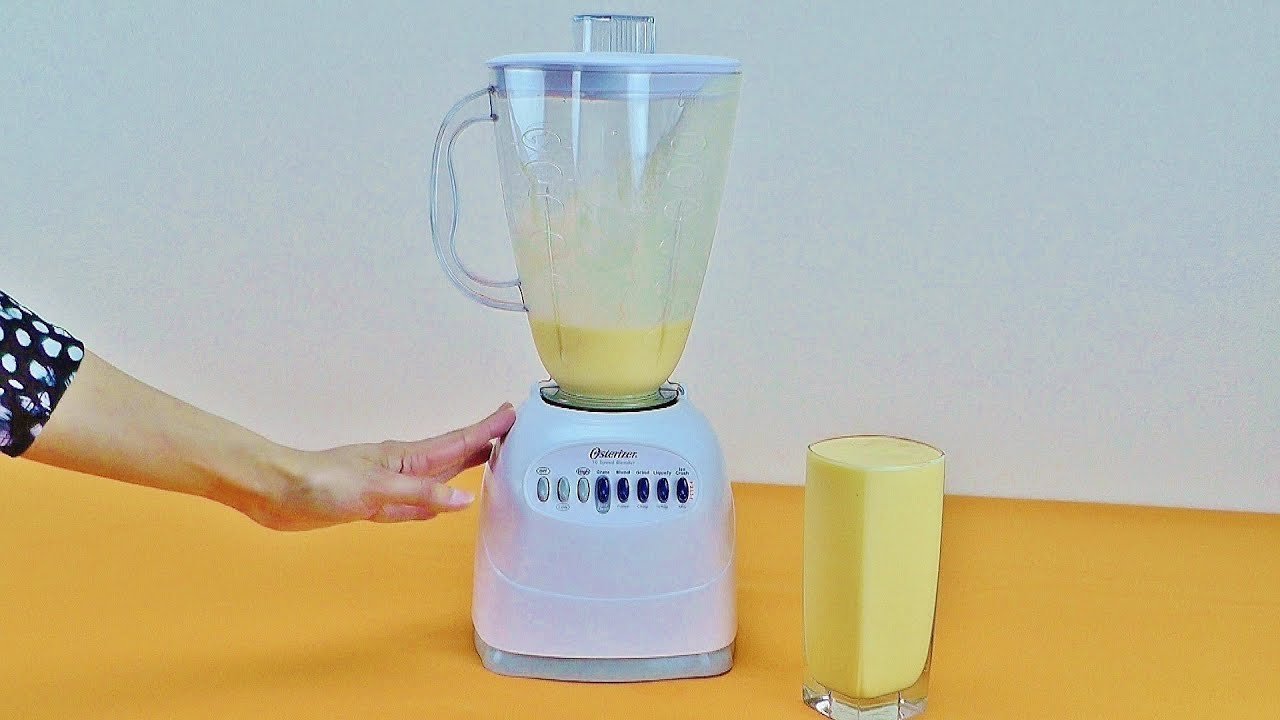
If your model has a separate pulse button and a dial, the pulse button overrides the dial — you don’t need to set a speed first. Check your model’s manual for the exact layout, since Oster has made several versions of this base.
The variations at a glance
| Your situation | What to do | What it takes | What to watch for |
|---|---|---|---|
| Fresh smoothie, soft fruit | Speed 4–6, 45 seconds | 1 minute | Don’t overfill past max line |
| Ice or frozen fruit | Pulse 5–8 times, then speed 8 | 1–2 minutes | Stop if motor smells hot |
| Nut butter or thick paste | Speed 1, scrape every 20 seconds | 5–10 minutes | Motor heats up fast |
| Soup or hot liquid | Blend cool, then heat on stove | 2 minutes blending | Never blend boiling liquid |
| Small batch, half cup | Speed 2–3, 20 seconds | 30 seconds | Blades may miss the food |
| Grain or coffee grinding | Dry jar only, pulse 10 times | 1 minute | Don’t use a wet jar |
What separates a good result from a poor one
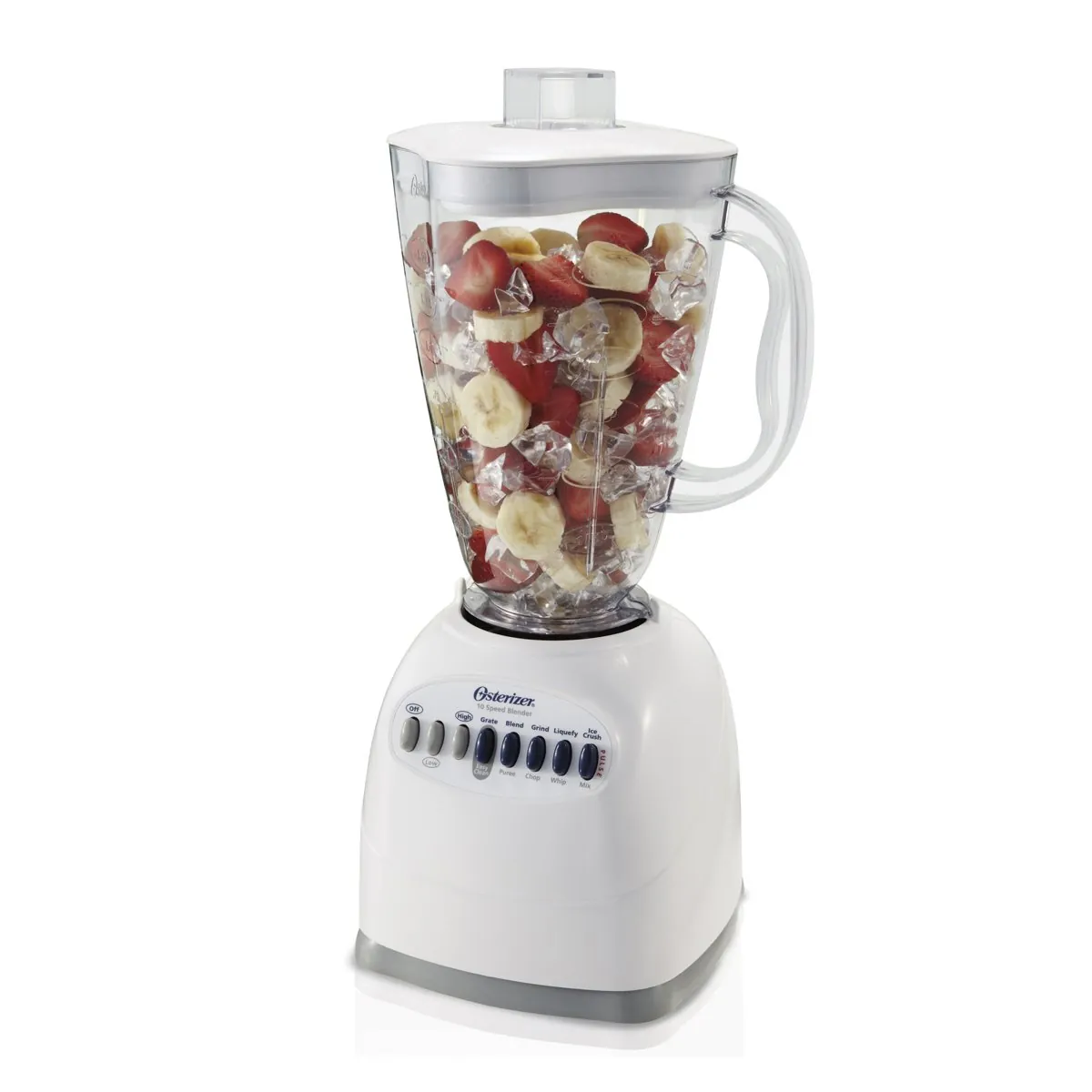
How they load the jar
Experienced users build the jar in layers and never guess. Liquid at the bottom, then soft, then hard, then ice. They fill to about three-quarters of the max line, not to the line itself, so there’s room for the mixture to move. That single habit prevents most stalls.
They also check the blade assembly before every use. If the rubber gasket under the blades is cracked or missing, liquid leaks into the base. You can see this on the underside of the jar — a thin black or white ring. If it’s loose, order a replacement before you blend again.
What they leave alone
They don’t run the motor for more than about 2 minutes at a time on thick mixtures. Nut butter and hummus heat the motor, and heat is what kills blenders. If the base feels warm to the touch, stop and let it cool for 10 minutes.
They also don’t add more liquid to fix a stall. Adding liquid makes the mixture thinner, which is fine for a smoothie, but it won’t help a thick paste. For paste, stop, scrape, and restart on low. And they don’t tap the jar on the counter to settle the food — that cracks glass jars over time.
What goes wrong, and what to do
| What you notice | What it usually means | What to do first | How to stop it happening again |
|---|---|---|---|
| Motor hums, blades don’t turn | Jar not seated, or food jammed | Turn off, reseat jar, shake | Load liquids first, don’t overfill |
| Mixture won’t move | Too full, or too little liquid | Remove half, add 1/4 cup liquid | Fill to three-quarters max |
| Food stuck on sides | Speed too high too soon | Turn off, scrape down, restart low | Start on speed 1 every time |
| Burning smell from base | Motor overheating | Stop, unplug, cool 10 minutes | Blend in shorter runs |
| Liquid leaking under jar | Worn gasket or loose blade base | Check gasket, tighten blade ring | Replace gasket when cracked |
| Blender walks on counter | Base not level, or feet worn | Move to flat surface | Check feet for wear |
| Loud grinding noise | Ice too large, or a hard seed | Stop, break ice smaller | Crush ice in pulses |
The rules that apply
Oster’s own manual for this blender states the safety limits, and those are the ones that matter here. Check the part number on your jar against the manual.
If you’re blending something warm, take the center cap out of the lid first and cover the hole with a folded towel.
If your blender trips a breaker or sparks, stop using it and contact Oster support. That’s an electrical fault, not something to fix at home. The same goes for a cracked jar — replace it, don’t tape it.
What it costs you
The blender itself is the main cost, and prices vary by model and by where you buy. Oster sells several versions of this base, so the price on the shelf today isn’t the price next month. Check the current listing on the retailer’s site or Oster’s own page for the model number printed on the bottom of your base.
Replacement parts are the ongoing cost. A new jar, a new lid, or a new blade assembly each cost a fraction of a full blender, and they’re the parts that wear out first. The gasket is the cheapest and the most likely to fail. Look up your model number on Oster’s parts page to see what’s available.
Your time is the other cost. A smoothie takes about 2 minutes start to finish, including cleanup. Thick pastes like nut butter take 5 to 10 minutes with scraping. If you blend daily, that adds up — but it’s still faster than most alternatives.
Electricity use is small. A blender motor draws a few hundred watts while running, and you run it for under a minute at a time. Your fridge uses more.
Keeping it right afterwards
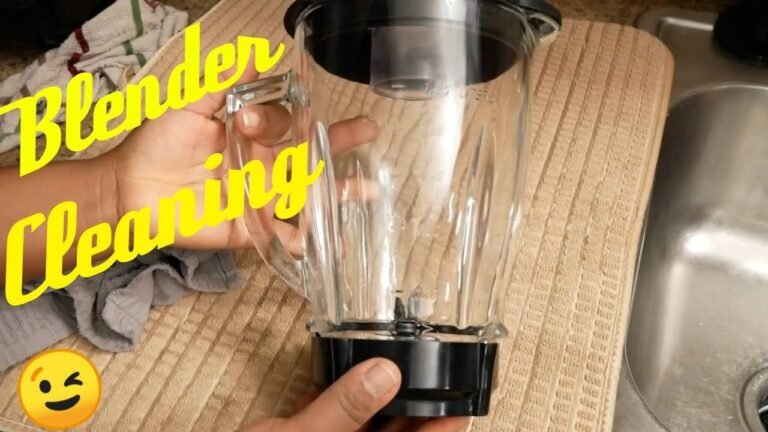
Rinse the jar the moment you’re done, before the food dries. Warm water and a drop of dish soap, then run the blender on speed 2 for 10 seconds with the soapy water inside. That cleans most of it without taking anything apart. Pour it out, rinse, and let it air-dry upside down.
Take the blade assembly off about once a week and wash it by hand with a brush around the base of the blades. Food collects there and starts to smell. Check the gasket at the same time — if it’s cracked, stretched, or missing, replace it.
The sign that your blender needs attention is a change in sound. A healthy motor has a steady hum. A strained one whines higher or drops in pitch when you add food. If the sound changes and the mixture isn’t moving, stop and check the load before you keep going.
Store the jar off the base if you have counter space, with the lid off so it dries fully. A closed, damp jar grows a smell that’s hard to remove.
When this is the wrong approach
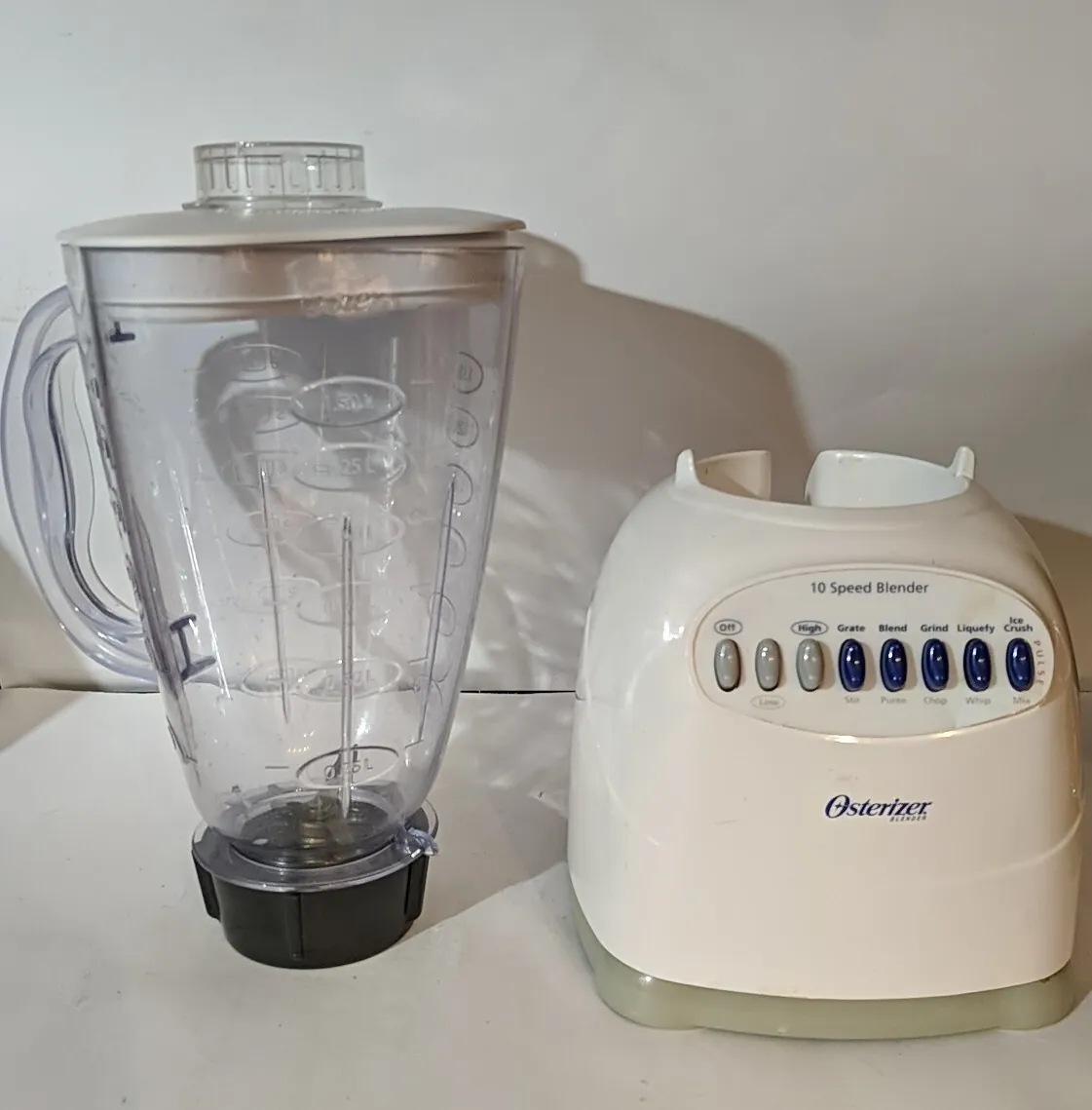
This page assumes your blender works and you want to use it better. If the motor is dead, the base sparks, or the jar is cracked, stop — replace the part or the machine, and don’t try to repair the base yourself.
If you need to blend hot soup straight from the pot, a standard blender isn’t the right tool. Use an immersion blender instead, which goes into the pot and avoids the steam pressure problem entirely.
If you’re blending large volumes — more than 6 cups at once — a countertop blender in this class isn’t built for it. A high-powered blender or a food processor handles bigger batches. For anything medical, like texture-modified food for a swallowing condition, follow your speech therapist’s or doctor’s instructions, not a general guide.
Frequently asked questions
Can I put ice in an Oster 10 speed blender?
Yes, but pulse it first. Add ice last, on top of liquid and soft food, then press pulse in 1-second bursts 5 to 8 times before moving to speed 8. Running ice at full speed from a cold start strains the motor.
Why is my Oster blender not spinning?
The jar usually isn’t seated all the way, or food is jammed under the blades. Turn it off, unplug it, lift the jar, and check that the tabs line up with the slots. If the motor hums but nothing turns, that’s a jam or a worn coupling — not a power problem.
How long do I blend a smoothie?
About 45 to 60 seconds at speed 5 or 6 for a standard 2-cup smoothie. If your jar is fuller or your fruit is frozen, add 15 to 30 seconds. Stop when the mixture moves in a smooth circle with no chunks on the sides.
Is it safe to blend hot liquids in this blender?
No, not with the lid sealed. Steam builds pressure inside the jar and can blow the lid off. Let hot food cool to warm first, or use an immersion blender. If you must blend something warm, remove the center cap and cover the hole with a folded towel.
What happens if I overfill the jar?
Liquid pushes past the lid and spills onto the base and counter. Overfilling also stalls the blades because there’s no air space for the food to move. Fill to about three-quarters of the max line, and blend in two batches if you need more.
Does the speed number matter for thick mixtures?
Yes. Thick mixtures like nut butter or hummus need low speeds, usually 1 or 2, with scraping every 20 seconds. High speeds heat the motor without moving the paste. If the base feels warm, stop and let it cool for 10 minutes.
How do I clean the blade assembly?
Take it off the jar and wash it by hand with warm soapy water and a brush around the blade base. Check your manual first — some Oster blade assemblies aren’t dishwasher-safe. Check the gasket at the same time and replace it if it’s cracked.
How often should I replace the gasket?
Replace it when it’s cracked, stretched, or missing — not on a fixed schedule. A worn gasket leaks liquid into the base, which is the main cause of motor damage. Look at it every time you wash the blade assembly, and order a replacement from Oster’s parts page.
What to do next
Start with one simple blend: 1 cup of liquid, a banana, and 4 ice cubes. Run it on speed 1 for 5 seconds, then step up to speed 5 and hold for 45 seconds. If the motor smells hot, the base sparks, or the jar cracks, stop and call Oster support or a technician.