5 Best Affordable Juicers That Earn Their Counter Space
You wanted a glass of fresh orange juice on a Sunday morning. So you got the oranges out, and then you remembered the machine in the cupboard. The one with the parts that don’t quite fit back together. That’s usually the moment people start searching for a juicer that earns its counter space.
The hard part isn’t finding a juicer. It’s that two things pull against each other. A wide feed chute saves you chopping time, but it takes up counter space. A slow press gets more juice out of leafy greens, but it asks for more patience. This page walks through what each listing actually promises, so you can match one to your kitchen and your mornings.
| # | Product | Best for | |
|---|---|---|---|
| 1 | Hamilton Beach Big Mouth | Best Overall | Check Price |
| 2 | Breville BJE200XL | Best Compact | Check Price |
| 3 | Ninja NeverClog JC151 | Best Cold Press | Check Price |
| 4 | NutriBullet Juicer Pro | Most Powerful | Check Price |
| 5 | BLACK+DECKER CJ625 | Best Citrus Juicer | Check Price |
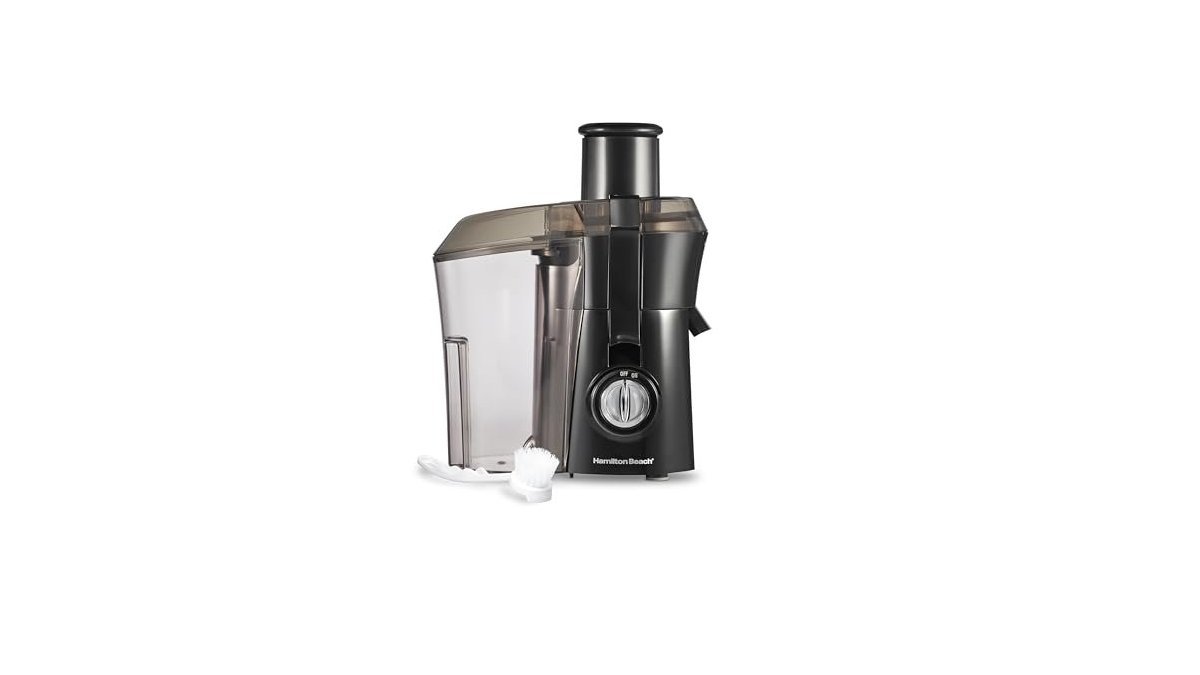
1. Hamilton Beach Centrifugal Juicer Machine With Big Mouth 3” Feed

Right for: Busy households juicing whole apples and carrots most mornings.
This listing centers on one idea: skip the knife. The 3″ chute takes a whole apple, a bunch of celery, or a handful of carrots, so you feed produce in whole instead of cutting it down first. An 800 watt motor handles hard and soft foods, and the 80 oz. pulp bin means you’re not emptying it every few minutes. Hamilton Beach backs it with a 3-year limited warranty and calls itself America’s #1 juice extractor brand.
On a normal weekday, that combination changes your routine in a small but real way. You spend less time at the cutting board and more time actually drinking the juice before work. The 80 oz. pulp bin is the largest among the models here. The dishwasher-safe parts and included strainer cleaning brush matter too, since cleanup is the step that decides whether a juicer gets used twice or gets shelved.
What works:
- 3″ chute fits whole apples, celery, and carrots
- 800 watt motor for hard and soft produce
- 80 oz. pulp bin holds a lot before emptying
- Pulp bin, juice bowl, lid, and pusher are dishwasher safe
- 3-year limited warranty from Hamilton Beach
Where it gives ground:
Skip it if: You have a small kitchen with almost no counter space.
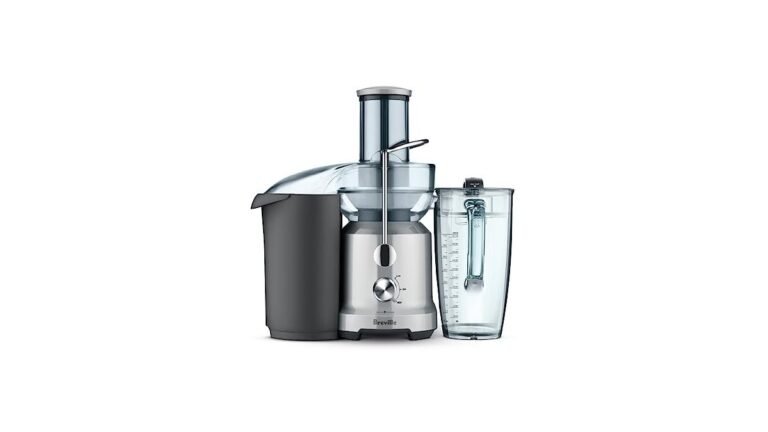
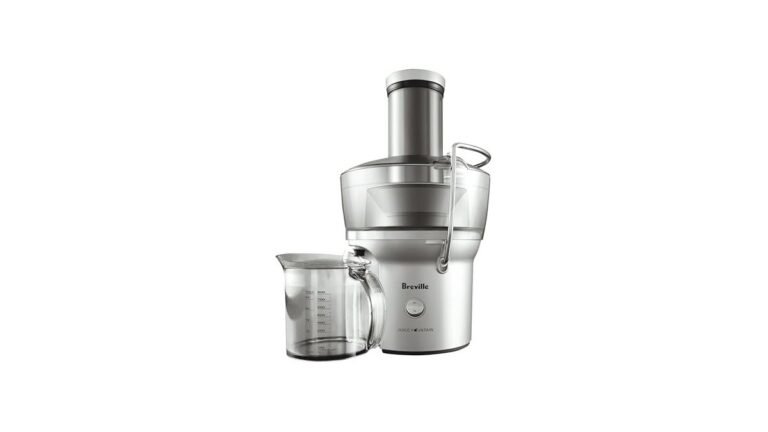
2. Breville BJE200XL Juice Fountain Compact Centrifugal Juicer

Right for: Small kitchens where counter space is the first concern.
Breville built this one around fitting into tight spaces. The pulp collects inside the unit’s own footprint, so you’re not juggling a separate bin beside it. A 3″ chute still takes whole carrots, apples, and oranges without pre-cutting, so the compact size doesn’t take away the prep shortcut. Inside, a titanium-reinforced disc and an Italian-made stainless steel micro mesh filter basket do the extraction work.
There’s a detail here that matters more than it sounds: the juice jug has a built-in froth separator. Some fruits and vegetables throw up foam when juiced, and pouring through the separator leaves you with a smoother glass. The safety locking arm is another practical touch, since the machine won’t run unless the cover is locked in the vertical position. The cord wraps under the base for storage, which helps if you plan to move it in and out of a cupboard.
What works:
- Compact design conserves counter and storage space
- 3″ chute juices whole fruits and vegetables
- Titanium-reinforced disc and stainless steel mesh filter
- 25 fl oz juice jug with integrated froth separator
- Safety locking arm stops operation without the cover in place
Where it gives ground:
- 25 fl oz jug and 1.6 qt pulp container limit long batches
- Centrifugal system, so it runs at high speed
Skip it if: You juice large volumes in one sitting for a family.
3. Ninja NeverClog Cold Press Juicer

Right for: Green-juice drinkers who want less foam and less clogging.
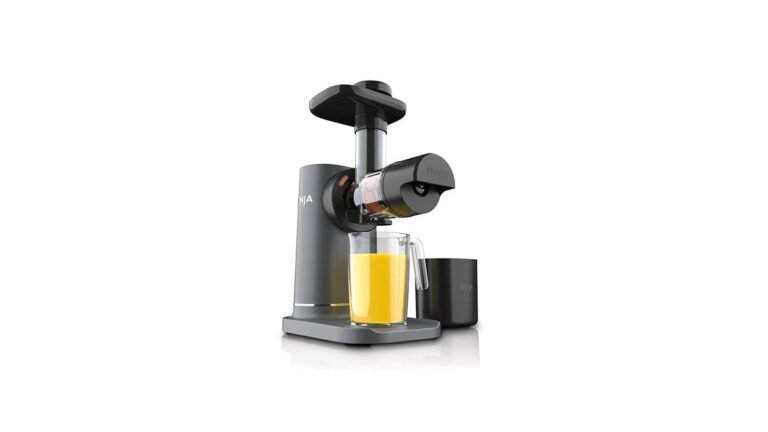
This is a cold press machine, and that changes how it works. A 150 watt high-torque motor turns an auger at low speed instead of spinning a blade fast. The listing says that approach powers through apples, carrots, celery, and leafy greens without clogging, while minimizing foam.
Two interchangeable pulp filters let you pick between Less Pulp and Lots of Pulp. That’s real control over texture rather than a single fixed setting, and it’s the difference between a green juice you strain and one you drink as is.
The Reverse program is the feature worth understanding before you buy. If fibrous produce starts to jam, reverse backs the auger up to clear it and push extraction further. You’ll use it most with celery and leafy greens, the ingredients that stall a juicer.
A built-in anti-drip lever lets you pause and pour without a mess on the counter. It fits under kitchen cabinets, and all juice-contact parts are dishwasher safe. The listing also notes it’s designed to be easier to clean than many centrifugal juicers.
What works:
- 150 watt high-torque auger runs at low speed
- Two pulp filters for Less Pulp or Lots of Pulp
- Reverse program helps clear jams
- Anti-drip lever prevents spills when pouring
- Includes 24 oz. jug, 36 oz. pulp container, and 15 recipes
Where it gives ground:
Skip it if: You want juice in seconds and don’t care about foam.
4. NutriBullet Juicer Pro Centrifugal Juicer Machine

Right for: Batch juicers who prep ahead and take juice to work.
The headline here is power and capacity together. A 1000 watt motor with turbo speed drives the extraction, and 3 precision speeds let you match the setting to the ingredient. The 27 oz. sealing pitcher stores fresh juice for up to 48 hours, which turns juicing into a make-ahead task instead of a daily one. A 3″ feed chute with a dual-size food pusher handles both wide and narrow produce.
The 3″ chute is the wide side. The dual-size pusher gives you a narrow feed as well, so small produce doesn’t slip through the gap and large produce doesn’t need to be cut down to fit. Fewer knife cuts before you start.
What sets this listing apart is everything that comes in the box. You get two glass to-go bottles, a 2 oz. freezer tray, and a 4 oz. freezer tray, so juice and pulp both have somewhere to go. The self-contained pulp basin lifts off and goes straight to the sink, and the sieve, basin, pitcher, bottles, and trays are all dishwasher safe. The sieve is stainless steel, while the basin and pitcher are BPA-free plastic.
The two freezer trays are different sizes on purpose. The listing includes a 2 oz. freezer tray and a 4 oz. freezer tray. The sealing pitcher stores fresh juice for up to 48 hours, per the listing.
What works:
- 1000 watt motor with turbo speed and 3 speeds
- 27 oz. sealing pitcher stores juice up to 48 hours
- Includes two glass to-go bottles and two freezer trays
- 3″ chute with dual-size food pusher
- No-drip spout and dishwasher-safe parts
Where it gives ground:
- Takes up counter space at 9.3″ by 10.3″ by 16″
- More parts to wash than a basic machine
The sealing lid has a froth separator, which keeps the foam out of the pour. If you drink juice the same day, the pitcher and bottles cover you. If you juice for the week, the trays are the part that matters.
5. BLACK+DECKER 32oz Electric Citrus Juicer

Right for: Citrus lovers making orange and grapefruit juice by the glass.
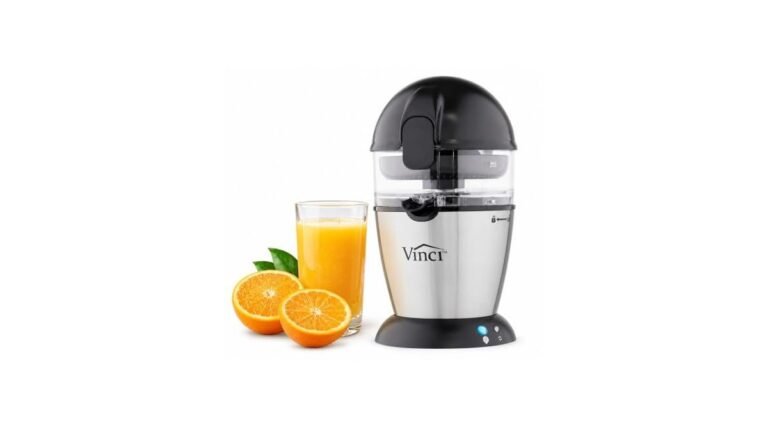
This one is built around a single, straightforward task. Auto-reversing juicing cones press the fruit from both directions for maximum extraction, and you press the fruit down to start it. Adjustable pulp control with a removable pulp basket means you decide how much pulp lands in your glass, and you can toss the rest or use it in recipes. Markings on the clear container make juicing for a specific recipe easy.
The container doubles as a pitcher with a handle and a drip-free pour spout, so you juice and pour from the same vessel. Because it’s clear, you can watch the yield rise with each piece of citrus. If your household drinks orange juice most mornings and rarely touches greens, this is a much simpler machine to live with than a full extractor.
The pulp basket is the part worth thinking about before you buy. It catches what the cones press out, and it lifts free so you can empty it over the sink or keep the pulp for baking. If you like juice with some texture, set the control to let more through. If you want it clean, hold it back and dump the basket.
The listing describes the CJ625 as dishwasher-safe. The clear juice container holds 32 oz.
What works:
- Auto-reversing cones for maximum juice extraction
- Adjustable pulp control with removable pulp basket
- Clear 32 oz. container doubles as a pitcher
- Drip-free pour spout
- Dishwasher-safe parts
Where it gives ground:
Also Worth Considering
The QCen Juicer Machine Centrifugal Juicer is a 500W centrifugal model with an extra wide feed chute, stainless steel, and BPA-free parts. It’s built for fruits and vegetables on a compact countertop footprint, and the listing stresses easy cleaning.
Its dual speed control runs 12000–18000 RPM. Speed “1” is for soft fruits and veg such as watermelon, orange and strawberry; speed “2” is for hard ones such as carrot, apple and pear. A locking system arm stops it running without the cover locked in place, and overload protection switches the machine off if it overheats. One caution from the listing: avoid trying to juice things with a low water content.
The Magic Bullet Mini Juicer is a countertop space-saver with a 2″ feed chute, a 400W motor, and a 16 oz. cup. The smaller chute means more pre-cutting, but the compact design suits very tight kitchens. It juices straight into that cup, which has a twist-on to-go lid, and a silicone spout cap catches drips. Attachments are top-rack dishwasher safe, and it carries a 1 year limited warranty.
The GDOR Powerful Juicer steps up to a 1200W motor with a larger 3.2″ feed chute and a titanium enhanced cutting system. It uses a heavy duty full copper motor with dual speeds and BPA-free parts. Speed “I” is for soft fruits like oranges and tomatoes; speed “II” is for hard ones like apple, celery, carrot and kale. The 22 oz. juice jug holds more at once, and all detachable parts are dishwasher safe.
How to Think Before You Choose
How Wide Does Your Chute Need to Be
Chute width decides how much knife work happens before the machine starts. A 3″ chute takes a whole apple, a whole orange, or a bunch of celery in one push. That difference shows up every single time you juice, not just once.
Most people should lean toward the widest chute they can fit on their counter. The reason is simple: the chopping step is what makes people stop juicing after a few weeks. If you’re cutting apples into quarters before every glass, the machine starts to feel like work. A wide chute removes that friction entirely.
Before you decide, do one thing at home. Take the biggest apple in your fruit bowl and measure its widest point with a ruler. Then take a bunch of celery and measure its thickness. Compare those numbers to the chute size in the listing. If your usual produce is wider than the chute, you’ll be cutting every time. If it fits, you won’t.
Fast Spinning or Slow Pressing
Centrifugal juicers spin a blade fast and throw juice through a mesh filter. Cold press juicers turn an auger slowly and press the juice out. Both make juice. They differ in speed, foam, and how they treat soft produce and leafy greens.
Most households should lean centrifugal. It’s faster, it handles whole fruit well, and it’s the more common design for a reason. Cold press earns its place if you drink green juice often, or if foam bothers you enough that you’d stop using the machine. The trade is time: a slow auger takes longer per glass.
Check this at home before you buy. Count how many glasses your household drinks in a week, and note whether most of them are fruit or green. If greens are a small part of that number, a fast machine serves you better. If greens are most of it, the slower press is the one you’ll keep using.
What Cleanup Really Costs You
Every juicer needs cleaning after every use. The question is how many parts come apart, and how many of them can go in the dishwasher. Fewer parts and dishwasher-safe components mean the machine gets used again tomorrow. More parts and hand washing mean it sits in the cupboard.
Lean toward the listing that names its dishwasher-safe parts specifically. A machine that lists the pulp bin, juice bowl, lid, and pusher as dishwasher safe is telling you something concrete. A cleaning brush in the box helps with the mesh filter, which is the part that traps pulp.
Check your own routine at home. Look at your sink after dinner on a normal weeknight and ask whether you’d wash three extra parts at that moment. If the answer is no, prioritize dishwasher-safe parts and a large pulp bin, because fewer emptying trips means fewer interruptions. That single decision predicts whether the juicer earns counter space or cupboard space.
Who Should Skip These Altogether
Not everyone needs a juicer, and that’s worth saying plainly.
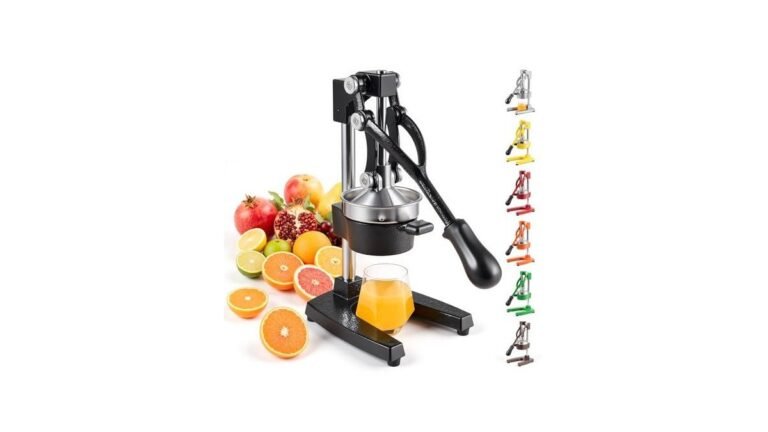
If you drink juice only occasionally, a hand squeezer or a fork and a strainer will do the job without another appliance on your counter.
If you already own a blender, it handles smoothies and many juice-style drinks, so you may not need a second machine that does something similar.
If your kitchen has almost no free counter space and no cupboard room, a full-size extractor will live in a box. A compact citrus press serves you better.
If you’re curious but not committed, borrow a machine first or start with citrus. A machine used once and stored away helps nobody.
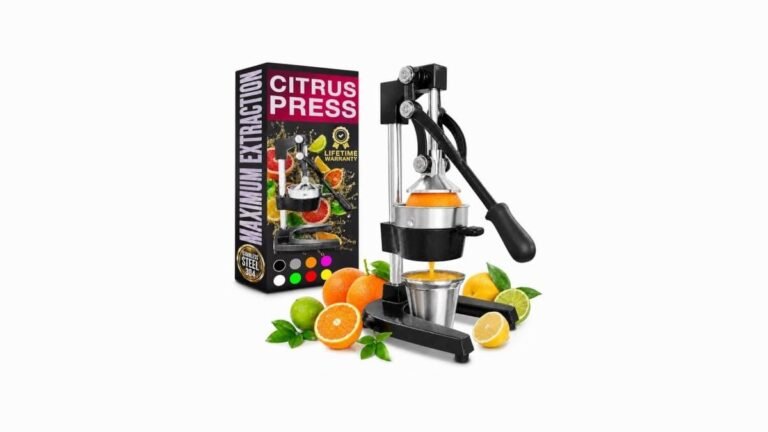
One more case is easy to miss. If citrus is all you plan to juice, a press is the whole job. The juicers here take whole apples, carrots and celery, and the citrus press takes oranges and little else.
Then there’s the question of what you actually want in the glass. A centrifugal juicer and a cold press juicer don’t produce the same drink, so if you want one and buy the other, you’ll be disappointed.
If you want the pulp out, look for a model with a pulp filter or a froth separator. If you want it in, that feature is working against you.
Closing
For most buyers, the Hamilton Beach Big Mouth is the pick that fits an ordinary kitchen: a 3″ chute, an 800 watt motor, a large pulp bin, and a 3-year limited warranty.
For the harder case, where you drink green juice and foam bothers you, the Ninja NeverClog JC151 and its low-speed auger with a Reverse program is the one built for that job.
Before you order, measure your tallest cupboard clearance and the widest apple in your bowl, then check both against the listing. That two-minute check decides whether the machine earns counter space or ends up in a box.
If you want to juice and store ahead, the NutriBullet Juicer Pro’s 27 oz. sealing pitcher holds fresh juice up to 48 hours. Its 3″ chute and dual-size pusher take both wide and narrow produce.
If you juice citrus only, skip the centrifugal machines. The BLACK+DECKER CJ625 is pressure activated, with auto-reversing cones and a pulp basket you can empty or reuse.
If your counter is the constraint, the Breville BJE200XL is the space-saving one, and its cord wraps under the base. The Magic Bullet Mini Juicer is smaller still, with a 2″ chute and a 16 oz. cup.
One mistake loses people the whole purchase: buying a wide-chute machine and then pre-cutting anyway. Feed produce in whole and the prep time you save is the point.
Frequently Asked Questions
What can each of these juicers actually juice?
It depends on the design. The Hamilton Beach Big Mouth handles hard and soft foods, from oranges and apples to cucumbers and leafy greens, per its listing. The Breville BJE200XL juices whole fruits and vegetables including carrots, apples, and oranges. The Ninja NeverClog JC151 is built for fibrous produce like apples, carrots, celery, and leafy greens. The NutriBullet Juicer Pro covers fruit, vegetables, and food prep. The BLACK+DECKER CJ625 is a citrus juicer only.
What tends to go wrong first?
Clogging and foam are the two things these listings address directly. The Ninja JC151 uses a Reverse program to reduce jams and a low-speed auger that the listing says minimizes clogging and foam. The Breville BJE200XL includes a froth separator in its juice jug because some produce creates froth. The NutriBullet Juicer Pro adds a no-drip spout so you don’t lose juice at the pour.
Is the simplest pick here enough?
For many households, yes. The BLACK+DECKER CJ625 does one job: citrus. If orange and grapefruit juice is what your family drinks, it covers that without the parts and footprint of a full extractor. It has auto-reversing cones, adjustable pulp control, and a clear 32 oz. container that doubles as a pitcher. If you also want apple, carrot, or green juice, you’ll need one of the extractors instead.
What should I confirm before ordering?
Three things. First, the chute size against your usual produce, since a 2″ chute means more pre-cutting than a 3″ one. Second, the capacity: the Breville BJE200XL has a 25 fl oz jug and 1.6 qt pulp container, while the Hamilton Beach Big Mouth has an 80 oz. pulp bin and the Ninja JC151 has a 24 oz. jug with a 36 oz. pulp container. Third, the dimensions against your counter and cupboard.