5 Best Rated Cold Press Juicers for Slow, High-Yield Juice
What Is a Cold Press Juicer?
A cold press juicer, sometimes called a masticating juicer, crushes produce slowly instead of shredding it at speed. That slow crush is the whole point. It gets more liquid out of the same fruit, and the juice holds up better in the fridge.
If you’re shopping for the best rated cold press juicer, you’re really trying to get three things right at once. You want juice that actually tastes good and doesn’t separate in ten minutes. You want a machine that doesn’t make you stand there feeding it one carrot at a time. And you want cleanup that doesn’t ruin the whole idea of juicing.
Here’s the one thing that separates a good buy from a bad one: the size of the feed opening and how the machine handles that opening. A wide chute sounds great, but if the machine still jams on kale stems, the width means nothing. A narrow chute means more chopping, but it also means fewer clogs. That’s the real trade-off in this category, and every pick below lives somewhere on that line.
The second thing to weigh is what comes in the box. Some juicers ship with one screen and nothing else. Others include multiple screens for smoothies, sorbet, or nut milk, which turns one appliance into several. That difference matters more than most spec sheets suggest.

- Self-feeding hopper loads whole recipe at once
- Cold press juicer cuts and [juices produce](https://juicerblenderguide.com/how-to-make-green-juice-in-ninja-blender/) for you
- Extracts more from leafy greens and produce
- 200 W motor runs quietly at 50 RPM

- Auto-cutting blade and 3-liter hopper
- 240W motor runs 45 continuous minutes
- Removable parts and cleaning tool included
- Juice, smoothie and sorbet screens included

- High-torque motor handles tough fruits and vegetables
- 2 interchangeable pulp filters for texture control
- 2 programs: Start/Stop and Reverse
- 150-watt motor turns auger at low speeds

- 1.5QT hopper fits multiple ingredients at once
- 1.5QT capacity fits up to 5 whole apples
- 250W motor and slow-crushing auger
- 35 oz juice cup holds 4+ servings

- Mini compact juicer for 1-2 servings
- Includes 16 oz juice cup
- 70 RPM slow cold press extraction
- 3/4" feed chute, cut produce smaller
1. Nama J2
Best for: Hands-free batch juicing with minimal prep
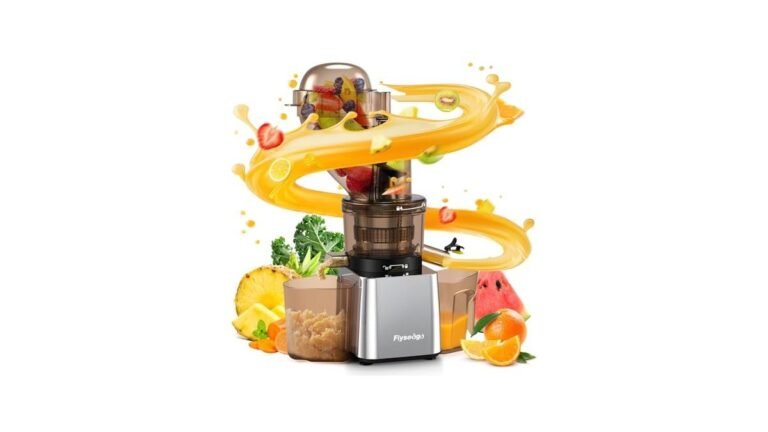
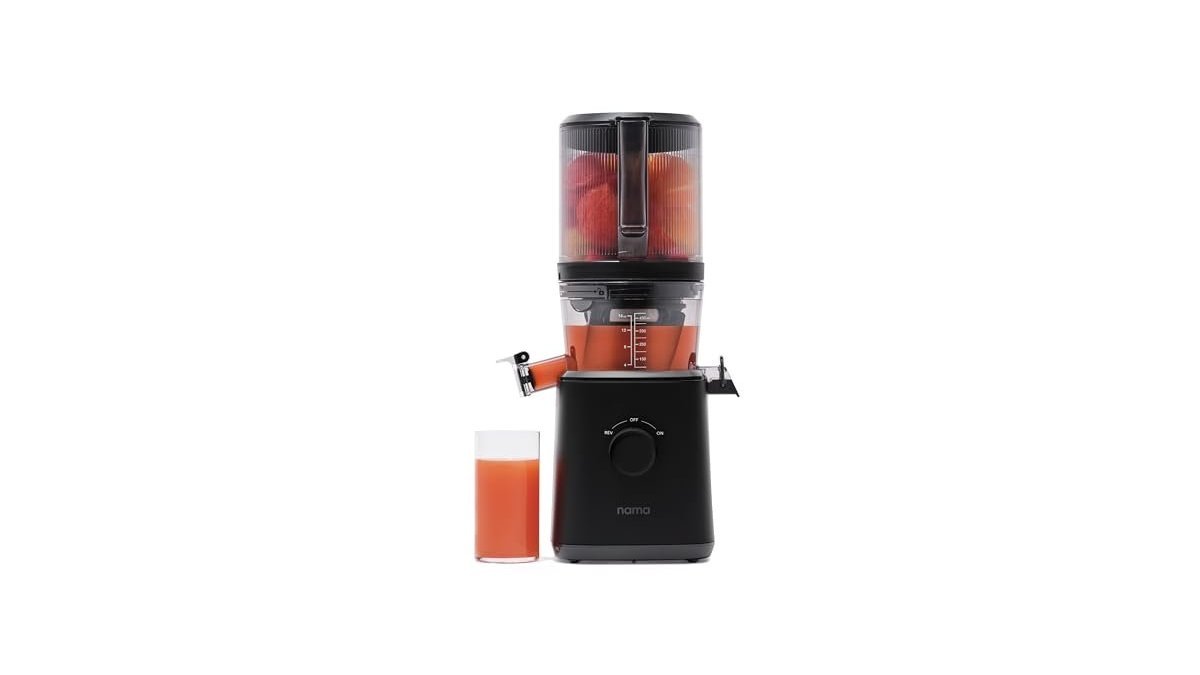
The Nama J2 is built around a self-feeding hopper, which means you load your whole recipe at once and walk away. That single feature changes how juicing feels. Instead of standing over the machine dropping in one piece at a time, you’re free to do something else while it works.
The 200 W motor runs at 50 RPM, which is a slow, quiet pace. Slow rotation is what makes cold press juicing work, and it’s also why this machine doesn’t sound like a blender. The listing says it handles leafy greens well and leaves less waste behind, and it ships with juice containers, strainers, and guides. The 15-year warranty matches the longest coverage stated in this group.
| What it gives you | What you accept |
|---|---|
| Load a full recipe at once | You still cut produce to fit the hopper |
| Containers, strainers, and guides included | It’s a serious appliance, not a grab-and-go gadget |
This isn’t the machine for someone who wants a single glass of juice twice a month and nothing more. It’s for a household that juices often and wants the process to fit around everything else.
2. Kuvings AUTO10 Cold Press Juicer Machine
Best for: Big batches and the widest recipe range
The AUTO10 carries a 3-liter hopper and an auto-cutting blade, so you can load whole fruits and vegetables, close the lid, and let it work. The listing describes a 100 oz capacity, which suits someone juicing for a family or prepping several days at once.
The 240 W motor is paired with a stated 45-minute continuous run. That’s the number that matters if you make large batches. It includes juice, smoothie, and sorbet screens, so it also makes nut milk and sorbet. A redesigned pulp chute is meant to prevent clogging.
What goes smoothly:
- Load whole produce without pre-chopping
- Long continuous run for big batches
- Three screens cover juice, smoothies, and sorbet
- Removable parts and a cleaning tool for cleanup
- 15-year assurance from a brand with 40 years behind it
What you have to accept:
This one isn’t for a cramped kitchen with no spare counter room. It’s for the person who juices in volume and wants one machine to cover several jobs.
3. Ninja NeverClog Cold Press Juicer
Best for: Small kitchens and clog-free everyday juicing
The JC151 is a compact masticating juicer with a 150 W high-torque motor and a 24 oz juice jug. The listing’s main claim is right in the name: it’s built to push through fibrous produce like apples, carrots, celery, and leafy greens without clogging. A reverse function helps clear jams if one starts.
Two interchangeable pulp filters let you pick between less pulp and lots of pulp, which is unusual control at this size. All juice-contact parts are dishwasher safe, and it’s designed to fit under kitchen cabinets. The listing also notes an anti-drip lever so you can pause and pour without a mess. A 36 oz pulp container and a guide with 15 recipes come in the box.
The motor runs the auger at low speeds rather than spinning it fast. That’s what separates a masticating juicer from a centrifugal one, and it’s why the listing promises high yield with less foam.
Who it fits: Anyone in an apartment or small kitchen who wants cold press juice without a large machine on the counter. The two pulp filters also suit a household where different people want different textures.
Who should pass: Someone juicing for a crowd, since the 24 oz jug and compact build are aimed at everyday single or double servings. And anyone who wants sorbet or nut milk, because this listing doesn’t offer those screens.
4. nutribullet Cold Press Batch Juicer
Best for: Batch loading without constant feeding
The NutriBullet batch juicer centers on a 1.5 QT hopper that the listing says fits up to five whole apples. You load it, and the machine does the rest without you standing there feeding it. For anyone who has juiced with a narrow-chute machine, that’s the feature that changes the daily routine.
The 250 W motor drives a slow-crushing auger for thorough extraction, and the listing notes low foam as a result. A 35 oz juice cup holds four or more servings, and a 30 oz pulp cup means fewer stops to empty it. A juice basin and anti-drip spout keep things contained between pours. Fewer parts and dishwasher-safe components make cleanup simpler.
| What it gives you | What you accept |
|---|---|
| 250 W motor, low foam | No smoothie or sorbet screens listed |
This isn’t the pick for someone who wants a single appliance to also make sorbet or nut milk. It’s for the person who wants a lot of juice from a lot of produce with very little standing around.
5. Elite Gourmet EJX600 BPA-Free Cold Press Juicer
Best for: Single servings in a tiny kitchen
The EJX600 is a mini juicer, and the listing is upfront about that. It’s designed for one or two servings at a time with a 16 oz cup, and the seller asks buyers to confirm the size before ordering. That honesty is worth noting, because this machine will disappoint anyone expecting to fill several bottles.
The 70 RPM slow masticating speed is tied by the listing to less foam and less oxidation. The feed chute is 3/4 inch, so produce needs cutting into smaller pieces, especially hard items like apples, carrots, beets, and ginger. There are only three removable parts, a cleaning brush is included, and those parts are top-rack dishwasher safe. Overload and overheat protection guard the motor.
Snapshot:
- Best for one or two glasses at a time
- 16 oz Tritan juice cup included
- 70 RPM slow extraction, less foam
- 3/4 inch chute means real chopping
- Three removable parts, top-rack dishwasher safe
- Overload and overheat protection built in
This one isn’t for a family or anyone juicing large batches. It’s for a single person in a small space who wants a glass of fresh juice without a large appliance.
Also Worth Considering
The Aeitto Cold Press Juicer Machines take a large feed chute for whole fruits, with a slow masticating design the listing calls self-feeding. It’s built to be easy to assemble and clean, with a brush included, and the seller claims no clogging and no cutting. That combination of a wide chute and no pre-cutting is the same promise the bigger names make, in a different package.
The listing also states the machine stops automatically when the hopper cover is opened, which is the safety detail to weigh if children are in the kitchen. Support runs 12 months for repair and replacement, with round-the-clock online consultation.
The AMZCHEF Cold Press Juicer Machine uses a 6.5 inch chute for whole fruits and vegetables, plus a triple stainless steel filter. A quiet DC motor and easy-clean parts round it out. If quiet running matters to you, that’s the detail to look at here.
The same listing puts the motor at 55 decibels or below and the capacity at 2000 ml, so it’s pitched at long, uninterrupted sessions rather than a single glass. The body is stainless steel, and the design is fully detachable for cleaning.
The LAUDLIFE Cold Press Juicer pairs a 5.9 inch wide feed chute with an integrated 100 oz hopper and strainer design. It’s BPA free and described as easy to clean, built for whole fruits and vegetables. The large integrated hopper is the standout feature for batch juicing.
Two more details from that listing: a 250 W motor with a reverse function to clear a jam, and a three-part easy-clean design. The 100 oz hopper is the reason to pick it over the smaller machines here.
The Decision Filter
Start with one question: how many people are you juicing for, and how often? That single answer cuts this list fast. If you’re juicing for yourself a few times a week, the compact options make more sense than a machine with a 3-liter hopper. If it’s a family or a weekly batch, the larger hoppers earn their counter space.
Then ask what else you want the machine to do. If sorbet and nut milk matter, you need one that ships with those screens. If it’s juice only, you can skip that and keep things simple.
Most people miss this: the feed chute size decides how much chopping you do every single time, and that daily chore matters more than motor wattage over a year of use.
Read the chute spec before anything else. A 3/4-inch chute means you cut hard items like apples, carrots, beets and ginger into smaller pieces first. A 5.9-inch or 6.5-inch chute takes whole apples, oranges, carrots and celery, even large pineapples. If you juice on busy mornings, that difference is the whole purchase.
Two more specs change daily life. If you leave the machine running while you do something else, look for a motor rated for continuous work, since one model runs 45 continuous minutes. If you juice early or in a small kitchen, check the noise figure and the footprint, because a compact machine fits under cabinets and a quiet one keeps the household asleep.
Then check what happens when something jams. A reverse function clears blockages, and an auto safety lock stops the machine when the lid opens. Neither shows up in the wattage number, and both decide how the machine feels in week two.
The Thirty-Second Checklist
- Will you really juice several times a week, or only now and then? If juicing is a daily habit, a hands-free hopper that takes a whole recipe at once earns its counter space. If it’s a weekend thing, a smaller single-serve machine is enough.
- Does anyone else in the house need to use it without help? Look for one-touch programs and a safety lock that stops the machine when the lid opens. Both matter more when children or guests are pouring.
- Will it fit under your cabinets and stay on the counter? Compact models are built for small kitchens and apartments. A family-sized hopper with a large juice cup is not, so measure before you commit.
- Do you want it to make sorbet or nut milk too? Some machines ship with juice, smoothie and sorbet screens. Others are juice only, and no filter will turn them into anything else.
- Can you live with cutting produce to fit the chute? Wide chutes take whole apples, oranges and carrots. A 3/4-inch chute means cutting hard items like beets and ginger into smaller pieces first.
- If it’s the wrong size, can you return it easily? Check the warranty and the repair or replacement window before the box is opened.
Three Regrets Worth Avoiding
Regret #1: Buying a machine too small for how you actually juice. A single-serve model is fine until two people want a glass, and then you’re running it twice. The fix is to count servings per session before you choose, not servings per person. A 16 oz cup is built for one or two servings at a time, and the maker says plainly it isn’t intended for large-batch juicing or filling multiple bottles. If you juice for a household, look at capacity instead: a 35 oz juice cup holds four or more servings, and a 24 oz jug with a 36 oz pulp container lets you keep going without stopping to empty it.
Regret #2: Not checking the feed chute size. A 3/4 inch chute means cutting everything into small pieces, every time, and that chore adds up. The fix is to decide up front whether you’d rather chop more or clean a wider chute. Chutes run from that 3/4 inch up to 5.9 and 6.5 inches, where whole apples, oranges, carrots, celery and even large pineapples go in without chopping. If your mornings are tight, the wider chute is the one that saves you the knife work.
Regret #3: Assuming every juicer makes sorbet and nut milk. Some ship with only a juice screen and nothing else. The fix is to check what’s in the box before you buy, because a missing screen can’t be added later. One machine lists juice, smoothie and sorbet screens, and makes nut milk, smoothies and sorbets in the same body. Another ships with two interchangeable pulp filters so you pick less pulp or lots of pulp. If you want those textures, confirm the screens are included.
If You Want This, Look for That
Here’s a quick way to match what you want with what to check in a listing.
| If you want… | Look for | Avoid |
|---|---|---|
| No constant feeding | Large self-feeding hopper | Narrow chute, one-piece loading |
| Less chopping | Wide feed chute | 3/4 inch chute |
| Big family batches | Large juice and pulp cups | Single-serve cup size |
| Sorbet and nut milk | Extra screens included | Juice-only screen setup |
| Easy cleanup | Few removable parts | Many small parts to wash |
| Quiet mornings | Low RPM, slow motor | High-speed operation |
Two of these rows decide most purchases, so read them closely.
On capacity, the listings split into two groups. A 16 oz cup with a 3/4 inch chute is built for one or two servings, and its own copy says it isn’t intended for large batches or filling multiple bottles. If you juice for a household, that machine will frustrate you daily.
If you want to fill bottles for the week, look for a 1.5QT hopper that fits up to five whole apples, or a 3-liter hopper, or a 100 oz integrated hopper. Those are the batch machines.
On pulp, the choice is yours to make rather than the machine’s. One model ships two interchangeable filters so you pick less pulp or lots of pulp. Elsewhere the texture is fixed by the design, so check which one you’re buying.
A few smaller things are worth a line in your notes. A reverse function clears jams, and one-touch programs mean fewer decisions at 6am. An anti-drip lever lets you pause and pour without a spill.
Safety locks stop the motor when the lid opens, which matters with children in the kitchen. Dishwasher-safe parts and a cleaning brush decide how often you actually use the thing.
Warranty is the last row worth comparing, because it runs from 12 months to 15 years across these machines.
Closing
When two picks still look equal, use this tie-break: count the removable parts. The machine with fewer parts gets used more, because cleanup is the step that decides whether juicing becomes a habit or a chore. Fewer parts also means fewer things to lose or break.
That count is easy to run. The Ninja JC151 lists its juice-contact parts as dishwasher safe. The Elite Gourmet EJX600 has only 3 removable parts, and those are top-rack dishwasher safe, though not the motor base or the cord. The Aeitto uses a hopper and screen built as one piece, so there’s less to take apart.
Next, write down how many glasses you actually drink in a week. That number tells you whether you need a compact machine or a large hopper, and it settles most of the doubt faster than any spec sheet.
If you juice for one or two people, the Elite Gourmet is built for 1–2 servings at a time and holds a 16 oz cup. If you fill several bottles at once, look at the batch machines instead. The NutriBullet hopper fits up to 5 whole apples and its juice cup holds 4+ servings. The Kuvings hopper takes 3 liters.
Then check what’s in the box. Screens, cups, and brushes included mean less to buy later. The Kuvings adds juice, smoothie, and sorbet screens. The Ninja includes 2 pulp filters, a 24 oz juice jug, a 36 oz pulp container, and a guide with 15 recipes. The NutriBullet ships with a 35 oz juice cup and a 30 oz pulp cup.
With those three things sorted, you can pick with confidence and get back to the part that matters, which is the juice.
Frequently Asked Questions
Does a cold press juicer work with leafy greens and wheatgrass?
Yes, and that’s where slow juicing earns its keep. A masticating auger crushes leaves instead of shredding them at speed, so it gets more liquid out of spinach, kale, and wheatgrass. The trade-off is pace. Machines with a wider chute handle whole leaves better than narrow ones.
How much produce do I need for one glass of juice?
It depends on the produce and the machine, but a rough guide helps. Leafy greens yield far less liquid per pound, so you need more of them. A machine that extracts more from each ingredient means you buy less produce for the same glass, which is the real reason extraction matters.
Can I juice nuts or make nut milk in these machines?
Only if the listing includes a screen for it. The Kuvings AUTO10 lists juice, smoothie, and sorbet screens, and the listing says it makes nut milk. Other models here list only a juice screen, so they’re built for fruit and vegetables. If nut milk matters to you, check the included accessories before you choose, because that screen is what makes it possible.
How long does fresh cold press juice last in the fridge?
Slow juicing exposes the juice to less air and heat than high-speed shredding, so it tends to hold up longer. Many people keep it in a sealed glass jar in the fridge for a day or two. Oxidation is what changes the taste and color, so a tight lid and a full jar, with little air space, help. Drink it sooner for the best flavor.
Is cleanup really as hard as people say?
It depends on the machine, not the category. Listings here range from three removable parts to several screens and cups. Parts that are dishwasher safe cut the work down a lot. A cleaning brush helps with the screen, which is where pulp tends to sit. Fewer parts and dishwasher-safe components are the two things that make cleanup quick.
What happens if the juicer jams mid-batch?
Most machines here include a reverse function or a clearing method. The Ninja JC151 lists a reverse program to reduce jams, and the Kuvings listing describes a redesigned pulp chute meant to prevent clogging. If a jam happens, stop, reverse, and clear the pulp before continuing. Feeding fibrous produce in smaller pieces lowers the chance of it happening again.
Do these juicers need a rest between batches?
Some do, and one here doesn’t. The Kuvings AUTO10 listing says it runs for 45 continuous minutes, which covers large batches without a pause. Other listings don’t state a continuous run time, so treat that as unknown rather than a limit. If you plan to juice in volume, a stated run time is worth checking before you buy.