Best Lime Juicer: 5 Picks That Get Every Drop
You’ve got a bowl of limes on the counter and a recipe that wants their juice — maybe margaritas for four, or a marinade, or a pie that needs a full half cup of the stuff. You cut one in half, squeeze it with your hand, and get a sad trickle plus two seeds in the bowl. That’s the moment most people start searching for the best lime juicer.
The trouble is that these tools split into two very different families. Manual squeezers ask for hand strength and give you speed and almost nothing to clean. Electric presses ask for counter space and a power outlet but do the work for you. Within each family, the listings here differ on the same few things: how much force your hand has to supply, whether seeds and pulp get filtered, how big a fruit the tool accepts, and how long the coverage lasts. This page sorts through what each listing actually promises so you can pick the one that fits your kitchen.
All 5 products side by side — scroll sideways to see every column.
| Top Pick | Best for Pulp Control | Best for Hand Fatigue | |||
| Preview |  |  | 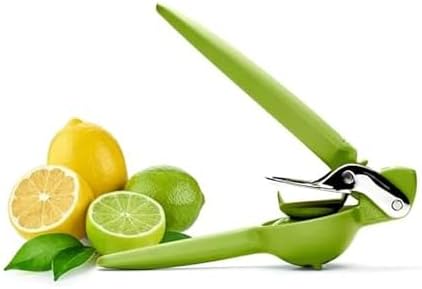 |  |  |
|---|---|---|---|---|---|
| Product | Zulay Kitchen 2-in-1 Squeezer | BLACK+DECKER CJ625 | Chef'n FreshForce | KitchenAid Citrus Press | Vinci Electric Juicer |
| Brand | Zulay Kitchen | BLACK+DECKER | Chef'n | KitchenAid | VINCI |
| Best for | Best Overall | Best for Pulp Control | Best for Hand Fatigue | — | — |
| The listing says | 2-in-1 lemon squeezer wastes no drop Easy on hands, works with a soft squeeze | Auto-reversing cones for maximum juice extraction Adjustable pulp control with removable pulp basket | Makes juicing easy, add a little or a lot Produces 20% more juice than conventional handheld juicers | Unique hopper keeps juice contained Integrated spout for easy pouring | Hands-free, fully enclosed juicing Auto Juice button presses fruit in about 10 seconds |
| More information | Check Price on Amazon | Check Price on Amazon | Check Price on Amazon | Check Price on Amazon | Check Price on Amazon |
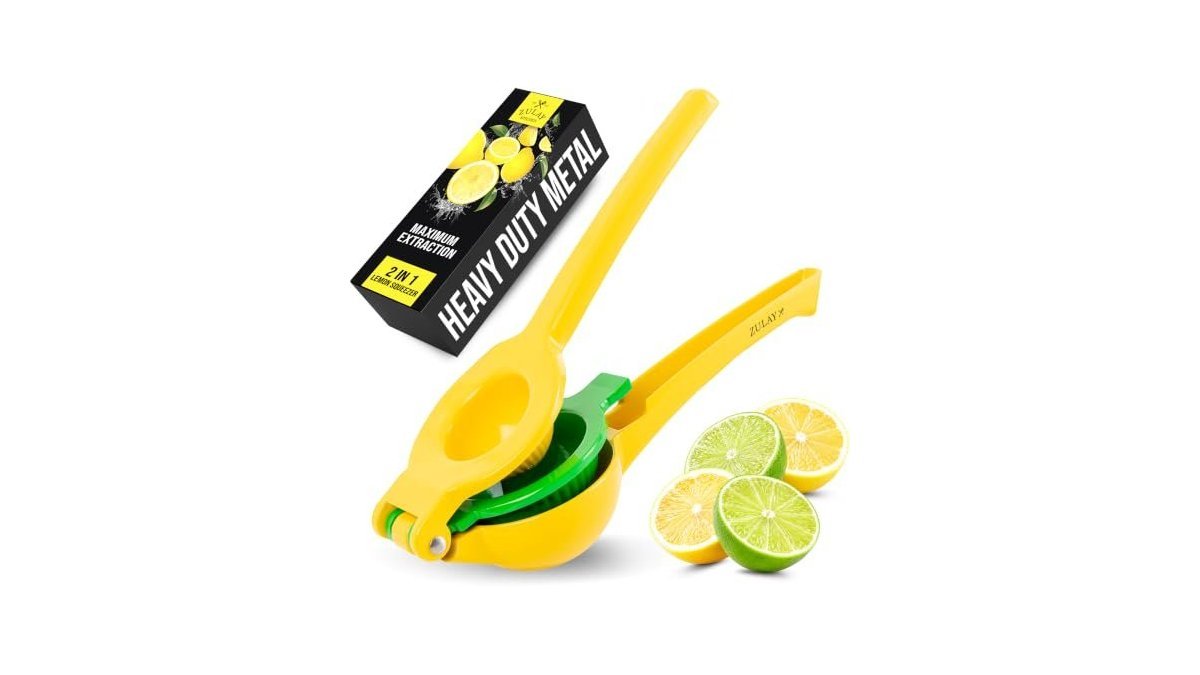
1. Zulay Kitchen Metal 2-in-1 Lemon Lime Squeezer
Right for: Anyone who wants one simple tool and no setup.
This is a handheld press made from aluminum with a food-grade coating, and the listing says it handles limes, lemons, and small oranges. The holes at the bottom of the bowl act as a seed filter, so pulp and seeds stay out of your glass. The seller backs it with a lifetime guarantee, and it goes in the dishwasher or just under the tap.
On a normal evening, that means you cut a lime, drop a half in the bowl, and squeeze — no cord, no counter space claimed, no parts to assemble. The pressure still comes from you.
What works:
- Seed filter holes keep pulp and seeds out
- Dishwasher safe, or rinse under water
- Lifetime guarantee from the seller
- No batteries, no cord, stores in a drawer
- Works on limes, lemons, and small oranges
Where it gives ground:
- All the squeezing force comes from your hand
- One fruit half goes in at a time
Skip it if: You’re juicing a big batch and want the machine to do it.
2. BLACK+DECKER 32oz Electric Citrus Juicer
Right for: Households that juice oranges, lemons, and limes in volume.
This is an electric citrus juicer with a 32-ounce container and pressure-activated operation — you press the fruit half down on the cone and it starts. The cones auto-reverse, which the listing says provides maximum juice extraction. A removable pulp basket lets you adjust how much pulp lands in the juice, and you can toss the collected pulp or fold it into another recipe.
For someone making a pitcher of lemonade or a round of cocktails for a group, that changes the job completely. You’re not squeezing anything by hand; you’re pressing fruit onto a spinning cone and watching the level rise in a clear container that doubles as a pitcher with a handle and a drip-free spout. The measurement markings on the side mean you can juice straight to a recipe’s number instead of guessing. The trade-offs are the ones that come with any corded appliance: it lives on the counter or in a cupboard, it needs a free outlet, and the plastic container and basket are parts you’ll be washing.
What works:
- 32-ounce container doubles as a pouring pitcher
- Auto-reversing cones for extraction
- Adjustable pulp control with removable basket
- Measurement markings on the clear container
- Drip-free spout for pouring
Where it gives ground:
- Needs an outlet and counter or cupboard space
- Several removable parts to wash
Skip it if: You juice one lime at a time and want nothing plugged in.
3. Chef’n FreshForce Lemon Squeezer Citrus Juicer
Right for: People with weak grip or sore hands who still want manual.
This handheld press uses a patented dual-gear mechanism, and the listing says it produces 20% more juice than conventional handheld citrus juicers while reducing hand fatigue. It’s built from durable nylon and stainless steel, handles lemons, limes, and other small citrus, and the top rack of the dishwasher takes care of cleaning.
The patented dual-gear mechanism increases pressing power. If you’ve ever given up halfway through a stubborn lime because your hand ached, that’s the problem this design targets. The catch is in the same sentence as the benefit: it reduces fatigue, it doesn’t remove it, and it’s still a manual tool for small citrus only. A grapefruit won’t fit, and a long juicing session is still a long juicing session.
What works:
- Dual-gear mechanism multiplies pressing power
- Listing claims 20% more juice than conventional handhelds
- Nylon and stainless steel construction
- Handles lemons, limes, and small citrus
- Top rack dishwasher safe
Where it gives ground:
- Still a manual tool, so some effort remains
- Built for small citrus, not large fruit
Skip it if: You want zero hand effort and don’t mind a cord.
4. KitchenAid Citrus Juice Press Squeezer
Right for: Cooks who want leverage without electricity.
This is a countertop press that sits flat so you can lean your weight into the handle rather than gripping it in the air. Juice collects inside a hopper with a built-in strainer that catches pulp and pips, and an integrated spout pours from the same vessel. It’s made from aluminum and nylon, sized at 8 inches, and meant for lemons and limes. The listing covers it with a generous replacement policy and a lifetime limited warranty, and it’s dishwasher safe.
Sitting this on the counter moves the effort from your grip to your arm and body weight, so a hard lime gives way with far less strain. The juice stays contained until you pour, which keeps the counter clean. What you give up is versatility — the listing names lemons and limes, so it isn’t the tool for oranges or grapefruit — and it takes up a spot on the counter or in a cabinet between uses.
What works:
- Sits flat on the counter for added leverage
- Built-in strainer catches pulp and seeds
- Integrated spout for pouring, no mess
- Dishwasher safe
- Generous replacement policy plus lifetime limited warranty
Where it gives ground:
- Listed for lemons and limes only
- Occupies counter or cabinet space
Skip it if: You need one tool that also handles oranges and grapefruit.
5. Vinci Electric Juicer
Right for: Anyone who wants to press a button and walk away.
This is a fully enclosed electric press. You cut the citrus, place a half on the reamer, close the lid, and press the Auto Juice button — the machine presses the fruit inside the chamber in about 10 seconds with no holding or squeezing. The listing says the pressure adjusts to the thickness of the rind to avoid scraping too deep and pulling bitter notes into the juice. It fits fruit from key limes up to grapefruits 4.5 inches across, and the 12-ounce Tritan bowl has a locking spout you can keep closed to collect juice or lower to pour. Fine and coarse pulp filters are included, and the lid, bowl, reamer, and filters are top-rack dishwasher safe.
Think about what that means for a party. You’re not standing over a bowl squeezing halves one by one; you’re feeding halves in and pressing a button, and the juice never leaves the enclosed chamber until you pour it, so there’s no splashing across the counter. The trade-offs are real, though: it’s a machine that needs a spot on the counter and an outlet, and it’s the most involved thing here to take apart and clean, even if the parts are dishwasher safe.
What works:
- Fully hands-free, enclosed pressing in about 10 seconds
- Pressure adjusts to rind thickness
- Fits key limes up to 4.5-inch grapefruits
- 12-ounce bowl with locking spout
- Fine and coarse pulp filters included
Where it gives ground:
- Needs counter space and an outlet
- More parts to disassemble for cleaning
Skip it if: You make one drink at a time and want a drawer-sized tool.
Also Worth Considering
Cuisinart Pulp Control Citrus Juicer — An electric model with three pulp control settings, and the title says it accommodates both small limes and large grapefruits. If you want the electric route with a say in how much pulp ends up in the glass, this is the one to look at alongside the Vinci.
Zulay Kitchen Cast Iron Juicer — A heavy-duty stainless steel hand press built for oranges, lemons, and other citrus, with the listing describing it as lemonade-stand ready. Worth a look if you want a manual press with more heft than an aluminum handheld.
OXO Grips Small Citrus Juicer — A reamer-style juicer with a 2.5-ounce cup for measuring, a drip-free pour spot, and a design aimed at oranges, lemons, limes, and cocktails. A simple option if you prefer twisting fruit over squeezing handles.
How to Think Before You Choose
Hand Force or Electricity
This is the first fork in the road, and it decides everything else. A manual tool asks your hand, wrist, and forearm to supply the pressure; an electric one asks for an outlet and counter space instead. Neither is better in the abstract — they suit different kitchens and different hands.
Most people should lean manual if they juice a small amount at a time, want the tool in a drawer, and have no grip problems. Lean electric if you juice by the pitcher, make citrus-heavy recipes often, or find squeezing painful. The volume matters more than anything: a single piece of fruit a day is a manual job, a pitcher of margaritas for eight is not.
Here’s something you can check at home before deciding. Take a lime from your fridge, cut it in half, and squeeze it fully by hand into a glass, counting how many seconds you can keep a firm, steady squeeze before your hand complains. If you make it through several limes without noticing, a manual press will feel easy. If one lime leaves your hand tired, put that fact ahead of everything else on this page.
Seeds, Pulp, and What Lands in the Glass
Every tool here handles the solids differently, and this shapes what your drink tastes like. Hole-style filters in a handheld press stop seeds and most pulp at the bowl. Electric models often give you a basket or a set of filters so you choose the pulp level. A built-in strainer in a countertop press does the same job by gravity.
Most people should lean toward adjustable pulp control if they juice for other people, because pulp preference is personal and a filter you can swap or remove settles the argument. If you only ever juice for yourself, a fixed seed filter is enough and one less part to wash.
Before you buy, pour a glass of the juice you normally drink and look at it honestly. If you like it cloudy with body, a coarse or no-filter setup suits you. If you want it clear, you need a tool with a fine strainer or a removable pulp basket. That single look at the glass tells you more than any feature list.
Size of Fruit and Size of Batch
The listings here differ on how much fruit they accept and how much juice they hold. Some are built for lemons and limes only; others take key limes on the small end and grapefruits up to 4.5 inches on the large end. Bowl and container sizes run from a few ounces to 32 ounces.
Most people should lean toward a tool that covers the fruit they actually buy. If oranges and grapefruit never enter your kitchen, a lime-and-lemon tool is all you need, and a wider mouth just means a bulkier object in the drawer. If your citrus basket is mixed, check the stated fruit range before anything else.
Measure two things at home: the widest fruit you’d realistically juice, and the largest amount of juice a single recipe asks for. A ruler against a grapefruit and a look at your biggest recipe’s measurement will tell you whether you need a wide-accepting press and a large container, or whether a small handheld covers your whole year of juicing.
Who Should Skip These Altogether
These tools are genuinely useful, but they’re not for everyone, and a few readers should keep their money.
- If you juice only occasionally for a single recipe, a fork or your hands will do the job, and a dedicated tool just takes up drawer space.
- If you already own a handheld squeezer that works fine, nothing here replaces it — a second one adds a duplicate, not a capability.
- If you need large volumes of juice regularly, a full-size juicing machine or bottled juice handles that better than any press on this list.
- If you’d use it once for a party and then store it, borrow one or squeeze by hand that night instead of buying.
Frequently Asked Questions
What do I actually need to use these juicers?
For the manual presses, you need nothing but the fruit and your hand — no power, no setup, no assembly. The electric models need a free outlet and a spot on the counter or in a cupboard. Before ordering, check that you have the space the model you’re considering actually occupies, because a 32-ounce pitcher-style juicer and a handheld press live in very different places in a kitchen.
How much cleaning does each one ask for after juicing?
The handheld presses are the simplest: the Zulay Kitchen 2-in-1 Squeezer and the Chef’n FreshForce are both dishwasher safe, and the Zulay listing says it can also just be rinsed under water. The KitchenAid Citrus Press is dishwasher safe as well. The electric models take more disassembly — the Vinci Electric Juicer has a removable lid, juice bowl, reamer, and filters that are all top-rack dishwasher safe.
What tends to go wrong first with a citrus press?
The Chef’n FreshForce listing says its dual-gear mechanism helps reduce hand fatigue, and the KitchenAid Citrus Press listing says it sits flat on the countertop for added leverage. Coverage varies too: the Zulay Kitchen 2-in-1 Squeezer carries a lifetime guarantee, and the KitchenAid Citrus Press carries a one-year hassle-free replacement plus a lifetime limited warranty, while the other listings here don’t state a warranty term.
Is the simplest pick here enough for most people?
For most households, yes. If you juice a lime or two at a time for drinks, marinades, or dressings, a handheld press like the Zulay Kitchen 2-in-1 Squeezer covers the job. The point where simple stops being enough is volume: once you’re filling a pitcher for a group, an electric model like the BLACK+DECKER CJ625 or the Vinci Electric Juicer earns its place.
What should I confirm before ordering?
Check four things. First, the fruit range: the Vinci Electric Juicer fits key limes up to 4.5-inch grapefruits, while the KitchenAid Citrus Press is listed for lemons and limes only. Second, the container or bowl size if you juice in batches — 12 ounces and 32 ounces suit different jobs. Third, the cleaning routine, since dishwasher-safe parts still need to be taken apart first. Fourth, the warranty terms, which differ across these listings.
The One to Get
For most people, the Zulay Kitchen 2-in-1 Squeezer is the pick — it takes limes, lemons, and small oranges, filters the seeds, rinses clean, and carries a lifetime guarantee, with no cord or counter space involved. If your juicing runs to pitchers rather than single drinks, the Vinci Electric Juicer is the one for the harder case: it presses a half in about 10 seconds, adjusts to the rind, and fits fruit from key limes up to grapefruits. Either way, your next step is to measure your biggest regular recipe and your widest fruit, then open the listing that matches and read the seller’s own description before you decide.
In every case, the fruit itself is the only consumable; there are no pods, filters, or cartridges to replace. Before ordering, check that you have the space the model you’re considering actually occupies, because a 32-ounce pitcher-style juicer and a drawer-sized handheld live in very different places in a kitchen.
For most households, yes. The honest test is how much juice your biggest regular recipe calls for — if it’s measured in tablespoons, keep it simple; if it’s measured in cups, go electric.
Check four things.
Conclusion
Pick the squeezer that matches how often you actually cook, then put it to work on those limes before they go soft. If you’re still deciding, grab a cheap manual one first — you’ll learn fast whether you want a press or a reamer. Either way, you’ll be drinking that margarita sooner.