Best Juicer for Ginger Shots: 5 Picks That Handle the Root
Ginger shots are simple. Ginger, lemon, maybe a little honey, and a juicer that can handle a root that fights back. That’s the whole idea.
But here’s what people get wrong. They buy a juicer built for soft fruit and watery vegetables, then feed it knuckles of ginger and watch it jam, stall, or spit out dry pulp with the good stuff still inside. Ginger is fibrous and stringy. It needs a slow, strong squeeze, not a fast spin.
That’s the one thing that separates a good buy from a bad one here. A slow cold press machine — sometimes called a masticating or auger juicer — turns at low speed and crushes the fiber instead of shredding it. You get more liquid out of the same root, and the juice holds up better in the fridge. A fast centrifugal juicer is louder, simpler in build, and often leaves ginger pulp wetter than it should be.
So when you’re shopping for the best juicer for ginger shots, look at the motor and the speed first. Then look at the feed chute, because a wide one means less chopping. Then look at what comes apart for washing, since ginger leaves residue behind.
You’ll also want to think about how you actually use it. If it’s a shot every morning, a compact model that lives on the counter wins. If you’re juicing for a family, capacity matters more than size. And if you want nut milk or sorbet too, some of these do that as well.
All 5 products side by side — scroll sideways to see every column.
| Top Pick | Best for Big Batches | Best for Easy Cleaning | Best for Whole Fruits | Best for Small Kitchens | |
| Preview |  |  |  |  |  |
|---|---|---|---|---|---|
| Product | Ninja NeverClog JC151 | EanOruus 3-in-1 Juicer | Aeitto 3-in-1 Juicer | SMALLHOO 3-in-1 Juicer | TUUMIIST Cold Press Juicer |
| Brand | Ninja | EanOruus | Aeitto | SMALLHOO | TUUMIIST |
| Best for | Best Overall | Best for Big Batches | Best for Easy Cleaning | Best for Whole Fruits | Best for Small Kitchens |
| The listing says | High-torque motor handles tough fruits and vegetables 2 pulp filters for less or lots of pulp | Two strainers for juice and sorbet 6.5-inch feed chute takes whole fruits | Mesh-free system for juice, nut milk and sorbet Mesh-free design for faster cleaning and assembly | Makes juice, nut milk and sorbet 7'' chute fits unpeeled and cored whole fruits | 300 watt juicer uses slow-speed cold press One-piece design, cleans in 5 minutes |
| More information | Buy on Amazon | Buy on Amazon | Buy on Amazon | Buy on Amazon | Buy on Amazon |
1. Ninja NeverClog Cold Press Juicer
Best for: Everyday ginger shots with texture control
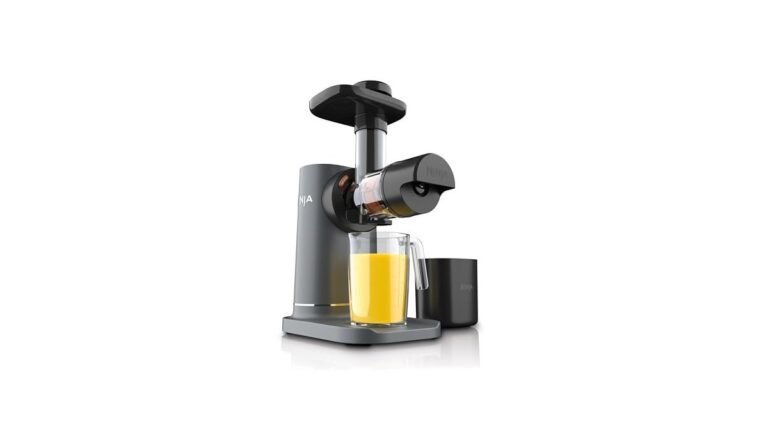
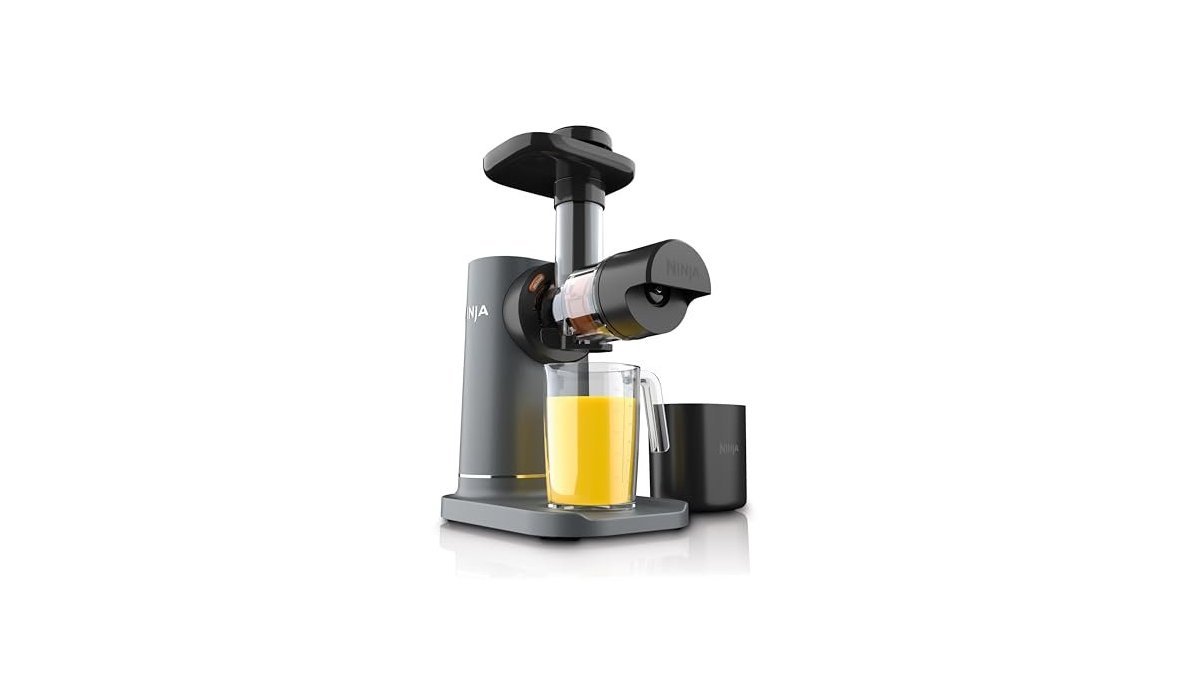
The Ninja NeverClog JC151 is a cold press juicer with a 150-watt high-torque motor that turns the auger at low speed. That’s the setup you want for fibrous roots, because low-speed crushing is what pulls liquid out of ginger instead of just shredding it. The feature that would change a buyer’s mind is the pair of interchangeable pulp filters — one for Less Pulp, one for Lots of Pulp. For ginger shots, that means you decide how much body ends up in the glass.
Owning it’s mostly about small conveniences adding up. There’s a built-in anti-drip lever, so you can pause mid-batch and pour without a puddle forming on the counter. The 24 oz juice jug and 36 oz pulp container are sized for a personal or two-person routine rather than a big family batch. It’s compact enough to sit under kitchen cabinets, and the juice-contact parts go in the dishwasher.
| What it gives you | What you accept |
|---|---|
| Two pulp filters for texture control | 24 oz jug suits small batches, not crowds |
| Dishwasher-safe juice-contact parts | 31.5-inch cord |
Who it fits: Anyone making a daily ginger or green juice who wants control over pulp and an easy cleanup routine. The two filters and dishwasher-safe parts suit someone who’ll actually use this most mornings.
Who should pass: If you’re juicing for a large household in one go, the 24 oz jug and 36 oz pulp container will have you emptying and refilling mid-session. A bigger-capacity machine fits that life better.
2. EanOruus 3-in-1 Juicer
Best for: Big batches with almost no chopping
The EanOruus 3-in-1 is built around two numbers: a 6.5-inch feed chute and a 100 oz hopper. That chute is wide enough that the listing says it takes large whole fruits and vegetables, including apples and oranges. For ginger you’ll still cut the root down, but the point stands — less prep, more hands-free feeding. It also ships with two interchangeable strainers, so it makes juice, nut milk, and frozen fruit sorbet.
The motor is a high-torque AC brushless design, which the listing describes as engineered for heavy-duty daily use. That matters if you’re running it every morning rather than once a weekend. The detachable pulp outlet is called out as part of the cleaning story, which is the part of juicing people quit over.
- What goes smoothly: Wide chute cuts prep time; large hopper handles batch juicing; three functions from two strainers; detachable pulp outlet for cleanup; brushless motor aimed at daily use.
- What you have to accept: A 100 oz hopper and wide chute mean a large machine on the counter; three functions mean more parts to store.
3. Aeitto 3-in-1 Juicer Machines
Best for: People who hate scrubbing mesh screens
The Aeitto 3-in-1 takes aim at the worst chore in juicing: the mesh screen. Its EasePress design is mesh-free, so there’s no screen to change between recipes and no screen to scrub afterward. The listing says you rinse the straight-through chamber under running water, with a cleaning brush included for the stubborn bits. That single design choice is why this one earns its place.
Think about what the missing screen means for your routine elsewhere. On a traditional cold press machine, every switch from juice to nut milk to sorbet means handling a screen, and every session ends with scrubbing one. Here the same chamber handles all three. Assembly gets simpler too, because there’s no screen to seat correctly before you start.
It also runs a 6.0-inch feed chute that the listing says fits whole apples, oranges, celery, cucumbers, carrots, kale, and spinach. That width is the second half of the pitch: less chopping before, less cleaning after.
The multi-layer extraction structure is claimed at 99% juice yield, which is the seller’s figure. The listing describes the design as improving compression and extraction at every stage, releasing more juice while reducing leftover moisture in the pulp. Treat the percentage as a claim and judge the pulp yourself.
Capacity matters if you are juicing for a household rather than just yourself. The feed chamber is paired with large-capacity juice and pulp containers, and the machine feeds automatically so you can walk away. The listing points this at busy mornings, family breakfasts, and entertaining guests.
There’s a recipe book and an app for ideas, plus phone and 24/7 email support for setup and replacement parts.
Snapshot:
- Mesh-free chamber rinses under the tap
- 6.0-inch chute takes whole produce
- Makes juice, nut milk, and sorbet
- Large feed chamber for family batches
- Recipe book and app included
- Phone and 24/7 email support listed
4. SMALLHOO 3-in-1 Juicer
Best for: Whole fruit, big families, quiet mornings
The SMALLHOO 3-in-1 pairs a 7-inch ultra-wide chute with a 120 oz hopper. The listing says the chute fits unpeeled and cored whole fruits, so prep drops to almost nothing. For ginger you’ll still break the root down, but everything else can go in whole. It runs a 350W motor at 60 RPM, and the listing describes it as quiet enough not to wake the family.
It’s a 3-in-1 too — juice, nut milk, and sorbet. The listing notes nuts need soaking 3-4 hours and frozen fruit should thaw 3-5 minutes before sorbet. Cleaning is tool-free disassembly with dishwasher-safe parts, and a reverse function clears jams. There’s an automatic safety lock that shuts the machine off when the lid is open.
Who it fits: Families or meal-preppers who want one big batch to cover several days, and anyone juicing early who doesn’t want noise. The 120 oz hopper and quiet operation both point at that buyer.
Who should pass: Someone making one small glass a day will find a 7-inch chute and 120 oz hopper more machine than the job needs, and more counter space than it deserves. A 1-year warranty.
5. TUUMIIST Cold Press Juicer
Best for: Small kitchens and short, simple routines
The TUUMIIST is the compact pick. It runs a 300-watt motor at 55 RPM, which the listing describes as mimicking hand-held squeezing — slow enough to preserve freshness and nutrients in the juice. The 5.8-inch feed chute takes whole fruits and vegetables, so you skip most pre-cutting. It’s made from BPA-free materials, which the listing calls out as a juice-contact detail.
The one-piece design is the real story for daily use. The listing says it assembles and cleans easily, with a specialized brush and a claimed 5-minute cleanup. That’s the seller’s figure. If you’re making a ginger shot before work, five minutes of washing is the difference between a habit and a machine in a cupboard.
One thing to know before you buy: the listing is specific that the unit must be assembled correctly to work. You keep the cover open and turn the hopper clockwise until the guide mark lines up with the lock symbol on the chamber. Get that wrong and it won’t run.
Who it fits: Someone in a small kitchen or apartment who wants a compact cold press machine for a daily shot, and who’ll take a minute to assemble it right.
Who should pass: If you want to load a whole batch and walk away, the smaller chute and compact build mean more feeding and more emptying than the wide-chute machines. It’s built for a small serving at a time.
Also Worth Considering
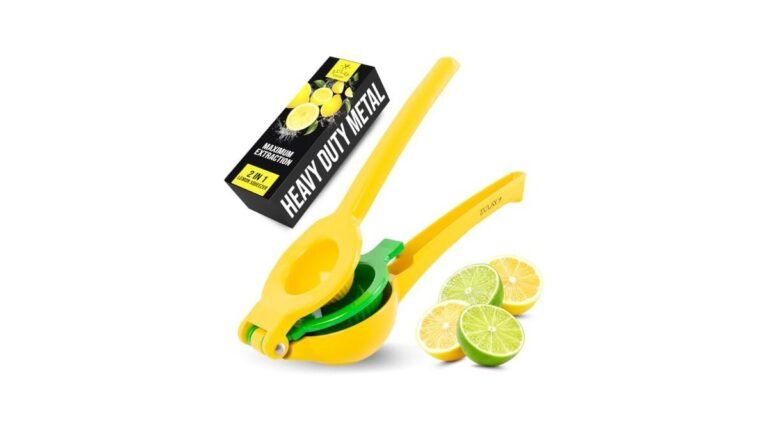
The Zulay Kitchen Metal 2-in-1 Lemon Lime Squeezer is a handheld manual citrus press in stainless steel, built for lemons and limes. If your ginger shot is ginger plus lemon and you only need the citrus part pressed, this does that job without plugging anything in. It’s a hand tool, so it won’t touch the ginger itself.
The Sopito Manual Juicer is a stainless steel squeeze press for citrus fruits, with an extended handle for leverage and a dishwasher-safe build. The listing describes it as extra-large and suited to home, travel, or commercial use. Same story as the Zulay — it’s a citrus press, not a ginger juicer, but it covers the lemon half of the recipe.
The Sopito’s extended handle is the reason it comes up here at all. Its listing says the lever is longer than most cast iron juicers’, which cuts down on hand strain, and that it’s aimed at people who want fresh juice without sore hands. If you’re pressing a lot of citrus at once, that leverage is the difference between a batch and a chore.
The Zulay squeezes limes, lemons, and small oranges, and its holes act as a seed filter so pulp and seeds stay out of the glass. It’s made from aluminum with a food-grade coating, and its listing says it can go in the dishwasher or just be rinsed under water. The Sopito’s bowl is 4.3 inches wide, and its listing notes that most oranges run 2.6 to 3.5 inches across, so nearly all commercial oranges fit. Beyond oranges it handles lemons, limes, grapefruits, and even pomegranates.
Both are hand tools, so neither one plugs in. That’s the whole point of them next to the countertop machines above: no cord, no counter space, nothing to assemble. What they can’t do is take ginger root. If the ginger is the part you need juiced, a press built for citrus halves won’t do it, however hard you squeeze.
The Decision Filter
Answer one question first: how many people are you juicing for, and how often? If you are juicing just for yourself, most mornings, a compact cold press machine with an easy cleanup is the whole answer — everything bigger just takes up counter space you’ll resent. If it’s a family or a weekly meal-prep session, capacity and chute width move to the top of the list.
Most people miss this: the pulp container size, not the juice jug. You’ll empty the pulp far more often than the jug, and a small pulp bin turns a smooth session into a stop-start one.
Your second question is whether you want nut milk and sorbet. If you do, the 3-in-1 machines cover it. If you only ever want juice, that extra hardware is just more parts to wash.
Feed chute width is where the daily annoyance hides. A 6.5-inch chute takes whole apples and oranges, so prep is a rinse and a drop. A 5.8-inch chute still handles whole fruits, just with less margin on the big ones.
Below that, you’re cutting. Cutting is the step you do every single time, so it’s the one to remove first.
Then match the batch to your fridge. A 100-ounce hopper is built for large batches or a gathering in one go. The Ninja’s 24-ounce jug and 36-ounce pulp container are sized for a glass or two at a time.
Two smaller things decide whether you keep using it. Check the pulp outlet comes off — a detachable one rinses fast, a fixed one does not. And check for a reverse function, which clears jams instead of making you take the machine apart mid-batch.
If you juice citrus by the glass rather than by the pitcher, none of this applies. A handheld press or a manual lever juicer with a seed-straining cone is faster than assembling anything, and it needs no counter space at all.
The Quick Checklist
Will you really use this most days, or only on weekends? A 150-watt high-torque auger turns at low speed and powers through apples, carrots, celery, and leafy greens. A 350-watt machine running at 60 RPM, or a 300-watt one at 55 RPM, does the same job by a different route.
Does anyone else in the house need to operate it without help? Two one-touch programs, Start/Stop and Reverse, keep it simple. Reverse helps clear jams. A machine that needs its hopper turned clockwise until the guide mark lines up with the lock symbol is a different ask.
Will it fit under your cabinets and stay plugged in where you juice? A space-saving body fits under kitchen cabinets, and the cord is 31.5 inches. Measure the counter before you commit.
Do you have space for a wide chute and a large hopper? Feed chutes run 5.8, 6.0, 6.5, and 7 inches. Hoppers run 100 ounces and 120 ounces. A 24-ounce juice jug and a 36-ounce pulp container are the small end.
Can you live with the cleanup routine this machine asks for? Dishwasher-safe juice-contact parts, a mesh-free chamber you rinse under the tap, or tool-free disassembly. A hand press goes in the dishwasher too.
If it’s the wrong one, who would you hand it to? A 100-ounce hopper suits a family or a meal prepper. A manual citrus press suits small batches and travel.
Three Regrets Worth Avoiding
Regret #1: Buying for juice only, then wanting nut milk or sorbet later. Several machines here are 3-in-1 with interchangeable strainers, and the listings are clear that nuts need soaking and frozen fruit needs a few minutes to thaw. If there’s any chance you’ll want those, pick a 3-in-1 now instead of buying twice. The fix: decide before you buy whether juice is the only job.
Regret #2: Underestimating cleanup. The listings that lead with mesh-free chambers, straight-through rinsing, dishwasher-safe parts, and included brushes are telling you something about where owners give up. The fix: weigh the cleaning design as heavily as the motor.
Regret #3: Choosing a chute that’s too narrow for how you actually eat. If you buy whole apples and don’t want to chop, a wide chute changes your mornings. The listings here range from 5.8 inches up to 7 inches, and the wider ones are described as fitting whole unpeeled fruit. The fix: match the chute to the produce you’ll feed it, not to the recipe you saw once.
One more thing worth checking before you commit: how much you can load at once. The hoppers here run from 100 ounces up to 120 ounces, and the listings pitch that range at families and meal preppers who want several days of juice from a single session. If you juice for one, a smaller hopper is easier to store and clean. If you’re feeding a household, the big one saves you refilling mid-batch.
Then there’s the jam. Reverse is the feature that clears a clog without disassembly, and it shows up across these listings for a reason. A machine without it means stopping, taking the chamber apart, and starting over. On a fibrous morning that’s the difference between juice and abandoned juice.
Two smaller details decide daily use more than they should. A safety lock that shuts the motor off when the lid is open, and an anti-drip lever that lets you pause and pour without a spill. Neither shows up in a spec comparison, and both show up every single time you use the machine.
If you’re only ever squeezing lemons, limes, or oranges, none of this applies. A manual press handles that job, stores in a drawer, and never needs a motor.
What to Look for in a Juicer for Ginger Shots
Here’s the short version of what to chase and what to walk past.
| If you want… | Look for | Avoid |
|---|---|---|
| A daily single ginger shot | Compact cold press, easy rinse | Wide chute, huge hopper |
| No chopping at all | 6.5-inch chute or wider | Narrow feed tube |
| Family-size batches | Large hopper, big pulp bin | Small jug and pulp container |
| Fast cleanup | Mesh-free chamber, dishwasher-safe parts | Multi-screen assemblies |
| Nut milk and sorbet too | 3-in-1 with two strainers | Juice-only machines |
| Quiet early mornings | Low RPM, brushless motor | High-speed centrifugal design |
Two rows in that table are worth slowing down for, because the wrong pick adds work to every single day.
Start with the first row. A compact cold press with a small jug and a quick rinse is built for one glass at a time, which is exactly what a daily ginger shot is.
Buy a wide-chute machine instead and you get a bigger footprint and more parts to wash, for a job that never needed them. The chute only pays off when you’re feeding it whole fruit, often.
Now the cleanup row. Mesh-free means the chamber rinses straight through under running water, so there’s no screen to scrub and no screen to store.
A machine with interchangeable mesh screens asks you to swap and wash them between recipes. That’s fine if you juice once a week and want the texture control. It’s a daily tax if you juice every morning.
So the rule is simple. If you juice most days, buy for the rinse. If you juice on weekends and want to dial pulp up or down, the screens earn their place.
One more thing the table can’t show you: pulp capacity. A 36-ounce pulp container lets you finish a batch before you empty it. A small one means stopping mid-run with a full chamber and a half-fed chute.
Check the pulp bin against the juice jug before you buy. If the bin is small and the jug is large, you’ll be emptying it more often than you pour.
Closing
If two picks still look equal after all that, use this tie-break: pick the one whose cleaning routine you’d actually do at 7 a.m. on a workday. Motor power and chute width are easy to compare on a page, but the machine you keep using is the one that doesn’t feel like a chore to rinse. Everything else is a detail you can live with.
Cleaning is where the listings separate most. The Ninja’s juice-contact parts are dishwasher safe, and its anti-drip lever lets you pause and pour without a spill. The Aeitto drops the mesh screens entirely, so you rinse a straight-through chamber instead of scrubbing. The EanOruus has a detachable pulp outlet. The TUUMIIST ships with a brush and claims a five-minute clean. The SMALLHOO disassembles without tools.
Notice what that means. Two machines with the same wattage can demand very different amounts of your morning.
There’s a second tie-break worth keeping in your pocket. Ask whether the machine does one job or three. The EanOruus, Aeitto and SMALLHOO all make juice, nut milk and sorbet. The Ninja is a juicer, full stop.
If you only ever want juice, that extra versatility is cabinet space you’re paying for. If someone in the house wants sorbet, it’s the whole reason to buy.
One mistake people make here: buying for the batch they imagine rather than the batch they make. A 100oz hopper is a gift if you juice for a family several days ahead. If you make one glass on a weekday, it’s a large object to store and rinse.
Your next step is simple. Pick the two that fit how you actually juice, read their listings one more time with your own routine in mind, and let the buy button take you to the current listing on Amazon. The specs won’t change. Your mornings will.
Related guides
- The 10 Best Juicers for Ginger Root
- The 10 Best Juicers for Beets That Handle Tough Roots
- Best Juicer For Ginger
Frequently Asked Questions
Will a cold press juicer really get more out of ginger than a centrifugal one?
Yes, and the reason is mechanical. Ginger is dense and fibrous, and a slow auger crushes it against a chamber wall rather than shredding it at speed. The listings here describe low-speed extraction — 55 RPM on the TUUMIIST, 60 RPM on the SMALLHOO — as mimicking hand squeezing. That slow pressure is what coaxes liquid out of tough fiber.
Can I put whole ginger root in, or do I have to chop it?
You’ll almost always cut ginger down, even with a wide chute. The chutes here run from 5.8 inches up to 7 inches, and the listings describe them as taking whole apples, oranges, cucumbers, and carrots. Ginger is a knobbly root, not a round fruit, so it doesn’t feed cleanly on its own.
Do I need to peel the ginger first?
That’s your call, not the machine’s. The listings here don’t require peeling for the produce they describe, and several note that whole unpeeled fruit can go in. Ginger skin is thin and carries flavor, so many people leave it on and just wash the root well. If you peel it, you lose a little volume but get a cleaner, milder taste in the shot.
How long does fresh ginger juice keep in the fridge?
Cold press juice generally holds up better than fast-juiced because less air gets whipped into it. The TUUMIIST listing talks about locking in freshness and nutrients through slow extraction, and the Ninja listing mentions minimizing foam. Foam and air are what speed up the decline. Make small batches and drink them fresh.
What happens if the machine jams on a tough root?
Several machines here include a reverse function for exactly this. The Ninja lists Start/Stop and Reverse as its two one-touch programs and says reverse helps reduce jams. The SMALLHOO listing says its reverse function prevents jams, and adds an automatic safety lock that shuts the unit off when the lid is open. If yours stalls, switch to reverse, let it clear, then feed smaller pieces.
Are the parts dishwasher safe, or do I have to hand wash?
It depends on the model, and the listings are specific. The Ninja says all juice-contact parts are dishwasher safe. The SMALLHOO says tool-free disassembly with dishwasher-safe parts. The Aeitto takes a different route with a mesh-free chamber you rinse under running water, plus an included brush. Check which parts the listing covers before you rely on the dishwasher for everything.
Is BPA-free a real concern with juicers?
It’s a fair thing to check, since juice sits in contact with the chamber and jug. The TUUMIIST listing states its juicer is made of BPA-free materials, and calls that out as a juice-contact detail. If avoiding certain plastics matters to you, look for that line in the listing before you buy, and check which parts are described as juice-contact.