The 10 Best Juicers for Ginger Root
You’ve got a bag of fresh ginger on the counter and a recipe that wants fresh ginger juice. So you peel a few knobs, chop them up, and reach for whatever you’ve got. Maybe it’s a blender that leaves you with a fibrous paste. Maybe it’s a citrus squeezer that just laughs at a hard root. That’s usually the moment people start searching for the best juicer for ginger root.
Ginger is a tough one to juice. It’s dense, it’s stringy, and it doesn’t give up its liquid easily. The two things you have to weigh against each other are speed and yield. A fast machine gets you juice in seconds but may leave more behind in the pulp. A slow press gets more out of every root but asks for more of your time and patience. This page sorts through what each listing actually promises, so you can pick the one that fits how you cook.
All 10 products side by side — scroll sideways to see every column.
| Best Choice | Best Wide Chute | Best Slow Masticating | Best Manual Ginger Press | Best Hand Crank | Best Citrus Style Press | Most Labor-Saving Press | Best Screw Press | Best Filter Set | Best for High Volume | |
| Preview |  |  |  |  |  |  |  |  |  |  |
|---|---|---|---|---|---|---|---|---|---|---|
| Product | EanOruus Cold Press Juicer | SIFENE Compact Centrifugal Juicer | Omega VRT350X | Piefeak Manual Ginger Juicer | Kilixin Manual Wheatgrass Juicer | NDQGXQPGU Manual Juicer Press | LUCSQZZIY Manual Ginger Squeezer | Manual Ginger Juicer | Ginger Squeezer | HQHAOTWU Sugar Cane Juicer |
| Brand | EanOruus | SIFENE | Not stated | Piefeak | Kilixin | NDQGXQPGU | LUCSQZZIY | Generic | Generic | HQHAOTWU |
| Best for | Best Overall | Best Wide Chute | Best Slow Masticating | Best Manual Ginger Press | Best Hand Crank | Best Citrus Style Press | Most Labor-Saving Press | Best Screw Press | Best Filter Set | Best for High Volume |
| The listing says | Three detachable parts and a cleaning brush Blade-free design with lid-activated automatic shutoff | 1300 W peak-power motor with titanium-plated disc 3.2 in. extra-wide feed chute fits whole fruits | Refurbished, tested and certified to look and work like new Includes functionality testing, cleaning, inspection, repackaging | For ginger juice, tea, sauce prep and catering Spiral screw structure boosts juice yield | Extracts juice from wheatgrass, greens, fruits, vegetables Does not juice sugarcane | 3-piece set: cup body, fine filter screen, press rod For ginger, lemon, orange and other fruits | 3-piece set: cup body, fine filter screen, press rod For ginger, lemon, orange and other fruits | T-handle applies pressure for cooking and tea 304 stainless steel, 1.3 kg, barrel about 5 cm across | 3-piece set: juicing cup, fine filter, press rod For ginger, lemons and oranges | Three stainless steel rollers, width adjusts automatically Productivity about 300Kg |
| More information | Check Price on Amazon | Check Price on Amazon | Check Price on Amazon | Check Price on Amazon | Check Price on Amazon | Check Price on Amazon | Check Price on Amazon | Check Price on Amazon | Check Price on Amazon | Check Price on Amazon |
1. EanOruus Cold Press Juicer
Right for: Busy households juicing whole produce with little prep.
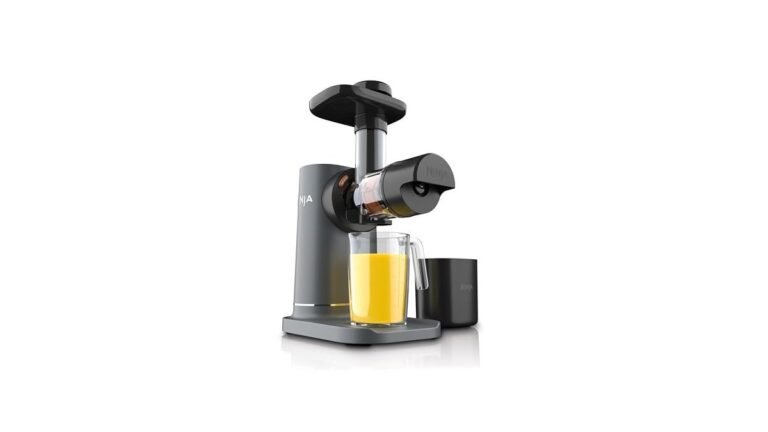
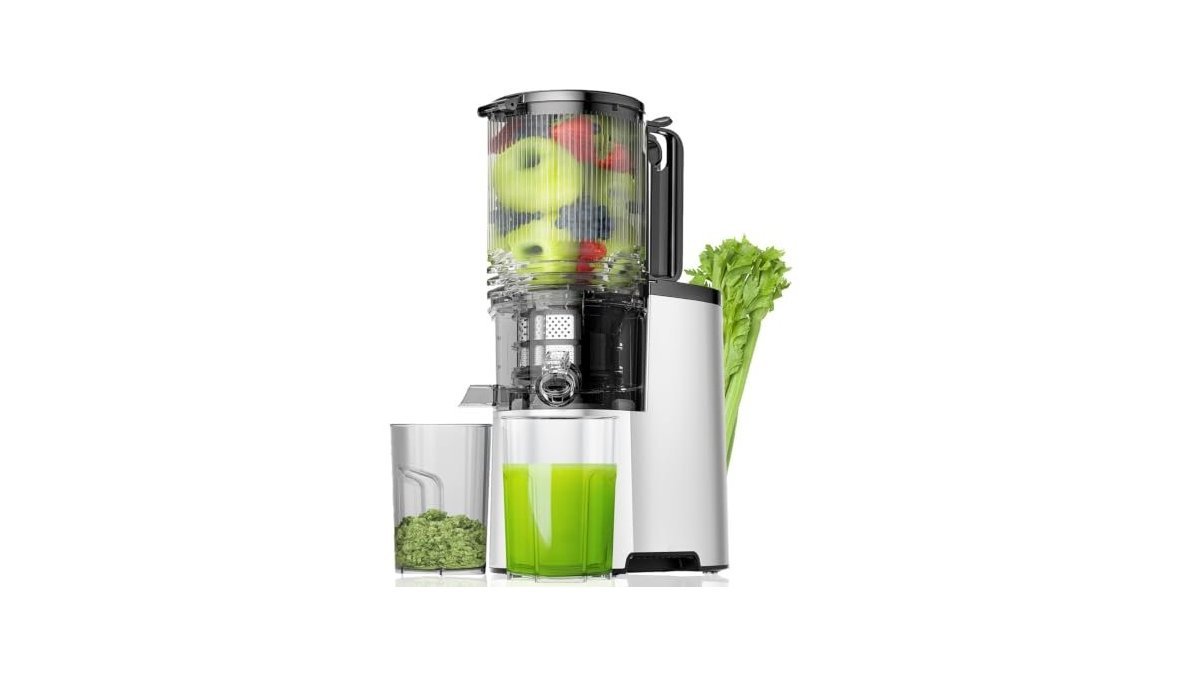
This listing promises a 400W motor running at 50rpm, which is slow enough that the seller says heat and oxidation stay low. The 5.8-inch feed chute takes whole apples and carrots, so you skip most chopping. A reverse mechanism clears clogs from fibrous things like celery and kale. The blade-free design shuts off when the lid opens.
On a normal morning, that feed chute is the part you’d notice most. Tossing in a whole apple instead of quartering it saves real minutes when you’re rushing. The slow speed means you’re not standing there forever either, since you’re not pre-cutting everything first. It’s built for someone who juices most days and wants the routine to feel easy.
What works:
- 5.8-inch chute takes whole apples and carrots
- 400W motor runs slow at 50rpm
- Reverse function clears fibrous clogs
- Lid-activated shutoff for safety
- Three detachable parts plus a cleaning brush
Where it gives ground:
- Slow speed means each batch takes time
- Cleaning brush is included but parts still need rinsing
Skip it if: You want the fastest possible pass through a large harvest.
2. SIFENE Compact Centrifugal Juicer
Right for: Morning juicers who want speed over a slow press.
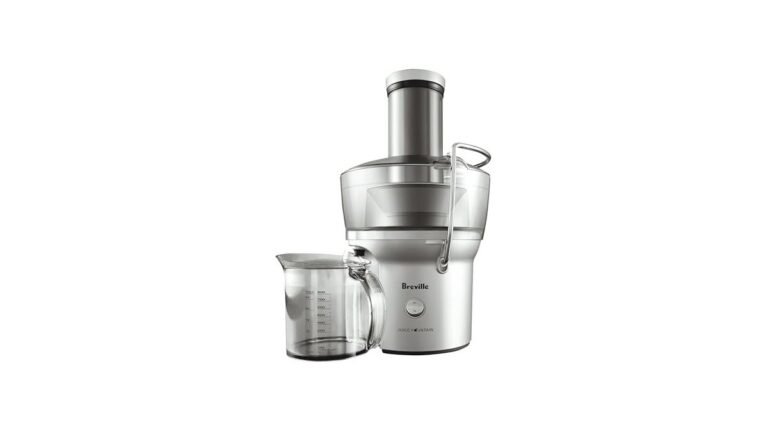
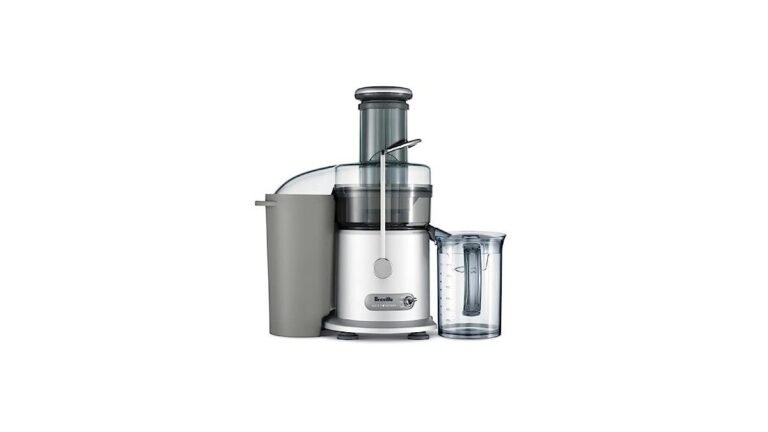
This is a 1300W centrifugal machine with a 3.2-inch feed chute and a titanium-plated disc. The seller says the disc gives drier pulp, which means more of your produce ends up as juice. Three speeds cover soft fruit at 12,000-15,000 RPM and harder vegetables at 15,000-18,000 RPM, with a pulse mode for quick bursts. The listing names ginger and beets as things it handles.
For a busy morning, speed is the whole point here. You feed produce in, it spins fast, and juice comes out in seconds rather than minutes. The 800 ml jug and 1,600 ml pulp bin mean you’re not stopping to empty things constantly. The listing’s own cleaning note tells you the mesh filter needs the included brush after each use. That’s the daily chore you accept in exchange for the speed.
What works:
- 1300W motor with three speed settings
- 3.2-inch chute fits whole apples and pears
- Titanium-plated disc for drier pulp
- BPA-free parts are top-rack dishwasher safe
- Safety arm, overheat protection, suction feet
Where it gives ground:
- Mesh filter needs brushing after each use
Skip it if: You want a quiet, slow press and don’t mind the wait.
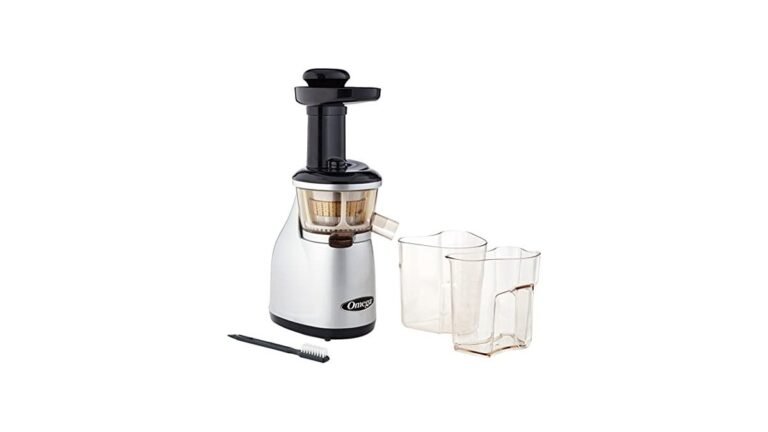
3. Omega VRT350X Vertical Low Speed Juicer
Right for: Buyers who want a known vertical slow juicer and accept a refurbished unit.
This is a renewed Omega VRT350X vertical low-speed juicer in silver. The listing says the refurbishing process includes functionality testing, basic cleaning, inspection, and repackaging. It ships with all relevant accessories. It may arrive in a generic box rather than the original packaging.
For someone who wants a slow masticating juicer and doesn’t mind a renewed unit, this is a straightforward option. A vertical design usually takes less counter space than a horizontal one, which matters in a small kitchen.
The listing is short on feature detail beyond the refurbishment terms. So what you’re really buying is the Omega name and the renewed condition. That’s the honest trade: you get a tested refurbished machine, and you accept a generic box and less documentation about the model’s specifics.
The refurbishment terms are the part worth reading twice. Functionality testing means the juicer was run and checked, not just wiped down. Basic cleaning and inspection sit alongside that, and repackaging is what puts it in the generic box. Those four steps are the whole of what the seller promises.
Notice what the terms don’t promise. There’s no claim about how the machine was used before, how old it is, or how long it will last. If those details matter to you, this listing won’t answer them.
What works:
- Renewed unit tested to look and work like new
- Ships with all relevant accessories
- Vertical low-speed design
- Omega brand name
Where it gives ground:
- May arrive in a generic box
- Listing gives limited feature detail
Skip it if: You want a brand-new unit with full original packaging.
4. Piefeak Manual Ginger Juicer
Right for: Home cooks who juice ginger in small amounts by hand.
This is a manual hand-crank ginger juicer in thickened stainless steel. The listing describes a spiral extrusion design that it says boosts yield while reducing the effort you put in. It’s built for ginger juice, ginger tea, and sauce prep, and the seller says it suits both home kitchens and catering settings. All parts detach and rinse under running water.
On an ordinary day, this is the tool you grab when a recipe calls for a tablespoon of fresh ginger juice. You don’t plug anything in, you don’t clean a big machine, and you don’t commit counter space. The spiral screw does the squeezing so your hands do less work than a simple press. It suits someone who cooks with ginger often but in modest amounts.
The thickened stainless steel build handles ginger and that the tool keeps juice free from impurities. That’s the whole pitch of the material choice: nothing extra ends up in what you drink.
Cleaning is where a manual juicer usually loses people. Here every part comes off, so the rinse happens under the tap and takes moments. If you juice a little ginger most days, that difference decides whether the tool stays on the counter or in a drawer.
What works:
- Spiral extrusion design for yield
- Thickened stainless steel build
- Fully detachable parts rinse quickly
- Compact and manual, no outlet needed
- Works for home and catering use
Where it gives ground:
- Manual operation means batch-by-batch work
- Best suited to smaller quantities
Skip it if: You need to juice large volumes quickly.
5. Kilixin Manual Wheatgrass Juicer
Right for: Wheatgrass and leafy-green juicers who want a hand crank.
This manual juicer is built for wheatgrass, leafy greens, fruits, and vegetables, with the listing noting it doesn’t handle sugarcane. It’s made from stainless steel and uses a hand crank. The seller gives specific advice: for apples, buy crisp juicy ones, peel them, cut them small, and add them in small amounts to avoid clogging. The listing also notes a trick for removing a stuck filter.
That apple advice is the honest heart of this listing. It tells you the machine has limits and how to work within them. On a normal day, you’d feed small pieces in slowly and crank steadily, which suits someone who juices wheatgrass or greens in small daily shots. The trade-off is speed and prep: you cut things small, and you go at your own pace. It’s compact and easy to store, so it fits a kitchen where counter space is tight.
What works:
- Handles wheatgrass, leafy greens, fruits, vegetables
- Stainless steel build for frequent use
- Hand crank, no electricity needed
- Compact and easy to store or carry
- Parts come apart for cleaning
Where it gives ground:
- Apples need peeling and small pieces to avoid clogging
- Not designed for sugarcane
Skip it if: You want to drop in whole fruit and walk away.
6. NDQGXQPGU Manual Juicer Press
Right for: Ginger and citrus pressers who want a pulp-free result by hand.
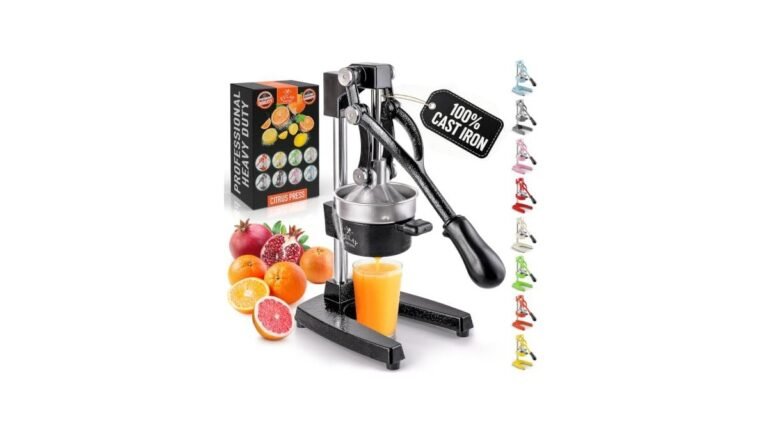
This is a manual press whose parts come apart for easy cleaning, with a cup body, a fine filter screen, and a press rod. The listing says it’s designed for ginger, lemon, orange, and other fruits. The fine mesh filter separates juice from residue for a smooth result. The horizontal press bar and wooden side handle are meant to crush tough ginger with less hand strength. It’s thickened stainless steel and the seller says it won’t retain strong odors.
On a normal day, this is the tool for a glass of ginger-lemon drink. You load the cup, press the bar down, and the filter keeps the pulp out. The wooden side handle helps crush tough ginger with minimal hand strength. The trade-off is that it’s a hand press, so a big pile of roots means repeated pressing. It’s compact and upright, so it stores easily and suits someone who makes fresh drinks at home or in small batches.
What works:
- Three-piece set with cup, filter, press rod
- Fine mesh filter for pulp-free juice
- Horizontal press bar with wooden handle
- Thickened stainless steel, rust-proof
- Compact vertical design
Where it gives ground:
- Hand pressing means repeated batches
- Best for smaller quantities at a time
Skip it if: You want an electric machine to do the work.
7. LUCSQZZIY Manual Ginger Squeezer
Right for: Anyone who wants the least hand effort from a manual press.
This listing pairs a cup body with a fine filter screen and a press rod. The seller highlights the ergonomic horizontal press bar and wooden side handle, saying they help crush tough ginger with minimal hand strength. It’s thickened stainless steel and the listing says it’s rust-proof and won’t hold onto strong odors. The fine mesh filter gives pulp-free juice.
The labor-saving claim is what this listing leans on hardest. If your hands tire easily, or you’ve used a stiff press before and didn’t enjoy it, that’s the feature that matters. On a normal day, you’d press ginger for tea or a marinade without fighting the tool. It’s compact and upright, which makes it easy to keep on the counter or tuck away.
What works:
- Horizontal press bar for less hand strain
- Wooden side handle for grip
- Fine mesh filter for smooth juice
- Thickened stainless steel, rust-proof
- Compact vertical footprint
Where it gives ground:
- Manual pressing suits smaller batches
- Repeated loads needed for larger amounts
Skip it if: You’d rather not press by hand at all.
8. Manual Ginger Juicer
Right for: Cooks who want direct control over each press.
This is a screw press in 304 stainless steel with a T-handle. The listing says you turn the handle to apply pressure to prepared ginger for cooking, tea, and sauces, with no outlet needed. It weighs 1.3 kg and the barrel is about 5 cm across. It has four detachable parts for rinsing, and the seller says you can also use it for garlic, lemon, and herbs in small batches.
The screw mechanism is the difference here. Instead of a lever you push down, you rotate a handle, which gives you steady, controlled pressure on each load. On a normal day, that control is nice when you want a specific amount of juice for a marinade or a sauce. The small barrel tells you this is a small-batch tool, so you press a little at a time. The four parts come apart so you can reach where pulp collects.
What works:
- T-handle screw mechanism for controlled pressure
- 304 stainless steel construction
- Four detachable parts for rinsing
- Works with ginger, garlic, lemon, herbs
- No outlet needed
Where it gives ground:
- Small barrel means small batches
- Screw pressing takes steady turns per load
Skip it if: You need to process a lot of ginger at once.
9. Ginger Squeezer
Right for: Buyers who want a complete press set with every part included.
This is a manual juicer set with a juicing cup, a fine filter, and a press rod, made for ginger, lemons, and oranges. The listing says the fine filter separates juice from pulp for a smooth result. It’s thickened stainless steel with rust and corrosion resistance, and the seller says it won’t retain odors. The horizontal press rod pairs with a wooden side handle for easier pressing.
The set is the appeal here. You get the cup, the filter, and the rod together, so there’s nothing extra to track down. On a normal day, you’d load ginger, press, and pour, with the filter catching the pulp. The wooden handle gives you a comfortable grip when the root is tough. The upright design fits a countertop or packs away, which suits someone who makes fresh ginger drinks at home.
What works:
- Complete three-piece set included
- Fine filter for pulp-free juice
- Thickened stainless steel, rust-resistant
- Horizontal press rod with wooden handle
- Compact upright design
Where it gives ground:
- Manual pressing suits small batches
- Larger amounts need repeated loads
Skip it if: You want a powered juicer for daily volume.
10. HQHAOTWU Sugar Cane Juicer Electric Sugarcane Press Vertical Sugar Cane
Right for: Shops and kitchens pressing ginger and cane in volume.
This is an electric sugarcane press with three stainless steel rollers, rated at about 300Kg/h. The listing says the rollers adjust automatically to improve efficiency. There’s a water injection hole for cleaning, plus a knob above the inlet to open and brush the rollers. It also presses ginger and apple pieces, and the seller names milk tea shops, restaurants, and supermarkets as suitable settings. The flat mouth is about 62mm across.
The volume here is the whole story. This machine is built for a counter where ginger or cane goes through all day, not for a single glass at home. On a normal day in a shop, you’d feed cane and ginger in, and the rollers crush it continuously.
What works:
- Three stainless steel rollers
- About 300Kg/h productivity
- Water injection hole for cleaning
- Also presses ginger and apple pieces
- Flat 62mm mouth for easy feeding
Where it gives ground:
- Weekly gear greasing and prompt roller washing
- Cane over 30mm must be halved first
Skip it if: You only juice a little ginger at home.
Also Worth Considering
Three more machines press ginger, and each has a different reason to exist. The BREVELTION Electric Roller Sugarcane Ginger runs on either 24V DC or 110V AC and comes with a battery box and transformer, so it can work where an outlet isn’t handy.
The PreAsion Sugarcane Juicer Press Machine is rated at 660lb/h and includes a cleaning port and wheels, which points to moving it around a busy space. Its feeding port takes cane up to 2.44 inches across, and the change-over switch reverses the rollers when something jams.
The DPQYJPP Sugar Cane Juice Machine is a manual countertop unit with three stainless steel rolls, so it presses cane, ginger, and sweet sorghum without electricity. It manages 110 pounds an hour, and its flat 63mm mouth takes cane in without extra cutting.
All three are built around volume, so they suit a shop or a serious home setup rather than a single glass. If you have an outlet and a fixed spot, the PreAsion’s wheels and cleaning port matter less than its throughput. If you move between stalls, the BREVELTION’s battery option is the one that keeps working.
How to Think Before You Choose
Slow Press or Fast Spin
The first real decision is whether you want a slow press or a fast centrifugal machine. A slow press runs at low speed, and the seller claims that keeps heat and oxidation low. The SIFENE listing says its 1300W motor processes produce and its titanium-plated disc supports efficient extraction with drier pulp. If your priority is a quick glass before work, the fast machine wins on time. Before you decide, check how often you actually juice. If it’s a few times a week, the slower pace won’t bother you. If it’s every single morning, speed starts to matter more.
Manual or Powered
The second trade-off is manual versus powered. A manual press needs no outlet, takes little space, and gives you direct control over each press. The listings here describe spiral screws, T-handles, and horizontal press bars, all aimed at making hand pressing easier. A powered machine does the work for you but takes up counter space and needs cleaning after each use. If you juice ginger in small amounts, lean manual, because a tablespoon of ginger juice doesn’t justify a big machine. If you’re making ginger drinks for a family every day, or running a small business, powered makes more sense. Check your counter. Measure the spot where it would live, and be honest about whether you’d leave a machine out or store it away each time.
Cleaning and Upkeep
The third trade-off is cleaning and upkeep, and it’s the one people underestimate. Every listing here mentions cleaning, and the details differ. Some parts are dishwasher safe, some need a brush, and one machine asks for weekly greasing and prompt roller washing to prevent rust. A press with detachable parts rinses quickly. A machine with a mesh filter needs brushing after each use. Before you buy, count the parts you’d have to wash and think about your sink. If you hate cleanup, a simple press with few pieces will get used more. If you don’t mind a routine, a bigger machine rewards you with volume. Check whether the parts are listed as dishwasher safe, and whether a cleaning brush comes in the box.
Who Should Skip These Altogether
Not everyone needs a juicer for ginger. Here are four readers who should hold off.
- If you only need ginger juice once or twice a year, a fine grater and a squeeze of your hand will do the job.
- If you already own a blender or a food processor, you can blend ginger with a little water and strain it through a cloth.
- If you want juice from soft fruit only, a citrus squeezer handles lemons and oranges without a dedicated ginger tool.
- If you’d use it once for a single recipe and then shelve it, borrow one or buy pre-made ginger juice instead.
One more group belongs on this list: anyone who wants to juice whole apples, carrots, or other firm produce in any quantity. Nothing here is built for that.
The manual models work on prepared ingredients. The Kilixin handles wheatgrass, leafy greens, apples, and celery, but its own guidance is to peel apples and cut them into small pieces, adding them in small quantities to avoid clogging. That’s prep work, not a shortcut.
The screw and press models are narrower still. They’re designed around ginger, lemon, orange, and watermelon. The T-handle unit lists garlic, lemon, and herbs for sauces, in small batches.
So if your plan is to feed in whole fruit and walk away, skip these. If you’re squeezing ginger for tea, sauces, or drinks, one of them fits.
Frequently Asked Questions
What do I need to do to ginger before juicing it?
It depends on the machine. A wide-chute electric juicer takes whole produce, but ginger is dense, so cutting it into smaller pieces helps any juicer work smoothly. A manual press usually wants peeled or roughly chopped ginger so the screw or bar can grip it. The HQHAOTWU listing says to cut the root and head off first and halve anything over 30mm before pressing. For a hand press like the Piefeak or the LUCSQZZIY, smaller pieces mean less strain on your hands. As a rule, the harder and more fibrous the root, the smaller you should cut it.
How much cleaning does a ginger juicer need after each use?
More than you’d hope, and the listings are upfront about it. The EanOruus says it has three detachable parts plus a cleaning brush, so cleanup is a rinse and a brush. The SIFENE listing says its BPA-free parts are top-rack dishwasher safe, but the stainless steel mesh filter needs the included brush after use. The HQHAOTWU asks for prompt roller washing after each session and weekly greasing of the transmission gear to prevent rust. The pattern is simple: the more the machine does, the more parts you wash.
What goes wrong first with these juicers?
Clogging and pulp buildup are the usual first problems, especially with fibrous ginger. That’s why several listings build in a fix. The EanOruus has an integrated reverse mechanism to clear clogs from celery, kale, and wheatgrass. The Kilixin listing warns that apples can get stuck or give low yield, and tells buyers to use crisp juicy apples, peel them, and add them in small amounts. Feeding slowly and in small pieces prevents most of this.
Is a simple manual press enough for ginger?
For most home cooks, yes. Ginger juice is usually used in small amounts, a tablespoon or two for tea, a marinade, or a sauce. A manual press like the Piefeak, the NDQGXQPGU, or the Ginger Squeezer handles that without an outlet, takes little counter space, and rinses quickly. The trade-off is that you press in batches, so a large quantity takes time and hand effort. Match the tool to how much juice you actually make.
What should I confirm before ordering?
Check the feed chute size, the cleaning routine, and the parts included. A wide chute like the 5.8-inch one on the EanOruus or the 3.2-inch one on the SIFENE cuts prep time, but it matters less if you’re pressing by hand. Confirm whether the parts are dishwasher safe or need hand washing, and whether a cleaning brush comes in the box. For manual presses, check that the set includes the cup, filter, and press rod, as the NDQGXQPGU, LUCSQZZIY, and Ginger Squeezer listings all specify.
Conclusion
Pick the machine that fits how often you actually cook with ginger, then give it a try on a small batch first. You’ll learn pretty fast whether it handles the fiber well or clogs up. If it works, you’re set for years of fresh juice without the hassle.