The 9 Best Reasonably Priced Juicers for Home
Juicing at home sounds simple. You buy a reasonably priced juicer, you put fruit in, juice comes out. Then you start reading listings and every one of them promises the same things — more yield, less foam, easier cleanup. The words blur together fast.
The motor type matters too. Fast centrifugal machines spin and shred. Slow masticating machines crush and press. The fast ones are quicker and often smaller on the counter. Neither is wrong — they just suit different kitchens.
This guide looks at nine machines — what each one is built from, what it does well, and who should walk away from it. No hype. Just the trade-offs, so you can match one to your own counter and your own habits.
| # | Product | Best for | |
|---|---|---|---|
| 1 | Omega VRT350 | Best Overall | Check Price |
| 2 | EanOruus Cold Press Juicer | Best Wide Chute | Check Price |
| 3 | NutriBullet 800W Juicer | Best for Whole Produce | Check Price |
| 4 | Ninja NeverClog JC151 | Best Cold Press | Check Price |
| 5 | BLACK+DECKER CJ625 | Simplest to Use | Check Price |
| 6 | Elite Gourmet ETS623 | Best Compact Citrus | Check Price |
| 7 | SIFENE Centrifugal Juicer | Best Space-Saving | Check Price |
| 8 | Juilist 800W Juicer | Most Speed Settings | Check Price |
| 9 | NEWBULIG Cold Press Juicer | Best Slow Masticating | Check Price |
1. Omega VRT350 Vertical Low Speed Juicer

Best for: Daily green juice and leafy greens
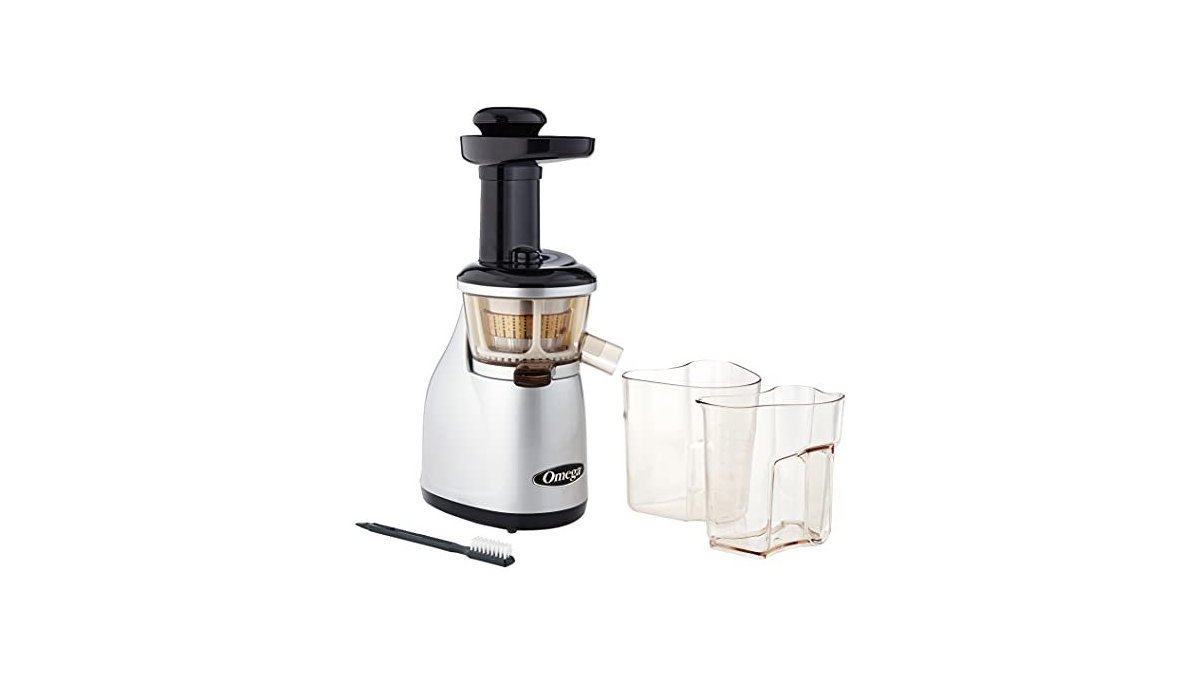
The Omega VRT350 is a vertical low-speed juicer that runs at 80 RPM. It squeezes rather than grinds, and the listing says this keeps the juice’s color, taste, and nutrients intact. The dual-stage system is the part worth understanding: it crushes the produce first, then presses the pulp again before ejecting it. That second press is why the listing claims a higher yield and drier pulp. For anyone who juices kale, spinach, or wheatgrass, dry pulp is the difference between a good glass and a wet, wasteful one.
Owning this one is a slower rhythm than a centrifugal machine. In return, the low speed limits froth and foam, and the listing says juice keeps for up to 72 hours without separating. That’s a big deal if you like to make a batch on Sunday. The three settings are On, Off, and Reverse — and Reverse is there for when something is stuck or you need to unclog.
| What it gives | What you accept |
|---|---|
| Dual-stage pressing for drier pulp | Slower feed, more prep time |
| Juice stores up to 72 hours | Smaller batches per session |
| Reverse setting clears jams | You’ll use it more than you expect |
2. EanOruus Cold Press Juicer

Best for: Busy households that skip chopping
The headline here is the 5.8-inch feed chute. That’s wide enough for whole apples and carrots, so the listing’s claim about skipping prep is the one feature that would change a buyer’s mind. The motor runs at 50 RPM with 400W, and the multi-stage extrusion is designed to keep heat and oxidation low. Three detachable components plus a cleaning brush cover assembly and breakdown, and the listing says there are no hard-to-reach spots to scrub.
Daily use looks like this: you rinse produce, drop it in whole, and let the machine work. The reverse mechanism handles clogs from celery, kale, and wheatgrass without you taking anything apart. There’s also a blade-free design with lid-activated shutoff — the motor cuts out the moment the lid opens. If you have kids in the kitchen, that’s a real safety point, not a marketing line.
What goes smoothly:
- Whole apples and carrots go in without cutting
- Reverse clears fibrous clogs fast
- Three parts come apart for cleaning
- Lid shutoff stops the motor instantly
- Brush handles the filter
What you have to accept:
- Wide body needs counter space
- Built for batches, not single servings
3. NutriBullet 800W Juicer

Best for: Whole fruits with dishwasher-safe cleanup
The NutriBullet Juicer runs an 800W motor with adjustable speeds, so you can match the setting to soft berries or hard carrots. The 3-inch feed chute takes whole fruits and vegetables, which cuts prep down. The listing bundles a lot: a 27 oz sealing juice pitcher, a 1.5L pulp basin, a stainless steel sieve, a food pusher, a cleaning brush, and recipe guides. That pitcher seals and stores juice for up to 48 hours.
What owning it feels like is mostly about cleanup. The sieve, pulp basin, and juice pitcher are all dishwasher-safe, and the pulp basin lifts off so you can carry it straight to the sink. A no-drip spout means you don’t lose juice on the pour. The unit measures 8.8 by 9.4 by 16 inches, so it’s a mid-size machine — taller than it’s wide.
Snapshot:
- Dual speeds for soft and hard produce
- 3-inch chute takes whole fruit
- 27 oz pitcher seals for storage
- Pulp basin lifts off for the sink
- Sieve, basin, and pitcher are dishwasher-safe
- No-drip spout on the pitcher
4. Ninja NeverClog Cold Press Juicer

Best for: Cold press juice without clogging
The Ninja NeverClog uses a 150W high-torque motor that turns an auger at low speed. The listing names apples, carrots, celery, and leafy greens as the things it powers through, and the whole pitch is that it doesn’t clog on fibrous produce. Two interchangeable pulp filters let you choose Less Pulp or Lots of Pulp, which is unusual — most machines decide your texture for you. Two one-touch programs cover Start/Stop and Reverse.
In a small kitchen, the compact body fits under cabinets, and the cord is 31.5 inches. There’s an anti-drip lever so you can pause mid-batch and pour without a mess. All juice-contact parts are dishwasher safe, and the listing says it’s designed to be easier to clean than many centrifugal juicers. You get a 24 oz juice jug, a 36 oz pulp container, and a guide with 15 recipes.
The catch is capacity. A 24 oz jug and 36 oz pulp container suit one or two people, not a family batch. This isn’t for someone juicing for four every morning.
Who it fits: Anyone who’s been burned by a juicer that jams on greens. The two pulp filters also suit people who want control over texture without buying extra parts.
Who should pass: Big households. The jug and pulp container are sized for small batches, so you’d be emptying and re-running constantly.
5. BLACK+DECKER 32oz Electric Citrus Juicer

Best for: Simple citrus juicing, no learning curve
The CJ625 is a citrus press, not a vegetable juicer. You cut an orange or lemon, press it onto the auto-reversing cone, and the machine does the rest. The reversing cones are designed for maximum extraction, and the pulp collects in a removable basket you can either toss or use in recipes. Markings on the clear container let you juice straight into a measurement for a recipe.
The container doubles as a pitcher with a handle and a spout, and the spout is drip-free. Because the container is clear, you can watch the yield rise with each piece of fruit. That’s the whole experience — cut, press, pour, repeat. Nothing to assemble, nothing to disassemble.
This isn’t for anyone who wants green juice, carrot juice, or anything that isn’t citrus. It presses fruit halves and that’s it. If your goal is a glass of orange juice in the morning, that’s plenty.
| What it gives | What you accept |
|---|---|
| Auto-reversing cones for extraction | Citrus fruit only |
| Adjustable pulp control | No leafy greens or hard vegetables |
| Clear container doubles as pitcher | One piece of fruit at a time |
6. Elite Gourmet ETS623 Electric Citrus Juicer

Best for: Small kitchens and RV counters
The Elite Gourmet ETS623 is a compact citrus juicer with a 40W motor — the listing points out that’s stronger than the typical 25W citrus machines, and pairs it with auto-reversing extraction for faster yield. The 24 oz container holds up to 3 cups, which the listing frames as 2 to 3 servings. A built-in pour spout and an integrated pulp and seed filter keep serving clean.
The size is the point here. It’s built for apartments, dorms, RVs, and small kitchens, and it’s BPA-free and ETL listed. The removable parts are top-rack dishwasher safe, though the listing recommends hand washing for the longest life. Push-down activation means there’s no button to hunt for.
The limit is the same as any citrus press — it reams halved fruit. It’s also a 3-cup batch machine. This isn’t for someone who wants one machine to do everything.
What goes smoothly:
- Push-down activation, no buttons
- 3 cups per batch
- Pulp and seed filter built in
- Compact enough for an RV
- Top-rack dishwasher safe
What you have to accept:
- Citrus fruit only
- Hand washing recommended for long life
- Small batches
7. SIFENE Centrifugal Juicer Machine

Best for: Tiny counters and quick single glasses
The SIFENE is a 350W centrifugal juicer, and the base measures just 8.66 by 7.09 inches. That compact base is exactly why it suits studio kitchens and dorm rooms. The motor spins at 18272 RPM, and three settings cover the range: Speed 1 for soft fruit like berries and watermelon, Speed 2 for carrots and apples, and Pulse for a high-speed burst that reduces pulp clogging.
The 2.5-inch feed chute takes whole celery stalks, large apple wedges, and full strawberries, so prep is lighter than you’d expect from a compact machine. All food-contact parts are BPA-free and dishwasher safe — the stainless steel filter, juice jug, pulp collector, chute cover, and pusher all come off. Safety features include a dual locking arm, anti-slip feet, and automatic overheat protection that shuts the motor down if it runs too long.
The listing doesn’t mention a storage window for this juicer, so it’s best treated as a drink-fresh machine. It’s not for someone who wants to batch juice for three days.
Who it fits: Renters, students, and anyone with a counter the size of a cutting board. The overheat protection also suits people who tend to push a machine hard.
Who should pass: Anyone who wants to store juice for days, or who juices large volumes in one go. The 1.5L pulp bin fills fast at speed.
8. Juilist 800W Juicer

Best for: Speed settings and fast juicing
The Juilist brings multiple speeds and a max 800W motor, and the listing claims it juices fruit in under 8 seconds. The 3-inch wide feed chute takes a range of fruits and vegetables without much cutting. The dial is clear: “1” for soft produce like oranges and tomato, “2” for hard produce like apple and carrot, and “P” for the highest speed, reached after you release the button. A visible window lets you watch the juicing as it happens.
The listing also states a lab-test claim — that the yield extracts up to 26% more juice than other 800W juicers. Treat that as the seller’s own wording rather than an independent figure. The stainless steel cutting disc sits inside a micro-mesh filter, and there’s a brush for cleaning it. Accessories are dishwasher safe, and safety comes from automatic overheat protection plus a double safety lock.
The listing includes automatic overheat protection, which shuts the motor down if it runs too long. This isn’t for someone who wants a quiet morning machine.
Snapshot:
- Three speeds plus a pulse setting
- 3-inch chute reduces chopping
- Visible window shows the process
- Brush cleans the mesh filter
- Double safety lock and overheat protection
- Stainless steel finish
9. NEWBULIG Cold Press Juicer

Best for: Quiet daily juicing with less chopping
The NEWBULIG runs a low-speed masticating system the listing describes as quiet, with minimal heat buildup and oxidation. The 4.25-inch feed chute takes large produce chunks, which cuts pre-cutting work. The auger crushes without blades, and an automatic safety lock stops the motor the moment the chamber opens. A reverse anti-clog function clears blockages from fibrous greens or dense produce without disassembly.
Cleaning is the part the listing leans on. All detachable parts come apart without tools and rinse under cool or lukewarm water below 104°F. A pulp-cleaning brush handles residual fiber. That temperature limit is worth noting — hot water is off the table for the parts.
What owning it feels like is a slower, quieter routine than a centrifugal machine, with better juice for storing. This isn’t for someone who wants juice in under a minute, and it’s not for anyone who’ll be tempted to rinse the parts in hot water.
What goes smoothly:
- 4.25-inch chute takes large chunks
- Quiet low-speed operation
- Reverse clears fibrous clogs
- Parts come apart without tools
- Brush included for the pulp
What you have to accept:
- Cool or lukewarm water only for rinsing
- Slower than a centrifugal machine
- Daily cleaning still takes a few minutes
Also Worth Considering
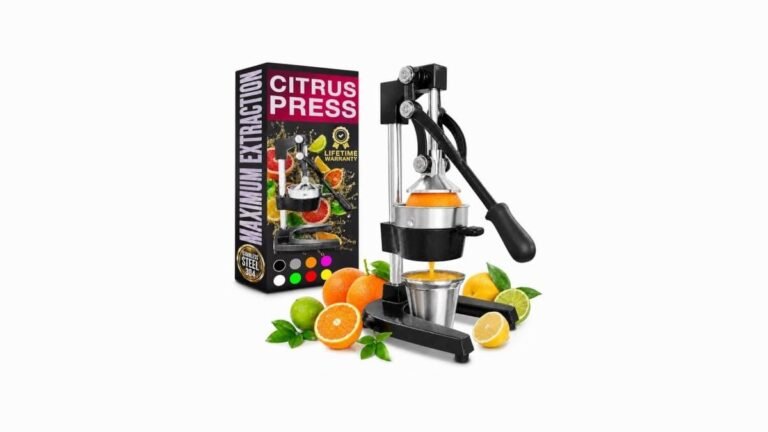
The BlissfulDestiny Lemon Squeezer is a manual tool, not a machine. It’s made from 304 food grade 18/8 stainless steel with an ergonomic grip, and it does one job: squeezing a lemon or lime by hand. There’s no motor, no cord, and nothing to plug in.
The dual-handle lever design is what separates it from squeezing with your fingers. The contoured handles reduce hand fatigue, so a long session of lemons doesn’t leave your hands aching. Built-in strainer holes keep seeds and pulp out of the glass while the lever action extracts the juice.
If your juicing is mostly a squeeze of citrus over a dish or into a drink, this sits in a drawer and never needs cleaning beyond a rinse. It won’t make a glass of orange juice or touch a carrot, but for small citrus jobs it’s the simplest thing on this page.
One care note: hand washing is recommended to maintain the brushed silver finish. It’s dishwasher safe, so that’s a preference rather than a rule.
The Decision Filter
Answer one question first: what will you actually put in it? If the answer is citrus only, you’re choosing between a press and a reamer, and every vegetable machine on this list is wrong for you. If the answer includes leafy greens, you need a slow masticating machine, and the fast centrifugal ones are the wrong tool for that job. If the answer is whole apples and carrots with no chopping, the feed chute width is your deciding number.
Most people miss this: the storage window. A slow machine’s juice keeps far longer than a fast one’s, and that single fact decides whether you can batch on Sunday or have to juice every single morning. Answer the produce question and the storage question, and you’re down to two machines.
Now check the two against each other on the things that only show up after a few weeks of use. Cleaning is the first. A machine with detachable parts and a brush gets rinsed and reassembled in minutes; one with a sieve you have to scrub by hand becomes the reason you stop juicing. Dishwasher-safe parts settle it.
Then the clog. Fibrous greens and dense produce build up pulp, and the answer is a reverse setting. Every slow machine here has one, and it clears a blockage without disassembly. If you juice celery or wheatgrass most mornings, treat reverse as required, not a bonus.
Last, the safety detail if there are children in the house. A blade-free auger with a lid that cuts the motor the moment it opens is the version you want.
The Quick Checklist
- Will you really juice more than twice a week?
- Does anyone else in the house need to use it easily?
- Will it fit under your cabinets or on your counter?
- Do you want to drink the juice fresh or store it?
- Can you live with the cleanup routine every time?
- What happens if it’s the wrong machine for you?
Two of these questions settle most of the decision. If you want juice to keep, the Omega VRT350 stores juice up to 72 hours without degradation or separation, and the NutriBullet pitcher holds fresh juice up to 48 hours. A machine without that kind of storage pushes you to drink it right away.
If someone else in the house will use it, weight the safety and cleaning details. The EanOruus shuts off the second the lid opens, and the NEWBULIG stops the motor when the chamber is opened. Both are blade-free. The NutriBullet’s sieve, pulp basin and pitcher are dishwasher-safe, and the Ninja’s juice-contact parts are too.
If cleanup is the thing you’ll skip, that’s your answer: buy the one you’ll actually rinse.
Three Regrets Worth Avoiding
Regret #1: Buying a fast machine for green juice. Centrifugal juicers spin at high speed, and fibrous greens like kale and wheatgrass clog them and leave wet pulp behind. The fix is simple — if leafy greens are on your list, choose a slow masticating machine with a reverse function.
Regret #2: Ignoring the feed chute size. A narrow chute means every apple gets cut into wedges before it goes in, and that prep time is what makes people stop juicing. The fix is to measure the chute against the produce you eat most, and pick a wider one if whole fruit matters to you.
Regret #3: Not checking the cleaning rules. Some parts rinse under cool or lukewarm water only, and some are dishwasher safe while others are hand wash only. The fix is to read the care instructions before you buy, not after, so the daily routine matches what you’re willing to do.
What to Look for in a Reasonably Priced Juicer
Here’s how to turn your own habits into a shortlist.
| If you want… | Look for | Avoid |
|---|---|---|
| Green juice with kale | Slow masticating auger | High-speed centrifugal motor |
| Juice that keeps for days | Low-speed pressing, sealed jug | Fast spinning, open pitcher |
| No chopping at all | Feed chute 4 inches or wider | Chutes under 3 inches |
| Easy cleanup | Dishwasher-safe parts | Hand-wash-only filters |
| Citrus juice only | Auto-reversing reamer cone | Vegetable juicers |
| A tiny counter footprint | Compact base, under 9 inches | Wide-body vertical machines |
Two rows deserve a second look before you buy.
The chute width is the one spec worth measuring against your actual produce. A 3-inch chute takes whole fruits and vegetables, so the NutriBullet and the Juilist both promise no slicing or dicing. A 5.8-inch chute on the EanOruus takes whole apples and carrots. If you mostly juice celery stalks and large apples, the wider chute saves real prep minutes. If you already cut your produce, it saves nothing.
Pulp control is the other one. The Ninja NeverClog ships two interchangeable filters, Less Pulp or Lots of Pulp, so texture is a choice rather than a fixed outcome. The BLACK+DECKER citrus juicer takes the opposite approach, collecting pulp in a removable basket you can throw out or use in other recipes. If you drink your juice straight, a filter you can swap matters. If you cook with the pulp, a basket you can lift out matters more.
One warning on the citrus row. A reamer cone only handles oranges, lemons, limes and grapefruit. If you want green juice as well, you need a second machine, not a bigger cone.
Frequently Asked Questions
Will a juicer fit under my kitchen cabinets?
It depends on the machine’s height, and the listings give you that number. The NutriBullet Juicer measures 16 inches tall, and the Ninja NeverClog is described as compact enough to fit under cabinets. Measure the gap between your counter and your upper cabinets before you buy, and add an inch for the feed chute lid.
Can I juice leafy greens in a centrifugal juicer?
You can, but it’s the weakest job for that design. Fast-spinning machines shred greens and often leave wet pulp behind, and the fibers can clog the filter. A slow masticating machine crushes greens instead, and the listings for those models include a reverse function specifically for fibrous produce like celery, kale, and wheatgrass. If green juice is a regular thing for you, choose the slow type.
How long does fresh juice actually keep?
It varies by machine type, and the listings state their own windows. The Omega VRT350 says juice can be stored up to 72 hours without degradation or separation, and the NutriBullet Juicer’s sealing pitcher stores juice for up to 48 hours. Fast centrifugal juicers introduce more air into the juice, so that juice is best drunk fresh. Always refrigerate, and use a sealed container rather than an open glass.
Is a cold press juicer hard to clean?
It takes a few minutes, but the listings are built around making it easier. The EanOruus has three detachable components and a cleaning brush, and the Ninja NeverClog says all juice-contact parts are dishwasher safe. The NEWBULIG’s parts come apart without tools, but it specifies rinsing under cool or lukewarm water below 104°F, so hot water isn’t an option there. Check the care rules for the specific model before you buy.
Do I need to cut fruit before juicing?
Only if the feed chute is narrow. The EanOruus has a 5.8-inch chute that takes whole apples and carrots, and the NEWBULIG’s 4.25-inch chute accepts large chunks. The NutriBullet and Juilist both use 3-inch chutes, which take whole fruits and large wedges. Anything smaller than that means cutting produce down first. If prep time is what stops you juicing, chute width is the number to check.
What happens if the juicer jams?
Most of these machines include a reverse function for exactly that. The Omega VRT350 has a Reverse setting for when something is stuck, the EanOruus and NEWBULIG both use reverse to clear fibrous clogs without disassembly, and the Ninja NeverClog lists Reverse as one of its two one-touch programs. If a machine jams and reverse doesn’t clear it, switch off, unplug, and take the chamber apart before you try again.
Are the parts dishwasher safe?
Some are, and some aren’t, so check per model. The NutriBullet’s sieve, pulp basin, and juice pitcher are all dishwasher safe, and the SIFENE’s food-contact parts are too. The Ninja NeverClog says all juice-contact parts are dishwasher safe. The Elite Gourmet’s removable parts are top-rack dishwasher safe, though the listing recommends hand washing for the longest product life. The NEWBULIG asks for cool or lukewarm water only.
Closing
When two picks still look equal, use this tie-break: pick the one whose cleaning routine you’d actually do on a Tuesday night. A machine that’s slightly slower but rinses in two minutes beats a faster one you dread. That single question settles most of these comparisons.
Then check the feed chute. A 3-inch chute takes whole fruits and vegetables, so you skip slicing and dicing. A 2.5-inch chute fits whole celery stalks, large apple wedges and full strawberries. A 5.8-inch chute takes whole apples and carrots with no pre-cutting at all. If you juice on busy mornings, the wider chute is the one you’ll keep using.
Check the care instructions too. Some parts are dishwasher safe, some are hand wash only, and one manual juicer recommends hand washing to keep its brushed finish. If you won’t hand wash, don’t buy the one that needs it.
Your next step is to check the feed chute size and the care instructions on the two you’re considering before you commit. A juicer is a habit, not a gadget — buy the one that fits the habit you already have, not the one you wish you had.