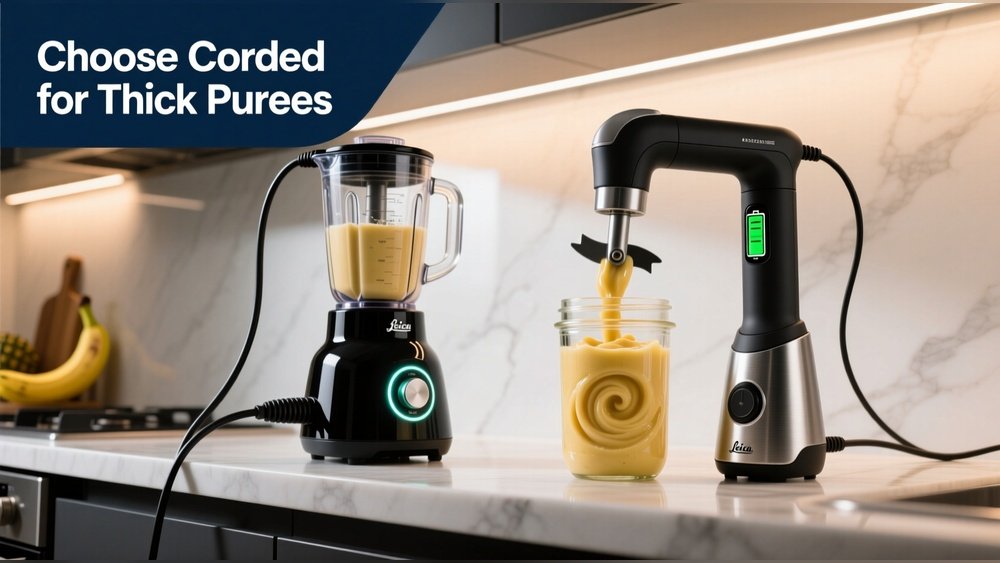
Is A Corded Or Cordless Immersion Blender Better? Pros & Cons
Choosing the right kitchen tools can make cooking much easier and more enjoyable. One common debate is whether a corded or cordless immersion blender is better. Both types have passionate fans, but your best choice depends on how you cook, what foods you prepare, and your kitchen setup. This guide will help you decide by looking at all the important details—real-life pros and cons, performance, safety, maintenance, and more. If you want to blend soups, whip up smoothies, or puree baby food, you’ll find clear answers here. Let’s dive into the world of immersion blenders and discover which type truly fits your needs.
Understanding Immersion Blenders
An immersion blender—also known as a stick or hand blender—is a handheld device with spinning blades at one end. You dip it directly into pots, bowls, or cups to blend, puree, or mix. Unlike traditional countertop blenders, immersion blenders offer more control and are easier to clean. They’re handy for making soups, sauces, smoothies, whipped cream, and even baby food.
There are two main types:
- Corded immersion blenders plug into an outlet for power.
- Cordless immersion blenders run on rechargeable batteries.
Each has unique strengths and challenges. Understanding these differences is the first step toward making a smart choice for your kitchen.
Corded Immersion Blenders: Key Features And Benefits
Corded immersion blenders have been around longer and are a common sight in homes and restaurants. Here’s what sets them apart:
Consistent Power
A major advantage of corded models is steady power. They plug into the wall, so they don’t lose strength as you blend. This means you can:
- Puree tough ingredients like carrots or nuts without stalling.
- Blend large batches or thick mixtures (like hummus) without worrying about the battery dying.
- Run the blender for longer periods—great for big soup pots.
No Charging Needed
You never have to wait for a battery to charge. Just plug in and blend. For busy cooks or people who prep several dishes in a row, this is a big plus.
Price And Value
Corded blenders are often less expensive than cordless ones with similar power. You’re not paying for batteries or charging systems.
Lightweight Design
Without a battery pack, corded immersion blenders are usually a bit lighter. This can reduce hand and wrist fatigue, especially for longer blending tasks.
Example
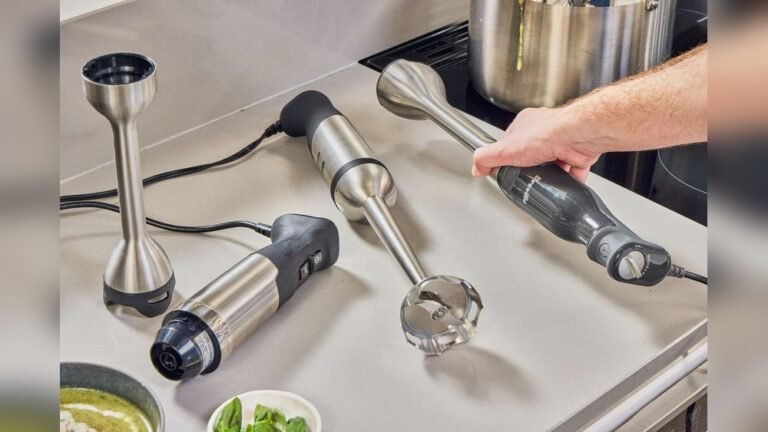
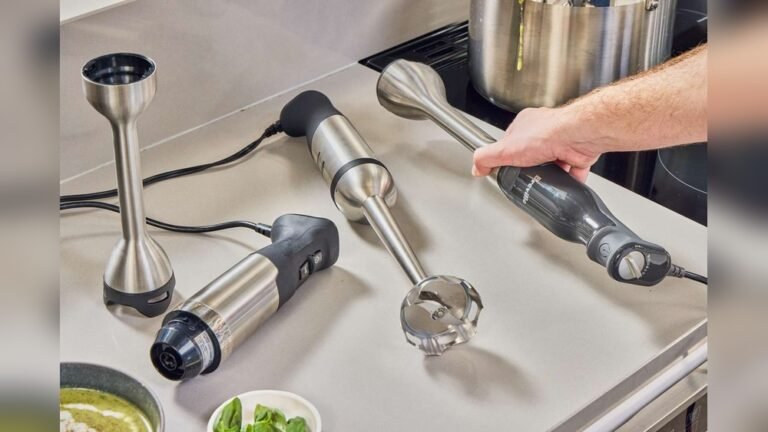
The Breville Control Grip is a popular corded model. It offers strong, reliable blending for soups and sauces and is praised for its ergonomic handle.
Corded Immersion Blenders: Drawbacks
Of course, corded blenders are not perfect for everyone.
Limited Mobility
The main downside is the power cord. It can:
- Tangle or get in the way as you move.
- Limit how far you can reach—especially if your outlet is far from the stove.
- Create clutter, especially in small kitchens.
Safety Risks
A dangling cord can be a tripping hazard, or accidentally drag the blender off the counter if caught.
Storage
Corded models require careful storage. You need to wrap the cord or use a cord clip, or it can become messy.
Not Ideal For Outdoor Or Travel Use
If you want to blend at a picnic, in your camper, or somewhere without an outlet, a corded model won’t work.
Cordless Immersion Blenders: Key Features And Benefits
Cordless immersion blenders have grown in popularity as battery technology has improved. Here’s why many cooks love them:
Freedom To Move
With no cord, you can blend anywhere—on the stove, at the table, or outside. This makes it easy to:
- Move between pots without worrying about the cord.
- Blend sauces while multitasking, or even blend directly at the dining table.
- Take your blender on trips, camping, or tailgating.
Less Clutter
No cord means a cleaner workspace. It’s easier to keep your kitchen organized, and you don’t have to worry about cords falling into food or liquids.
Safety
Without a cord, there’s less risk of tripping or catching the blender on something. This is a real plus in busy kitchens or homes with children.
Modern Technology
Many cordless models feature:
- Quick charging (some can fully charge in under 2 hours).
- Removable batteries for easy replacement.
- LED battery indicators, so you know how much power is left.
- Multiple speed settings for better control.
Example
The KitchenAid Cordless Hand Blender is a well-rated model. It can blend 25 bowls of soup on a single charge and has a comfortable grip for long blending sessions.
Cordless Immersion Blenders: Drawbacks
Cordless designs aren’t perfect either. Here’s what you should know:
Limited Battery Life
Most cordless blenders run for 20–30 minutes per charge. If you forget to recharge, you could run out of power in the middle of a recipe.
Less Power
While modern cordless models are strong, they usually have less blending power than corded versions. This can be noticeable when crushing ice or blending very thick mixtures.
Heavier
Batteries add weight. Some cordless blenders feel bulky after a few minutes of use, which can be hard for those with arthritis or weak wrists.
Higher Cost
Cordless models are often more expensive. You pay for convenience and battery technology.
Battery Replacement
Batteries degrade over time and may need replacement after a few years. This adds long-term cost and potential hassle.
Head-to-head: Corded Vs Cordless Immersion Blender Comparison
To help you visualize the main differences, here’s a direct comparison:
| Feature | Corded | Cordless |
|---|---|---|
| Power | High and consistent | Moderate, may decrease as battery drains |
| Mobility | Limited by cord length | Unlimited, use anywhere |
| Runtime | Unlimited (as long as plugged in) | 20–30 minutes per charge |
| Weight | Lighter | Heavier (due to battery) |
| Price | Usually lower | Usually higher |
| Storage | Requires cord management | Cleaner, no cord |
| Maintenance | Minimal | Battery may need replacement |

Credit: www.youtube.com
Power And Performance: What Really Matters
For many cooks, blending power is the most important factor. Let’s look at real-world performance:
Smoothies And Soups
Both corded and cordless blenders handle soft foods, smoothies, and soups well. You can easily blend cooked vegetables, fruits, or protein shakes with either type.
Tough Ingredients
If you often blend raw carrots, nuts, seeds, or ice, corded models usually perform better. Their motors are stronger and don’t lose power over time.
Long Blending Sessions
For making large batches or blending tough mixtures for several minutes, a corded blender’s unlimited runtime is a huge advantage. Cordless models may overheat or run out of battery.
Occasional Use
If you blend small amounts or do quick tasks (like making a cup of whipped cream or pureeing a small soup batch), a cordless model is often enough.
Noise Levels
Corded blenders can be slightly louder due to stronger motors. However, the difference is usually small.
Portability And Convenience
Cordless immersion blenders shine when it comes to convenience:
- You can blend at the stove, in the slow cooker, or even outside.
- They’re great for parties, events, or travel cooking.
- No cord means less mess on the counter.
However, you need to remember to keep the battery charged. If you forget, you might not be able to blend when you need to.
Corded blenders are less portable but never leave you stranded as long as there’s an outlet.
Safety Considerations
Both types have built-in safety features, but there are differences:
- Corded models can be a tripping hazard if the cord is loose.
- Cordless models remove the cord risk but can get hot during long use if the battery is working hard.
- Always unplug or remove the battery before cleaning blades.
- Children should not use immersion blenders unsupervised, regardless of type.
Maintenance And Cleaning
Corded Models
- Wipe the base with a damp cloth—never immerse in water.
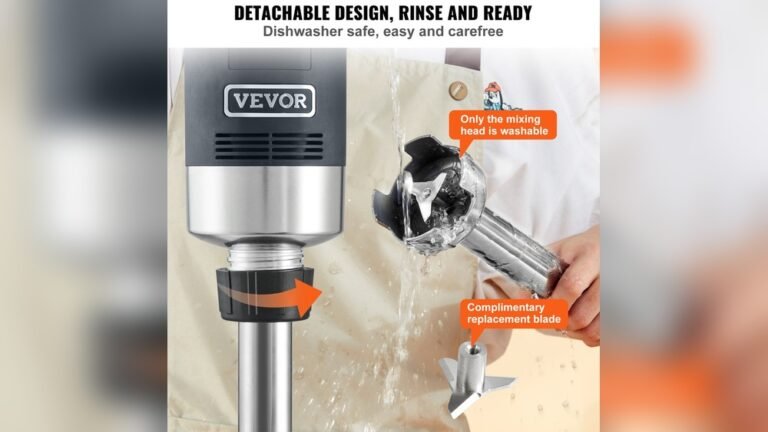
- Detachable shafts are usually dishwasher-safe.
- Minimal long-term maintenance.
Cordless Models
- Clean like corded models, but avoid water near battery contacts.
- Check battery health every few months.
- Replace batteries as needed (usually every 2–4 years, depending on use).
:max_bytes(150000):strip_icc()/sea-primary-immersion-blenders-sep-24-rkilgore-0658-89167e1e4bd44afb93d9c847674b09e4.jpeg)
Credit: www.seriouseats.com
Cost Comparison
Price is a big factor for many buyers. Here’s a sample cost range:
| Type | Budget Range | Premium Range |
|---|---|---|
| Corded | $20–$70 | $80–$150 |
| Cordless | $50–$120 | $130–$200+ |
Cordless models are almost always more expensive, especially for similar power levels.
When To Choose Corded: Practical Scenarios
Corded immersion blenders are best if:
- You want maximum power for tough tasks like nut butters or thick soups.
- You cook often for a big family or meal prep in large batches.
- You don’t mind being near an outlet.
- Budget is a concern, and you want more value for your money.
- You have limited storage space and prefer a lighter device.
Non-obvious insight: If you have an old kitchen with few outlets, a corded blender can actually be a hassle. Consider your kitchen’s layout before deciding.
:max_bytes(150000):strip_icc()/sea-immersion-blenders-sep-24-test-all-clad-rkilgore-0176-5ba26578fe9441fa9a1f86950c123177.jpeg)
Credit: www.seriouseats.com
When To Choose Cordless: Practical Scenarios
Cordless immersion blenders fit if:
- You cook in small batches or do quick tasks.
- You value portability—like blending at the table, on the patio, or while traveling.
- Your kitchen has limited outlets, or outlets are in awkward spots.
- You want a cleaner countertop with less cord mess.
- You prepare food with kids around and want to reduce tripping risks.
Non-obvious insight: Cordless models are great for people with mobility issues. There’s less risk of getting tangled, and you can blend from any position.
Common Mistakes When Choosing An Immersion Blender
- Ignoring power needs: Many people buy a cordless model for convenience but are disappointed by its lower power with tough foods.
- Not checking battery life: Some cordless blenders promise long runtimes but deliver less if you use high speed or blend thick foods.
- Overpaying for features: Some premium blenders offer attachments you’ll never use—stick to what you need.
- Forgetting about weight: Cordless units are heavier; test one in-store if possible.
- Not considering cleaning: More complex models can be harder to clean. Simpler designs are often easier for daily use.
User Experience: Real-world Feedback
Many home cooks and professional chefs share their experiences online:
- Corded fans often mention never worrying about running out of power, especially when blending tough foods or making big batches.
- Cordless users love the freedom to move around and the clean look on their counters. They’re especially popular with people who do not have many outlets or who like to blend at the table.
In some kitchens, cooks own both types—a corded for heavy-duty tasks, and a cordless for quick or portable jobs.
How Battery Technology Is Changing The Game
Recent improvements in lithium-ion batteries have made cordless blenders much better than older models. Some now match corded models for short bursts but still can’t run as long or as powerfully for extended tasks.
A few high-end cordless blenders offer removable battery packs. This lets you swap batteries and keep going—helpful for long cooking sessions.
However, batteries still degrade over time. If you plan to keep your blender for 5–10 years, consider the cost and availability of replacement batteries.
Environmental Impact: Which Is Greener?
- Corded models use electricity only while running and can last for many years.
- Cordless models need batteries, which require materials like lithium and must be recycled after their useful life.
If you’re eco-conscious, look for brands that offer battery recycling programs or use energy-efficient chargers.
Accessories And Attachments
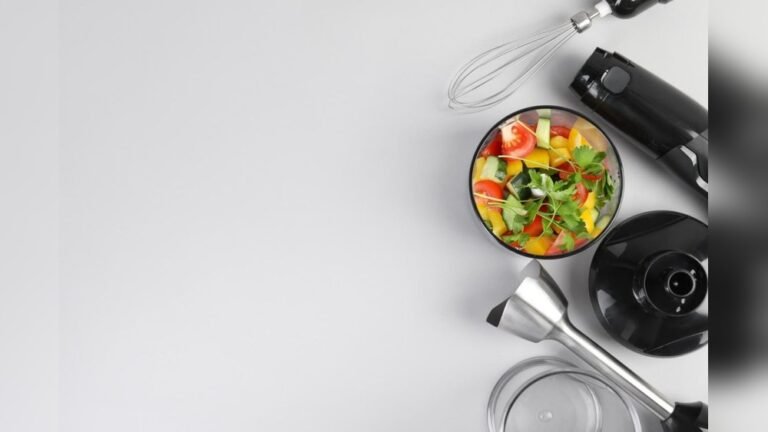
Many immersion blenders come with extra tools, like:
- Whisk attachments for whipped cream or eggs
- Chopper bowls for nuts, herbs, or cheese
- Mixing beakers for smoothies or baby food
Corded and cordless models both offer these, but cordless attachments may be limited by the motor’s power. Always check if the attachments you want are included and compatible.
Popular Brands And Models
Here are some widely praised models:
- Corded: Breville Control Grip, Braun MultiQuick 5, Cuisinart Smart Stick
- Cordless: KitchenAid Cordless Hand Blender, All-Clad Cordless, Cuisinart EvolutionX
Each brand offers different speed settings, handle designs, and attachments. Try to hold the blender before buying, if possible, to see what feels comfortable.
Cleaning And Care: Avoiding Problems
To keep your immersion blender working well:
- Always unplug (corded) or remove the battery (cordless) before cleaning.
- Wash the blending shaft and attachments by hand or in the dishwasher if allowed.
- Never immerse the motor/base in water.
- Dry all parts thoroughly before reassembling.
Tip: For stuck-on food, soak the shaft in warm soapy water for a few minutes before cleaning.
Troubleshooting Common Problems
- Blender won’t start: Check the outlet (corded) or battery charge (cordless).
- Weak blending: Try smaller batches or add more liquid. For cordless, recharge the battery.
- Strange noise or vibration: Stop immediately and check for stuck food or a bent blade.
- Battery won’t hold charge: Batteries do wear out. Contact the manufacturer about a replacement.
Which Is Better For Your Kitchen?
There’s no single answer to the corded vs cordless immersion blender debate. It depends on your cooking style, kitchen setup, and priorities.
- Power users: Choose corded for strength and unlimited runtime.
- Convenience seekers: Choose cordless for flexibility and less clutter.
- Budget shoppers: Corded usually gives more power for less money.
- Travelers/outdoor cooks: Only cordless will work outside the kitchen.
If you can, try both types before buying. Some stores offer demos or generous return policies.
Making Your Final Choice: A Quick Checklist
Ask yourself:
- What foods do I blend most often?
- How important is unlimited blending time?
- Is my kitchen’s outlet placement convenient?
- Do I want the option to blend away from the kitchen?
- Am I willing to recharge or replace batteries?
Your honest answers will make the decision much clearer.
Frequently Asked Questions
What Foods Can I Blend With A Cordless Immersion Blender?
You can blend soups, smoothies, sauces, whipped cream, and baby food easily with most cordless models. However, for very thick foods or large batches (like nut butters or heavy doughs), a corded model is often stronger and more reliable.
How Long Does A Cordless Immersion Blender Battery Last?
Most cordless blenders run for 20–30 minutes of actual blending per charge. Some high-end models can go a bit longer, especially at lower speeds. Battery life decreases if you blend very thick or hard foods. Always check the manufacturer’s specs before buying.
Are Corded Immersion Blenders Safer?
Both types are safe if used correctly. Corded models can be a tripping hazard if the cord is loose. Cordless blenders remove this risk but can get hot after long use. Always follow the safety instructions in your user manual and keep blenders away from children.
Can I Replace The Battery In A Cordless Immersion Blender?
Some cordless models have removable batteries that you can buy separately. Others have built-in batteries that require professional service to replace. Before buying, check if replacement batteries are available and how easy they are to install.
Are There Any Professional Recommendations On Which Type To Buy?
Professional chefs often use corded blenders for heavy-duty blending and cordless models for quick or portable tasks. If you want expert advice, check reviews on trusted sites like Wirecutter, which regularly tests and compares kitchen tools.
Choosing between a corded or cordless immersion blender is about matching the tool to your life. Think about your cooking habits, kitchen space, and what will make blending easy and fun for you. The right choice will save you time, reduce frustration, and help you create delicious meals with less effort.