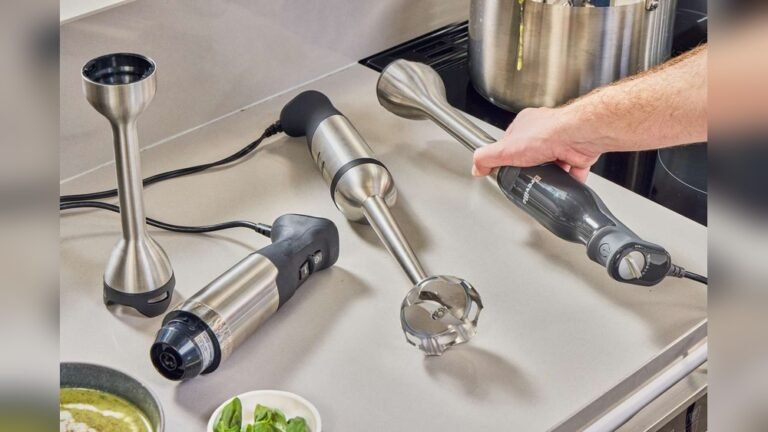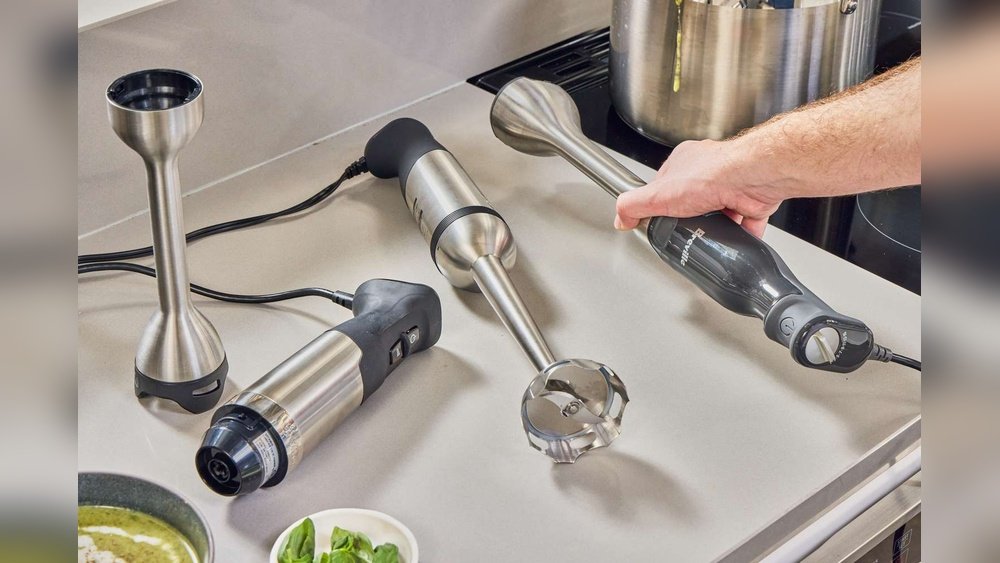
Is An Immersion Blender a High Powered Blender? Find Out Now
Is An Immersion Blender A High Powered Blender
For many kitchens, the blender is a hero. It whips up smoothies, soups, and sauces in seconds. But as you shop, you’ll see two main types: immersion blenders and high powered blenders. Are they the same? Is an immersion blender “high powered” enough for tough jobs? Or is it really a different tool? If you’ve wondered about this, you’re not alone. Many cooks—both pros and beginners—are confused about these appliances.
This article will clear up the confusion. You’ll learn what makes a blender “high powered,” how immersion blenders compare, and which tasks each can handle. We’ll explore technical specs, real-life performance, and practical kitchen tips. By the end, you’ll know exactly what each blender can (and can’t) do, so you can choose the right tool for your needs.
What Is An Immersion Blender?
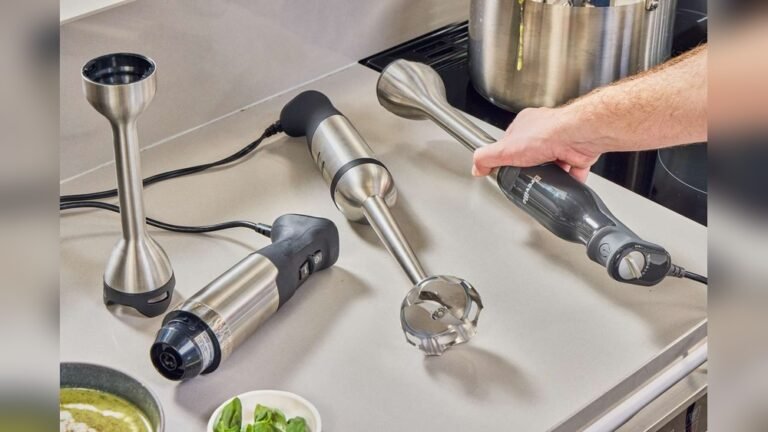
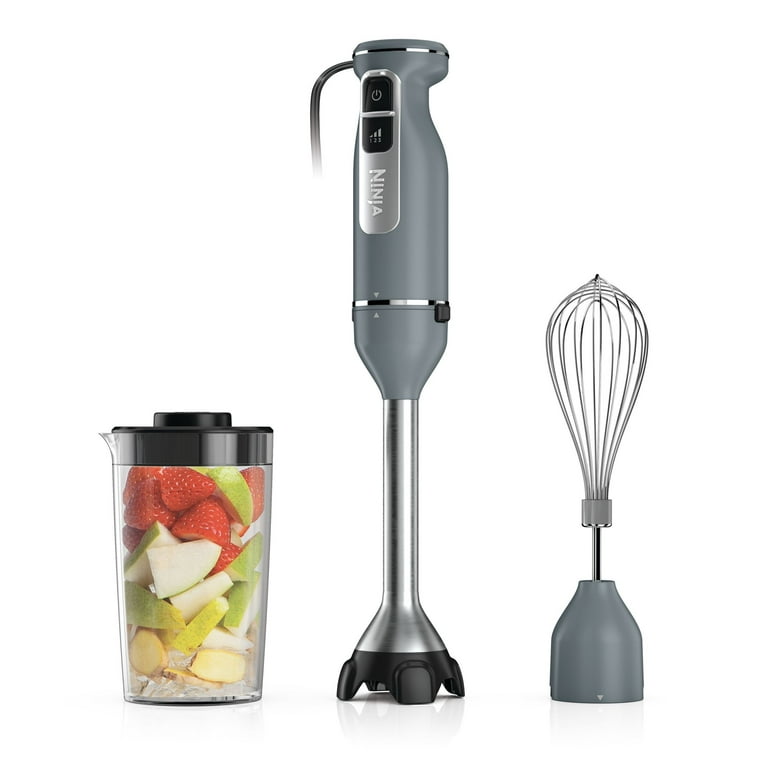
An immersion blender is also called a hand blender or stick blender. It’s a simple tool: a motor in the handle, and spinning blades at the end. You hold it in your hand and dip the blades directly into food.
Immersion blenders are loved for their:
- Portability: Small and lightweight, easy to store.
- Quick setup: No need to assemble big parts or bowls.
- Easy cleaning: Just rinse the blade attachment.
- Versatility: Blend soups in a pot, puree sauces, whip cream.
Most immersion blenders have:
- Motor power: Usually between 100 and 400 watts.
- Variable speeds: 1-5 speed settings, sometimes a turbo button.
- Blade design: Stainless steel blades, sometimes with a guard to prevent splashing.
Some models come with extra attachments like whisks or choppers. But the main function is to blend food directly in its container. You don’t need to pour hot soup into a pitcher—just blend right in the pot.
What Makes A Blender “high Powered”?
A “high powered blender” is more than just a kitchen buzzword. It means the blender has:
- Strong motor: Usually 1000 watts or higher.
- Robust blades: Thick, durable, often multi-blade setups.
- Heavy-duty build: Larger, stronger pitcher or jar.
- Advanced controls: Multiple speeds, pulse, sometimes preset programs.
High powered blenders are designed for tough jobs:
- Crushing ice: Smoothly, without jams.
- Blending nuts: Making nut butters or grinding seeds.
- Smooth purees: Silky smoothies, even with fibrous greens.
- Hot soups: Some can heat soup while blending.
Many brands market their blenders as “high powered,” but only a few truly fit the category. Classic examples are the Vitamix and Blendtec machines, which often have motors from 1200 to 1800 watts.
How Do You Measure Blender Power?
The main measure is wattage. More watts mean more power. But it’s not just about numbers. Other factors matter:
- RPM (rotations per minute): Faster blades mean smoother blends.
- Torque: How much force the motor can deliver.
- Blade shape and material: Sharp, thick blades cut better.
- Jar design: Wide jars help food move and blend evenly.
A blender with high wattage but poor blade design may not perform well. It’s the combination that counts.
Comparing Immersion Blenders And High Powered Blenders
Let’s look at the differences in detail. You’ll see why these two tools are not the same—and why each has its place.
Power And Performance
Immersion blenders are generally less powerful. Most models offer 200-400 watts. High powered blenders start at 1000 watts and go up to 1800 or more.
Here’s a comparison:
| Feature | Immersion Blender | High Powered Blender |
|---|---|---|
| Typical Motor Power | 200-400 watts | 1200-1800+ watts |
| Blade Speed | Low to medium | Very high |
| Jar Capacity | None (use any container) | 1-2 liters (fixed jar) |
| Ice Crushing | Limited | Excellent |
| Nut Butter | Usually not possible | Easy |
| Smoothie Texture | Good, but not silky | Ultra-smooth |
Functions And Use Cases
Immersion blenders excel at:
- Pureeing soup: Directly in the pot.
- Making sauces: Small batches, quick blending.
- Whipping cream: Light mixing.
- Emulsifying dressings: Smooth vinaigrettes.
High powered blenders handle:
- Tough ingredients: Ice, frozen fruit, nuts.
- Large batches: Smoothies for the whole family.
- Hot blending: Some heat ingredients during blending.
- Long blending times: Can run for several minutes without overheating.
Real-life Example
Suppose you want to make a green smoothie with spinach, frozen banana, and ice. An immersion blender will blend the spinach and banana, but may struggle with ice. The result might be chunky, not fully smooth.
A high powered blender will crush the ice and blend everything into a silky drink. It can also handle seeds, nuts, and fibrous greens. This is why high powered blenders are popular for smoothies and nut butters.
Technical Differences: Design, Power, And Safety
Motor And Blade Design
Immersion blenders use smaller motors to stay lightweight. Most models have a single blade, protected by a guard. This makes them safe to use in pots, but limits their power.
High powered blenders have larger motors, sometimes with cooling fans. Their blades are thick, sharp, and often in a multi-blade setup. The jar is designed to pull food toward the blades for thorough blending.
Safety Features
Immersion blenders are safe if used correctly. The blade guard prevents splashing, and the blades are recessed. But you must keep fingers away from the blade.
High powered blenders have safety lids, automatic shut-off features, and sturdy jars. They’re safe for blending tough foods, but the high speed means you must always secure the lid.
Noise Levels
Immersion blenders are quieter, usually around 70-80 decibels. High powered blenders can reach 90-100 decibels, especially when crushing ice.
Cleaning And Maintenance
Immersion blenders are easy to clean. Just detach the blade and rinse. Most parts are dishwasher safe.
High powered blenders need more cleaning. The jar, blades, and lid must be washed. Some models offer “self-clean” modes: add water and soap, and blend for 30 seconds.
Power Ratings: Data And Stats
To understand power, let’s look at typical wattages:
| Brand | Immersion Blender Model | Wattage | High Powered Blender Model | Wattage |
|---|---|---|---|---|
| Breville | Control Grip | 280 | Super Q | 1500 |
| Braun | MultiQuick 5 | 350 | PowerBlend 9 | 1600 |
| Cuisinart | CSB-179 | 300 | Hurricane Pro | 1200 |
| KitchenAid | KHB2561 | 200 | K400 | 1200 |
As you can see, high powered blenders often have four to six times the wattage of immersion blenders. This directly affects performance, especially for tough tasks.
Can An Immersion Blender Replace A High Powered Blender?
Many people hope to save money and space by buying only one blender. So, can an immersion blender do everything a high powered blender does?
The short answer: No.
Here’s why:
- Limited power: Immersion blenders can’t crush ice or nuts efficiently.
- Texture limits: They don’t produce ultra-smooth blends, especially for fibrous or frozen foods.
- Small batch size: They work best with one to two cups at a time.
- Safety: Immersion blenders are not safe for blending very hot or thick mixtures for long periods.
But immersion blenders are great for:
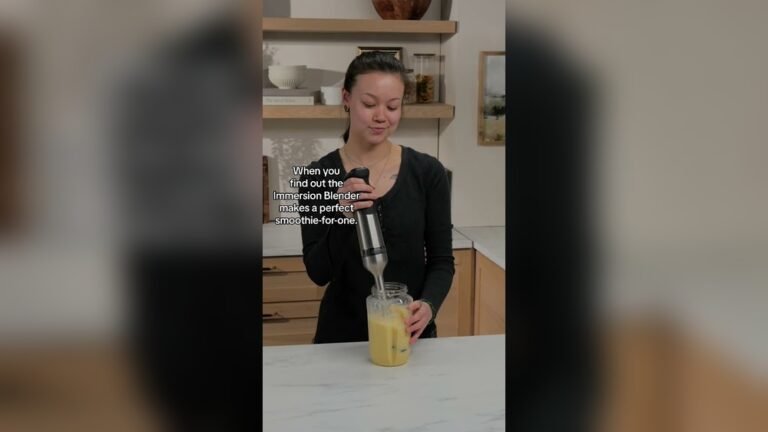
- Quick jobs: Soup, sauce, single smoothies.
- Easy cleaning: No big jar to wash.
- Versatility: Use in any container.
If you want silky smoothies, nut butters, or to crush ice, a high powered blender is necessary. If you need quick blending for soups and sauces, an immersion blender is ideal.
Kitchen Tasks: Which Blender Is Best?
To help you choose, here’s a look at common kitchen tasks:
Smoothies
- Immersion blender: Good for soft fruits, yogurt, milk. Struggles with ice and frozen berries.
- High powered blender: Excellent for any ingredient, including greens, seeds, ice.
Soup Purees
- Immersion blender: Perfect for blending soup directly in the pot.
- High powered blender: Also works, but you must pour hot soup into the jar.
Nut Butters
- Immersion blender: Not recommended. Too weak.
- High powered blender: Can make peanut, almond, or cashew butter.
Crushing Ice
- Immersion blender: Limited, may jam or damage blades.
- High powered blender: Designed for ice, no problem.
Baby Food
- Immersion blender: Great for pureeing vegetables, fruits, cooked foods.
- High powered blender: Also good, especially for larger batches.
Whipping Cream
- Immersion blender: Works well for small amounts.
- High powered blender: Possible, but may over-whip if not careful.
Dressings And Sauces
- Immersion blender: Excellent for emulsifying vinaigrettes and mayonnaise.
- High powered blender: Also works, but harder to make tiny batches.
Non-obvious Insights Beginners Miss
- Immersion blenders can aerate food. When blending soups or sauces, immersion blenders sometimes add air, making the result lighter or frothier. This is great for creamy soups, but not ideal for dense purees.
- Jar design matters for high powered blenders. A wide, squared jar blends better than a tall, narrow one. Food moves around more, preventing jams and ensuring a smoother texture.
- Continuous use affects performance. Immersion blenders can overheat if used for more than 2-3 minutes at a time. High powered blenders are built for longer blending sessions.
- Blade quality is key. Some cheap immersion blenders have dull blades, making them weak even if wattage is high. Look for stainless steel blades for better performance.
- Noise can be a real issue. High powered blenders can be loud enough to wake up sleeping kids or neighbors. If you live in a small apartment, consider noise levels before buying.
Pros And Cons: Immersion Blender Vs High Powered Blender
Immersion Blender
Pros:
- Lightweight and portable
- Easy to clean
- Great for soups and sauces
- Use in any container
Cons:
- Limited power
- Not suitable for hard or frozen foods
- Small batch only
- Can overheat quickly
High Powered Blender
Pros:
- Powerful, handles tough foods
- Makes silky smoothies and nut butters
- Large batch capacity
- Long blending time
Cons:
- Heavy and bulky
- More difficult to clean
- Requires pouring food into jar
- Louder noise
Choosing The Right Blender For Your Kitchen
When deciding, ask yourself:
- What foods do you blend most often? If you mostly puree soup or make sauces, an immersion blender is perfect. For smoothies, nut butters, or ice crushing, you need a high powered blender.
- How much space do you have? Immersion blenders are small and easy to store. High powered blenders take up more room.
- What is your budget? Immersion blenders are cheaper, usually $30-$100. High powered blenders can cost $200-$500.
- Do you cook in large batches? If yes, high powered blenders are better.
- Is cleaning important? Immersion blenders are easier to clean.
Common Mistakes When Choosing Or Using Blenders
- Thinking all blenders are equal. Immersion blenders and high powered blenders are not interchangeable.
- Ignoring wattage and blade design. Higher wattage is better, but only if blade quality matches.
- Using immersion blender for hard foods. This can damage the motor and blades.
- Overfilling high powered blender jars. Can cause leaks, jams, or uneven blending.
- Not securing the lid. High powered blenders can spill or splash if the lid isn’t tight.
High Powered Blender Brands And Models
Some of the most respected high powered blenders include:
- Vitamix 5200: 1380 watts, classic for smoothies and nut butters.
- Blendtec Designer Series: 1560 watts, strong for ice and frozen fruit.
- Breville Super Q: 1500 watts, modern design and quiet motor.
- Ninja Professional 1500: 1500 watts, affordable with good power.
- KitchenAid K400: 1200 watts, stylish and reliable.
Most immersion blenders are made by:
- Braun MultiQuick
- Cuisinart Smart Stick
- KitchenAid Hand Blender
- Breville Control Grip
:max_bytes(150000):strip_icc()/faw-all-clad-immersion-blender-nick-desimone-02-2933e6f3d45546719191bc0825f1cb24.jpeg)
Credit: www.foodandwine.com
Comparing Costs And Value
Let’s look at how price relates to power and function:
| Type | Average Price | Power Range | Main Uses |
|---|---|---|---|
| Immersion Blender | $30-$100 | 100-400 watts | Soups, sauces, small smoothies |
| High Powered Blender | $200-$500 | 1200-1800 watts | Smoothies, nut butters, ice crushing |
Immersion blenders are affordable and ideal for basic tasks. High powered blenders cost more, but offer much greater capability.
Real-world Kitchen Tips
- Use immersion blender for hot soup. You can blend right in the pot, avoiding spills or burns.
- Don’t use immersion blender for ice. It can break the blades or overheat.
- Clean immersion blender immediately. Food dries quickly on blades and guard.
- Pulse high powered blender for chunky salsa. Don’t over-blend if you want texture.
- Let high powered blender cool between batches. Prolongs motor life.
:max_bytes(150000):strip_icc()/sea-immersion-blenders-sep-24-test-hamilton-beach-4-1-electric-hand-rkilgore-0258-923c0592653b489a9e619650b668eef0.jpeg)
Credit: www.seriouseats.com
When Both Blenders Are Useful
Many kitchens have both. Immersion blenders for quick tasks, high powered blenders for heavy-duty jobs. If you cook often, having both is ideal.
For example:
- Make soup with immersion blender, then blend ice for smoothies with high powered blender.
- Use immersion blender for baby food or dressings, high powered blender for nut butter or frozen drinks.
Having both saves time and gives you more options.
Environmental Impact
Immersion blenders use less energy, since their motors are smaller. High powered blenders consume more electricity, especially if used daily.
If you want to lower your kitchen’s energy footprint, use immersion blenders for easy jobs and save high powered blender for tough tasks.
Professional Kitchens
In restaurants, high powered blenders are standard. Chefs need reliable, strong machines for large batches and tough ingredients. Immersion blenders are used for quick purees or emulsifying sauces on the spot.
If you run a food business, invest in a high powered blender. For home cooks, choose based on your needs.
Advanced Features: Do They Matter?
Some high powered blenders offer smart features:
- Preset programs: Smoothie, soup, ice crush.
- Self-cleaning mode: Saves time.
- Touch controls: Modern, easy to use.
- Safety locks: Prevent accidents.
Immersion blenders are simpler, with basic speed settings. If you like technology and automation, high powered blenders may be more appealing.
The Final Word: Which Blender Is “high Powered”?
An immersion blender is not a high powered blender. The two tools have different designs, power levels, and uses. Immersion blenders are perfect for quick, small blending jobs and are easy to clean. High powered blenders are built for tough ingredients and large batches.
If you want to blend ice, nuts, or make ultra-smooth drinks, a high powered blender is necessary. If you mostly make soup or small sauces, an immersion blender is enough.
Choosing the right tool saves time and money. Don’t expect an immersion blender to handle heavy tasks. Use each blender for what it’s best at. That way, your kitchen will run smoothly, and your food will turn out great every time.
For more technical details about blender power, you can check Wikipedia’s Blender Appliance page.
Frequently Asked Questions
What Is The Main Difference Between Immersion Blenders And High Powered Blenders?
The main difference is power and design. Immersion blenders have smaller motors and are handheld. High powered blenders have much stronger motors and blend food in a jar or pitcher. Immersion blenders are best for soups and sauces, while high powered blenders are built for smoothies, nut butters, and ice crushing.
Can Immersion Blenders Crush Ice Or Blend Frozen Fruit?
Immersion blenders can sometimes blend soft frozen fruit in small pieces, but they struggle with ice. Crushing ice usually damages the blades or overheats the motor. For regular ice blending, a high powered blender is necessary.
Are Immersion Blenders Safer Than High Powered Blenders?
Both are safe when used correctly. Immersion blenders have blade guards and are less powerful, which lowers risk. High powered blenders have safety lids and automatic shut-off. Always follow safety instructions and keep hands away from blades.
How Much Should I Spend On A Blender For Daily Smoothies?
If you want daily smoothies with ice or greens, invest in a high powered blender ($200-$500). If you only make simple fruit smoothies, an immersion blender ($30-$100) can work, but the texture may not be as smooth.
Do Professional Chefs Use Immersion Blenders Or High Powered Blenders?
Most professional chefs use both. Immersion blenders are great for pureeing soups directly in pots or emulsifying sauces. High powered blenders are used for tough blending jobs, large batches, and ultra-smooth purees.
Your kitchen needs may change over time. But now you know: immersion blenders are not high powered blenders, and each tool has its own strengths and limits. Choose wisely, and enjoy better food every day.
Credit: www.walmart.com