What Does An Immersion Blender Look Like: A Visual Guide
What Does An Immersion Blender Look Like
If you walk into a kitchen store today, you’ll see many gadgets for blending, mixing, and chopping food. But the immersion blender stands out. It’s a tool that many home cooks and chefs use every day. If you’ve never seen one, or if you’re just curious about its design, you’re in the right place. Understanding what an immersion blender looks like can help you choose the right one and use it confidently.
Basic Appearance And Structure
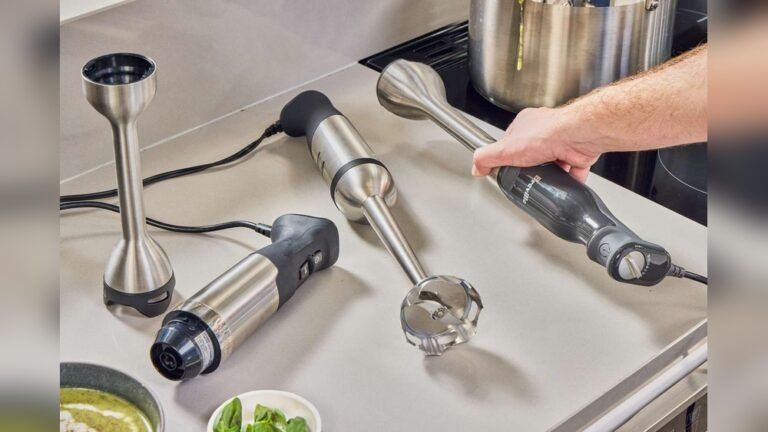
The immersion blender, sometimes called a stick blender or hand blender, is easy to spot because of its unique shape. It is not bulky like a countertop blender. Instead, it is slim and long, usually about 12 to 16 inches in length. This design lets you hold it in your hand and use it directly in pots or bowls.
At the top, you’ll find a handle. This is where the motor sits. The handle is usually made of sturdy plastic or sometimes stainless steel. It often has a slightly curved shape to fit comfortably in your palm. On the handle, you’ll see one or two buttons. These are the controls for turning the blender on, off, and sometimes for adjusting speeds.
Moving down, the handle connects to a shaft. This shaft can be made from plastic or metal. It’s usually straight, but some models have a slight bend for easier use. The shaft is what makes the immersion blender “immersion”—it can be plunged into your food.
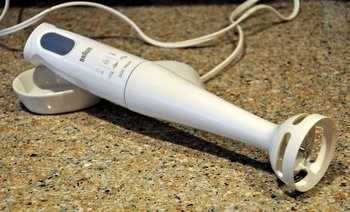
At the bottom of the shaft is the blending head. This part is key. It holds the blades, which are protected by a metal or plastic guard. The guard is shaped like a bell or dome, with small openings for food to flow in and out. The blades are sharp and sit horizontally, spinning at high speed to blend or puree food.
Key Components And Features
To understand what an immersion blender looks like, it’s helpful to break down each part. Here are the main components you’ll see:
- Handle and Motor Housing: The top section where you grip the blender. It’s usually thicker than the shaft, and it contains the motor.
- Power Buttons: Located on the handle, often raised for easy use. Some models have speed controls, usually marked with numbers or symbols.
- Shaft: The long part connecting the handle to the blending head. It’s usually smooth and can be detachable for cleaning.
- Blending Head: The bottom section. It’s wider than the shaft and has a bell-shaped cover over the blades.
- Blades: Made from stainless steel, these are inside the blending head. They’re small but very sharp.
- Blade Guard: Protects the blades and prevents splashing. It has holes or slots for food to move in and out.
- Cord or Battery Compartment: Most immersion blenders are powered by a cord, which comes out of the handle. Some newer models are cordless and have a battery compartment instead.
:max_bytes(150000):strip_icc()/sea-immerison-blenders-criteria-b7c39d149076405481659d9eb8b1da10.png)
Credit: www.seriouseats.com
Materials And Build Quality
Immersion blenders are made from materials chosen for durability and safety. Most models use plastic for the handle and shaft, but higher-end versions use stainless steel. Stainless steel is more durable and easier to clean, but plastic is lighter and sometimes less expensive.
The blades are almost always made from stainless steel. This metal stays sharp and resists rust. The blending head’s guard can be plastic or metal. Metal guards are stronger and less likely to stain, but plastic guards are lighter and quieter when blending.
Some immersion blenders are designed to be water-resistant. This is important because you’ll be blending liquids. Look for models with sealed buttons and joints to prevent water from getting inside.
How It Compares To Other Blenders
It’s easy to confuse an immersion blender with other kitchen blenders, especially if you haven’t used one before. Here’s a quick visual comparison:
| Blender Type | Appearance | Main Use |
|---|---|---|
| Immersion Blender | Long, slim, handheld, blending head at the end | Blending soups, sauces, smoothies directly in the pot |
| Countertop Blender | Large base, pitcher on top, lid | Making smoothies, crushing ice, blending larger batches |
| Food Processor | Boxy, bowl with lid, multiple attachments | Chopping, slicing, grating, mixing dough |
The immersion blender is much smaller and simpler. It doesn’t have a pitcher or bowl attached. Instead, you use it directly in your cooking pot or mixing bowl.
Common Variations And Designs
Not all immersion blenders look exactly the same. There are several variations:
- Basic Models: Simple shape, usually just one speed, often with a plastic shaft and blending head.
- Multi-Speed Models: More buttons for speed control, sometimes with a thicker handle to hold extra electronics.
- Detachable Shaft Models: Shaft can be removed for cleaning. You’ll see a release button at the joint.
- Cordless Models: No cord, usually a bit bulkier due to battery. Often have a charging port at the base.
- Professional Models: Heavier, with stainless steel shafts and heads. Often longer for bigger pots.
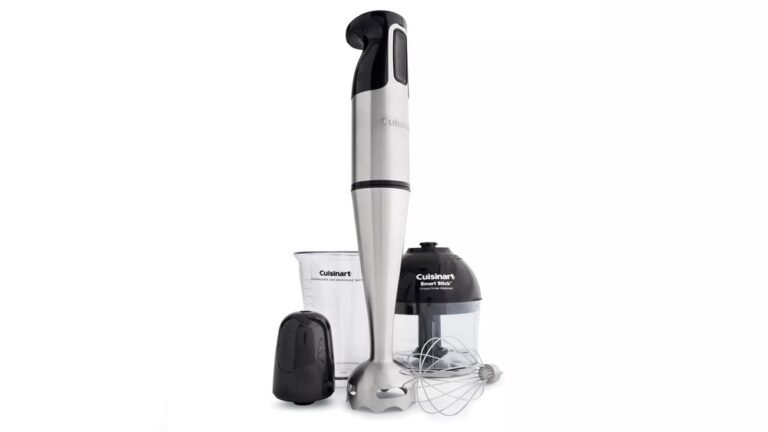
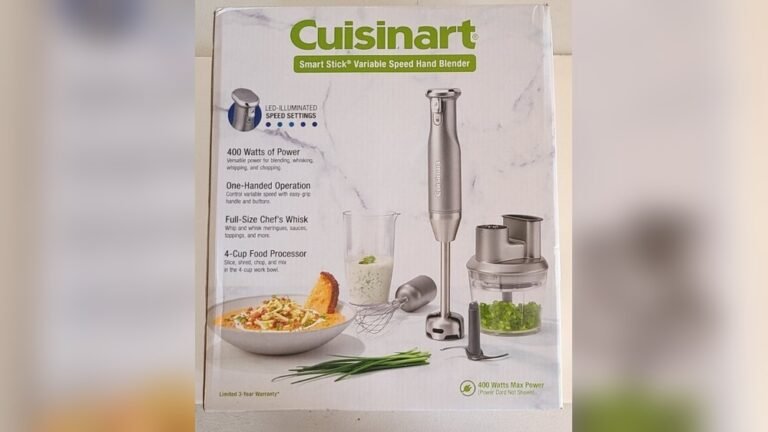
Some immersion blenders come with attachments. These can include a whisk, chopper bowl, or a masher. The handle will have a locking mechanism for changing attachments.
Detailed Visual Guide
If you’re trying to picture an immersion blender, here’s a step-by-step description:
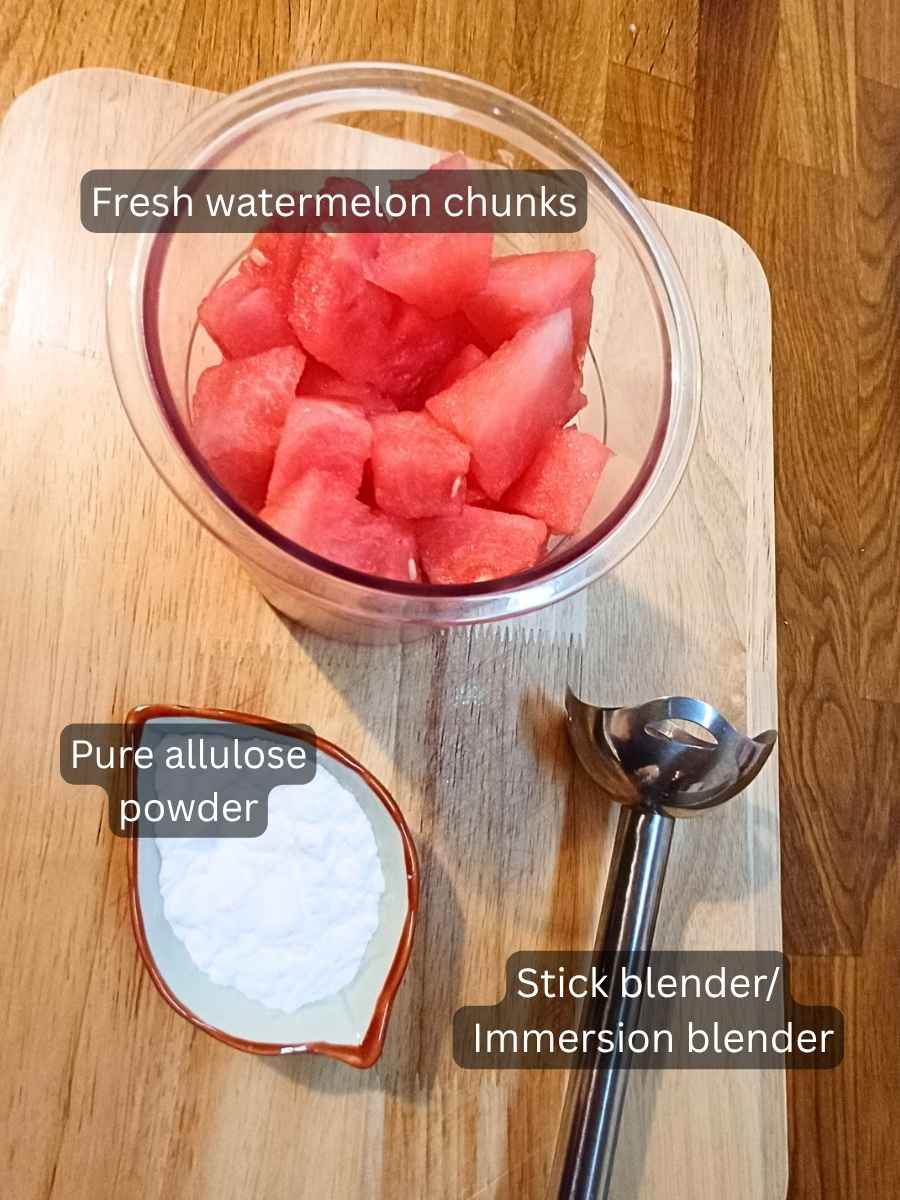
- The blender stands upright, with the handle at the top. The handle is about the size of a small water bottle.
- The shaft extends downward, straight or slightly curved, about a foot long.
- At the bottom, the blending head flares out, forming a bell shape. You can see the blades inside, protected by the guard.
- The cord (if present) comes out from the top or side of the handle. If cordless, there’s a charging port.
- The buttons are positioned for your thumb and fingers to reach easily.
- Some models have a small LED or indicator light near the buttons.
Many immersion blenders are colored white, black, or stainless steel. Some brands offer fun colors like red, blue, or green to match your kitchen.
Credit: earthandoven.com
Size And Weight Data
Immersion blenders are designed to be light and easy to hold. Here’s a comparison of typical sizes and weights:
| Model Type | Length (inches) | Weight (lbs) | Blending Head Diameter (inches) |
|---|---|---|---|
| Basic Plastic | 12 | 1.2 | 2.5 |
| Stainless Steel | 15 | 2.0 | 3 |
| Cordless | 14 | 2.5 | 2.8 |
| Professional | 16 | 3 | 3.2 |
Most home models are around 1.5 to 2 lbs, so they’re easy to use for several minutes without fatigue.
Color And Style Options
While function matters most, many people want their kitchen tools to look good. Immersion blenders are available in many color options. You’ll find classic white and black, but also stainless steel, silver, and bold colors. Some brands let you choose red, blue, green, or yellow.
The style is usually modern and sleek. Handles may be shiny or matte. Blending heads are often polished metal or smooth plastic. Some premium models have soft-touch grips or chrome accents.
Safety Features And Ergonomics
Because immersion blenders have sharp blades and powerful motors, safety is important. Most models include:
- Blade Guards: Prevent you from touching the blades directly. Also reduce splashing.
- Locking Mechanisms: Attachments click into place so they don’t fall off during use.
- Non-Slip Handles: Rubber or textured grips so the blender doesn’t slip in your hand.
- Sealed Controls: Buttons are protected from spills and moisture.
- Automatic Shut-Off: Some cordless models turn off if overheated.
Ergonomics are carefully designed. Handles are shaped for your hand, and buttons are placed for easy use. The shaft is long enough to reach deep into pots without splashing.
Real-world Examples
To help you visualize, here are some examples of popular immersion blenders:
- KitchenAid Immersion Blender: Has a rounded handle, stainless steel shaft, and a bell-shaped blending head. Available in many colors.
- Braun MultiQuick: Features a slim handle, detachable shaft, and multiple speed buttons. Blending head is metal and has a splash control guard.
- Cuisinart Smart Stick: Classic shape, simple controls, and a plastic shaft. Blending head is metal, with a wide guard.
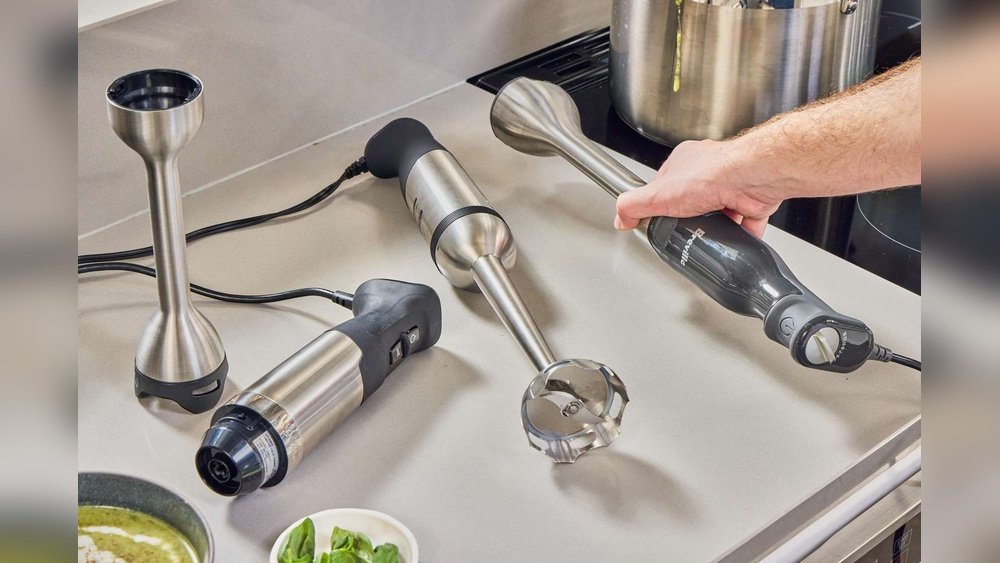
- Breville Control Grip: Larger handle, variable speed dial, and ergonomic grip. Blending head is stainless steel with a unique shape for less suction.
Each model has slight differences, but the basic look is similar: long, handheld, with a blending head at the bottom.
Credit: bakingbites.com
What Beginners Often Miss
Many people new to immersion blenders don’t notice these details:
- The blending head is not flat. It’s shaped like a bell to keep food moving toward the blades.
- Blade guards have holes or slots. These are designed for smooth blending and to prevent suction at the bottom of the pot.
- Detachable shafts are common. Beginners may not realize that the shaft can be removed for easy cleaning. Look for a release button or twist mechanism.
- Cordless models are slightly heavier. Because they hold batteries, they feel different in your hand.
Attachments And Accessories
Immersion blenders sometimes come with extra tools:
- Whisk Attachment: Connects to the handle, used for whipping cream or eggs.
- Chopper Bowl: A small bowl with blades, used for chopping nuts, herbs, or onions.
- Masher Attachment: Used for mashing potatoes or vegetables.
These attachments change the look of the blender. The handle stays the same, but the bottom section changes. Most attachments are easy to click on or off.
Cleaning And Maintenance
The shaft and blending head often detach for cleaning. You can rinse them under water or wash them in the dishwasher. The handle, which contains the motor, should not be submerged.
Look for models with sealed joints. This prevents food and water from getting inside. Stainless steel shafts are easier to clean and don’t stain.
Immersion Blender Vs. Traditional Blender: Visual Differences
Here’s a side-by-side visual comparison:
| Feature | Immersion Blender | Traditional Blender |
|---|---|---|
| Size | Slim, handheld | Bulky, countertop |
| Shape | Long shaft, blending head | Pitcher, base, lid |
| Use | Directly in pot or bowl | Must transfer food to pitcher |
| Cleaning | Shaft detaches for easy cleaning | Pitcher must be washed separately |
| Weight | 1.2-3 lbs | 4-8 lbs |
The immersion blender is portable and flexible. It looks much simpler and can blend food without extra dishes.
How To Identify Quality By Appearance
When shopping, a few visual clues help you spot a high-quality immersion blender:
- Stainless steel shaft and blending head: More durable than plastic.
- Wide blending head: Handles thicker soups and sauces.
- Multiple speed buttons or dial: Allows more control.
- Detachable shaft: Easier to clean and store.
- Non-slip grip: Comfortable for long blending sessions.
Avoid models with very thin plastic shafts, loose attachments, or tiny blending heads. These are often less effective and may not last.
The Evolution Of Immersion Blender Design
Immersion blenders have changed a lot over the years. Early models were simple, with just one speed and a plastic body. Today, you’ll find:
- Variable speed controls
- Cordless options
- Soft-touch handles
- Special blade designs for less suction and smoother blending
Modern immersion blenders are designed for both function and style. They look sleek and often match other kitchen appliances.
Using An Immersion Blender: What It Looks Like In Action
When you use an immersion blender, you hold the handle and lower the shaft into your food. The blending head sits just below the surface. You press a button, and the blades spin quickly. The food moves through the guard and gets chopped or blended.
If you’re blending soup, the blender head will be surrounded by liquid. For smoothies, you’ll see fruit and milk moving through the guard. For sauces, the blender sits in a small bowl.
Most users use a gentle up-and-down motion. The blender stays upright, and the shaft keeps your hand away from hot food.
Common Mistakes When Identifying An Immersion Blender
Some beginners confuse immersion blenders with hand mixers. Here’s how to tell them apart:
- Immersion blenders have sharp blades at the end of the shaft.
- Hand mixers have two beaters or whisks, not blades.
- Immersion blenders are used in pots and bowls, while hand mixers are for dough and batter.
Another mistake is thinking the blending head is removable on all models. Some basic models don’t have detachable shafts, so check before buying.
Where To Find More Information
For more details and visual guides, you can visit the official Wikipedia page: Wikipedia. This page includes photos, history, and technical details.
Frequently Asked Questions
What Is The Main Difference Between An Immersion Blender And A Regular Blender?
The main difference is in the design and use. An immersion blender is handheld and used directly in the pot or bowl. A regular blender has a pitcher and base and is placed on the counter. Immersion blenders are portable and easier to clean.
Can I Use An Immersion Blender For Hot Foods?
Yes, most immersion blenders are safe for hot foods. The shaft and blending head are designed to handle heat. However, avoid blending boiling liquids, as they can splash and cause burns. Always check your model’s instructions.
Are All Immersion Blenders Cordless?
No, most are still corded. Cordless models are available but are usually heavier and more expensive. Corded models are lighter and don’t need charging.
How Do I Clean An Immersion Blender?
Detach the shaft and blending head (if possible) and wash them with soap and water. Some models are dishwasher safe. Never submerge the handle or motor section in water. Use a damp cloth to wipe the handle.
What Attachments Can Come With An Immersion Blender?
Common attachments include a whisk, chopper bowl, and masher. These attach to the handle and change the tool’s function. Not all models include attachments; check before buying.
If you’re choosing your first immersion blender, look for one that feels comfortable in your hand and matches your kitchen style. Once you know what it looks like, you’ll spot it easily in stores and online. The immersion blender is a simple yet powerful tool that can make cooking easier and more fun.