10 Best Cheap Juicers That Actually Last
What Actually Matters in a Juicer
You want fresh juice without a big spend. That’s the whole idea behind a simple machine built for one job. But “cheap” is a tricky word here. It can mean a machine that quits in a month, or it can mean a simple machine that does one job well for years. The difference isn’t luck. It’s what you pick.
Masticating juicers, also called cold press, crush produce slowly with an auger. They’re gentler on nutrients and quieter, but they take longer. Citrus juicers are a third group. They only press oranges, lemons, limes, and grapefruit, and they do that one job very well.
A 3-inch chute means whole produce goes in, so you skip most of the cutting.
Then there’s cleanup. Every juicer needs washing after use. The question is how many parts come apart and whether they fit in a dishwasher. More parts means more scrubbing. Fewer parts means you’ll actually use the thing.
So when you’re hunting for the right juicer, don’t ask “which one is cheapest?” Ask three things. What will I juice most? How much prep can I stand? And who’s going to wash it? Get those right and a modest machine will serve you well. Get them wrong and even a fancy one sits in a cupboard.
Here are nine juicers worth a look, plus a few extras.

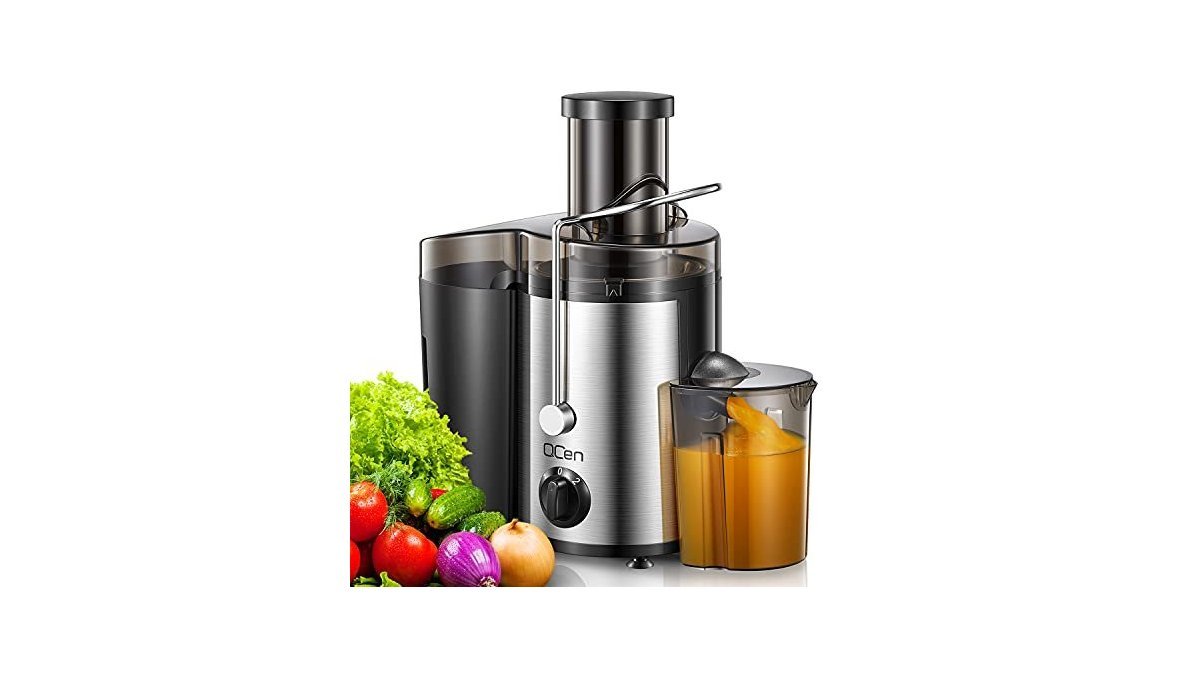
1. QCen Juicer Machine 500W Centrifugal Juicer with Extra Wide Feed

Best for: Everyday fruit and veg juicing on a budget
This is a centrifugal juicer with a 500W motor and a 3-inch wide mouth. That wide chute is the headline. It means you can drop in larger pieces of apple or carrot instead of cutting everything into thin sticks. The listing says the 3-inch mouth saves time on chopping, and that’s the feature that changes your morning routine the most.
It runs two speeds. Speed 1 is for soft produce like watermelon, orange, and strawberry. Speed 2 handles hard stuff like carrot, apple, and pear. There’s a locking arm, so it won’t run unless the cover is locked down, and an overload system that shuts the motor off if it gets too hot. The detachable parts come off for cleaning.
Living with it means a few things. The two-speed control gives you some say over how you treat different produce, which matters if you juice both soft and hard items in the same week. The safety lock and overload protection are the kind of features that matter more than they sound. If you push the machine too hard, it stops instead of burning out. The listing notes you should avoid juicing things with a low water content. That’s a real limit. Wheatgrass and dry nuts aren’t this machine’s job.
| What it gives you | What you accept |
|---|---|
| 3-inch wide chute cuts prep time | Not for low-water-content produce |
| Two speeds for soft and hard items | Centrifugal design, so it’s fast not slow |
| Locking arm and overload protection | Filter basket needs a firm pull to remove |
Who it fits: Anyone who wants fast juice from common fruits and veggies without much chopping.
Who should pass: If you mainly juice leafy greens or wheatgrass, a slow masticating machine suits you better.
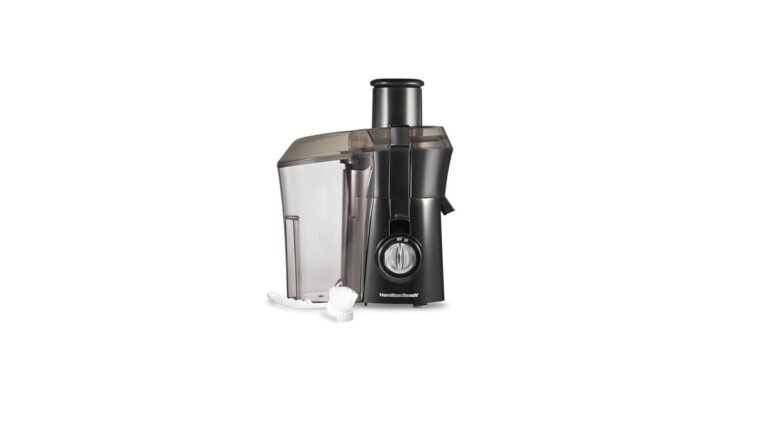
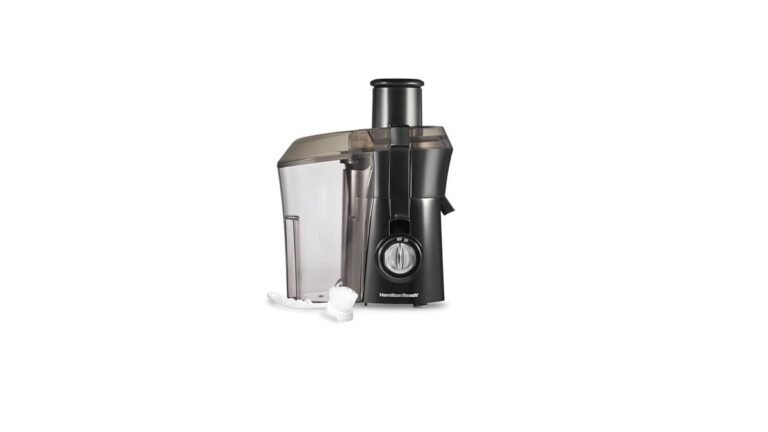
2. Hamilton Beach HealthSmart Compact Centrifugal Juicer Machine

Best for: Small kitchens and tight counter space
This is a compact centrifugal juicer with a 400W motor and a 2.4-inch round feed chute. The large chute reduces precutting by 50% versus the leading competitor. That’s a seller claim, not a measured result, but the point stands: a bigger round chute means bigger pieces go in whole. The stainless steel strainer handles both hard and soft produce, and a motor protection system is built in to help the motor last.
The compact shape is the real story. It takes up less counter room and fits into a cabinet for storage. That matters if your kitchen is small or your counter is already crowded. There’s a simple on/off button and a spout that sends juice straight into your glass, cup, or pitcher.
One thing to know: the juice cup isn’t included. You’ll use your own glass or pitcher. The listing cites Circana retail tracking data for the twelve months ending February 2024. That tells you it’s a popular, well-known machine, not that it’s the best for you.
- What goes smoothly: Fits under a cabinet; simple one-button use; dishwasher-safe removable parts; strainer handles hard and soft produce; spout pours straight to your glass.
- What you have to accept: No juice cup in the box; 2.4-inch chute is smaller than a 3-inch one; compact size means smaller batches.
3. BLACK+DECKER 32oz Electric Citrus Juicer

Best for: People who mainly juice oranges and grapefruit
This one is different. It’s a citrus juicer, not a centrifugal machine. You press fruit halves onto the cones and the machine does the rest. The auto-reversing cones are designed to pull maximum juice out, and there’s adjustable pulp control with a removable pulp basket. You can toss the pulp or save it for recipes.
The clear 32-ounce container doubles as a pitcher with a handle and a drip-free spout. Markings on the side let you measure as you juice, which helps when a recipe calls for a set amount. The clear view means you can watch your yield build up.
If citrus is most of what you drink, this is the smarter pick than a big centrifugal machine. It’s simpler, and it does exactly what it’s built for. It’s citrus only. The container and parts are dishwasher-safe, which keeps cleanup short.
Snapshot:
- Press-and-juice operation, no chopping
- Auto-reversing cones for more extraction
- Adjustable pulp control with removable basket
- 32-ounce clear container doubles as a pitcher
- Drip-free spout for clean pouring
- Dishwasher-safe parts
4. NutriBullet 800W Juicer

Best for: Big batches and daily make-ahead juicing
This is the most powerful machine on this list at 800W. It has a 3-inch feed chute for whole fruits and vegetables, dual speeds, and a 27-ounce sealing juice pitcher. That pitcher is the standout. The sealing juice pitcher lets you store fresh juice for up to 48 hours.
The setup is thoughtful. The pulp basin lifts off and goes right to your sink. The sieve, pulp basin, and juice pitcher are all dishwasher-safe. You get a cleaning brush and a food pusher in the box, plus a sealing lid with a froth separator. A no-drip spout keeps the pour clean.
The sieve is stainless steel. The pulp basin and pitcher are BPA-free plastic. The unit measures 8.8 by 9.4 by 16 inches, so it’s a taller machine that needs headroom on your counter. For someone juicing for two or three people, that capacity is the reason to pick it.
Who it fits: Households juicing larger amounts and storing ahead for the week.
Who should pass: If you juice one small glass at a time, the size and capacity are more than you need.
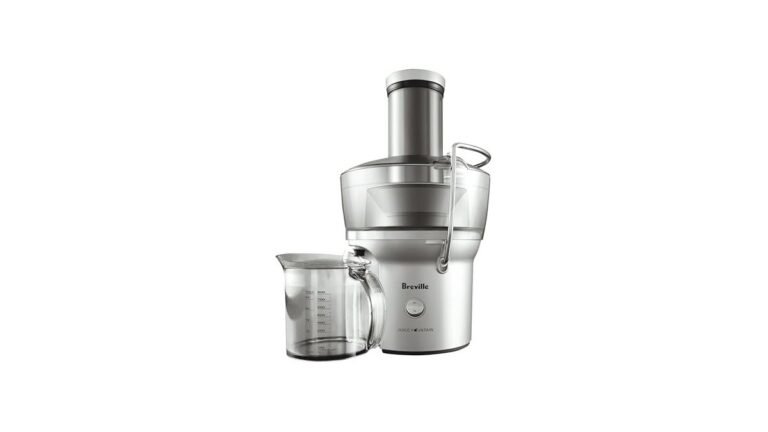
5. Breville BJE200XL Juice Fountain Compact Centrifugal Juicer

Best for: Whole-produce juicing with less prep
This is a compact centrifugal juicer built around a 3-inch extra-wide chute. The listing says you can juice whole fruits and vegetables without pre-cutting, including carrots, apples, and oranges. That’s the feature that earns it a spot. Less chopping is the daily win.
The extraction system uses a titanium-reinforced disc and an Italian-made micro mesh filter basket, both stainless steel. There’s a built-in froth separator in the juice jug, so certain fruits and veggies that foam up pour with less froth. The pulp collects within the unit’s footprint, which conserves counter space. The power cord wraps around under the base for storage.
You get a 25 fl-ounce juice jug with the froth separator and a cleaning brush. The pulp container holds 1.6 quarts. A safety locking arm means it won’t run unless the cover is locked in place.
- What goes smoothly: Whole produce goes in without cutting; froth separator gives smoother juice; pulp stays inside the footprint; cord wraps for storage; safety arm prevents accidental running.
- What you have to accept: 25 fl-ounce jug is smaller than some here; it’s a centrifugal machine, so it’s fast not slow.
6. Juilist 800W Juicer

Best for: Buyers who want the most speed control
This centrifugal juicer offers three speeds, which is more than most. Speed 1 is for soft produce like oranges, watermelon, and tomato. Speed 2 is for hard items like apple, carrot, and celery. The “P” setting reaches maximum speed and holds it after you release. That’s the highest level of control on this list.
The motor reaches a max of 800W, and the listing claims it juices fruit and vegetables within 8 seconds. That’s a seller claim, not a measured result. The wide feed chute takes larger pieces. There’s a visible window so you can watch the juicing process, and a brush is included for cleaning the filter. The accessories are dishwasher-safe.
Safety features include automatic overheat protection, a double safety lock, and a non-slip base. The stainless steel cutting disc sits inside a micro-mesh filter. The compact body takes up little counter room.
The trade-off with three speeds is that you have to learn which setting suits which produce. That’s a small learning curve. If you’d rather press one button and forget it, a simpler machine fits you better.
Snapshot:
- Three speeds plus a max-power setting
- 3-inch wide chute for larger pieces
- Visible window to watch juicing
- Overheat protection and double safety lock
- Non-slip base for stability
- Dishwasher-safe accessories with cleaning brush
7. Magic Bullet Mini Juicer with Cup

Best for: First-time juicers who want simple
This is the simplest machine here. A 400W motor, a 2-inch feed chute, and a single purpose: make juice. The listing says the 2-inch chute fits larger chunks, so there’s less chopping. Top-rack dishwasher-safe attachments keep cleanup easy, and a silicone spout cap catches drips before they hit your counter.
The best part is the cup. You juice straight into a 16-ounce cup that comes with a twist-on to-go lid. That means you can juice and walk out the door with it. No pouring, no second container. The unit takes up far less space than standard models, so it fits on the counter or tucks away.
It comes with a 1-year limited warranty. That’s the coverage it comes with, so it’s worth knowing. The small chute and small cup mean it suits one person, not a family. If you’re juicing for one and want the least fuss, this is it.
Who it fits: Single juicers who want grab-and-go convenience.
Who should pass: Families or anyone juicing large batches, since the cup is 16 ounces.
8. Elite Gourmet EJX600 BPA-Free Cold Press Juicer

Best for: Single servings of cold press juice
This is a mini cold press juicer, also called masticating. It runs at 70 RPM, which is slow. The listing says low-speed extraction produces smooth juice with less foam and less oxidation than high-speed centrifugal juicers. That’s the reason to pick a cold press machine: gentler processing.
It’s built for one or two servings at a time and includes a 16-ounce Tritan juice cup. The listing is upfront that it’s not for large-batch juicing or filling multiple bottles. That honesty helps. You know what you’re getting.
The feed chute is 3/4 inch, which is small. The listing says to cut produce into smaller pieces, especially hard items like apples, carrots, beets, and ginger. In exchange, you get slower, quieter juicing and less foam. There are only three removable parts, and they’re top-rack dishwasher safe, excluding the motor base and cord. A cleaning brush is included. There’s overload and overheat protection, and the brand has been in kitchens for over 40 years with US-based support.
| What it gives you | What you accept |
|---|---|
| Slow 70 RPM cold press extraction | 3/4-inch chute means more cutting |
| Only three removable parts | Motor base and cord not dishwasher safe |
| 16-ounce Tritan cup included | Single-serve only, not for big batches |
9. NEWBULIG Cold Press Juicer

Best for: Quiet juicing with less prep
This is a slow masticating juicer with a 4.25-inch feed chute. The listing says that chute accepts large produce chunks and drastically reduces pre-cutting. Wide chute plus slow juicing is an unusual pairing, and it’s what makes this one stand out.
The auger crushes ingredients without sharp blades, and an automatic safety lock stops the motor the moment the chamber opens. There’s a reverse anti-clog function. When pulp builds up from fibrous greens or dense produce, you flip the reverse setting to clear it without taking anything apart. That’s a real convenience if you juice greens often.
The listing says the low-speed operation is quiet and minimizes heat buildup and oxidation, preserving fresh flavor. All detachable parts come apart without tools and rinse under cool or lukewarm water below 104°F. A pulp-cleaning brush is included.
The trade-off is speed. Slow masticating juicing takes longer than centrifugal juicing. If you’re in a rush every morning, a fast machine suits you better. If you want quiet, gentle juicing with minimal chopping, this is the pick.
Who it fits: Green-juice drinkers who want quiet operation and little chopping.
Who should pass: Anyone who needs juice in under a minute.
Also Worth Considering
The Elite Gourmet ETS623 Citrus Juicer is a 40-watt electric citrus press with a 24-ounce capacity and a compact large-volume pulp control. It juices oranges, lemons, limes, and grapefruits, and has an easy-pour spout. If citrus is your main drink, it’s a focused option.
The TUUMIIST Juicer Machines is a cold press juicer with a 5.8-inch extra-large feed chute that fits whole fruits and vegetables. It’s BPA-free and built for high juice yield with easy cleaning. That chute is the widest mentioned here. It runs at 55 RPM, slow enough to mimic hand squeezing, and the one-piece design plus included brush is meant to cut cleaning to about 5 minutes.
The QCen Juicer Machine Centrifugal Juicer is an 800W centrifugal model with a wide mouth feed chute. It uses stainless steel and BPA-free parts, offers fast juice extraction, and is easy to clean. Two speeds cover soft produce like watermelon and orange on “1” and harder items like carrot, celery, apple, and pear on “2.” The safety lock arm keeps it from running until the cover is locked.
The Decision Filter
Start with one question: what will you juice most? If it’s oranges and grapefruit, a citrus juicer is your answer, and everything else on this list is wrong for you. If it’s leafy greens, you want a slow masticating machine, not a centrifugal one. If it’s apples, carrots, and melons, a centrifugal juicer is the fast, simple pick.
Most people miss this: the feed chute size decides how much time you spend chopping. A 3-inch chute or wider means whole produce goes in. A 2-inch or smaller chute means you cut first, every single time. That’s the detail buyers read past, and it’s the one they regret.
Chute width is where the two types split hardest. A 5.8-inch chute on a slow masticating machine takes whole fruits and vegetables with no pre-cutting at all. Centrifugal models cluster at 3 inches, which the listings describe as enough for whole produce, including carrots, apples, and oranges. The smallest, a 2-inch chute on a compact centrifugal model, still fits larger chunks but not whole items. A 3/4-inch chute on a mini cold press is the other extreme: cut everything small, especially hard items like apples, carrots, beets, and ginger.
Then check the speed control against your produce. Two speeds cover soft items like watermelon, orange, and strawberry on the low setting, and hard items like carrot, apple, and pear on the high one. A third setting, often marked “P,” reaches maximum speed. If your list is mostly soft fruit, one speed is enough. If it’s mostly hard, you want the second.
Two more things decide whether you keep using it. Locking arms and safety locks mean the machine won’t run unless the cover is locked in place, so a unit that’s awkward to assemble gets left in the cabinet. And if you juice in long stretches, note the limit: don’t run a machine continuously for more than 5 minutes, and if it shuts off from overheating, let it cool for 15 minutes before restarting.
So answer the produce question first. It rules out half this list in ten seconds.
The Quick Checklist
- Will I really juice several times a week, or just now and then? Daily juicing points to a machine with fewer removable parts. Occasional juicing means cleanup matters less than counter space.
- Who else in the house has to use and clean this machine? A one-piece design and a single on/off button are easier for a second person than a multi-part machine.
- Does it fit under my cabinets and on my counter? Check the height against your cabinet clearance before you buy. A compact body that stores in a cabinet solves this outright.
- What produce do I juice most, and does this machine handle it? Soft produce like watermelon, orange and strawberry wants low speed. Hard produce like carrot, apple, celery and pear wants high speed.
- Can the parts go in my dishwasher, or will I hand-wash them? Dishwasher-safe parts make cleanup quick. Hand washing is recommended for the longest product life.
- If it’s the wrong one, can I live with the prep and cleanup? A narrow chute means cutting produce into smaller pieces, especially hard items like apples, carrots, beets and ginger.
Three Regrets Worth Avoiding
Regret #1: Buying a machine with a narrow chute and then dreading the chopping. A small feed chute means every session starts with a cutting board and a knife. The fix is simple: look for a 3-inch chute or wider if you want to skip most of the prep.
Regret #2: Picking a citrus-only machine for a household that wants green juice. A citrus juicer does one job well, and it won’t touch carrots or kale. The fix is to match the machine to your main drink before you buy, not after.
Regret #3: Assuming every part is dishwasher safe. Some listings note that the motor base and cord must stay out of the dishwasher, and some note that no juice cup is included. The fix is to read what’s in the box and what can be washed before you commit.
If You Want This, Look for That
One lead thought: match the feature to your real habit, not to the label on the box.
| If you want… | Look for | Avoid |
|---|---|---|
| Less chopping every morning | 3-inch chute or wider | Narrow 2-inch chutes |
| Juice for the week ahead | Sealing pitcher, 24 oz or more | Small single-serve cups |
| Gentle green juice | Slow masticating auger | High-speed centrifugal only |
| Quick hard-veg juice | Two or more speeds | Single-speed soft-fruit units |
| Easy cleanup | Dishwasher-safe parts | Many small hand-wash pieces |
| Citrus only | Auto-reversing cones | General centrifugal machines |
Two rows deserve a second look, because the wrong pick makes daily juicing harder.
The chute width is the one number that decides how much knife work you do. A 3-inch chute takes whole carrots, apples and oranges. A 2-inch chute does not, and a 3/4-inch chute on a slow masticating model means you cut hard items like apples, carrots, beets and ginger into smaller pieces first.
Speed settings matter more than wattage for hard produce. On a two-speed machine, “1” is for soft fruits and vegetables such as watermelon, orange and strawberry; “2” is for hard ones such as carrot, apple, pear and celery.
If you mostly juice soft fruit, a single speed is enough. If carrots and apples are your habit, get the second speed.
Closing
When two picks still look equal, use one tie-break: which one needs less of your time each day? Add up the chopping, the juicing, and the washing. The machine that asks least of your morning is the one you’ll keep using.
Chute size is where the prep time hides. A 3-inch chute takes whole apples, carrots, and oranges, so nothing gets cut first. A 2.4-inch chute fits more produce and larger pieces with less precutting, and it still takes whole fruit. A 2-inch chute fits larger chunks, which means less chopping than a small one, but more than a 3-inch. If you juice carrots and apples daily, the wider chute pays you back every morning.
Cleanup is the other half. Removable parts that go in the dishwasher are the difference between a daily habit and a cabinet ornament. Count the parts you have to wash, and check whether the pulp container lifts off and comes apart without tools.
Next step: decide what you juice most, then check the chute size and the cleanup on the two or three that fit. Read what’s in the box, so you know if you need your own cup or pitcher. Then pick the one that matches your habit. The button takes you to today’s details on Amazon.
Frequently Asked Questions
Will a cheap juicer handle hard vegetables like carrots and beets?
Yes, if it’s a centrifugal juicer with a high-speed setting. The QCen 500W, Juilist 800W, and NutriBullet 800W all list a high speed for hard produce like carrot and apple. Slow masticating machines also handle them, but you’ll cut them smaller first because the chute is narrower. The one thing to avoid is juicing low-water-content items, which the QCen listing specifically warns against.
Do I need a cold press juicer or a centrifugal one?
It depends on what you drink and how much time you have. Centrifugal juicers spin fast, so they’re quick and good for hard produce, but they can leave more foam. Cold press or masticating juicers crush slowly, which the listings say gives smoother juice with less foam and less oxidation. Cold press takes longer and often asks for smaller pieces. If speed matters most, go centrifugal.
Can I put the parts in the dishwasher?
Some parts, yes. The Hamilton Beach, NutriBullet, Juilist, and Ninja listings all say their juice-contact parts are dishwasher safe. The Elite Gourmet EJX600 notes its removable parts are top-rack dishwasher safe but excludes the motor base and cord. Always check the specific listing, because the motor base never goes in water on any of these machines.
How much juice will I get from one batch?
That depends on the produce and the machine. The NutriBullet has a 27-ounce pitcher and a 1.5L pulp basin. The Breville has a 25 fl-ounce jug and a 1.6-quart pulp container. The Black+Decker citrus juicer has a 32-ounce container. The mini models, like the Magic Bullet and Elite Gourmet, are built for one or two servings only.
What happens if the juicer jams or overheats?
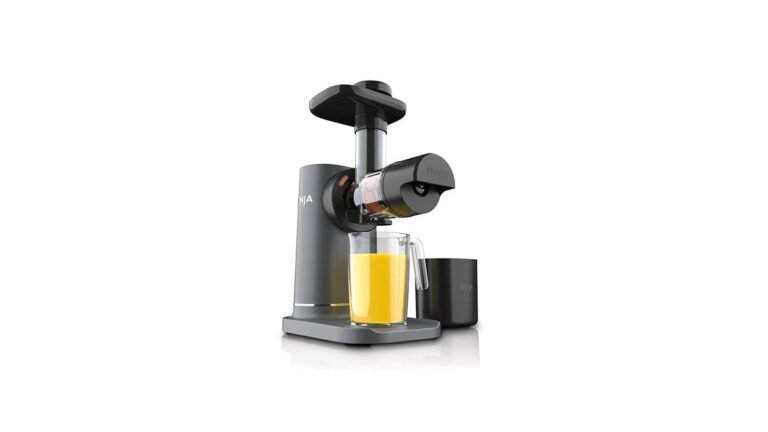
Most of these machines have protection built in. The QCen, Juilist, and Elite Gourmet EJX600 all list overload or overheat protection that shuts the motor off. The Ninja NeverClog and NEWBULIG both have a reverse function to clear clogs without taking the machine apart. If yours stops, let it cool, then clear any pulp before restarting.
Is it safe to let kids help with juicing?
The safety features help here. The QCen, Breville, and NEWBULIG all have locking systems that stop the motor unless the cover is locked in place. That means the machine won’t run with the lid open. Still, the discs and augers are sharp, so an adult should handle assembly, feeding hard produce, and cleaning the blade parts.