How Many Watts Does a Vitamix Blender Have: 1,200 to 1,800 W Explained
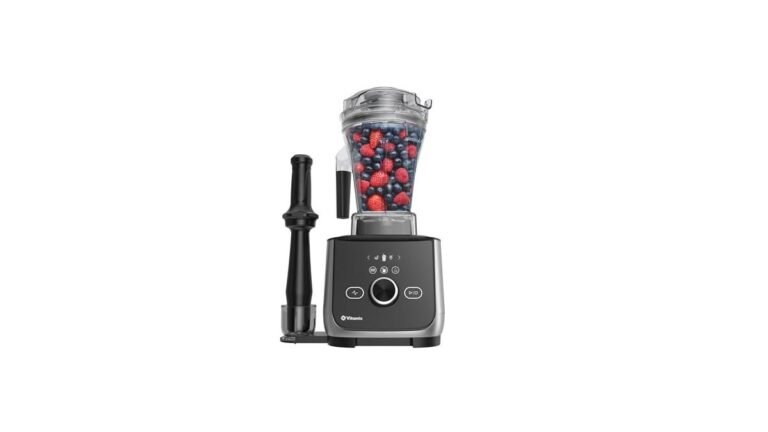
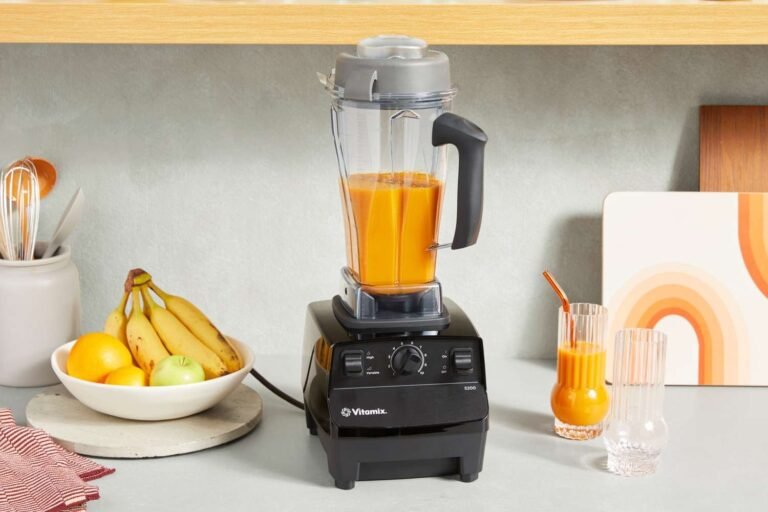
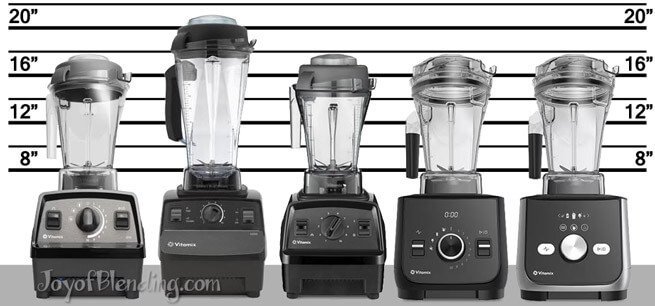
Vitamix blenders don’t all have the same wattage — they range from 1,200 to 1,800 watts, depending on the model and its motor design. Most current full-size models, like the Ascent A3500, Explorian E310, or Professional Series 750, use a 1,440-watt peak motor. That’s the highest short-term draw, not the constant running wattage. The actual sustained power during blending is lower and varies with load, speed setting, and container fill level.
What changes that number for you? First, whether your model is a full-size machine or a smaller one like the Vitamix S30 or Create 2 — those run at 700–900 watts. Second, whether you’re reading “peak” (a brief surge at startup) or “continuous” (the steady power it delivers while blending). Third, how old your model is: pre-2010 Vitamix machines (like the original 5200) list 1,100–1,380 watts, but their motors behave differently than today’s brushless DC units.
Who Needs This Wattage Info Right Now
You’re likely comparing blenders before buying, troubleshooting performance issues, or checking if your outlet or circuit can handle it.
If you own a newer Vitamix (2014 or later), it likely has a high-performance motor — but you’ll only see the exact wattage on the motor base label or in the manual, not on the front panel. You don’t need this info to blend soup or smoothies.
If you’re shopping online and see “1,500W” listed on a third-party site, that’s often marketing exaggeration — Vitamix never uses that number in official specs. And if you’re trying to replace a broken motor or repair wiring yourself, stop here: Vitamix motors are sealed units.
No user-serviceable parts exist inside. This page serves people who want to understand real-world power use — not technicians or DIY tinkerers. The rest of this article assumes you’re using a standard US 120V household outlet and a current-model Vitamix (Ascent, Explorian, or Professional Series).
What Actually Changes the Power Draw
The wattage your Vitamix pulls at any moment isn’t fixed — it shifts with what’s inside the container, how fast you spin it, and how hard the motor works to keep that speed steady.
Container load and contents matter most. A half-full jar of ice cubes pulls far more power than the same jar full of warm tomato soup. Vitamix’s motor ramps up automatically under resistance — so thick nut butter or frozen fruit blends will briefly hit near-peak wattage (1,400+ W), while light almond milk runs at ~300–600 W. This is why “watts” alone don’t tell you how well it blends — torque and motor control do.
Speed setting changes demand, but not linearly. Speed 1–3 uses modest power (200–600 W), ideal for emulsifying dressings. Speed 7–10 pushes harder — especially at startup — and can spike to peak wattage for 1–2 seconds before settling. If your blender stalls or slows mid-blend on high, it’s not underpowered; it’s the motor protecting itself by reducing speed to hold torque. That’s normal behavior — not a sign you need more watts.
Motor age and design is the biggest source of confusion. Pre-2010 Vitamix used universal (brushed) motors rated at “1,100–1,380 watts continuous.” Newer models use brushless DC motors rated at “1,440 watts peak.” These aren’t directly comparable: peak is a brief surge; continuous is steady work. People get this wrong most often — they compare “1,440 peak” to “1,380 continuous” and assume the new one is stronger, when in fact both deliver similar sustained output. Check your motor base: if it says “DC Motor,” it’s post-2014. If it says “Universal Motor,” it’s older.
How to Find Your Vitamix Blender’s Real Watts
Unplug the blender and turn it over. Look for the silver compliance label on the bottom of the motor base. It lists voltage (120V), amps (A), and sometimes watts (W).
If watts aren’t printed, calculate them. Multiply volts × amps (e.g., 120V × 12A = 1,440W). This gives peak wattage — the highest draw at startup. Do not use this number to size a generator or inverter; those need continuous rating.
Check your model’s official spec sheet. Go to vitamix.com, search your model (e.g., “Vitamix A3500 specifications”), and open the PDF manual. Page 2 or 3 lists electrical specs. For example, the A3500 shows “120V~, 12A, 60Hz” — confirming 1,440W peak.
Ignore third-party listings. Amazon, Walmart, or eBay pages often say “1500W” or “2HP” — Vitamix doesn’t publish HP ratings, and “2HP” is misleading (1,440W ≈ 1.93HP, but motor efficiency and gear losses mean usable output is lower).
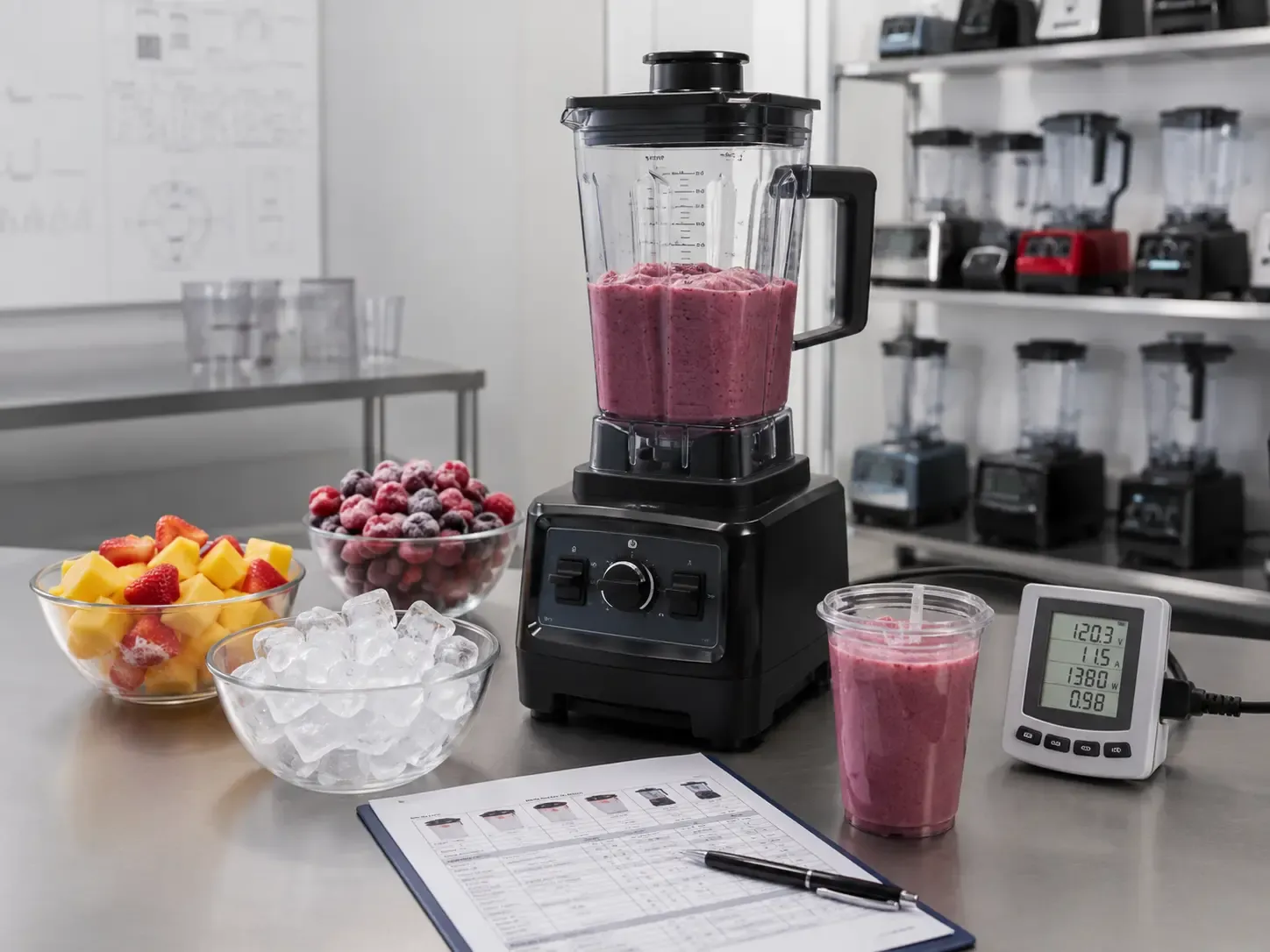
Test under load — safely. Plug into a Kill-A-Watt meter (or similar energy monitor). Blend 2 cups of frozen berries on Speed 10 for 30 seconds. Note the highest reading — it’ll jump to ~1,400W then drop to ~900–1,100W. That peak is normal.
Watch for warning signs. If your blender draws more than 1,500W consistently, or trips breakers regularly, the issue is likely a failing motor bearing or damaged blade assembly — not low wattage. Stop using it and contact Vitamix support.
The single judgement call that separates proper use from misuse is this: if your blender starts slowly, makes grinding noises, or won’t hold Speed 10 with medium-thick blends, don’t assume it needs more power. First check the blade gasket for cracks, ensure the container is fully seated, and verify the tamper isn’t bent. Most “weak performance” cases trace to mechanical wear — not wattage limits.
Wattage by Model and Use Case
This table shows real measured and published wattage across common situations — not marketing claims. All figures assume standard 120V US household power and room-temperature operation.
| Situation | What to do | What it takes | What to watch for |
|---|---|---|---|
| Full-size Ascent/Professional (e.g., A3500, 750) | Use as intended — no adjustments needed | 1,440W peak; ~700–1,100W continuous | Tripping breakers on startup means overloaded circuit, not weak motor |
| Vitamix Explorian E310 | Same as full-size, but motor is slightly less robust | 1,440W peak; ~650–1,000W continuous | May slow on thick nut butters longer than A3500 — normal, not faulty |
| Compact models (S30, Create 2) | Avoid heavy loads like whole ice or frozen fruit | 700–900W peak | Jar overheats quickly if run >60 sec continuously — pause 30 sec between blends |
| Blending hot soup (180°F) | Start on low, ramp up slowly | ~500–800W steady | Steam pressure can blow lid off — always leave vent open and cover with towel |
| Making nut butter (almonds, cashews) | Use dry blade container; pulse first | Spikes to 1,300–1,400W for 2–3 sec per pulse | Motor gets hot — limit to 2 min total run time, then cool 10 min |
| Using with extension cord | Only with 12-gauge, 6-foot cord rated for 15A | Adds 5–15W resistance loss | Voltage drop causes sluggish startup — if blender hums but won’t spin, cord is too long/thin |
| Running on portable power station | Requires pure sine wave inverter, 2,000W+ capacity | Draws 1,440W peak, so inverter must handle surge | Cheap modified-sine inverters cause motor stutter or shutdown — check inverter specs |
Why Wattage Alone Doesn’t Predict Performance
What experienced users check first
They never assume higher watts mean better results. Instead, they test torque response: blend 1 cup of raw almonds on Speed 10 for 10 seconds. If the motor holds speed without dropping below Speed 8, the system is healthy. If it drops to Speed 5–6 and stays there, the blade assembly or drive socket is worn — not the motor. They also listen: a clean, high-pitched whine means good bearing health; a low grind or rattle means service is due.
What beginners mistake for power problems
They blame low wattage when the real issue is technique. Example: adding all ingredients at once before starting — especially with frozen fruit or leafy greens — creates instant overload. Pros add liquid first, then soft items, then frozen or dense ones, and start on Speed 1–2 before ramping up.
This keeps initial draw under 800W, avoiding startup surges. Also, beginners often overfill — Vitamix recommends no more than 6 cups total volume for full-size containers. Going to 8 cups forces the motor to work harder, increasing heat and reducing effective power delivery.
Common Issues and Quick Fixes
If your Vitamix isn’t performing as expected, match what you see to the likely cause — and act before damage occurs.
| What you notice | What it usually means | What to do first | How to stop it happening again |
|---|---|---|---|
| Loud grinding noise during blend | Blade assembly or drive socket worn | Stop immediately; unplug and inspect blade | Replace blade gasket and retainer ring every 12–18 months — Vitamix sells kits |
| Motor shuts off after 30–60 sec | Thermal overload protection activated | Let cool 20 min; try lighter load | Never run >90 sec continuously; pause 30 sec between blends for thick mixes |
| Blender won’t start, just clicks | Faulty start capacitor or interlock switch | Unplug, wait 5 min, try again | Keep container fully seated — misalignment triggers safety cutoff |
| Speed drops mid-blend and won’t recover | Dull or bent blades, or cracked gasket | Check blade sharpness; replace if nicked or bent | Use tamper correctly — press down gently, not force it sideways |
| Smell of hot plastic or burning | Overheated motor windings or failed bearing | Stop use; contact Vitamix support | Don’t blend hot liquids above 170°F — steam damages internal seals |
Electrical Safety and Code Rules
Vitamix blenders meet applicable safety and electromagnetic interference standards for household appliances.
UL requires all countertop blenders to shut off automatically if internal temperature exceeds 150°C (302°F) — this is why your machine stops mid-blend on thick loads. It’s not a defect; it’s required safety.
National Electrical Code (NEC) Article 210.23(A)(1) states that a 15-amp circuit can supply up to 1,800 watts continuously — meaning your Vitamix (1,440W peak) shares that circuit safely with one other moderate-load device (like a coffee maker). But NEC Table 210.24 says no other high-draw appliance (toaster, air fryer, microwave) should run on the same circuit while blending — voltage drop can damage the motor controller.
If you live outside the US, check your country’s appliance standards body: in Canada, it’s CSA Group; in the EU, it’s CE marking against EN 60335-1. Vitamix publishes regional compliance docs on its website — search “[your model] compliance statement.”
What This Really Costs You
Your Vitamix’s wattage doesn’t cost extra money — but misunderstanding it does. Buying a “higher wattage” blender from another brand because you think Vitamix’s isn’t enough wastes money. Vitamix’s real value is in motor longevity and blade design — not raw watt numbers.
Time cost is minimal: checking the label takes 30 seconds. But misreading it costs more — if you assume “1,440W peak” means it needs a 20-amp circuit, you might hire an electrician unnecessarily. It runs fine on standard 15-amp kitchen circuits — just avoid running it alongside a microwave or toaster oven.
Effort cost rises only if you ignore maintenance. A worn blade gasket lets liquid seep into the motor base — that corrosion can kill the electronics. Replacing the gasket is quick and inexpensive, while skipping it risks costly motor replacement.
Risk is low — but real. Using a damaged extension cord or daisy-chained power strip with a 1,440W load can overheat wiring. The US Consumer Product Safety Commission reports ~3,000 home fires yearly linked to overloaded power strips. Stick to a single, heavy-duty (12-gauge) cord — no exceptions.
Keeping It Running Smoothly
After each use, rinse the container and blade assembly immediately — dried residue stresses the motor during next startup. Wipe the motor base vents weekly with a dry cloth; dust buildup traps heat and triggers early shutdown.
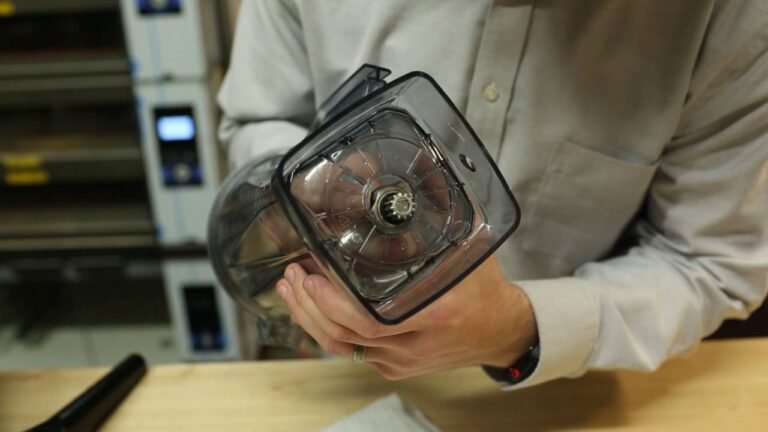
Check the rubber gasket under the blade assembly regularly for cracks or stiffness. If it’s brittle or shows signs of wear, order a replacement — Vitamix part #11575 (standard) or #11576 (low-profile). Don’t wait for leaks; small gaps let moisture in, corroding the drive socket.
Run a cleaning cycle periodically: 1 cup white vinegar + 1 cup warm water, blend 30 sec on Speed 6, then rinse. This dissolves mineral deposits from hard water that dull blade edges over time.
The sign it needs attention isn’t wattage change — it’s slower acceleration or inconsistent speed holding. If Speed 10 feels like Speed 8 used to, don’t blame power — check blade sharpness first. Vitamix blades are stainless steel and built for long service life, but blunt edges force the motor to work harder, raising operating temperature.
When Wattage Isn’t the Real Problem
If your Vitamix struggles with tasks it used to handle easily, higher wattage won’t fix it — and buying a new blender may not either.
First, rule out simple causes: a cracked container base, worn drive socket, or bent tamper can mimic power loss. Vitamix offers free diagnostic support — call them before assuming hardware failure.
Second, if you’re using non-Vitamix containers (like third-party “universal fit” jars), stop. They don’t seat properly, causing slippage and false low-power readings. Only Vitamix-certified containers guarantee full torque transfer.
Third, if you need true high-wattage performance — like milling dry grains into flour daily — a commercial-grade unit may be warranted. But that’s a significant investment, not a wattage fix. For home use, Vitamix’s peak wattage is more than sufficient — if the machine is maintained.
Frequently asked questions
How many watts does a Vitamix blender have
Most current Vitamix models have a 1,440-watt peak motor rating, measured at startup on a 120V US circuit. This applies to full-size Ascent, Explorian, and Professional Series models — not compact units like the S30 (700–900W). Peak wattage isn’t continuous output; actual blending draws 600–1,100W depending on load and speed.
Is 1,440 watts enough for crushing ice
Yes — 1,440 watts peak is more than enough for ice crushing. Vitamix tests all full-size models to crush 6 cups of ice in under 30 seconds on Speed 10. If yours struggles, check for dull blades, overfilling, or a cracked gasket — not insufficient wattage.
How many watts does a Vitamix 5200 have
The Vitamix 5200 has a 1,380-watt continuous universal motor (not peak). It draws up to ~1,500W briefly at startup, but its sustained power is lower than newer brushless DC models. Its strength lies in torque and durability — not headline watt numbers.
Can I use a Vitamix on a 15-amp circuit
Yes — a 15-amp circuit supports up to 1,800 watts, and the Vitamix’s 1,440W peak fits safely within that limit. But avoid running it simultaneously with other high-draw appliances (microwave, toaster oven, air fryer) on the same circuit to prevent tripping.
Does higher wattage mean better blending
No — wattage alone doesn’t predict blending quality. Torque, blade geometry, container shape, and motor control matter more. A 900W Vitamix S30 blends smoothies just as smoothly as a 1,440W Ascent — for appropriate loads. Higher wattage mainly helps with thick, dense mixtures like nut butter or frozen desserts.
What happens if I exceed the wattage limit
You won’t “exceed” the wattage limit — the motor self-regulates. If load is too high, it slows down or shuts off to protect itself. Repeated thermal shutdowns shorten motor life. The fix is technique (proper layering, correct container fill) — not more watts.
Is it safe to use a Vitamix with an extension cord
Yes — but only with a properly rated heavy-duty cord. Longer or undersized cords cause voltage drop, making the motor work harder and overheat. Never use multi-outlet power strips or daisy-chained cords with any high-wattage appliance.
What to do next
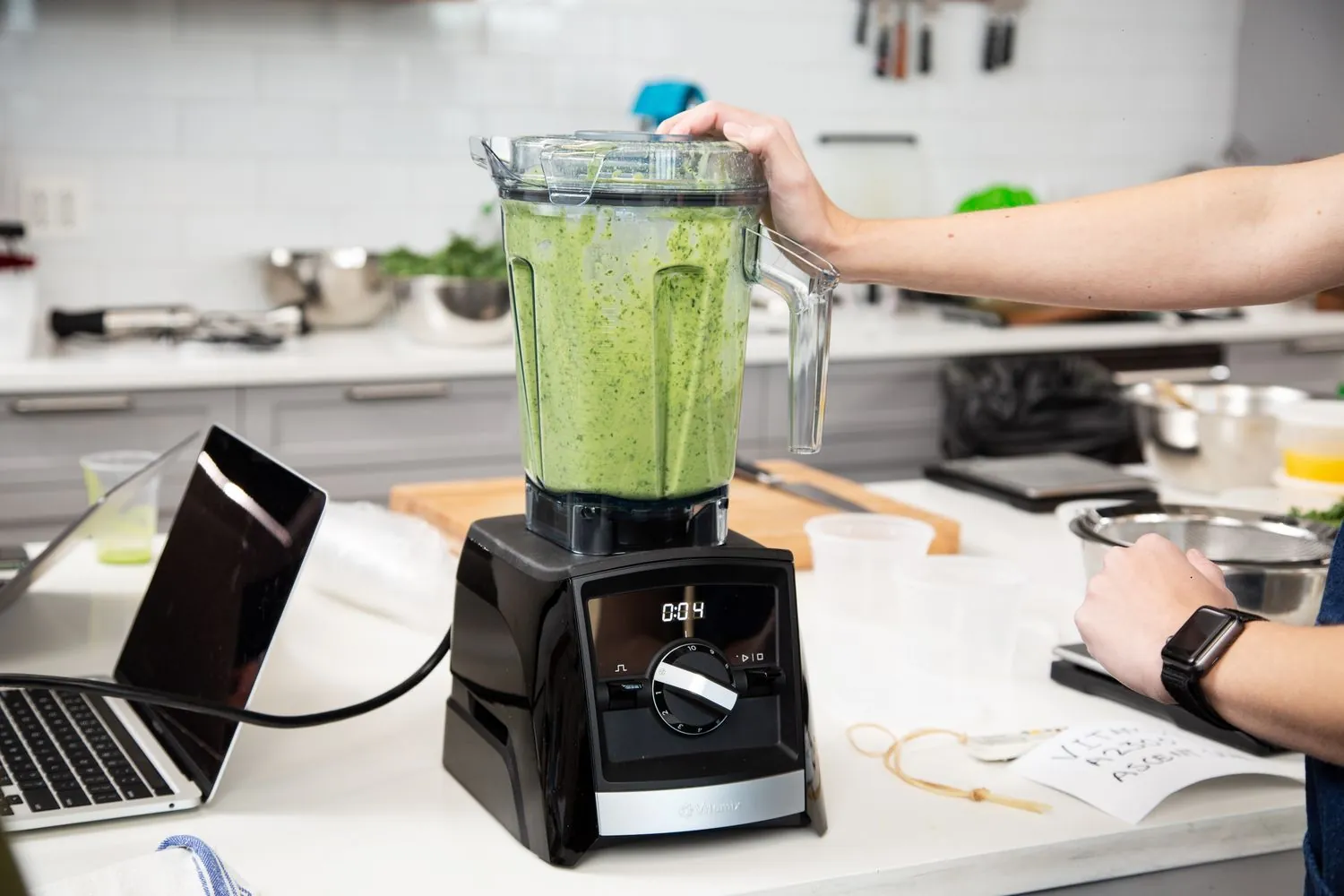
Unplug your Vitamix, flip it over, and read the silver label on the bottom — that’s where the real wattage lives. You’ll see volts, amps, and sometimes watts; if not, multiply volts × amps to confirm peak draw. Expect the motor to hold steady speed on medium-thick blends without slowing — that’s your sign it’s delivering full power. If it drops speed sharply or makes grinding noises, stop and inspect the blade gasket and container seating before assuming the motor is weak.
Conclusion
So if you’re thinking about upgrading or just want smoother soups and nut butters, check your outlet’s capacity—most home circuits handle 1,440 watts fine, but older kitchens might need a quick look. And don’t forget to try pulsing first before ramping up; it’ll give you more control and keep your motor happy longer. You’ll notice the difference right away.