Nutribullet Stick Blender Review: 3 Best Models Compared
A pot of soup is bubbling on the stove, and you want it smooth without pouring it into a countertop jar. So you reach for a hand blender — and then you stop, because the shelf is full of them and the names all sound the same. That’s the moment a Nutribullet Stick Blender Review is meant to help with.
Here’s the hard part. Two of these tools look almost identical, yet one comes with a chopper and one comes with a cup. A third isn’t a stick at all — it’s a full countertop machine with a heating cycle. So you’re weighing what’s in the box against how you actually cook, and how much cleanup you’re willing to do afterward. This page sorts that out for you.
| # | Product | Best for | |
|---|---|---|---|
| 1 | NutriBullet Lite Immersion Blender | Best Handheld | Check Price |
| 2 | NutriBullet Lite Immersion Blender | Best for Pots and Pans | Check Price |
| 3 | NutriBullet Rx Blender | Most Powerful | Check Price |
1. nutribullet Lite Immersion Blender Dark Gray

Right for: someone blending dressings and small batches in a cup.
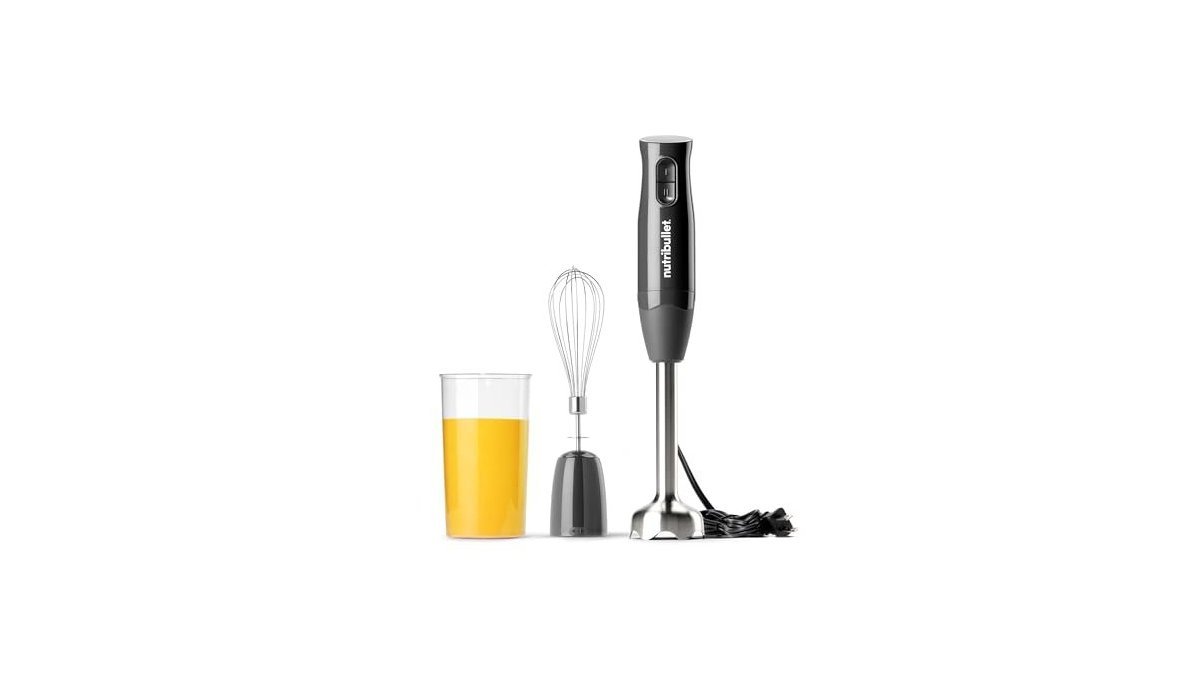
This is the version built around the 30oz measuring and blending cup. The listing promises a lightweight, ergonomic handheld blender with a stainless steel arm that stands up to high cooking temperatures, plus a whisk attachment for eggs, meringue, cream and batter. Two speeds let you pick low or high depending on whether the ingredients are delicate or tough. It’s aimed at soups, sauces, purees, dips, dressings and smoothies.
On a normal evening, that cup is the part you’ll notice most. You can measure dressing in it, blend in it, and skip dragging out a second bowl — the arm goes straight into the pot for the hot stuff. The whisk covers the baking side, so one tool handles both dinner and dessert prep. The 30oz cup is the measuring and blending cup included with this version, so dressings and cream can be made in it rather than in the pot.
What works:
- Stainless steel arm handles high cooking temperatures
- Variable settings for delicate and tough ingredients
- Whisk attachment for eggs, cream and batter
- 30oz cup for measuring and blending
- Lightweight grip for hands-on control
Where it gives ground:
- 30oz cup suits smaller batches
Skip it if: you want a chopper for salsas and stir-fries too.
2. NutriBullet Lite Immersion Blender

Right for: the cook who dices onions and blends soup in one session.
Same lightweight handheld body, same stainless steel arm rated for high cooking temperatures, same two speeds and whisk. What changes is the box: this version swaps the measuring cup for a chopper attachment, which the listing says is perfect for dicing and mincing ingredients for salsas, stir-fries and sautés. You still blend directly in your pot or dish, and it still covers soups, sauces, purees, dips, dressings and smoothies.
Think about what that means on a weeknight. You can mince garlic and onion in the chopper, tip them into the pan, cook, then run the arm through the same pan without dirtying a blender jar. That’s both dicing and blending handled without swapping appliances. The flip side is what’s in the box: this version pairs the chopper with the whisk and the stainless steel arm, so dicing and mincing happen in the chopper while the arm goes into the pot.
What works:
- Chopper attachment for dicing and mincing
- Stainless steel arm handles high cooking temperatures
- Two speeds for delicate and tough ingredients
- Whisk attachment for eggs, cream and batter
- Blend directly in your pot or dish
Where it gives ground:
Skip it if: you mostly blend dressings and cream in a cup.
3. NutriBullet Rx Blender

Right for: a household that wants a single appliance to handle both hot soup and cold shakes.
This one isn’t handheld at all. The listing gives a 1700 watt motor, a 30oz short cup and a 1 liter pitcher, plus hands-free SMART technology with auto start and stop. There’s a heating cycle for soups and sauces, so it can warm as it blends. It’s built for both single servings and family-sized batches, and the listing notes it’s manufactured in compliance with US and Canadian electrical standards.
That heating cycle is the real difference. You can make soup in the machine instead of on the stove, then switch to the cup for a morning shake — a single base handling both cooking and blending. The pitcher covers a family portion, which the handheld versions can’t. What you give up is the direct-in-the-pot control: this is a countertop appliance with a 1 liter pitcher and a 30oz short cup rather than a handheld arm.
What works:
- 1700 watt motor
- Large pitcher plus short cup
- Heating cycle for soups and sauces
- Hands-free SMART technology with auto start/stop
- Handles single and family-sized servings
Where it gives ground:
- Countertop machine, not a handheld tool
Skip it if: you want to blend right in the pot on the stove.
Also Worth Considering
NutriBullet Special Edition NutriBullet (Pro 900-Watt Blender, Matte Black) is a personal blender rather than a stick, built around a 900 watt motor. It suits someone who mostly makes shakes and smoothies in a single cup and doesn’t need to blend hot food in a pot. The matte black finish is the visible difference from the white version below.
NutriBullet Special Edition NutriBullet (Pro 900-Watt Blender, White) carries the same 900 watt personal blender setup in a white finish. Same idea: cup-based blending for drinks and light prep, not stovetop work. Pick between this and the matte black one on looks alone.
NutriBullet Pro Personal Blender comes with a 32 ounce cup, 24 ounce cups, flip-top travel lids and a 900 watt motor, and the listing covers shakes, smoothies, food prep and frozen blending. The travel lids are the detail that stands out — it’s aimed at people who blend a drink and take it with them.
All three of these are cup blenders, so the choice between them is about what you put in the cup, not about motor strength. The Pro Personal Blender is the one whose listing names frozen blending and dense whole foods like nuts, seeds, hard fruits and kale.
The Special Edition pair doesn’t make that claim in its own listing. It describes turning strawberries and spinach into smooth, sippable nutrition, and says most smoothies can be made in under 60 seconds. If your usual cup is fruit, greens and liquid, either finish will do the job; if you routinely load frozen fruit or nuts, the Pro is the one whose listing speaks to that.
Cleaning is the same story across all three: twist off the blades, rinse with soap and water, and the cups go on the top rack of the dishwasher. The Special Edition adds a recipe book and a user guide to the box.
How to Think Before You Choose
Handheld or countertop
This is the first fork in the road, and it decides how you’ll actually use the thing. A handheld tool goes into the pot, the bowl or the cup you’re already using, so there’s one less container to wash. A countertop machine has its own jar or pitcher, which means more capacity but also more to clean and more counter space spoken for.
Most people cooking soup, sauce or puree on the stove should lean handheld — the whole point isn’t pouring hot liquid into another vessel. Go countertop if you want volume, or if you want the machine to do the work without you standing there holding it.
Before you decide, check two things at home: how much counter space you’re willing to give up permanently, and how big your largest regular batch is. If your biggest pot holds more than a few servings, the handheld arm still goes straight into the pot, while the 30oz cup is the smaller-batch option.
What comes in the box
Two tools can share a name and a motor and still be different products, because the attachments change what you can cook. A whisk opens up eggs, cream and batter. A chopper covers dicing and mincing for salsas, stir-fries and sautés. A measuring cup is what makes dressings and whipped cream convenient.
The mistake is buying on the headline description and ignoring the accessory list. Think about the last five meals you cooked and count how many needed chopping versus whisking. That number tells you which attachment matters, and it’s usually not the one you’d guess.
One more check: look at the capacity if a cup is included. The Lite Immersion Blender versions list a 30oz cup, while the Rx lists a 1 liter pitcher for family-sized servings.
Heat, power and what you’re blending
Hot liquid is the thing that separates these tools. A stainless steel blending arm rated for high cooking temperatures is what lets you work directly in a pot, and that’s a listed feature worth confirming rather than assuming. If you’re blending cold drinks and frozen fruit instead, heat tolerance matters far less and motor size matters more.
Power shows up as wattage, and the listings here range from 900 watts up to 1700 watts. Higher wattage is about handling tougher jobs without straining, and in one case it comes with a heating cycle that warms soup as it blends. Someone blending soft cooked vegetables in a pot doesn’t need the top end.
Ask yourself what goes in most often. If it’s frozen fruit or ice, lean toward more power. If it’s cooked vegetables and stock, a handheld with adjustable settings covers it.
Who Should Skip These Altogether
These tools earn their place in a kitchen that cooks — but not every kitchen. Here’s who should walk away.
The deciding question is what you already own and how often you cook. The personal-blender models here list shakes, smoothies and frozen blending. An immersion blender is the one that goes into the pot.
So if your cooking is soups, sauces and purees made in the pot, the handheld is the tool you’re missing. If your cooking is cold cups you drink on the go, you likely already have the machine for it.
One more case: if you want to dice and mince for salsas, stir-fries and sautés, check which model you’re buying. Some immersion blenders include a chopper attachment and some don’t, and that attachment is the difference between one appliance doing the work and two.
Frequently Asked Questions
What can I blend with a handheld stick blender?
Cooked vegetables, soups, sauces, purees, dips, dressings and smoothies, based on the listings here. The NutriBullet Lite Immersion Blender listings also name a whisk attachment for eggs, meringue, cream and batter, and one version adds a chopper for dicing and mincing. For larger volumes, the NutriBullet Rx Blender’s 1 liter pitcher is the countertop option.
Is cleanup a lot of work after each use?
It’s usually the easiest part, because a handheld goes straight into the pot or cup you already used. The stainless steel arm is the piece that needs rinsing, and any attachment you used comes apart for washing. A countertop machine like the NutriBullet Rx Blender has a pitcher, a cup and a blade assembly, so there’s more to clean.
What tends to go wrong first?
The listing doesn’t state a failure pattern, so the honest answer is that it isn’t something the seller’s copy tells you. What you can control is how you treat it: don’t run a handheld arm through hard, dry or frozen blocks, and keep it in the liquid it’s designed for.
Is the simplest pick here enough?
For someone blending soup directly in the pot, yes. The NutriBullet Lite Immersion Blender blends directly in the pot, offers adjustable settings, and includes a whisk, which covers soup, sauce, puree, dressings and baking prep. You only need more if you’re dicing and mincing often, or if you want one machine to make hot soup and cold shakes. Start simple and add a chopper or a countertop machine only when a real job demands it.
What should I confirm before ordering?
Check the attachment list first, because the two handheld versions here differ mainly by whether you get a 30oz cup or a chopper. Then confirm the wattage if you’re considering the countertop route — the listings range from 900 watts up to 1700 watts. Finally, look at cup and pitcher sizes: smaller cups for single batches, larger pitchers for family portions.
Closing
For most people, the NutriBullet Lite Immersion Blender with the 30oz cup is the sensible pick — it blends in the pot, handles hot food, and covers dressings and cream without extra gear.
If you dice and mince as often as you blend, the version with the chopper attachment earns its place instead. Its 20oz chopper handles salsas, stir-fries, and sautés, work the 30oz cup alone won’t do. Both handheld versions share the same 300W motor body, stainless steel blending arm, whisk attachment, and adjustable settings, so the attachments in the box are the only real difference.
If you want one machine for both hot soup and cold shakes, the NutriBullet Rx Blender is the one built for that. Its 1700W motor, 1L pitcher, and 30oz cup cover single servings and family-sized batches, with a heating cycle for soups and sauces.
Next step: check which attachments come in the box before you order.