How Long Does a Nutribullet Blender Last?
A Nutribullet blender lasts about 2 to 5 years with regular use, and that range assumes you’re running it once or twice a day on soft foods like fruit, greens, and protein shakes. Push it to 4 or 5 times a day with frozen fruit, ice, and hard seeds, and you’re looking at the shorter end — closer to 2 years.
How long your Nutribullet lasts by use
Your use pattern decides everything here — not the calendar. A blender that makes one smoothie a day ages very differently from one that crushes ice and frozen berries several times a day. The table below maps common habits to a realistic check interval, with the sign that tells you it’s time.
| How you use it | How often | What tells you it’s due |
|---|---|---|
| Light: 1 soft smoothie a day | Check every 3 months | Blade still sharp, no smell |
| Moderate: 2 shakes, some frozen fruit | Check every 6-8 weeks | Slight drag, jar ring feels loose |
| Heavy: frozen fruit or ice daily | Check every 3-4 weeks | Loud rattle, warm base |
| Very heavy: 4+ blends a day | Check every 2 weeks | Burnt smell, slow spin |
| Seeds, nuts, or hard ice | Check after every 10 uses | Dull blade, gritty texture |
| Protein shakes only | Check every 2 months | Residue buildup under blade |
The last column is your real timer. Dates lie; a rattling blade and a warm base don’t.
Two habits push you up a row even if your blending looks light. Running the motor past about a minute without stopping, and blending anything you had to push down with a tamper, both wear the blade faster than volume does. If either is normal for you, use the interval for the row above yours.
Where you store it matters less than people think, but how you clean it matters more. Rinsing the jar right away and letting the blade air dry keeps residue from hardening into the seal. Leaving thick shakes to sit overnight is what turns a two-minute rinse into a scrub with a brush.
The check itself takes under a minute. Fill the jar with warm water, run it a few seconds, then feel the blade with a cloth — never a bare finger. A blade that catches the cloth is still sharp. One that slides across it smooth is dull, and dull blades make the motor work harder, which is what actually kills blenders.
If a check turns up a burnt smell or a base that stays warm after resting, stop using it and have it looked at. Those two signs together rarely mean a worn blade.
What happens if you skip the upkeep
The first thing you’ll notice is a slower blend, usually within a few weeks of a blade going dull. The motor has to work harder to push food through a blunt blade, so it spins longer and heats up more. That heat is the start of the damage — it stresses the motor windings and the plastic housing around them.
After a few months of that, the base gets noticeably warm during a normal blend. You’ll hear a change in pitch too — a lower, rougher sound than the clean whir it made when new. This is the motor straining, and it’s the point where a cheap fix (a new blade or gasket) still saves the unit.
Keep going and the gasket under the blade starts to fail. A stretched or cracked gasket lets liquid seep into the base through the blade assembly. Once moisture reaches the motor, corrosion sets in, and the unit can short or simply stop mid-blend. That’s usually the end — a sealed motor isn’t a repair most people can do at home.
The eventual failure is almost always the motor or the blade assembly, not the jar. Plastic jars crack over time from heat and dishwasher cycles, but a cracked jar is cheap to replace. A dead motor is not.
The honest timeline varies by model and by how hard you push it. Nutribullet’s own product pages and warranty terms list the motor and blade coverage for each model, so check your specific unit’s documentation rather than trusting a general number. If you’re unsure whether a part is user-replaceable, the Nutribullet support page names which parts ship separately for your model.
One more thing: the warranty clock and the blade clock run separately. A warranty covers a defect, not wear. A dull blade at 14 months is wear, and most warranties won’t touch it.
Signs your Nutribullet is overdue for a check
The blend takes longer than it used to. Same recipe, same amount, but now it needs extra pulses — the blade is dull, not the motor. If a smoothie that once finished in 30 seconds now takes a minute or more, the blade is the first thing to check, not the motor.
A burning or hot-plastic smell during use. The motor is overheating; stop and let it cool fully before the next blend. If the smell returns on the very next run, stop blending altogether — repeated heat cycles cook the windings, and a motor that smells twice is close to failing.
The base feels warm after 30 seconds. Normal blending shouldn’t heat the housing that fast — it means extra friction or a strained motor. Warm after a full minute of thick nut butter is normal; warm after 30 seconds of almond milk is not.
Liquid leaks from under the blade. The gasket has stretched or cracked; replace it before moisture reaches the motor. A gasket is a cheap part and a motor is not, so replace at the first drip rather than the first puddle.
A rattling or grinding sound. Something’s loose in the blade assembly or the jar isn’t seated right — check the seating first. Twist the jar off, reseat it, and run it again with water only. If the noise is still there, the blade assembly is the culprit.
The blade feels dull when you touch the tips (carefully). A sharp blade catches a fingernail; a dull one slides. If it slides, replace it. Test the tips only, never the flat edges, and never with a bare fingertip pressed down.
The jar ring won’t tighten fully. Worn threads let the jar shift during blending, which stresses both the blade and the motor. If the ring spins past snug without gripping, the jar is done — a new blade won’t fix a jar that won’t lock.
What each round of upkeep takes
A blade check takes about 2 minutes. Unscrew the blade assembly from the jar, look at the tips, run a fingernail across one edge, and screw it back. That’s it. You’re not disassembling anything, and you shouldn’t — the base is sealed and the motor isn’t a user-serviceable part.
Do the check in daylight if you can. A dull edge looks fine under a warm kitchen bulb, which is how people go months without noticing.
A full clean takes 5 to 10 minutes. Fill the jar halfway with warm water, add a drop of dish soap, run it for 20 to 30 seconds, then rinse the blade assembly by hand. Never put the blade assembly or base in the dishwasher unless your model’s manual says the blade is dishwasher-safe — most aren’t, and the heat warps the gasket.
Rinse in warm water and dry the gasket well. A gasket that has stretched, cracked, or gone stiff is the usual reason a jar starts leaking at the base.
Replacing a blade or gasket is the one job with real effort. You order the part, wait for it, and swap it in — maybe 15 minutes total once it arrives. The cost isn’t money here; it’s the wait and the attention to get the right part number for your model.
Order the gasket with the blade even if the gasket looks fine. They wear at the same rate, and paying shipping twice costs more than the part.
What this asks of you is consistency, not skill. Two minutes every few weeks beats two hours of troubleshooting later. If you’d rather not think about it, set the check to your grocery day — you’re already handling the fruit, so you’ll notice a dull blade then.
If the base itself smells burnt, don’t open it. A capacitor inside can hold a dangerous charge even when unplugged. That’s a technician job, or a replacement.
How to make it last longer
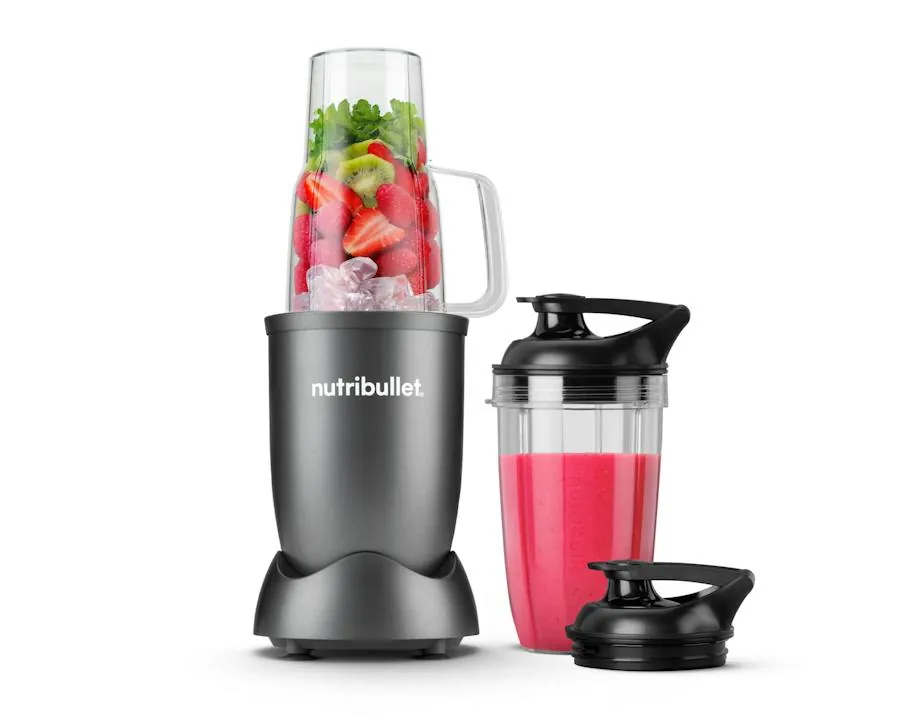
Cut frozen fruit into smaller pieces before blending. Smaller chunks put less torque on the blade and motor, which is the main cause of early wear. A strawberry the size of a golf ball is fine; a whole frozen mango cheek is not. If the blade stalls even for a second, stop and cut everything down further before you start again.
Add liquid first, then soft items, then frozen or hard items on top. This order lets the blade pull food down instead of fighting it, so the motor runs cooler and shorter. If you’re blending only frozen fruit with no liquid, add a splash of water or milk anyway. Without it the blade spins in an air pocket and does nothing but heat up.
Never run it longer than 60 seconds at a time. Give the motor 2 to 3 minutes to cool between blends; heat is what kills sealed motors. The exception is a machine rated for continuous use, which will say so in its manual. If yours doesn’t say that, treat the 60-second limit as firm.
Rinse the blade assembly right after each use. Dried residue hardens onto the blade and gasket, so rinsing right away keeps the assembly clean and the gasket from getting sticky. Don’t soak the base or the blade housing in water. Wash the blade under the tap and dry it, and keep the water away from the motor housing.
Replace the gasket at the first sign of a leak. A gasket is a small part, but a leaking one sends water into the motor — the failure that ends the unit. How often you check it depends on how much you use the blender, so your owner’s manual is the authority. A gasket that has gone stiff or flat is no longer sealing properly, so replace it before it starts to drip.
Frequently asked questions
How long does a Nutribullet blender last?
About 2 to 5 years with daily use, depending on how hard you push it. Light use — one soft smoothie a day — sits at the top of that range. Daily frozen fruit, ice, or hard seeds push it toward 2 years. The motor and blade assembly decide the end, not the jar.
Can you replace the blade on a Nutribullet?
Yes, on most models. The blade assembly unscrews from the jar and Nutribullet sells replacements separately for many units. Check your model’s support page for the exact part. Swapping it takes about 15 minutes and is the single best way to extend the unit’s life.
Why is my Nutribullet not blending as well as before?
A dull blade is the usual cause, not a dying motor. If the unit still powers on and spins but leaves chunks, replace the blade assembly first. If it also smells hot or sounds rough, the motor is strained — stop using it and check your warranty terms.
Is it safe to use an old Nutribullet?
It’s safe if the base stays cool, the cord isn’t damaged, and no liquid leaks into the base. Stop using it if you smell burning, see smoke, or feel the housing get hot fast. Those signs mean an internal fault, and a sealed motor isn’t something to open at home.
What happens if you don’t replace a worn gasket?
Once the gasket fails, liquid can seep into the base through the blade assembly. Once moisture reaches the motor, corrosion starts and the unit can short or stop. A gasket is a small part, but skipping it’s the most common way these blenders die early.
Does it matter which model you have?
Yes. Motor wattage and blade design differ across models, and higher-wattage units handle frozen food with less strain. Check the wattage on the base label or your manual. A lower-wattage model doing heavy frozen work will wear out faster than a higher-wattage one doing the same job.
How long does the warranty last?
Most Nutribullet models carry a limited warranty, and the length varies by model — commonly 1 year on the base and longer on some parts. Check the warranty card in your box or the warranty page for your exact model, since coverage differs and wear isn’t covered.
What happens if you blend without liquid?
The blade can’t circulate food, so the motor strains and heats up fast. It can overheat quickly if you keep blending with nothing to circulate. Always add liquid first, and never run a thick paste without enough liquid to keep things moving.
Conclusion
Check your blade and gasket today — that two-minute look tells you more than any lifespan estimate. If the blade’s dull or the gasket’s stretched, order the replacement now and you’ll get months more out of the unit. You’ll know it worked when the blend comes out smooth again and the base stays cool.