How to Work a Nutribullet Blender: Step-by-Step
To work a Nutribullet blender, you fill the cup to the MAX line, twist the blade cap on until it’s snug, lock the cup onto the base, and press down to run it for 30–60 seconds. That’s the whole job. The details that decide whether you get a smooth drink or a leaky mess are how full the cup is, how hard you press, and how long you run it. Below, you’ll find the exact steps, the times for different ingredients, and where this method stops working.
Who this is really for
Three kinds of people search for this. The first just unboxed a Nutribullet and wants to make one smoothie without breaking anything. They need the order of operations — fill, twist, lock, press — and nothing else.
The second has used it a few times and keeps hitting the same wall. The smoothie comes out gritty, or the cup leaks, or the motor smells hot. They already know how to turn it on. What they need is the fix for a specific problem.
The third is cooking for someone else — a partner, a parent, a kid — and needs to know what’s safe to blend and what isn’t. They want the limits, not the basics.
This page serves the first two readers best. If you’re the third, the safety notes here will help, but check the manual that came in your box for your exact model, because cup sizes and wattages differ.
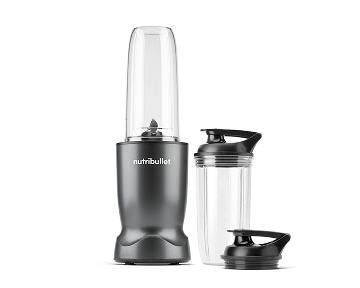
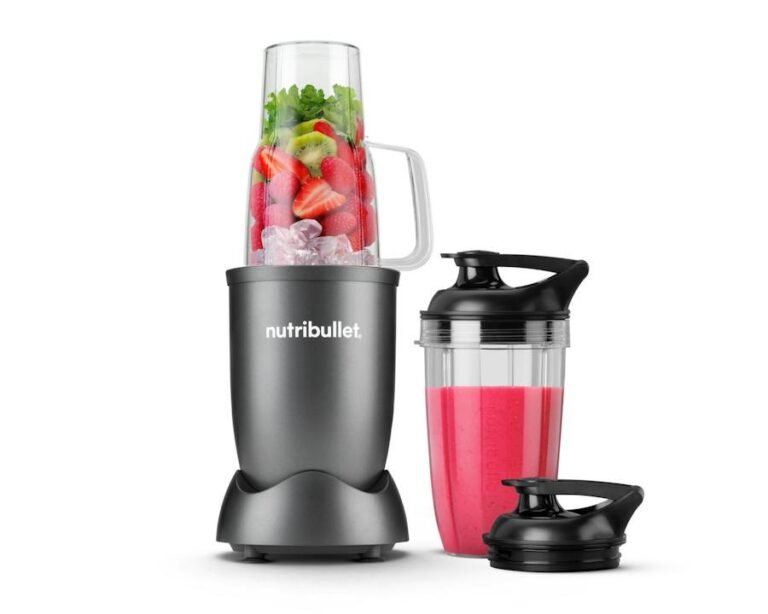
The rest of this page assumes one thing: you have a Nutribullet with a cup and a blade cap, not a pitcher-style full-size blender. If you have the pitcher kind, the steps are close but the fill line and the lid work differently.
What decides the result
How full you fill the cup. This matters more than anything else. Go past the MAX line and liquid has nowhere to go, so it pushes up into the blade cap and leaks. Stay under it and you get a clean seal. The MAX line is printed on the cup — read yours, since the 24 oz and 32 oz cups have different marks.
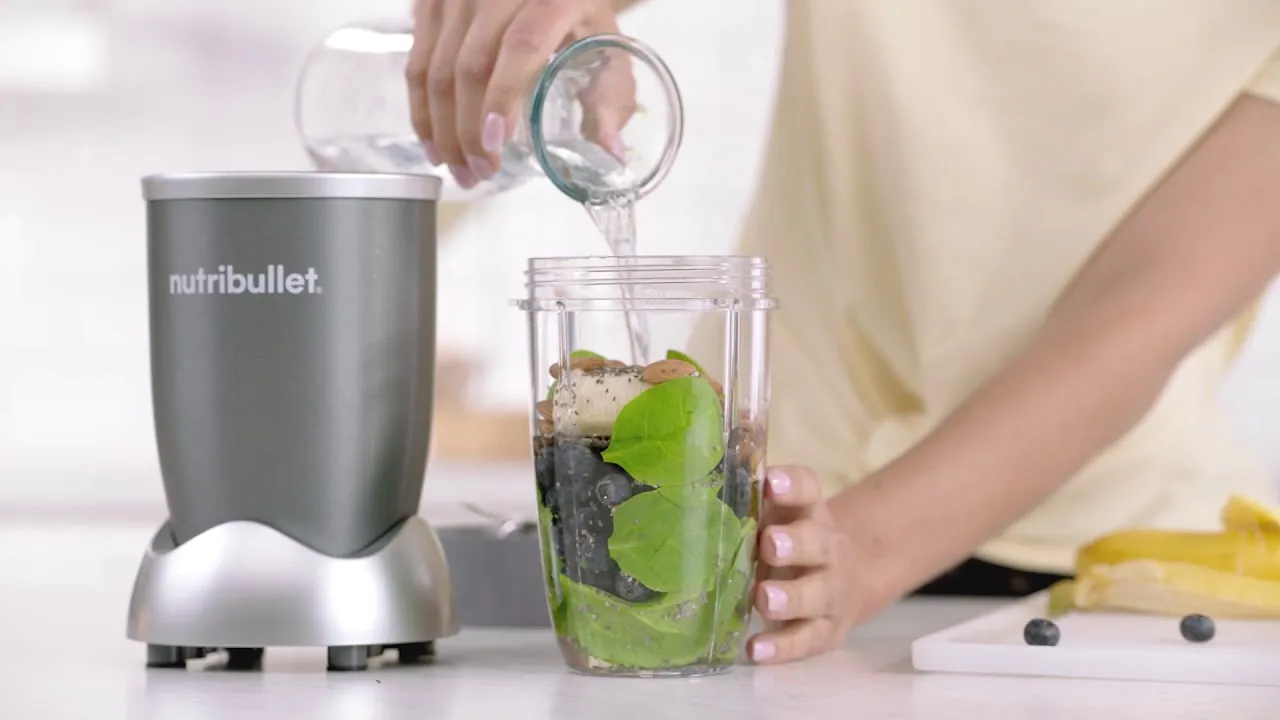
The order you load the cup. Soft, wet ingredients go in first, near the blades. Hard, dry things like ice, frozen fruit and nuts go on top. Load it the other way and the blades spin in air while the hard stuff sits on top and never reaches them.
How hard and how long you press. A light press runs the motor slow. A firm press runs it fast. Most people press too gently and stop too early, then wonder why the drink is chunky. Press firmly and hold for the full time.
The wattage of your base. A 600-watt base needs longer than a 900-watt one for the same load of frozen fruit. Check the label on the bottom of your base — it’s printed there. If you can’t find it, the model number is on the same label, and the Nutribullet website lists the wattage for each model.
Wet vs dry loads. A cup of frozen berries and a splash of milk blends fast. A cup of raw almonds needs a different approach entirely — smaller amounts, more pauses, and you’ll still get a coarse meal, not a fine flour.
The one people get wrong most often is fill level. Overfilling causes most of the leaks and most of the “it won’t blend” complaints.
How to use a Nutribullet blender
Set the base on a flat, dry counter. Wipe the counter first — a wet spot lets the base slide. The base should sit flat with no wobble. If it rocks, move it.
Add liquid first, up to about one-third of the cup. Use about 1 cup of milk, water, or juice for a 24 oz cup. The liquid helps everything else move.
Add soft ingredients next. Fresh fruit, yogurt, leafy greens, and soft vegetables go in right above the liquid. Fill to about two-thirds of the cup.
Add hard ingredients on top. Frozen fruit, ice, and nuts go last, near the top of the cup. Keep the total below the MAX line. If you’re at the line, take some out.
Twist the blade cap on clockwise until it stops. It should feel snug, not forced. A loose cap leaks; a cross-threaded cap leaks worse. Check that the gasket ring is seated inside the cap — a missing or twisted gasket is the number one cause of leaks.
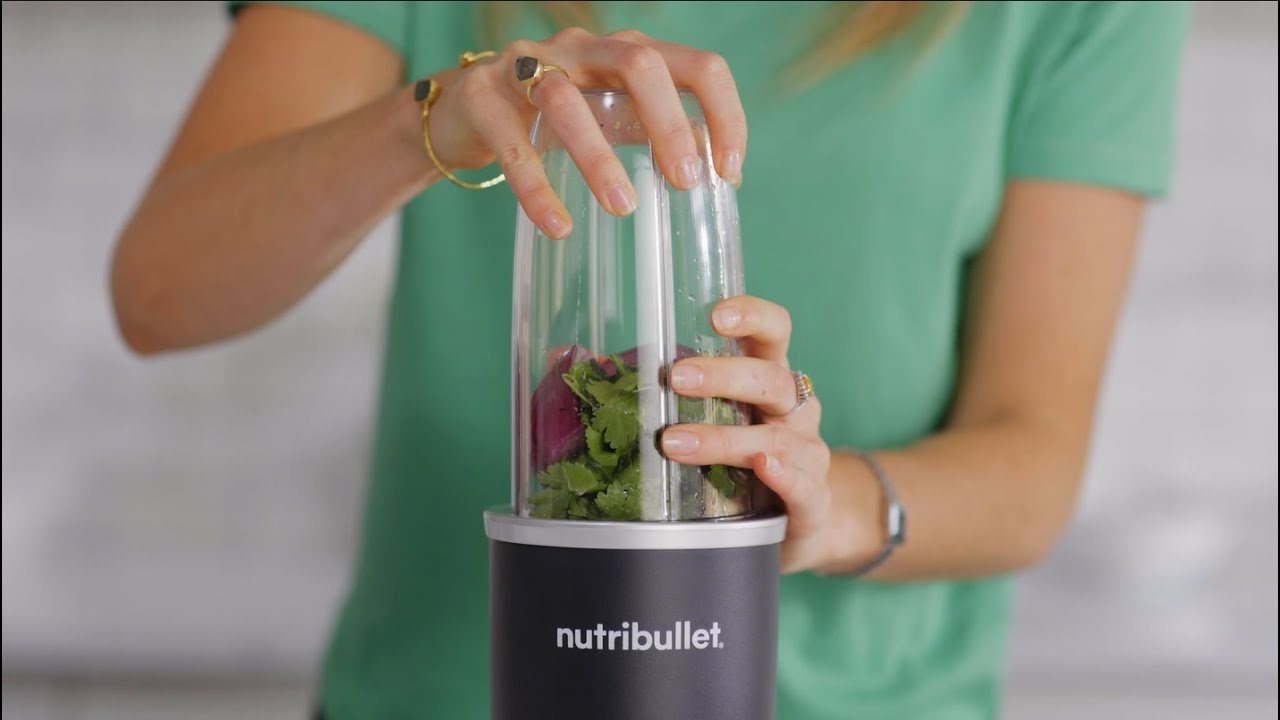
Flip the cup over and press it onto the base. Line up the tabs on the cup with the slots on the base. Push down and twist slightly clockwise until it locks. You’ll feel it click into place.
Press the cup down firmly to start. Hold it down for the full run. For a soft smoothie, 30 seconds is enough. For frozen fruit or ice, run 45–60 seconds. If the motor sounds like it’s straining, lift off for 5 seconds, then press again.
Release the pressure and let the blades stop completely. Wait until you hear nothing. Then twist the cup counter-clockwise and lift it off the base.
Unscrew the blade cap and pour. Do this over a sink the first few times. Hold the cap by the outer ring, not the blades. The blades are sharp, so handle them carefully.
Rinse the cup and cap right away. Warm water and a drop of dish soap. If you let residue dry, it hardens around the blade base and is much harder to remove later.
The judgement call that separates a good job from one that just looks done: whether you stopped at the right texture. A smoothie should pour in one slow stream with no lumps you can see. If it plops out in chunks, you stopped too early or overloaded the cup. Run it another 15 seconds before you add more liquid — adding liquid first makes a thin drink you can’t fix.
The variations at a glance
| Situation | What to do | What it takes | What to watch for |
|---|---|---|---|
| Fresh fruit smoothie | Liquid first, fruit second, blend 30 seconds | 1–2 minutes total | Don’t overfill past MAX |
| Frozen fruit or ice | Hard items on top, blend 45–60 seconds | 2–3 minutes total | Pause if motor strains |
| Leafy greens | Pack loosely, blend 45 seconds | 2 minutes total | Leaves stick to cup sides |
| Nut butter or seeds | Small batches, pulse in 10-second bursts | 3–5 minutes total | Motor heats up fast |
| Hot soup | Blend cool, then heat on stove | 5–10 minutes total | Never blend hot liquid |
| Single-serve protein shake | Liquid, powder, ice, blend 20 seconds | Under 1 minute | Powder clumps if added first |
| Thick dip or hummus | Scrape down every 15 seconds | 3–4 minutes total | Needs liquid to move at all |
What separates a good blend from a bad one
How experienced users load the cup
They build the cup in layers and never guess at the fill level. Liquid goes in first, measured — ½ cup for a thick shake, 1 cup for a thin one. Soft items sit in the middle. Hard items sit on top, and the whole load stops below the MAX line with a finger’s width to spare.
That gap matters. A cup filled exactly to the line with frozen fruit will push liquid up into the cap once the blades start. Leaving room costs you nothing and saves a cleanup.
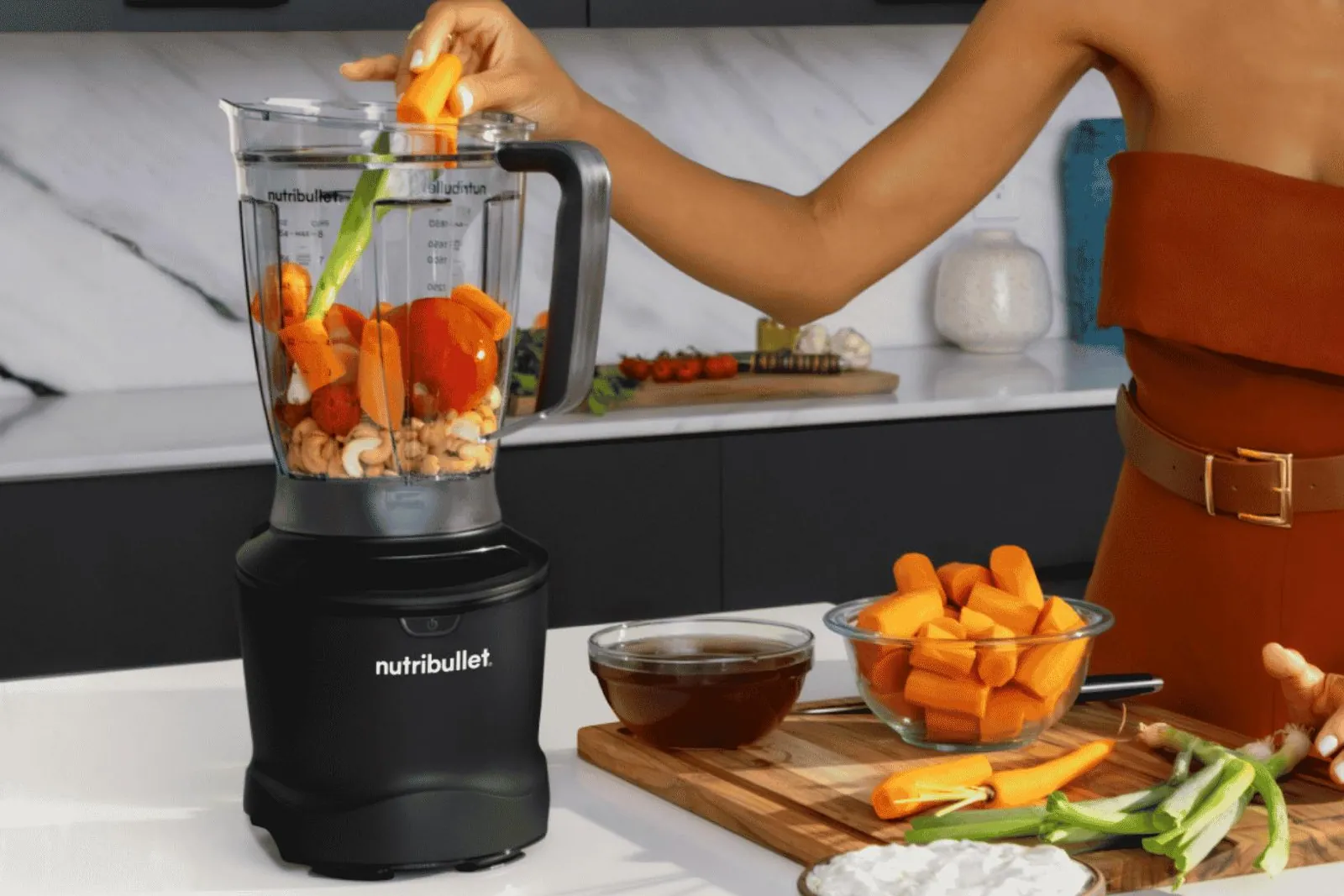
They also cut large items down. A whole apple won’t blend — it just rattles. Quarters or eighths will. Same for carrots: coins, not chunks.
What they check while it runs
They listen to the motor, not the clock. A healthy run sounds steady and low. A straining motor drops in pitch and starts to whine. When that happens, they lift off for 5 seconds, shake the cup, and press again.
They also stop before the drink gets warm. Friction heats a blend fast — a 60-second run on frozen fruit can leave the drink lukewarm. If your smoothie comes out warm, you ran it too long or your base is working too hard.
What they leave alone: the blade cap. They rinse it, they don’t scrub it with a brush, and they never try to sharpen or remove the blades.
What goes wrong, and what to do
| What you notice | What it usually means | What to do first | How to stop it happening again |
|---|---|---|---|
| Liquid leaks from the cap | Gasket missing or twisted | Reseat the rubber ring | Check gasket before every use |
| Drink comes out chunky | Stopped too early | Run 15 more seconds | Hold the full 45–60 seconds |
| Motor smells hot | Overloaded cup or ran too long | Stop, unplug, let cool 10 minutes | Fill below MAX, blend in shorter runs |
| Blades spin but nothing moves | Air pocket around blades | Lift off, shake cup, press again | Put liquid in first, not last |
| Cup won’t lock onto base | Tabs not lined up | Lift, rotate, press down again | Line up tabs before pressing |
| Smoothie tastes warm | Friction heat from long run | Add cold liquid, stir | Keep frozen blends under 60 seconds |
| Powder clumps in the drink | Powder added before liquid | Shake and reblend 10 seconds | Always add powder last, on top of liquid |
The rules that apply
Nutribullet’s own user guide sets the limits you should follow. It says never to fill the cup past the MAX line, and never to run the base continuously for more than one minute at a time. Between runs, let the motor rest.
The guide also says not to blend hot liquids. Hot liquid seals the cup, builds pressure, and can blow the cap off when you open it. Let soup cool below a simmer first, or blend it in small batches with the cap vented — but most models don’t have a vent, so cooling first is the safe path.
Never put the base, the cord, or the plug in water. Wipe the base with a damp cloth only. The cup, blade cap, and lid are top-rack dishwasher safe on most models — check your manual, because some older blade caps are hand-wash only.
If your base sparks, smokes, or trips your breaker, stop using it and contact Nutribullet support. Don’t open the base. There’s nothing inside a home user can safely fix, and the warranty won’t cover a unit that’s been opened.
What it costs you
The money side is simple: a Nutribullet is inexpensive compared with a full-size high-powered blender. Check Nutribullet’s own site or a retailer for today’s price, because sales move these numbers.
What really costs you is time and food waste. A smoothie takes 2–3 minutes start to finish, including rinsing. Skip the rinse and you’ll spend 10 minutes scrubbing dried fruit off a blade cap the next morning. That’s the trade.
The other cost is ingredients that don’t work. Nuts, whole grains, and hard spices won’t turn into flour in a Nutribullet — they’ll turn into coarse bits and put strain on the motor. If you need flour, you need a different machine. Buying almonds to find that out is a real cost.
Replacement parts are the hidden line item. Gaskets wear out and go missing. Cups crack if you drop them. A new blade cap or cup usually costs a fraction of a new unit — check Nutribullet’s parts page for your model’s current price rather than guessing.
Keeping it right afterwards
Rinse the cup and blade cap with warm water and a drop of soap within 10 minutes of use. Dried residue is the main reason blade caps get stiff and start to leak.
Check the gasket ring regularly. Pull it out with your fingers, look for cracks or stretching, and press it back flat into the groove. A gasket that’s lost its shape is the most common cause of a leaking cup, and it’s cheap to replace. How often it needs checking depends on how much you use the machine, so the owner’s manual is the authority.
Store the cup with the blade cap off and the cup upside down, so it dries fully. Trapped moisture grows mold around the blade base.
The sign that your unit needs attention: the motor sound changes, the blend takes longer than it used to, or the cup wobbles on the base. Any of those means stop and check the gasket, the cup tabs, and the base slots before the next run.
If the base itself gets hot to the touch while running, unplug it and call Nutribullet support. That’s not a user-fixable problem.
When a Nutribullet is the wrong tool
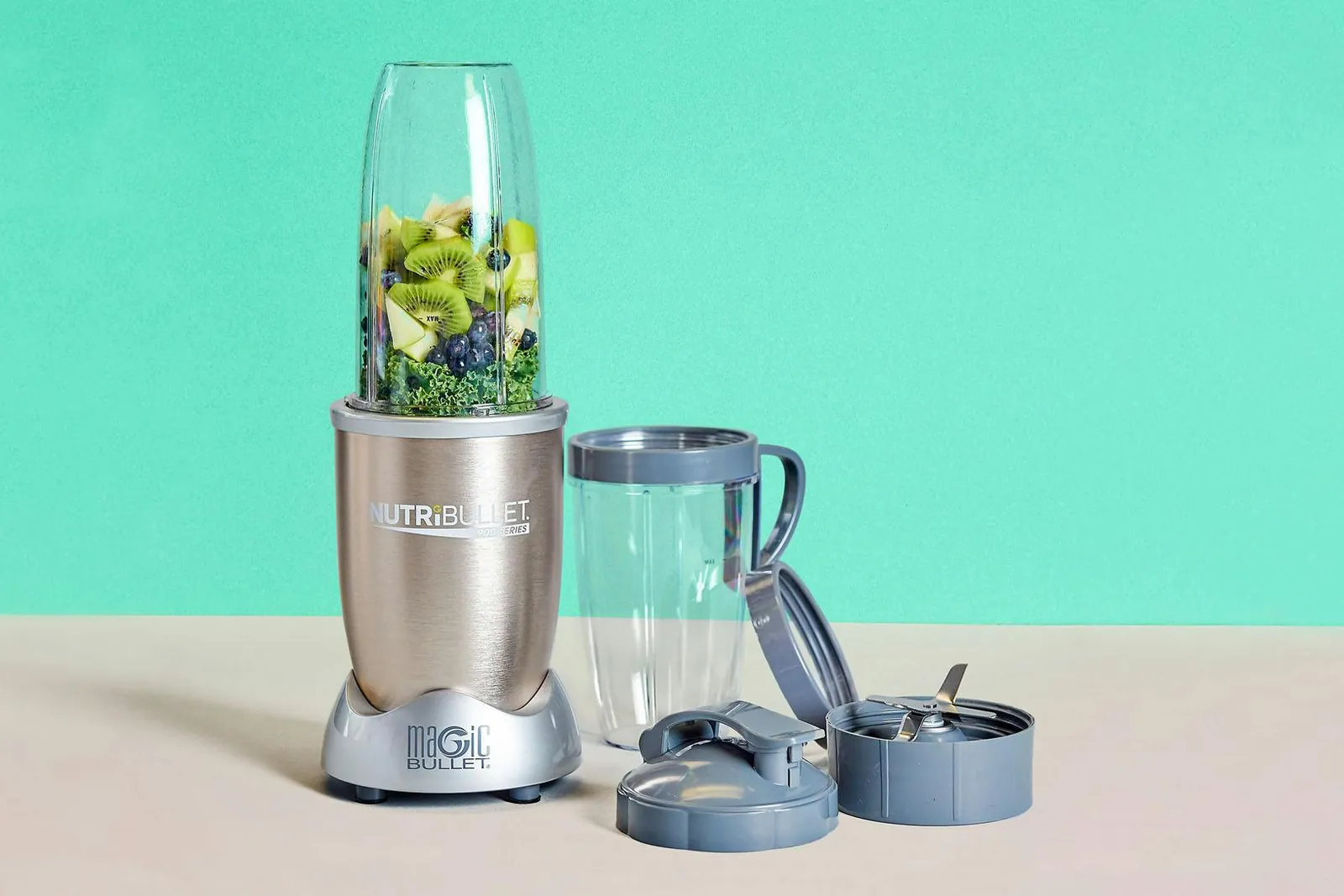
If you’re blending for more than two people at once, a Nutribullet is the wrong machine. The cups max out around 32 oz, and you’ll be running batch after batch. A full-size pitcher blender handles a family’s worth in one go.
If you need flour, nut butter in large amounts, or hot soup blended straight from the pot, look at a high-power blender with a vented lid, like a Vitamix or a Blendtec. Those handle heat and volume that a Nutribullet can’t.
If your base sparks, smokes, or trips the breaker, stop. That’s an electrical fault, and it’s a job for Nutribullet support or a qualified appliance technician — not something to open up at home.
Frequently asked questions
How long do you blend a Nutribullet?
Run it 30 seconds for soft ingredients like fresh fruit and yogurt, and 45–60 seconds for frozen fruit or ice. On a lower-wattage model, blend longer and pause halfway to shake the cup.
Can you put hot liquid in a Nutribullet?
No. Hot liquid builds pressure inside the sealed cup and can blow the cap off when you open it, which risks burns. Let soup or any cooked liquid cool below a simmer first, then blend in small batches. Nutribullet’s own guide says the same.
Why is my Nutribullet leaking from the top?
The gasket ring inside the blade cap is missing, twisted, or worn out. Pull it out, check for cracks, and press it flat back into the groove. If it’s stretched or torn, replace it — a new gasket usually costs a few dollars.
How full should you fill a Nutribullet cup?
Never past the MAX line printed on the cup. For a 24 oz cup, fill only to the MAX line printed on the cup. Leave a finger’s width of space below the line when using frozen items, because they expand as the blades break them down.
Does it matter which order you add ingredients?
Yes. Liquid goes in first, soft ingredients in the middle, and hard items like ice and frozen fruit on top. Load it the other way and the blades spin in air while the hard pieces sit above them and never get pulled down.
What happens if you overfill a Nutribullet?
Liquid pushes up into the blade cap and leaks out around the seal. In bad cases, the pressure pops the cap loose mid-blend. Pour some out until you’re below the MAX line, then reseal and run again.
Can a Nutribullet crush ice?
Yes, in small amounts. Use a small amount of ice and put it on top of the liquid. Run 45–60 seconds, pausing once to shake the cup. Large amounts of ice at once will strain the motor and leave chunks.
Is it safe to put the blade cap in the dishwasher?
On most current models, yes — top rack only. Some older blade caps are hand-wash only, so check the manual that came with your unit. When in doubt, rinse it by hand with warm water and a drop of soap.
Conclusion
Start with one simple smoothie: 1 cup of liquid, a handful of soft fruit, and 4–5 frozen pieces on top, blended for 45 seconds. You’ll know it worked when the drink pours in one smooth stream and the cup rinses clean in seconds. If the motor starts whining, the base gets hot, or you smell burning, stop and contact Nutribullet support — that’s past what you can fix at home.