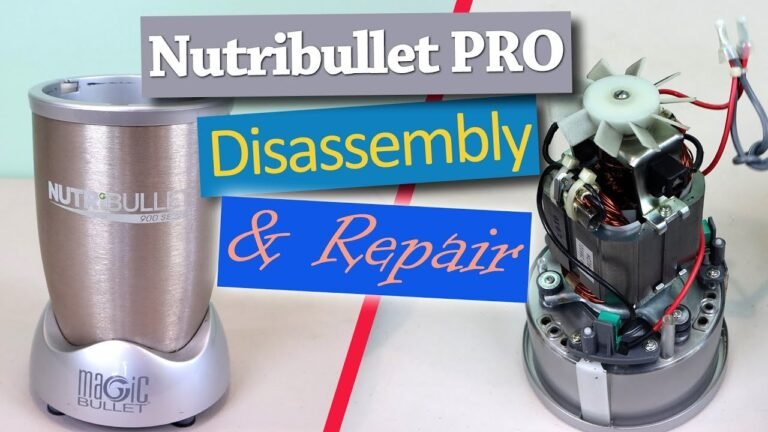
How To Reset Nutribullet Blender: Fix a Motor That Won’t Run
To reset a Nutribullet blender, unplug it for 60 seconds, then plug it back in and press the cup down into the base until it clicks. If the motor still won’t run, the real cause is usually the thermal fuse in the base, not the motor — it trips when the base gets too hot and resets itself once it cools.
Three things change this answer: which Nutribullet model you own, how long the base has been running hot, and whether the blades spin freely by hand or feel jammed. Each one sends you down a different path, and the rest of this page covers all three.
Who should read this, and who shouldn’t
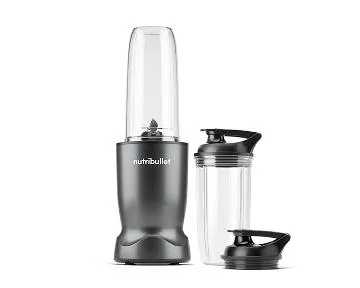
Three kinds of people type this search, and they need different things. The first owns a Nutribullet that stopped mid-blend and wants it running again in the next five minutes — they need the reset sequence and nothing else. The second has a base that’s been cutting out for weeks and wants to know if it’s dying — they need the thermal fuse and motor checks.
This page serves the first two best. It assumes you own a Nutribullet, that the cup and blade assembly are the ones that came with it, and that you’re working with a standard US 110–120V outlet. If you’re outside North America, the reset steps are the same but the plug and voltage differ — check the label on the bottom of your base for the exact rating.
If you’re shopping and haven’t bought yet, read a buying guide instead. If your base is cracked, smells like burnt wire, or trips your breaker every time you plug it in, stop here and contact Nutribullet support directly — that’s not a reset problem.
What actually decides whether a reset works
The single biggest factor is heat. Nutribullet bases have a thermal protection device that cuts power when the motor gets too hot, and it won’t let the motor run again until the base cools.
That’s why the fix that works most often is simply waiting — 15 to 30 minutes with the base unplugged and in open air, not in a cupboard. If you blend thick mixtures like frozen fruit with little liquid, you’ll hit this limit faster than someone making a thin smoothie.
The second factor is the cup and blade assembly. The motor only runs when the cup is pressed down far enough to engage the safety interlock tabs on the base. If the cup isn’t seated all the way, or the tabs are worn or cracked, the base behaves exactly like it’s dead. Press the cup down and listen for the click — no click means no power, no matter how many times you reset.
Third is blade condition. Spin the blade assembly by hand with the cup upside down. It should turn freely. If it drags or grinds, the bearing is worn and the motor is fighting resistance it can’t overcome — that’s a replacement part, not a reset.
Fourth is the outlet and cord. Test the base on a different outlet you know works, and check the cord for cuts or a bent plug.
The one people get wrong most often is heat. They unplug for ten seconds, plug back in, and press — the base is still hot, so it cuts out again and they conclude the motor is dead.
Step-by-step reset for a Nutribullet
- Unplug the base from the wall. Pull the plug itself, not the cord. Wait a full 60 seconds — this cuts power to the base and lets the thermal device begin cooling.
- Take the cup off and check the blade assembly. Turn the cup upside down and spin the blades by hand. They should turn freely with light finger pressure. If they drag or won’t move, stop — you need a new blade assembly, not a reset.
- Wipe the interlock tabs on the base. These are the small raised tabs where the cup sits. Wipe them with a damp cloth and dry them. Food residue here stops the cup from pressing down far enough.
- Fill the cup to the MAX line, not above. Overfilling makes the motor work harder against a thick load, which builds heat and can trip the thermal cutout. For a smoothie, use about 1 cup of liquid first, then add fruit up to the MAX line.
- Seat the cup and press straight down. Line up the tabs, push down firmly, and turn slightly until you feel it lock. You should hear or feel a click. Hold it down for 2 seconds.
- Press and hold the button for 1 to 2 seconds. On models with a single button, press and hold. On models with a pulse button, press and release in short bursts. If nothing happens, release and wait 10 seconds before trying again.
- If it still won’t run, unplug and wait 30 minutes. Set the base on a counter in open air, not in a cabinet. After 30 minutes, plug in and try step 5 again.
- Run it in short bursts of 5 to 10 seconds. Long continuous runs build heat fast. Three or four short bursts with a 10-second pause between them will blend most mixtures without tripping the cutout.
The judgement call is knowing when to stop resetting. If you’ve done the 30-minute cool-down twice and the base still won’t run, the thermal fuse has likely failed open — that’s a permanent break, and no reset will fix it. At that point, contact Nutribullet support. Don’t open the base housing. The capacitor inside can hold a lethal charge even when unplugged, and opening it voids any remaining warranty.
The variations at a glance
Different situations call for different actions, and the wrong one wastes your time or damages the base.
| Your situation | What to do | What it takes | What to watch for |
|---|---|---|---|
| Stopped mid-blend, base warm | Unplug, cool 30 minutes | 30 minutes, no cost | Don’t rush the cool-down |
| Cup won’t press down fully | Clean interlock tabs, reseat cup | 2 minutes | Worn or cracked tabs |
| Blades drag when spun by hand | Replace blade assembly | Cost of new blade | Never run with stiff blades |
| Base dead, cooled, still nothing | Check outlet and cord first | 5 minutes | Try a different outlet |
| Trips the breaker on plug-in | Stop, contact support | Support call | Wiring fault, not a reset |
| Base smells burnt or is cracked | Stop using it entirely | Replacement base | Safety risk, not repairable |
| Under warranty, still failing | Call Nutribullet support | Receipt and model number | Don’t open the housing |
What experienced users do differently
People who’ve used a Nutribullet for years treat the base as a heat-sensitive tool, not a tough appliance. They load liquids first, then soft items, then frozen items on top, which keeps the blade moving freely and the motor under less strain. They also stop and shake the cup rather than running it longer when things aren’t blending — that single habit prevents most thermal cutouts.
Load order and batch size
Liquid goes in first, always. Then leafy greens, then soft fruit, then frozen fruit or ice on top. Fill no higher than the MAX line — usually 24 oz on a standard Nutribullet cup. If you’re blending something thick like nut butter or frozen mango, add 2 to 4 tablespoons more liquid than the recipe says. The motor works harder against thick mixtures, and heat builds faster. Two smaller batches beat one overfilled batch every time.
What they leave alone
They don’t run the base for more than 60 seconds continuously. They don’t press the cup down harder when it won’t start — pressing harder doesn’t fix a thermal cutout and can crack the tabs. And they don’t try to repair the base themselves. The thermal fuse and motor sit behind a housing that holds a charged capacitor, so a technician handles that, not a home fix.
What goes wrong, and how to fix it
Most problems trace back to one of five causes, and the fix is usually simpler than replacing the whole unit.
| What you notice | What it usually means | What to do first | How to stop it happening again |
|---|---|---|---|
| Nothing happens at all | No power reaching the base | Check outlet and cord | Use a dedicated outlet |
| Runs 10 seconds, then stops | Thermal cutout tripped | Cool 30 minutes, unplugged | Blend in short bursts |
| Motor hums but blades don’t turn | Blade bearing seized | Replace blade assembly | Don’t overload the cup |
| Cup won’t click into place | Interlock tabs blocked or worn | Clean tabs, check for cracks | Rinse tabs after each use |
| Base smells hot or burnt | Motor overheating repeatedly | Stop, let it cool fully | Reduce batch size |
| Breaker trips on plug-in | Internal wiring fault | Stop, call support | Never force a dead base |
| Base runs but leaks from bottom | Cup seal worn or overfilled | Check gasket, refill to MAX | Replace gasket when loose |
The rules that apply
The safety rules here come from the manufacturer and from basic electrical practice. Nutribullet’s own user guide says to unplug the base before cleaning and never to immerse the base in water — the base contains electrical parts, and water in the vents is a shock risk. It also says not to run the blender continuously for more than one minute, which is why the thermal cutout exists.
On repairs, the rule is simple: the base housing isn’t user-serviceable. Opening it exposes a capacitor that can hold a lethal charge even after unplugging. In the US, any repair that involves the internal wiring should go to a qualified technician or back to the manufacturer, and doing it yourself can void your warranty.
Warranty terms vary by model and by country. Nutribullet publishes its warranty length and what it covers on its own website and in the box paperwork — check your model’s page there, because the term differs between the standard and Pro lines.
What this costs you
Resetting the base costs nothing but time — 60 seconds for a quick reset, or 30 minutes if the thermal cutout has tripped. That’s the whole cost of the most common fix.
If the blade assembly is the problem, you’re buying a replacement part. Nutribullet sells blade assemblies and cups separately, and prices change, so check the current price on Nutribullet’s own site or your retailer rather than trusting a number here. A full replacement base costs more than a blade, so it’s worth confirming which part failed before buying.
Warranty repairs cost you nothing if you’re inside the term, but you’ll need your receipt and model number. Shipping and handling rules vary — Nutribullet’s support page states what applies to your model.
The hidden cost is time lost to repeated failed resets. If you’ve cooled the base twice and it still won’t run, stop buying parts at random and call support — that call is free and usually settles it in one conversation.
Keeping it running after the reset
Once it’s working again, the main habit is managing heat. Give the base 10 seconds of rest between bursts, and let it sit unplugged for a few minutes after a long session before the next one. Wipe the interlock tabs and the rim of the base after every use — a damp cloth is enough, and it prevents the seating problem that mimics a dead motor.
Check the blade assembly periodically by spinning it by hand; how often depends on how much you use it, so follow your owner’s manual. If it starts to drag, replace it before it strains the motor. Rinse the cup and blade right after use so residue doesn’t harden into the seal.
The sign it needs attention again is the same one that brought you here: it stops mid-blend, or the cup stops clicking in cleanly. Handle it at that point with a cool-down and a tab wipe, and you won’t need to start over.
When a reset is the wrong move
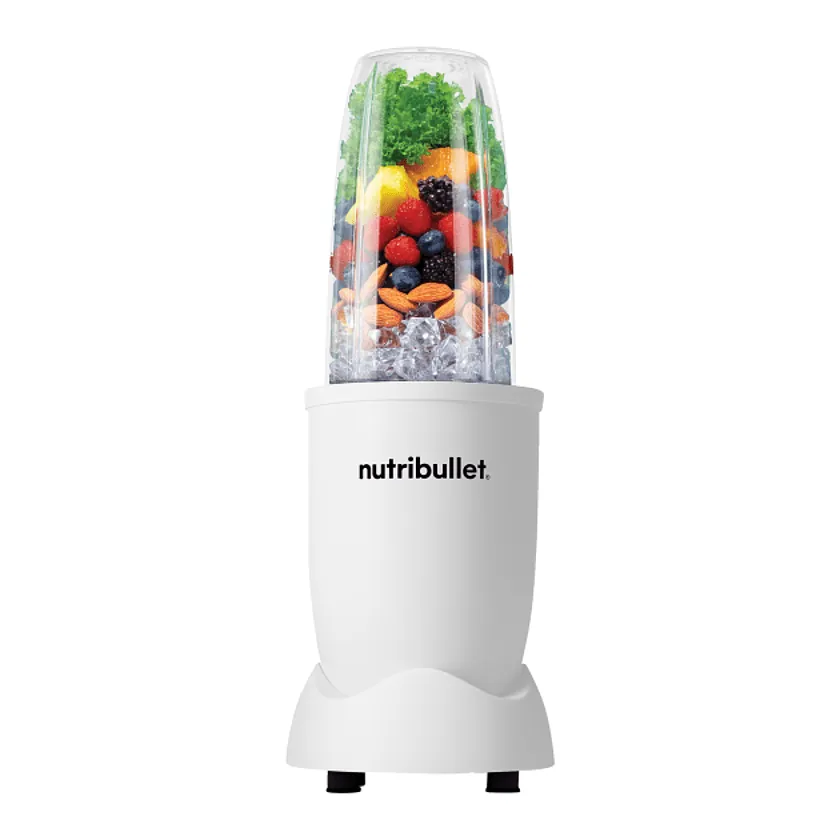
If the base is cracked, smells like burnt wiring, or trips your breaker the moment you plug it in, stop. Those point to an internal electrical fault, and a reset can’t fix a broken circuit — unplug it and contact Nutribullet support or a qualified appliance technician.
If your unit is still under warranty, don’t open the housing to investigate. Opening it voids the warranty and exposes a capacitor that holds a lethal charge even when unplugged. Send it in or call support instead.
If you need a blender that runs for minutes at a time — for soups, large batches, or daily heavy use — a single-serve Nutribullet isn’t built for that. A full-size countertop blender handles continuous runs without tripping a thermal cutout, and that’s the right tool for the job.
One more case where a reset buys you nothing: the motor hums but the blades never turn. That’s usually a stripped gear coupling or a seized bearing, and no button sequence reaches it. Unplug, then turn the blade assembly by hand — if it won’t spin freely, the unit needs service, not another reset.
Repeated resets on a unit that keeps cutting out aren’t harmless. Each one restarts a motor that’s already hot, and the thermal cutout is the part protecting it from overheating. Keep overriding it and you shorten the motor’s life, sometimes to the point where the next failure is permanent.
So the split is simple. A cutout that trips once, after a genuinely heavy load, and resets to normal running is doing its job. A cutout that trips within seconds of a light load, or trips again right after a successful reset, is a fault — stop resetting and get the unit looked at.
Frequently asked questions
How long does a Nutribullet take to reset?
About 60 seconds for a control reset, or 15 to 30 minutes if the thermal cutout has tripped and the base is hot. The 30-minute figure assumes you leave it unplugged in open air at room temperature. In a warm kitchen or a closed cabinet, allow longer — check by feeling the base, and wait until it’s cool to the touch.
Why does my Nutribullet stop after a few seconds?
The thermal cutout is tripping because the motor is overheating. Thick mixtures, overfilling past the MAX line, and long continuous runs all build heat fast. Blend in 5 to 10 second bursts with 10-second pauses, use more liquid, and keep the cup below the MAX line.
Can you reset a Nutribullet without unplugging it?
No. The thermal device stays open until the base cools, so unplugging and waiting is the reset. Pressing the button repeatedly on a hot base won’t help — the thermal device stays open until the base cools, regardless of what you press.
Is it safe to keep using a Nutribullet that keeps cutting out?
Only if it’s a heat issue and the base cools fully between uses. If it cuts out within seconds of a cold start, smells burnt, or trips your breaker, stop using it and contact support. Repeated cutouts from a cold start point to a failing component, not normal thermal protection.
What happens if I open the Nutribullet base myself?
You void your warranty and expose yourself to a capacitor that can hold a lethal charge even when unplugged. The base isn’t user-serviceable. Any internal repair belongs with a qualified technician or the manufacturer.
Does the Nutribullet have a reset button?
No. There’s no reset button on any standard Nutribullet base. The reset is unplugging it, and the thermal protection resets itself once the base cools. If someone tells you to press a hidden button, they’re describing a different appliance.
How do I know if the blade assembly is the problem?
Spin the blades by hand with the cup upside down. They should turn freely with light pressure. If they drag, grind, or won’t move, the bearing is worn and the motor can’t overcome the resistance — replace the blade assembly.
Does it matter which outlet I use?
Yes, if the outlet is on a circuit that’s already loaded. A kitchen outlet shared with a microwave or kettle can be overloaded and trip the breaker. Try a different outlet you know works, and avoid extension cords — the base draws high current at startup.
Conclusion
Plug the base into a known-good outlet, unplug it for 60 seconds, reseat the cup until it clicks, and press. If it runs, you’ll hear the motor spin up cleanly within 2 seconds — that’s your sign it worked. If it stays dead after two 30-minute cool-downs, or it smells burnt or trips the breaker, stop and call Nutribullet support or a qualified technician.