Is More Wattage For An Immersion Blender Better? Expert Guide
For anyone who enjoys cooking at home, an immersion blender is a handy tool. Also called a stick blender or hand blender, it makes soups, sauces, smoothies, and purees easy to prepare. When shopping for one, you’ll notice that wattage — the power rating measured in watts — is a key feature. Many people believe that higher wattage always means better performance. But is more wattage for an immersion blender truly better? The answer is more complex than “yes” or “no.” This article explores how wattage affects immersion blenders, what else matters, and how to choose the best tool for your kitchen.
What Does Wattage Mean In Immersion Blenders?
Wattage is the measurement of how much electrical power an appliance uses. In immersion blenders, this typically ranges from 150 to 1000 watts. A higher wattage means the blender motor can handle more work. But it’s not the only thing that determines how well a blender performs.
For example, a 200-watt blender can blend soft foods or mix liquids. A 500-watt or higher model is often used for tougher jobs, like crushing ice or blending raw vegetables. However, more wattage can also mean a heavier motor, more noise, and sometimes a higher price tag.
How Wattage Affects Immersion Blender Performance
Wattage does make a difference, especially for certain tasks. Here’s how it affects performance:
- Power: More watts usually means more power to cut through tough foods.
- Speed: Higher wattage models can blend faster, saving you time.
- Consistency: Power helps achieve a smoother texture, especially for thick soups and smoothies.
- Overheating: Low-wattage blenders can overheat if pushed too hard, while higher wattage models handle longer use.
However, the blade design, shape of the blending shaft, and even the container size also affect results. For most home cooks, a mid-range wattage (around 250–600 watts) is enough. Only those who blend tough ingredients every day truly need the highest wattage.
Comparing Common Wattages
Understanding what different wattages can do helps you choose wisely. Here’s a comparison of typical wattage ranges for immersion blenders:
| Wattage Range | Best For | Common Uses | Limitations |
|---|---|---|---|
| 150–250 W | Light Tasks | Whipping cream, mixing drinks, light batters | Not ideal for nuts, ice, or hard vegetables |
| 250–500 W | Everyday Use | Pureeing soups, smoothies, sauces | Struggles with large amounts of ice or frozen food |
| 500–1000 W | Heavy-Duty | Crushing ice, nuts, hard vegetables, thick doughs | Heavier, noisier, more expensive |
This table shows that more wattage does give more power, but it’s not necessary for every kitchen.
When More Wattage Really Matters
For some users, high-wattage immersion blenders are the best choice. Here are situations where more power is better:
1. Frequent Blending Of Hard Ingredients
If you often blend raw carrots, frozen fruit, ice, or nuts, a 700+ watt blender will save time and protect the motor.
2. Large Batches
Making large pots of soup or sauces can strain low-wattage blenders. More power means you can work for longer without overheating.
3. Commercial Or Professional Use
Restaurants, cafes, and caterers need reliability. High wattage ensures performance and durability.
4. Specialty Diets
If you prepare nut butters, hummus, or thick shakes daily, extra power is necessary.
However, for the average home cook, these situations are rare.
When High Wattage Is Not Necessary
Many kitchen tasks do not need a high-wattage immersion blender. In fact, using one can be inconvenient.
- Simple Mixing: For tasks like making whipped cream or mixing pancake batter, even a 200-watt model is enough.
- Light Soups and Sauces: Cooking vegetables until soft and blending them does not require a powerful motor.
- Baby Food: Most baby food uses cooked, soft ingredients, so lower wattage is fine.
Choosing a powerful model for these jobs can mean more noise, weight, and cost without real benefit.
Other Factors That Matter Besides Wattage
Many buyers focus on wattage, but several other features are just as important — sometimes even more so.
Blade Design
The shape, sharpness, and material of the blades affect how well an immersion blender cuts and mixes. Some blenders have multi-angle blades that create a vortex, pulling food into the cutting area. Stainless steel blades last longer and stay sharp.
Shaft Material And Length
A stainless steel shaft is more durable and handles hot foods better than plastic. The length determines if you can reach into deep pots.
Speed Settings
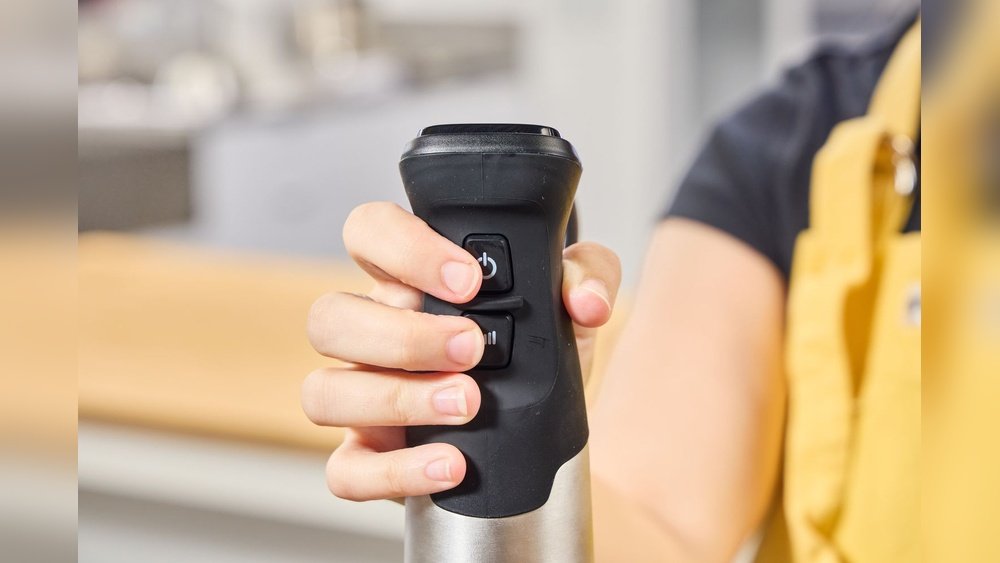
Multiple speed settings give you control. You can start slow to avoid splashing, then increase speed for blending tough ingredients. Some models also have a turbo button for short bursts of extra power.
Ergonomics
A comfortable handle and balanced weight help you use the blender longer without fatigue.
Attachments
Some immersion blenders come with whisks, choppers, or blending cups. These extras can increase versatility.
Ease Of Cleaning
Removable, dishwasher-safe parts save time and effort. One common mistake is choosing high wattage but ignoring cleaning needs.
Real-world Example: Does More Wattage Always Win?
Imagine two home cooks:
- Sarah uses a 400-watt immersion blender for soups and sauces.
- Mike has a 900-watt model, mostly for smoothies and nut butters.
Sarah’s blender works perfectly for her soft, cooked foods. She enjoys a lightweight device that’s easy to clean. Mike, however, needs the extra power for frozen fruit and nuts, but his blender is heavier and louder.
If Sarah switched to Mike’s blender, she might find it overkill. If Mike used Sarah’s, he’d struggle with his recipes. This example shows that more wattage only helps if your recipes need it.
Common Misconceptions About Wattage
Many people believe that wattage is the only thing that matters. This isn’t true. Here are some common myths:
- More watts = always better: Not always. Blade design, speed settings, and shaft material also play big roles.
- High-wattage blenders last longer: Actually, durability depends more on build quality and how you use the blender.
- Low-wattage blenders are useless: Not at all. For soft foods and light tasks, they work well.
Understanding these myths helps you avoid spending extra money for features you don’t need.
How To Choose The Right Wattage For Your Kitchen
Choosing the right wattage depends on your cooking style. Here’s a simple way to decide:
1. List Your Most Common Tasks
Are You Blending Soups, Making Smoothies, Or Preparing Nut Butters?
2. Check Ingredient Types
Do You Often Use Ice, Nuts, Or Raw Vegetables?
3. Consider Batch Size
Do You Cook For One Or A Large Family?
4. Think About Noise And Weight
High-wattage models are heavier and louder.
5. Set A Budget
More power usually costs more.
A good rule for most homes: 250–600 watts is enough. Go higher only if your recipes demand it.
Wattage And Blender Life Span
Some buyers believe that a higher wattage means a longer-lasting blender. This is only partly true. While more power can handle tough jobs without overheating, other factors matter too.
- Motor Quality: A well-made 300-watt motor can outlast a cheap 900-watt motor.
- Usage Habits: Overloading any blender, regardless of wattage, shortens its life.
- Maintenance: Cleaning and storing your blender well keeps it running longer.
Don’t rely on wattage alone for durability. Look at reviews, warranties, and brand reputation.
Noise, Weight, And Handling
High-wattage immersion blenders are not just more powerful — they’re also heavier and noisier.
- Noise: More power means a louder motor. If you cook in the morning or late at night, this can be a problem.
- Weight: Large motors add weight, making the blender harder to hold for long periods.
- Vibration: More power can create more vibration, which may make your hand tired.
If you have arthritis or prefer a light tool, a mid-range model is likely better.
Energy Consumption And Cost
Higher wattage means higher energy use. However, immersion blenders are used for short periods, so the difference in electricity cost is usually small. Still, for people who use their blender every day, this can add up over time.
- Example:
A 300-watt blender used for 5 minutes a day uses about 9 kilowatt-hours per year. A 900-watt blender used the same way uses 27 kilowatt-hours. The extra cost is small but real.
For most people, energy cost is not a big factor, but it’s worth considering for daily heavy use.
Comparing Popular Immersion Blender Models
To show how wattage fits into the bigger picture, here’s a comparison of popular models:
| Brand & Model | Wattage | Speeds | Blade Material | Price Range (USD) |
|---|---|---|---|---|
| Braun MultiQuick 5 | 350 W | 2 | Stainless Steel | $50–$70 |
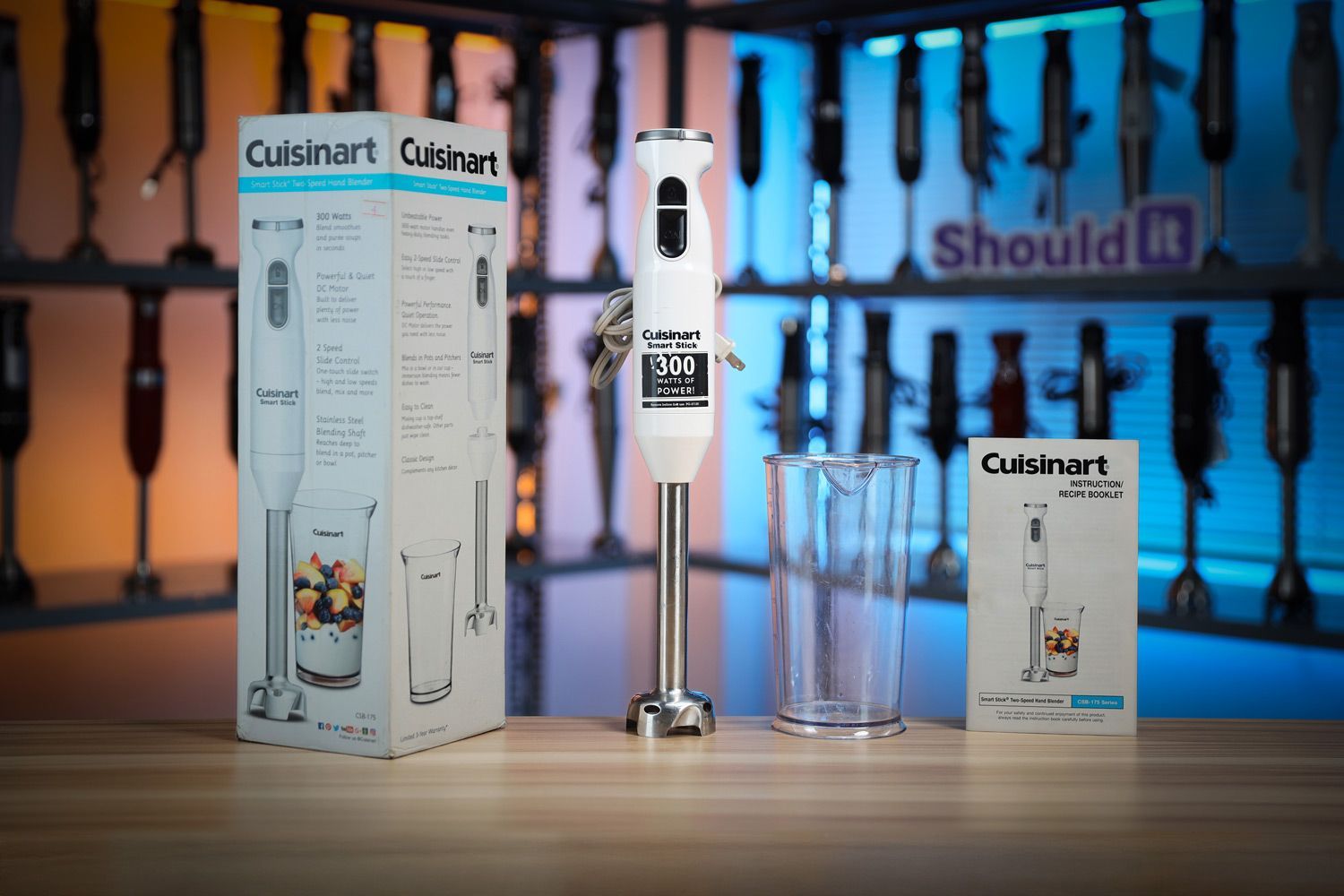
| Cuisinart Smart Stick | 300 W | 2 | Stainless Steel | $40–$60 |
| KitchenAid Pro Line | 600 W | 5 | Stainless Steel | $130–$150 |
| Bosch MSM67160 | 750 W | 12 | Stainless Steel | $70–$100 |
| Breville Control Grip | 280 W | 15 | Stainless Steel | $100–$120 |
This shows that some high-end models have moderate wattage but excellent performance, thanks to good design.
The Role Of Attachments And Accessories
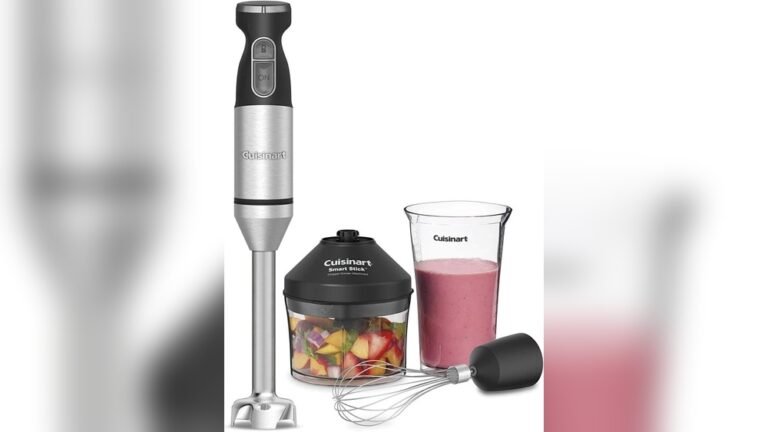
Many immersion blenders come with attachments: whisks, choppers, and blending cups. These can boost usefulness more than wattage alone.
- Whisk Attachments: Great for eggs, cream, and batters.
- Chopper Bowls: Turn your blender into a mini food processor.
- Blending Cups: Useful for smoothies and dressings.
A common mistake is to buy a high-wattage blender but never use the attachments that come with it. Think about your real needs.
:max_bytes(150000):strip_icc()/sea-primary-immersion-blenders-sep-24-rkilgore-0658-89167e1e4bd44afb93d9c847674b09e4.jpeg)
Credit: www.seriouseats.com
Safety Considerations
High-wattage immersion blenders can be powerful, but they also require careful handling.
- Blades Spin Faster: More power means faster blades, which can be dangerous if not used properly.
- Motor Heat: Powerful motors can get hot. Avoid running the blender for long periods.
- Lock Mechanisms: Some models have safety locks, especially in higher wattages.
Always follow the manufacturer’s instructions for safe use.
Wattage And Food Texture
The texture of your food depends on more than just wattage. Here are some examples:
- Smooth Soups: Higher wattage can create a silkier finish, but a low-wattage model works if you cook the veggies until very soft.
- Chunky Salsas: Too much power can over-blend. A lower setting (even on a high-wattage unit) is better.
- Smoothies: Frozen fruit and ice need more power, but fresh fruit blends easily in mid-range models.
The secret is matching your recipes with your blender’s abilities.
Real User Experiences
Many buyers share their experiences online, offering helpful insights. Here are a few examples:
- Karen, home cook: “I bought a 300-watt blender. It’s perfect for soups, but struggled with ice. Next time, I’ll go higher if I want smoothies.”
- James, fitness enthusiast: “I make protein shakes with frozen fruit. My 800-watt stick blender works fast, but it’s heavy. My partner prefers the lighter one for sauces.”
- Linda, new mom: “A 200-watt model makes all my baby food with no trouble. I don’t need anything more.”
The lesson: the best wattage depends on your needs, not just the numbers on the box.
Environmental Impact
Choosing a high-wattage immersion blender has a small effect on your carbon footprint, since it uses more energy. While the difference is small for occasional use, it adds up for daily heavy blending.
If you care about energy use, choose a mid-range model and blend in short bursts. Also, look for brands that use recyclable materials and offer repair parts.
Maintenance Tips For High And Low Wattage Blenders
Caring for your immersion blender, no matter the wattage, helps extend its life.
- Clean Immediately: Food dries quickly and is hard to remove later.
- Avoid Overfilling: Too much food can strain the motor.
- Let It Rest: For long jobs, give the motor a break every couple of minutes.
- Check the Cord: Don’t twist or pull the cord, especially on heavier models.
- Store Safely: Keep blades covered and store attachments together.
Proper care matters more than wattage for long-term performance.
The Science Behind Wattage And Blending
Wattage measures the electrical input, but efficiency depends on how well the blender turns that electricity into mechanical power. Some models use better motors and blades that get more work done with less wattage.
- Efficiency: A well-designed 350-watt blender can blend as well as a poorly designed 600-watt model.
- Torque: High torque means better ability to keep spinning under heavy loads, not just raw wattage.
- Blade Speed: RPM (rotations per minute) also affects blending, but higher RPM isn’t always better — it can cause splashing or overheating.
A non-obvious insight: look for brands that mention torque and blade design in their specs, not just wattage.
Immersion Blender Vs. Countertop Blender: Does Wattage Matter The Same?
Some buyers wonder if immersion blenders need as much power as countertop blenders.
- Countertop Blenders: Designed for large, tough jobs. Common wattage: 500–1500 W.
- Immersion Blenders: Used for smaller tasks in pots or cups. Common wattage: 150–1000 W.
Countertop blenders need higher wattage because they handle bigger loads. Immersion blenders, used for smaller portions and softer foods, don’t need as much power.
Upgrading: Should You Replace Your Old Blender For More Watts?
If your current immersion blender is working, don’t rush to upgrade for more wattage unless:
- You find it struggles with your favorite recipes.
- The motor overheats or smells burnt during normal use.
- You want to try new recipes (like nut butters or thick shakes) that need more power.
Upgrading just for a bigger number on the box usually isn’t necessary.
Price Vs. Wattage: Is Expensive Always Better?
Higher wattage often means a higher price, but not always better performance. Other features like warranty, attachments, and brand matter too.
- Budget Models (Under $50): Usually low to mid wattage, basic features.
- Mid-Range ($50–$100): More power, better blades, some attachments.
- High-End ($100+): Premium materials, high wattage, many speed settings, and accessories.
Look for value, not just wattage. Sometimes, a mid-range blender offers the best blend of power and price.
What About Cordless Immersion Blenders?
Cordless models are becoming popular. They use rechargeable batteries, which changes the wattage story.
- Battery Power: Usually lower wattage than corded models.
- Run Time: Limited by battery size.
- Best Use: Small jobs, outdoor cooking, or where outlets are hard to reach.
If you need high power for tough jobs, a corded model is usually better. Cordless blenders are convenient but less powerful.
Understanding Manufacturer Claims
Brands often advertise peak wattage (the highest power for a split second) instead of normal operating wattage. This can be misleading.
- Continuous Wattage: Power the blender can use for several minutes.
- Peak Wattage: Highest possible power for less than a second.
Always check if the listed wattage is continuous or peak. Continuous is what matters for real blending.
The Role Of Warranty And Customer Support
Buying a high-wattage blender is an investment. Good warranty and support matter.
- Warranty: Look for at least one year, longer is better.
- Service: Can you get replacement parts or repairs?
- Support: Is the company easy to contact?
A common mistake: choosing high wattage but ignoring the warranty. A well-supported 400-watt blender can outlast an unsupported 900-watt model.
Credit: shouldit.com
Summary: Is More Wattage Better For An Immersion Blender?
- More wattage means more power, but only needed for tough jobs (ice, nuts, raw veggies).
- For most home cooks, 250–600 watts is enough.
- Other features — blade design, shaft material, speed settings, attachments — matter just as much.
- High wattage adds weight, noise, and cost.
- Choose wattage based on your recipes, not just the numbers.
If you love making smoothies with frozen fruit every day, go for a higher wattage. If you mostly blend soups and sauces, a mid-range model is perfect.
For more technical details about how wattage affects small appliances, you can explore Wikipedia’s immersion blender page.
Frequently Asked Questions
What Is The Ideal Wattage For A Home Immersion Blender?
For most home kitchens, 250 to 600 watts is ideal. This range handles soups, sauces, and most smoothies. Only choose higher wattage if you regularly blend hard foods like ice or nuts.
Does Higher Wattage Mean A Smoother Blend?
Not always. Higher wattage helps with tough ingredients, but blade design and speed settings are just as important for smooth textures. For soft foods, even low-wattage blenders can produce smooth results.
Will A High-wattage Blender Use More Electricity?
Yes, but the difference is small for typical use. For example, using a 900-watt blender for five minutes a day costs only a few dollars more per year than a 300-watt model.
Is A Heavy, High-wattage Blender Harder To Use?
Usually, yes. High-wattage blenders have bigger motors, which add weight and can cause more vibration. People with weak grip or arthritis may prefer a lighter, mid-range model.
What If My Low-wattage Immersion Blender Overheats?
Stop blending and let it cool. Overheating means the motor is working too hard. For tough ingredients, blend in smaller batches, use shorter bursts, or consider upgrading to a higher wattage model.
The right immersion blender isn’t just about wattage — it’s about matching the tool to your kitchen needs. Choose wisely for the best cooking results.

Credit: www.ebay.com