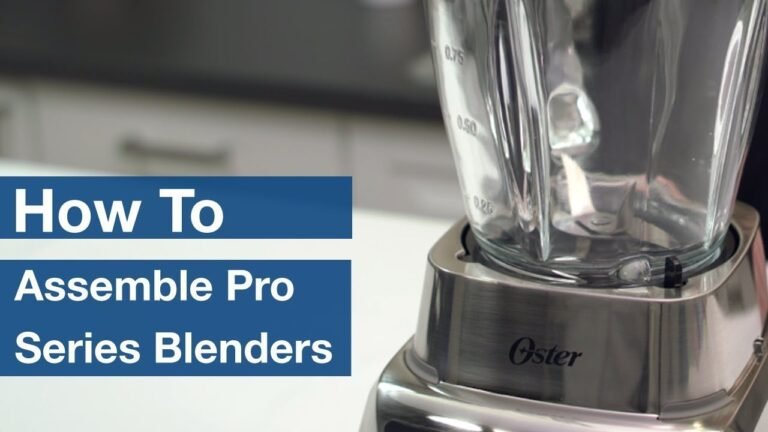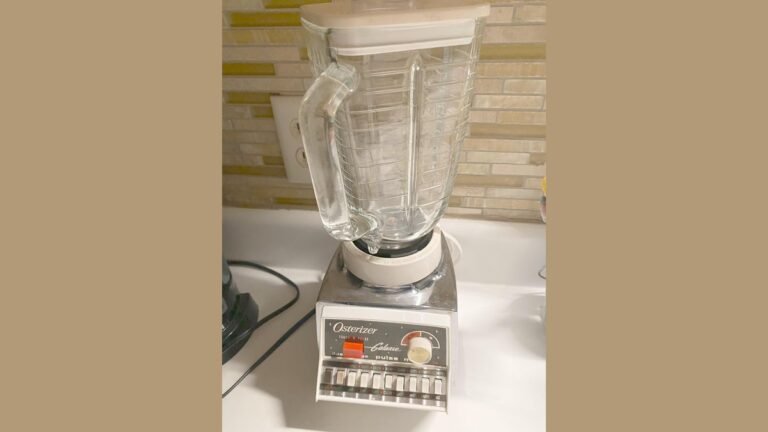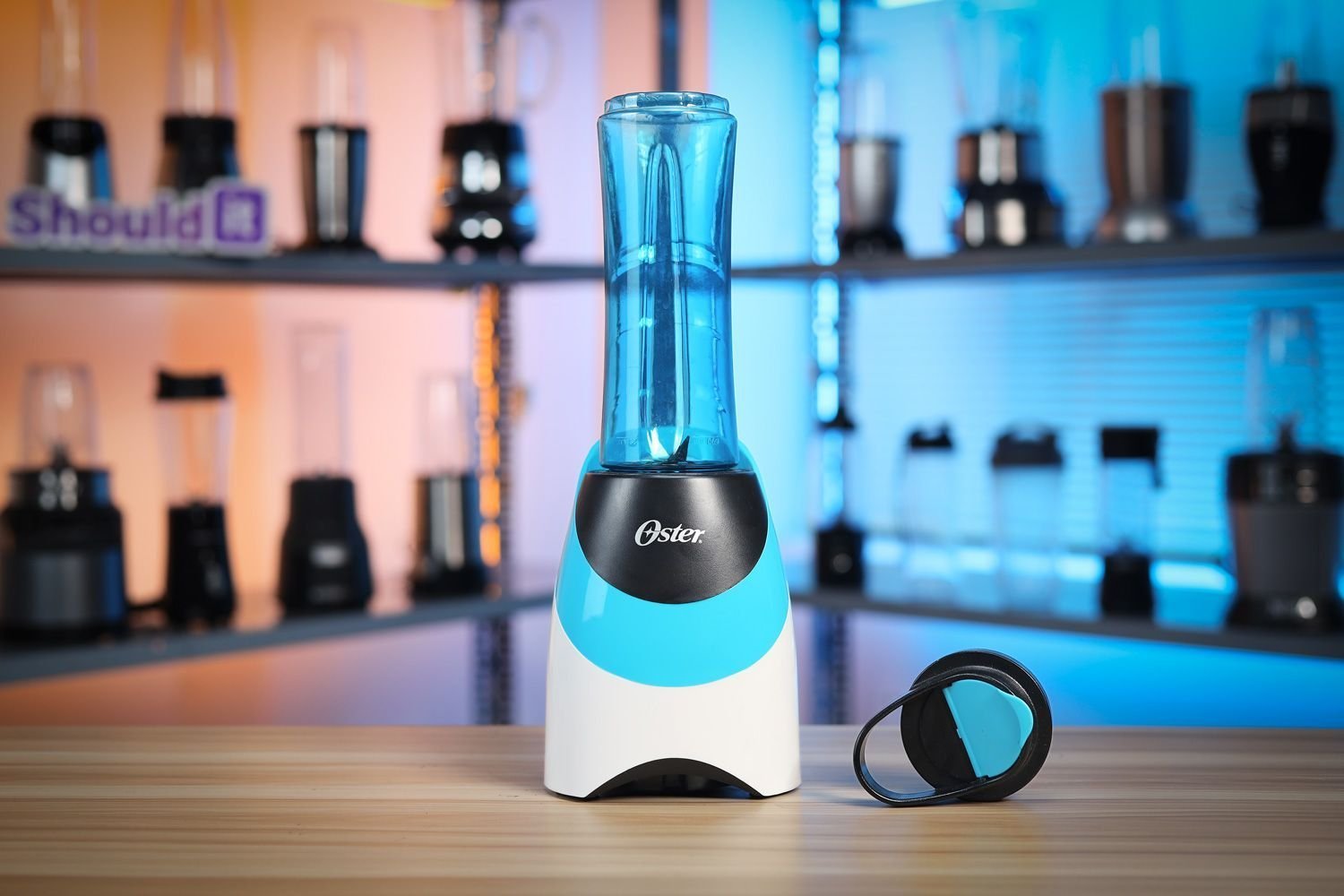
How To Use an Oster Personal Blender for Smooth Results
Using an Oster personal blender means locking the blade base onto a filled cup, pressing the cup down or hitting the button, and running it in short bursts until the mix is smooth. Most models finish a soft smoothie in 20 to 40 seconds. Harder items like frozen fruit or ice take longer, and that’s the part most people get wrong.
Three things change the answer for you: whether your model is a press-down base or a button base, how full you fill the cup, and what you’re blending. This page covers all three, plus the fill line, the order you load ingredients, and the sign it’s time to stop.
Which Oster personal blender owner are you?
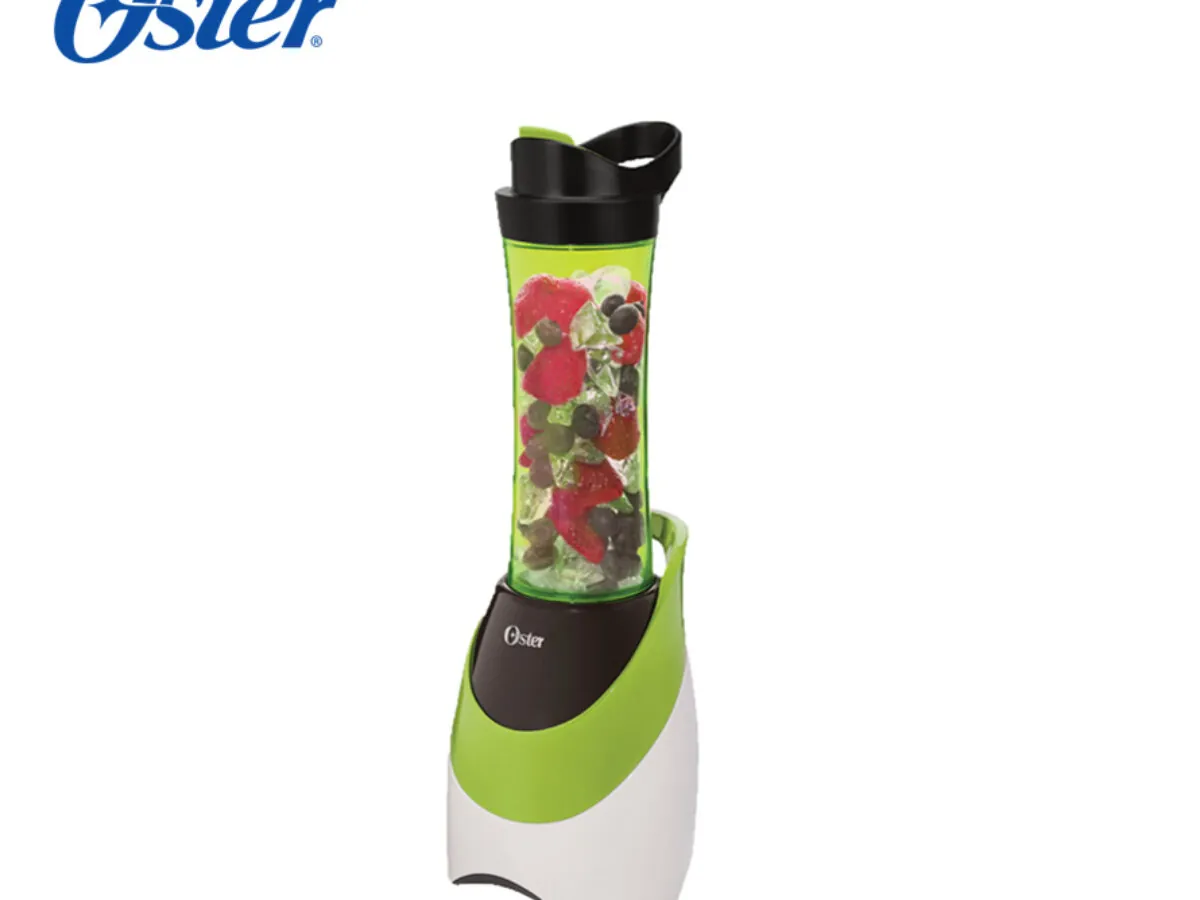
Three kinds of people search for this. The first just unboxed a blender and wants to know the correct order: fill, lock, press. They need the basics only, and they’ll be done in five minutes.
The second has used it a few times and hit a problem — fruit stuck at the top, a burning smell, or a cup that won’t lock. They need the troubleshooting side, not the setup.
The third is deciding whether a personal blender is enough for what they make. They blend ice, nuts, or hot soup, and they need to know the limits before they buy or before they keep pushing a machine past its job.
This page serves the first two best. It assumes you own an Oster personal blender with a blade base that twists onto a cup, and that the cup has a MAX fill line printed on it. If you’re shopping and want to crush ice daily or make nut butter, a full-size countertop blender is the better tool — a personal blender’s motor isn’t built for that.
What actually decides your result
Fill level decides more than anything else. Every Oster personal cup has a MAX line, and going past it’s the top reason for leaks and overflow. Blending whips air into the mix and creates a vortex, so a cup filled to the very top will push its lid off. Stay at or under the line.
Ingredient order matters next. Soft items go in first, near the blades; hard items like ice and frozen fruit go on top. If you load ice first, it sits above the blades and just spins. The blades need liquid or soft food around them to pull everything down.
Your model type changes the method. Press-down bases start when you push the cup into the base. Button models need the cup locked, then a button held. Check the bottom of your base or the manual to see which you have — the steps differ.
Frozen and fibrous items decide your time. Frozen berries break down in 30 to 45 seconds. Whole ice cubes can take longer and may need pulses. Leafy greens like kale need the cup about half full with liquid, or they wrap around the blade and stall.
The mistake people make most is adding more ice when the blend stalls. That makes it worse. Stop, take the cup off, shake it, and add liquid instead.
Step-by-step: blending in an Oster personal blender
- Set the cup on a flat counter and add liquid first. Pour in ½ to 1 cup (120–240 ml) of milk, water, or juice. This gives the blades something to pull. You’ll see the liquid sitting at the bottom, ready.
- Add soft ingredients next. Yogurt, banana, or soft fruit go in on top of the liquid. Push them down lightly with a spoon so they sit near the blade.
- Add hard items last, and stop at the MAX line. Frozen fruit, ice, and leafy greens go on top. Leave at least 1 inch (2.5 cm) of space below the MAX line so the mix has room to move.
- Twist the blade base onto the cup until it’s snug. Turn it clockwise until it stops and the cup and base line up. Give it a gentle tug — if it moves, it’s not locked, and it’ll leak.
- Flip the cup onto the base. For press-down models, line the cup up with the base and push down. For button models, twist the cup into the base until it clicks, then press the button.
- Run it in short bursts first. Press for 3 to 5 seconds, release, and repeat 3 or 4 times. This breaks up the big pieces before you commit to a long run. You’ll hear the motor smooth out as the chunks disappear.
- Then hold for 20 to 40 seconds. For a soft smoothie, 20 seconds is usually enough. For frozen fruit or ice, run 30 to 45 seconds total, in bursts. Stop when the mix moves freely and you see no chunks against the cup wall.
- Stop and shake if it stalls. Turn it off, take the cup off the base, and shake it side to side. Add 2 to 4 tablespoons (30–60 ml) more liquid. Never reach in with a spoon while it’s running.
- Unscrew the blade base and swap on the lid. Twist the blade base off counter-clockwise, then screw on the drinking lid or a storage lid. Drink straight from the cup or store it.
- Rinse the cup and blade base right away. Warm water and a drop of soap, swished for 10 seconds, stops residue drying on the blade. Most Oster cups and blade bases are top-rack dishwasher safe — check your model’s manual to confirm.
The judgement call is knowing when to stop. A smooth, even texture with no chunks against the wall means it’s done. Running it another minute won’t make it smoother — it just heats the mix and wears the motor.
Which setup fits your situation
| Your situation | What to do | What it takes | What to watch for |
|---|---|---|---|
| Soft smoothie, fresh fruit | Liquid first, 20-second blend | About 1 minute | Don’t overfill past MAX |
| Frozen fruit smoothie | Bursts, 30–45 seconds | 2 minutes | Add liquid if it stalls |
| Ice cubes | Pulse only, small amounts | 3–4 minutes | Motor strain, loud rattle |
| Leafy greens | Half-full cup, extra liquid | 2 minutes | Leaves wrap the blade |
| Protein powder shake | Liquid first, powder last | 30 seconds | Powder clumps at the bottom |
| Hot soup or coffee | Don’t blend in a sealed cup | — | Steam pressure, lid pops off |
What separates a smooth blend from a gritty one
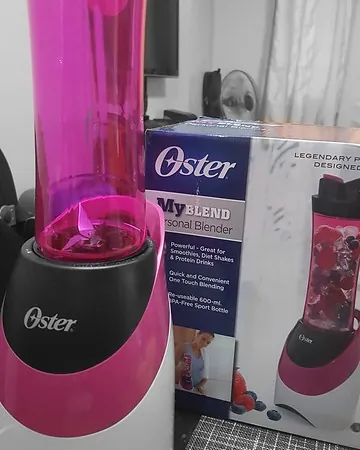
How experienced users load the cup
They build the cup in layers and never guess at the order. Liquid at the bottom, soft food in the middle, hard food on top. That single habit stops most stalls before they start.
They also measure the liquid instead of eyeballing it. For a standard 20-ounce Oster cup, ½ to 1 cup of liquid covers the blade and gives frozen fruit room to circulate. Under that, the mix sits still. Over the MAX line, it overflows.
What they check while it runs
They listen to the motor, not the clock. A steady hum means the blades are cutting. A strained, grinding sound means something’s stuck — time to stop and shake. They also watch the cup wall for chunks that never move, since those won’t blend no matter how long you run it.
And they leave the machine alone. No reaching in with a spoon, no adding ice to fix a stall, no running it for minutes at a time. Short bursts, done right, beat one long run every time.
What goes wrong, and how to fix it
Here’s the match between what you notice and what to do about it.
| What you notice | What it usually means | What to do first | How to stop it happening again |
|---|---|---|---|
| Liquid leaking from the base | Blade base not fully locked | Twist it on tighter | Check the seal before every blend |
| Ingredients stuck at the top | Hard items loaded first | Stop, shake, add liquid | Load liquid and soft food first |
| Motor smells hot | Running too long at once | Stop and let it cool | Use 5-second bursts, not long runs |
| Blend comes out gritty | Not enough time or liquid | Add liquid, blend 20 more seconds | Follow the MAX line and burst method |
| Cup won’t lock to the base | Cup and base not aligned | Line up the tabs and twist | Check the manual for your model’s fit |
| Loud rattle, no blending | Ice jammed above the blades | Stop and shake the cup | Add ice in small amounts, on top |
The rules and limits that apply
Oster’s own manual for each model is the authority here — it lists the cup size, the MAX line, and whether the parts are dishwasher safe. Read the page for your exact model, because cup sizes and wattages differ across the range. A 250-watt base and a 400-watt base don’t handle ice the same way.
Never blend hot liquids in a sealed personal cup. Steam builds pressure, and the lid can pop off and scald you. Let soup or coffee cool to room temperature first, and only blend if your manual says the cup is rated for it.
Don’t run the blender continuously for more than about a minute. The manual for most Oster personal blenders tells you to let the motor rest between runs. If it smells hot or the base feels warm, stop.
The reader’s checks stop at the outside of the machine. Never open the base housing, and never touch or test anything inside it — a capacitor can hold a lethal charge even when it’s unplugged. If the base won’t start, or the blade base is cracked, contact Oster support or a qualified technician.
What this really costs you
The money side is small. You already own the blender, and the running cost is electricity — a personal blender draws a few hundred watts for under a minute per use, so the per-smoothie cost is a fraction of a cent at typical US rates. Check your own utility rate and your model’s wattage on its label if you want the exact number.
The real cost is time and wear. A smoothie takes about a minute of hands-on work: fill, lock, blend, rinse. Skip the rinse and the cost shows up later as dried residue on the blade and a harder cleanup.
What moves the cost up is misuse. Running it for minutes at a time, blending ice daily, or pushing past the MAX line wears the motor and the seals faster. Replacement cups and blade bases are sold separately, and prices vary by model and seller — check Oster’s site or your retailer for today’s price rather than trusting an old figure.
What moves it down is simple: burst blending, correct fill level, and a 10-second rinse after each use. Those three habits keep the machine working and cost you nothing.
Keeping your blender working
Rinse the cup and blade base within a few minutes of each use. Warm water, a drop of soap, and a 10-second swish is enough for most mixes. For thicker blends, fill the cup halfway with warm water, run it for 5 seconds, and pour it out — that self-clean trick handles most residue.
Check the blade base seal regularly. Run your finger around the rubber ring where the base meets the cup. If it’s cracked, stretched, or missing, replace the blade base — a bad seal is the main cause of leaks, and it won’t fix itself. How often you need to check depends on how much you use the blender, so follow the owner’s manual as the authority.
The sign it needs attention again is simple: a leak, a rattle, or a blend that takes longer than it used to. Any of those means stop and check the seal, the fill level, and the load order before you run it again. Fixing those three things usually puts it right without replacing anything.
When a personal blender is the wrong choice
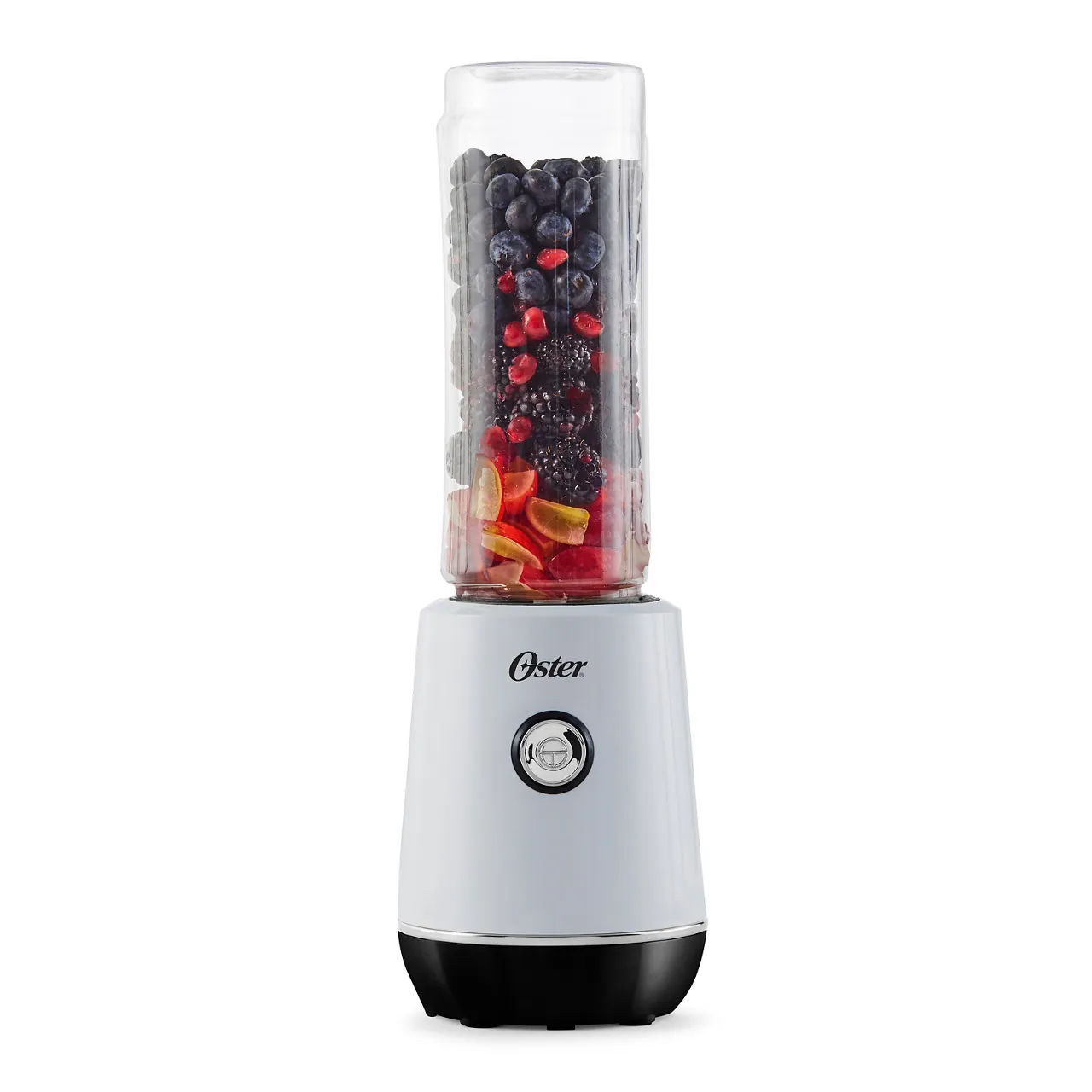
A personal blender isn’t the right tool for everything. If you’re blending ice or frozen fruit every day, a full-size countertop blender with a heavier motor will last longer and crush ice properly. A personal blender can do it occasionally, not as a daily job.
If you want nut butter, thick dips, or dough, stop here. Those need a food processor or a high-power blender. Pushing a personal blender through nut butter will burn out the motor, and that’s not covered by most warranties.
If your Oster base won’t power on, smells burnt, or the blade base is cracked, don’t try to repair it yourself. Contact Oster support or a qualified technician. The inside of the base holds a capacitor that can shock you even when it’s unplugged, so that’s not a home fix.
Related guides
Frequently asked questions
How long does an Oster personal blender take to blend a smoothie?
About 20 to 40 seconds for a soft smoothie with fresh fruit and liquid. Frozen fruit or ice takes 30 to 45 seconds in short bursts. These times assume a standard 20-ounce cup filled to the MAX line. If your cup is smaller or your fruit is frozen solid, add 10 to 15 seconds and check between bursts.
Can an Oster personal blender crush ice?
Yes, in small amounts and with pulses, not long runs. Add 3 to 4 cubes at a time on top of liquid, then pulse in 2-second bursts. Running it continuously with a full cup of ice strains the motor. If your model’s manual says ice isn’t recommended, follow the manual over any general advice.
Why is my Oster personal blender not turning on?
The cup probably isn’t locked into the base. Press-down models need the cup pushed down firmly; button models need the cup twisted until it clicks. Check that the base is plugged in and the outlet works. If it still won’t start with the cup locked, contact Oster support — don’t open the base.
Is it safe to blend hot liquids in a personal blender?
No, not in a sealed cup. Steam builds pressure inside, and the lid can pop off and burn you. Let hot food cool to room temperature first. Even then, only blend hot items if your model’s manual says the cup and lid are rated for it.
How full should I fill an Oster personal blender cup?
Stop at the MAX line printed on the cup, and leave about 1 inch (2.5 cm) of space below it. Blending whips air into the mix and creates a vortex, so a cup filled to the top will overflow or push the lid off. For frozen blends, staying under the line also gives the pieces room to move.
What happens if I overfill my personal blender?
The mix pushes past the lid and leaks down the sides, and the blades can’t pull the ingredients down, so it stalls. Pour some out until you’re under the MAX line, then blend again. Overfilling repeatedly can wear the seal and the motor over time.
Does it matter which order I put ingredients in?
Yes. Liquid first, soft food next, hard items like ice and frozen fruit last. If ice goes in first, it sits above the blades and just spins. Liquid at the bottom gives the blades something to pull, which drags the hard pieces down into the cut.
How do I clean an Oster personal blender?
Rinse the cup and blade base in warm soapy water right after use, or fill the cup halfway with warm water and run it for 5 seconds. Most Oster cups and blade bases are top-rack dishwasher safe — check your model’s manual to confirm. Never put the motor base in water.
Start with one blend
Fill your cup to the MAX line, liquid first, and run it in 5-second bursts. You should get a smooth mix in under a minute, with no chunks against the cup wall and no leak at the base.
If the motor smells hot, the base won’t start with the cup locked, or the blade base is cracked, stop there and contact Oster support or a qualified technician.
One blend tells you whether the machine works, not whether your recipe does. A thick shake that stalls is a recipe problem, not a fault: add liquid and pulse again. A thin mix that still leaves grit means the blade is dull or the base is losing power, and no amount of extra time fixes that.