What’s Better, Nutribullet or Ninja? A Buyer’s Guide
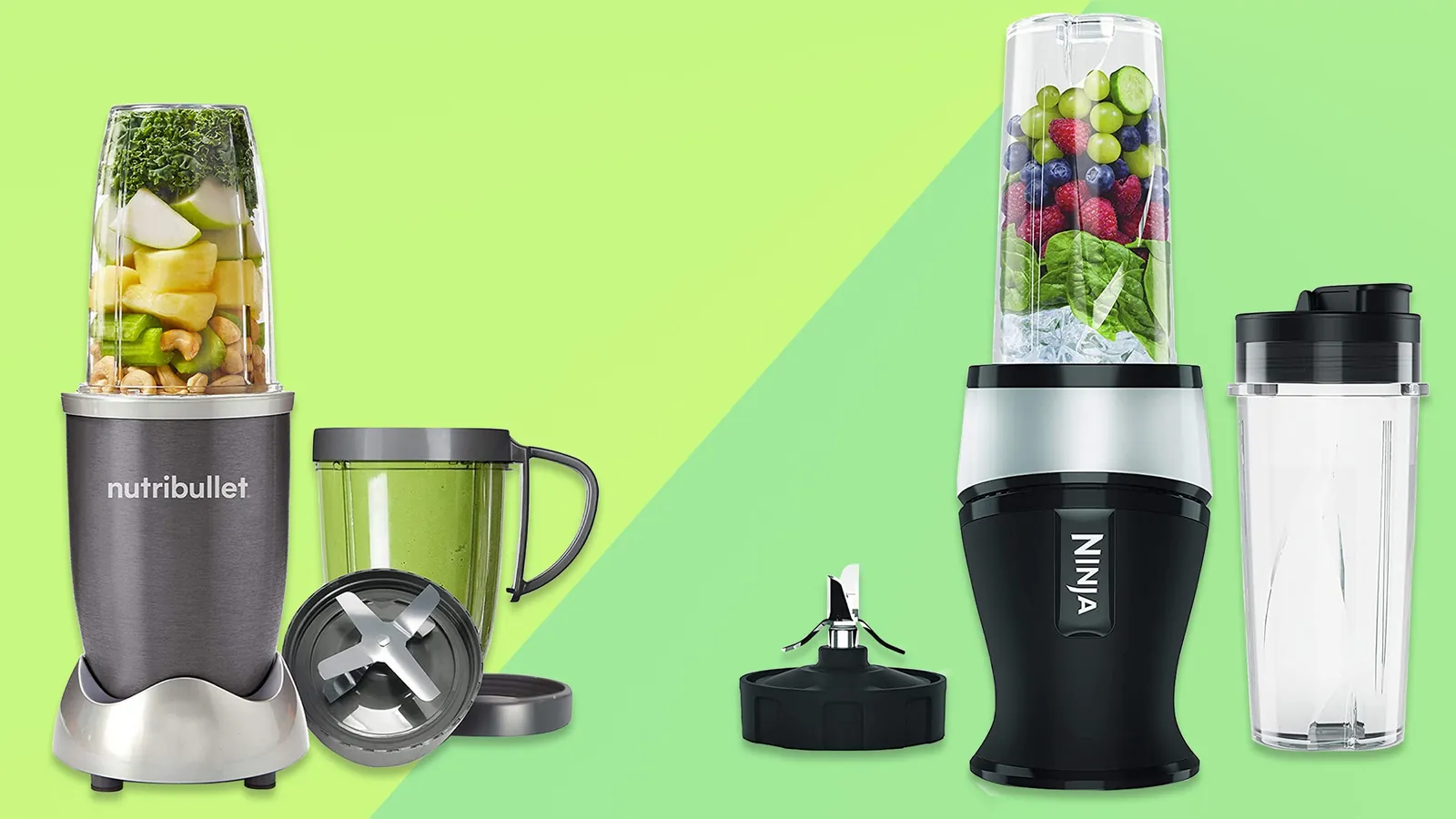
Nutribullet and Ninja both make personal blenders that crush ice, blend smoothies, and mix protein shakes, but they aim at different buyers: Nutribullet keeps things simple with compact, single-purpose machines, while Ninja offers more power and versatility across a broader range of models and price points. If you want the shortest possible answer, Ninja usually wins on raw power and features, Nutribullet usually wins on simplicity and countertop footprint. Which one is actually better for you depends on what you blend, how much you blend, and how much you want to spend.
Key Takeaways
- Ninja generally delivers more wattage for the money, which matters if you blend frozen fruit, ice, or tough greens daily.
- Nutribullet is simpler and smaller, with fewer parts and a smaller footprint, which suits small kitchens and single-serve routines.
- Both brands make several tiers, so comparing a $40 Nutribullet to a $180 Ninja is unfair; match models by price first.
- Cup compatibility varies by model, not by brand, so check that replacement cups and blades fit your exact machine before buying.
- Warranties differ by model, typically ranging from one year on budget units to several years on premium ones, so read the specific product page.
- Neither brand is “best” outright — Ninja suits variety and volume, Nutribullet suits speed and simplicity.
The Short Answer
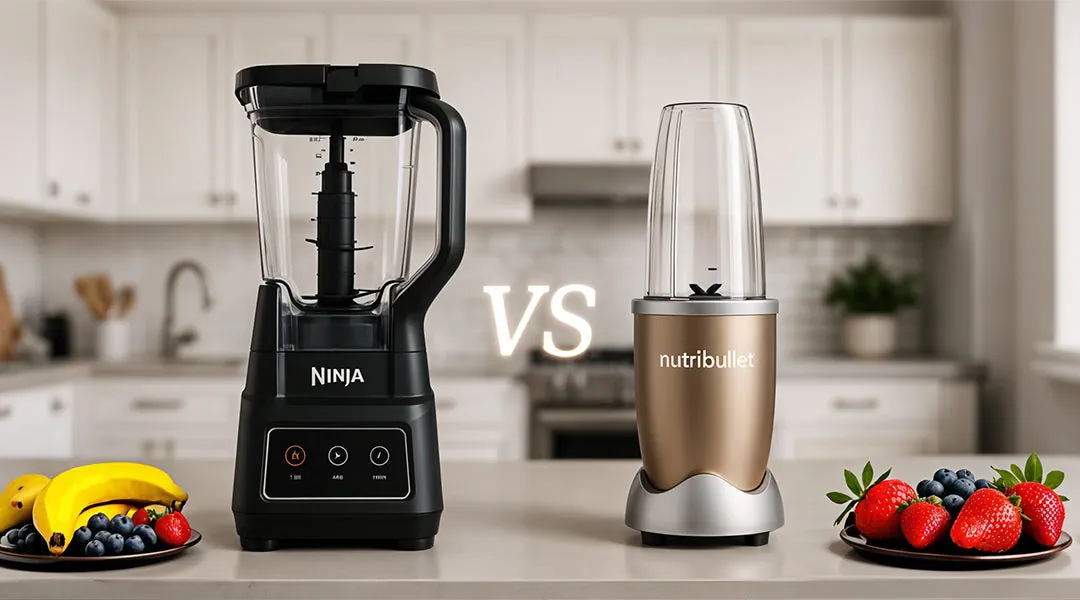
Ninja is the better pick for most people who want one machine to do many jobs, because its lineup includes higher-wattage motors, larger pitchers, and models that double as food processors or dough mixers. Nutribullet is the better pick for anyone who wants a small, cheap, no-fuss blender for smoothies and shakes and doesn’t care about extra attachments.
Think of it this way: Ninja competes on versatility and power, Nutribullet competes on simplicity and price. If you have ever been annoyed that a blender couldn’t handle frozen strawberries, you probably want a Ninja. If you have ever been annoyed that a blender had too many parts to wash, you probably want a Nutribullet.
How the Two Brands Compare
Both companies started with a single idea and expanded. Nutribullet launched as a personal blender you twist and blend, and the brand has stayed close to that formula. Ninja started with kitchen appliances more broadly and now sells everything from personal blenders to full-size countertop systems with multiple attachments.
The practical result is that Nutribullet’s catalog is easier to navigate. You’re mostly choosing between wattage tiers and cup sizes. Ninja’s catalog is wider, which means more choice but also more chances to buy the wrong model for your needs.
| Feature | Nutribullet | Ninja |
|---|---|---|
| Typical focus | Personal, single-serve blending | Personal to full-size, multi-function |
| Motor range | Roughly 200W to 1200W+ | Roughly 700W to 1500W+ |
| Common cup sizes | 18 oz, 24 oz, 32 oz | 16 oz, 18 oz, 24 oz, plus pitchers |
| Extra attachments | Limited (some models add milling blades) | Common (processor bowls, dough blades, pitchers) |
| Footprint | Small to medium | Small to large, depending on model |
| Cleaning | Few parts, usually rinse-and-go | More parts on multi-function models |
| Best for | Smoothies, shakes, quick blends | Smoothies, sauces, frozen drinks, food prep |
Nutribullet Models Worth Knowing
Nutribullet’s lineup splits into a few recognizable families. Knowing the names helps you avoid paying for power you won’t use or, worse, buying a weak motor for frozen fruit.
Nutribullet Pro and Pro 1000
The Nutribullet Pro line is the mid-tier workhorse, and the Pro 1000 pushes into higher wattage territory that handles ice and frozen fruit more comfortably. These are still single-serve machines: you blend in the cup, twist on a blade, and drink from the same cup.
Nutribullet Pro Plus and Select
The Pro Plus adds a bit more power and often includes extra cups or a milling blade for grinding. The Select line is a step up in motor size and sometimes adds preset programs, which take the guesswork out of how long to blend.
Nutribullet Baby and Magic Bullet
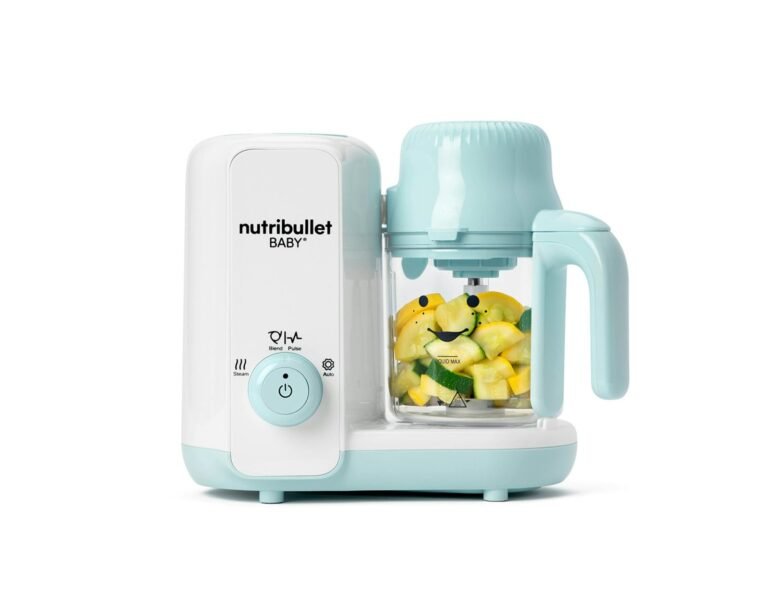
The Baby is a specialized model for pureeing baby food in small batches, and the Magic Bullet is the budget-friendly sibling brand with lower wattage. These are fine for soft foods and liquids but aren’t the tools for daily ice crushing.
Pro Tip: If you mostly blend soft fruit, yogurt, and protein powder, a mid-tier Nutribullet is plenty. Save the money and skip the highest-wattage model.
Ninja Models Worth Knowing
Ninja’s naming is busier, but a few families come up constantly in comparisons.
Ninja Fit and Ninja Personal Blenders
The Ninja Fit is the closest direct competitor to a basic Nutribullet: a compact personal blender with a cup you blend in and carry. Higher personal-blender models add more wattage and sometimes a second cup.
Ninja Nutri-Blender Pro and Duo
The Nutri-Blender line sits in the middle, with models that offer more power than the Fit and, on some versions, a small pitcher in addition to cups. The Duo name usually signals two blending vessels rather than two motors.
Ninja Foodi Power Blender and Kitchen System
These are the flagship machines. They include a full-size pitcher, personal cups, and often a food processor bowl or dough blade. If you want one appliance to replace a blender and a food processor, this is the Ninja tier to shop.
| Ninja Family | Rough Wattage | What It Adds |
|---|---|---|
| Ninja Fit | Around 700W | Basic personal blending |
| Nutri-Blender Pro | Around 900W–1000W | More power, sometimes a pitcher |
| Foodi Power Blender | Around 1400W–1500W | Presets, pitcher, cups |
| Kitchen System | Around 1400W–1500W | Processor bowl, dough blade, pitcher |
Power and Performance
Wattage isn’t everything, but it’s the fastest way to predict whether a blender will struggle. Higher wattage generally means the motor can keep spinning when the blade hits something hard, like frozen mango or ice cubes.
Nutribullet’s entry models sit at the low end, which is fine for soft ingredients but frustrating for frozen ones. Its higher tiers close much of the gap. Ninja’s mid and high tiers tend to offer more wattage per dollar, which is why people who blend frozen fruit daily often land on Ninja.
The catch is that wattage alone doesn’t guarantee a smooth result. Blade design, cup shape, and how much liquid you add matter just as much. A high-wattage blender with too little liquid will still stall or leave chunks.
Warning: Never run either brand dry or overfill past the max line. Both can leak or overheat, and damage from misuse is typically not covered by warranty.
Size, Footprint, and Storage
This is where Nutribullet often wins outright. Most Nutribullet models are designed to sit on the counter without dominating it, and the cups stack reasonably well in a cabinet.
Ninja’s personal models are similarly compact, but its flagship systems are genuinely large. A Kitchen System with a pitcher, processor bowl, and cups needs real cabinet space for the attachments you aren’t using.
If your kitchen has limited counter space, measure before you buy. A machine that lives in a closet gets used far less than one that stays plugged in.
Ease of Use and Cleaning
Nutribullet’s appeal is that there’s almost nothing to learn. You fill the cup, twist on the blade, press down, and blend. Cleaning is usually a rinse of the cup and blade, and many cups are dishwasher safe on the top rack.
Ninja personal blenders work the same way. The difference appears with the multi-function models, which add a pitcher, a lid, a processor bowl, a chopping blade, and a dough blade. That’s more capability and more dishes.
If you know yourself well enough to admit you won’t hand-wash five parts, buy the simpler machine. A blender you avoid using is worse than a cheaper one you use daily.
Which Blends Frozen Fruit Better?
Frozen fruit is the single most common reason people upgrade blenders. Here is the honest breakdown.
- Light frozen use (a handful of berries in a mostly liquid smoothie): either brand’s mid-tier model handles it.
- Heavy frozen use (frozen mango, ice, leafy greens, thick consistency): Ninja’s higher-wattage models have the edge.
- Ice crushing for cocktails: look specifically for models marketed for ice crushing, on either brand, and expect to pulse rather than run continuously.
- Nut butters and dough: this is Ninja Kitchen System territory; most Nutribullet models aren’t built for it.
The pattern is consistent: as the job gets harder, Ninja’s advantage grows. As the job gets easier, the gap closes and price and simplicity decide it.
Price Ranges to Expect
Prices move constantly with sales, so treat these as typical ranges rather than fixed numbers. The point is to understand what each price band buys you.
| Price Band | What You Get (Nutribullet) | What You Get (Ninja) |
|---|---|---|
| Budget (roughly $40–$70) | Basic personal blender, low wattage | Ninja Fit or similar, modest wattage |
| Mid (roughly $70–$120) | Pro or Pro Plus tier, better motor | Nutri-Blender Pro, more power, maybe a pitcher |
| Premium (roughly $120–$200+) | Highest-wattage single-serve models | Foodi or Kitchen System with multiple attachments |
At any given price, Ninja tends to give you more wattage and more attachments, while Nutribullet tends to give you a more focused, simpler machine. That’s the trade in one sentence.
Which Brand Is More Reliable?
Both brands have long track records and large user bases, and both have complaints about motors failing after heavy use. Reliability tends to track the specific model and how hard it’s pushed more than the brand name.
A few habits extend the life of either machine:
- Give the motor a break between long blends instead of running it continuously.
- Add liquid first, then soft ingredients, then frozen items on top.
- Don’t exceed the max fill line, especially with hot or expanding ingredients.
- Hand-wash blades carefully rather than letting them sit in water, and dry them to avoid rust.
Warranty length varies by model on both sides, so check the specific product page rather than assuming a brand-wide number. Keep your receipt, since claims usually require proof of purchase.
Who Should Buy Nutribullet
Nutribullet fits you if most of these are true:
- You make one smoothie or shake at a time.
- Your ingredients are mostly soft: banana, yogurt, protein powder, spinach, soft fruit.
- You want the smallest possible footprint.
- You want the fewest parts to wash.
- You want to spend less and don’t need food-processing attachments.
Who Should Buy Ninja
Ninja fits you if most of these are true:
- You blend frozen fruit, ice, or thick mixtures regularly.
- You want to make more than one serving at a time.
- You want a pitcher for soups, sauces, or batch smoothies.
- You want food processor capability, like chopping or dough, in the same machine.
- You’re willing to store extra attachments and wash more parts.
Head-to-Head Verdict
If you forced a single recommendation: Ninja for versatility, Nutribullet for simplicity. Neither is a mistake, and the wrong choice is usually the result of buying the cheapest model of either brand and expecting flagship performance.
A useful way to decide is to name your hardest regular job. If it’s frozen fruit and ice, buy Ninja at a wattage that matches. If it’s a banana-and-protein-powder shake, buy Nutribullet and pocket the difference.
Mistakes to Avoid When Choosing
- Comparing across price tiers. A budget Nutribullet versus a premium Ninja isn’t a fair fight.
- Ignoring cup compatibility. Replacement cups and blades are model-specific, so a great deal on cups that don’t fit your base is worthless.
- Overbuying attachments. A processor bowl you never use is just cabinet clutter.
- Underbuying power. If you blend frozen fruit daily, a low-wattage motor will burn out or frustrate you.
- Skipping the warranty details. Coverage length and what counts as misuse vary by model.
Pro Tip: Write down your three most common blends and your counter space in inches before you shop. Those two facts eliminate most of the lineup immediately.
Frequently Asked Questions
Is Ninja or Nutribullet better for smoothies?
For basic smoothies with soft ingredients, both work well and Nutribullet is often simpler. For thick smoothies with frozen fruit, ice, or lots of leafy greens, Ninja’s higher-wattage models generally blend smoother with less stopping and stirring. Match the model’s wattage to how frozen your ingredients are.
Can Nutribullet crush ice?
Some higher-wattage Nutribullet models can crush ice, but entry-level models struggle and may stall. If ice crushing is a regular job for you, check that the specific model is marketed for it, and pulse in short bursts rather than running the motor continuously. Ninja generally handles ice more comfortably across its range.
Which brand is cheaper?
Nutribullet tends to have a lower entry price, with basic personal blenders often costing less than comparable Ninja models. However, both brands span budget to premium tiers, so at any given price point Ninja usually includes more wattage and attachments while Nutribullet stays simpler.
Do Nutribullet and Ninja cups fit each other?
No. Cups, blades, and lids are specific to each brand and usually to each model family within that brand. Always confirm compatibility with your exact base before buying replacement or extra cups, since a mismatched cup won’t seal or may not engage the motor safely.
How long do these blenders last?
There’s no reliable brand-wide lifespan figure. Durability depends heavily on the model, how often you blend hard ingredients, and whether you let the motor rest between blends. Following the manual, avoiding overfilling, and not running the machine continuously will extend the life of either brand.
Which is easier to clean?
Nutribullet is generally easier because most models have fewer parts: a cup, a blade, and a lid. Ninja personal blenders are similarly simple, but Ninja’s multi-function systems add pitchers, bowls, and extra blades, all of which need washing. If low cleanup matters most, choose the simpler machine.
Conclusion
Pick the brand that matches your hardest regular blending job and your available counter space, then buy the model whose wattage and attachments actually cover that job rather than the cheapest option on sale.