Magic Bullet vs NutriBullet: What’s the Difference?
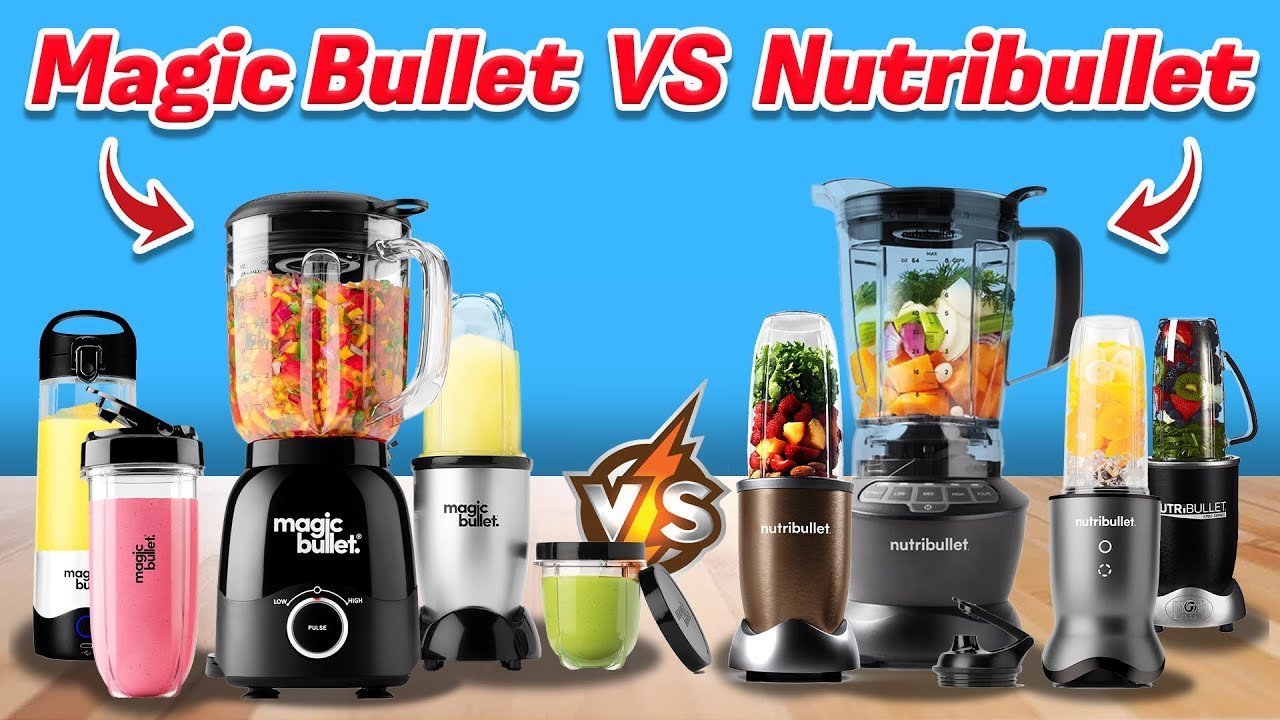
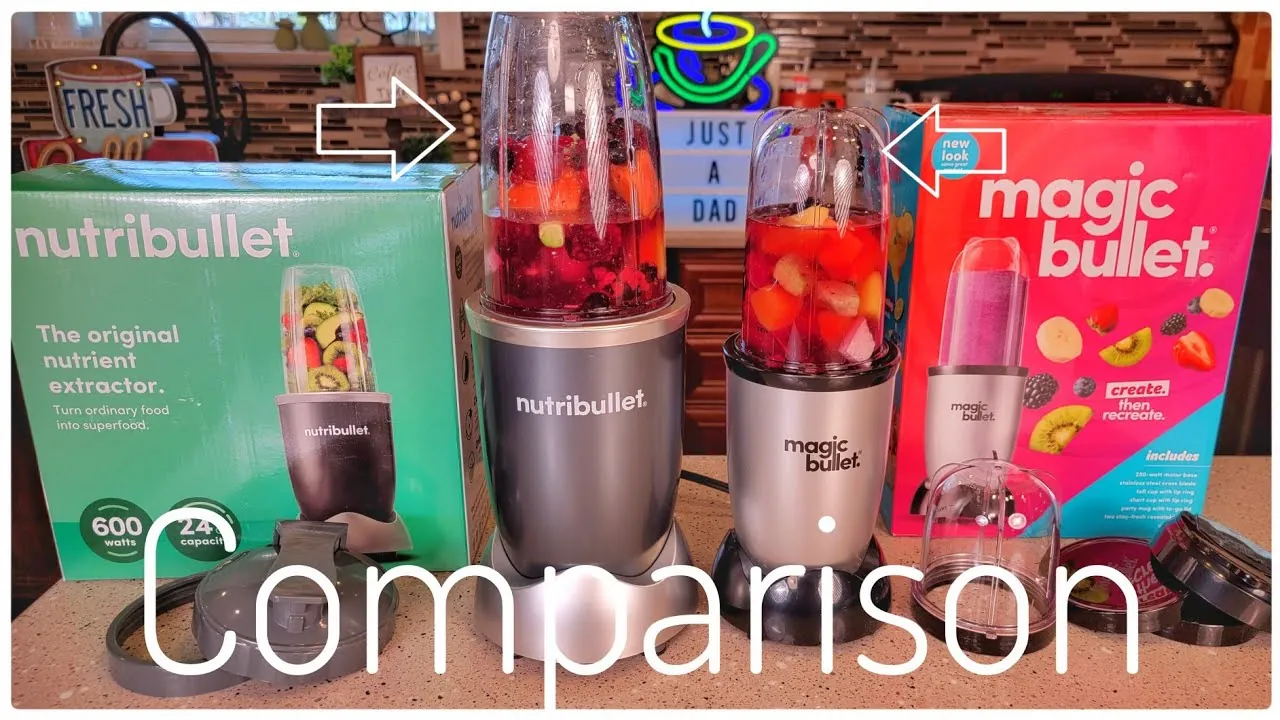
Magic Bullet and NutriBullet are two separate blender brands that share a corporate parent (Capital Brands) but sit at different points on the price and power spectrum: Magic Bullet is the compact, low-wattage personal blender line, typically $30–$60 and 200–250 watts, while NutriBullet is the larger, higher-powered line, typically $60–$180 and 600–1,700 watts depending on the model. The practical difference comes down to motor power, cup size, what you can actually blend, and how long the machine survives daily use.
Key Takeaways
- Magic Bullet is for light jobs: smoothies with soft fruit, protein shakes, sauces, dressings, and small chopping tasks. It struggles with ice, frozen fruit, and fibrous greens.
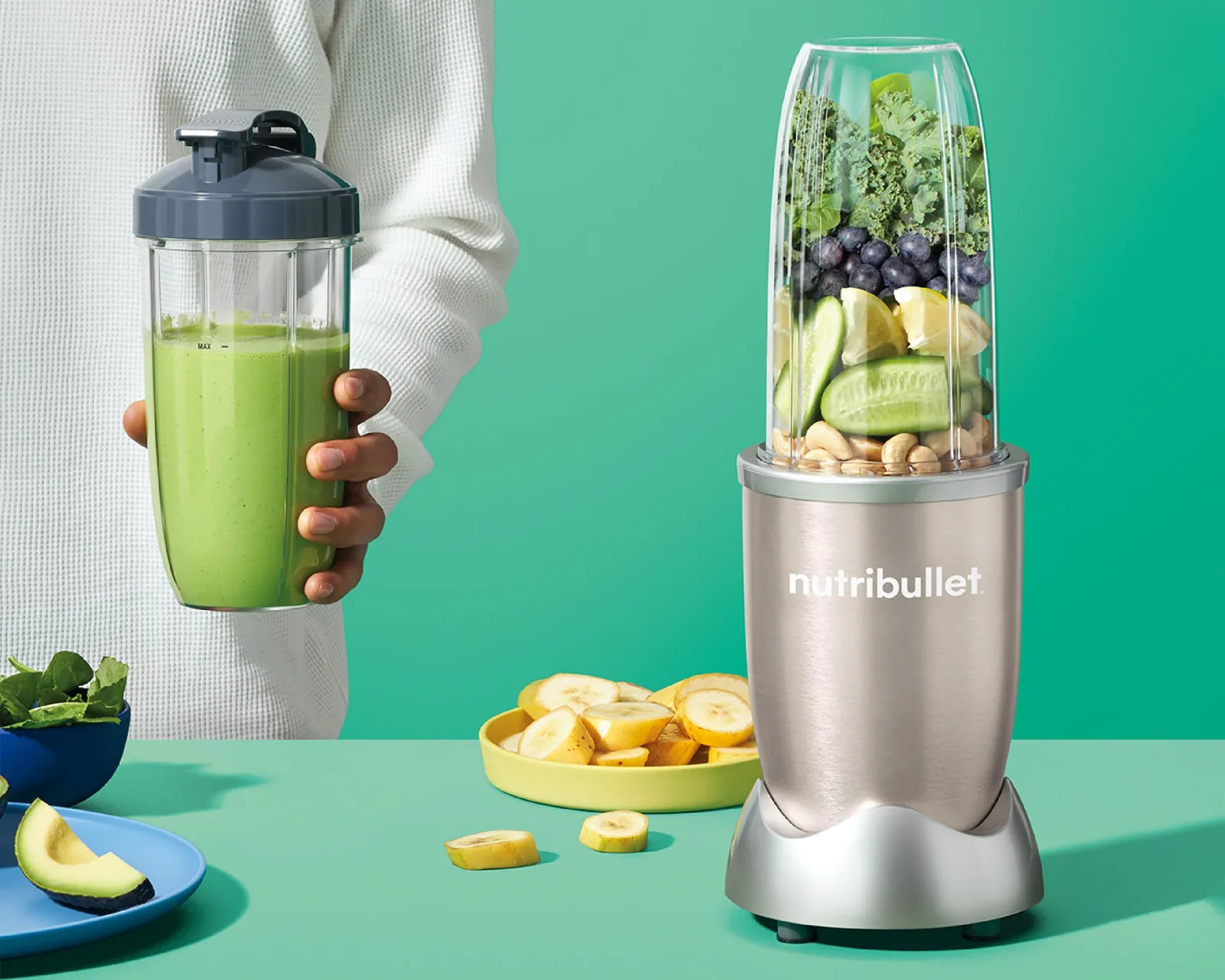
- NutriBullet is for daily smoothies and frozen ingredients: higher wattage and extractor-style blades handle frozen fruit, leafy greens, and ice far more reliably.
- Cup size is the biggest everyday difference: Magic Bullet cups run roughly 12–18 oz; NutriBullet cups run roughly 18–32 oz depending on the model.
- Price gap is real but not huge: expect roughly $30–$60 for Magic Bullet and $60–$180 for NutriBullet, with the Pro and Rx lines at the top.
- Neither is a full-size blender: if you want to crush large amounts of ice, make hot soup, or blend tough dough, you want a countertop blender instead.
- Match the machine to your habit: occasional shakes and small batches favor Magic Bullet; a smoothie every single morning favors NutriBullet.
The Short Answer: One Brand, Two Tiers
Both names belong to Capital Brands, which has been selling the Magic Bullet since the early 2000s and launched NutriBullet in 2012. The reason the two names confuse people is that they look nearly identical: a motor base, a screw-on blade, and a cup you drink straight from. The difference is what happens underneath the cup.
Magic Bullet is the original “as seen on TV” personal blender. It’s deliberately small, deliberately cheap, and deliberately limited. Its motor is built for short bursts, not sustained blending.
NutriBullet was designed as the upgrade. It uses a more powerful motor, a taller and wider cup, and a blade design marketed as an “extractor” that pulverizes seeds, skins, and stems rather than just chopping them.
If you remember one thing: Magic Bullet is the entry-level machine, and NutriBullet is the one built for people who blend every day.
Power, Wattage, and What That Means
Wattage is the single most useful number to compare, because it predicts what the blender will refuse to do.
| Feature | Magic Bullet | NutriBullet (600-series) | NutriBullet Pro / Rx |
|---|---|---|---|
| Typical wattage | 200–250 W | 600 W | 900–1,700 W |
| Typical price | $30–$60 | $60–$100 | $100–$180 |
| Cup sizes | 12–18 oz | 18–24 oz | 24–32 oz |
| Ice crushing | Poor to fair | Fair to good | Good to excellent |
| Frozen fruit | Struggles | Handles it | Handles it easily |
| Leafy greens | Chops unevenly | Blends smooth | Blends very smooth |
| Nut butters | Not recommended | Possible in small batches | Possible with patience |
| Dishwasher-safe parts | Yes | Yes | Yes |
A 200-watt motor and a 900-watt motor aren’t the same tool with a different sticker. The low-wattage motor has to run longer to break down the same food, which generates heat and wears the brushes faster. That’s why Magic Bullet manuals warn against running the machine for more than a minute at a time.
Wattage isn’t the only variable — blade geometry and cup shape matter too — but it’s the fastest way to predict whether a blender will handle your morning routine.
Cup Size and Capacity Differences
Capacity sounds like a minor spec until you own the machine. A 12-ounce cup means you can’t make a smoothie for two people, and it means a full cup of kale plus a banana plus liquid will overflow before it blends.
Magic Bullet cups are typically 12 to 18 ounces, and the short cups are genuinely short — good for a single shake or a batch of pesto, tight for anything else.
NutriBullet cups start around 18 ounces on the smaller models and go up to 32 ounces on the Pro and Rx lines. The taller, wider cup also gives ingredients more room to circulate, which is a real blending advantage, not just a marketing one.
Why cup shape affects blending
A narrow cup forces ingredients back down into the blades. A wide, tall cup lets them tumble. This is why the same recipe can come out gritty in a Magic Bullet and smooth in a NutriBullet even when the wattage difference is modest.
Extractor blades on NutriBullet models sit higher and have more surface area, which is part of why they handle fibrous ingredients better.
Blade Design: Chopping vs. Extracting
Magic Bullet ships with a cross blade for blending and a flat blade for dry chopping, like grinding coffee or chopping nuts. It’s a chopping tool at heart.
NutriBullet ships with an extractor blade — a taller, angled blade assembly designed to create a vortex that pulls ingredients down and pulverizes them. The marketing claim is that you can drink whole fruits and vegetables, skins and seeds included.
In practice, the extractor blade does a better job on:
- Kale, spinach, and other fibrous greens
- Frozen berries and mango chunks
- Chia and flax seeds
- Apple and pear skins
The Magic Bullet cross blade does a fine job on:
- Bananas and soft fruit
- Protein powder and milk
- Salad dressings and sauces
- Baby food and purees
Blade design is the second-biggest differentiator after wattage, and it’s the reason NutriBullet can charge more for what looks like the same product.
What Each One Actually Blends Well
Here is the honest breakdown of everyday tasks.
| Task | Magic Bullet | NutriBullet |
|---|---|---|
| Banana protein shake | Excellent | Excellent |
| Frozen berry smoothie | Fair | Excellent |
| Kale and spinach smoothie | Poor to fair | Excellent |
| Crushing ice for cocktails | Poor | Good (Pro/Rx) |
| Chopping onions and garlic | Good | Good |
| Grinding coffee beans | Fair (flat blade) | Not its strength |
| Nut butter | Not recommended | Possible, small batches |
| Hot soup | No | No |
| Baby food puree | Good | Excellent |
| Salad dressing | Excellent | Excellent |
Notice the pattern: the two machines overlap heavily on soft, wet, easy jobs. They diverge sharply on frozen, fibrous, and tough jobs. If your smoothies are banana-and-peanut-butter, a Magic Bullet is genuinely enough. If they’re kale-and-frozen-mango, it’s not.
Pro Tip: If you buy a Magic Bullet, freeze your fruit in small pieces and add liquid first. It won’t turn the machine into a NutriBullet, but it will stop you from burning out the motor in month three.
Price and Value Compared
Prices move around with sales, bundles, and retailer exclusives, so treat these as typical ranges rather than fixed numbers.
- Magic Bullet: roughly $30–$60 for the standard 250-watt kit with cups and blades. Bundle sets with extra cups push toward the top of that range.
- NutriBullet 600-series: roughly $60–$100.
- NutriBullet Pro: roughly $100–$140.
- NutriBullet Rx: roughly $140–$180, and it includes a heating function for soups.
Value depends entirely on use frequency. A $45 Magic Bullet used twice a week for three years is a bargain. A $45 Magic Bullet used twice a day will likely die within a year, at which point the $90 NutriBullet was the cheaper purchase.
Cost per use is the right lens here, not sticker price.
Warranty differences
Magic Bullet typically carries a one-year limited warranty. NutriBullet models generally carry a one-year warranty on the base 600-series, with longer coverage on some Pro and Rx models depending on the retailer and current terms. Always check the warranty card in the box, because Capital Brands changes terms between product generations.
Durability and Longevity
This is where the price gap earns its keep.
Magic Bullet motors are small and run hot. The most common failure mode is a burned-out motor after months of blending frozen ingredients or running the machine past its recommended time limit. The plastic tabs on the cups and the blade gaskets also wear out, and replacements cost money.
NutriBullet motors are larger and better cooled. They still fail — no personal blender is immortal — but they tolerate daily use far better. The most common complaints are leaking gaskets and cracked cup tabs rather than dead motors.
If you blend once a day or more, NutriBullet is the more durable choice. If you blend a few times a week, Magic Bullet will likely last years.
Warning: Never run either machine continuously for more than about a minute. Both manuals specify short bursts, and ignoring that’s the fastest way to kill a motor regardless of wattage.
Noise, Size, and Counter Footprint
Both are loud. Personal blenders are high-RPM machines with small motors, and they whine. Neither is meaningfully quieter than the other, though the NutriBullet’s larger motor can sound deeper rather than shriller.
Size is a genuine difference:
- Magic Bullet base is short and squat, roughly the footprint of a coffee mug, and fits under most cabinets.
- NutriBullet base is taller, and the tall cups can exceed the clearance under upper cabinets.
If counter space is tight or you have low cabinets, measure before buying. The tall NutriBullet cups are the most common reason people end up storing the machine in a cupboard and never using it.
Counter footprint matters more than most buyers expect. A blender you have to dig out is a blender you stop using.
Ease of Cleaning
Both are easy by blender standards, and both are dishwasher-safe on the cups, lids, and blades.
The routine is the same: rinse the cup, add warm water and a drop of soap, screw the blade back on, and pulse for a few seconds. That handles most cleanup without disassembly.
Differences worth knowing:
- Gaskets on both brands trap residue and need occasional removal and soaking.
- NutriBullet’s taller cups are slightly harder to hand-wash because your hand doesn’t reach the bottom.
- Magic Bullet’s flat blade for dry chopping must be hand-washed carefully — it’s sharp and small.
Neither machine is hard to clean. Both will smell if you leave protein shakes in them overnight.
Which One Should You Buy?
Answer these three questions honestly.
1. How often will you blend?
Once a day or more → NutriBullet. A few times a week → Magic Bullet is fine.
2. What goes in the cup?
Soft fruit and powder → Magic Bullet. Frozen fruit, ice, kale, seeds → NutriBullet.
3. How many people are drinking?
One small shake → Magic Bullet. Two shakes or a large smoothie → NutriBullet.
If you answered “daily,” “frozen,” and “two,” buy a NutriBullet Pro and skip the upgrade cycle entirely. If you answered “occasionally,” “banana,” and “one,” a Magic Bullet will do the job for years at half the price.
A note on the NutriBullet Rx and soup
The Rx model can heat soup through friction, which neither the standard NutriBullet nor any Magic Bullet can do. If hot soup or baby food in bulk matters to you, that’s the only model in this comparison that addresses it.
Common Mistakes Buyers Make
- Overfilling the cup. Both machines have a max-fill line. Ignoring it causes leaks and stalls.
- Adding ice first. Liquid goes in first, then soft ingredients, then frozen items on top.
- Running it too long. Short pulses beat one long continuous run every time.
- Not tightening the blade. A loose blade means a smoothie on your counter.
- Buying the cheapest bundle. Extra cups and a spare blade are usually worth the small upcharge.
- Expecting full-size blender performance. Neither machine makes dough, crushes a full tray of ice, or blends hot liquid safely.
Pro Tip: Buy one extra cup and one extra blade at the same time as the blender. Replacement parts are cheap at purchase and annoying to hunt down later, and the blade gasket is the first thing to fail.
Frequently Asked Questions
Is a Magic Bullet or NutriBullet better for smoothies?
For soft-fruit smoothies with yogurt, milk, or protein powder, both work and the Magic Bullet is cheaper. For smoothies with frozen fruit, ice, kale, or seeds, the NutriBullet is clearly better because of its higher wattage and extractor blade. If smoothies are your main reason for buying, NutriBullet is the safer choice.
Can a Magic Bullet crush ice?
Only marginally. The standard 200–250 watt Magic Bullet can handle a few small ice cubes in a mostly liquid mixture, but it will stall or wear out if you ask it to crush a full cup of ice. NutriBullet Pro and Rx models handle ice far more reliably. For real ice crushing, use a full-size blender.
Are Magic Bullet and NutriBullet the same company?
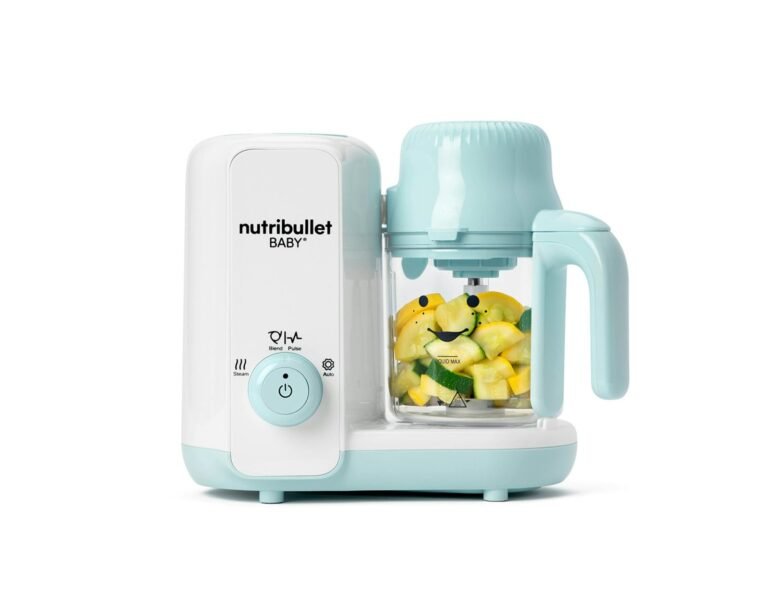
Yes. Both brands are owned by Capital Brands, which also produces the NutriBullet Baby and related lines. They’re sold as separate product families at different price points rather than as competing companies. That’s why the cups, blades, and accessories look so similar across the two.
How long do these blenders typically last?
With light use a few times a week, a Magic Bullet can last several years. With daily use and frozen ingredients, expect closer to a year before motor or gasket problems appear. NutriBullet models generally last longer under daily use because of their larger, better-cooled motors, though gaskets and cup tabs still wear out.
Can I put hot liquids in either blender?
No. Neither Magic Bullet nor standard NutriBullet models are designed for hot liquids, and blending hot liquid in a sealed cup creates pressure that can blow the lid off and cause burns. Let cooked food cool before blending, or use the NutriBullet Rx, which has a heating function designed for soup.
Do the cups and blades interchange between the two?
Generally no. Magic Bullet and NutriBullet use different thread patterns and blade heights, so cups and blades aren’t cross-compatible across the two product families. Within a family, some accessories fit multiple models, but always confirm compatibility with the specific model number before buying replacement parts.
Conclusion
The simplest next step is to write down what you blended last week and how often. If the list is frozen fruit, greens, and ice more than a few times a week, go with a NutriBullet Pro. If it’s bananas, protein powder, and the occasional dressing, a Magic Bullet will serve you well for years at roughly half the price.