The 10 Best Apple Juicers for Fresh Cider at Home
You’ve got a bowl of apples on the counter and a juicer that’s been sitting in the cabinet since who knows when. Maybe you bought it on a whim, maybe it was a gift, and now you’re wondering if a better one would actually get used. That’s usually the moment people start searching for the best apple juicer.
The trouble is, these machines pull in opposite directions. Some feed whole fruit fast but leave more foam and pulp behind. Others crush slowly for more juice from every apple but ask for more patience and more counter space. This guide walks through what each listing actually promises, so you can match one to how you really juice.
All 10 products side by side — scroll sideways to see every column.
| Top Pick | Best for Small Kitchens | Best for Pulp Control | Best for Juice Storage | Best for Quiet Mornings | Best for Nut Milk | Best for Whole Produce | Best for Single Servings | |||
| Preview |  |  |  |  |  |  |  | 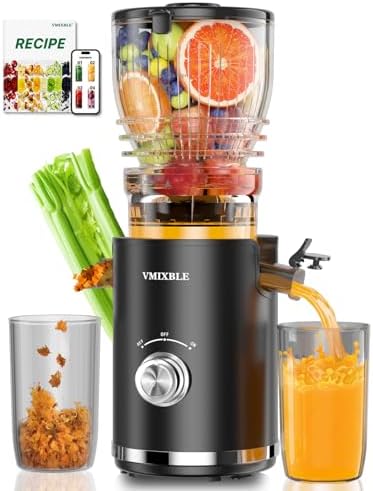 |  |  |
|---|---|---|---|---|---|---|---|---|---|---|
| Product | Breville Juice Fountain Cold XL | Breville Juice Fountain Compact | Ninja NeverClog JC151 | NutriBullet NBJ50500AK | NutriBullet 800W Juicer | Godspeeds Smoothpress Cold Press | Aeitto 3-in-1 Juicer | VMIXBLE Cold Press Juicer | Hamilton Beach Big Mouth Juicer | Magic Bullet Mini Juicer |
| Brand | Breville | Breville | Ninja | NutriBullet | NutriBullet | Godspeeds | Aeitto | VMIXBLE | Hamilton Beach | Magic Bullet |
| Best for | Best Overall | Best for Small Kitchens | Best for Pulp Control | — | Best for Juice Storage | Best for Quiet Mornings | Best for Nut Milk | Best for Whole Produce | — | Best for Single Servings |
| The listing says | 3.5 in feed chute, 70 fl oz of juice Cold Spin Technology and Noise Reduction Technology | 3 inch wide chute juices whole fruits and vegetables Pulp collects within the unit's footprint | High-torque motor powers through tough produce 2 interchangeable pulp filters for less or more pulp | 1.5QT hopper fits multiple ingredients at once 1.5QT capacity fits up to 5 whole apples | Dual speeds for soft or hard produce No-drip spout | 300W motor extracts up to 99% juice 6-inch wide chute for hands-free juicing | 3-in-1: juice, nut milk and sorbet Mesh-free design for faster cleaning | 300W motor, up to 99% juice yield 5.8 inch larger feed chute fits whole produce | 3-year limited warranty from Hamilton Beach 3” chute, 800 watts, 80 oz. pulp bin | 400-Watt motor extracts juice from fruits and veggies 2-inch feed chute fits larger chunks |
| More information | Check Latest Price on Amazon | Check Latest Price on Amazon | Check Latest Price on Amazon | Check Latest Price on Amazon | Check Latest Price on Amazon | Check Latest Price on Amazon | Check Latest Price on Amazon | Check Latest Price on Amazon | Check Latest Price on Amazon | Check Latest Price on Amazon |
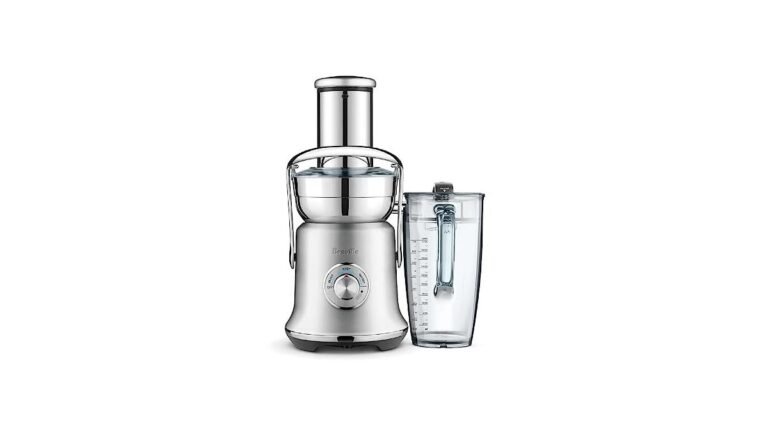
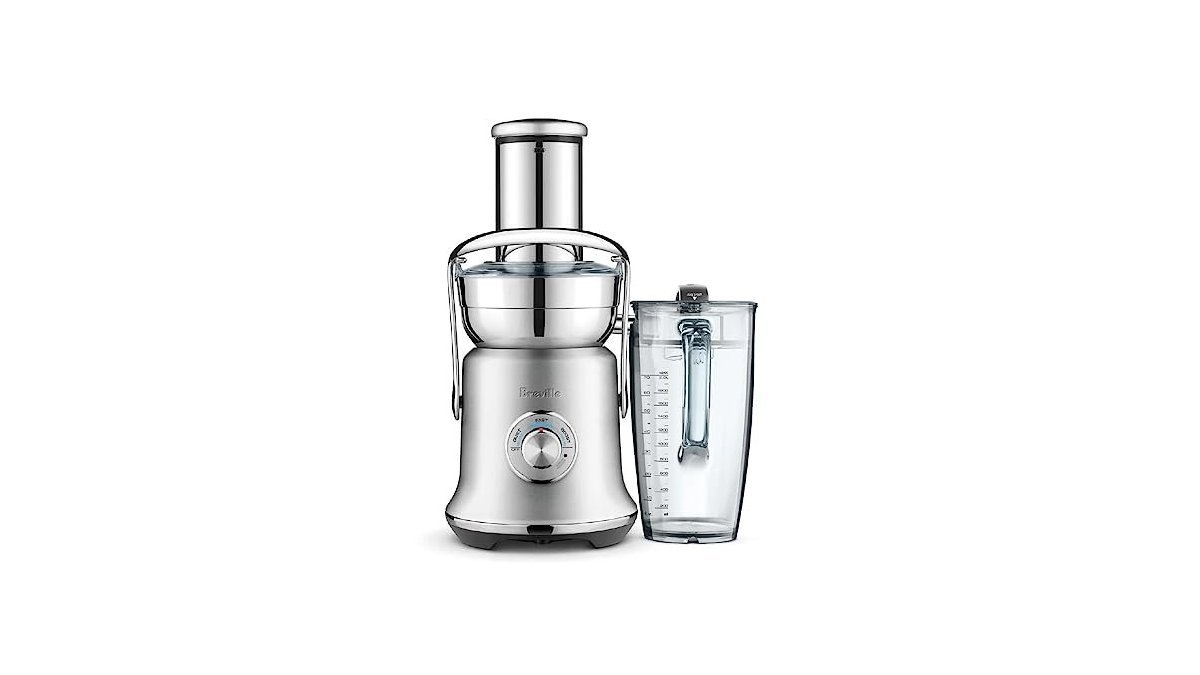
1. Breville BJE830BSS Juice Fountain Cold XL
Right for: Busy households juicing for several people at once
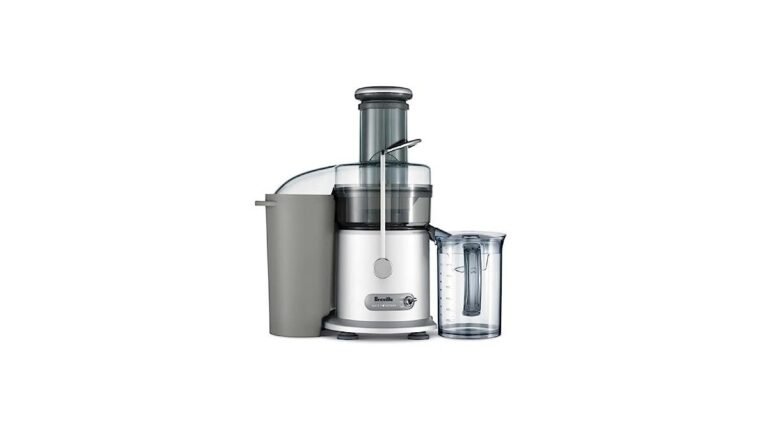
This is Breville’s big-batch machine. The listing promises a 3.5-inch feed chute that takes whole apples, carrots and oranges without pre-cutting, plus Cold Spin Technology and an Italian-made precision mesh filter. The 70 fl oz jug stores juice in the refrigerator for up to three days, and a Quiet setting cuts mechanical noise by 40%. The pulp bin sits behind the base to save countertop space.
On a normal morning, that chute size is the difference between rinsing five apples and quartering them first. The jug capacity means one session covers the family instead of one glass, and the nozzle inverts when you’re done so drips land in the jug, not on the counter.
What works:
- 3.5 in chute takes whole apples and carrots
- 70 fl oz jug stores juice up to three days
- Quiet setting cuts mechanical noise by 40%
- Inverting nozzle helps prevent drips
- Pulp bin sits behind the base to save space
Where it gives ground:
- Listing says nothing about dishwasher-safe parts
Skip it if: You juice one glass at a time in a tiny kitchen.
2. Breville BJE200XL Juice Fountain Compact Centrifugal Juicer
Right for: Small kitchens where counter space is tight
Breville’s compact centrifugal model keeps the wide-feed idea in a smaller body. A 3-inch chute takes whole fruits and vegetables, and the titanium-reinforced disc plus Italian-made micro mesh filter basket are both stainless steel. The 25 fl oz juice jug has an integrated froth separator, and the power cord wraps under the base. A safety locking arm stops the machine unless the cover is seated correctly.
If you make a glass or two in the morning, the 25 fl oz jug covers that without taking over the counter. The froth separator matters more than it sounds: apple juice throws a lot of foam, and pouring through the separator leaves a smoother glass. The pulp collects inside the unit’s footprint, so nothing extra sits beside it. What you give up is batch size, since 25 fl oz is a personal-to-two-person pour.
What works:
- 3 in chute handles whole apples and oranges
- Froth separator pours smoother juice
- Cord wraps under the base for storage
- Safety locking arm prevents operation without cover
- Stainless steel disc and mesh filter basket
Where it gives ground:
- 25 fl oz jug suits small batches only
- Listing describes no noise-reduction feature
Skip it if: You need to juice for a family in one go.
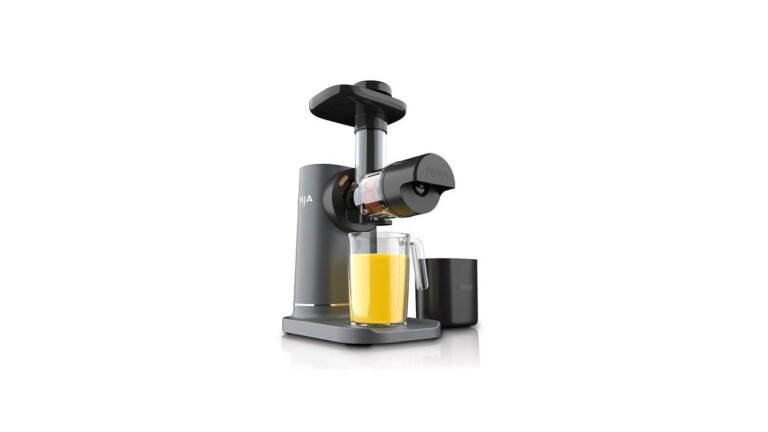
3. Ninja NeverClog Cold Press Juicer
Right for: Drinkers who care about texture and pulp level
Ninja’s cold press machine is built around control. It runs a 150-watt high-torque motor that turns an auger at low speed, and the listing promises it powers through apples, carrots, celery and leafy greens without clogging. Two interchangeable pulp filters let you pick Less Pulp or Lots of Pulp. There’s a Reverse function for jams and an anti-drip lever so you can pause mid-pour.
That pulp choice is the real story here. Some people want a clear apple juice; others want something closer to a smoothie. Two filters mean one machine covers both without a second purchase. The auger runs slow, so it won’t match a centrifugal machine on speed, and the listing’s own claim is about avoiding clogs rather than beating anything on time. The 24 oz jug is a modest pour.
What works:
- Two pulp filters for Less Pulp or Lots of Pulp
- Reverse function helps clear jams
- Anti-drip lever allows clean pauses
- Juice-contact parts are dishwasher safe
- Fits under kitchen cabinets
Where it gives ground:
- 24 oz jug is a small batch
- Slow auger speed means a slower session
Skip it if: You want to fill a large jug in one pass.
4. nutribullet Cold Press Batch Juicer
Right for: Anyone tired of feeding one apple at a time
This is the batch machine of the group. The listing gives it a 1.5QT hopper that fits up to five whole apples, so you load it and walk away instead of standing there pushing fruit down a chute. A 250-watt motor drives a slow-crushing auger for high yield and low foam, and the 35 oz juice cup holds four or more servings. The 30 oz pulp cup takes the leftovers.
Think about what that changes on a Sunday morning. You chop nothing, feed nothing, and come back to juice for the week. The anti-drip spout keeps the basin contained until you pour. The listing frames this as a batch machine: load the hopper and let it run.
What works:
- 1.5QT hopper fits up to five whole apples
- 35 oz juice cup holds 4+ servings
- Slow auger keeps foam low
- Anti-drip spout limits mess between pours
- Dishwasher-safe components
Where it gives ground:
- Batch design suits volume juicing, not single glasses
Skip it if: You only ever want one glass in the morning.
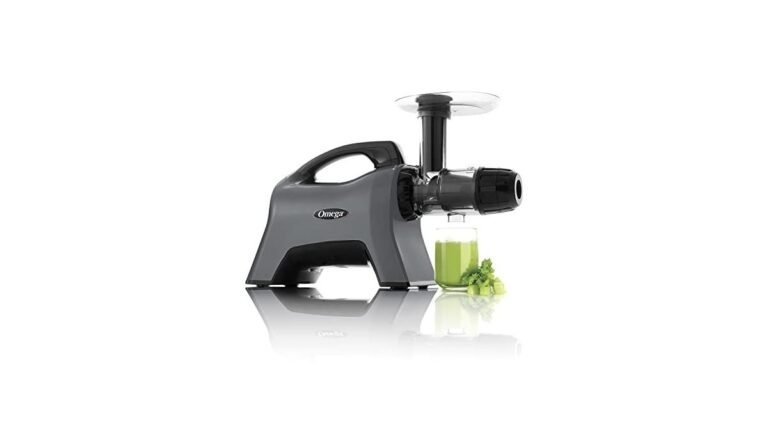
5. NutriBullet 800W Juicer
Right for: First-time juicers who want simple operation
This is the straightforward centrifugal option. An 800-watt motor with dual speeds lets you pick a setting for soft or hard produce, and a 3-inch feed chute takes whole fruits and vegetables. The sealing pitcher keeps juice fresh overnight, and the sieve, pulp basin and pitcher are all dishwasher safe. The pulp basin lifts off and goes straight to the sink.
Dual speeds are the practical part. Apples and carrots want the higher setting; softer produce does better on the lower one, and one switch covers both. The sealing lid with froth separator means you can make juice the night before and grab it on the way out.
What works:
- Dual speeds for soft and hard produce
- 3 in chute takes whole fruits and vegetables
- 27 oz pitcher stores juice up to 48 hours
- Sieve, pulp basin and pitcher are dishwasher safe
- No-drip spout
Where it gives ground:
- 1.5L pulp basin fills fast on big batches
- 16 in height needs cabinet clearance
Skip it if: You want slow cold press extraction instead of centrifugal.
6. Godspeeds Smoothpress® Cold Press Juicer
Right for: Buyers who want a long warranty and wide chute
Godspeeds leads with two numbers: a 6-inch wide chute and a 10-year warranty. The 300-watt motor runs a slow cold press at 58 RPM, which the listing says keeps heat and oxidation down, produces less foam, and stays under 58 dB. The snap-apart design disassembles without tools, and the detachable toothed filter rinses under the tap. Accessories include a juice cup, pulp cup, food pusher, cleaning brush and recipe book.
A 6-inch chute is genuinely wide, and the listing says it fits whole apples, oranges and cucumbers, so prep mostly disappears. The 10-year warranty is the longest coverage in this group. The trade-off is speed: 58 RPM is slow by design, and the listing frames that as a quality choice, not a fast one.
What works:
- 6 in chute fits whole apples and oranges
- 10-year warranty
- 58 RPM cold press runs under 58 dB
- Snap-apart design needs no tools
- Toothed filter rinses under the tap
Where it gives ground:
- 58 RPM slow crushing means a slower session
Skip it if: You want juice in under a minute from start to finish.
7. Aeitto 3-in-1 Juicer Machines
Right for: People who dread scrubbing mesh screens
Aeitto’s pitch is the mesh-free system. Instead of a screen you have to scrub, the EasePress design uses a straight-through chamber you rinse under running water, and the same machine makes juice, nut milk and fruit sorbet without swapping screens. The feed chute is 6.0 inches, the capacity is 100 oz, and there’s a reverse function plus a cleaning brush in the box. Support runs by phone and 24/7 email.
If cleanup is what stopped you juicing before, that mesh-free chamber is the whole argument. Rinsing a straight chamber beats picking pulp out of fine holes, and the multi-use design means the machine earns counter space beyond apple juice. A 100 oz capacity and a 6-inch chute are the two figures the listing leads with.
What works:
- Mesh-free chamber rinses under running water
- Makes juice, nut milk and fruit sorbet
- 6.0 in feed chute fits whole produce
- 100 oz capacity for family batches
- Phone and 24/7 email support
Where it gives ground:
Skip it if: You have very little counter space to spare.
8. VMIXBLE Cold Press Juicer
Right for: Slow-juicing fans who want quiet mornings
VMIXBLE’s listing centers on a 300-watt motor and a 5.8-inch feed chute that takes whole fruits and vegetables without shredding. It runs at 57 RPM, which the listing says reduces heat and oxidation to protect flavor, vitamins and nutrients, and it’s built to run quietly for early mornings. Assembly is three steps, disassembly is quick, and a safety feature stops the machine if the lid opens. It’s BPA free.
The 57 RPM slow crush reduces heat and oxidation to protect flavor, vitamins and nutrients. The safety cutoff matters if there are kids in the house.
What works:
- 5.8 in feed chute fits whole produce
- 57 RPM slow crush reduces heat and oxidation
- Safety protection stops operation when lid opens
- Three-step assembly and quick disassembly
- BPA free
Where it gives ground:
- No warranty length stated in the listing
Skip it if: You need a stated warranty before you’ll buy.
9. Hamilton Beach Centrifugal Juicer Machine With Big Mouth 3” Feed
Right for: High-volume juicers who want dishwasher-safe parts
Hamilton Beach builds this one around an 800-watt motor and an extra-large 3-inch Big Mouth chute that takes a whole apple, a bunch of celery or a handful of carrots. The pulp bin holds 80 oz. The pulp bin, juice bowl, lid and pusher are all dishwasher safe, and a strainer cleaning brush is included. The listing backs it with a multi-year limited warranty.
The 80 oz pulp bin holds the stated capacity for this machine. Dishwasher-safe removable parts cut the cleanup argument too. What you trade is extraction style: this is a centrifugal machine, so it’s built for speed rather than the slow crush the cold press models use.
What works:
- 3 in Big Mouth chute takes whole apples
- 80 oz pulp bin
- 800-watt motor
- Pulp bin, juice bowl, lid and pusher are dishwasher safe
- Multi-year limited warranty
Where it gives ground:
- Centrifugal extraction, not slow cold press
Skip it if: You specifically want cold press juice.
10. Magic Bullet Mini Juicer with Cup
Right for: Small kitchens and single servings
The Magic Bullet Mini has a 400-watt motor that handles fruits and vegetables, a 2-inch feed chute, and a 16 oz cup that comes with a twist-on to-go lid. Attachments are top-rack dishwasher safe, and a silicone spout cap catches drips. The listing includes a limited warranty and notes it’s built to North American and Canadian electrical standards.
If your kitchen has almost no spare counter, this is the one that fits.
What works:
- 16 oz cup with twist-on to-go lid
- Silicone spout cap catches drips
- Top-rack dishwasher-safe attachments
- Takes up very little counter space
- 400-watt motor
Where it gives ground:
- 2 in chute means larger apples need cutting
- 16 oz capacity is a single serving
Skip it if: You’re juicing for more than one person.
Also Worth Considering
Three more listings turned up that didn’t make the main list, but each is worth a look if the picks above don’t fit.
The EanOruus Juicer Machines is a 3-in-1 cold press model in premium gray that makes juice, nut milk and sorbet. It has a 6.5-inch extra-large chute and a 100 oz capacity, and it runs on an AC motor. If you want the biggest chute in this whole group, that 6.5-inch figure is the one to note.
That 100 oz hopper is the other number worth remembering. It lets you load ingredients for multiple days of juice or a large gathering in one go, so you refill less often. The two interchangeable strainers handle the switching: one for juice, one for sorbet, with nut milk as the third use.
The Juilist Juicer Machines is a compact countertop centrifugal model with a 3-inch wide mouth and a max 800W, three-speed motor. It’s listed with easy-clean parts and a safety lock. The three-speed control is more settings than most machines here offer, which suits anyone who switches between soft and hard produce often.
Speed 1 is the low setting for soft produce like oranges, watermelon and tomato. Speed 2 is for hard food like apple, carrot and celery. “P” is the highest speed, reached after you release it.
The QCen Juicer Machine Centrifugal Juicer runs 800W with a wide mouth feed chute for fruits and vegetables. It’s listed with stainless steel and BPA-free parts, easy cleaning and fast juice extraction. It’s a straightforward centrifugal option for anyone who wants a simple machine with no extra programs to learn.
Its two speeds split the same way: 1 for soft fruits and veg, 2 for hard ones like carrot, celery, apple and pear. Two details decide whether it lasts. Don’t run it continuously for more than 5 minutes, and if it stops from overheating, let it cool for 15 minutes before restarting.
How to Think Before You Choose an Apple Juicer
Fast Centrifugal or Slow Cold Press
These two designs work in opposite ways, and the choice shapes everything else. A centrifugal machine spins a disc or sieve fast, so juice comes out quickly and you can run a lot of produce through in a short session. A cold press machine turns an auger slowly, which the listings say limits heat and oxidation and leaves less foam. The trade is time against texture and yield.
Most people juicing apples a few mornings a week should lean centrifugal. Apples are firm and juicy, and speed matters more than the extraction style when you’re in a hurry. Go cold press if you juice leafy greens alongside your apples, or if foam in the glass bothers you. The listings here that name a speed run between 57 and 58 RPM, which tells you how slow the slow ones really are.
Before you decide, check one thing at home: how many apples you actually go through in a week. Count them. If it’s three or four, a fast machine wins. If it’s twenty, the yield difference starts to matter more than the minutes.
How Wide a Chute You Really Need
Feed chute size is the number that decides how much chopping you do, and it’s the easiest spec to compare. The listings here run from 2 inches up to 6.5 inches. A 3-inch chute takes a whole apple, which is the point most people stop noticing the prep. Past 5 or 6 inches, you’re feeding whole oranges and cucumbers with no cutting at all.
The listings here run from 2 inches up to 6.5 inches, and a 3-inch chute takes a whole apple. Wider chutes are genuinely nicer, but they usually come attached to a bigger body, so the chute and the footprint grow together. If your counter is tight, a 3-inch chute in a compact machine beats a 6-inch chute in one you have to store in a closet.
Measure your counter first, then your fruit. Put a ruler across your largest apple and see what chute it needs. That single measurement settles more than any feature list.
What Cleanup You’ll Actually Tolerate
The machine you keep using is the one that’s easy to clean, and this is where the listings differ most. Some have mesh screens with fine holes that need scrubbing, and some use mesh-free chambers you rinse under a tap. Some have parts that go in the dishwasher, and some list no dishwasher guidance at all. A cleaning brush shows up in most of these boxes, which tells you the sellers know pulp gets stuck.
Lean toward dishwasher-safe parts if you have a dishwasher, and toward a mesh-free design if you don’t. Pulp dries hard on a fine mesh, and that’s the job people avoid. A straight chamber rinses in seconds; a screen takes real scrubbing. Cold press machines also tend to have more parts than centrifugal ones, so check how many pieces come apart before you commit.
Time yourself once. After your next juice, note how long cleanup takes with whatever you own now. If it’s past ten minutes, prioritize the easiest-clean design on your shortlist rather than the widest chute.
Who Should Skip These Altogether
Juicing isn’t for everyone, and it’s worth saying so before you buy a machine that sits unused.
If you drink one small glass a week, a hand juicer or just eating the apple serves you better than a countertop machine. The machines here are built for volume: a 70 fl oz jug, a 100 oz hopper, a 1.5QT hopper that fits up to five whole apples at once. Batch capacity is the whole point, and a single glass doesn’t use it.
If you already own a blender, it handles apples for smoothies and sauces, so you may not need a separate juicer at all. If you want clear juice from soft fruits only, a press-style tool suits that narrow job better than any of these machines.
If you’d use it once for a party and then store it, borrow one or buy pre-made juice for the occasion instead. Storage is the other cost. A 3.9 qt pulp container, a 36 oz pulp cup and a 1.6 qt pulp container all have to live somewhere between uses.
One more thing to weigh: cleanup. The cold press models here are sold on being easier to clean than many centrifugal juicers, and several list dishwasher-safe juice-contact parts. If you won’t rinse parts after each session, that advantage disappears.
Closing
For most buyers, the Breville Juice Fountain Cold XL is the pick: a 3.5-inch chute, a 70 fl oz jug and a quiet setting cover everyday family juicing without fuss.
For the harder case, where cleanup is what stopped you before, the Aeitto 3-in-1 Juicer and its mesh-free chamber is the one to look at.
Before you order, do one thing: measure your counter and your largest apple, then check those two numbers against the chute size and dimensions in the listing you’re considering. That’s the step that keeps a good machine from becoming a cabinet resident.
If your produce is mostly soft — oranges, watermelon, tomato — a low speed setting is enough, and the harder setting is for apples, carrots and celery. Running the wrong one costs you yield, not safety.
Two habits shorten the life of any of these machines. Feeding produce continuously for more than five minutes can trip the overheat protection, and the fix is a 15-minute cooldown before you restart. Juicing things with very little water content is the other one to skip.
Storage matters too. Juice kept in a sealed jug in the refrigerator holds for up to three days, so a Sunday batch still pours on Wednesday.
Frequently Asked Questions
What do these machines need from me before I can juice?
Every machine here needs produce, a power outlet and a few minutes of setup. The difference is prep: machines with a 3-inch chute or wider take whole apples, while the Magic Bullet Mini Juicer’s 2-inch chute means larger apples need cutting first. You’ll also need somewhere to put the pulp, from a 30 oz cup to an 80 oz bin.
What tends to go wrong first with a juicer?
Pulp buildup is the most common issue the listings address. The Ninja NeverClog JC151 and the Aeitto 3-in-1 Juicer both list a Reverse function to help clear jams. Several listings here either use a mesh-free design or include a cleaning brush, since fine mesh screens are the part that clogs.
Is the simplest pick here enough for most people?
Often, yes. The NutriBullet 800W Juicer has dual speeds, a 3-inch chute and a 27 oz pitcher that stores juice for up to 48 hours, which covers everyday apple juice without extra programs. If you juice apples and carrots a few times a week, a simple centrifugal machine handles it.
What should I confirm before ordering?
Check three things. First, your counter space against the listed dimensions, since the NutriBullet 800W Juicer stands 16 inches tall. Second, the chute size against your produce, because a 2-inch chute means cutting apples. Third, the warranty, which ranges from 1 year on the Magic Bullet Mini Juicer to 10 years on the Godspeeds Smoothpress Cold Press.