How To Clean a Nutribullet Blender in About 60 Seconds
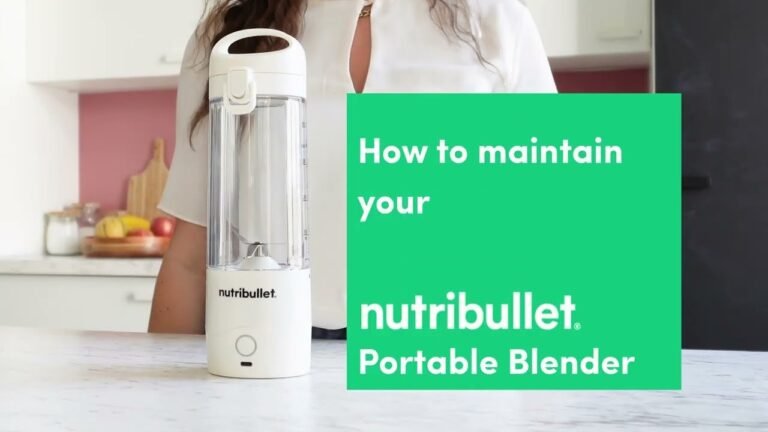
Cleaning a Nutribullet blender takes about 60 seconds: fill the cup one-third with warm water, add a drop of dish soap, twist the blade base on, and run it for 20–30 seconds. Rinse, and let both parts air-dry upside down. That handles everyday messes.
Three things change the job: whether food has dried on, whether you used oily or dairy ingredients, and whether your blade base is dishwasher-safe. Each one has its own answer below.
For dried-on food, don’t reach for a brush first. Fill the cup halfway with warm water and let it sit for 10 minutes, then run the blend cycle. The soak does the work, and you avoid scraping the plastic.
Oily or dairy residue needs one extra step: wash the cup by hand with a sponge after the blend cycle. A plain water rinse leaves a film that traps smells, and that film is why a cup that looks clean still smells like yesterday’s smoothie.
Check your blade base before it goes in the dishwasher. Most are top-rack safe, but some models are hand-wash only, and the heat can warp the seal. If yours is hand-wash only, rinse it immediately after use so nothing sets.
Which readers this page is for
Three kinds of people search for this. The first owns a Nutribullet and blends a smoothie most mornings. They already know the parts — cup, blade base, motor base — and they want the fastest daily routine that keeps the cup from smelling sour.
The second let the cup sit overnight, or longer. Now there’s a dried ring of green sludge around the blade, and a plain water rinse won’t touch it. They need a soak method and a safe way to scrub near sharp blades.
The third is deciding whether to buy one, or just bought one secondhand with no manual. They want to know what can go in a dishwasher and what will ruin the motor base.
This page serves the first two best. If you own a different brand, the steps still work, but check your own manual for dishwasher-safe parts — Ninja and Vitamix blades differ from Nutribullet’s. If your motor base is dead — no spin, burning smell — cleaning won’t fix it, and you need the manufacturer’s support page instead.
The rest of this page assumes your blade base and cups are the ones that came with the machine, and that nothing is cracked.
What changes the result
How long the food sat there. Fresh residue rinses off in one blend cycle. Residue that dried for 8 hours or more needs a 10-minute warm soak first, because dried fruit and nut butter bond to the plastic like glue. Check by running your finger along the inside wall — if it feels rough, soak it.
Whether the food was fatty. Nut butters, seeds, and full-fat yogurt leave an oily film that water alone won’t lift. This is the one people get wrong most often, because the cup looks clean while still smelling stale. Warm water plus a drop of soap handles it; cold water doesn’t.
Blade base design. Some Nutribullet blade bases are dishwasher-safe on the top rack, and some older ones are not. The answer is printed on the blade base itself or in your model’s manual — read that, not a forum post.
Cup material. Tritan and other clear plastics scratch. A scratched cup holds onto smell and stains. Use a soft sponge, never steel wool or a scouring pad.
Water temperature. Warm tap water works. Boiling water can warp some cups, so keep it hot but not boiling.
Step-by-step cleaning
- Unplug the motor base and wait for the blades to stop completely. You’ll know it’s safe when you hear nothing and see no movement.
- Twist the blade base off the cup counterclockwise. It should release with light pressure — if it sticks, wipe the threads with a warm damp cloth and try again.
- Fill the cup one-third full with warm water — roughly 8 oz (240 ml) for a 24 oz cup. Add one drop of dish soap. More soap just means more rinsing.
- Twist the blade base back on and run the machine for 20–30 seconds. The water should turn cloudy and swirl fast. That’s your sign it’s working.
- Pour the soapy water out and rinse the cup with warm water until no bubbles remain. Run your finger inside — no slick feeling means it’s rinsed.
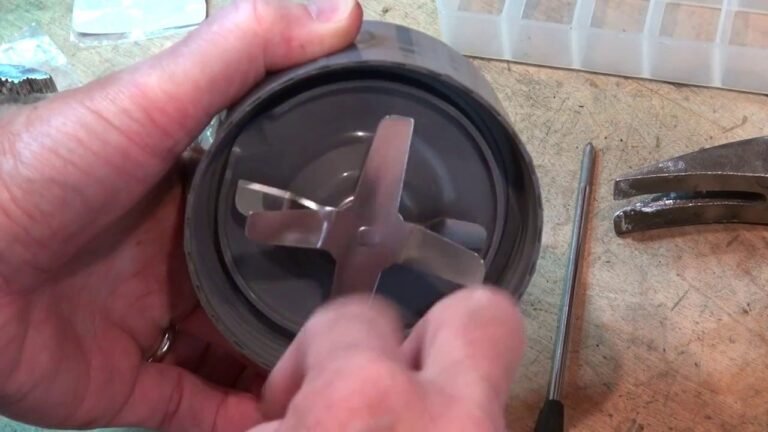
- Wash the blade base by hand in warm soapy water, holding it by the plastic collar, away from the blades. Never put your fingers near the blade edges, even when you think they’re dull.
- Scrub the cup with a soft sponge or bottle brush, paying attention to the bottom corners. Those corners are where residue hides.
- Rinse everything again and shake off excess water.
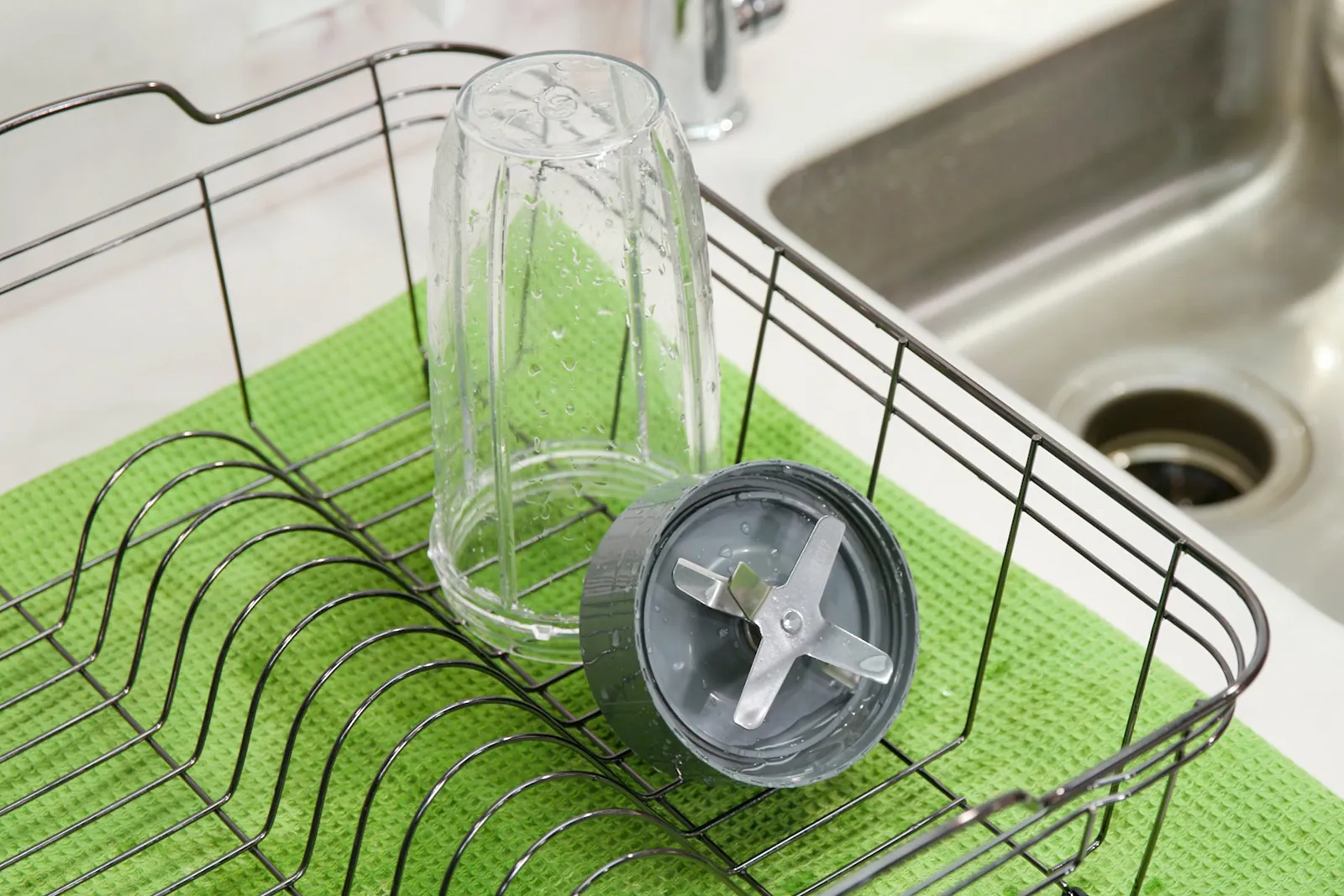
- Air-dry both parts upside down on a dish rack, blade base separate from the cup. Trapped water in the blade collar grows mold.
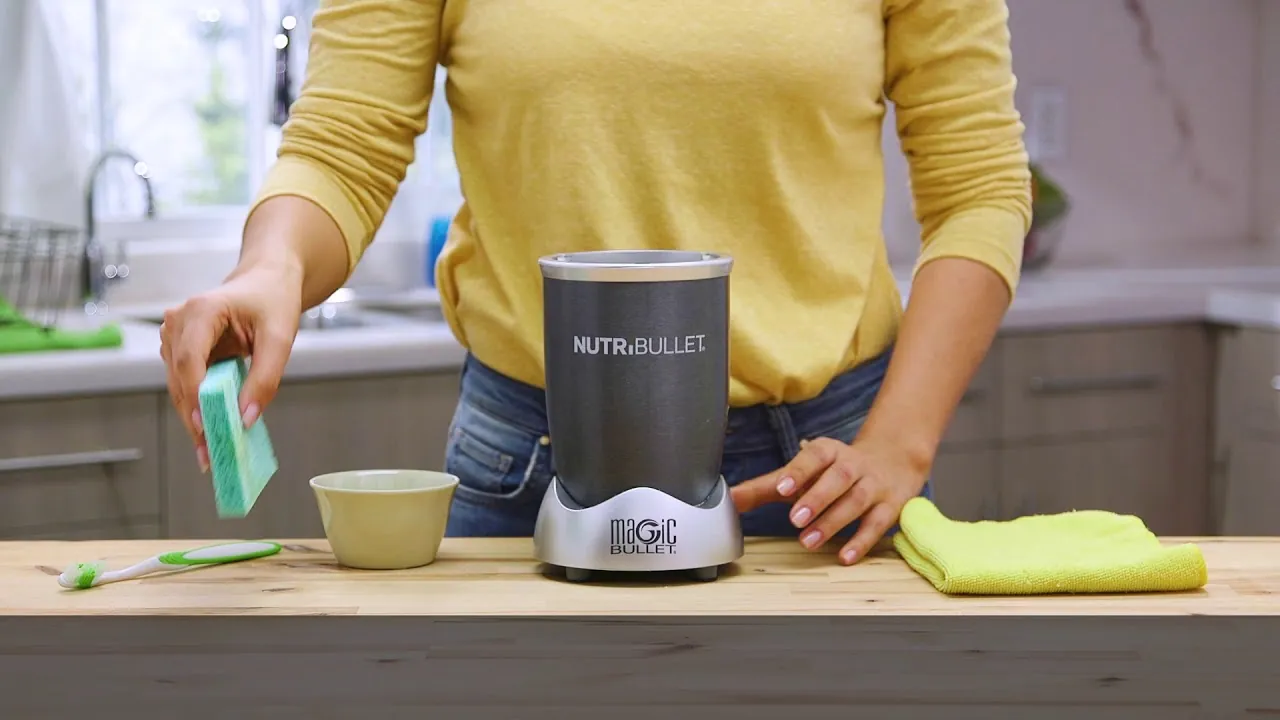
- Wipe the motor base with a damp cloth and dry it right away. Never submerge it, and never run water over it.
The judgement call is step 6. People rush it, then find a film on the blades a day later. If the blade base still smells like old smoothie after washing, soak it 10 minutes in warm soapy water and wash again.
If your blade base is cracked, or the gasket is torn, stop. A cracked blade base can leak or throw food, and replacement is the only safe fix — contact Nutribullet support for the correct part for your model.
Which method fits your situation
| Your situation | What to do | Time it takes | Watch for |
|---|---|---|---|
| Fresh smoothie, right after | Soapy water blend cycle | About 60 seconds | Missed residue at cup bottom |
| Sat out 8+ hours | Warm soak, then blend cycle | 10–12 minutes | Dried ring near the blades |
| Nut butter or seeds | Warm soapy soak, then scrub | 10 minutes | Oily film that smells stale |
| Cup smells sour | Baking soda and warm water soak | 15 minutes | Smell returning after drying |
| Blade base, dishwasher-safe model | Top rack, no heat dry | Full cycle | Heat warping the plastic |
| Blade base, older model | Hand wash only | 2–3 minutes | Water trapped in the collar |
| Motor base, dusty or splattered | Damp cloth wipe only | 30 seconds | Liquid entering the vents |
What careful cleaners do differently

They clean before the food sets
The single biggest difference is timing. A cup rinsed within 10 minutes of blending needs one cycle. The same cup left overnight needs a 10-minute soak and a scrub. Careful users also keep a small bottle brush next to the sink, because the cup’s rounded bottom is the one spot a sponge can’t reach.
They check the blade base gasket — the rubber ring inside the collar — regularly. If it’s loose or gritty, residue builds under it and the smell comes back no matter how well you wash the cup.
They leave the motor base alone
Experienced users never try to open the motor base, and never run it under the tap. A damp cloth on the outside, then dry, is the whole job. They also don’t soak the blade base overnight in hot water, because heat can distort the plastic collar over time.
What they deliberately skip: bleach on the cups, boiling water, and the dishwasher’s heated dry cycle for any part not marked safe. None of those clean better than soap and warm water.
What goes wrong, and what to do
| What you notice | What it usually means | What to do first | How to stop it happening again |
|---|---|---|---|
| Sour or stale smell | Residue under the gasket | Remove gasket, wash both | Check gasket regularly |
| Cloudy, scratched cup | Abrasive sponge or scrubber used | Accept it, or replace cup | Use soft sponge only |
| Cup still greasy | Cold water, no soap | Rewash with warm soapy water | Always use warm water |
| Water inside blade collar | Stored wet, upside down wrong | Shake out, air-dry 24 hours | Dry blade side up |
| Motor base won’t start | Not fully twisted, or overloaded | Reseat cup, let it cool | Don’t overfill past the max line |
| Cup leaks when blending | Worn or missing gasket | Replace gasket or blade base | Check gasket fit regularly |
| Pink or black spots in cup | Mold in a scratch or corner | Soak in warm soapy water, scrub | Dry fully before storing |
The rules that apply
Nutribullet publishes its own cleaning guidance for each model, and that’s the page to trust over any general advice. In most models, the cups and lids are top-rack dishwasher-safe, while the blade base and motor base are not. Older models differ, so check the manual that came with your machine or the model page on Nutribullet’s own site.
The motor base carries electrical parts. Never submerge it, never pour water into the vents, and never open the housing — there’s nothing inside an ordinary user can safely service. If the base sparks, smells burnt, or trips your outlet, unplug it and contact Nutribullet support or a qualified appliance technician.
If your cup or blade base is cracked, replace it. Blades under load can throw food or leak, and a damaged part isn’t a cleaning problem.
The dishwasher question has a second half. Top-rack safe means the heated drying cycle, not just the wash. If your machine runs a hot dry at the end, pull the cup and lid out before it starts and let them air-dry on a rack. Heat is what warps the threads, and a warped cup won’t seal on the blade base.
Hand washing works for every model. Fill the cup halfway with warm water, add a drop of dish soap, screw the blade base on, and run it for ten to twenty seconds. Rinse the blade base from the top, never by putting your hand down into the blades. A bottle brush reaches the corners a rinse misses.
Gaskets are the part people forget. The rubber ring in the blade base traps pulp and starts to smell. Most models let you lift it out with a fingernail; wash it separately and seat it fully before you screw the base back on.
What it really costs you
The everyday method costs almost nothing — a drop of dish soap and about 60 seconds of your time. Over a year of daily smoothies, that’s roughly 6 hours of cleaning, spread thin enough that most people don’t notice it.
The costs that add up are the replacements. A new blade base or a new cup set costs money, and the price depends on your model, so check Nutribullet’s site or your retailer for today’s figure — it changes. Dishwasher-safe cups save you hand-washing time but use a full cycle’s worth of water and energy.
Baking soda and white vinegar, the two cheap extras people reach for, cost very little per use. What moves the cost up fastest is skipping the daily rinse: dried residue leads to scrubbing, scrubbing leads to scratches, and scratched cups get replaced sooner. The cheapest habit is the 60-second one.
Keeping it clean between washes
Store the cup and blade base separately, both fully dry and upside down or on their sides. A cup sealed with the blade base while still damp is the fastest way to grow mold and a sour smell. Leave the lid off overnight if you’re not sure it’s dry.
The sign it needs attention again is smell, not sight. If the cup smells clean when you open it in the morning, you’re fine. If it smells stale, remove the gasket and wash under it — that’s usually where the problem lives.
For a deeper reset, soak the cup 15 minutes in warm water with 2 tablespoons of baking soda, then wash normally. If the smell survives that, the cup’s surface is likely scratched and holding onto residue, and replacing the cup is the honest fix.
When cleaning won’t help
If the motor base won’t spin, hums without turning, or smells burnt, cleaning is the wrong approach. Unplug it and contact Nutribullet support or a qualified appliance technician — the motor and wiring aren’t user-serviceable, and opening the housing risks shock.
If the blade base is cracked, the gasket is torn, or blades are bent, don’t clean it and keep using it. Replace the blade base with the correct part for your model.
A faint burnt smell right after a hard blend is usually just hot plastic or dust on the vents, and it fades once the base cools. A sharp, acrid smell that returns on the next run means the motor is overheating. Stop using it. Continuing to run a base that keeps smelling burnt can turn a cheap repair into a dead unit, and in rare cases it starts a fire on the counter.
If the cup is heavily scratched and still smells after a baking soda soak, replacement is the answer, not more scrubbing. Scratches hold onto oils and bacteria that no soak reaches, so the smell comes back within a few uses.
If you rent or share a kitchen and can’t control what goes in the dishwasher, hand-wash everything to be safe.
Frequently asked questions
Can I put Nutribullet cups in the dishwasher?
Yes, for most current models — cups and lids go on the top rack. The blade base and motor base shouldn’t go in. Older models may differ, so check the manual for your exact model or the product page on Nutribullet’s site before your first wash.
How long does it take to clean a Nutribullet?
About 60 seconds for a fresh smoothie: one 20–30 second blend cycle with warm soapy water, then a rinse. If food dried for 8 hours or more, add a 10-minute warm soak first. The time depends on how long the residue sat, not on the machine.
Why does my Nutribullet cup still smell after washing?
The smell usually lives under the rubber gasket in the blade base, not in the cup. Remove the gasket, wash it and the collar in warm soapy water, dry both fully, then refit. If the smell returns, the cup’s plastic is likely scratched and holding residue.
Is it safe to clean the blade base with my hands?
Yes, if you hold the plastic collar and keep your fingers away from the blade edges. Use a bottle brush or a sponge on a handle for the blade area. Never reach into the blades with a cloth, because you can’t see the edges and they cut.
What happens if I put the motor base in water?
It can short out, spark, or become permanently unsafe to use. The motor base has electrical parts and vents that water enters easily. Wipe it with a damp cloth only, dry it right away, and if it does get soaked, unplug it and let it dry fully before trying it again.
Can I use bleach or boiling water to clean the cup?
No. Bleach can leave residue and damage some plastics, and boiling water can warp the cup. Warm tap water with a drop of dish soap cleans just as well. For smells, use a 15-minute soak with 2 tablespoons of baking soda in warm water instead.
How often should I clean the blade base gasket?
Check it regularly if you blend daily. Lift the gasket out, wash it, and look for grit, stickiness, or a loose fit. A gasket that won’t sit flat, or feels stretched, should be replaced — it’s the part that stops leaks.
Does it matter which dish soap I use?
No, any ordinary grease-cutting dish soap works. Use one drop, not a squeeze — too much soap means more rinsing and a soapy taste in your next smoothie. Scented or antibacterial soaps are fine, but unscented is easier to rinse clean.
Conclusion
Start with the 60-second method tonight: warm water, one drop of soap, one blend cycle. Your cup should smell clean and look clear when it dries. If a sour smell or a leak keeps coming back after a gasket wash, stop guessing and replace the blade base or contact Nutribullet support.