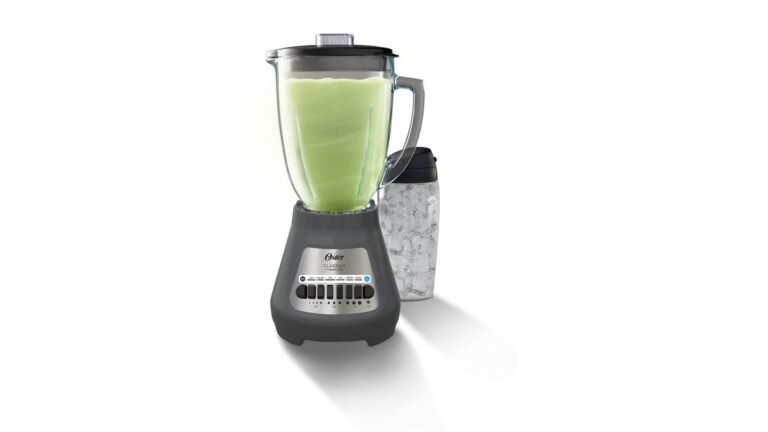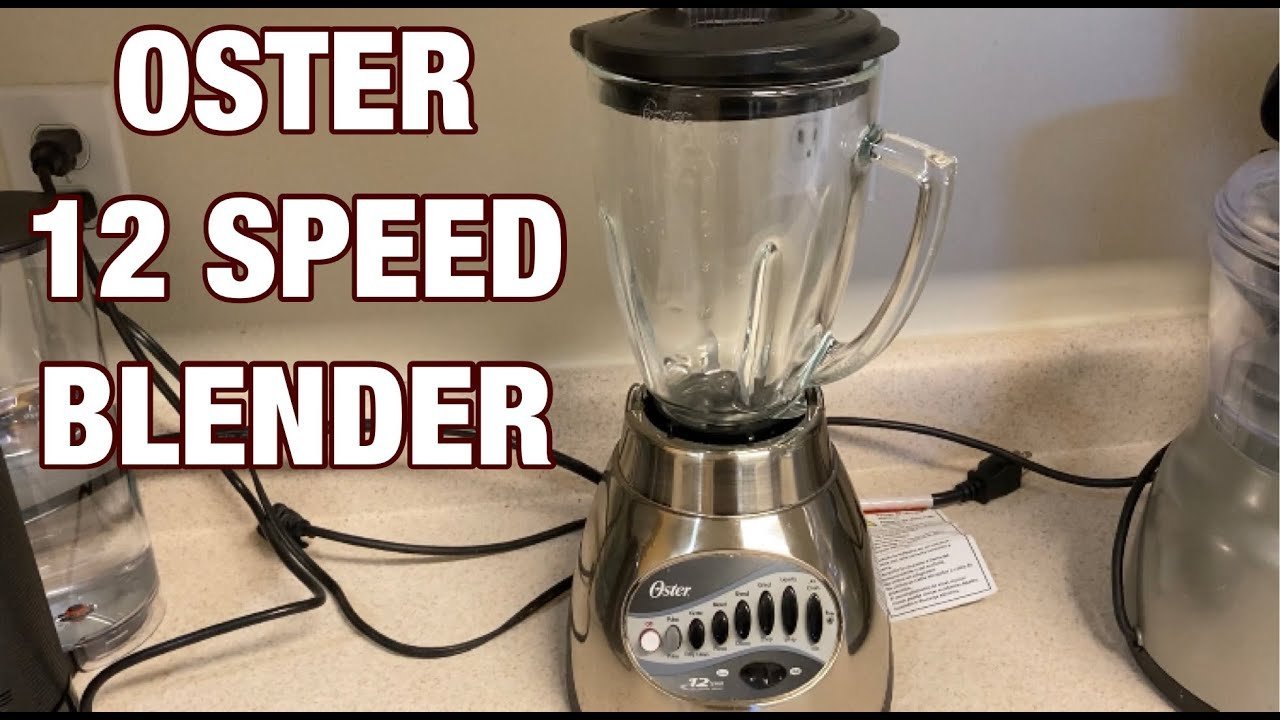
How to Use an Oster 12 Speed Blender: Speeds and Settings
To use an Oster 12 speed blender, add your ingredients, lock the lid, press the speed button that matches your food, and let it run until the texture is right — usually 20 to 60 seconds. Start low, then move up. The 12 speeds aren’t 12 separate powers; they’re one motor with 12 settings, so speed choice is your main control.
This page covers all three, and it assumes a standard 5-cup (1.25 L) glass jar with a 3-cup (700 ml) working fill.
Which Oster 12 speed blender owner this is for
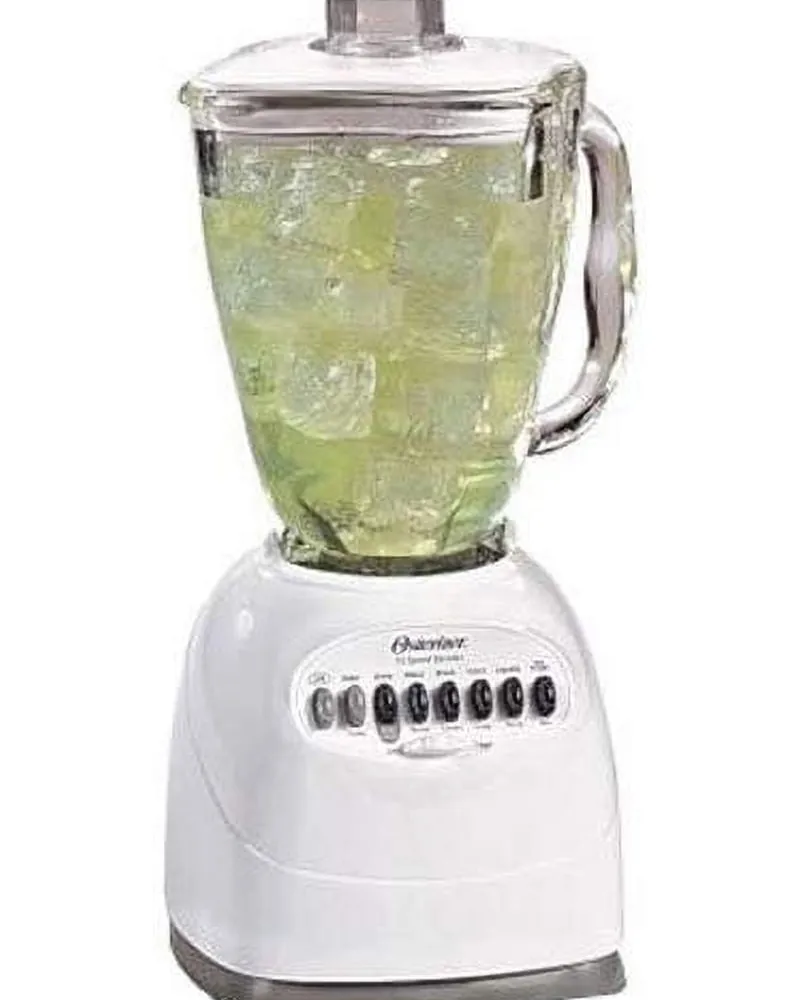
You’re likely one of three people. You already know the jar, lid, and blade are separate pieces, and you need the speed order and the pulse rule.
The second has owned one for years and only ever used two buttons. You’ve got a favorite smoothie setting and you’ve never touched the rest. What you need is a reason to move up or down the dial, and what each step actually does to ice or nuts.
The third is troubleshooting. Your blender stalls on frozen fruit, smells hot, or leaves chunks. You don’t need a tutorial — you need a fix.
This page serves the first two best. It assumes your blender works, your jar isn’t cracked, and you’re using the blade that came with it. If your unit smokes, sparks, or won’t spin at all, skip to the technician point in the last section — that’s not a settings problem.
What actually decides your result
Ingredient load is the biggest lever, and the one people get wrong most. A 5-cup jar blends best between 1.5 and 3 cups of total contents. Fill it to 4 cups and the blades can’t pull the food down; fill it to 1 cup and the blades spin in air. Check by looking at the jar: if the food sits above the top of the blade assembly by more than half, split the batch.
Liquid ratio decides whether anything moves at all. Thick mixtures need about 1 part liquid to 3 parts solids to circulate. If your smoothie just sits there and hums, you’re under that line — add 2 tablespoons of liquid and pulse.
Frozen and hard items decide blade wear and motor heat. Ice cubes, frozen fruit, and whole nuts need short pulses, not a long run. A continuous 60-second run on solid ice is what makes the base warm and the smell appear.
Jar size and material decide your speed ceiling. A 5-cup glass jar handles higher speeds with hot liquids than a smaller plastic jar does. Your model’s own manual, or the sticker on the base, tells you your jar size — read it there rather than guessing.
Blade type matters least, but it’s real. Four-point blades handle ice better; six-point blades handle dry grinding better. Look at your blade before you blame your technique.
How to use the Oster 12 speed blender, step by step
- Check the base and cord first. Set the base on a flat, dry counter within reach of the outlet. Confirm the cord isn’t frayed and the outlet isn’t shared with a kettle or toaster. A working outlet and a dry base is your starting sign.
- Add liquids first, then soft foods, then hard foods. Pour 1 cup of liquid, then fruit or yogurt, then ice or frozen items on top. Liquids at the bottom let the blades catch immediately instead of cavitating.
- Fill to between 1.5 and 3 cups total. For a 5-cup jar, that’s the working range for a single batch. Stop below the max-fill line molded on the jar — never above it.
- Seat the blade assembly and twist until it locks. The blade base should sit flush with no wobble. If it rocks, it isn’t seated — lift it and set it again.
- Press the lid down until the tabs click. Two tabs, both down. If the lid lifts when you tug it gently, it isn’t locked, and hot liquid will find that gap.
- Start on the lowest speed and run 5 to 10 seconds. This pulls the load down onto the blades. You’ll see the mixture start to move in a slow circle.
- Step up one speed at a time, 5 to 10 seconds each, until you reach the setting for your task. Smoothies sit around speed 5 to 7; soups around 6 to 8; ice crushing wants pulse, not a steady speed.
- Use pulse for ice, nuts, and anything frozen. Press and release in 1-second bursts, 5 to 8 times. Stop when the pieces are pea-sized or smaller.
- Blend 20 to 60 seconds total for most tasks. Smoothies are done at 30 to 45 seconds. Stop when the texture stops changing — running longer only warms the food.
- Turn the dial to off, wait for the blades to stop completely, then unplug. Lift the jar off the base before you open the lid. Never reach into the jar with your hand — use a spatula, and only with the blender unplugged.
The judgement call that separates a good result from a bad one is knowing when to stop. A blender doesn’t “finish” a smoothie the way an oven finishes a cake — you’re watching texture, not time. If you’re standing there wondering whether 10 more seconds will help, it usually won’t. Stop, taste, and pulse once more only if you need to.
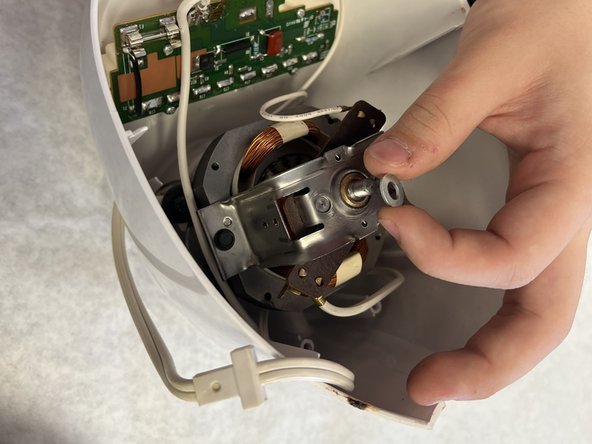
One limit worth naming: if your model needs a repair — a new blade assembly, a motor that won’t turn, a switch that’s dead — that’s a service-center job or a replacement part from Oster, not a home fix. Don’t open the base.
Matching the setting to the job
Every row below assumes a 5-cup jar filled to between 1.5 and 3 cups. If your jar is smaller, drop one speed step and shorten the run by about a third.
| What you’re making | Setting to use | Time it takes | What to watch for |
|---|---|---|---|
| Smoothie with fresh fruit | Speed 5, then 7 | 30 to 45 seconds | Stops circulating means add liquid |
| Smoothie with frozen fruit | Pulse, then speed 7 | 45 to 60 seconds | Motor smell means stop and rest |
| Ice for drinks | Pulse only | 5 to 8 one-second bursts | Steady speed overheats the base |
| Soup or sauce | Speed 6 to 8 | 30 to 45 seconds | Never blend hot liquid above 2 cups |
| Nut butter or thick paste | Pulse, then speed 4 | 60 seconds, then rest | Rest 2 minutes between runs |
| Pancake batter | Speed 3 to 4 | 15 to 20 seconds | Over-blending makes it tough |
| Baby food or puree | Speed 8 | 40 to 60 seconds | Check for chunks before serving |
Small habits that change the result
Prep and loading order
Cut fruit into roughly 1-inch pieces before it goes in. A whole apple quarter will bounce; a 1-inch chunk gets caught. Put 1 cup of liquid in first every time, even for thick mixtures — it’s the difference between blending and shaking.
Leave 1 inch of headroom below the max-fill line. Blending expands volume, and a full jar pushes the lid.
Order of work and what to leave alone
Run soft items before hard ones if you’re doing two batches — the jar stays cooler and you don’t need to wash between them. Don’t pre-crush ice in a bag; the blender does it better and faster in the jar.
Leave the blades alone. Don’t try to sharpen them, and don’t run the blender empty to “clean” them. Rinse with warm water and a drop of dish soap on speed 3 for 10 seconds, then wash by hand.
When it doesn’t work
| What you notice | What it usually means | What to do first | How to stop it happening again |
|---|---|---|---|
| Food sits still, motor hums | Not enough liquid | Add 2 tablespoons liquid, pulse | Start with 1 cup liquid |
| Chunks left after 60 seconds | Jar overfilled | Remove half, blend in two batches | Keep to 3 cups max |
| Burning smell from base | Long run on hard food | Stop, unplug, let cool 15 minutes | Pulse ice, never steady speed |
| Lid pops up while running | Tabs not fully clicked | Stop, press lid down until both click | Check both tabs every time |
| Liquid leaks at the blade base | Gasket missing or twisted | Unplug, reseat gasket flat | Check gasket before each use |
| Blender won’t start at all | Jar not seated on base | Twist jar until it drops into place | Seat jar before pressing any button |
The rules that come with the machine
Oster’s own use-and-care guide is the document that decides what’s allowed — read the version that came in your box or the one on Oster’s site, because it changes by model. Two rules show up in every version I’ve seen: never put the base, cord, or plug in water, and never run the blender with the jar empty.
The one rule people break most is hot liquids. A blender jar isn’t a pot. If you’re blending soup, let it cool to below a simmer first, fill no more than 2 cups, and vent the lid by lifting one corner with a towel. Sealed hot liquid builds pressure and can blow the lid off.
For anything electrical — a dead switch, a sparking cord, a base that trips your breaker — stop and take it to an Oster-authorized service center. A capacitor inside the base can hold a charge even when unplugged. That’s technician work, not kitchen work.
What this really costs you
The blender itself is the only money you have to spend, and Oster’s 12-speed models sit in the budget range — check the current price on Oster’s site or the retailer’s page, because it moves with sales. Replacement parts are the real variable: a new blade assembly or a jar gasket costs far less than a new base, and both are sold separately.
Your time cost is small per use — 30 to 60 seconds of blending, plus 2 minutes of washing. The hidden cost is food waste. A batch that stalls or over-blends gets poured out, and frozen fruit isn’t cheap.
What moves the cost up: blending thick nut butters often, which wears the motor faster, and running ice daily on a steady speed instead of pulse. What moves it down: batching, using the right liquid ratio, and washing the jar right after use so residue doesn’t harden.
Keeping it running well
Rinse the jar within 10 minutes of use. Warm water, a drop of soap, speed 3 for 10 seconds, then hand wash. The blade assembly and gasket come apart — take them apart weekly and check the gasket for cracks or a stretched shape.
The sign it needs attention again is simple: if the blender starts needing longer runs for the same result, or if you hear a new rattle, stop and check the blade seating and gasket before the next batch. A loose blade base is the most common cause of both.
Store the jar off the base, lid off, so air can dry the inside. Don’t wrap the cord tight around the base — it strains the connection point. If the gasket is cracked, replace it rather than stretching it back into place; a stretched gasket leaks.
When an Oster 12 speed blender is the wrong tool
Three cases where you should reach for something else. If you’re blending more than 6 cups at once — for a party, meal prep, or a big batch of soup — a 12-speed Oster jar is too small, and running it in four batches takes longer than a high-capacity blender would. Buy or borrow a larger machine.
If you need true nut butter or grain flour, a blender will do it slowly and heat the motor. A food processor or a dedicated grain mill handles both without the strain.
If your base is dead, sparking, or tripping the breaker, this page can’t help. Don’t open the housing. Take it to an Oster-authorized service center, or replace the unit.
One more case worth knowing: hard, dry, or fibrous jobs. Grinding coffee, cracking ice for a whole punch bowl, or puréeing a pound of cooked carrots will wear the blade and couplings faster than soft fruit ever will. If you blend mostly smoothies and sauces, the Oster is fine. If most of your blending is dry or frozen, put the money toward a machine built for it.
And if the jar is cracked at the rim or the lid no longer seals, stop. A leaking jar sends liquid into the base, and that’s how a working motor becomes a dead one.
Frequently asked questions
Can you put hot liquid in an Oster 12 speed blender?
Only if it’s cooled below a simmer and you fill no more than 2 cups in a 5-cup jar. Vent the lid by lifting one corner with a towel. Oster’s own guide says the same.
Why does my Oster blender smell like it’s burning?
Because the motor is overheating from a long run on hard food, usually ice or frozen fruit. Stop, unplug, and let it cool 15 minutes. Next time, use pulse in 1-second bursts instead of a steady speed, and keep batches under 3 cups.
How long do you blend a smoothie in an Oster blender?
30 to 45 seconds for fresh fruit, 45 to 60 seconds for frozen, assuming a 5-cup jar filled to 3 cups or less. Start on speed 5, move to 7. Stop when the texture stops changing — extra time just warms the drink.
Is it safe to put the Oster jar in the dishwasher?
Check your model’s manual first, because it varies. Most Oster glass jars and lids are dishwasher-safe on the top rack; the blade assembly usually isn’t, and the base never is. When in doubt, hand wash the blade and gasket.
What happens if you blend ice on a high steady speed?
The motor heats up fast and the base can smell hot within about 60 seconds of continuous running. Pulse is the right setting for ice — 5 to 8 one-second bursts. Steady high speed on solid ice is the fastest way to shorten motor life.
How full can you fill an Oster 12 speed blender?
1.5 to 3 cups of total contents in a 5-cup jar is the working range. Never go above the max-fill line molded on the jar, and leave 1 inch of headroom. Overfilling is the top cause of chunks left after a full minute.
Does the 12 speed setting matter, or is it just marketing?
It matters for control, not power. All 12 settings run the same motor at different speeds. Low speeds fold and mix; high speeds puree. The real skill is starting low and stepping up, not picking the highest number.
Why won’t my Oster blender turn on?
The jar usually isn’t seated all the way down on the base — twist it until it drops into place. If it still won’t start, check the outlet with another appliance, then the breaker. If none of that works, it’s a service-center job.
What to do first with your Oster 12 speed blender
Pick one recipe you make often and blend it three times, changing only the speed. Start with 1 cup of liquid, keep the jar under 3 cups, and step up one setting at a time. You’ll get a smooth result in 30 to 45 seconds, and the sign it worked is a texture that stops changing while the motor still sounds steady.
Frozen fruit and ice are the exception. Use pulse in short bursts rather than a steady speed, because a continuous run on solid ice heats the motor and wears the blades. If the blend stalls, stop, take the jar off, and shake it loose rather than pulsing your way out.
Thick mixtures are the other case. Nut butters and hummus need the tamper or a scrape-down every 15 seconds, and they will never reach a texture that stops changing.
If the base smells hot, sparks, or trips your breaker, stop and call an Oster-authorized service center.